Giardia Treatment in Dogs: Medicine, Fenbendazole, and Vet-Guided Care
Giardia treatment combines veterinarian-selected medicine, hydration, nutrition, cleaning, and rechecks. Learn how fenbendazole and metronidazole differ and when persistent diarrhea needs follow-up.

BVMS MRCVS
Medically reviewed by Dr. Pippa Elliott, BVMS MRCVS · Last reviewed

This article contains affiliate links. Webvet may earn a commission when you buy through them, at no extra cost to you.
Giardia treatment in dogs is a veterinarian-guided plan, not one universal medicine or home protocol. Fenbendazole is commonly used, while metronidazole may be considered in selected cases. Testing, hydration, nutrition, bathing, environmental control, follow-up, and the patient's response all shape whether a dog truly improves throughout recovery and rechecking.
Do not copy a dose from a general chart or use leftover medication. A dog with bloody diarrhea, repeated vomiting, marked weakness, collapse, abdominal pain, or dehydration needs prompt veterinary care, even if a fecal test already found Giardia.

 Sponsored
Need flea, tick, or parasite care for your dog?
A licensed vet at Dutch can recommend the right preventive and prescribe it when it's appropriate. Annual members get 20% off their first flea and tick order.
Use code Pets60
Plans start at $12/month · covers up to 5 pets
- Licensed vets in most states
- Rx for 150+ conditions
- 4.7 on Trustpilot
Fenbendazole and Metronidazole Compared
- 1Fenbendazole is commonly used in canine Giardia plans, but the dose and duration must come from the veterinarian.
- 2Metronidazole may be used in selected cases, but it has important adverse-effect and neurologic cautions.
- 3In the United States, a product's retail dewormer label may not include Giardia even when a veterinarian uses fenbendazole extra-label.
- 4Medication alone does not prevent reinfection. Feces removal, bathing when directed, clean bowls and bedding, and safer water access matter.
- 5Persistent diarrhea deserves a recheck rather than an improvised second course or a stack of home remedies.
Fenbendazole is often the first medicine veterinarians consider for Giardia, while metronidazole may have a narrower or adjunctive role. The choice depends on the dog, the certainty of diagnosis, other intestinal problems, previous treatment, safety considerations, and the clinician's judgment.
The Merck Veterinary Manual describes fenbendazole as a preferred treatment context for dogs. Cornell University College of Veterinary Medicine discusses both fenbendazole and metronidazole as veterinary options.
| Medicine role | Why a veterinarian may consider it | Veterinary caution |
|---|---|---|
| Fenbendazole | Commonly selected for canine Giardia and familiar in parasite-control practice | Giardia use and the needed regimen may differ from a retail product's labeled worm directions |
| Metronidazole | May be considered in selected dogs, including cases with a broader intestinal context | Adverse effects, drug interactions, and neurologic toxicity risk require individualized use |
| Combination or changed protocol | May be considered after the diagnosis, adherence, reinfection, and other causes are reviewed | More medicine is not automatically better, and persistent signs may not represent resistant Giardia |
| Supportive care | Hydration, a tolerable diet, and management of nausea or other problems can help the patient recover | Support does not kill Giardia and must not delay treatment of dehydration or another disease |
Use each medicine role and veterinary caution as a discussion guide, not a dosing tool. The table distinguishes parasite treatment, selected adjunctive use, changed protocols, and supportive care. It also shows why the dog's diagnosis, condition, prior response, and safety profile matter more than choosing the product that sounds strongest online.

Why fenbendazole is commonly discussed first
Fenbendazole is a broad-spectrum benzimidazole antiparasitic. Veterinarians are familiar with its use against several intestinal parasites, and Merck places it prominently in canine Giardia treatment. Its practical advantages do not make every retail packet interchangeable or every positive result an automatic reason to treat.
The veterinarian still needs the dog's accurate weight, age, health history, current medications, pregnancy or nursing status, symptoms, and fecal findings. The treatment plan may also account for other parasites that were found at the same time.
Treating Giardia in dogs with Panacur still requires veterinarian-directed product selection, dose, duration, and follow-up. Panacur is a fenbendazole brand, not a separate shortcut around diagnosis. A retail packet's labeled worm directions should not be converted into a Giardia plan without the veterinarian confirming the exact product and patient.
Limited-evidence adjuncts come after the treatment plan
A veterinarian may approve a yeast-based product as an adjunct for stool support after diagnosis and treatment are established. VCA notes that probiotics may be recommended, while Merck reports little reliable evidence for supplemental probiotic therapy in giardiasis. AnimalBiome S. boulardii + FOS Powder is one product to discuss.
It is not Giardia medicine and does not replace hydration, prescribed treatment, environmental control, or a recheck.
If broader microbiome support is approved, AnimalBiome Gut Restore for Dogs and AnimalBiome Gut Maintain for Dogs are exact products to discuss. Neither treats Giardia or replaces the medication and follow-up plan.
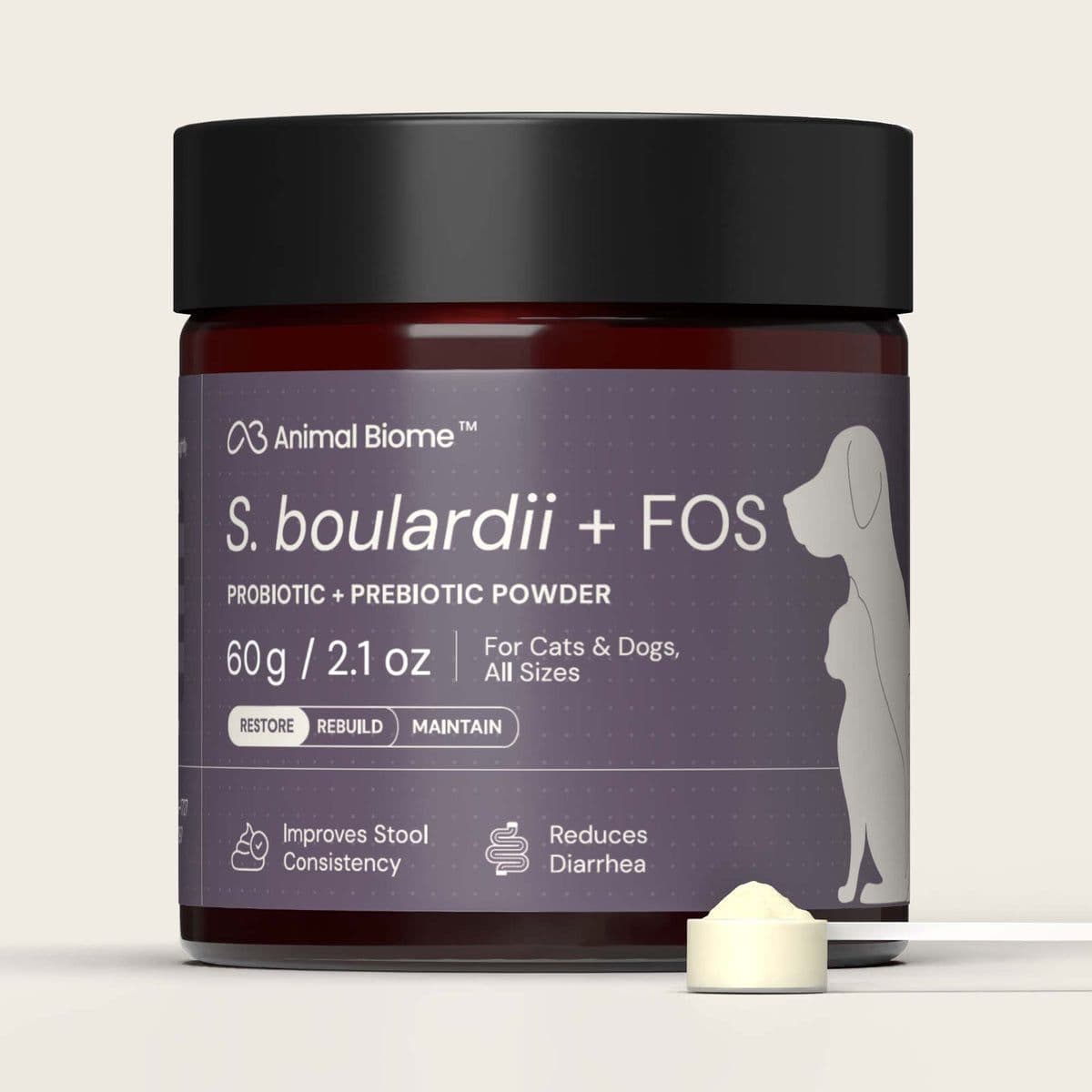
Antibiotic-resistant probiotic yeast paired with prebiotic FOS; supports stool consistency and helps reduce diarrhea in cats and dogs, including during antibiotic courses.
Webvet may earn a commission when you click through to Animal Biome, at no extra cost to you.
Why metronidazole is not simply stronger
Metronidazole is another veterinary treatment option for Giardia. It may be selected in particular clinical circumstances, but it is not a harmless backup for every loose stool or every positive Giardia test.
Merck reports serious central nervous system adverse effects after chronic treatment or high doses. Contact the veterinarian about any suspected adverse effect, and seek urgent guidance for new neurologic signs. Exact risk depends on the dog, dose, duration, and other factors.
Why combination treatment is not automatic
When signs persist, it can be tempting to add medications. That approach can increase adverse effects without solving reinfection, poor administration, an incorrect diagnosis, or a second intestinal disease. A recheck should come before an improvised combination.
The veterinarian may repeat or change treatment after reviewing the whole case. The important distinction is that the change follows evidence and clinical judgment, not an assumption that a stronger protocol always works faster.
How Veterinarians Treat Giardia in Dogs
Veterinary treatment begins by deciding whether Giardia explains the dog's illness and whether urgent supportive care is needed. The fastest safe path is accurate assessment, the right medication when indicated, and immediate attention to dehydration or another serious cause of diarrhea.
There is no evidence-bound way to get rid of Giardia in dogs instantly, and no single best treatment fits every patient. A dog may need time for intestinal inflammation and appetite to recover. A clinic must also consider whether Giardia is an incidental finding rather than the sole cause of signs.

Step 1: Confirm the clinical problem
The veterinarian combines history, physical examination, and fecal testing. The history should cover stool pattern, appetite, vomiting, weight change, travel, boarding, daycare, dog-park use, wildlife, untreated water, diet changes, and previous deworming.
Physical findings can change the priority. Dehydration, abdominal pain, fever, weight loss, pale gums, or marked lethargy can justify broader testing or immediate treatment. A positive Giardia result does not exclude parvovirus, another parasite, a foreign body, pancreatitis, or inflammatory intestinal disease.
For symptom and testing decisions, see WebVet's guide to Giardia in dogs. It keeps diagnostic triage separate from the medication plan.
Step 2: Choose medication for the dog, not the search result
The veterinarian decides whether fenbendazole, metronidazole, another approach, or no antiparasitic treatment fits the case. The choice may differ for a small puppy, pregnant dog, dog with liver disease, dog taking interacting medicine, or dog whose symptoms suggest another diagnosis.
Do not use a powder merely because searches call it a powder treatment for Giardia in dogs. Active ingredient, strength, packet size, labeled species, expiration, storage, and the intended parasite all matter. A product name does not replace a prescription or written veterinary direction.
Questions to settle before the first dose
A clear medicine plan should answer more than the product name. Ask the clinic to write down:
- The exact active ingredient and product strength
- The amount for this dog and the intended schedule
- Whether it should be given with food
- Which adverse effects require a call or emergency visit
- How to store the product away from children and other animals
- Whether other household pets have a separate plan
Review current prescriptions, preventives, supplements, and recent dewormers. This reduces duplicate therapy and helps the veterinarian notice interactions or an active ingredient that was already tried.
If the dog refuses the medicine, do not hide repeated extra amounts in multiple meals. Call for an administration strategy or another formulation. Accurate delivery matters, and guessing can create underdosing or accidental repeat dosing.
Step 3: Stabilize hydration and nutrition
Diarrhea and vomiting can deplete water and electrolytes. Some dogs only need carefully managed oral intake, while others need fluids administered by the veterinary team. A puppy or dog that cannot keep water down should not be managed with repeated home feeding attempts.
Nutrition supports the intestinal lining and recovery. The veterinarian may recommend a digestible complete diet, smaller meals, or a temporary therapeutic food. Fasting or severe diet restriction can be counterproductive, especially in a growing or already thin dog.
What to feed a dog with Giardia depends on hydration, appetite, age, body condition, and other disease. A veterinarian may choose a complete digestible diet or temporary therapeutic food. Food supports recovery but does not eliminate Giardia, and an improvised restrictive diet can create nutritional problems.
Temporary food follows the veterinary plan
If a temporary bland food is part of the written plan, Under the Weather Rice & Chicken is one exact retail option to ask about. It does not kill Giardia and should not become a complete long-term diet without veterinary nutrition guidance.
Step 4: Reduce cysts on the dog and in the environment
Giardia cysts pass in feces and can remain on the hair around the rear end. Cornell includes bathing and environmental hygiene in the control plan. Your veterinarian may recommend bathing near the end of treatment or at another specific time to reduce contamination on the coat.
Pick up feces promptly, clean contaminated bowls and hard items, wash soiled bedding, and prevent access to standing water or heavily contaminated areas. These steps reduce reinfection pressure. They do not replace medicine when the veterinarian has determined medicine is needed.
Step 5: Define what improvement and follow-up mean
Ask when stool frequency, appetite, and energy should begin moving in the right direction. Also ask whether follow-up is based on clinical improvement, repeat fecal testing, household risk, or a combination. The answer can differ among dogs and testing methods.
Keep a daily log of bowel movements, vomiting, appetite, water intake, energy, and medication administration. If symptoms persist, the record helps distinguish a missed dose, treatment intolerance, reinfection, or a disease pattern that never responded.
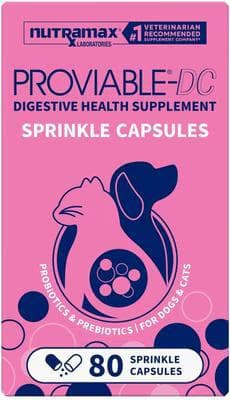
Multi-strain probiotic plus prebiotic sprinkle capsules for dogs and cats; supports digestive balance during diarrhea, diet changes, and antibiotic courses.
Webvet may earn a commission when you click through to Chewy, at no extra cost to you.
Make the household schedule auditable
Use one written line for every planned dose, meal change, bath, bedding wash, and recheck. Initial each item after it happens. This is especially useful when more than one person cares for the dog or when several pets have different instructions.
Store veterinary medicine separately from supplements and human products. Do not pre-mix an entire course into a food container unless the veterinarian or pharmacist confirms stability and dosing accuracy. A dog that skips a meal could otherwise miss an unknown portion.
Limited-evidence Proviable after the plan is set
FortiFlora for dogs is another exact probiotic product to discuss only after the veterinary treatment and recovery plan is set. It does not treat the parasite or justify changing prescribed medication.
How long treatment and recovery can take
How long it takes for Giardia to resolve in dogs varies. The medicine course may be relatively short, but stool quality, appetite, weight, and the intestinal microbiome can take longer to normalize. Reinfection can create an apparent relapse soon after improvement.
Ask the veterinarian for two timelines: when meaningful improvement should appear, and when a recheck should occur if it does not. Contact the clinic sooner for worsening diarrhea, new vomiting, reduced drinking, weakness, blood, or a dog that cannot take the prescribed medicine.
The role of repeat testing
Giardia cyst shedding can be intermittent, and diagnostic methods do not answer identical questions. The veterinarian may use fecal flotation, antigen testing, or more than one sample. VCA Animal Hospitals notes that routine flotation can miss infection.
Repeat testing is most useful when interpreted with symptoms and exposure. A test result alone does not prove that every persistent loose stool is still caused by Giardia, and a visually normal stool does not prove cyst shedding has ended.
Which Signs Should Improve and Which Need a Recheck
Improvement should be a trend toward fewer bowel movements, better stool consistency, stable appetite, better energy, and maintained or recovering weight. One formed stool is encouraging, but it is not a reliable cure test.
Dogs can improve unevenly. Stool may remain softer than normal while the intestine recovers, especially after repeated diarrhea or a diet change. What matters is whether the overall direction matches the veterinarian's expectation.
Signs that support continued monitoring
If the veterinarian has already examined the dog and provided a plan, these trends may support ordinary follow-up:
- Stool is gradually becoming more formed
- Bowel movements are less frequent
- Appetite and water intake are normalizing
- Energy is returning
- Weight is stable or starting to recover
- Medication is being given as directed without adverse effects
Continue the full written plan. Do not stop medicine early because the stool looks better, and do not extend a course because one bowel movement remains soft.
Signs that justify a prompt recheck
Call the clinic when:
- Diarrhea is not improving by the expected point
- Stool improves, then repeatedly becomes loose again
- Weight continues to fall
- Appetite remains poor or the dog refuses food
- Vomiting begins or continues
- The dog seems painful, weak, or unusually quiet
- Another pet in the home develops signs
- Medication is missed, vomited, or cannot be given safely
Long-term effects and body condition
Giardia symptoms can become chronic or intermittent. Over time, reduced nutrient absorption and ongoing diarrhea may contribute to weight loss or poor body condition. A puppy may fail to gain as expected even if it still eats.
Long-term effects should not be assumed to come from permanent Giardia infection. The veterinarian may investigate intestinal inflammation, food response, pancreatic disease, other parasites, or systemic illness when weight and stool do not normalize.
Puppies, seniors, and medically fragile dogs
Puppies have less reserve for ongoing fluid loss and need enough nutrition for growth. Older dogs may have kidney, liver, endocrine, or mobility problems that change hydration and medicine decisions. Immunocompromised dogs can require closer monitoring and a more cautious household plan.
Call earlier when a vulnerable dog stops eating, vomits, becomes weak, or loses weight. Do not assume the standard follow-up interval is safe for every patient. The treating veterinarian should define the threshold for same-day reassessment.
Pregnant or nursing dogs also need individualized review before any medicine or supplement. Tell the clinic about possible pregnancy, litter age, and all animals with close contact so risks and product choices are considered together.
 Sponsored
Vet care that's always there
Unlimited video calls and messaging with licensed vets for less than a typical vet visit. One membership covers up to five pets.
Use code Pets60
Plans start at $12/month · covers up to 5 pets
- Licensed vets in most states
- Rx for 150+ conditions
- 4.7 on Trustpilot
Fenbendazole Dosing Requires the Drug Guide and Your Vet
Exact fenbendazole and Panacur dosing belongs with the veterinarian. For product-specific instructions, label distinctions, adverse effects, and questions about exact products, read WebVet's fenbendazole for dogs guide.
This article does not publish a Panacur dosage chart because weight is only one input. The dog's diagnosis, product concentration, packet size, age, concurrent parasites, health, and intended duration all affect the written plan.
United States extra-label context
Merck notes that no drugs are approved specifically for treating giardiasis in dogs in the United States and that some Giardia treatments are used extra-label. In that situation, the veterinarian provides directions for the diagnosed dog rather than relying on a retail package's worm instructions.
Extra-label does not mean owner-directed. Keep the written veterinary directions with the exact product so the active ingredient and strength do not become separated from the plan.
Retail Fenbendazole Products After Veterinary Direction
If the veterinarian confirms the exact product and provides written Giardia directions, Panacur C Canine Dewormer may match what was specified. Do not substitute a different packet or strength based only on brand familiarity.
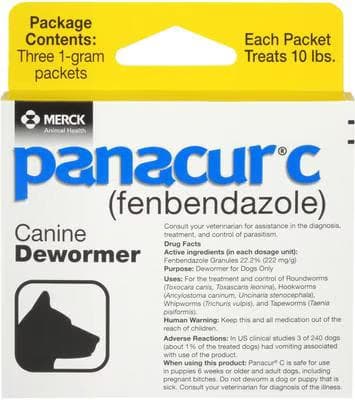
Broad-spectrum dog dewormer (fenbendazole) that treats roundworms, hookworms, whipworms, and Taenia tapeworms. Three daily 1-gram packets dosed by weight.
Webvet may earn a commission when you click through to Chewy, at no extra cost to you.
Contagious Period and Contact During Treatment
A dog may remain capable of spreading Giardia cysts during treatment, and the exact contagious period cannot be read from stool appearance. Cyst shedding can be intermittent, while reinfection and environmental contamination can extend the practical household risk.
How do dogs get Giardia at home during this period? Microscopic fecal material can move from rear fur, paws, bedding, crates, bowls, or outdoor elimination areas to a dog's mouth. That household route is why prompt feces removal, coat hygiene, clean shared items, and veterinary contact guidance remain important during treatment.
Ask the veterinarian when daycare, boarding, dog parks, grooming, communal bowls, or close play can resume. The answer may depend on treatment completion, symptoms, follow-up testing, and the health of other animals in the setting.
How Giardia spreads during the treatment window
Dogs become infected by swallowing cysts from fecally contaminated water, soil, food, objects, or fur. Cysts can be infective when passed, so prompt feces removal matters even before the first medicine dose.
A dog can contaminate the rear coat, bedding, crate, bowls, and frequently touched areas after diarrhea. Another dog can then ingest microscopic material while grooming, drinking, sniffing, or licking a surface.
Contact and hygiene during treatment
You can usually comfort and cuddle your dog. Avoid feces and visibly soiled rear fur, and wash your hands thoroughly with soap and water after petting the dog or handling infected feces.
Dog-to-human transmission is possible, although Cornell explains that dog-associated strains are not the strains most often found in people. A physician should evaluate human diarrhea or a specific exposure concern.
Managing other pets
Tell the veterinarian about all dogs and cats, shared spaces, symptoms, and test results. The clinician can decide whether contacts need testing, treatment, or monitoring.
Separate bowls, prompt feces removal, and controlled elimination areas may reduce exposure while the plan is underway. Complete isolation within a household is not always practical, so consistent hygiene and coordinated veterinary guidance matter more than an improvised rule.
Cleaning as Part of the Treatment Plan
You do not need to indiscriminately disinfect your house if your dog has Giardia, but targeted cleaning is needed. The aim is to remove fecal contamination and reduce reinfection. Trying to sterilize every surface can expose people and pets to unnecessary chemicals without solving the main transmission routes.
Cornell recommends prompt feces removal, cleaning food and water bowls, laundering bedding, and bathing the dog when directed. For a complete surface and daily-care protocol, read WebVet's guide to Giardia home care and reinfection prevention.

Daily priorities
- Remove feces immediately from indoor and outdoor areas.
- Wash hands after cleanup and before handling food.
- Wash bowls and prevent communal drinking.
- Launder soiled bedding and dry it thoroughly.
- Clean crates, carriers, and hard surfaces that contact fecal material.
- Keep the rear coat clean and follow veterinary bathing instructions.
- Block access to puddles, standing water, and heavily used elimination areas.
Do not mix cleaning products or apply concentrated disinfectants to the dog. Outdoor areas are difficult to decontaminate because soil, moisture, shade, and organic material change how products work. Access control and immediate feces removal are practical foundations.
Why cleaning and medicine belong together
Medication addresses the parasite in the dog. Cleaning reduces the chance that the dog swallows cysts again from its coat or surroundings. When either side is neglected, an apparently successful course can be followed by renewed exposure.
Cleaning also helps protect other pets. It cannot prove that a dog is no longer shedding, so follow the veterinarian's guidance about contact and testing rather than using a spotless room as a medical endpoint.
Metronidazole Safety Requires the Drug Guide and Your Vet
Metronidazole may be part of selected Giardia treatment plans, but exact dosing and adverse-effect decisions belong with the veterinarian. Do not use a human prescription, a previous pet's tablets, or a search result that gives milligrams per kilogram without the dog's full clinical context.
For drug-specific dose, interaction, adverse-effect, and emergency questions, read WebVet's metronidazole guide for dogs and cats. This article explains only the medicine's role in the larger Giardia plan.
Side effects to report
Contact the veterinarian about any suspected adverse effect or difficulty giving the medicine. Seek urgent guidance for any new problem with balance, movement, awareness, or seizures.
Do not stop or change prescribed medicine without contacting the clinic unless emergency instructions tell you otherwise.
Why a frightening search result needs context
Searches such as "metronidazole killed my dog" usually reflect fear after a serious adverse event, not a way to predict an individual outcome. Neurologic toxicity is a recognized concern, and that is exactly why dose, duration, liver health, and concurrent medicines matter.
At urgent care, report the product strength, number of doses, timing, and all other medications so the team can assess exposure and start appropriate care.
Safe-Guard After Written Veterinary Direction
The earlier United States extra-label boundary applies to every retail fenbendazole product. If the veterinarian specifies Safe-Guard Canine Dewormer for Medium Dogs, compare its active ingredient, packet strength, number of packets, expiration date, and package integrity with the written directions. Ask before switching products or combining packets.
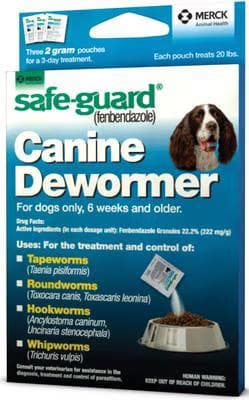
Fenbendazole 3-day dewormer that treats tapeworms (Taenia), roundworms, hookworms, and whipworms. Over the counter, for dogs 6 weeks and older.
Webvet may earn a commission when you click through to Chewy, at no extra cost to you.
Recovery Rechecks and Persistent Diarrhea
A dog does not normally live with symptomatic Giardia forever, but recurring positive tests or diarrhea can create a long course. The next step is a structured recheck, not a permanent rotation of antiparasitic drugs.
Merck, Cornell, and VCA all connect treatment success with diagnosis, environmental control, and follow-up. Persistent signs may represent reinfection, incomplete administration, another parasite, intestinal inflammation, diet response, or a separate disease.
Does Giardia in dogs go away, and how long does diarrhea last after Giardia treatment in dogs? Many dogs improve, but no universal timeline applies. To help prevent Giardia from coming back, complete the written plan, reduce fecal exposure, and use the veterinarian's recheck threshold rather than repeating medicine automatically.

A useful recheck sequence
The veterinarian may work through these questions:
- Was the original diagnosis supported by appropriate testing and compatible signs?
- Was every dose given at the intended time and strength?
- Did vomiting, refusal, or administration difficulty reduce the actual course?
- Could the dog have been reinfected from fur, water, soil, or another pet?
- Are current fecal tests consistent with active clinical infection?
- Does another intestinal or systemic disease better explain the remaining signs?
That sequence prevents the label "treatment-resistant Giardia" from being applied too quickly. True drug failure is only one possibility, and not necessarily the most useful first assumption.
What treatment-resistant Giardia can mean
In everyday conversation, the term often means that diarrhea or a positive test continued after a course. It does not automatically prove that the organism is genetically resistant to a medicine. Reinfection, adherence, testing limitations, and another diagnosis must be examined first.
If the veterinarian changes the medicine, the change should follow that review. Do not combine leftover or retail medicines at home in an attempt to overcome presumed resistance.
Four patterns that can look like treatment failure
- No improvement from the beginning can suggest that Giardia was not the main cause, the medicine was not administered as intended, or another serious problem is present. This pattern supports prompt reassessment rather than waiting through repeated courses.
- Improvement followed by rapid relapse raises reinfection, incomplete environmental control, an untreated contact, or a recurring non-Giardia condition. Timing relative to bathing, shared spaces, and treatment completion can help the veterinarian narrow the possibilities.
- Improved stool with continued weight loss deserves special attention. Stool consistency can normalize before nutrition and body condition recover, but continued weight loss can also signal malabsorption or another disease that needs testing.
- A positive test with a clinically normal dog requires interpretation rather than automatic escalation. The veterinarian may consider the test method, household setting, exposure of vulnerable animals or people, and whether treatment benefits outweigh medicine-related risks.
Bring the timeline rather than summarizing all four patterns as "the medicine did not work." A dated record can show whether the problem is persistent, recurrent, or disconnected from the original symptoms.
When diarrhea continues after Giardia treatment
Stool can remain loose while the intestinal lining and diet normalize. It can also remain loose because Giardia was not the only problem. The veterinarian may recommend a fresh sample, additional parasite testing, diet review, bloodwork, or another diagnostic step.
Record whether the stool improved at all during treatment. A partial response followed by relapse suggests a different question from no response from day one. Note appetite, weight, vomiting, urgency, frequency, and any blood or mucus.
Give the clinic a concise failure report
When calling, lead with the dog's current condition and the most important change. State whether the dog is eating, drinking, vomiting, passing blood, maintaining weight, and acting normally. Then give the last medicine dose and when the diarrhea returned.
Have these details ready:
- Product name, strength, and written schedule
- Doses missed, vomited, spilled, or given late
- Date of the last normal stool and first renewed diarrhea
- Baths, cleanup, standing-water access, and possible feces exposure
- Signs in other household pets
- New foods, treats, supplements, or medications
This report helps the team decide whether the dog needs emergency care, a same-day examination, a fresh fecal sample, or a scheduled recheck. It also keeps a reinfection question from being mistaken for a dose question.
Keep the fresh stool sample separate from food and label it with the collection time if the clinic asks for one. Use the container and storage instructions the practice provides. A poorly handled sample can reduce diagnostic value and cost time during a complicated recheck.
When a repeat positive needs interpretation
A repeat result should be interpreted in the context of the test type and clinical signs. The goal is to treat illness and reduce meaningful transmission risk, not to chase every result without considering the patient.
Ask what the result demonstrates, whether another sample is needed, and what finding would change the plan. That conversation is more useful than assuming a positive automatically requires the same medication again.
Cost and recheck planning
If finances are limiting the workup, say so early. Ask which test is most likely to change treatment, which findings would make hospitalization necessary, and what the minimum safe recheck includes. Clinics can often explain priorities even when they cannot predict the final bill.
WebVet's guide to Giardia treatment cost for dogs keeps itemized financial decisions separate from medical dosing. Do not postpone urgent care for a dehydrated or rapidly declining dog while comparing retail products.
Why Home and Over-the-Counter Cures Are Not Substitutes
If you are wondering how to treat Giardia in dogs at home, the answer starts with a veterinarian. A so-called natural homeopathic or over-the-counter Giardia cure does not replace veterinary diagnosis and treatment. Diatomaceous earth, herbal mixtures, essential oils, and internet protocols can delay appropriate care. Apparent stool improvement does not prove parasite clearance.
An over-the-counter dog dewormer may contain fenbendazole, but its retail label can target specific worms rather than Giardia. The fact that a veterinarian may use the same active ingredient extra-label does not make the package's labeled worm directions a Giardia protocol.
Diatomaceous earth and homeopathic claims
Merck, Cornell, and VCA do not identify diatomaceous earth as a treatment for canine Giardia. Do not use it in place of veterinary testing, hydration support, or prescribed medication.
Merck, Cornell, and VCA do not identify homeopathy as a treatment for canine Giardia. Do not use it in place of veterinarian-selected antiparasitic care.
Doxycycline and unrelated antibiotics
Merck, Cornell, and VCA do not list doxycycline as a standard canine Giardia treatment. Do not use it without a veterinary indication. A dog with diarrhea may need a different diagnosis rather than another antimicrobial.
Natural feeding questions
Natural remedies for treating Giardia in dogs do not replace veterinary diagnosis or effective antiparasitic care. No natural food kills Giardia. A digestible diet can support intake and stool tolerance, but it does not replace treatment or fluids.
Ask the veterinarian what to feed, how much, how often, and how to transition back. The answer may differ for a puppy, overweight adult, dog with pancreatitis risk, or dog already eating a therapeutic diet.
Food and Digestive Support During Recovery
Food and digestive supplements can support recovery, but they do not clear Giardia. The first priorities are tolerable nutrition, hydration, prescribed treatment, and a plan for worsening signs.

Choosing a recovery diet
The veterinarian may recommend the dog's usual diet, a digestible veterinary diet, or another complete food based on symptoms and health history. Sudden repeated switches can create more diarrhea, so use a transition plan unless the clinician directs an immediate change.
Smaller meals may be easier for some dogs to tolerate. A puppy, diabetic dog, or dog with another metabolic condition should not be fasted or fed an improvised recipe without veterinary advice.
Probiotics and microbiome products
The limited-evidence boundary described earlier still applies during later recovery. Introduce only what the veterinarian approves, especially if the dog is immunocompromised, taking several medications, or being evaluated for persistent diarrhea. Stop and call if a new supplement coincides with vomiting, worsening diarrhea, weakness, or poor intake.
Water intake and dehydration checks
Make fresh water available unless the veterinarian gives different instructions, but do not force large amounts into a vomiting dog. Small sips do not correct severe dehydration. Dry or tacky gums, weakness, sunken eyes, poor urine output, or collapse needs urgent assessment.
Track drinking alongside stool and vomiting. Increased thirst can reflect fluid loss, while reduced interest in water can signal nausea or worsening illness. Either trend helps the clinic judge whether home recovery remains appropriate.
Returning to normal activity
Energy may return before the household transmission plan is complete. Continue restrictions on communal water, dog parks, daycare, and high-risk shared spaces until the veterinarian says they can resume.
Keep medication, feeding, cleanup, and recheck dates in one written schedule. A simple checklist reduces missed doses and makes it easier to identify where a relapse may have started.
Protect weight while the intestine recovers
Ask whether the dog should maintain, gain, or avoid gaining weight during recovery. A puppy and an overweight adult have different goals. Repeatedly adding rich foods to tempt appetite can worsen diarrhea or create an unbalanced diet.
Use a measured daily amount and record how much is actually eaten. If the dog needs a temporary diet, ask how long it is nutritionally appropriate and how to transition. A short-term bland product is not automatically complete for growth or long-term feeding.
Weight should be checked on the same scale when possible. A downward trend, visible muscle loss, or failure of a puppy to grow is a reason to contact the clinic even if bowel movements are less frequent.
Frequently Asked Questions
What should I do if my dog vomits a Giardia medicine dose?
If your dog vomits a Giardia medicine dose, call the prescribing clinic before repeating it or changing the next dose. The safe response depends on the medicine, product strength, when vomiting occurred, whether the tablet or powder was visible, and the dog's condition.
Cornell and VCA describe Giardia treatment as veterinarian-guided. Repeating an uncertain dose can create an accidental extra dose, while skipping without advice may disrupt the intended course.
Keep the product and written directions nearby when you call.
Can I reuse leftover metronidazole when diarrhea returns?
Do not reuse leftover metronidazole when diarrhea returns without a new veterinary instruction. Merck describes indication-specific use and important neurologic risk with high doses or prolonged treatment.
Returning diarrhea can reflect reinfection, another parasite, medication intolerance, diet response, or a separate disease. Tell the clinic the prior prescription strength, dates, response, and current signs so the new episode is assessed on its own.
Urgent signs still require prompt care rather than a leftover dose.
Why should I keep the original Giardia medicine package?
Keep the original Giardia medicine package because it identifies the active ingredient, strength, lot, expiration date, and exact product the veterinarian directed. That information matters if a dose is spilled, vomited, doubled, or followed by an adverse effect.
Keep it through the course and recheck, and bring it to urgent care when asked. Do not rely on packet color or brand memory to identify a medicine.
Store it with the written patient directions, away from children and animals.
Can I give another household pet the same Giardia medicine?
Do not give another household pet the same Giardia medicine unless the veterinarian gives a separate direction for that animal. Cornell and VCA describe patient-specific testing and treatment, and another pet may have different weight, symptoms, health risks, or test results.
Report every dog and cat in the home, but keep each product with its written patient instructions while the clinic decides who needs testing, monitoring, or treatment.
Do not divide a course or estimate another animal's amount.
The Bottom Line
Giardia treatment in dogs works best as a connected plan: confirm that Giardia is clinically relevant, treat with the veterinarian-selected medicine, protect hydration and nutrition, remove fecal contamination, bathe when directed, and recheck persistent or recurring signs.
Fenbendazole and metronidazole have different roles and cautions. Neither should be dosed from a generic chart. Retail fenbendazole products may be useful only after the veterinarian confirms the exact product and extra-label Giardia directions.
If diarrhea continues, resist the urge to stack medicines or home remedies. Reevaluate adherence, reinfection, testing, and alternative diagnoses. Seek urgent care for blood, repeated vomiting, marked weakness, collapse, abdominal pain, or dehydration.
Sources

Editor
The Webvet Editorial Team is the in-house group of pet-care editors and writers behind Webvet, operated by Smart Pet Collective. The team researches, writes, and maintains Webvet's pet health, behavior, and medication content. Every article follows a defined editorial process: research from reputable veterinary and scientific sources, careful drafting, mandatory review of medical content by a credentialed veterinarian, and dated publication. Health and medication articles are medically reviewed by a licensed veterinary professional before they go live and are kept current over time.
Veterinarian · BVMS MRCVS
Dr. Pippa Elliott, BVMS, MRCVS, is a veterinarian with nearly 30 years of experience in companion animal practice. Dr. Elliott earned her Bachelor of Veterinary Medicine and Surgery from the University of Glasgow. She was also designated a Member of the Royal College of Veterinary Surgeons. Married with 2 grown-up kids, Dr. Elliott has a naughty Puggle named Poggle, 3 cats and a bearded dragon.


