Fenbendazole for Dogs: Dosage Chart, Giardia Use, and Side Effects
Fenbendazole for Dogs explained: see the vet-reviewed dosage-by-weight chart, side effects, safety warnings, cost, and when to call your veterinarian.

BVMS MRCVS
Medically reviewed by Dr. Pippa Elliott, BVMS MRCVS · Last reviewed

Drug facts
Rx Database sponsored by
Fenbendazole
Fenbendazole is the medication or medication group covered in this vet-reviewed WebVet consumer safety guide.
 Sponsored
Is Fenbendazole right for your dog?
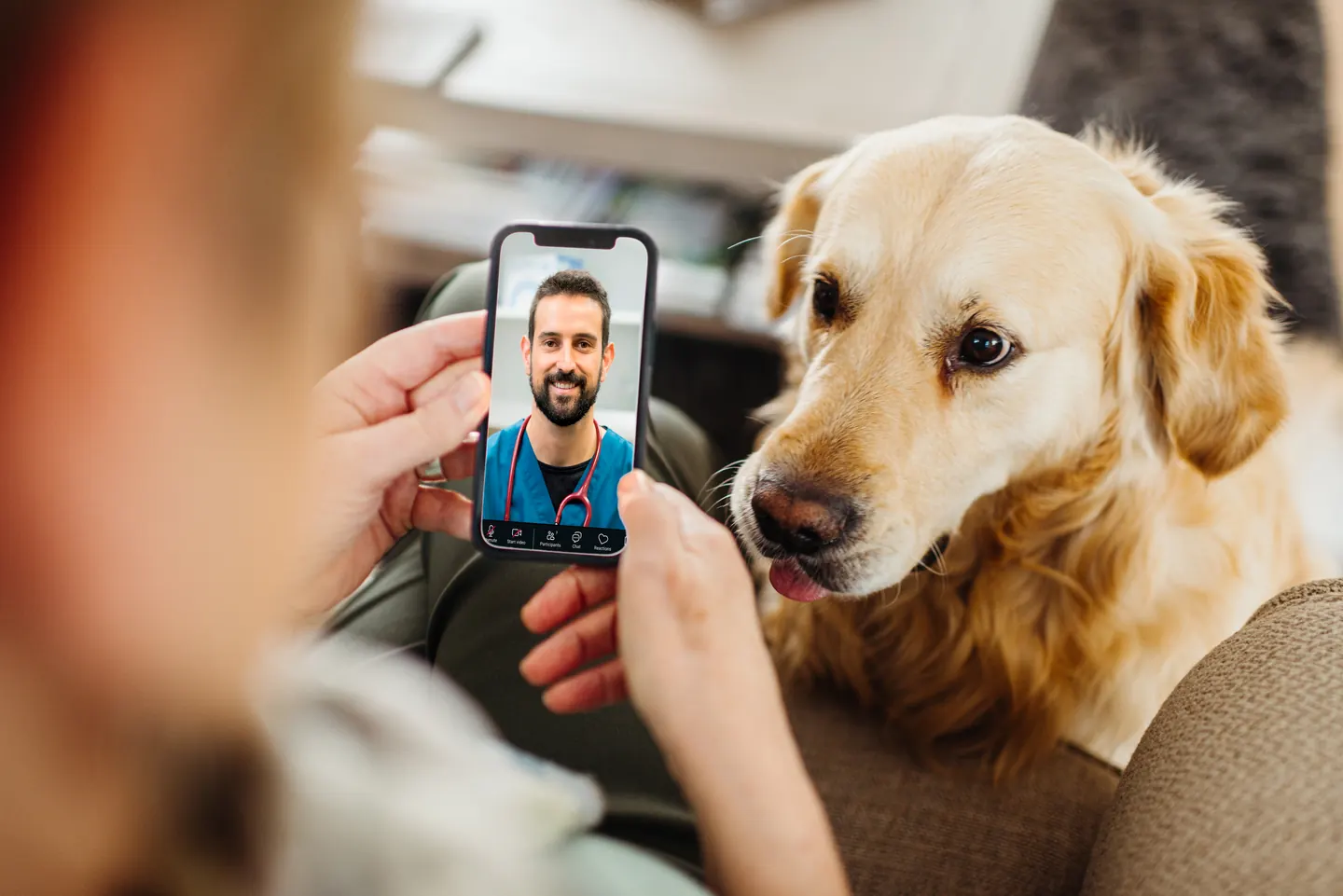
Ask a licensed vet at Dutch over video before you start Fenbendazole. Unlimited calls and messaging are included.
Use code Pets60
Plans start at $12/month · covers up to 5 pets
- Licensed vets in most states
- Rx for 150+ conditions
- 4.7 on Trustpilot
Fenbendazole for dogs is a broad-spectrum deworming medicine used for susceptible intestinal worms and often selected for Giardia. Merck lists 50 mg/kg by mouth daily for 3 days for named susceptible dog worms and 50 mg/kg every 24 hours for 3 to 5 days for Giardia. Confirm the diagnosis, exact formulation, measured amount, and course with your veterinarian before using any number below.
Fenbendazole Dosage for Dogs by Weight
When considering fenbendazole for dogs, use the veterinarian-confirmed product and plan for that animal. This chart converts the primary veterinary dose of 50 mg/kg into an approximate amount per administration. The course differs by indication: Merck's approved intestinal-helminth table lists daily administration for 3 days for the named susceptible dog worms, while its Giardia guidance lists every 24 hours for 3 to 5 days and notes U.S. approval limitations for Giardia.
| Dog's weight | Approximate weight in kg | Approximate amount at 50 mg/kg | Course must match the diagnosis |
|---|---|---|---|
| 5 lb | 2.3 kg | About 115 mg per administration | Veterinarian confirms susceptible worm or Giardia plan |
| 10 lb | 4.5 kg | About 225 mg per administration | Veterinarian confirms susceptible worm or Giardia plan |
| 20 lb | 9.1 kg | About 455 mg per administration | Veterinarian confirms susceptible worm or Giardia plan |
| 30 lb | 13.6 kg | About 680 mg per administration | Veterinarian confirms susceptible worm or Giardia plan |
| 40 lb | 18.1 kg | About 905 mg per administration | Veterinarian confirms susceptible worm or Giardia plan |
| 50 lb | 22.7 kg | About 1,135 mg per administration | Veterinarian confirms susceptible worm or Giardia plan |
| 60 lb | 27.2 kg | About 1,360 mg per administration | Veterinarian confirms susceptible worm or Giardia plan |
| 80 lb | 36.3 kg | About 1,815 mg per administration | Veterinarian confirms susceptible worm or Giardia plan |
| 100 lb | 45.4 kg | About 2,270 mg per administration | Veterinarian confirms susceptible worm or Giardia plan |
The table is a math check, not a prescription. A packet, granule, suspension, paste, or compounded product can contain a different amount in the same-looking volume. Do not convert milligrams into packets, scoops, milliliters, or paste markings until the veterinarian or pharmacist confirms the exact concentration.

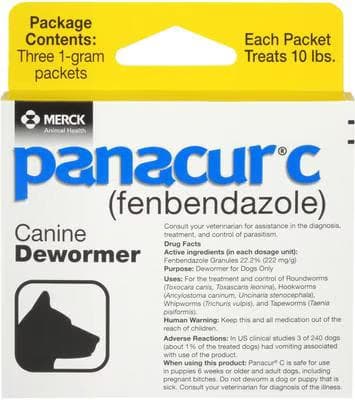
Broad-spectrum dog dewormer (fenbendazole) that treats roundworms, hookworms, whipworms, and Taenia tapeworms. Three daily 1-gram packets dosed by weight.
Webvet may earn a commission when you click through to Chewy, at no extra cost to you.
The helminth course and Giardia course are not interchangeable
The same 50 mg/kg amount appears in both primary sources, but the indication and course language differ. Susceptible intestinal-worm treatment follows the applicable dog product or prescription. Giardia treatment may be extra-label depending on the product and jurisdiction, and the veterinarian may pair it with testing, hygiene, and follow-up.
Do not shorten a course because stool improves or extend it because diarrhea continues. Early improvement does not prove parasite clearance, while ongoing diarrhea may mean reinfection, another parasite, diet, pancreatitis, chronic enteropathy, or another disease.
Giving granules, liquid, or another prescribed form
Follow the pharmacy or product instructions about food. A measured granule dose may be mixed into a small amount of food the dog will finish, but using a full bowl makes the swallowed amount uncertain if the dog walks away. A liquid requires the supplied oral syringe and its concentration in mg/mL.
Before the first dose, write down:
- the condition being treated
- the dog's current measured weight
- milligrams per administration
- the exact formulation and concentration
- how the milligrams translate to the dispensed amount
- the planned final day
- what to do after a missed or vomited dose
- when follow-up testing is due
Do not double a missed dose. If the dog vomits after administration, call before repeating it because some medicine may already have been absorbed.
How the veterinarian turns weight into a measured dose
The chart stops at milligrams because the next conversion is product-specific. The veterinary team checks the dog's weight in kilograms, applies the indication-specific milligram amount, then translates that amount into the packets, granules, or liquid actually dispensed. That last step changes whenever the concentration or package strength changes.
A useful written direction should answer all of these questions:
- Is the amount expressed in milligrams, milliliters, packets, scoops, or another unit?
- Does the instruction describe one administration or the entire course?
- Is the supplied measuring device marked in the same unit as the label?
- Must a packet be used whole, or has the clinic authorized a measured portion?
- Should the product be mixed, shaken, stored, or discarded in a particular way?
- Who should be called if part of the dose is spilled, refused, or vomited?
Do not use kitchen spoons for a liquid or judge a packet fraction by eye. If the written instruction and the package appear to use different units, pause before the first dose and have the clinic reconcile them. The safest time to solve a conversion problem is while the package is still unopened.
Questions to settle before starting
Ask what evidence makes a susceptible parasite the treatment target. A positive fecal result, visible parasite, exposure pattern, or veterinarian's clinical judgment may support the plan, but each provides a different level of certainty. Knowing the reason also makes a failed response easier to interpret.
Confirm whether the plan is intended to treat the sick dog only or whether another pet needs testing. Do not share the medicine between pets. Even when two animals have similar signs, species, body weight, parasite, formulation, and health status can lead to different instructions.
Prevent the most common home-administration errors
Many mistakes happen before the medicine reaches the dog. A caregiver may read the course total as a per-dose amount, use the wrong measuring device, mix the medicine into too much food, or assume a partial packet can be estimated visually. Different caregivers can also unknowingly repeat an administration.
Use a simple medication station with the current package, supplied measuring device, written directions, and one shared log. Keep older parasite products elsewhere so similar boxes cannot be confused. Mark an administration only after the dog has swallowed the measured amount.
If the dog refuses medicated food, do not keep adding unmeasured food and medicine. Call for an administration alternative. If some of the portion was eaten, the veterinarian needs to decide whether the amount was sufficient or whether another plan is safer. Repeating a full dose can create an accidental excess.
What to do with leftover product
Do not use leftovers to treat a future diarrhea episode. The later illness may involve a different parasite, a non-parasite disease, or a different body weight. A compounded product may also have a limited beyond-use period even when it looks unchanged.
Ask the pharmacy or veterinarian how to dispose of unused medicine and contaminated measuring supplies. Do not pour medication into a drain or leave a flavored product where another pet can reach it. Keep the label until the course and any follow-up questions are complete.
If the veterinarian wants a product retained for the recheck, store it exactly as directed and keep the original packaging. The active ingredient, concentration, lot information, and expiration date may help investigate an adverse event or apparent treatment failure.
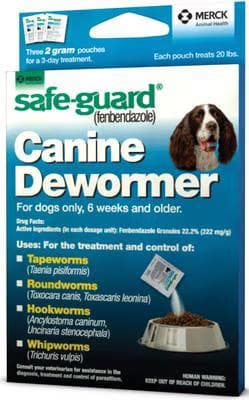
Fenbendazole 3-day dewormer that treats tapeworms (Taenia), roundworms, hookworms, and whipworms. Over the counter, for dogs 6 weeks and older.
Webvet may earn a commission when you click through to Chewy, at no extra cost to you.
What Fenbendazole Treats, Including Giardia

Fenbendazole is a benzimidazole anthelmintic. It interferes with susceptible parasites' ability to maintain essential cellular structures and energy processes. In dogs, veterinarians use it for labeled susceptible intestinal helminths and commonly select it for Giardia under a patient-specific plan.
- 1Fenbendazole should be prescribed or label-matched to a diagnosed susceptible parasite.
- 2The primary dose is indication-specific and does not turn every diarrhea case into a fenbendazole case.
- 3Giardia control includes hygiene and reinfection prevention, not only medication.
- 4A livestock or differently concentrated product can create a serious dosing error.
- 5Persistent vomiting, diarrhea, weakness, blood, or treatment failure needs veterinary reassessment.

Susceptible intestinal worms
Fenbendazole is commonly used against susceptible roundworms, hookworms, and whipworms, with label claims depending on product and parasite species. It also has activity against a named tapeworm species in some veterinary references, but it is not a universal tapeworm solution.
That distinction matters when an owner sees rice-like segments. The common flea-transmitted tapeworm usually leads to a praziquantel-centered product decision and flea control. Giving more fenbendazole without identifying the tapeworm can leave the infection and reinfection source untouched.
For roundworms and hookworms, the veterinarian considers age, parasite burden, anemia risk, and environmental exposure. A weak puppy with pale gums or blood loss needs examination and supportive care, not only a dewormer.
Giardia use
Giardia is a protozoal parasite rather than a worm. Merck lists fenbendazole at 50 mg/kg every 24 hours for 3 to 5 days as first-line treatment while noting U.S. approval limitations. The veterinarian decides whether treatment is appropriate based on signs, testing, exposure, and the exact product available.
Medication is only one part of Giardia control. Reinfection can occur when cysts remain in feces, on the coat, on surfaces, or in shared environments. The clinic may recommend prompt feces removal, cleaning, bathing, household planning, and follow-up testing suited to the case.
Helpful questions include:
- Was Giardia confirmed, strongly suspected, or found without symptoms?
- Does this dog need treatment based on clinical signs and household risk?
- Which product and concentration are being used extra-label or according to label?
- How should feces, bedding, bowls, and coat contamination be managed?
- When should persistent diarrhea or a positive follow-up test change the plan?
Fenbendazole should not be used as a generic home response to every loose stool. Giardia can coexist with dietary disease, another parasite, infection, pancreatitis, or chronic enteropathy. The treatment plan should explain what finding makes Giardia the target.
Building a Giardia reinfection-control plan
Giardia management can fail when medication and environment are treated as separate problems. The veterinarian's plan may combine prompt stool removal, cleaning of soiled areas, coat hygiene, clean water, and management of shared dog spaces. The exact cleaning approach depends on the home and the surfaces involved, so use the clinic's instructions rather than improvising with harsh chemicals around pets.
Organize the plan by exposure point:
- Pick up feces promptly in the yard and on walks.
- Keep food and water bowls away from toileting areas.
- Wash soiled bedding and clean resting areas as directed.
- Prevent drinking from puddles or other questionable shared water when possible.
- Clean visible fecal material from the coat without allowing the dog to become chilled.
- Ask whether housemates with diarrhea need testing instead of automatically medicating them.
- Tell a daycare, boarding facility, or dog walker when temporary exposure precautions are needed.
The goal is not to sterilize the home. It is to reduce repeated contact with infectious material while the dog completes the veterinary plan. A practical routine that the household can follow is more useful than one intense cleaning session followed by normal exposure.
If signs recur, provide the veterinarian with the medication record and the likely exposure points. That information helps distinguish incomplete administration, continued exposure, another infected animal, and a diagnosis that needs to be reconsidered.
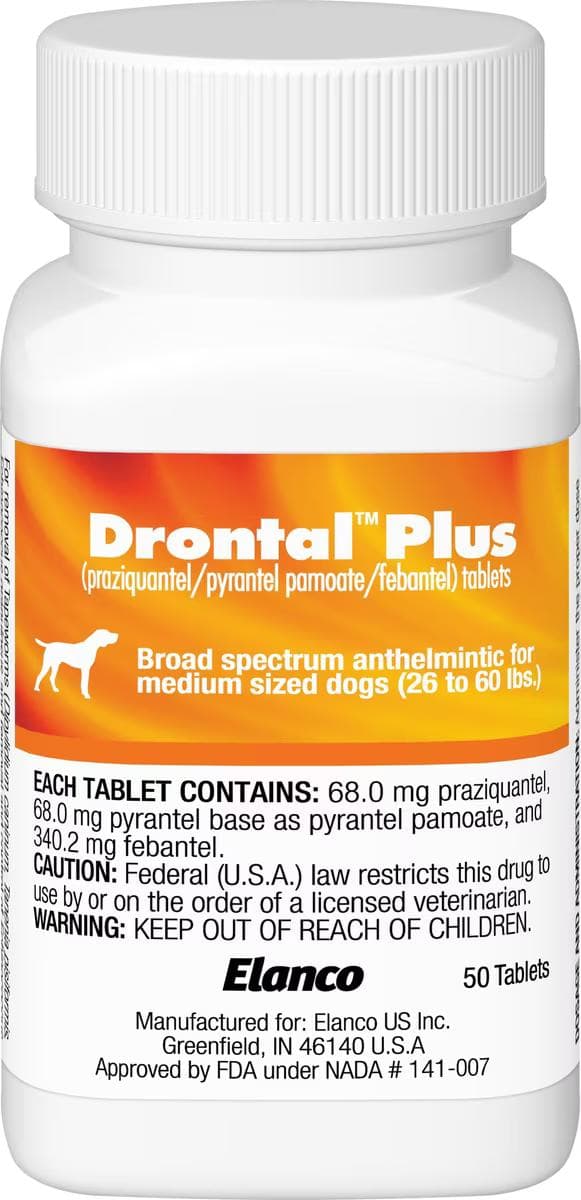
Broad-spectrum prescription dewormer (praziquantel, pyrantel, febantel) that clears tapeworms, roundworms, hookworms, and whipworms in one dose. Prescription required.
Webvet may earn a commission when you click through to Chewy, at no extra cost to you.
How long does it take to work?
Fenbendazole begins acting during the prescribed course, but visible response depends on the parasite, burden, intestinal damage, hydration, diet, and reinfection. Some dogs improve before the course ends, while others need more time for stool and appetite to normalize after parasites are treated.
Do not use the first firm stool as permission to stop. Likewise, do not repeat or extend fenbendazole when the dog remains sick without calling. Treatment failure is a diagnostic signal.
Is it hard on the liver or kidneys?
Fenbendazole is generally used because veterinary references support a favorable safety margin when the correct dog dose and course are followed. That does not mean every dog can receive every formulation without review. Liver or kidney disease, severe illness, malnutrition, pregnancy, concurrent medicines, and an inaccurate product conversion can change the plan.
Tell the veterinarian about known organ disease and every prescription or supplement. If a dog develops jaundice, dark urine, marked thirst, reduced urination, severe weakness, repeated vomiting, or another systemic sign, stop guessing about the cause and seek veterinary care.
Fenbendazole Side Effects and When Treatment Fails
Possible side effects include vomiting, diarrhea, appetite change, drooling, abdominal discomfort, and tiredness. Parasite die-off and the original gastrointestinal illness can produce similar signs, so severity, timing, and trend matter more than assuming every change is from the drug.

| What you observe | What it may mean | What to do |
|---|---|---|
| Brief mild stomach upset in a bright dog | Product effect, food, parasite die-off, or original illness | Monitor and call if persistent or worsening |
| Reduced appetite, repeated vomiting, or continuing diarrhea | Adverse effect, dehydration, wrong diagnosis, or treatment failure | Contact the veterinarian the same day |
| Worms in stool during treatment | Susceptible parasites may be passing | Complete the directed course and follow the testing plan |
| No improvement or rapid recurrence | Wrong parasite, reinfection, inadequate product match, or another disease | Arrange examination and targeted testing |
| Bloody diarrhea, pale gums, painful swollen belly, profound weakness, or collapse | Heavy parasite burden or another emergency | Seek urgent veterinary care |
| Facial swelling, hives, breathing difficulty, tremors, or inability to stand | Severe reaction, overdose, or another crisis | Go to an emergency veterinarian now |
 Sponsored
Vet care that's always there
Unlimited video calls and messaging with licensed vets for less than a typical vet visit. One membership covers up to five pets.
Use code Pets60
Plans start at $12/month · covers up to 5 pets
- Licensed vets in most states
- Rx for 150+ conditions
- 4.7 on Trustpilot
Why treatment can fail
Fenbendazole failure does not automatically mean the parasite is resistant or that the amount should be increased. Common explanations include:
- the parasite was never identified
- the selected product does not cover that parasite species
- the dog did not consume the complete measured amount
- a liquid concentration or packet conversion was misunderstood
- the course was stopped early or repeated incorrectly
- Giardia or worm exposure caused reinfection
- another untreated dog or cat remains a source
- diarrhea comes from a non-parasite disease
The next step should answer a decision. Fecal testing may identify a worm or Giardia. Bloodwork can assess anemia, dehydration, and organ health. Imaging or a diet trial may be more useful when obstruction, pancreatitis, or chronic enteropathy is possible.
Sorting a drug effect from worsening disease
Timing helps, but it does not prove the cause. Mild stomach upset that begins after a dose may relate to the medicine, the parasite, the food used for administration, or the original intestinal illness. More important questions are whether the dog remains bright, can keep water down, and is trending better or worse.
Record what happened before and after each administration:
- appetite and water intake
- vomiting and whether medicine was visible
- stool consistency, blood, mucus, and visible parasites
- energy, comfort, and willingness to walk
- gum color and any signs of dehydration
- every other medicine, supplement, or diet change
Call promptly when the pattern worsens instead of waiting until the course is finished. A dog that is losing fluid, bleeding, becoming weak, or refusing food needs a patient-specific assessment. Continuing the same medicine cannot correct anemia, obstruction, severe dehydration, or an unrelated disease.
What a useful recheck can decide
A recheck is most valuable when it is tied to a clear question. The veterinarian may need to decide whether the targeted parasite remains present, whether the dog was reinfected, or whether the original symptoms have another cause.
Bring the exact package and administration log. Explain how much food was used, whether each portion was finished, and whether any dose was lost. If several caregivers helped, reconcile their records before the appointment so an accidental gap or duplicate dose is visible.
Do not begin another dewormer shortly before the recheck unless the veterinarian directs it. Overlapping products can complicate side-effect assessment and make it harder to know which ingredient affected the parasite.
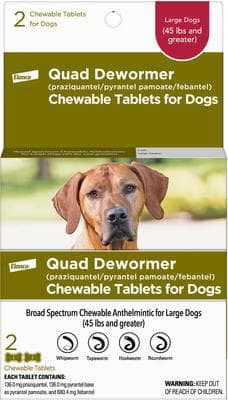
Broad-spectrum chewable dewormer (praziquantel, pyrantel, febantel) that treats tapeworms, roundworms, hookworms, and whipworms in one course. For large dogs 45 lbs and over.
Webvet may earn a commission when you click through to Chewy, at no extra cost to you.
Possible overdose or wrong product
Call a veterinarian or animal poison service immediately if the dog received a livestock product, an unknown concentration, another animal's prescription, duplicate doses, or a much larger amount than directed. Do not wait for signs.
Report the exact product, intended species, active ingredient, concentration, estimated amount, time, current weight, age, health problems, and current signs. Keep the packaging and measuring device. Do not induce vomiting or give a home antidote unless a veterinary professional directs it.
Pregnancy, puppies, and medically fragile dogs
Young, pregnant, nursing, underweight, or chronically ill dogs deserve a veterinary product and course decision rather than a generic adult chart. The parasite burden itself may be more dangerous in a puppy, while nutritional needs, anemia, dehydration, and concurrent treatment can change priorities.
A breeder, shelter, or previous owner schedule should not be copied without confirming what product was used and when. Duplicate treatment and gaps can look identical when records are vague.
Fenbendazole Cost and Prescription Options
Fenbendazole cost varies with body weight, formulation, amount required per administration, course length, retail or veterinary source, and whether compounding is needed. The available primary veterinary evidence does not support a universal price range, so an honest answer begins with the exact prescription.
Ask for a complete estimate that separates:
- examination and fecal testing
- product or compounding cost
- amount needed for the full course
- follow-up testing when recommended
- treatment for dehydration, anemia, infection, or another complication
- environmental or multi-pet reinfection control
The cheapest package may not contain enough for the full measured course or may use a form that is difficult to administer accurately. A larger farm-animal package is not a safe bargain. Cost per gram is irrelevant when the formulation, concentration, or species label does not fit.
Prescription or over the counter?
Availability depends on product and location. Some dog-labeled fenbendazole products are sold without a prescription, while a veterinarian may dispense or prescribe another formulation. OTC status does not establish that the dog has a susceptible parasite or that a particular package matches its weight.
A fecal test can save money by preventing purchase of an ineffective ingredient. It can also reveal when a combination dewormer, different antiparasitic, or non-parasite workup is more appropriate.
How to compare quotes
Compare the full course in the exact formulation, not one packet or one bottle. Ask whether the quote includes enough product for every directed day and whether the concentration is identical across pharmacies.
For a compounded liquid, confirm concentration, beyond-use date, storage, measuring device, and whether flavoring ingredients are suitable for dogs. A lower quote is not equivalent if it supplies a different concentration or volume.
Where the real treatment cost can grow
The medication is often only one line in a parasite case. Cost can increase when the dog is dehydrated, anemic, losing weight, or too nauseated to complete treatment. It can also increase when an ineffective first product delays the correct diagnosis.
Before choosing solely by shelf price, ask:
- Does this product cover the parasite the veterinarian suspects or found?
- Does the package contain the full directed course for this dog's current weight?
- Will a difficult formulation cause wasted doses or refusal?
- Is a fecal recheck part of the estimate?
- Does another pet or the environment need attention to prevent another round of treatment?
- What new sign would justify an examination instead of another package?
An OTC dog-labeled product can be a reasonable part of a veterinary plan. The false economy is buying several mismatched products, using an incomplete course, or choosing a farm formulation that cannot be measured safely for the patient.
Choosing a Dewormer Product for a Dog
Fenbendazole treats several important parasites, but this monograph does not own the product-ranking decision. The broader dog dewormer hub compares active ingredients by diagnosed worm type, product spectrum, OTC versus veterinary access, and reinfection control.
| Decision | Fenbendazole details | Dog dewormer comparison guide |
|---|---|---|
| Dose understanding | Primary 50 mg/kg framework and indication-specific course | Product weight bands and product selection |
| Giardia | Fenbendazole use, testing, and reinfection context | Broader dewormer and parasite-choice context |
| Roundworm, hookworm, whipworm | Why fenbendazole may fit susceptible species | Which active ingredient and dog product best matches the diagnosis |
| Tapeworm | Why fenbendazole is not a universal tapeworm choice | Praziquantel and combination-product choices |
| Cost | Formulation and full-course quote questions | Specific product picks and OTC-versus-vet comparison |
Do not force fenbendazole onto a parasite because it is already in the cabinet. Pyrantel pamoate, praziquantel, febantel, moxidectin, and other antiparasitic ingredients cover different targets and carry their own labels.
Read the active-ingredient panel, not only the front label
Words such as broad-spectrum, dewormer, and parasite control do not identify the exact worms covered. Turn the package over and match the active ingredient, treated species, dog weight band, age restrictions, warnings, and course directions to the veterinarian's recommendation.
A combination product requires the same discipline. More active ingredients do not automatically make a product better for the dog. A targeted medicine may be preferable when the parasite is known, while a combination may be selected when its entire labeled spectrum fits the case.
Avoid stacking products that share an ingredient. A heartworm preventive, monthly parasite product, and newly purchased dewormer may overlap even when their brand names look unrelated. Give the clinic a list or photos of every current package so the active ingredients can be checked together.
When a different ingredient is the answer
Fenbendazole should not be repeated merely because symptoms remain. Rice-like tapeworm segments, a parasite outside the product's spectrum, or persistent non-parasite diarrhea can each point away from another fenbendazole course.
The decision may change when testing identifies:
- a worm needing a different active ingredient
- a mixed infection requiring a broader plan
- anemia or dehydration needing supportive treatment
- Giardia with ongoing household exposure
- no parasite evidence and a need for another gastrointestinal workup
For help choosing a product by the diagnosed parasite, use the dog dewormer guide. This article explains fenbendazole, but the diagnosis should choose the medicine rather than the medicine choosing the diagnosis.
For a cat, use the species-specific fenbendazole for cats page and a veterinarian's directions. A dog's calculated amount, packet, or course should never be divided for a cat by guesswork.
Monitoring During and After Treatment
Keep a simple log of product, concentration, milligrams, administration time, food, vomiting, stool, appetite, energy, and visible parasites. For Giardia, add hygiene actions and exposure from other animals or shared spaces.
Signs of progress can include improved stool, appetite, weight gain, energy, and reduced visible parasites. These are encouraging, not definitive proof of clearance. Follow-up testing is more reliable when the veterinarian recommends it.
Contact the clinic if:
- the dog cannot complete the measured dose
- vomiting or diarrhea worsens
- blood, weakness, pallor, pain, or dehydration appears
- signs persist beyond the expected response window
- symptoms return soon after the course
- another pet develops compatible signs
Do not save partial mixed doses or leftover compounded medicine for a future episode unless the pharmacy and veterinarian confirm storage, expiration, and reuse. A later diarrhea episode may have a different cause.
Make the treatment record easy to interpret
Use one row per administration rather than a general note that the dog “got the medicine.” Record the scheduled time, actual time, exact product, measured amount, food used, and whether the dog swallowed everything. Add symptoms in a separate column so improvement or decline can be compared with dosing.
Keep the clinic's phone number with the treatment record.
Photographs can help document visible worms, segments, stool changes, or a package label, but they do not replace an examination or fecal test. Avoid handling parasites with bare hands. Wash hands and clean contaminated areas after collecting a sample as the clinic directs.
The record also gives the clinic a clean way to compare symptom change with the prescribed course. A note that simply says “better” can hide whether appetite returned while diarrhea continued, or whether stool improved before treatment and worsened again afterward. Separate observations keep those trends visible.
If the dog is weighed again at the recheck, record that result separately rather than changing the starting weight. Both numbers matter: the starting weight explains the dispensed plan, while the later weight helps the veterinarian judge recovery, growth, or ongoing loss.
Multi-pet homes need separate plans
One infected dog can signal shared exposure, but it does not mean every pet should receive the same drug. Dogs and cats may have different approved products, concentrations, parasites, health risks, and body weights. Testing or preventive histories can also show that only one animal needs treatment.
Use a separate labeled package, measuring device, and administration log for each treated pet. Confirm whether litter boxes, yards, bowls, bedding, fleas, hunting, or shared water create the relevant transmission route. Coordinating those details prevents both missed treatment and unsafe duplication.
Fenbendazole For Dogs FAQs
Frequently Asked Questions
Does fenbendazole have side effects in dogs?
Fenbendazole can have side effects in dogs, including vomiting, diarrhea, appetite change, drooling, abdominal discomfort, and tiredness. The timing and severity of those effects matter because the parasite or original illness can look similar. Call the veterinarian when signs persist, worsen, or appear with blood, weakness, swelling, breathing trouble, collapse, or another marked change.
What is the human equivalent of fenbendazole?
There is no direct human equivalent that makes veterinary fenbendazole appropriate for self-treatment. Fenbendazole is a veterinary benzimidazole drug, while human clinicians use different approved medicines for specific infections. Do not substitute a veterinary formulation for human care, assume another benzimidazole has an equivalent dose, or use an animal product without speaking to a physician.
How often can you use fenbendazole for humans?
There is no safe consumer answer for how often humans can use veterinary fenbendazole because it is not a human self-treatment product. Do not create a schedule from an animal label or another person's experience. Anyone considering it, or anyone already exposed, should contact a physician or poison service and identify the exact veterinary product involved.
The Bottom Line
Fenbendazole can treat susceptible intestinal worms and is commonly selected for Giardia, but the diagnosis and formulation control the plan. The primary veterinary dose is 50 mg/kg, with a 3-day susceptible-helminth course and a 3-to-5-day Giardia course in the cited Merck guidance. The veterinarian must translate that framework into the exact product amount and follow-up.
Product choice belongs to the dog-dewormer hub. This page's job is to make the fenbendazole dose, Giardia context, side-effect triage, treatment-failure pathway, and cost questions clear without turning a chart into a do-it-yourself prescription. See WebVet’s guide to Giardia treatment cost for dogs.

Editor
The Webvet Editorial Team is the in-house group of pet-care editors and writers behind Webvet, operated by Smart Pet Collective. The team researches, writes, and maintains Webvet's pet health, behavior, and medication content. Every article follows a defined editorial process: research from reputable veterinary and scientific sources, careful drafting, mandatory review of medical content by a credentialed veterinarian, and dated publication. Health and medication articles are medically reviewed by a licensed veterinary professional before they go live and are kept current over time.
Veterinarian · BVMS MRCVS
Dr. Pippa Elliott, BVMS, MRCVS, is a veterinarian with nearly 30 years of experience in companion animal practice. Dr. Elliott earned her Bachelor of Veterinary Medicine and Surgery from the University of Glasgow. She was also designated a Member of the Royal College of Veterinary Surgeons. Married with 2 grown-up kids, Dr. Elliott has a naughty Puggle named Poggle, 3 cats and a bearded dragon.


