What Does Giardia Poop Look Like in Dogs?
Giardia may cause soft, pale, greasy-looking, foul-smelling, or mucus-covered stool, but pictures cannot diagnose it. Learn the testing steps and urgent red flags.

BVMS MRCVS
Medically reviewed by Dr. Pippa Elliott, BVMS MRCVS · Last reviewed

This article contains affiliate links. Webvet may earn a commission when you buy through them, at no extra cost to you.
What does Giardia poop look like in dogs? Possible patterns include soft or poorly formed stool, pale or greasy-looking stool, mucus, and a strong odor. However, no color, texture, smell, or photograph can confirm Giardia. Some infected dogs have normal-looking stool or no obvious signs.
A veterinarian must interpret the dog's history, examination, and fecal tests. Contact the clinic when diarrhea persists or returns, and seek urgent care for bloody or black stool, collapse, repeated vomiting, marked weakness, pain, or signs of dehydration.
 Sponsored
Need flea, tick, or parasite care for your dog?
A licensed vet at Dutch can recommend the right preventive and prescribe it when it's appropriate. Annual members get 20% off their first flea and tick order.
Use code Pets60
Plans start at $12/month · covers up to 5 pets
- Licensed vets in most states
- Rx for 150+ conditions
- 4.7 on Trustpilot
What Giardia Poop Can Look Like in Dogs
- 1Giardia can cause soft, pale, greasy-looking, foul-smelling, or mucus-covered stool, but these changes are not unique to Giardia.
- 2A dog with Giardia may pass normal-looking stool between abnormal bowel movements or may show no signs.
- 3Blood and profuse watery diarrhea are not typical Giardia findings and need broader veterinary assessment.
- 4Fresh fecal samples, microscopy, antigen testing, and sometimes additional tests help a veterinarian confirm or exclude likely causes.
- 5A stool photo can document a change for the veterinary team. It cannot diagnose the infection or tell you which medicine to give.
Giardia poop can look soft, poorly formed, pale, greasy, unusually smelly, or coated with mucus. The Merck Veterinary Manual describes soft, pale, malodorous, mucus-containing, and fatty-appearing feces among possible findings. These are patterns, not a visual test or home diagnosis. The dog's overall condition and testing determine the next step.
The same dog may have a formed bowel movement in the morning and loose stool later. Stool can also improve briefly and worsen again. Giardia cyst shedding may be intermittent, so appearance and timing do not track infection reliably.
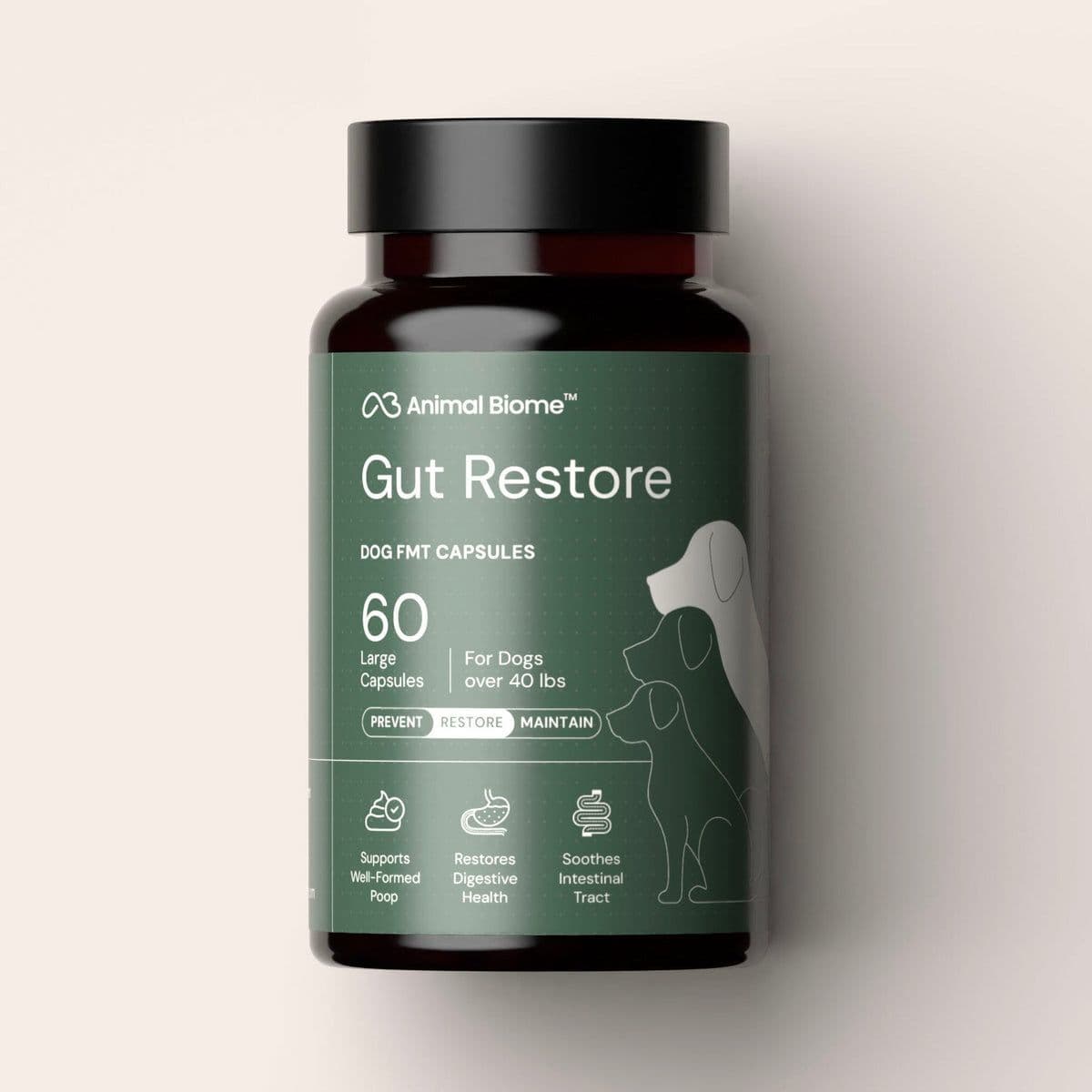
Veterinarian-developed oral fecal microbiota transplant (FMT) capsules that reintroduce a full community of dog-specific gut bacteria; used to support dogs with ongoing soft stools, diarrhea, or recovery after antibiotics.
Webvet may earn a commission when you click through to Animal Biome, at no extra cost to you.
| What you notice | Can it occur with Giardia? | What it proves | Practical next step |
|---|---|---|---|
| Soft or poorly formed brown stool | Yes | Nothing by itself | Note frequency and call the vet if it persists or recurs |
| Pale or greasy-looking stool | Yes | It may reflect poor digestion, but not a specific cause | Arrange veterinary assessment and bring a sample if requested |
| Mucus on the stool | Yes | Colon irritation may be present, but Giardia is only one possibility | Photograph it and ask whether testing is needed |
| Strong or unusual odor | Yes | Odor is subjective and not diagnostic | Look at the dog's overall condition, not smell alone |
| Green or orange stool | It may be reported with diarrhea | Color does not identify Giardia | Discuss diet, medications, speed of transit, and other causes with the vet |
| White specks | Not a reliable Giardia sign | Giardia is microscopic and cannot be identified as visible specks | Save a sample rather than trying to identify material at home |
| Normal-looking stool | Yes | Normal appearance does not exclude infection | Follow the testing and recheck plan if exposure or signs remain concerning |
| Fresh red blood or black, tarry stool | Blood is usually absent with Giardia | A broader or more serious problem may be present | Contact a veterinarian promptly; severe signs can require emergency care |
The table is a decision aid, not a photo-diagnosis chart. A rendered image cannot show smell, frequency, pain, hydration, appetite, or the result of a fecal test. Those missing facts can change the safest response. Use the table to choose a next question or care level, not to select medicine or postpone an examination.

Soft or poorly formed stool
Soft stool may lose its usual log shape, flatten when picked up, or appear like a mound. Giardia diarrhea in dogs can be intermittent rather than constant. A single soft bowel movement after a food change does not point to one diagnosis.
Track how often the dog defecates, whether urgency is increasing, and whether the stool becomes watery. Also note appetite, energy, vomiting, and water intake. A simple record gives the veterinary team more useful information than a color label alone.
Pale, greasy-looking, or fatty stool
Some Giardia stool may look lighter than usual, glisten, seem oily, or leave a film. Merck includes fatty-appearing feces among possible findings. Other gastrointestinal conditions can also change stool color or texture.
Do not diagnose steatorrhea from a photograph. Describe what you can actually see, including color, sheen, volume, and whether the stool is difficult to pick up. Let the veterinarian decide which findings matter and which tests fit the full case.

Mucus and a strong odor
Mucus may look like clear or whitish jelly, a shiny coating, or strings on the surface. A foul odor can occur too. Cornell University College of Veterinary Medicine includes mucus and foul odor among possible Giardia-associated stool changes.
Neither feature is specific. Mucus can accompany irritation from diet changes, stress, other parasites, infections, or inflammatory disease. Odor also depends on food, transit time, and the observer. Use these details to support a veterinary history, not to select medication.

Green, orange, or yellow stool
Online searches often connect green dog poop or orange dog poop with Giardia. Color alone cannot make that connection. Many non-Giardia factors and gastrointestinal conditions can change stool color.
Take a well-lit photo before cleanup if the color is unusual. Avoid filters, flash glare, or placing the stool beside food. Tell the clinic about recent diet changes, scavenging, supplements, and medicines so the image is interpreted in context.
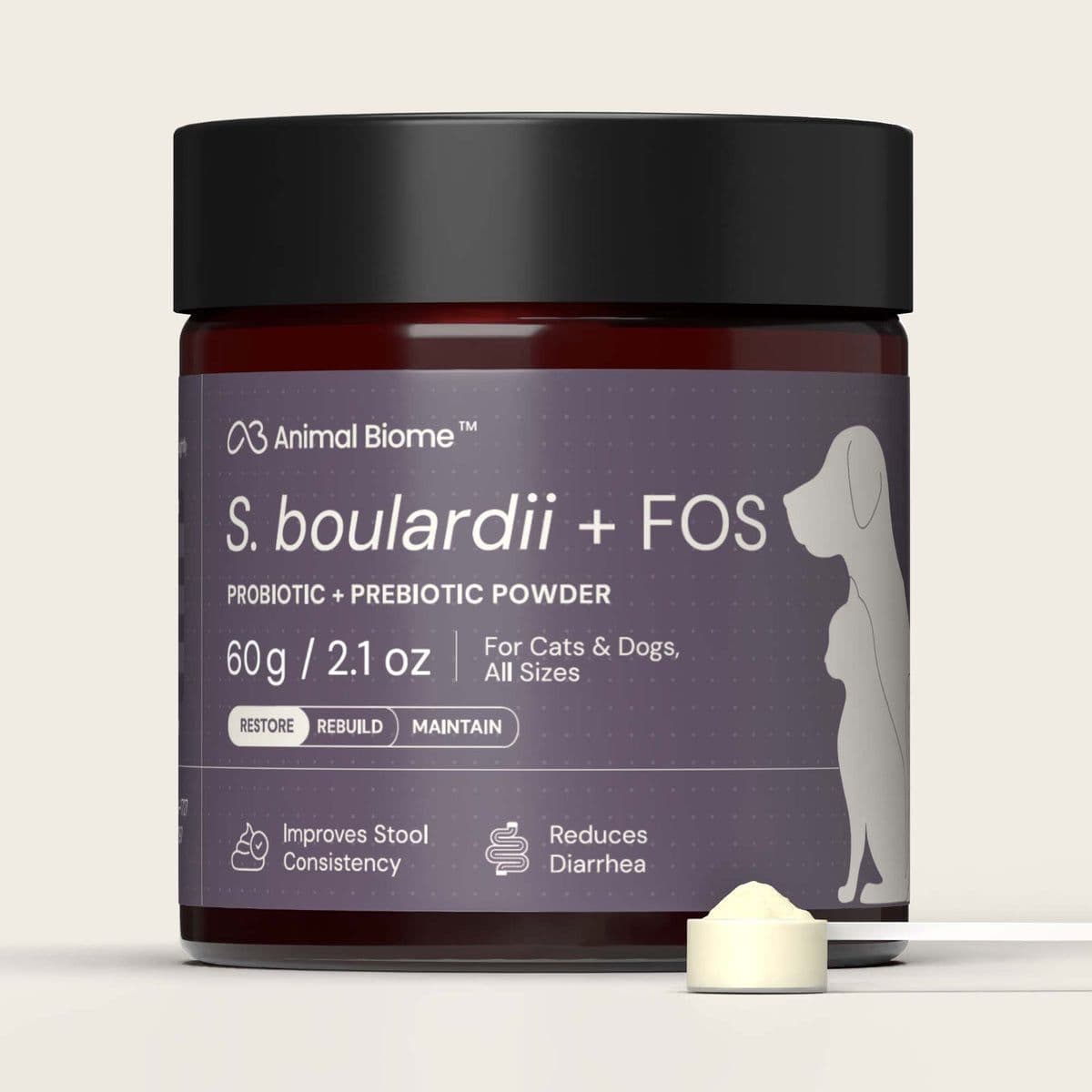
Antibiotic-resistant probiotic yeast paired with prebiotic FOS; supports stool consistency and helps reduce diarrhea in cats and dogs, including during antibiotic courses.
Webvet may earn a commission when you click through to Animal Biome, at no extra cost to you.
White specks are not visible Giardia
Giardia organisms and cysts are microscopic. White specks that an owner can see are not a reliable way to identify this parasite. Visible material may be food, fiber, plant debris, or another substance, and a photograph usually cannot settle the question.
Retail Products Belong Only After the Veterinary Plan
Retail digestive supplements belong only in a veterinarian-approved recovery plan after diagnosis and treatment decisions are set. Animal Biome Gut Restore for Dogs, Animal Biome S. boulardii + FOS Powder, Nutramax Proviable, and Purina FortiFlora for dogs are exact products to discuss. None confirms Giardia, kills the parasite, or replaces prescribed care and rechecks.
Temporary food or fiber also requires veterinary approval. Under the Weather Rice & Chicken and Nummy Tum-Tum Pure Organic Pumpkin are exact options to ask about after the care plan is set. Neither diagnoses nor treats Giardia, and neither belongs in stool-color interpretation, testing, or sample-collection instructions.
Place a small portion of the stool in the container the clinic recommends. Do not handle it closely to inspect specks, and wash your hands after cleanup. The laboratory, not the naked eye, determines whether a sample supports Giardia infection.
Normal poop does not rule it out
An infected dog can have normal-looking stool or no clinical signs. VCA Animal Hospitals notes that Giardia may be present without obvious illness. Normal appearance therefore cannot serve as an exclusion test.
This matters when a dog has a known exposure, recurrent digestive signs, poor growth, or a household situation the veterinarian considers important. Follow the testing plan even if the sample looks better on collection day.

Why a Picture Cannot Diagnose Giardia
A picture cannot diagnose Giardia because many intestinal problems produce the same visible stool changes. Long-term Giardia symptoms cannot be separated from other causes by appearance. Diet changes, food intolerance, scavenging, stress, other parasites, infections, inflammation, and systemic disease can all cause diarrhea, mucus, unusual color, or odor.
A photo preserves one moment. It cannot show whether the dog is dehydrated, losing weight, painful, or shedding Giardia cysts. It also cannot distinguish a harmless food fragment from a laboratory finding.
Use the picture to choose the next question
The broader causes of diarrhea in dogs guide explains why stool changes need context. WebVet's Giardia symptoms and testing guide covers the full clinical picture rather than assigning meaning to color alone.
If the question is where exposure may have happened, read how dogs get Giardia. An exposure route may justify a veterinary conversation, but it still cannot turn a stool picture into a diagnosis.
What a useful stool photo should show
A useful photo documents the bowel movement without pretending to identify its cause. If it is safe to do so, take the picture before the stool is disturbed and include a familiar object nearby for scale without touching the feces.
Capture facts the clinic can use:
- Overall shape and consistency
- Color in neutral light
- Visible mucus, blood, or foreign material
- Approximate amount
- Date and time
- Whether the bowel movement was urgent or painful
- The dog's appetite, energy, vomiting, and water intake that day
Avoid posting graphic images publicly for crowdsourced diagnosis. A veterinarian who knows the dog can decide whether the photo adds value, whether a sample is needed, and how quickly the dog should be examined.
 Sponsored
Vet care that's always there
Unlimited video calls and messaging with licensed vets for less than a typical vet visit. One membership covers up to five pets.
Use code Pets60
Plans start at $12/month · covers up to 5 pets
- Licensed vets in most states
- Rx for 150+ conditions
- 4.7 on Trustpilot
How Veterinarians Confirm Giardia
You cannot reliably tell that a dog has Giardia at home. A veterinarian combines the history and examination with fecal testing. Testing may look for cysts under a microscope, detect Giardia antigen, or use another veterinarian-selected method. The result must be interpreted with the dog's signs, exposure, overall condition, and examination findings.
Merck describes microscopy, antigen tests, and molecular methods as available diagnostic approaches. Cornell explains that more than one method or sample may be needed because cyst shedding can be intermittent. One negative result does not always settle a strongly suspected case.
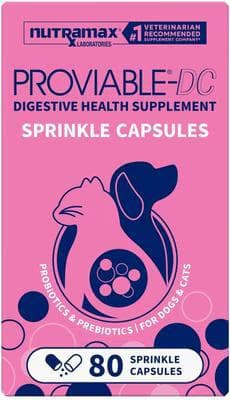
Multi-strain probiotic plus prebiotic sprinkle capsules for dogs and cats; supports digestive balance during diarrhea, diet changes, and antibiotic courses.
Webvet may earn a commission when you click through to Chewy, at no extra cost to you.

Fecal microscopy
Microscopy may include concentration methods that help a trained examiner look for Giardia cysts and other parasite stages. Results depend on the specimen, timing, preparation, and what the test is designed to find.
Because shedding can vary, cysts may not be present in the portion examined. The veterinarian may recommend repeat sampling or pair microscopy with another method when the history and signs remain concerning.
Fecal antigen testing
Antigen tests look for Giardia material rather than relying only on seeing a cyst. They can complement microscopy, especially when shedding is intermittent. A positive result still belongs in clinical context because infection, signs, and the need for treatment are related but not identical questions.
The veterinary team chooses which test answers the current question. Screening an apparently healthy dog, investigating recurrent diarrhea, and checking persistent signs after treatment may call for different interpretation.
Molecular testing and broader panels
Molecular tests can detect Giardia DNA. A broader diarrhea panel may also examine other infectious causes. More testing is not automatically better, and a test that detects genetic material does not replace examination or clinical judgment.
Ask what each test can and cannot answer. Useful questions include whether the result will change treatment, whether another cause is being considered, and whether the dog needs a recheck if signs continue.
Why the examination still matters
The veterinarian assesses the whole dog, not only the sample. Hydration, abdominal comfort, body weight, temperature, appetite, and the duration of signs can change the plan even when stool descriptions sound similar.
Waiting for a perfect sample should not delay an examination when diarrhea, vomiting, weakness, pain, appetite loss, or another sign is worsening.
How to Collect a Stool Sample and What the Vet May Test
Collect a fresh fecal sample only according to the receiving clinic's instructions. VCA's fecal testing guidance explains that a veterinarian may ask an owner to bring fresh feces or may collect a sample at the clinic.
Call before collecting if the appointment is not soon. The clinic can tell you how much it needs, which container to use, how to label it, whether refrigeration is appropriate, and when the sample becomes too old for the intended test.
| Step | What to do | Why it matters |
|---|---|---|
| Call the clinic | Ask about container, amount, storage, and delivery time | Requirements vary by test and laboratory |
| Collect safely | Use a clean disposable tool and avoid soil, litter, or grass when possible | Contamination can complicate interpretation |
| Label the container | Add the dog's name and collection date and time as instructed | Timing helps the team assess sample suitability |
| Deliver promptly | Follow the clinic's temperature and timing directions | Freshness matters for some examination methods |
| Share the history | Report symptoms, medicines, diet changes, travel, and parasite preventives | The result is interpreted with the clinical picture |
| Expect a follow-up question | Ask whether repeat or different testing is needed if signs persist | Intermittent shedding can limit one sample |

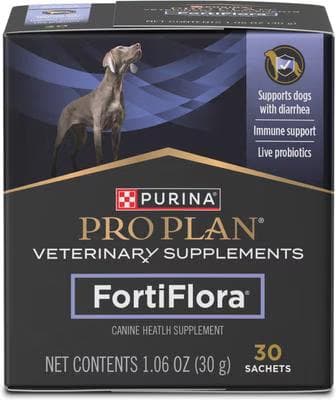
The #1 vet-recommended probiotic for dogs. Daily powder sachets with live probiotics support healthy digestion and firmer stools, and can help dogs coping with diarrhea or GI upset.
Webvet may earn a commission when you click through to Chewy, at no extra cost to you.
Safe collection steps
- Keep children and other pets away from the bowel movement.
- Wear disposable gloves or use an inverted collection bag as directed.
- Choose a portion that shows the abnormal material, unless the clinic says otherwise.
- Avoid mixing the sample with soil, gravel, litter, or cleaning chemicals.
- Close the approved container securely and place it where food cannot be contaminated.
- Wash hands with soap and water after collection and cleanup.
Do not add water, disinfectant, medication, or preservative unless the clinic supplied it. Do not mail a sample to an unselected laboratory while a sick dog waits for care. The veterinary team should decide whether the dog needs an examination first.
Information to bring with the sample
A short timeline can be as valuable as the container. Note when diarrhea started, the number of bowel movements, and whether the pattern is improving, stable, or worsening.
Also report:
- Vomiting, appetite loss, lethargy, pain, or weight change
- Blood, black color, mucus, foreign material, or worms seen
- New food, treats, supplements, medicines, or scavenging
- Travel, boarding, daycare, dog-park, kennel, or wildlife exposure
- Recent deworming or parasite testing
- Illness in another pet or person in the household
This history helps the veterinarian decide whether to focus on Giardia, broaden the fecal workup, check hydration, or investigate another cause.
Why Stool Can Remain Abnormal After Treatment
There is no single visual timetable for a dog to get rid of Giardia. Stool may remain soft while the intestine recovers, or it may improve and then worsen with reinfection, missed medication, another parasite, a diet issue, or a separate gastrointestinal condition.
Whether Giardia goes away on its own, how long Giardia lasts in dogs, and whether it has long-term effects cannot be judged from stool. Those questions require veterinary testing, treatment, and follow-up.
Treatment choice and duration belong with the veterinarian. WebVet's guide to fenbendazole for dogs covers medication-specific use and safety, while the veterinary deworming guide explains why parasite treatment should match the diagnosis.
Improvement is more than one normal bowel movement
One formed stool is encouraging, but it does not prove that infection or intestinal irritation has resolved. Look for a sustained trend in stool consistency, frequency, appetite, energy, hydration, and weight.
Keep giving prescribed medication exactly as directed. Contact the clinic about a missed or vomited dose instead of doubling it. Do not restart leftovers when diarrhea returns because the new episode may have a different cause.
Reinfection can look like treatment failure
Giardia cysts can remain on soiled fur or in contaminated environments, allowing a dog to swallow them again. Reinfection can produce another period of abnormal stool after apparent improvement.
Follow the veterinarian's plan for bathing, prompt feces removal, bowls, bedding, and exposure control. The dedicated Giardia home care and cleaning guide explains those steps without treating cleaning as a cure.
Persistent signs may require a broader workup
Continued diarrhea does not automatically mean that Giardia survived treatment. Merck lists reinfection, treatment failure, dosing problems, resistance, and another gastrointestinal condition among issues a veterinarian may consider.
The next step may be another sample, a different fecal method, an examination, or testing beyond Giardia. Tell the clinic exactly when treatment ended and when stool changes returned.
Digestive support follows the treatment plan
Some veterinarians recommend a temporary diet or digestive support after diagnosis. AnimalBiome Gut Maintain for Dogs is one exact supplement to discuss. For persistent signs after the Giardia plan is complete, the Animal Biome Gut Microbiome Test for Dogs is another optional product to ask the veterinarian about.
These products do not kill Giardia, confirm eradication, or replace a veterinary workup. Ask whether either product is appropriate for this dog, when to use it, and whether it could complicate diet or symptom tracking.
Stool Changes That Need Prompt Veterinary Care
Fresh blood, black tarry stool, profuse watery diarrhea, repeated vomiting, collapse, marked lethargy, pain, or dehydration need prompt veterinary assessment. Merck notes that blood is usually absent and watery diarrhea is unusual in giardiasis, so these findings should not be dismissed as a routine Giardia pattern.
Cornell's diarrhea guidance identifies blood, black stool, vomiting, appetite loss, lethargy, and persistent diarrhea as reasons to seek veterinary care. Cornell emergency care also lists collapse, severe vomiting, pain, and a distended abdomen among urgent warning signs.

Signs of dehydration
Diarrhea and vomiting can accompany dehydration, but owners should not use a stool picture or one home check to judge its severity. A veterinarian can assess hydration with the rest of the dog's condition.
Call the clinic when a dog cannot keep water down, refuses to drink, or seems progressively weaker. Puppies and small dogs can deteriorate quickly, and an examination is safer than waiting for a visual stool pattern to become clearer.
Bloody or black stool
Fresh red blood or black, tarry stool needs veterinary interpretation, especially with weakness, pain, vomiting, or a large volume of diarrhea.
Do not assume blood is simply a severe form of Giardia. The veterinarian may need to consider hemorrhagic diarrhea, foreign material, toxins, ulcers, clotting problems, or other causes.
When an ordinary appointment is still important
Not every case is an emergency, but recurring or persistent diarrhea deserves a call. Arrange veterinary advice if soft stool continues, keeps returning, is accompanied by weight loss or poor growth, or affects a dog with another medical condition.
Bring the photo, sample if requested, medication list, and timeline. Early, organized information often helps the clinic choose a sensible first test without turning every stool change into an emergency.
Frequently Asked Questions
Can a dog have Giardia with normal poop?
A dog can have Giardia with normal poop. Infected dogs may have normal-looking stool or no obvious signs, and cyst shedding may be intermittent. Normal appearance does not exclude infection.
If exposure, recurrent diarrhea, or another concern remains, follow the veterinarian's testing and recheck plan. The clinic may still recommend testing when the history makes infection plausible.
Does Giardia poop always smell bad?
Giardia poop does not always smell bad. Malodorous stool can occur, but smell is subjective and not diagnostic. Diet, intestinal transit, other infections, and many digestive problems can change odor.
Use smell as one detail in the history rather than evidence that a dog has or has cleared Giardia. A veterinarian still needs the symptom history and appropriate testing.
Does Giardia cause blood in a dog's stool?
Giardia does not usually cause blood in a dog's stool, according to Merck. Fresh red blood or black, tarry stool needs veterinary assessment because another or more serious problem may be present.
Severe bloody diarrhea, weakness, repeated vomiting, pain, or collapse can require emergency care. Do not wait for a presumed parasite pattern to become clearer.
Can you see Giardia in dog poop?
You cannot see Giardia in dog poop. Giardia organisms and cysts are microscopic, and visible white specks do not identify the parasite. Veterinarians may use fecal microscopy, antigen detection, molecular testing, or a combination chosen for the case.
A photo cannot substitute for those methods. Ask the clinic which test best fits the dog's signs and exposure history.
How fresh should a stool sample be for Giardia testing?
A stool sample for Giardia testing should be as fresh as the receiving clinic requires. The acceptable collection time, container, amount, storage, and temperature depend on the intended test. Call first, label the sample as directed, and deliver it promptly. If timing is unclear, contact the clinic before collecting, refrigerating, or transporting the sample.
The Bottom Line
Giardia can be associated with soft, pale, greasy-looking, foul-smelling, or mucus-covered stool, yet none of those features is diagnostic. Normal stool also does not rule infection out. The safest use of a photo is to document a change for the veterinary team.
Collect a fresh sample only as directed, report the full symptom timeline, and follow the veterinarian's testing plan. Seek prompt care for blood, black stool, profuse watery diarrhea, repeated vomiting, collapse, marked weakness, pain, or dehydration.

Editor
The Webvet Editorial Team is the in-house group of pet-care editors and writers behind Webvet, operated by Smart Pet Collective. The team researches, writes, and maintains Webvet's pet health, behavior, and medication content. Every article follows a defined editorial process: research from reputable veterinary and scientific sources, careful drafting, mandatory review of medical content by a credentialed veterinarian, and dated publication. Health and medication articles are medically reviewed by a licensed veterinary professional before they go live and are kept current over time.
Veterinarian · BVMS MRCVS
Dr. Pippa Elliott, BVMS, MRCVS, is a veterinarian with nearly 30 years of experience in companion animal practice. Dr. Elliott earned her Bachelor of Veterinary Medicine and Surgery from the University of Glasgow. She was also designated a Member of the Royal College of Veterinary Surgeons. Married with 2 grown-up kids, Dr. Elliott has a naughty Puggle named Poggle, 3 cats and a bearded dragon.


