Ear Mites in Kittens: Signs, Treatment, and Safe Care
Ear mites in kittens are itchy, contagious, and easy to confuse with infection. Learn the signs, why age and weight change medication safety, how to protect littermates, and when a young kitten needs urgent veterinary care.

BVMS MRCVS
Medically reviewed by Dr. Pippa Elliott, BVMS MRCVS · Last reviewed

This article contains affiliate links. Webvet may earn a commission when you buy through them, at no extra cost to you.
Ear mites in kittens can cause relentless scratching, head shaking, inflamed ears, and dark crumbly debris. Young kittens often acquire Otodectes cynotis through close contact with their mother, littermates, foster cats, or other pets. A veterinarian should confirm the parasite before treatment because yeast, bacteria, wax, and other ear disease can look similar.
Kitten safety depends on exact age, weight, health, and product labeling. Some prescription ear-mite medicines are labeled from four weeks of age, while common systemic topical products may start at eight weeks and can have weight minimums. Never choose a product by age alone, split a tube, or use a dog medication on a kitten.
- 1Kittens commonly acquire ear mites by close contact with an infested mother, littermate, foster, dog, or cat.
- 2Dark coffee-ground debris is suggestive, but microscopy is needed to distinguish mites from infection.
- 3Medicine eligibility varies by age, weight, health, and label.
- 4Treating exposed pets at the same time helps prevent transfer back to the kitten.
- 5Severe pain, poor appetite, lethargy, head tilt, imbalance, or a swollen ear flap needs prompt veterinary care.
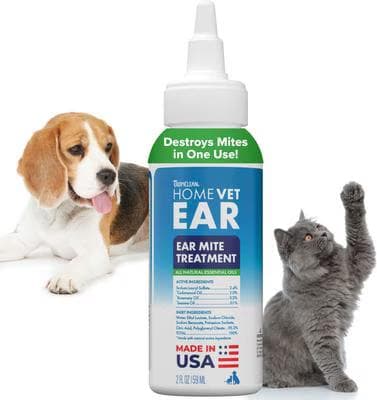
A natural essential-oil ear treatment that destroys ear mites in a single use and soothes irritated ears. Made in the USA, safe for dogs and cats.
Webvet may earn a commission when you click through to Chewy, at no extra cost to you.
Signs of Ear Mites in Kittens
Ear mites live mainly in the external ear canal and feed on surface material. The irritation can be out of proportion to the tiny size of the parasite. The Cornell Feline Health Center describes frequent scratching, head shaking, flattened ears, inflammation, and dark debris as typical signs.

Common kitten ear mite symptoms include:
- Repeated head shaking or tilting
- Scratching at one or both ears
- Dark brown or black crumbly material resembling coffee grounds
- Redness, crusts, scabs, or hair loss around the ears
- Crying, hiding, or resisting touch near the head
- A foul odor or moist discharge when infection is also present
- A puffy, fluid-filled ear flap from an aural hematoma
Do not diagnose mites by debris color alone. Cornell notes that black, tar-like discharge often suggests mites, while pus-like discharge can accompany bacterial or yeast infection, but mixed disease occurs.
A veterinarian may see moving mites with an otoscope or find mites and eggs in a sample under the microscope. Ear cytology also checks for yeast and bacteria.
When a kitten needs urgent care
Prompt care is especially important when a small kitten stops eating or becomes lethargic. Seek same-day advice for severe pain, blood or pus, a canal swollen shut, a balloon-like ear flap, feverish behavior, vomiting, tremors, or suspected exposure to an unapproved pesticide.
Head tilt, falling, circling, rapid eye movements, or facial weakness can signal middle or inner ear involvement and should be treated as urgent.
| Kitten situation | Medication implication | Safe next step |
|---|---|---|
| Younger than 4 weeks | Common labeled ear-mite drugs may not cover this age | Veterinary exam; no DIY medicine |
| 4 to 5 weeks | FDA records include an ivermectin otic product labeled from 4 weeks, but suitability is individual | Vet selects and administers or prescribes |
| 6 to 7 weeks | Some otic products may be labeled, while many systemic topicals still are not | Verify exact product, age, weight, and health |
| 8 weeks or older | Some selamectin products become age-eligible; weight and health rules still apply | Use only the prescribed dose |
| Sick, underweight, or neurologically abnormal | Label age alone does not establish safety | Stabilization and vet-directed treatment |
The table is not a dosing guide. The FDA approval summary for Acarexx covers cats and kittens four weeks or older, while FDA labeling for Revolution covers cats eight weeks or older.
Revolution Plus is labeled for cats and kittens at least eight weeks old and at least 2.8 pounds. Labels and availability can change, so the veterinarian must verify the current product.
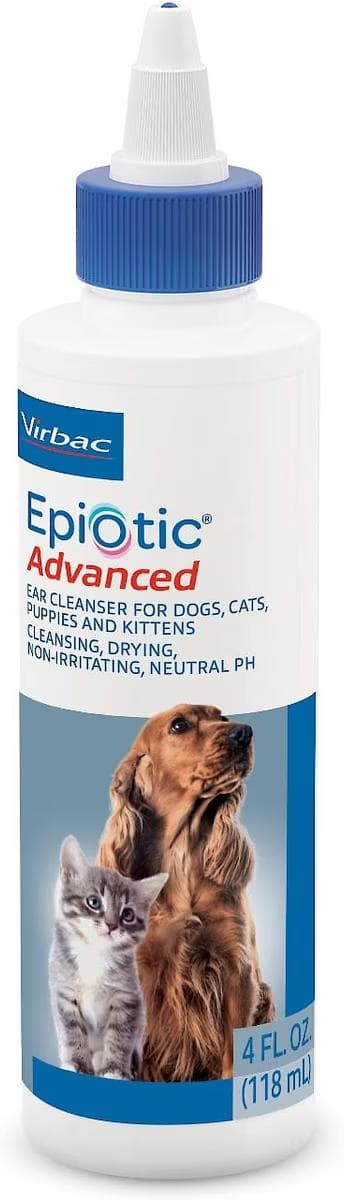
Webvet may earn a commission when you click through to Chewy, at no extra cost to you.
Safe Ear Mite Treatment for Kittens
What kills ear mites in kittens is a correctly selected antiparasitic, not a product chosen only because the package shows a cat. The age and weight medication safety table is a starting framework for the veterinarian, since minimum ages, minimum weights, active ingredients, routes, and health precautions vary.
A four-week-old foster kitten, an eight-week-old healthy kitten, and an underweight sick kitten may need different decisions even when microscopy confirms the same parasite. Veterinary diagnosis must also look for secondary otitis and eardrum problems before cleaning or ear-applied medicine begins.
Ask the clinic to record the kitten's measured weight, chosen product, route, dose date, repeat date if any, and recheck threshold. In a litter, keep a separate line for every kitten and adult contact pet.
This avoids accidentally treating one kitten twice while another is missed, and it gives the next foster caregiver a reliable handoff rather than relying on memory.
Treatment starts with the right diagnosis. The Companion Animal Parasite Council says product selection should account for age, severity, secondary infection, number of animals, and owner ability to give treatment. Labeled options for cats include prescription ear medicines and systemic topical products.

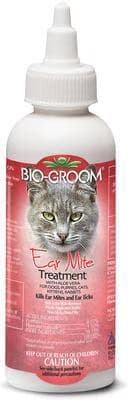
An aloe-enriched medicated treatment that kills ear mites and ear ticks while calming the itch and irritation they cause. For dogs, cats, and rabbits.
Webvet may earn a commission when you click through to Chewy, at no extra cost to you.
What the veterinary visit may include
The veterinarian will examine both ears, assess the eardrum when possible, and collect debris for microscopy or cytology. Painful or blocked ears may need gentle professional cleaning, sometimes with sedation. If bacteria or yeast are present, the kitten may need separate medicine for secondary otitis.
The chosen mite drug might be applied into the ears or onto the skin, depending on the product. Route is not interchangeable. Skin-applied selamectin goes on the skin, not into the canal. Ear medication should be used only as demonstrated and never pushed deep with a rigid applicator.
For the full medicine and recovery plan, see cat ear mite treatment. Questions about oils, vinegar, peroxide, and other DIY ideas belong in the safety guide to cat ear mite home remedies.
Cleaning a kitten's ears
Do not flush a painful kitten ear before the eardrum has been assessed. If the vet approves home cleaning, use the recommended cleaner and technique. Cotton swabs can push debris deeper or injure a kitten that moves suddenly. Wipe only the material that reaches the outer flap unless specifically trained to do more.
Debris can remain after mites have been killed. Judge recovery by the veterinarian's plan, decreasing irritation, and any scheduled recheck, not by repeatedly cleaning until the ear looks spotless.

Monthly topical that protects cats from fleas, ticks, ear mites, roundworms, hookworms, and heartworm.
Webvet may earn a commission when you click through to Chewy, at no extra cost to you.
Preventing Ear Mites From Spreading Between Kittens
Close contact is the main route. Nursing, sleeping in a pile, grooming, and play give mites easy access to a new host. A kitten that has never been outdoors can still arrive with mites from its mother, shelter, rescue, breeder, foster home, carrier, or another pet.
CAPC states that environmental survival is not thought to be a major transmission factor. Routine hygiene still makes sense: wash bedding, vacuum resting areas, clean carriers, and wash grooming tools. Avoid foggers, essential oils, or insecticide sprays around kittens. The highest-value action is simultaneous, correct treatment of exposed animals.
For a detailed indoor exposure plan, see how indoor cats get ear mites. Human infestation is rare, and the guide to ear mites from cats and people explains sensible contact and cleaning precautions.
Intake checklist for a foster or newly adopted kitten
- Schedule an intake exam before unrestricted contact with resident pets.
- Keep the kitten's bedding, carrier, and grooming tools separate at first.
- Check daily for scratching, head shaking, debris, appetite change, and energy.
- Record the kitten's current weight rather than estimating.
- Tell the vet about every recent parasite product and possible exposure.
- Follow the prescribed contact-pet plan if mites are confirmed.
- Recheck persistent debris, odor, pain, or scratching after treatment.
Weigh foster kittens regularly on a reliable scale and report weight loss, diarrhea, vomiting, or poor appetite. A dose selected from an old weight may no longer fit a rapidly growing kitten, while an underweight or ill kitten may need stabilization before routine parasite treatment.
Keep the medication log with the litter so that another caregiver does not repeat a dose.
If the mother cat is present, include her in the veterinary plan even if her ears look cleaner. Adult cats can show less dramatic signs than kittens. The same principle applies to resident dogs and cats: absence of coffee-ground debris does not prove that a contact animal is free of mites.
For the broader diagnostic picture, WebVet's cat ear mite overview explains the difference between parasite debris, flea clues, and other ear disease.
 Sponsored
Need flea, tick, or parasite care for your cat?
A licensed vet at Dutch can recommend the right preventive and prescribe it when it's appropriate. Annual members get 20% off their first flea and tick order.
Use code Pets30
Plans start at $11/month · covers up to 5 pets
- Licensed vets in most states
- Rx for 150+ conditions
- 4.7 on Trustpilot
Frequently Asked Questions About Ear Mites in Kittens
Frequently Asked Questions
Can I cuddle my kitten with ear mites?
Yes, gentle handling is usually fine. Ear mites mainly spread between susceptible animals through close contact, and human infestation is rare. Wash your hands after ear care, avoid touching medication sites until dry, and keep the kitten from cuddling untreated pets until the veterinary household plan is underway.
What kills ear mites in kittens?
Cat-labeled antiparasitic medicines can kill ear mites, but the correct product depends on age, weight, health, and the ear exam. Some prescription ear products have younger age labeling than systemic topicals. Let a veterinarian choose rather than using a retail or dog product.
How long does it take to get rid of ear mites in kittens?
Timing depends on the medicine and whether infection or injury is also present. The mite life cycle is roughly 18 to 28 days, but some labeled treatments use a single dose. Follow the exact prescription and recheck instructions.
Can indoor kittens get ear mites?
Yes. Kittens commonly arrive with mites after contact with their mother, littermates, foster animals, shelter animals, or other household pets. Outdoor access is not required.
Do I need to clean my whole house?
No extreme decontamination is needed. Wash bedding, vacuum resting places, and clean shared tools and carriers. Focus on veterinary treatment of exposed dogs and cats because close contact is the main route.
Sources

Editor
The Webvet Editorial Team is the in-house group of pet-care editors and writers behind Webvet, operated by Smart Pet Collective. The team researches, writes, and maintains Webvet's pet health, behavior, and medication content. Every article follows a defined editorial process: research from reputable veterinary and scientific sources, careful drafting, mandatory review of medical content by a credentialed veterinarian, and dated publication. Health and medication articles are medically reviewed by a licensed veterinary professional before they go live and are kept current over time.
Veterinarian · BVMS MRCVS
Dr. Pippa Elliott, BVMS, MRCVS, is a veterinarian with nearly 30 years of experience in companion animal practice. Dr. Elliott earned her Bachelor of Veterinary Medicine and Surgery from the University of Glasgow. She was also designated a Member of the Royal College of Veterinary Surgeons. Married with 2 grown-up kids, Dr. Elliott has a naughty Puggle named Poggle, 3 cats and a bearded dragon.


