Home Remedies for Cat Ear Mites: What Is Safe?
Home remedies for cat ear mites can irritate a painful canal or delay effective care. Learn the safe limits of at-home support, which common ingredients to avoid, and when your cat needs prompt veterinary treatment.

BVMS MRCVS
Medically reviewed by Dr. Pippa Elliott, BVMS MRCVS · Last reviewed

This article contains affiliate links. Webvet may earn a commission when you buy through them, at no extra cost to you.
Home remedies for cat ear mites do not replace a veterinary diagnosis or a proven mite-killing medicine.
The safest home care is limited: prevent self-injury, keep the ear dry, gently wipe only debris you can see on the outer flap if your cat is comfortable, and arrange an exam. Do not pour oil, vinegar, hydrogen peroxide, alcohol, or essential oils into the canal.
Dark debris does not prove that mites are present. Yeast, bacteria, wax, a foreign body, allergy, or an injured eardrum can look similar. A veterinarian can inspect the canal and eardrum with an otoscope and examine debris under a microscope before recommending treatment.
- 1No kitchen ingredient is a dependable cure for every stage of a cat ear mite infestation.
- 2Safe interim care means keeping the ear dry, limiting scratching, and wiping only the visible outer flap when it is not painful.
- 3Never flush a painful ear or insert cotton swabs into the canal.
- 4Skip vinegar, hydrogen peroxide, rubbing alcohol, tea tree oil, and other essential oils.
- 5A cat-safe, age-appropriate antiparasitic medicine is the reliable route to eliminating mites.
- 6Head tilt, imbalance, severe pain, blood, pus, or a swollen ear flap needs prompt veterinary care.

 Sponsored
Need flea, tick, or parasite care for your cat?
A licensed vet at Dutch can recommend the right preventive and prescribe it when it's appropriate. Annual members get 20% off their first flea and tick order.
Use code Pets30
Plans start at $11/month · covers up to 5 pets
- Licensed vets in most states
- Rx for 150+ conditions
- 4.7 on Trustpilot
Safe Home Care Before the Vet Visit
Home remedies for cat ear mites should be judged by a safe versus unsafe remedy table, not by whether an ingredient is described as natural. A safe measure protects comfort without entering an unexamined canal or delaying diagnosis.
An unsafe measure adds an irritating liquid, creates toxicity risk, obscures the ear before microscopy, or pretends to cure an infestation.
The table below keeps that boundary practical: outer-flap protection and observation may be reasonable, while vinegar, peroxide, alcohol, oils, and essential oils do not belong in an unexamined ear.
The goal before an appointment is comfort and protection, not a home cure. Ear mites can trigger intense itching, inflammation, and dark waxy debris. Scratching can create wounds around the ear and may contribute to an aural hematoma, a blood-filled swelling of the ear flap.
The Cornell Feline Health Center advises prompt veterinary care because untreated mite irritation can be complicated by infection and deeper ear disease. The Merck Veterinary Manual notes that otoscopy and microscopic examination help identify mites, yeast, and bacteria.

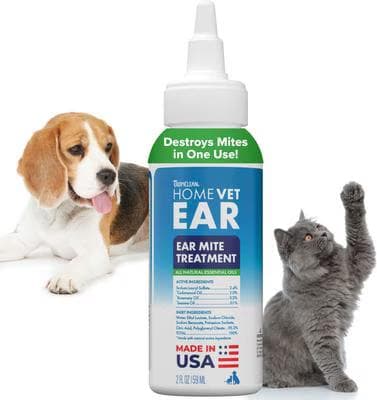
A natural essential-oil ear treatment that destroys ear mites in a single use and soothes irritated ears. Made in the USA, safe for dogs and cats.
Webvet may earn a commission when you click through to Chewy, at no extra cost to you.
What you can do safely
- Keep the cat indoors and separate shared grooming tools. This reduces close contact with unfamiliar pets while you arrange care.
- Limit scratching. Keep nails trimmed if your cat accepts routine nail care. Ask the clinic whether a soft recovery collar is appropriate if the cat is injuring the face or ear.
- Photograph the visible ear. A clear photo of the outer flap and visible debris can document change, but do not force the ear open or delay an appointment to get a picture.
- Wipe only the outer flap if it is comfortable. Use dry gauze or a cotton round to lift loose material you can see. Stop if the cat flinches, cries, struggles, or the skin bleeds.
- Keep the ear dry. Avoid bathing and prevent water from entering the canal.
- Prepare useful history. Tell the clinic about new cats, foster animals, shelters, boarding, pet sitters, close-contact dogs or cats, and every product already applied.
Do not perform an at-home cotton-swab test. A cotton swab can push debris deeper and injure the canal during a sudden movement. Do not try to remove every trace of wax before the appointment. The veterinarian may need an intact sample for microscopy or ear cytology.
| Home action | Safe boundary | Why it helps | When to stop |
|---|---|---|---|
| Keep the ear dry | No liquid in the canal | Avoids adding moisture and irritation | Any worsening pain or discharge |
| Wipe the visible outer flap | Dry gauze only, no deep insertion | Removes loose surface debris | Flinching, bleeding, or resistance |
| Prevent self-trauma | Routine nail care or vet-advised collar | Reduces scratches and hematoma risk | Distress, breathing trouble, or inability to eat |
| Document symptoms | Photo and short behavior notes | Helps the vet assess progression | Never delay urgent care |
| Separate grooming items | Wash combs, bedding, and carriers normally | Reduces avoidable transfer between pets | Avoid insecticide sprays and foggers |
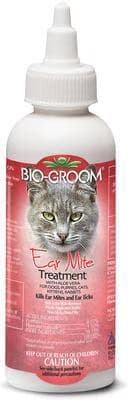
An aloe-enriched medicated treatment that kills ear mites and ear ticks while calming the itch and irritation they cause. For dogs, cats, and rabbits.
Webvet may earn a commission when you click through to Chewy, at no extra cost to you.
Is a veterinary ear cleaner a home remedy?
An ear cleaner can be useful when a veterinarian has examined the eardrum and selected a product for that cat. It is supportive care, not a mite-killing substitute unless the product is specifically labeled and prescribed for that purpose.
Even a well-formulated cleaner can sting inflamed tissue or interfere with medication when used at the wrong time.
If your veterinarian approves cleaning, ask for a demonstration and written timing. Some mite treatments do not require cleaning first. The FDA label for selamectin notes that debris can remain even after treatment, so a dirty-looking ear is not a reason to pour in extra products.
For medication options and timelines, use WebVet's guide to cat ear mite treatment. The broad cat ear mite symptoms and diagnosis guide explains why mites, fleas, and other ear problems are easy to confuse.
SponsoredVet care that's always there
Unlimited video calls and messaging with licensed vets for less than a typical vet visit. One membership covers up to five pets.
Use code Pets30
Plans start at $11/month · covers up to 5 pets
- Licensed vets in most states
- Rx for 150+ conditions
- 4.7 on Trustpilot
Cat Ear Mite Remedies to Avoid
Search results often describe household ingredients as natural cures. Natural does not mean safe in a cat's ear, and a substance that kills a mite in a dish is not automatically safe for inflamed living tissue. Home mixtures also have no reliable concentration, sterility, dose, or proof that they reach every parasite stage.

Apple cider vinegar and white vinegar
Vinegar is acidic and can sting raw, scratched, or ulcerated tissue. It does not confirm the diagnosis, assess the eardrum, or treat a secondary infection. Do not put apple cider vinegar or a vinegar-water mixture into an unexamined cat ear.
Hydrogen peroxide
Hydrogen peroxide bubbles on organic material, but that visible reaction is not evidence of a safe mite cure. It can irritate tissue and delay healing. It also adds liquid to a canal that may already be inflamed. Do not use it in a cat's ear.
Rubbing alcohol
Alcohol can cause intense burning on inflamed or damaged skin. It is not an appropriate home treatment for ear mites, and fumes or accidental licking add avoidable risk.
Olive oil, mineral oil, coconut oil, and baby oil
Older references sometimes describe oil as a way to smother mites. That approach requires prolonged repeated application, does not rule out infection or eardrum damage, and can delay faster labeled treatment.
Cornell's older educational page mentions baby oil historically, but current practical care should favor veterinary diagnosis and modern labeled products. Do not place oil in the canal unless your own veterinarian specifically directs it after an exam.
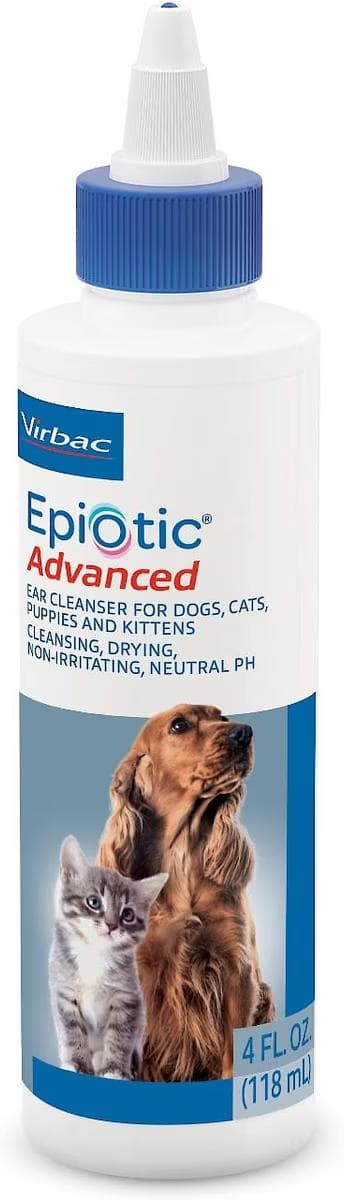
Webvet may earn a commission when you click through to Chewy, at no extra cost to you.
Tea tree oil and other essential oils
Do not use tea tree, eucalyptus, peppermint, oregano, clove, or other essential oils in or around a cat's ear. Cats can be exposed through skin absorption, inhalation, and grooming. Concentration and dilution errors can cause toxicity, while an irritated canal is especially vulnerable.
Human ear drops and leftover pet medication
Human drops may contain ingredients inappropriate for cats or for a ruptured eardrum. Leftover antibiotics do not kill mites, expired products may be contaminated, and an old prescription was selected for a different patient or condition. Never reuse medication without the prescribing veterinarian's approval.
| Popular remedy | Main problem | Safer choice |
|---|---|---|
| Apple cider vinegar | Acid can sting damaged tissue; no diagnostic value | Leave the canal alone and book an exam |
| Hydrogen peroxide | Irritates tissue and adds moisture | Dry outer-flap care only |
| Rubbing alcohol | Painful on inflammation; ingestion risk | Vet-selected cleaner after otoscopy |
| Household oils | Delays proven care and may trap debris | Labeled cat antiparasitic medicine |
| Essential oils | Toxicity and irritation risk | Do not apply; call the vet if exposure occurs |
| Cotton swabs | Push debris deeper and can injure the canal | Gauze on the visible outer flap only |
Why Home Care Does Not Replace Treatment
Searches for how to treat cat ear mites at home or cat ear mites treatment at home often blur supportive care with parasite elimination.
Supportive care can reduce self-trauma while an appointment is arranged, but it does not identify the organism, confirm the eardrum, select an age-safe drug, or treat secondary yeast and bacteria.
The damaged eardrum warning checklist is the hard stop: pain, blood, pus, head tilt, imbalance, rapid eye movements, or facial weakness means nothing should enter the canal before veterinary examination.
A useful home-care record is safer than another ingredient. Write down when scratching began, whether one or both ears are affected, recent contact with new pets, and every cleaner or parasite product used. Photograph only the visible outer ear if the cat is comfortable.
Bring the product packages to the appointment. This gives the veterinarian evidence without altering the canal, washing away a diagnostic sample, or exposing inflamed tissue to an untested mixture. Continue ordinary feeding, hydration, and quiet indoor rest while awaiting the appointment.
If appetite, energy, coordination, or comfort declines, update the clinic promptly because those whole-cat changes matter more than whether the visible wax looks lighter after wiping.
Otodectes cynotis completes its life cycle in roughly 18 to 28 days. The Companion Animal Parasite Council recommends choosing treatment based on age, disease severity, secondary infection, number of affected animals, and owner ability to give the medication. It also advises treating all dogs and cats in an affected household.

Monthly topical that protects cats from fleas, ticks, ear mites, roundworms, hookworms, and heartworm.
Webvet may earn a commission when you click through to Chewy, at no extra cost to you.
Why Diagnosis Still Determines Treatment
A home mixture cannot make those decisions. It cannot tell whether the eardrum is intact, whether yeast or bacteria are present, whether secondary otitis has developed, whether a kitten meets a product's age and weight limits, or whether another pet is silently carrying mites.
The apparent improvement after wiping debris may last only until irritation builds again.
Proven medicines include several labeled prescription options for cats. Some are administered into the ear and others are applied to the skin. Route matters. A skin-applied preventive should never be squeezed into the ear, and an ear product should not be improvised as a body treatment.
The fastest safe path is not the harshest ingredient. It is an accurate diagnosis followed by the correct cat-safe drug. If access or cost is the barrier, tell the clinic when you call. Ask about an exam-only visit, written estimates, generic options, payment plans, or local low-cost services.
Delaying until the cat has secondary infection or an aural hematoma can increase pain and cost.
When Home Care Is Not Enough
Arrange a veterinary visit when scratching or head shaking persists, when dark debris returns quickly, or when there is redness, odor, hair loss, scabbing, discharge, or pain. Kittens, frail cats, and cats with a history of neurologic disease deserve especially prompt advice because medication eligibility and resilience differ.
Seek same-day care for:
- A head tilt, falling, circling, or inability to walk normally
- Rapid eye movements or unusual pupil position
- Facial weakness or drooping
- Severe pain, crying, or aggression when the ear is approached
- Blood, pus, marked odor, or a completely blocked canal
- A hot, balloon-like swelling of the ear flap
- Lethargy, refusal to eat, repeated vomiting, tremors, or collapse
- Known exposure to essential oils, concentrated livestock antiparasitics, or a dog-only product
After diagnosis, follow every instruction for medicine, cleaning, contact pets, and recheck. Treating one cat while an exposed dog or cat remains untreated can allow rapid transfer back through close contact.
Routine laundering and vacuuming are reasonable, but CAPC says environmental survival is not thought to be a major driver of transmission. Focus on the animals and avoid whole-house pesticides.
What to bring to the appointment
Bring or photograph every bottle, drop, wipe, oil, or parasite product used during the previous month. Include the package front, active ingredients, concentration, and lot information when possible. Write down when each substance was applied and whether the cat licked it.
This history helps the veterinarian separate mite symptoms from chemical irritation and avoid duplicating active ingredients.
If you can safely collect it, bring a photo of the debris before any wiping and a short video of head shaking or balance changes. Do not delay urgent care to create records, and do not scrape material from deep in the canal. A fresh sample collected at the clinic is safer and more useful.
Until the visit, use a clean carrier and towel, keep the cat away from untreated pets, and avoid bathing. Offer normal food and water. Never give human pain medicine, since common products such as acetaminophen can be life-threatening to cats.
Clean your hands and work surface after handling debris. Seal used gauze in the trash, wash the towel, and keep other pets away from discarded material. These ordinary measures are enough while awaiting care and are safer than adding chemicals to the room.
Frequently Asked Questions About Home Remedies for Cat Ear Mites
Frequently Asked Questions
How do cats act when they have ear mites?
Many cats scratch their ears, shake their heads, flatten the ears, or resist having the head touched. Dark debris is common, but some cats carry mites with less obvious material. Behavior and debris are clues, not a diagnosis.
What is a natural remedy for ear mites?
There is no household natural remedy that combines reliable mite control with proof of safety for an unexamined ear. The safe approach is veterinary diagnosis and a cat-labeled antiparasitic. At home, limit care to keeping the ear dry, preventing scratching, and wiping only the comfortable visible flap.
Can I use olive oil for cat ear mites?
Do not place olive oil into your cat's ear unless your veterinarian has examined the ear and specifically instructed you to do so. Oil does not check the eardrum, diagnose secondary infection, or provide the predictable control of a labeled medicine.
Does apple cider vinegar get rid of ear mites in cats?
Do not rely on it. Vinegar can sting inflamed tissue and does not address diagnosis, eardrum safety, or secondary infection. A confirmed infestation should be treated with a cat-safe medicine chosen by a veterinarian.
Can cleaning alone get rid of ear mites?
No. Cleaning removes some wax and debris, which can improve comfort, but it is not a dependable way to eliminate the infestation. Use cleaning only as directed alongside effective treatment.
What if I already used a home remedy?
Stop applying it and call your veterinarian with the exact ingredient, concentration, amount, and time of exposure. If your cat is drooling, vomiting, weak, trembling, uncoordinated, or having trouble breathing, seek urgent help.
Sources

Editor
The Webvet Editorial Team is the in-house group of pet-care editors and writers behind Webvet, operated by Smart Pet Collective. The team researches, writes, and maintains Webvet's pet health, behavior, and medication content. Every article follows a defined editorial process: research from reputable veterinary and scientific sources, careful drafting, mandatory review of medical content by a credentialed veterinarian, and dated publication. Health and medication articles are medically reviewed by a licensed veterinary professional before they go live and are kept current over time.
Veterinarian · BVMS MRCVS
Dr. Pippa Elliott, BVMS, MRCVS, is a veterinarian with nearly 30 years of experience in companion animal practice. Dr. Elliott earned her Bachelor of Veterinary Medicine and Surgery from the University of Glasgow. She was also designated a Member of the Royal College of Veterinary Surgeons. Married with 2 grown-up kids, Dr. Elliott has a naughty Puggle named Poggle, 3 cats and a bearded dragon.


