Cat Ear Mites Treatment: How to Get Rid of Mites Safely
Cat ear mites treatment requires the right diagnosis and a cat-safe medicine. Learn how veterinary treatments work, how long recovery takes, why contact pets matter, and when persistent debris or pain needs a recheck.

BVMS MRCVS
Medically reviewed by Dr. Pippa Elliott, BVMS MRCVS · Last reviewed

This article contains affiliate links. Webvet may earn a commission when you buy through them, at no extra cost to you.
Cat ear mites treatment works best when a veterinarian first confirms that Otodectes cynotis is actually causing the problem. Effective medicines can clear an infestation, but dark debris and itching can also come from yeast, bacteria, allergies, or a damaged ear canal. Treating the wrong condition wastes time and can make a painful ear worse.
The practical plan is simple: confirm the mites, use a cat-safe medicine chosen for your cat's age and weight, treat every exposed dog and cat as your veterinarian directs, and complete the follow-up plan. Cleaning may remove irritating debris, but cleaning alone does not reliably eliminate every life stage.
- 1A veterinary ear exam and microscopic debris check separate mites from infection, wax, and other causes.
- 2Labeled cat ear mite medicines include prescription ear products and systemic topical parasite preventives.
- 3Product eligibility varies by age, weight, health, and label, so never substitute a dog product or guess a dose.
- 4Treat all dogs and cats in the household when your veterinarian recommends it, because close contact drives spread.
- 5Improvement in scratching may begin before the debris and inflammation fully resolve.
- 6A recheck matters when symptoms continue, because secondary otitis may need separate treatment.
 Sponsored
Need flea, tick, or parasite care for your cat?
A licensed vet at Dutch can recommend the right preventive and prescribe it when it's appropriate. Annual members get 20% off their first flea and tick order.
Use code Pets30
Plans start at $11/month · covers up to 5 pets
- Licensed vets in most states
- Rx for 150+ conditions
- 4.7 on Trustpilot
Cat Ear Mites Treatment Options
Veterinarians diagnose ear mites by finding mites or their eggs with an otoscope or by examining ear debris under a microscope. Ear cytology can also show whether bacteria or yeast are complicating the infestation. This distinction matters because a mite-killing drug does not automatically treat secondary otitis, and an antibiotic does not kill mites.
The Companion Animal Parasite Council lists several labeled options for cats, including selamectin, imidacloprid plus moxidectin, ivermectin otic suspension, and milbemycin oxime otic solution. Availability and labeling change, and not every product suits every cat.
Your veterinarian selects the product and schedule after considering age, body weight, ear condition, other pets, and how reliably treatment can be given.


Monthly topical that protects cats from fleas, ticks, ear mites, roundworms, hookworms, and heartworm.
Webvet may earn a commission when you click through to Chewy, at no extra cost to you.
Systemic topical medicines
Some prescription parasite preventives are applied to the skin, usually at the base of the neck, and circulate through the cat. These products can be useful when the ear canal is too sore for repeated drops or when a broader parasite-prevention plan is needed.
Selamectin products are one example. The current FDA label for Revolution states that it treats and controls O. cynotis in cats eight weeks of age and older and is given as a single topical dose for ear mites.
Revolution Plus also carries an ear-mite indication for eligible cats and kittens eight weeks or older that meet its weight minimum. Those facts do not make the products interchangeable: the active ingredients, minimum weights, precautions, and handling directions differ.
Apply a systemic topical exactly where the label or veterinarian instructs. Do not put a skin-applied dose into the ear.
Keep children and other pets away from a wet application site for the interval on the label, prevent grooming of the site, and contact the clinic if the cat licks the product or develops vomiting, tremors, weakness, or another concerning reaction.
Prescription ear medicines
Other products are placed in the ears and are designed specifically for ear mites. FDA approval records include ivermectin otic suspension for cats and kittens four weeks or older, with the important label note that effectiveness against eggs and immature stages was not proven. That is one reason the exact schedule and follow-up instructions matter.
Ear-applied treatment is not a license to use any retail ear drops. A product can be safe for one species, age, or intact eardrum and inappropriate for another. Never use a canine dose on a cat, and never improvise with livestock ivermectin. Concentration errors with antiparasitic drugs can be dangerous.
Cleaning and treatment of secondary infection
The Cornell Feline Health Center explains that mites create dark wax and debris while scratching can injure the ear. Cleaning may improve comfort and help medication contact the canal, but a painful or obstructed ear may need professional cleaning or sedation.
Follow the clinic's directions about whether to clean before medicine, after medicine, or not at all. Some treatments work without precleaning, while debris can remain after mites are killed. More cleaning is not necessarily better. Repeated scrubbing can inflame delicate tissue.
When cytology shows bacteria or yeast, the veterinarian may prescribe an additional antimicrobial or anti-inflammatory treatment. A swollen ear flap can be an aural hematoma caused by forceful scratching and head shaking. That complication needs its own evaluation.
| Treatment step | What it accomplishes | What it cannot do alone | Checkpoint |
|---|---|---|---|
| Veterinary exam and microscopy | Confirms mites and looks for yeast, bacteria, and eardrum problems | Does not remove the infestation | Diagnosis before choosing medicine |
| Labeled antiparasitic medicine | Kills susceptible mite stages according to the product label | May not resolve secondary infection or all inflammation | Give exactly as prescribed |
| Vet-directed ear cleaning | Removes irritating wax and debris and may improve medication contact | Is not a reliable mite cure | Stop if the cat shows pain |
| Household pet plan | Reduces transfer back from an exposed dog or cat | Does not replace each animal's correct dose | Treat contacts as directed |
| Recheck | Confirms clinical recovery and investigates persistent signs | Cannot help if it is skipped | Return on the clinic's timeline |
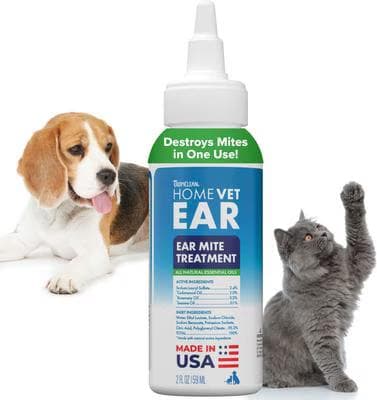
A natural essential-oil ear treatment that destroys ear mites in a single use and soothes irritated ears. Made in the USA, safe for dogs and cats.
Webvet may earn a commission when you click through to Chewy, at no extra cost to you.
How Cat Ear Mite Medicine Is Used
For owners asking how to treat cat ear mites, the critical distinction is route: some medicines go on the skin, while others are formulated for the ear canal.
How to get rid of cat ear mites safely therefore starts with reading the dispensing label and matching the product to the veterinarian's instructions.
Never move a skin-applied product into the ear, never use an ear product on the neck, and never repeat a dose because debris is still visible. If medicine is spilled or the cat licks it, call the clinic before giving more.
This route check prevents the most avoidable treatment errors while preserving the dose the veterinarian selected for that cat's age, weight, and health.
Read the dispensing label before every dose. Confirm the cat's name, product, strength, route, amount, and timing. If anything differs from the veterinarian's instructions, call before applying it. For topical skin products, part the fur until skin is visible.
For otic products, use only the demonstrated technique and never push an applicator deep into the canal.
If ear cleaning is prescribed, gather the veterinary cleaner, cotton rounds or gauze, a towel, and treats before bringing in the cat. Avoid cotton swabs inside the canal. They can pack debris deeper or injure a struggling cat. Let the clinic handle severe debris, bleeding, marked swelling, or a cat that cannot be safely restrained.

A safe medication routine
- Verify that the product is for cats and for your cat's current age and weight.
- Check whether the veterinarian wants the ears cleaned and when cleaning should occur relative to medicine.
- Give the full dose by the correct route. A topical skin product does not go into the canal.
- Prevent licking or contact with a wet application site as the label directs.
- Record the dose and any scheduled repeat treatment or recheck.
- Watch appetite, energy, coordination, skin, and the treated ears for unexpected changes.
- Call rather than repeating a dose if medicine is spilled, vomited, licked, or applied incorrectly.
An aloe-enriched medicated treatment that kills ear mites and ear ticks while calming the itch and irritation they cause. For dogs, cats, and rabbits.
Webvet may earn a commission when you click through to Chewy, at no extra cost to you.
What progress should look like
Head shaking and frantic scratching should ease as mites die and inflammation settles. Dark debris can persist for a while, especially if the ears were not cleaned. The absence of visible specks does not prove that all mites are gone, and lingering wax does not necessarily mean the drug failed.
Take a brief photo of the outer ear before treatment if the cat tolerates it. Note scratching frequency, odor, discharge, appetite, and behavior. This simple record helps the veterinarian judge whether the trajectory is improving.
Call sooner if itching intensifies, discharge becomes bloody or pus-like, the ear smells markedly worse, or the cat develops swelling, feverish behavior, lethargy, poor appetite, head tilt, circling, imbalance, or rapid eye movements. Those signs can point to trauma or deeper ear disease rather than an uncomplicated infestation.
SponsoredVet care that's always there
Unlimited video calls and messaging with licensed vets for less than a typical vet visit. One membership covers up to five pets.
Use code Pets30
Plans start at $11/month · covers up to 5 pets
- Licensed vets in most states
- Rx for 150+ conditions
- 4.7 on Trustpilot
How Long Treatment Takes and How to Prevent Reinfection
The treatment timeline table below is a monitoring tool, not a universal dosing schedule. It separates early symptom improvement from parasite control, debris clearance, secondary-infection recovery, and the recheck decision. Record the date of each dose, changes in scratching, and whether every exposed pet began its own plan.
That record helps the veterinarian distinguish reinfection, an application problem, persistent secondary otitis, and normal residual wax without relying on appearance alone.
At each checkpoint, compare behavior as well as the ear's appearance. A cat that sleeps, eats, plays, and tolerates gentle head contact more normally may be improving even while wax remains. In contrast, less debris does not reassure if pain, odor, swelling, or head tilt is worsening.
Note any missed or uncertain application, new contact with an untreated animal, and changes in other parasite medicines. These details let the veterinarian decide whether the next step is time, cleaning, repeat microscopy, cytology, treatment for secondary infection, or a revised antiparasitic plan.
Keep that record through the scheduled recheck rather than stopping when scratching first improves. Early comfort is encouraging, but the treatment endpoint is the veterinarian's clinical assessment, especially when the original exam found secondary otitis or substantial canal inflammation.
The complete O. cynotis life cycle takes about 18 to 28 days, according to CAPC. Treatment timing is product-specific. Some labeled systemic products use one dose for feline ear mites, while an ear medicine may have another schedule. Follow the prescription rather than assuming every cat needs several weeks of drops.
Many owners expect the ears to look normal immediately. Mites can die before wax, crust, and inflammation disappear. Secondary bacterial or yeast overgrowth can also keep an ear itchy after the parasite has been controlled. Persistent symptoms therefore call for a recheck, not extra unapproved doses.
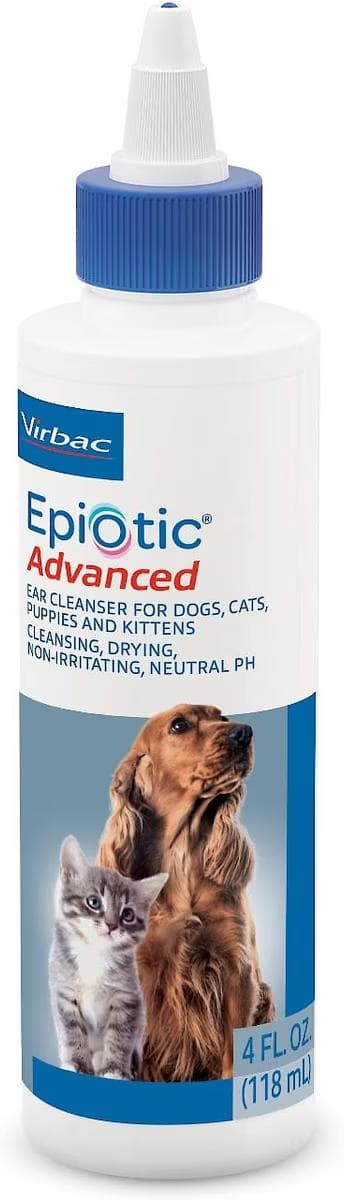
Webvet may earn a commission when you click through to Chewy, at no extra cost to you.
Treatment timeline table
| Stage | What owners may notice | Best action |
|---|---|---|
| Diagnosis day | Dark debris, scratching, redness; mites may be seen on otoscopy or microscopy | Start the selected medicine and contact-pet plan |
| Early response | Scratching may lessen, but debris can remain | Continue exactly as directed; do not overclean |
| Life-cycle window | Immature stages may be relevant depending on the product | Give any scheduled repeat treatment on time |
| Recheck point | Ears should be more comfortable; persistent odor, pain, or discharge needs investigation | Let the vet repeat otoscopy or cytology if advised |
| Ongoing prevention | New exposure remains possible through close contact | Use the parasite-prevention plan recommended for the household |
Preventing a repeat infestation
Close animal-to-animal contact is the main transmission route. Focus first on exposed pets, not extreme house decontamination. Wash pet bedding on a normal hot cycle when practical, vacuum favorite resting areas, clean shared grooming tools, and avoid sharing unwashed carriers or blankets with unfamiliar animals.
CAPC notes that environmental survival is not thought to be a major transmission factor. This is not the same as saying off-host survival is impossible. A veterinary study found that survival varies with environmental conditions, while close contact remains the central practical concern.
Routine cleaning is reasonable; pesticides on bedding, foggers, essential oils, and frantic whole-house treatment are not.
New kittens, foster cats, and pets coming from group housing deserve a veterinary intake check before close contact with resident animals. If one pet is diagnosed, ask whether every dog and cat should start treatment at the same time. Staggered treatment can leave an untreated host available for the mites.
Why treatment sometimes appears to fail
True drug failure is only one possibility when a cat keeps scratching. The original diagnosis may have been incomplete, a dose may have missed the skin, an ear-applied medicine may have been stopped early, or an untreated contact pet may have passed mites back.
Yeast, bacteria, allergy, a foreign body, or chronic inflammatory tissue can also keep the ear uncomfortable after mites are controlled.
Bring the medication package and your dosing record to the recheck. Tell the veterinarian whether the product was applied to skin or ear, whether the cat licked it, whether any dose spilled, and whether every contact animal received its own plan. Repeat microscopy or cytology is more informative than changing products at random.
Do not stack parasite products unless the veterinarian has reviewed all active ingredients. Two products with different brand names may contain drugs from related classes or cover the same parasite. More medicine does not mean faster relief, and combining products can increase adverse-effect risk.
Supporting a sore cat during recovery
Keep the cat indoors in a quiet room and minimize handling of the painful ear. Use food, play, and treats to maintain normal routines, but do not force restraint for cleaning.
If scratching is opening the skin, ask whether a soft recovery collar is appropriate and how to ensure the cat can still eat, drink, groom, and rest safely.
Monitor both ears even if only one looked affected. Also inspect the face and neck for scratches, hair loss, or swelling. Never give human pain medicine. Acetaminophen is particularly dangerous to cats, and common anti-inflammatory drugs can also be toxic without veterinary direction.
Questions to ask before leaving the clinic
- Which diagnosis was confirmed, and was secondary yeast or bacteria found?
- Is the eardrum visible and intact?
- Does this medicine go on the skin or into the ear?
- Should the ear be cleaned, with what product, and at what time?
- Which other household pets need treatment?
- What side effects require a call or emergency visit?
- When should improvement begin, and when is the recheck?
- Does this product also serve as ongoing prevention, or is another plan needed?
Keep written instructions where every caregiver can see them. If more than one person gives medicine, initial each completed dose. This prevents accidental repeats and makes a missed dose visible. Store veterinary products in their original packaging, away from heat, food, children, and other pet medicines.
Never transfer a dose into an unlabeled container. At the end of treatment, dispose of empty tubes and unused medicine according to the label or clinic's directions rather than saving them for a future ear problem.
For a broad explanation of signs and diagnosis, see WebVet's cat ear mite overview. Questions about oils, vinegar, and other DIY approaches belong in our guide to cat ear mite home remedies. Human infestation is rare, and our guide on whether humans can get ear mites from cats explains the appropriate household response.
Treatment decisions are especially age-sensitive for ear mites in kittens.
Frequently Asked Questions About Cat Ear Mites Treatment
Frequently Asked Questions
Can cat ear mites go away on their own?
Do not wait for a confirmed infestation to disappear. Mites reproduce in the ear canal and can cause ongoing inflammation, self-trauma, secondary infection, and sometimes an aural hematoma. Labeled treatment is effective and more humane than waiting.
What kills ear mites in cats fast?
The fastest safe route is a veterinary diagnosis followed by a labeled cat medicine chosen for the cat's age, weight, and health. Prescription topical preventives and prescription ear medicines can be highly effective. Cleaning alone, oils, and household ingredients are not equivalent substitutes.
How long does it take for ear mites in cats to go away?
It depends on the medicine, severity, and whether secondary otitis is present. Some labeled products use a single dose, but debris and inflammation can last longer than live mites. Follow the prescribed schedule and recheck plan instead of judging success only by how the ear looks.
Should I clean my cat's ears before treatment?
Only if your veterinarian or product instructions say to do so. Cleaning can remove debris, but a very painful, swollen, obstructed, or potentially ruptured ear needs professional assessment. Some products are applied without precleaning.
Does every pet in the home need treatment?
CAPC advises that all dogs and cats in the household be treated when ear mites are present. Your veterinarian should choose the appropriate product and dose for each animal. Never divide a tube or use a cat prescription on another pet without instructions.
Can I use dog ear mite medicine on a cat?
No. Species labeling, active ingredients, concentration, age limits, and dosing can differ. Some canine parasite products are dangerous to cats. Use only a product specifically prescribed or labeled for your cat.
Sources

Editor
The Webvet Editorial Team is the in-house group of pet-care editors and writers behind Webvet, operated by Smart Pet Collective. The team researches, writes, and maintains Webvet's pet health, behavior, and medication content. Every article follows a defined editorial process: research from reputable veterinary and scientific sources, careful drafting, mandatory review of medical content by a credentialed veterinarian, and dated publication. Health and medication articles are medically reviewed by a licensed veterinary professional before they go live and are kept current over time.
Veterinarian · BVMS MRCVS
Dr. Pippa Elliott, BVMS, MRCVS, is a veterinarian with nearly 30 years of experience in companion animal practice. Dr. Elliott earned her Bachelor of Veterinary Medicine and Surgery from the University of Glasgow. She was also designated a Member of the Royal College of Veterinary Surgeons. Married with 2 grown-up kids, Dr. Elliott has a naughty Puggle named Poggle, 3 cats and a bearded dragon.


