Best Automatic Litter Boxes: Top Self-Cleaning Models Compared
Compare six automatic litter boxes by safety, cat fit, cleaning system, app features, ongoing work and value, with clear evidence limits for every pick.

BVMS MRCVS
Medically reviewed by Dr. Pippa Elliott, BVMS MRCVS · Last reviewed

This article contains affiliate links. Webvet may earn a commission when you buy through them, at no extra cost to you.
WebVet may earn a commission from qualifying purchases made through links on this page, at no additional cost to you.
An automatic litter box can remove the daily scoop, but it cannot remove every litter-box job. The best model is the one that can detect your cat safely, accept a litter your cat will use, separate waste reliably, and leave you with a cleaning routine you will actually maintain. For most households, those practical fit questions matter more than an app feature list.
WebVet compared six current systems across safety, cat access, cleaning mechanism, litter compatibility, waste handling, monitoring, footprint, recurring supplies, warranty support and price. Litter-Robot 5 Pro is our premium overall pick, while PetSafe SmartSpin, Neakasa M1 Plus and the rake-based PetSafe Crystal Pro Legacy solve different size, entry and budget problems.
- 1Best premium overall: Litter-Robot 5 Pro for its roomy cat range, WasteID, dual cameras and unusually complete household monitoring.
- 2Best lower-priced rotating alternative: PetSafe ScoopFree SmartSpin for clumping litter, a lower entry and app-based weight and usage data.
- 3Best open top: Neakasa M1 Plus for large cats and cats that resist a covered globe.
- 4Best budget mechanism: PetSafe ScoopFree Crystal Pro Legacy, if you accept disposable crystal trays and a rake rather than rotating clumping litter.
Compare the 6 Best Automatic Litter Boxes
| Model | Cleaning design | Cat-fit strength | Monitoring | Litter | Price tier |
|---|---|---|---|---|---|
| Litter-Robot 5 Pro | Rotating globe | 3 to 30 lb, up to 5 cats | Weight, WasteID, dual cameras | Clumping | Flagship |
| PetSafe SmartSpin | Rotating drum | Low 12-inch entry, cats up to 25 lb | Weight and usage app | Clumping preferred | Upper midrange |
| Neakasa M1 Plus | Open-top rotating drum | Large or enclosure-wary cats | Usage and status app | Clumping | Upper midrange |
| PETKIT PuraMax 2 | Enclosed rotating cylinder | Low entry, cats older than 6 months | Weight, use and status app | Most clumping litter | Upper midrange |
| Casa Leo Leo's Loo Too | Enclosed rotating drum | Up to 4 cats, roughly 1 to 20 lb | Weight, drawer and controls app | Clay clumping required | Premium |
| PetSafe Crystal Pro Legacy | Motorized rake | Familiar open pan | Health counter | Disposable crystal tray | Budget |
- Litter-Robot 5 Pro: premium monitoring and cameras.
- PetSafe ScoopFree SmartSpin: lower-priced enclosed rotation.
- Neakasa M1 Plus: open-top access.
- PETKIT PuraMax 2: compact enclosed design.
- Casa Leo Leo’s Loo Too: color and design choices.
- PetSafe ScoopFree Crystal Pro Legacy: budget rake-and-crystal system.
The table is a starting point, not a safety certificate or promise that every cat will fit. Manufacturers measure capacity differently, and a weight limit does not tell you whether a long-bodied cat can turn around comfortably. Measure the entrance, usable interior and placement area, then compare those numbers with your cat's body and mobility.
Compare the full evaluations below before buying. Check the exact model, included accessories, return terms and recurring supplies so that a lower sticker price does not hide a more expensive ownership routine.

How WebVet Evaluated Automatic Litter Boxes
This is an evidence-tiered comparison. Smart Pet Collective has original setup-day and household photos from Litter-Robot products, including app status, drawer access and cats approaching installed units. WebVet did not conduct a new six-product head-to-head test, and we do not convert manufacturer specifications into fake hands-on findings.
For products we have not used directly, we relied on current manufacturer pages, manuals, verified product identity and current retailer listings for the exact products. We separated observed household evidence from official specifications and from outcomes that require long-term ownership, such as durability, odor after months of use and customer-service quality.
We used eight decision factors:
- Cat safety and minimum weight: sensor layers, open-entry behavior and the point at which automatic mode is permitted.
- Physical fit: opening size, interior room, entry height and whether a cat must tolerate an enclosure.
- Cleaning mechanism: rotating sift, open-top rotation or a rake across a disposable tray.
- Compatible litter: clumping clay, broader clumping choices or proprietary crystal refills.
- Waste and odor work: drawer design, seals, liners, filters and how often the owner still handles waste.
- Monitoring: app status, weight, visits, waste type and cameras.
- Ownership burden: assembly, topping up, wiping, disassembly, deep cleaning and replacement supplies.
- Value: current price tier, trial terms, warranty and whether the expensive feature solves a real household problem.

Best Automatic Litter Boxes: Our 6 Picks
The six automatic litter box reviews below cover rotating sifters and a rake-based self-scooping litter box. A rotating robot litter box separates firm clumps into a drawer; the rake system moves solid waste across a crystal tray that also absorbs urine. Both electric litter box designs reduce scooping, but owners still remove waste, replenish litter and wash approved parts.
1. Litter-Robot 5 Pro: Best Premium Automatic Litter Box
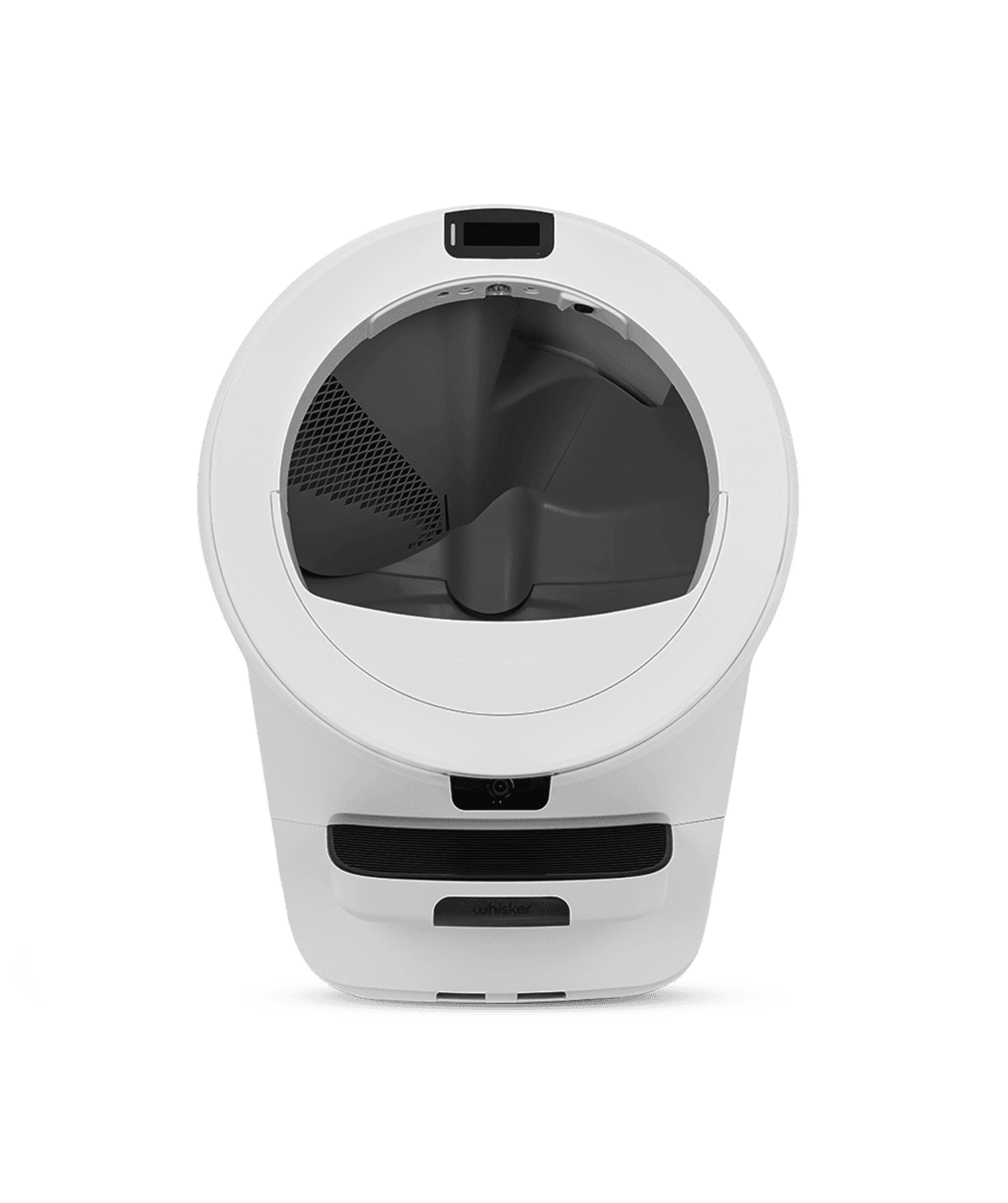
Litter-Robot 5 Pro is the strongest premium choice for a multi-cat home that will use its monitoring features. It combines the rotating self-sifting platform with WasteID, a 3-to-30-pound cat range, capacity for up to five cats, an LCD display, SmartScale profiles and two integrated 1080p night-vision cameras.
Its strongest advantage is not simply that it is a robot litter box with a camera. The front camera can show which cat approaches, while the interior camera covers the litter bed. The free app includes basic live viewing and recorded events; Whisker+ adds visual identification, longer history, more streaming and deeper individual insights.
Smart Pet Collective set up a Whisker-provided white unit in an indoor multi-cat home on July 29, 2026. The display guided onboarding, Wi-Fi connected, the unit joined an account that already contained another Litter-Robot, and the dashboard showed the camera online, a recent recording, waste at 1 percent, litter low, two scoops saved and separate cat profiles. Those are setup-day observations, not a long-term reliability or odor test.

The 5 Pro is still a large appliance, and its $899 starting price can exceed the value of the cameras for a single-cat household. It also needs clumping litter, routine drawer changes, surface wiping and periodic deep cleaning. Buyers who only want self-sifting and weight tracking should compare the camera-free Litter-Robot 5 review before paying for Pro hardware.
Litter-Robot 5 Pro Pros and Cons
Pros
- Dual cameras, WasteID, weight profiles and app status create the most complete monitoring package in this comparison.
- Supports a broad 3-to-30-pound cat range and up to five cats.
- Original setup evidence shows a successful guided onboarding and second-robot addition.
Cons
- Flagship price, large footprint and optional subscription cost make it excessive for simpler households.
- Long-term odor, reliability, drawer intervals and learned visual identification were not established by the setup-day test.
Webvet may earn a commission when you click through to Whisker, at no extra cost to you.
2. PetSafe ScoopFree SmartSpin: Best Lower-Priced Rotating Box
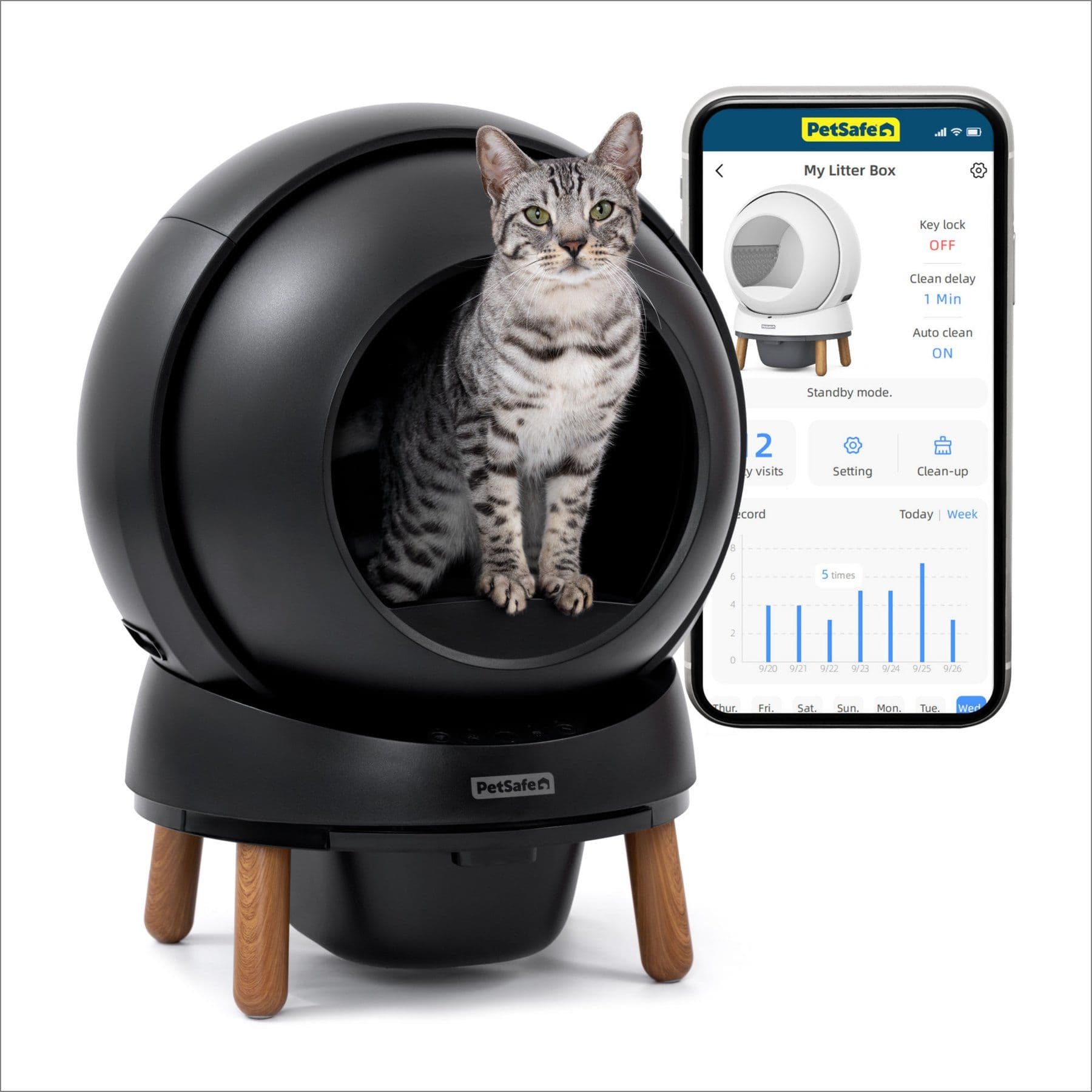
PetSafe ScoopFree SmartSpin is the most direct lower-priced alternative to a premium rotating Litter-Robot in this slate. It rotates to sift clumps into a sealed 6-liter waste drawer, uses the PetSafe Pet Companion app for weight and usage data, and sits about 12 inches from the floor for easier entry.
PetSafe positions it for cats up to 25 pounds and single- or multi-cat homes. The company says the drawer can hold up to two weeks of waste, but that is a maximum under favorable conditions, not a fixed emptying schedule. More cats, larger clumps, humid litter and loose drawer packing shorten the interval.

SmartSpin works best with premium clumping litter. PetSafe describes broader compatibility, but a firm, fast clump is still the practical requirement for clean separation. Weak clumps smear or break during rotation, increasing residue and maintenance. Its low profile can help a cat that dislikes a high step, although the interior is still enclosed.
Choose SmartSpin if you want app-connected rotation below the Litter-Robot price tier and do not need built-in video. Avoid treating the app's weight data as veterinary diagnosis. A trend can tell you to look closer, but a scale reading cannot explain why weight or litter-box use changed.
PetSafe SmartSpin Pros and Cons
Pros
- Rotating clumping-litter design with a sealed drawer and app monitoring.
- Lower 12-inch entry can be easier than taller premium robots.
- Current price is materially below Litter-Robot 5 Pro.
Cons
- Enclosed body may still deter cats that dislike covered boxes.
- The two-week drawer statement varies with cat count, litter and waste volume.
Webvet may earn a commission when you click through to Chewy, at no extra cost to you.
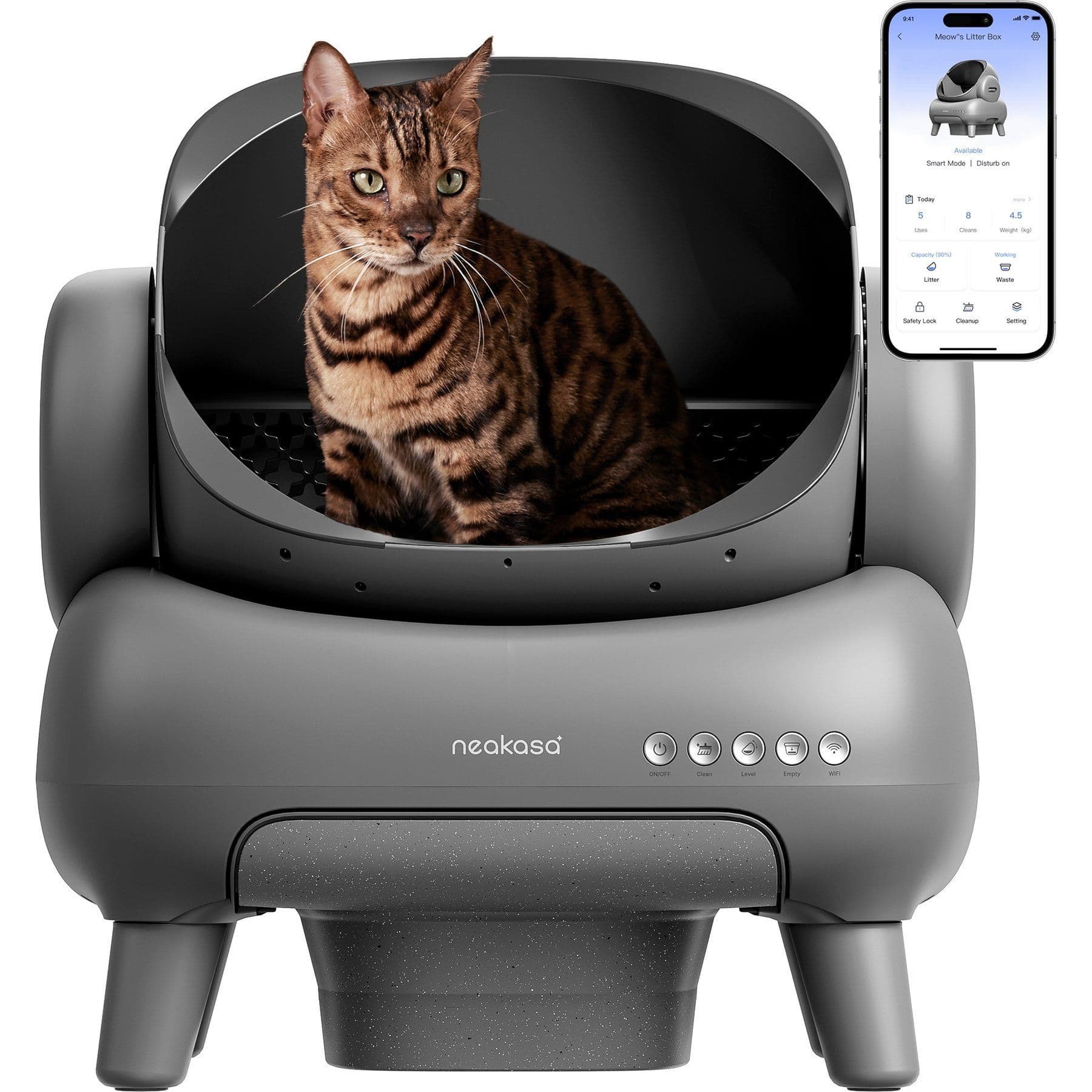
3. Neakasa M1 Plus: Best Open-Top Automatic Litter Box
Neakasa M1 Plus is the best open-top automatic litter box in this comparison. Instead of asking a cat to enter a covered globe, it leaves the top open while the bowl rotates below the rim. That design can make a meaningful difference for a Maine Coon, Ragdoll, long-bodied cat or any cat that refuses an enclosed litter box.
The Pull and Wrap waste system is designed to reduce direct contact with the bag when it is removed. The app tracks use and machine status, while the included mat addresses the predictable tradeoff of an open entry: more litter can leave on the cat's paws.

An open top is not automatically safer or better. It changes the fit and acclimation question, but owners still must follow minimum-weight and automatic-mode rules, keep the sensors clean and confirm that the cat cannot interfere with a moving cycle. Open access may also be less useful in a dog household because a determined dog can reach the litter area more easily.
Choose the M1 Plus when enclosure tolerance is the main barrier. Its real value is the distinct geometry, not that it is a generic Litter-Robot dupe. If your cat already accepts covered spaces, compare drawer access, cleaning disassembly, local support and total price before deciding that open-top design is worth the tradeoffs.
Neakasa M1 Plus Pros and Cons
Pros
- Open top provides more visual and physical space for large or enclosure-wary cats.
- App monitoring and bag-wrapping system address convenience and disposal.
- Included mat supports a design that may allow more tracking.
Cons
- Open access gives dogs and curious cats less of a physical barrier.
- WebVet has not completed a direct long-term M1 Plus household test.
Webvet may earn a commission when you click through to Chewy, at no extra cost to you.
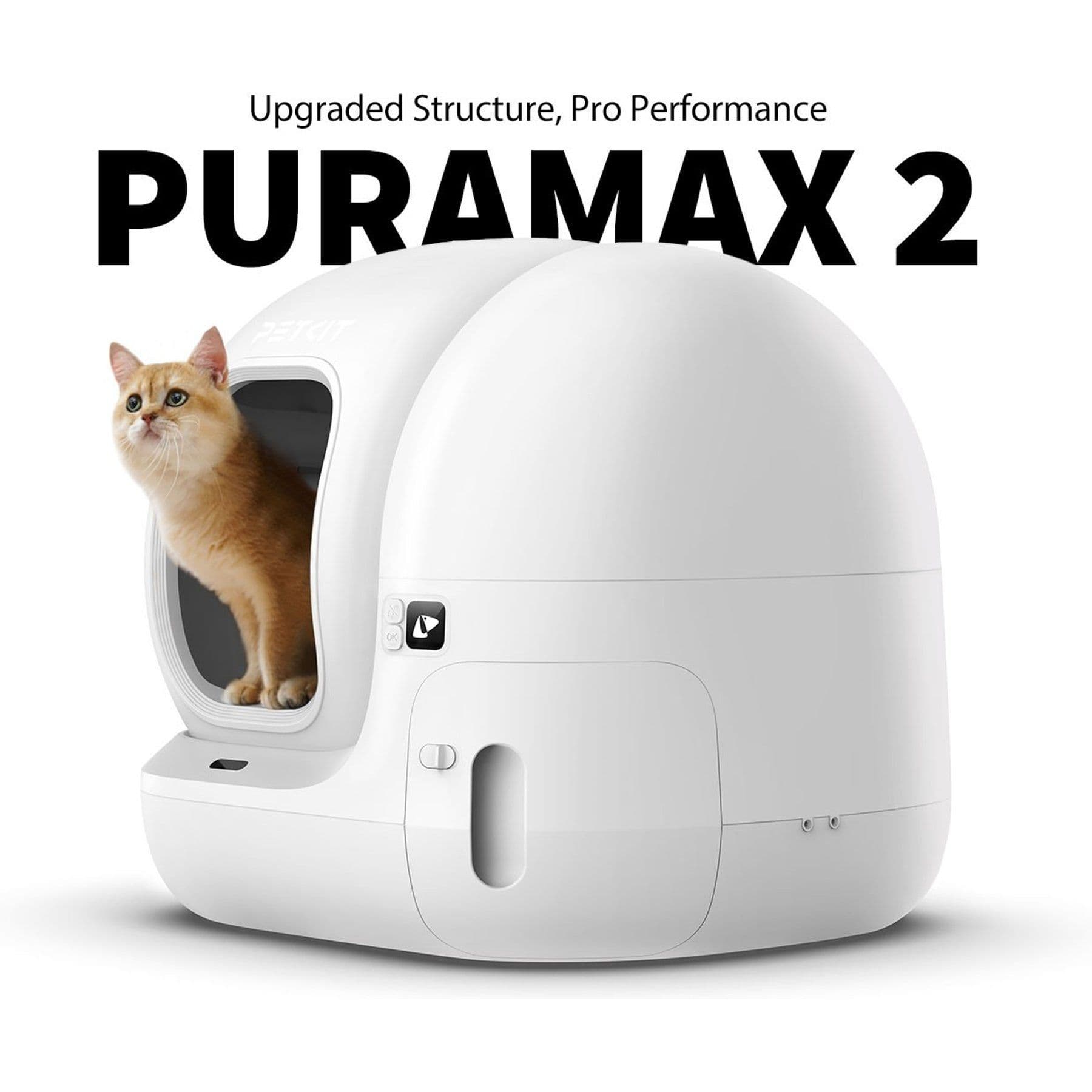
4. PETKIT PuraMax 2: Best Compact Enclosed Smart Alternative
PETKIT PuraMax 2 is an enclosed rotating alternative with a relatively low 7.87-inch entrance, a 76-liter interior and a 7-liter waste container. Its published dimensions are about 24.41 by 21.18 by 21.73 inches, and the current manual lists model P9902 at about 22 pounds.
The system uses 11 safety sensors and PETKIT's zero-pinch cylinder position, which keeps the entrance open during rotation. It connects over 2.4 GHz Wi-Fi for use and weight records, cleaning controls and device status. Two sifter options support different clumping-particle sizes.

PETKIT states that the unit is for cats older than six months. That age rule matters even if a kitten meets a weight threshold because development, behavior and body size do not reduce to one number. Leave automatic mode off until every stated requirement is satisfied.
PuraMax 2 is a good fit when you want app control and a lower entrance in a compact enclosed form. It is less attractive when you need an open top, built-in cameras or the deepest U.S. service network. The odor spray and sealed bin reduce odor exposure, but owners still need to refill the deodorizer, empty the bin and clean the cylinder and base.
PETKIT PuraMax 2 Pros and Cons
Pros
- Low entry, app control, sealed bin and two sifter options create a flexible smart-box package.
- Eleven-sensor system and open entrance during rotation address common mechanical concerns.
- Published dimensions make placement planning straightforward.
Cons
- Restricted to cats older than six months under the current manual.
- Odor-control consumables and deeper disassembly add recurring ownership work.
Webvet may earn a commission when you click through to Chewy, at no extra cost to you.
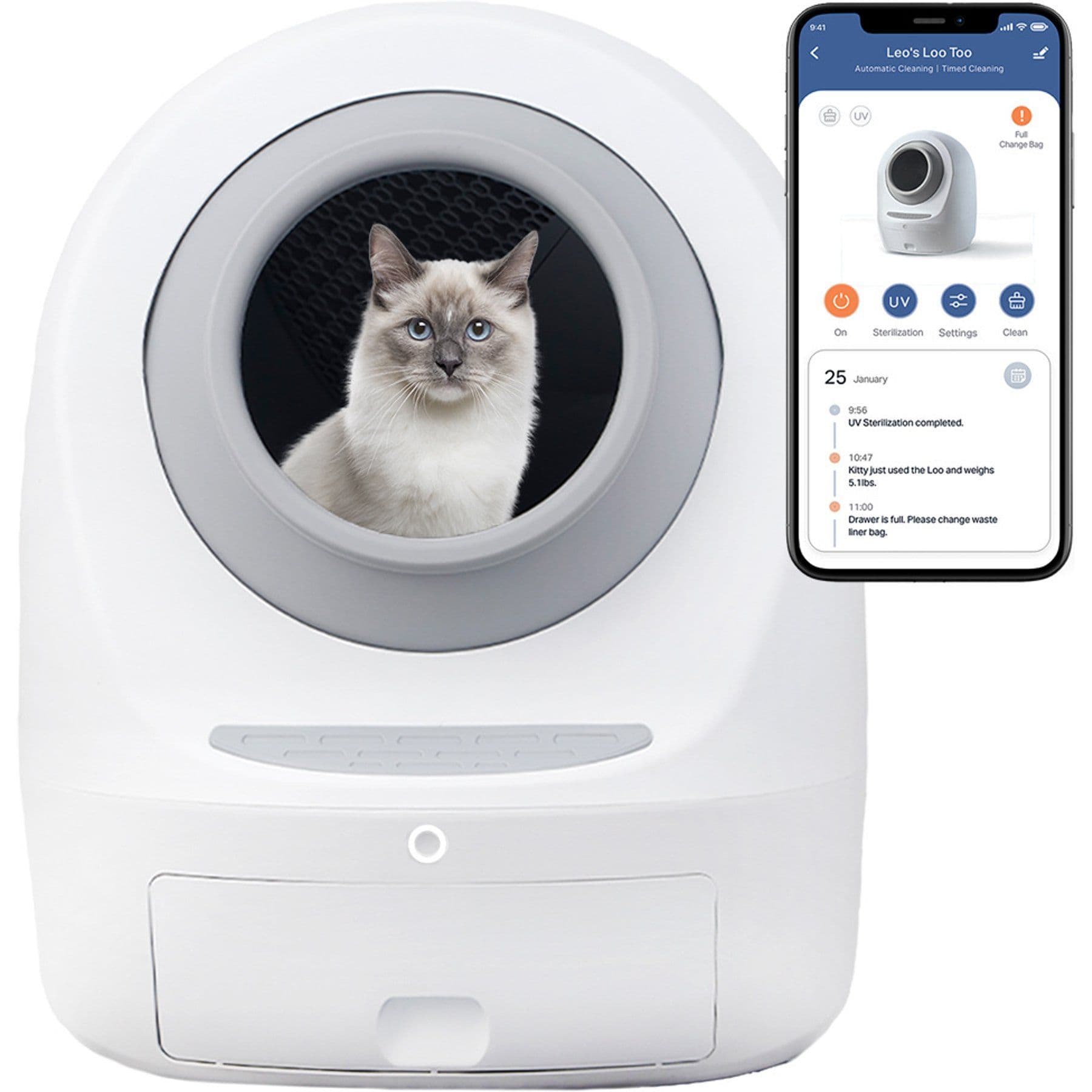
5. Casa Leo Leo's Loo Too: Best Design-Led Enclosed Box
Casa Leo Leo's Loo Too is the design-led option for an owner who wants an enclosed rotating machine in colors beyond black and white. The current line includes gray, green, blue and pink, while the app handles weight history, drawer alerts, cleaning delays and automatic mode. It can also connect with Alexa and Google Assistant.
Casa Leo publishes a 30-decibel cycle, support for up to four cats and a roughly 9-to-9.5-liter waste drawer. The current support materials describe an 8.5-inch entrance, a 21-inch drum interior and a recommended 1-to-20-pound cat range. Those dimensions make it important to judge body length and turning comfort, not only weight.

This machine requires clumping clay litter. Casa Leo warns that other substrates can damage internal components and void the warranty, so it is a poor choice if your cat needs pellets, paper, non-clumping litter or another veterinary-directed substrate. The brand recommends Dr. Elsey's Ultra as one compatible option.
Leo's Loo Too is worth considering when appearance, quiet published operation and smart-home controls matter. It is not the best value if you would ignore voice control or if your cat finds the circular entry restrictive. The 90-day trial offers an acclimation window, but return conditions and shipping should be read before purchase.
Casa Leo Leo's Loo Too Pros and Cons
Pros
- Distinct colors, app controls and smart-home support suit visible living-space placement.
- Published 30-decibel operation and a large drawer target quiet, lower-touch ownership.
- Supports up to four cats within the stated fit range.
Cons
- Clay-clumping requirement rules out many alternative substrates.
- Circular 8.5-inch entrance can be a tighter fit than an open-top machine.
Webvet may earn a commission when you click through to Chewy, at no extra cost to you.
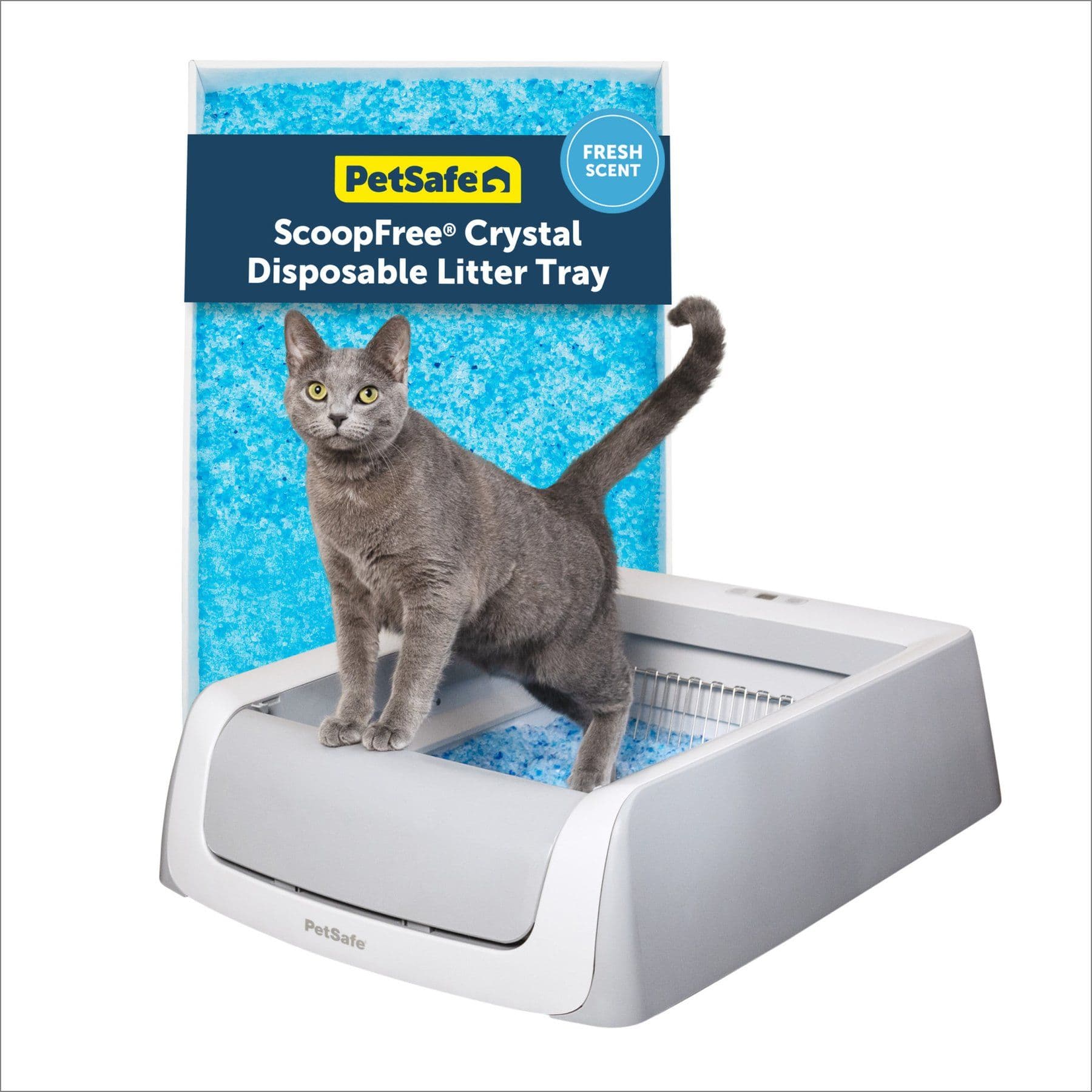
6. PetSafe ScoopFree Crystal Pro Legacy: Best Budget Self-Scooping Box
PetSafe ScoopFree Crystal Pro Legacy is the most affordable automatic litter box in this group because it uses a simpler rake and disposable crystal tray. After the cat exits, the motorized rake moves solid waste into a covered compartment while the crystals absorb urine. A health counter records how many times the box is used.

This mechanism avoids a rotating globe and keeps the familiar open-pan shape. That can make physical access easier for some cats and reduces the amount of enclosed hardware. It also creates a very different recurring-cost model. The machine is designed around PetSafe ScoopFree disposable crystal trays, so buyers trade a low appliance price for proprietary refill costs and packaging waste.
Crystal litter is low-dust and moisture-absorbing, but it does not form the clumps used by the other five systems. Urine remains in the tray until the whole tray is changed. Performance therefore depends heavily on one cat's urine volume, stool consistency, humidity and willingness to use crystals.
Choose Crystal Pro Legacy if the main goal is a lower entry price and you accept the refill system. Skip it if you want clumping litter, weight profiles, app alerts or a sealed rotating drawer. It is a self-scooping litter box, not a cheaper clone of the Litter-Robot experience.
PetSafe Crystal Pro Legacy Pros and Cons
Pros
- Lowest appliance price in the six-product slate.
- Familiar open-pan shape and rake mechanism avoid an enclosed rotating globe.
- Health counter gives a simple visit-count signal without an app.
Cons
- Proprietary disposable crystal trays create meaningful recurring cost and waste.
- No weight tracking, app control, camera or clumping-litter flexibility.
Webvet may earn a commission when you click through to Chewy, at no extra cost to you.
Which Automatic Litter Box Design Fits Your Cat?
The best automatic litter box for a cat is the one the cat can enter, turn around in and leave without fear. Covered preference is individual. A cat that happily uses a hooded manual box may adapt quickly to a globe, while another may reject any ceiling or moving interior.

Use these fit rules before comparing apps:
- Choose an open-top automatic litter box when enclosure aversion or large-body turning room is the central problem.
- Choose a large automatic litter box only after checking usable interior dimensions, not the outer shell or marketing cat count.
- Choose a small automatic litter box for a tight room only if its opening, bed and entry remain comfortable for the cat.
- Consider a semi-automatic litter box or traditional box when your cat cannot meet sensor weight, mobility or substrate requirements.
- A self-sifting litter box still needs the owner to rotate or pull its mechanism, while a self-washing litter box adds plumbing, water and different consumables outside this dry-litter comparison.
- Keep at least one conventional box during acclimation, placed nearby without blocking either entrance.
A senior cat may need a step or ramp, but an accessory must not interfere with weight sensors or drawer access. A kitten may grow into the machine, but automatic mode should remain disabled until the manufacturer says the cat meets every requirement.
 $65 · no membership
Have a health question about your cat?
A licensed vet can assess your cat over video and prescribe online when it's appropriate.
 Talk to a vet
- Licensed vets
- All 50 states
- same-day Rx
Webvet may earn a commission if you book.
Automatic Litter Box Alternatives to Litter-Robot
The strongest alternative is not one universal Litter-Robot dupe. It is the mechanism that solves the reason you rejected Litter-Robot. PetSafe SmartSpin keeps rotating clumping-litter automation at a lower price. Neakasa changes the enclosure. PETKIT changes entry height and sifter flexibility. Casa Leo emphasizes appearance and controls. Crystal Pro Legacy changes both mechanism and cost structure.
Other brands, including CATLINK, Petlibro, LitterMaid and newer marketplace models, may fit particular budgets. WebVet did not include them merely to inflate the list. A product needed a verifiable current identity, a clear safety framework, a support trail and a distinct decision advantage over one of the six selected models.
How We Treated Other PetSafe and Marketplace Models
The PetSafe automatic litter box family spans different mechanisms. The PetSafe ScoopFree SmartSpin self-cleaning litter box uses clumping litter, while a ScoopFree automatic cat litter box such as Crystal Pro uses disposable crystal trays. Searchers may also encounter the PetSafe ScoopFree Crystal Classic self-cleaning litter box, OpenSky, older ScoopFree self-cleaning litter box pages, and ScoopFree litter tray refills. Confirm the exact generation before comparing it with the current PetSafe SmartSpin litter box.
For models outside these six picks, check the exact product identity, safety information and support options before comparing price. A marketplace listing or app-platform name alone does not establish that two boxes use the same hardware. Neakasa M1 Plus and PETKIT PuraMax 2 are included above; the older LitterMaid automatic litter box uses a different rake-style mechanism. Luma smart litter box reviews should identify the exact manufacturer and model, show how cat detection stops a cleaning cycle, and explain warranty and replacement-part support. We do not have enough verified model-specific evidence to rank Luma against these six picks. Before choosing it on price, obtain the current manual, minimum cat requirements and return terms from the seller.

What Automatic Litter Box Do Vets Recommend?
Veterinarians do not share one universal automatic-litter-box recommendation. A medically sensible choice preserves normal elimination, makes urine and stool changes visible, stays clean and does not discourage the individual cat. A manual box can be better when it provides safer access or lets an owner monitor output more clearly.
An automatic box can add useful visit and weight trends, but alerts are not diagnoses. Sudden straining, repeated trips, vocalizing, blood, very small urine clumps or inability to urinate require veterinary attention, not a reset or litter change. For multi-cat homes, data is most useful only when the system can reliably distinguish cats.
The veterinary decision starts with cat safety and minimum weight, then open-top versus enclosed fit. A senior cat may need a low step, an anxious cat may need an open top, and a kitten below the stated limit needs manual mode or a manual box. Ask the cat's veterinarian when mobility, respiratory disease, urinary history or litter aversion changes the safest setup.
Are There Any Automatic Litter Boxes That Actually Work?
Yes, automatic litter boxes can reliably separate waste when four conditions are met: the cat uses the box, the litter matches the mechanism, the unit is level and maintained, and waste has the consistency the sifter or rake expects. The machine does not control diarrhea, weak clumps, overfilling, a dirty sensor or a cat that urinates outside the intended bed.
The useful promise is narrower than “never touch litter again.” A good system replaces one or more daily scoops with drawer changes, top-ups, surface wiping and periodic disassembly. Owners who understand that exchange are more likely to find the machine successful.
Models that actually work also respect cat safety and minimum weight and match open-top versus enclosed fit to the cat. A reliable motor cannot make a cautious cat enter a globe, and a roomy opening cannot make an underweight kitten safe in automatic mode. Judge success by clean separation, normal cat use, fault-free cycling and a maintenance routine the owner consistently completes.
Is an Automatic Litter Box Really Worth It?
An automatic litter box is worth it when daily scooping is the task most likely to be delayed, multiple cats fill a box quickly, or reliable visit and weight trends change how the household monitors care. It is less compelling when one easy manual box is already scooped twice daily, the cat rejects machines, or recurring supplies strain the budget.
Calculate value with the whole ownership bridge:
- Add the appliance, ramp, mat, warranty and any subscription you would actually use.
- Estimate liners, filters, deodorizers, proprietary trays and litter for one year.
- List the manual tasks that remain, including drawer, wipe-down and deep-clean time.
- Price the risk that the cat will not acclimate within the return window.
- Compare that total with a large, accessible manual box and consistent scooping routine.
Worth also depends on cat safety and minimum weight plus open-top versus enclosed fit. An expensive model has no value if the cat cannot enter comfortably or must remain below the automatic-mode limit. A simpler open-top unit may be worth more for one large or enclosure-wary cat, while a camera model may justify its price only when verified video changes daily care.
Is There a Cheaper Version of the Litter-Robot?
PetSafe SmartSpin is the closest lower-priced rotating alternative in this group. Neakasa M1 Plus and PETKIT PuraMax 2 occupy a similar middle tier with different fit advantages. PetSafe Crystal Pro Legacy is much cheaper, but the rake-and-crystal mechanism and proprietary refills make it a different ownership experience.
The right comparison is not sticker price alone. A $130 machine with frequent disposable trays can cost more over several years than its shelf price suggests, while a $899 camera model can waste money if the household never opens the video tools.
PetSafe SmartSpin is the closest cheaper rotating answer here, but it is not a copy of Litter-Robot. Entry height, cat limit, app detail, drawer design, warranty and support differ. Crystal Pro Legacy is the lowest purchase-price pick, yet its disposable tray system creates a recurring-cost bridge that buyers should calculate before calling it the least expensive long-term option.
What Are the Downsides of Using a Litter-Robot?
The main Litter-Robot downsides are its high price, appliance-sized footprint, clumping-litter requirement, drawer and deep-cleaning work, sensor troubleshooting and the possibility that a cat dislikes the globe. The machine also changes how waste is seen. Sealed containment helps odor, but owners must still look at clumps and cat behavior rather than relying only on app cards.

For model-specific tradeoffs, read the evidence-bound Litter-Robot 4 review, the camera-free Litter-Robot 5 review and the original setup evidence in our Litter-Robot 5 Pro review.
What Is the Best Automatic Litter Box Besides a Litter-Robot?
The best automatic litter box besides a Litter-Robot is PetSafe SmartSpin for a household that wants an enclosed rotating mechanism at a lower price. It combines clumping litter, a sealed drawer, lower entry and app monitoring. Neakasa M1 Plus is the better answer when the cat needs an open top. PETKIT PuraMax 2 is the compact enclosed alternative, while Casa Leo is the design-led choice.
No alternative is best for every cat. Match the product to the obstacle: entry, enclosure, weight, litter, monitoring, dog access, room size or budget.
Choose SmartSpin when a lower enclosed rotating box fits the cat and clumping litter is preferred. Choose Neakasa when an open top is the decisive acceptance or body-size advantage. PETKIT fits a compact enclosed comparison, while Casa Leo is for an owner who values its controls and furniture-like appearance. Each still requires a manual backup during transition and direct inspection of waste.
What Is the Highest Rated Automatic Litter Box?
Ratings vary by retailer, date, variant and whether old and new generations are combined, so WebVet does not crown a product from a star average alone. Current averages can hide how many reviews concern shipping, an older model or a discontinued accessory.
Our highest overall recommendation is Litter-Robot 5 Pro because its verified feature set and original setup evidence resolve the widest range of premium-household needs. That is an editorial decision, not a claim that it has the highest live star score everywhere.
For a different household, the highest-rated choice can change. Neakasa may rate highest on enclosure tolerance, SmartSpin on lower-cost rotation, and Crystal Pro Legacy on entry price. WebVet therefore ranks by cat fit, mechanism, evidence, ownership work and value rather than copying a retailer score that can change after publication.
Litter Choice, Odor and Routine Maintenance
Rotating boxes need litter that forms firm clumps before the cycle begins. Standard-weight clumping clay is the safest default across Litter-Robot and most competing rotation systems, but every manual controls. Do not assume a litter that pours into the globe will sift cleanly or preserve sensor accuracy.
Our full best litter for Litter-Robot guide explains clump strength, particle size, fill line, dust, tracking and crystal warnings. For general odor problems, WebVet's cat litter odor guide separates litter performance from box count, scooping and airflow.
Clean on three levels:
- Each visit: the machine sifts or rakes only after a safe delay.
- Each drawer change: inspect waste, liner, seals, sensors and litter level.
- Periodic deep clean: unplug, disassemble only approved parts, remove residue and dry everything fully before reassembly.
Never spray cleaner into electronics or mix products that can produce harmful fumes. Keep power cords dry and protected from chewing.
Frequently Asked Questions
Are automatic litter boxes safe for cats?
They can be safe when the model uses reliable cat detection, the cat meets every minimum age and weight rule, the unit is placed on an approved level surface, and the owner verifies that interruption sensors work. Safety claims do not replace supervision during introduction. Leave automatic mode off for an ineligible kitten and provide a manual box whenever the unit faults, cycles unexpectedly or cannot remain clean.
How often do automatic litter boxes still need cleaning?
Most remove waste after each visit, but owners still empty the drawer or replace a tray, add litter, wipe the entry and inspect sensors. A deeper clean is needed periodically because dust, urine film and broken clumps collect on the globe, rake, screen, liner and seals. The exact schedule depends on cat count, waste volume, litter, humidity and the manufacturer's instructions.
Are automatic litter boxes worth the money for one cat?
They can be, especially when mobility, travel schedules or inconsistent scooping make a fresh box difficult. One cat also produces less drawer volume, which can extend the interval between changes. The value is weaker when the owner already maintains a simple box easily or would pay for camera, app and subscription features that are rarely used.
Can a large cat use an automatic litter box?
Some can. Compare the cat's weight, shoulder height and body length with the usable opening and interior, not only the manufacturer's maximum pounds. Litter-Robot 5 models publish a 3-to-30-pound range, Neakasa offers an open top, and other models have smaller entries. A cat must be able to enter, turn, posture and exit without squeezing or crouching unnaturally.
Can you use any cat litter in an automatic litter box?
No. Rotating sifters usually need firm clumping litter, Casa Leo requires clay clumping litter, and the Crystal Pro Legacy is designed for ScoopFree crystal trays. Pellets, paper, non-clumping substrates, loose clumps or oversized particles can fail to separate, damage parts or void warranty coverage. Follow the exact manual for the model and any veterinary substrate requirement for the cat.
Do automatic litter boxes control all odor?
No. Fast waste separation and a sealed drawer can reduce exposure, but odor also depends on stool quality, urine volume, litter, drawer packing, filters, room airflow and cleaning. A sudden odor change can reflect a torn liner, residue, weak clumps or a health change. Inspect the box and cat rather than masking the smell with stronger fragrance.
$65 · no membershipHave a health question about your cat?
A licensed vet can assess your cat over video and prescribe online when it's appropriate.
Talk to a vet- Licensed vets
- All 50 states
- same-day Rx
Webvet may earn a commission if you book.

Editor
The Webvet Editorial Team is the in-house group of pet-care editors and writers behind Webvet, operated by Smart Pet Collective. The team researches, writes, and maintains Webvet's pet health, behavior, and medication content. Every article follows a defined editorial process: research from reputable veterinary and scientific sources, careful drafting, mandatory review of medical content by a credentialed veterinarian, and dated publication. Health and medication articles are medically reviewed by a licensed veterinary professional before they go live and are kept current over time.
Veterinarian · BVMS MRCVS
Dr. Pippa Elliott, BVMS, MRCVS, is a veterinarian with nearly 30 years of experience in companion animal practice. Dr. Elliott earned her Bachelor of Veterinary Medicine and Surgery from the University of Glasgow. She was also designated a Member of the Royal College of Veterinary Surgeons. Married with 2 grown-up kids, Dr. Elliott has a naughty Puggle named Poggle, 3 cats and a bearded dragon.