Best Litter for Litter-Robot: What Works and What to Avoid
Choose Litter-Robot litter by clump strength, weight, particle size, dust and tracking, with four compatible picks and a clear list of materials to avoid.

BVMS MRCVS
Medically reviewed by Dr. Pippa Elliott, BVMS MRCVS · Last reviewed

This article contains affiliate links. Webvet may earn a commission when you buy through them, at no extra cost to you.
WebVet may earn a commission from qualifying purchases made through links on this page, at no additional cost to you.
The best litter for Litter-Robot is a standard-weight clumping clay litter that forms firm, fast clumps and sifts through the globe screen without leaving excessive residue. Dr. Elsey's Ultra is our best overall pick because it combines a conventional particle weight, unscented formula and firm clumping behavior at a widely available price.
Litter choice changes how well any Litter-Robot separates waste. Weak clumps can break during a cycle, oversized particles can remain in the globe, lightweight litter can scatter, and too much litter can spill into the waste opening. The right product still requires the correct fill level and a cycle delay long enough for urine clumps to set.
- 1Best overall: Dr. Elsey's Ultra Unscented Clumping Clay Cat Litter.
- 2Best litter type: standard-weight clumping clay with firm, fast-forming clumps and particles that pass through the sifting screen.
- 3Best lower-tracking option: Dr. Elsey's Clean Tracks, with the tradeoff that no litter eliminates tracking.
- 4Avoid: non-clumping litter, newspaper, wood pellets, loose clumps and particles too large to sift properly.
- 5Sensor note: white or translucent crystal litter may affect litter-level and waste sensors in newer Litter-Robot models.
Best Litter for Litter-Robot: Our 4 Picks
These four picks are conventional clumping clay litters selected for machine compatibility first. They differ mainly in scent, tracking priorities, packaging and household fit. None can guarantee a clean cycle when the bed is overfilled, the clump has not set or the liner is already coated with damp residue.
1. Dr. Elsey's Ultra Unscented Clumping Clay Cat Litter: Best Overall
Dr. Elsey's Ultra is our best overall choice for a Litter-Robot because its standard-weight clay and unscented formula match the basic traits the rotating sifter needs. It is a practical starting point for owners who want firm clumps without adding fragrance as another cat-acceptance variable.

The product is not marketed only for automatic boxes, which is useful. It behaves like a conventional clumping litter, so an owner can also use it in the manual transition box. That makes a gradual litter change easier when a cat is learning the robot.
Potential tradeoffs are bag weight, dust and tracking. A 40-pound bag can be difficult to lift and pour accurately. Transfer smaller amounts with a scoop instead of tipping the bag into the globe, and stop at the molded fill line.
Dr. Elsey's Ultra Pros and Cons
Pros
- Standard-weight clumping clay suits the sifting mechanism.
- Unscented formula avoids added perfume.
- Firm-clumping profile makes it a sensible compatibility-first default.
- Widely useful in both the robot and a manual transition box.
Cons
- Heavy bags may be difficult to handle.
- Dust and floor tracking can still occur.
- A firm clump can still stick when cycled too soon or pressed against a damp liner.
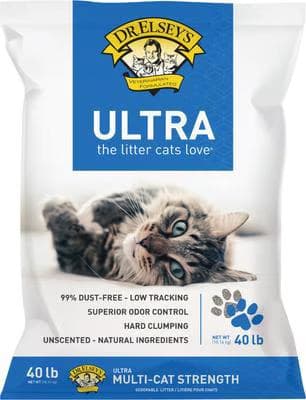
99% dust-free, low-tracking clumping clay litter with superior odor control and hard clumping. Unscented, natural ingredients, multi-cat strength.
Webvet may earn a commission when you click through to Chewy, at no extra cost to you.
2. Dr. Elsey's Clean Tracks Clumping Clay Cat Litter: Best for Tracking Control
Dr. Elsey's Clean Tracks is the better fit when conventional clay performance is working but granules outside the box are the main complaint. It retains a clumping-clay base while emphasizing particles designed to stay nearer the litter area.

Lower tracking does not mean no tracking. A cat can still carry granules on damp paws, launch litter while turning or step directly from the globe onto hard flooring. A large textured mat and a clear exit path remain part of the solution.
Choose it over Ultra when floor cleanup matters more than having the simplest baseline formula. If the cat dislikes the feel or clumps become less reliable in the home, return to the litter that produces the cleaner sift. Machine behavior matters more than a package claim.
Dr. Elsey's Clean Tracks Pros and Cons
Pros
- Conventional clumping clay remains compatible with the globe screen.
- Lower-tracking positioning addresses a common automatic-box complaint.
- Unscented option avoids using fragrance to mask drawer odor.
Cons
- Tracking can still happen around the step and mat.
- Individual clump quality depends on urine volume and cycle timing.
- Heavy packaging may be awkward to pour.
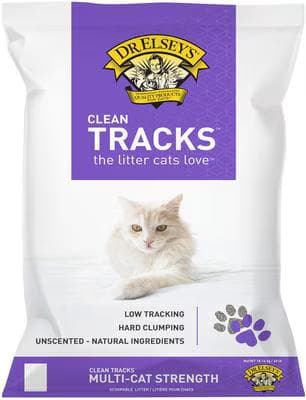
Unscented hard-clumping clay litter designed to reduce tracking in multi-cat homes.
Webvet may earn a commission when you click through to Chewy, at no extra cost to you.
3. Tidy Cats Free & Clean Unscented Clumping Clay Cat Litter: Best Pail
Tidy Cats Free & Clean is our pail pick for owners who prefer rigid storage and an unscented clumping formula. A pail is easier to close between top-ups and can be simpler to scoop from than a flexible bag.

The compatibility case is still based on litter behavior, not the container. Confirm that the litter forms a firm clump, passes through the screen and does not leave a growing layer of damp fragments. Activated charcoal can support odor control, but it does not replace changing the drawer liner or cleaning residue.
This is a reasonable option for multi-cat homes that buy larger quantities and need a container that stands upright. Reuse or recycle the pail according to local rules rather than allowing empty containers to accumulate.
Tidy Cats Free & Clean Pros and Cons
Pros
- Unscented clumping clay matches the basic machine requirement.
- Rigid pail is convenient for storage and measured scooping.
- Activated charcoal adds odor-control support without perfume.
Cons
- The pail creates more rigid packaging than a bag.
- Dust and tracking are still possible.
- Odor control cannot compensate for an overdue waste drawer.
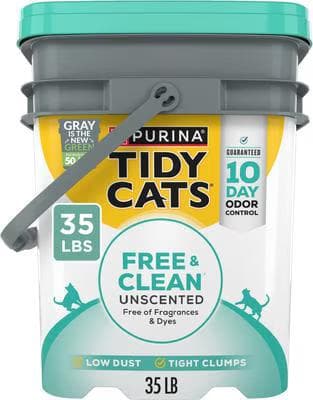
Webvet may earn a commission when you click through to Chewy, at no extra cost to you.
4. Scoop Away Complete Performance Clumping Clay Cat Litter: Best Scented Multi-Cat Pick
Scoop Away Complete Performance is the scented multi-cat option in this group. It uses clumping clay, so it can meet the mechanical need, while its fragrance and multi-cat positioning appeal to households that prioritize perceived odor control.

Fragrance is the main tradeoff. Some cats and people prefer unscented litter, and a stronger smell does not mean waste has been removed. Introduce it gradually and watch whether any cat delays entry, urinates beside the box or chooses a different litter station.
Use this pick only when the cats already accept scented litter. For a new robot, changing box shape, motion and scent at the same time creates too many variables. Keep the familiar litter during acclimation whenever it is compatible.
Scoop Away Complete Performance Pros and Cons
Pros
- Clumping clay supports the normal sifting process.
- Multi-cat positioning suits homes that generate more waste.
- Scent may appeal to owners who prefer a fragranced litter area.
Cons
- Fragrance can be a cat or human sensitivity issue.
- Scent may mask the need for drawer or globe cleaning.
- Tracking and dust still need household management.
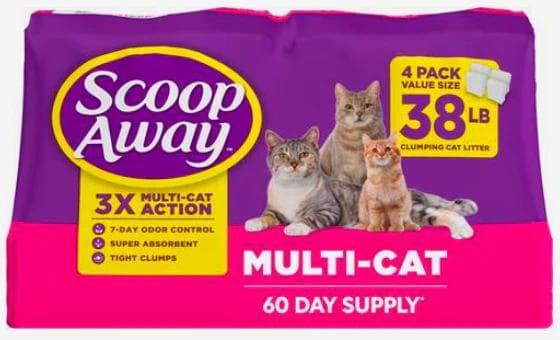
Webvet may earn a commission when you click through to Chewy, at no extra cost to you.
Compare Our 4 Litter Picks
The most useful comparison is not which package makes the broadest claim. It is which litter trait changes actual machine behavior. A firm clump reaches the drawer intact. A suitable particle passes through the screen. A standard-weight granule is less likely to scatter than a very light one, while an unscented formula removes fragrance from the acceptance decision.
| How Litter Traits Affect Litter-Robot Pick | Litter Trait | Machine Behavior | Best Household Fit | Main Tradeoff |
|---|---|---|---|---|
| Dr. Elsey's Ultra | Standard-weight, unscented clumping clay | Firm fast-forming clumps can reach the drawer with less breakup when allowed to set | Owners who want the simplest compatibility-first default | Heavy bag, dust and tracking |
| Dr. Elsey's Clean Tracks | Clumping clay designed to reduce tracking | Conventional particles sift while the tracking-focused blend may reduce floor scatter | Homes where granules outside the box are the main complaint | Tracking is reduced, not eliminated |
| Tidy Cats Free & Clean | Unscented clumping clay in a rigid pail | Clumps sift normally and the pail supports controlled top-ups | Multi-cat homes that value closed storage | Rigid packaging and possible dust |
| Scoop Away Complete Performance | Scented multi-cat clumping clay | Firm clumps can sift, while fragrance changes cat acceptance rather than the cycle | Cats already comfortable with scented litter | Perfume sensitivity and scent masking |
A product can perform differently across homes because urine volume, humidity, wait time and liner condition change the clump before it reaches the screen. Treat the first bag as a controlled trial. Change one variable at a time and inspect what reaches the drawer.
 $65 · no membership
Have a health question about your cat?
A licensed vet can assess your cat over video and prescribe online when it's appropriate.
 Talk to a vet
- Licensed vets
- All 50 states
- same-day Rx
Webvet may earn a commission if you book.
What Type of Litter Works Best in Litter-Robot?
Standard-weight clumping clay works best in Litter-Robot for most households. It should form firm, fast clumps and use particles small enough to fall through the sifting screen while the larger clump moves into the waste drawer.
The machine does not clean litter chemically. It rotates and separates by particle size. That makes four physical traits especially important:
- Clump strength determines whether urine waste stays together during rotation.
- Set time determines whether a fresh clump is ready when the cycle starts.
- Particle size determines whether clean granules return through the screen.
- Weight affects scattering, tracking and how the bed moves during a cycle.
Standard-weight does not mean the heaviest available product. It means avoiding extremely light granules that may move unpredictably or track heavily. The current Whisker litter guidance likewise centers clumping performance and screen compatibility rather than requiring a proprietary brand.
Tidy Cats can be a suitable Litter-Robot choice when the exact formula is clumping clay, as with the Free & Clean pick above. The brand also sells other formulas, so check the package rather than assuming every Tidy Cats product is interchangeable. For any clumping litter for Litter-Robot, verify firm clumps, screen fit, sensor behavior and reasonable clean-litter loss.
Keep litter and drawer liners separate in your shopping list. Bags of Litter-Robot cat litter supply the material in the globe; waste bags line the drawer below it. A liner cannot correct weak clumps or unsuitable particles. Whether you use an automatic cat litter robot or a manual transition box, start with a substrate the cat accepts, then confirm that it meets the machine instructions.
Firm, Fast-Forming Clumps
A strong clump is the key performance trait. If the outside is still soft when the globe turns, the clump can smear across the liner or break into pieces small enough to fall back into the clean bed.
Use the cycle delay as a litter setting, not merely a convenience setting. A longer delay can help a slower litter harden. A shorter delay may move stool to the drawer sooner but can be too fast for urine. Newer WasteID logic may adjust timing, but direct inspection still tells you whether the result is clean.
Particle Size and Screen Fit
Clean litter must pass through the screen openings during rotation. Oversized grains and intact pellets may remain on the waste side and be discarded. Very fine litter may sift, but it can create more dust or cling to damp surfaces.
Do not judge particle size from a single granule. Pour a small amount to the fill line, run an empty manual cycle and inspect both the returned bed and drawer. Stop if clean litter is being thrown away in obvious quantities.
Dust, Tracking and Liner Sticking
Dust is a respiratory and housekeeping concern, but package language such as “low dust” is not a guarantee of a dust-free pour. Pour close to the bed, avoid shaking the bag and ventilate the area without creating a draft across airborne litter.
Tracking is controlled by the litter, cat, step, mat and exit route together. Liner sticking usually worsens when a wet clump contacts the rubber before it has set. A longer wait time, correct fill amount and clean dry liner may matter more than switching brands.
How Much Litter Should You Put in Litter-Robot?
Fill to the raised line inside the globe, with the litter level when the robot is in its normal home position. Do not create a mound above the line. The line is the safe reference, not a target to exceed after the bed settles.

Overfilling can send clean litter into the drawer, burden the motor, coat the waste opening and make litter-level readings less useful. Underfilling leaves too little depth for a cat to bury and too little material to absorb urine into a firm clump.
Use a scoop for top-ups and add a modest amount at a time. Run a cycle only after the robot recognizes the home position, then check whether the returned bed is level with the molded mark. A LitterHopper can automate additions on compatible models, but it does not correct an unsuitable litter or a dirty sensor area.
The original fill-line photographs show what correct volume looks like inside the globe before and after litter is added. They are a visual baseline, not a claim that every product settles identically. Granule density and the curve of the bed can change the appearance, so use the molded line and the machine's home position rather than copying an estimated number of scoops.
What Litter Should You Avoid in Litter-Robot?
Avoid litter that does not form a firm clump or cannot pass through the screen. Non-clumping litter, newspaper, wood pellets and loose-clumping products undermine the separation process. Large particles can be discarded with waste, while soft urine material can return to the bed.
Some clumping alternatives made from corn, wheat, grass or other plant material may physically work if they form a firm clump and sift correctly. “Natural” is not a mechanical standard. Test a small amount and watch for clump breakup, excess clean litter in the drawer, mold risk in humid storage and cat acceptance.
Silica crystal litter needs special caution. Even a crystal product that fits through the screen may not clump in the required way. Whisker also warns that white or translucent crystals can affect newer optical litter and waste sensors. Do not assume a product is compatible because its pieces look small.
How to Test a New Litter Without Creating a Mess
Keep the current compatible litter during initial robot acclimation. Once the cat uses the robot reliably, introduce a new product gradually unless the manufacturer or veterinarian directs an immediate switch.
Use a simple one-variable test:
- Empty and clean the globe according to the model instructions, then let the liner dry.
- Add the test litter only to the molded fill line.
- Run an empty manual cycle and check how much clean litter reaches the drawer.
- After cat use, inspect whether urine clumps remain whole at the selected delay.
- Note dust, tracking, liner residue and any avoidance for several days.
- Stop the trial if a cat strains, refuses available boxes or shows urinary signs.
Keep a manual litter box available during the test. A backup protects access if the robot is off, full, obstructed or rejected. It also helps distinguish dislike of the litter from dislike of movement or enclosure.
Litter Choices for Litter-Robot 4, 5 and 5 Pro
The core recommendation is the same across Litter-Robot 4, Litter-Robot 5 and Litter-Robot 5 Pro: use a firm clumping litter that fits the screen and stays at the fill line. The model does not turn incompatible pellets or weak clumps into a good choice.
Newer models add more sensing and data, so color and optical behavior deserve extra attention. White or translucent crystals may create sensor problems even when their particle size appears acceptable. A camera on Litter-Robot 5 Pro does not identify whether a clump will sift cleanly.
Our Litter-Robot 4 review documents a two-cat household record and the cleaning routine around that model. The Litter-Robot 5 review explains WasteID and its larger range, while the Litter-Robot 5 Pro review separates observed setup and app evidence from longer-term unknowns.
What Type of Litter Is Best for a Robot Litter Box?
The best litter for a robot litter box is the type specified by that machine's sifting design. For Litter-Robot, the safest default is standard-weight clumping clay with firm, fast-forming clumps and screen-compatible particles.
Other automatic boxes may use disposable crystal trays, rakes or proprietary cartridges. Follow the exact model manual rather than carrying this recommendation to every self-cleaning box. A litter that works in a rotating globe can be wrong for a rake system.
For Litter-Robot specifically, our standard-weight clumping clay recommendation reflects firm fast-forming clumps and screen behavior. Check a new litter in an empty manual cycle, then inspect real clumps after the selected delay. The best formula is the one the cat accepts and the machine separates cleanly without unusual dust, discarded clean litter or sensor errors.
What Is the Best Natural Litter for a Litter-Robot?
There is no universally best natural litter for Litter-Robot. A plant-based litter is a candidate only if it forms a strong clump, passes through the screen and remains stable in the household's humidity.
Corn, wheat and grass formulas vary widely. Test a small bag before buying in bulk and inspect for broken clumps, excess discarded clean litter, dust and spoilage. Do not choose a “natural” claim over demonstrated cat acceptance and machine behavior.
A natural product does not replace the standard-weight clumping clay recommendation unless it produces firm fast-forming clumps in the actual globe. Humidity, particle shape and urine volume can change plant-based performance. Keep a manual box available during the trial and stop if the cat rejects the texture or the machine returns broken waste to the clean bed.
Can I Use Any Litter in My Litter-Robot?
No. Use clumping litter that forms firm waste masses and has particles small enough to sift. Non-clumping litter, most intact pellets, loose clumps and oversized materials can prevent clean separation or send unused litter to the drawer.
Check current instructions for the exact model because sensor guidance can change. If the package and machine instructions conflict, follow the machine limit or ask Whisker to confirm compatibility before filling the globe.
The safest default remains our standard-weight clumping clay recommendation because firm fast-forming clumps can survive rotation and suitable clean particles can return through the screen. “Any litter” is too broad: color may affect sensors, particle size may waste clean product and weak clumps may smear. Test the exact formula rather than relying only on the word clumping.
Does It Matter What Litter You Use in a Litter-Robot?
Yes. Litter controls clump integrity, sifting loss, liner residue, dust, tracking and how much dirty material returns to the bed. It can also affect optical litter-level and waste sensing on newer models.
A premium label does not guarantee better results. Judge the product by intact clumps in the drawer, clean returned litter, reasonable floor scatter and continued cat use.
It matters because the robot uses physical separation. A slow clump can break, a large pellet can travel to the drawer, very light granules can scatter and translucent crystals can challenge newer sensing. The correct litter reduces avoidable machine friction, but owners must still use the fill line, select an appropriate delay and clean residue.
What Litter Works Best With a Litter-Robot?
An unscented, standard-weight clumping clay works best for the broadest range of Litter-Robot homes. Dr. Elsey's Ultra is our first pick, with Clean Tracks for a tracking-focused alternative, Tidy Cats Free & Clean for pail storage and Scoop Away for cats already comfortable with scented litter.
The product choice and setup work together. Fill only to the line, keep the liner clean and dry, and select a delay that lets urine clumps harden before rotation.
What Are the Downsides of the Litter-Robot?
The downsides include the purchase price, large footprint, cat-acclimation risk, dependence on compatible clumping litter, sensor and app troubleshooting, drawer changes and periodic deep cleaning. Automation removes daily scooping, not litter-box ownership.
Litter can create additional tradeoffs. Standard clay is heavy, some products create dust or tracking, and fragrance can bother a cat or person. Our model comparison explains which automatic litter box tradeoffs differ beyond litter choice.
What Is the Life Expectancy of a Litter-Robot?
There is no responsible universal life-expectancy number for every Litter-Robot. Service life depends on model, cycle count, cleaning, environment, part wear and whether repair components remain available.
Warranty length is not the same as expected lifespan. Keep the base dry, do not bypass safety sensors and address unusual sounds or repeated faults through current support. A compatible litter can reduce avoidable residue, but it cannot guarantee electronics or motor life.
Do Vets Recommend Litter-Robot?
A veterinarian may support an automatic box for a particular household, but there is no blanket veterinary recommendation that makes Litter-Robot right for every cat. Access, comfort, box count, cleanliness and the owner's ability to notice urine and stool changes matter more than automation alone.
Ask the cat's veterinarian about mobility limitations, urinary history or litter aversion. Keep a manual option for cats that cannot enter comfortably or need close monitoring of individual output.
A vet may recommend features such as a low entry, unscented low-dust litter or closer urine monitoring rather than a particular brand of robot. Bring the cat's diagnoses, mobility, current litter preference and box behavior into that discussion. Automation should support access and observation, never delay care when a cat strains, vocalizes or cannot pass urine.
What Is the Healthiest Type of Litter for Cats?
The healthiest practical litter is one the individual cat uses reliably without apparent irritation, while the household can keep it clean. Many cats do well with an unscented, low-dust clumping litter, but respiratory disease, paw pain, allergies and ingestion behavior can change the recommendation.
Litter-Robot compatibility is secondary to health and access. Seek veterinary advice for coughing, wheezing, sore paws, repeated inappropriate elimination, straining, blood or inability to urinate. Inability to pass urine can be an emergency.
Frequently Asked Questions
Can you use lightweight litter in Litter-Robot?
Some lightweight clumping litters may sift, but they are not our default recommendation. Very light particles can scatter, track or move differently during rotation. Test a small quantity to the fill line and inspect clean-litter loss, clump integrity and sensor behavior before buying more.
Why does litter stick to the Litter-Robot liner?
Litter often sticks when a urine clump contacts the liner before it has hardened, when the liner is damp or when fine residue has accumulated. Try a longer cycle delay, correct the fill level and clean and dry approved surfaces. Persistent sticking may mean the litter forms weak or slow clumps.
How high should you fill a Litter-Robot?
Fill to the raised line inside the globe when the machine is in its home position. Do not mound litter above it. After a clean cycle, check the settled bed and remove excess if unused litter is accumulating in the waste drawer.
Can you mix two litters in Litter-Robot?
Yes during a gradual transition if both products are compatible, but the mixture may clump differently from either litter alone. Change the ratio gradually and inspect every cycle. Do not mix an incompatible pellet or non-clumping material into a working clay bed.
How often should you add litter to Litter-Robot?
Top up when the settled bed falls below the fill line, not on a fixed calendar. Cat count, clump size and clean-litter loss change the interval. Add small scoops, allow the bed to settle and avoid overfilling in an attempt to extend time between checks.
$65 · no membershipHave a health question about your cat?
A licensed vet can assess your cat over video and prescribe online when it's appropriate.
Talk to a vet- Licensed vets
- All 50 states
- same-day Rx
Webvet may earn a commission if you book.

Editor
The Webvet Editorial Team is the in-house group of pet-care editors and writers behind Webvet, operated by Smart Pet Collective. The team researches, writes, and maintains Webvet's pet health, behavior, and medication content. Every article follows a defined editorial process: research from reputable veterinary and scientific sources, careful drafting, mandatory review of medical content by a credentialed veterinarian, and dated publication. Health and medication articles are medically reviewed by a licensed veterinary professional before they go live and are kept current over time.
Veterinarian · BVMS MRCVS
Dr. Pippa Elliott, BVMS, MRCVS, is a veterinarian with nearly 30 years of experience in companion animal practice. Dr. Elliott earned her Bachelor of Veterinary Medicine and Surgery from the University of Glasgow. She was also designated a Member of the Royal College of Veterinary Surgeons. Married with 2 grown-up kids, Dr. Elliott has a naughty Puggle named Poggle, 3 cats and a bearded dragon.
Related reading

Litter-Robot 5 Pro Review: Hands-On Setup, Camera and App Test

Litter-Robot 5 Review: What Changed and Is It Worth the Upgrade?

Litter-Robot 4 Review: Pros, Cons and Is It Worth It?
