Litter-Robot 4 Review: Pros, Cons and Is It Worth It?
An evidence-bound Litter-Robot 4 review based on a documented two-week multi-cat test, with setup, acclimation, app, cleaning, problem and value analysis.

BVMS MRCVS
Medically reviewed by Dr. Pippa Elliott, BVMS MRCVS · Last reviewed

This article contains affiliate links. Webvet may earn a commission when you buy through them, at no extra cost to you.
WebVet may earn a commission from qualifying purchases made through links on this page, at no additional cost to you.
This Litter-Robot 4 review analyzes a documented two-week multi-cat household test, then checks those observations against current Whisker product information. The record shows what daily use looked like for two very different cats, including quick acceptance by one cat, slow acclimation by the other, app weight tracking, a weekly drawer routine and occasional sensor friction.
Our bottom line is that Litter-Robot 4 remains a strong established automatic box for owners who want quiet self-sifting and useful weight and visit data without paying for Litter-Robot 5 or 5 Pro. It reduces daily scooping, but it does not remove weekly waste handling, cleaning, litter top-ups, placement constraints or troubleshooting.
- 1Good fit for: one- to four-cat homes with cats from 3 to 25 pounds that accept an enclosed globe and standard clumping litter.
- 2Proven in the archived record: different acclimation speeds, weight-based cat separation, grocery-bag drawer liners and cleaning about once or twice weekly for two cats.
- 3Main drawbacks: large footprint, premium price, sensor sensitivity, a dog-accessible opening and continuing deep-clean work.
- 4Evidence limit: WebVet did not obtain or hands-on test a separate Litter-Robot 4.
Litter-Robot 4 Review: Our Verdict
Litter-Robot 4 is worth considering when daily scooping is the problem you most need to solve and the cat fits the machine. Quiet automatic sifting reduced daily scooping work in the documented household. The app tracked cat weights and visits for two cats with different behavior. Those advantages are meaningful because they address both box freshness and awareness of who is using it.
The large appliance still needs weekly drawer and cleaning work. Occasional sensor alerts and placement sensitivity can require troubleshooting. No automatic box is worth its price if the cat refuses the globe, the room cannot provide a level placement or the owner expects maintenance to disappear.
This Litter-Robot 4 review also factors in carbon filters, cleaning and troubleshooting rather than treating odor containment as permanent. A Litter-Robot 4 carbon filter is a consumable, not a substitute for drawer changes. Current price and trial terms matter because return shipping, bundles and warranty coverage can change the real cost if a cat rejects the globe. For owners searching for the best litter for Litter-Robot 4, firm clumping behavior and screen fit matter more than a premium label. Whisker Litter-Robot 4 reviews should distinguish a current specification from an archived household observation.
Litter-Robot 4 Pros and Cons
Pros
- Quiet automatic cycles remove clumps after use and reduce daily scooping.
- SmartScale and the Whisker app can separate cats by weight when their weights differ enough.
- Large drawer, flexible liners and current accessory support simplify routine ownership.
- Established model costs less than Litter-Robot 5 and 5 Pro.
Cons
- Premium price and large footprint remain difficult for small homes.
- Weekly drawer, liner, litter and deep-cleaning work does not go away.
- Sensor errors, soft surfaces and dog interference can cause extra cycles or alerts.
- Cats that dislike enclosed or moving boxes may need a long transition or may never accept it.
Webvet may earn a commission when you click through to Whisker, at no extra cost to you.
How This Review Was Evaluated
WebVet did not obtain or hands-on test a separate Litter-Robot 4. This review analyzes Smart Pet Collective's documented two-week Petful test; the original acquisition method was not recorded, and affiliate links may earn a commission. The archived Petful page was marked sponsored, which is an additional relationship fact readers should know even though the acquisition record is incomplete.
That makes this an expert-analysis review, not a new WebVet hands-on test. We use the archived observation log for household behavior and current Whisker sources for present specifications, cat limits, feature definitions and model comparisons. We do not use manufacturer imagery as proof that an event occurred in the test home.
The white household unit documented in the archived multi-cat test was used by two cats, Newt and Ripley, in a home with a curious puppy. The record covered setup, cat reactions, app separation by weight, drawer liners, cleaning frequency, noise, odor experience and sensor alerts. It did not establish multiyear reliability, a measured decibel level, lifetime repair rate or current customer-service performance.
What Is Litter-Robot 4?
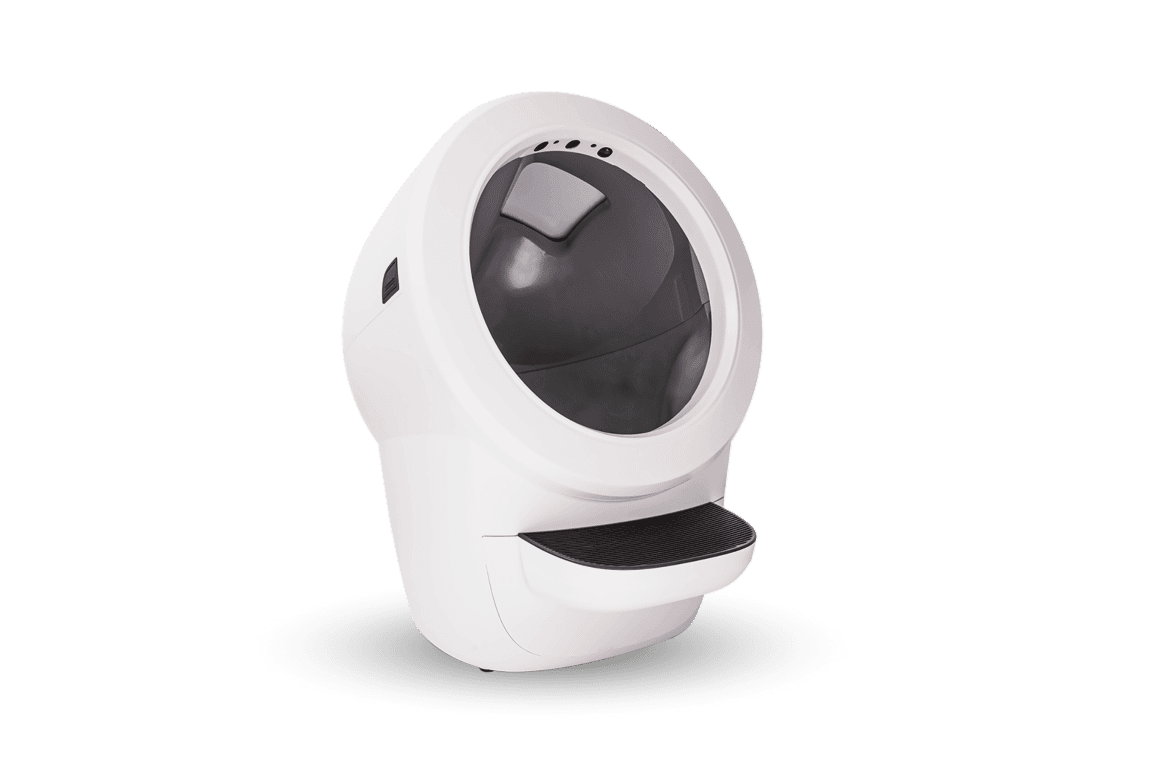
Litter-Robot 4 is a Wi-Fi-connected self-cleaning cat litter box built around a rotating globe. After a cat exits and the selected delay passes, the globe rotates. Clean litter moves through the sifting screen while clumps fall through the waste port into the drawer below. The globe then returns a fresh bed of litter to its normal position.
Current Whisker guidance positions it for up to four cats weighing 3 to 25 pounds. It uses OmniSense detection, QuietSift cycles, SmartScale weight identification, drawer-level sensing, litter-level sensing, a night light and the free Whisker app. It does not have the WasteID system or built-in cameras found farther up the current lineup.

The machine starts at about $699 before bundles and accessories. Direct Whisker purchases include a 90-day in-home trial under current terms, with the customer responsible for return shipping. Read the exact warranty and return conditions at purchase because bundles can include different coverage.
Litter-Robot 4 Specs: Dimensions, Weight and Capacity
Litter-Robot 4 is roughly 27 inches wide, 22 inches deep and 29.5 inches tall, with an appliance weight around 24 pounds. Whisker lists about 16.5 inches of interior headroom and a 15.75-inch opening. These numbers should be checked against the cat and the complete placement area.
| Decision | Litter-Robot 4 specification | Household consequence |
|---|---|---|
| Cat weight | 3 to 25 pounds | Kittens below the minimum cannot use automatic mode |
| Household capacity | Up to 4 cats | More cats shorten drawer and cleaning intervals |
| Exterior size | About 27 W x 22 D x 29.5 H inches | Needs appliance space plus front access |
| Interior headroom | About 16.5 inches | Large cats need a real turn-and-posture check |
| Litter | Firm clumping litter | Weak clumps and oversized particles impair sifting |
| Connectivity | 2.4 GHz Wi-Fi | App use depends on compatible home Wi-Fi |
Place the unit where the cat has an open approach and the owner can pull the drawer, lift the bonnet and reach the globe. A tight closet may fit the outer dimensions but still fail the maintenance test. Protect the power cord from chewing and moisture.
Living With Litter-Robot 4
The Litter-Robot 4 self-cleaning cat litter box replaces the scoop after many visits, but its dimensions, drawer, sensors and accessories still shape daily use. A Litter-Robot 4 LitterHopper or hopper can automate top-ups on compatible configurations, while a shield or bundle may change entry and floor protection. None removes sensor and carpet limitations: placement must follow current Whisker guidance, and weight accuracy depends on a stable approved surface.
| Frequency | What the robot does | What the owner still does |
|---|---|---|
| After a visit | Delays, rotates, sifts and resets | Confirms normal operation and observes the cat |
| As needed | Reports drawer and litter level | Adds litter and changes the liner |
| Weekly range | Contains separated waste | Empties drawer, wipes surfaces and checks sensors |
| Periodically | None | Unplugs, disassembles approved parts and deep cleans |
| During faults | Stops or sends an alert | Provides a manual box and troubleshoots safely |
Cat Acceptance Was Not the Same for Both Cats
Newt, the confident cat, explored and used the unit almost at once. Ripley watched the cycle, hissed and needed more time. The archived account describes Ripley acclimating over several weeks, although its introduction labels the test as two weeks; it does not provide a separate dated acclimation log. The supported lesson is that the two cats accepted the box at different speeds.

That difference is more useful than an average “easy setup” claim. A slow cat should not be forced inside or trapped near a cycle. Put the robot beside the familiar box, use the cat's normal compatible litter, leave the old box available and keep automatic cycling off until the cat uses the new bed comfortably.
Drawer and Odor Routine
The two-cat household emptied and cleaned the drawer about once or twice weekly and used grocery bags successfully. The exact interval belongs to that home. Cat size, stool volume, urine clump size, litter, humidity and how waste lands in the drawer all change capacity.
Prompt sifting and a carbon-filtered drawer reduced the household's odor exposure, but “odor free” should not be treated as a universal result. A torn liner, saturated filter, residue on the globe, loose stool or missed clumps can create odor. The right response is inspection and cleaning, not adding fragrance until the source is hidden.
How the Whisker App Performed
The app separated cats by weight and surfaced visit and weight information in the multi-cat home. The archived record describes noticing a small weight change in a senior cat and adjusting the routine. That is a useful awareness signal, but it is not a veterinary interpretation.

SmartScale identification is most reliable when cats differ enough in weight. Similar-weight cats can be misassigned. Confirm trends against direct observation and a veterinary scale when weight loss, appetite, urine output or visit frequency changes.
Ownership Friction and Dog Interference
Occasional sensor lights and errors still required attention, and a hard level surface supports weight accuracy. Whisker sells a carpet tray when an approved stable base is needed. Do not improvise a platform that rocks, blocks sensors or changes how the drawer seats.
The home also had a puppy that could put her head into the opening and trigger extra cycles. A robot does not solve dog access merely because waste eventually enters a drawer. Placement, a pet gate or a dog-restricted room may still be necessary.
Webvet may earn a commission when you click through to Whisker, at no extra cost to you.
 $65 · no membership
Have a health question about your cat?
A licensed vet can assess your cat over video and prescribe online when it's appropriate.
 Talk to a vet
- Licensed vets
- All 50 states
- same-day Rx
Webvet may earn a commission if you book.
Cleaning Litter-Robot 4 Without Creating New Problems
Emptying the drawer is quick: pull it out, close the liner, inspect the compartment and fit a new liner so it does not block sensors or bunch above the rim. Standard grocery bags worked in the archived home, though purpose-fitted white liners can support accurate level readings.
For a deeper clean:
- Turn off and unplug the unit.
- Remove waste and litter according to the manual.
- Separate only parts Whisker identifies as washable.
- Keep the base and electronics dry.
- Remove residue from the globe, screen, seals and waste opening.
- Dry every part fully before reassembly and reset the scale after adding litter.
Do not use harsh fragrance or incompatible cleaners where residue contacts paws. Never hose down the powered base. If urine reaches electronics or a fault persists after approved cleaning, stop automatic use and contact the manufacturer.
Compatible Litter for Litter-Robot 4
Standard-weight clumping clay is the simplest default. It should form a firm clump before the cycle begins, pass through the screen at the intended particle size and avoid creating excessive dust on sensors and tracks. Loose clumps break into clean litter; very light litter can affect sensing and travel farther from the entrance.
The separate best litter for Litter-Robot guide compares four compatible products and explains fill-line, crystal, pellet and liner-sticking problems. A veterinarian-directed substrate takes priority over machine convenience. If a recovering or medically managed cat needs paper or non-clumping litter, use a compatible manual box.
Litter-Robot 4 vs 5 and Other Alternatives
A Litter-Robot 4 vs 5 comparison starts with the cats, not the model numbers. Litter-Robot 4 supports cats from 3 to 25 pounds and up to four cats. Litter-Robot 5 raises the published range to 30 pounds, supports up to five cats, adds WasteID, increases headroom and changes the display and drawer distribution. The standard 5 has no built-in camera, while 5 Pro adds dual cameras.
A Litter-Robot 3 vs 4 decision is different because it compares an older platform with the established fourth generation. Owners should compare condition, support, safety systems, app functions and repair cost before replacing a working unit. Outside Whisker, open-top and lower-priced automatic boxes may fit a cat that dislikes the enclosed globe. Our automatic litter box comparison covers those mechanisms without calling every alternative a direct substitute.
Which Litter-Robot Is Better, Litter-Robot 4 or Litter-Robot 5?
Litter-Robot 5 is better for cats from 25 to 30 pounds, five-cat households, owners who want WasteID and buyers who value its larger interior, improved drawer distribution and LCD onboarding. Litter-Robot 4 is the better value when its 3-to-25-pound range and four-cat capacity already fit the home.
Litter-Robot 5 adds WasteID and a larger cat range. Litter-Robot 5 Pro adds built-in cameras for visual monitoring. Neither upgrade erases drawer work, cleaning or cat-acclimation risk. Read the Litter-Robot 5 review for the standard model's no-camera decision.
This comparison uses the documented two-week multi-cat test for Litter-Robot 4 and current official specifications for Litter-Robot 5. WebVet did not obtain a separate Litter-Robot 4 for a new test. Choose the newer model only when its capacity, WasteID or space solves an observed constraint, not because the archived test can predict another household.
Webvet may earn a commission when you click through to Whisker, at no extra cost to you.
Can I Trade My Litter-Robot 4 for a Litter-Robot 5?
Do not assume a permanent trade-in credit. Manufacturer promotions change, and a discount advertised in one period may be gone when you buy. Check Whisker's current upgrade or referral terms directly and compare them with the resale value of a working, cleaned Litter-Robot 4.
Before selling or transferring a connected device, remove it from the account, erase personal app information as supported, clean it thoroughly and disclose faults honestly. Shipping a large used robot can consume much of a nominal resale price.
The documented two-week multi-cat test does not establish a resale value, and WebVet did not obtain a separate unit to test a trade-in process. Verify the promotion, accepted serial numbers, condition rules, return shipping and account-removal steps in writing. A private sale may pay more, but it also shifts cleaning, disclosure and transport responsibilities to the owner.
How Should Reddit Reports Inform a Litter-Robot 4 vs 5 Decision?
Community reports are useful for discovering recurring ownership questions, but they cannot identify the right model without the household facts. Reddit discussions often mix older firmware, accessories, bundle prices and individual cat behavior. Use them to build a checklist, then verify specifications and support steps against current primary sources.
Choose Litter-Robot 4 when price matters and its size range is sufficient. Choose Litter-Robot 5 when WasteID, the larger interior or the 30-pound ceiling solves a specific problem. Choose Litter-Robot 5 Pro only when integrated video has real value.
The most relevant Reddit question is whether another owner describes the same cat size, box location and maintenance tolerance. The documented two-week multi-cat test is stronger evidence for its recorded household, but WebVet did not obtain a separate unit and does not treat either the archive or a forum thread as universal. Verify model specifications and current support after community research.
Is the Litter-Robot 4 Really Worth It?
It can justify its cost for a household that will use daily automation, needs weight and visit trends, has a compatible cat and can afford the appliance without neglecting other care. Brand recognition alone does not justify buying a robot litter box.
The question of Litter-Robot 4's real worth depends on the work it removes and the work it leaves. In the documented home, quiet sifting reduced daily scooping while drawer changes, cleaning and alerts remained. Give those observed time savings a value, then compare them with purchase price, supplies, floor space and cat-acclimation risk.
The value equation includes:
- Purchase price, mat, ramp, filters, liners and warranty.
- Compatible litter and any LitterHopper accessory.
- Time saved from daily scooping.
- Time retained for drawer handling, wiping and deep cleaning.
- Risk that a cautious cat never accepts the globe within the trial.
The broader automatic litter box comparison shows open-top, lower-priced and rake-based alternatives.
What Are the Common Problems With Litter-Robot 4?
Common problem categories include sensor interruption, inaccurate weight data on an unsuitable surface, drawer-full readings affected by bag placement, litter-level errors, overfilling, weak clumps, globe residue, Wi-Fi onboarding and a cat or dog repeatedly entering during a cycle.
Troubleshoot in a safe order:
- Provide a clean manual litter box.
- Turn off and unplug the robot if motion or obstruction is uncertain.
- Read the exact light or app error.
- Check level placement, drawer seating, liner, litter fill and visible sensor areas.
- Use the current Whisker support procedure for that code.
- Stop if the fix requires opening electronics or defeating a safety layer.
What Is the Life Expectancy of a Litter-Robot 4?
There is no responsible universal number. Use intensity, cleaning, litter dust, moisture, power events, part wear and repair support vary by home. The archived two-week record cannot prove lifespan, and a reviewer's multiyear anecdote cannot guarantee another unit.
Buy based on current warranty coverage, replaceable-part availability and the cost of ownership if a repair occurs after coverage. Keep the manual box as a durable fallback even when the robot is working normally.
The archived test lasted two weeks, so it cannot establish life expectancy for the white household unit or the wider product line. Ask whether the current warranty covers the likely repair, whether Whisker still sells the relevant part and whether local disposal or shipping makes replacement costly. Preventive cleaning can reduce avoidable residue, but it cannot guarantee motor, sensor or electronic life.
What Are the Downsides of Using a Litter-Robot?
The downsides of using a Litter-Robot are price, size, an enclosed entrance, clumping-litter requirements, continuing drawer and deep-clean work, sensor dependence and a learning curve for both cat and owner. App data can also encourage false confidence if people watch graphs instead of the cat and waste.

For this archived household, the convenience was real and the friction was manageable. That is a useful case, not a promise. Cat acceptance remains the first gate.
The practical downside is an exchange of tasks. Quiet automatic sifting reduced daily scooping, while the large appliance still needed weekly drawer and cleaning work. Occasional sensor lights needed attention, a hard level surface supported weight accuracy, and the open entrance allowed dog interference. Owners must decide whether that remaining routine is easier than consistent manual scooping.
Webvet may earn a commission when you click through to Whisker, at no extra cost to you.
Frequently Asked Questions
How often do you empty Litter-Robot 4?
The documented two-cat home emptied and cleaned the drawer about once or twice weekly. Your interval can be shorter or longer based on cat count, body size, urine clump volume, stool volume, litter and drawer packing. Empty when the app or direct inspection indicates it is needed, and inspect the liner and waste rather than waiting for a calendar day.
Does Litter-Robot 4 work on carpet?
It requires a stable, level base for accurate weight sensing. Current Whisker guidance provides a carpet-tray option for approved carpet placement. A soft, uneven or rocking surface can distort SmartScale readings and operation. Do not use a homemade support that blocks feet, changes the load path or prevents safe drawer access.
What litter works best in Litter-Robot 4?
A standard-weight, firm-clumping clay litter is the safest default. It should make tight clumps within the selected cycle delay and sift without excess dust or oversized particles. Avoid non-clumping pellets and substrates the manual excludes. If a veterinarian requires a different litter for recovery or health monitoring, use a manual box that supports that need.
Can Litter-Robot 4 identify two cats at the same weight?
Weight-based identification may struggle when cats are very close in weight. The app can still report visits and weights, but the individual assignment may be uncertain. Treat those readings as prompts for observation, not proof of which cat used the box. Camera-based visual identification is a Litter-Robot 5 Pro and Whisker+ feature.
Does Litter-Robot 4 eliminate odor?
It can reduce odor by moving clumps into a filtered drawer after the cycle. It cannot eliminate odor from loose stool, saturated litter, residue, a torn liner or an overdue drawer. Clean the source, maintain the filter and monitor diet or health changes when odor changes suddenly.
Is Litter-Robot 4 safe for kittens?
Automatic mode is only for cats that meet Whisker's current minimum weight and other instructions. A small kitten can use the globe only under the conditions the manufacturer allows, often with automatic cycling disabled. Keep a manual box available and never bypass weight or motion safety systems.
$65 · no membershipHave a health question about your cat?
A licensed vet can assess your cat over video and prescribe online when it's appropriate.
Talk to a vet- Licensed vets
- All 50 states
- same-day Rx
Webvet may earn a commission if you book.

Editor
The Webvet Editorial Team is the in-house group of pet-care editors and writers behind Webvet, operated by Smart Pet Collective. The team researches, writes, and maintains Webvet's pet health, behavior, and medication content. Every article follows a defined editorial process: research from reputable veterinary and scientific sources, careful drafting, mandatory review of medical content by a credentialed veterinarian, and dated publication. Health and medication articles are medically reviewed by a licensed veterinary professional before they go live and are kept current over time.
Veterinarian · BVMS MRCVS
Dr. Pippa Elliott, BVMS, MRCVS, is a veterinarian with nearly 30 years of experience in companion animal practice. Dr. Elliott earned her Bachelor of Veterinary Medicine and Surgery from the University of Glasgow. She was also designated a Member of the Royal College of Veterinary Surgeons. Married with 2 grown-up kids, Dr. Elliott has a naughty Puggle named Poggle, 3 cats and a bearded dragon.