How to Figure Out What Breed Your Dog Is (and How Accurate DNA Testing Really Is)
Discover what appearance, records, and DNA can tell you about your dog's ancestry. Learn how to read breed percentages, understand Supermutt, and put unexpected results in context.

This article contains affiliate links. Webvet may earn a commission when you buy through them, at no extra cost to you.
Finding out what breed your dog is starts with separating clues from evidence. A curly tail, a familiar coat pattern, or a shelter label can suggest an answer. Documented parentage and a DNA ancestry test give you different, more useful ways to investigate it.
For owners with an unknown mix, Embark offers a way to move beyond appearance and explore the ancestry in their dog's DNA. The rewarding part is learning something new about a dog you already know. Understanding how those results are produced helps you enjoy the discoveries without asking the report to explain everything.
 Sponsored
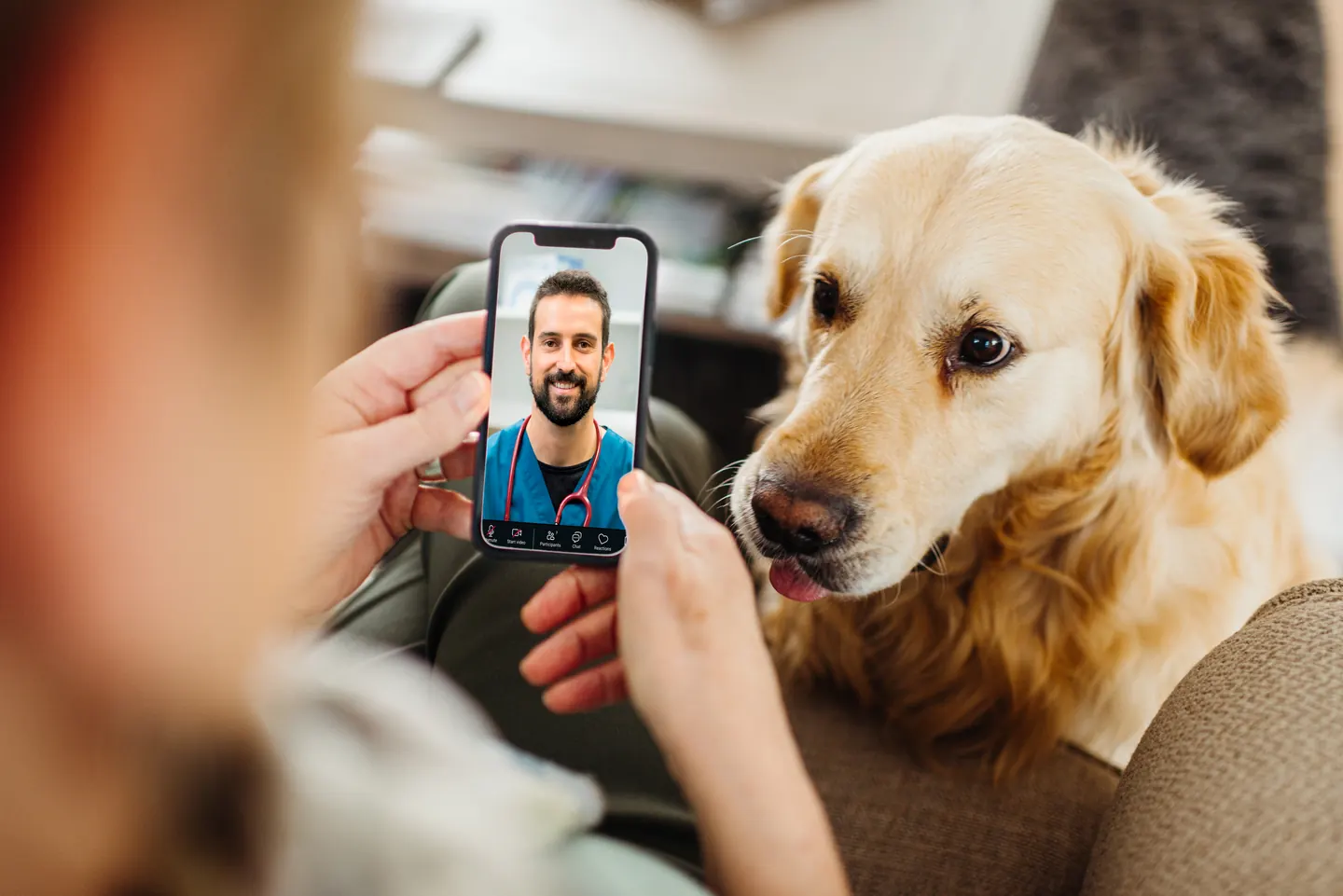
Have a health question about your pet?
Talk to a licensed vet at Dutch over video or message, including nights and weekends.
Use code Pets60
Plans start at $12/month · covers up to 5 pets
- Licensed vets in most states
- Rx for 150+ conditions
- 4.7 on Trustpilot
Finding out what breed your dog is: start with the evidence
To identify your dog's breed, first check any reliable records about their parents. If that history is missing, a dog DNA test can provide an ancestry estimate by comparing genetic information with reference dogs. Appearance, a veterinarian's visual impression, and an online questionnaire can supply clues, but they cannot establish the complete mix.
The same approach works whether you have a small dog, an adult rescue, or a puppy whose looks keep changing. Ask where each breed label came from before treating it as a fact.
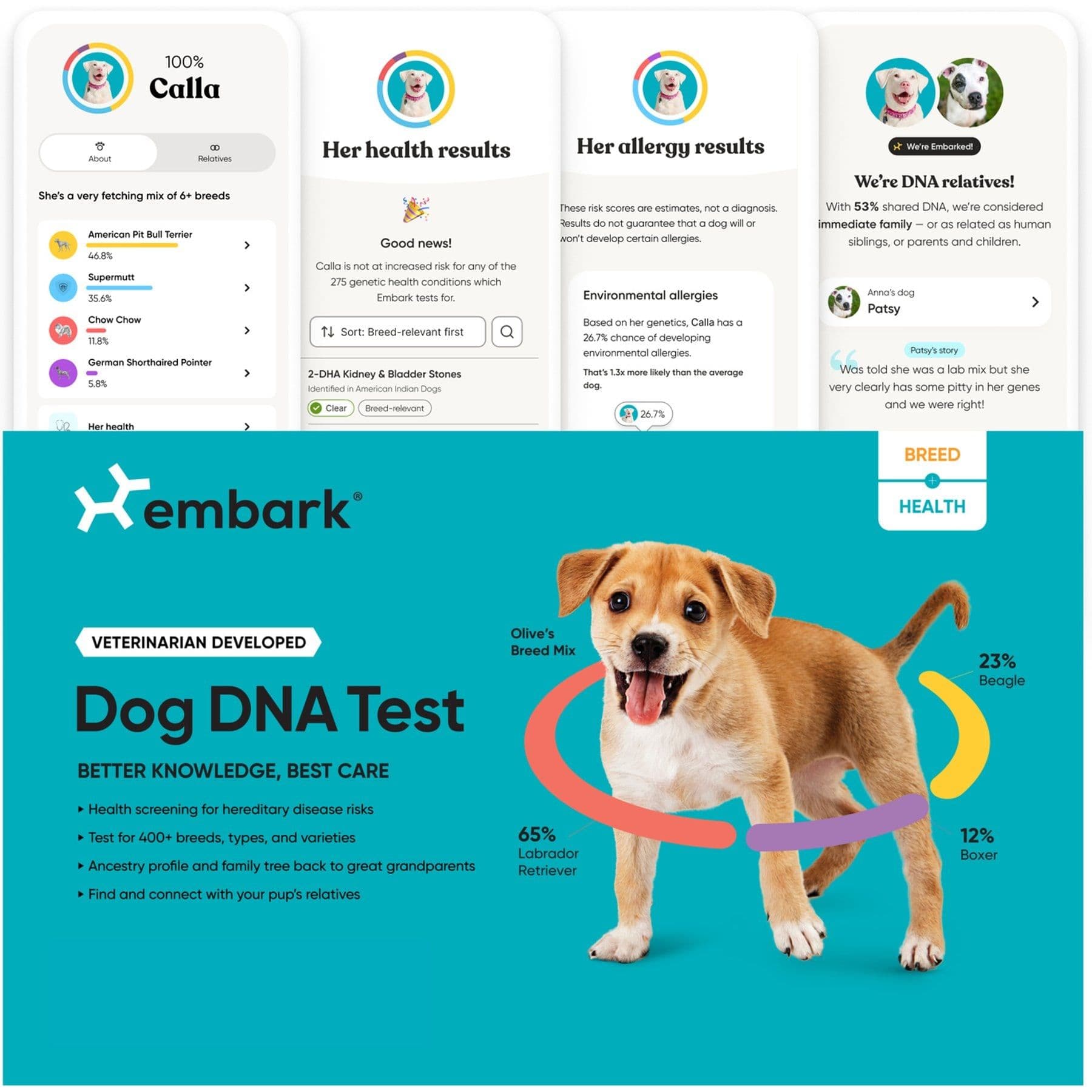
Explore your dog's ancestry and tested inherited health risks with Embark Breed + Health.
Webvet may earn a commission when you click through to Chewy, at no extra cost to you.
- Start with records. Ask the breeder, shelter, or previous owner whether a label reflects documented parentage, an earlier DNA result, or someone's best guess.
- Describe what you can see. Coat, ears, build, and size are useful observations. Record them without assuming that each feature belongs to just one breed.
- Choose the evidence you still need. If you want to find out what your dog is mixed with, a genetic ancestry test addresses that question more directly than another photo comparison.
| Evidence | What it can tell you | What to keep in mind |
|---|---|---|
| Documented parentage | The reported identity and lineage of known parents | Check the source and supporting records |
| Appearance or a photo app | Breeds with a similar look | Visual clues are not ancestry proof |
| DNA ancestry estimate | Genetic similarities to breeds in a reference database | Results depend on the database and analysis; small segments can remain uncertain |
| Pedigree registration | The registry's recorded lineage and registration status | A consumer ancestry report does not create registration |
A dog described as a Beagle or an Affenpinscher may have known parents, or may simply resemble that breed. The name alone does not tell you which explanation applies. Likewise, asking a phone assistant to identify your shelter dog for free is a different exercise from checking ancestry. Start with the source of the claim, then decide whether you want to explore further.
What appearance can tell you

Appearance gives you a sensible starting point for curiosity. Notice your dog's overall build, coat length and texture, ear position, muzzle, and tail. Several breeds may share those features, and a mixed-breed dog can inherit a combination that does not look like any single ancestor.
A University of Florida survey compared photo-based breed guesses from more than 5,000 dog experts with DNA profiles for 100 dogs. Its published examples show why a plausible visual label may capture only part of the picture:
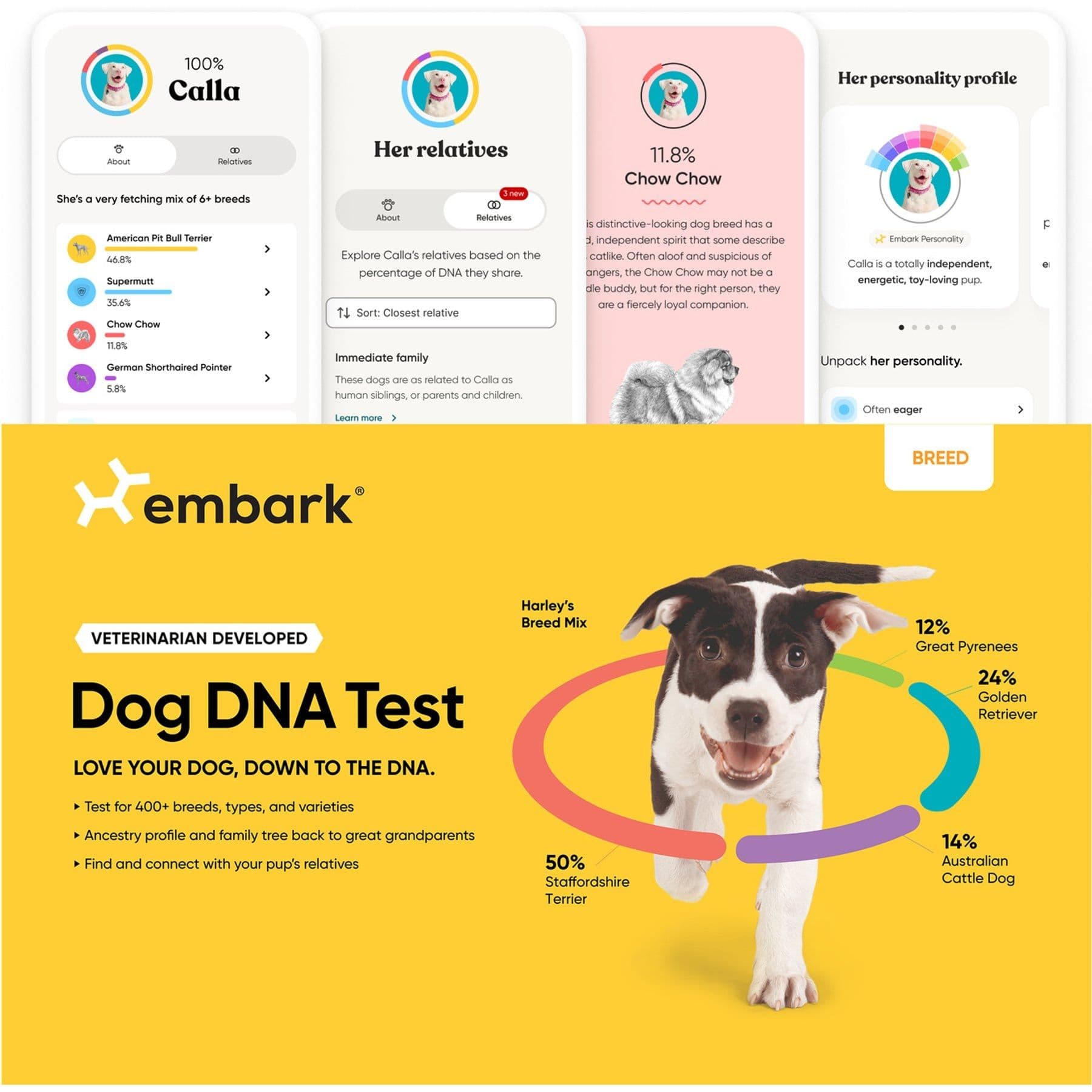
Discover your dog's breed ancestry and genetic relatives with Embark Breed ID.
Webvet may earn a commission when you click through to Chewy, at no extra cost to you.
- Dog 02: The listed DNA result included 50% Catahoula Leopard Dog and 25% Siberian Husky. Labrador Retriever led the visual responses, and neither of those major DNA findings appeared among the five top guesses.
- Dog 06: The listed DNA result was 50% American Foxhound and 50% Beagle. Beagle and Foxhound were the first two visual responses.
The University of Florida results chart lets you compare the photographs, guesses, and reported DNA findings. These examples illustrate variable agreement between appearance and ancestry estimates. They do not measure the accuracy of today's DNA kits.
Paw size is a good example of a tempting shortcut. Big paws do not prove a particular breed, and they cannot give you a dependable ancestry breakdown. A broad head or short coat has similar limits. These are physical features, not genetic labels.
Keep visual descriptions specific:
- “Short coat, deep chest, and long legs” records what you actually see.
- “Looks a little like a Labrador” leaves room for uncertainty.
- “Definitely half Labrador” claims a percentage that appearance cannot establish.
“Pit bull” also needs care. It is commonly used as an umbrella label for several breeds and dogs with a similar appearance, rather than one exact genetic identity. A DNA report may name particular breeds that differ from a shelter's broader description. Our guide to adopting a pit bull explores preparing for the individual dog joining your household.
 Sponsored
Vet care that's always there
Unlimited video calls and messaging with licensed vets for less than a typical vet visit. One membership covers up to five pets.
Use code Pets60
Plans start at $12/month · covers up to 5 pets
- Licensed vets in most states
- Rx for 150+ conditions
- 4.7 on Trustpilot
Photo apps, Google, and AI breed guesses
Photo tools can make the guessing process enjoyable, especially when friends disagree about your dog's ears or coat. Their answers are based on pictures and visual patterns. Photo apps do not analyze DNA, even when the result appears precise or includes percentages.
A dog-breed quiz usually works from your answers about appearance or behavior. A quiz asking which dog breed would suit your family has a different purpose: helping you think about a future pet. Neither type establishes the ancestry of the dog already on your sofa.
Can I take a picture of my dog to determine breed?
A clear picture can help you find dogs with a similar appearance, but it cannot determine your dog's complete breed mix. A dog scanner app works with what is visible in the uploaded picture. It cannot see ancestry that does not produce an obvious physical feature.
If you try one, use a clear image without clothing obscuring the dog. Treat the suggested breeds as possibilities to explore rather than a confirmed family tree.
Is there a free app that can identify dog breeds?
Yes. For example, Siwalu's Dog Scanner listing offers a free download with in-app purchases and accepts photos, videos, or gallery uploads. Check the current listing for included features. Its image-based suggestions are visual matches, not a free DNA test or confirmation of genetic ancestry.
The useful question is what the app analyzed. If you supplied only a picture, the answer is a picture-based guess, regardless of the number of breeds displayed.
Can AI tell me what type of dog this is?
AI can suggest breeds that resemble your dog in a photograph. It may also produce a confident answer when the evidence is limited, so ask it to explain which visible features informed the guess.
Use that explanation as a conversation starter. An AI answer cannot confirm genetic ancestry, identify every breed in a mixed dog, or replace a test of an actual sample.
Explore your dog's ancestry and tested inherited health risks with Embark Breed + Health.
Webvet may earn a commission when you click through to Chewy, at no extra cost to you.
How DNA identifies your dog’s ancestry
A dog DNA breed identification test examines genetic markers from a sample and compares patterns with reference populations. Those reference dogs help the company recognize ancestry associated with particular breeds. The report estimates which patterns are present in your dog and how much of the tested ancestry they represent.

With an at-home kit, you collect a cheek swab using the supplied instructions and send it for laboratory analysis. Buying the test online does not make the analysis an online questionnaire. The physical sample is what allows the laboratory to examine your dog's DNA.
Embark says its ancestry testing covers more than 400 breeds, types, and varieties. Its Breed ID option focuses on breed ancestry and genetic relatives, making it a straightforward choice when your main question is, “What breed is my dog?”
Embark Breed ID is the ancestry-focused option. Embark Breed + Health adds genetic health screening and physical-trait information.
Choosing an ancestry or health-inclusive kit
Choose between them by deciding what you want to learn:
- Breed ancestry and relatives: Breed ID addresses the ancestry question.
- Ancestry plus tested genetic health risks: Breed + Health includes a broader report. Our guide to dog DNA health screening explains what those results mean and why genetic risk is not a diagnosis.
- A comparison before buying: Our best dog DNA test guide compares Embark with other options and explains which features matter.
Discover your dog's breed ancestry and genetic relatives with Embark Breed ID.
Webvet may earn a commission when you click through to Chewy, at no extra cost to you.
A kit can also be a thoughtful way to share a new adopter's curiosity. If you are buying for someone else, our guide to a DNA kit as a gift for new dog owners explains how to choose the option and leave activation in the recipient's hands.
How accurate are dog DNA tests?
Dog DNA tests do work by analyzing genetic information, but “accuracy” needs a clear definition. Reading a genetic marker correctly is one task. Estimating which ancestral breed contributed a segment of DNA is another. A high laboratory measurement figure does not mean that every small breed percentage is equally certain.
Embark reports more than 99% breed ancestry accuracy. That is a manufacturer claim about its ancestry analysis. It should not be turned into a promise that every detail of an individual dog's result is exact or that the report proves every ancestor.
Three features help explain how dog DNA testing works and why results can differ:
- The reference population: The company needs relevant comparison dogs to recognize the ancestry being tested.
- The genetic markers analyzed: Those markers provide the information used to compare your dog with the reference population.
- The analysis method: Algorithms interpret the patterns and estimate the breed contributions.
Embark also identifies its research partnership with Cornell University College of Veterinary Medicine. That collaboration supports the company's work on canine genetics. For an individual report, the most useful evidence remains the relevant reference population, testing method, and explanation of uncertain ancestry.
For an owner, the practical approach is to examine the report's evidence and uncertainty together. A visual mismatch is a reason to ask a question, not proof of a laboratory error. Equally, a DNA result that matches an earlier guess is not an independent accuracy test. Ask how the company assigned an unexpected segment and how confident it is in that assignment.
Making sense of unexpected breed results
A surprise in your dog's DNA results does not automatically mean the test is wrong. It may mean the original visual guess captured only part of the story. Rescue dogs often arrive with incomplete histories, and the traits you notice most can be a poor guide to the full mix.
Start with the major ancestry findings before investigating small percentages. This keeps a tiny, uncertain segment from overshadowing the clearest information in the report. It also makes it easier to distinguish an unexpected result from an unexplained one.
Use this reading order:
- Read the main breed breakdown. Note the largest contributions without trying to match every percentage to a physical feature.
- Read any uncertainty explanation. Some segments may not support a confident assignment to one breed.
- Explore relatives and ancestry context. These can add interest without proving an exact identity for every unknown ancestor.
- Ask a specific question if needed. “What does this uncertain segment mean?” is more useful than asking support to make the result match an earlier guess.
Embark uses “Supermutt” for ancestry that cannot confidently be assigned to a particular breed. According to Embark's explanation of Supermutt, distant mixed ancestry can leave small DNA segments that are difficult to identify reliably. Possible trace breeds are estimates, not a definitive list of hidden ancestors.
Supermutt is not a breed or a judgment about your dog. It communicates a limit in assigning those portions of ancestry. Keeping that uncertainty visible is more helpful than pretending every segment has a certain answer.
Understanding your dog as an individual

Breed information adds to what you know about your dog. It does not replace what you learn by living together. Your dog's preferred games, comfort around visitors, response to training, and ability to settle deserve attention in their own right.
Use the report to inspire questions rather than predictions. You might become curious about a breed's history or try a new enrichment activity. Let your dog's actual response tell you whether the activity is enjoyable.
- Watch what holds your dog's interest.
- Build routines around the dog in front of you.
- Adjust activities to their age, comfort, and abilities.
- Keep track of individual progress rather than comparing your dog with a breed stereotype.
The most satisfying result is often a richer picture of a familiar companion. An unexpected ancestry mix does not erase what you already know about them.
Questions about finding your dog’s breed
Frequently Asked Questions
How much does it cost to find out what breed your dog is?
Prices and promotions change through the year, so check the current price on the linked product page. Compare a breed-only kit with a health-inclusive kit according to the information you want, then check the current total before ordering.
Can Google identify dog breeds?
Google image tools can suggest dogs or breeds with visual similarity to a photograph. A photo search does not analyze DNA, so a matching image is a clue rather than evidence of the complete ancestry mix. It is useful for exploring a resemblance, not confirming breed percentages.
Can DNA testing prove that my dog is purebred?
An ancestry estimate may be consistent with a purebred dog, meaning one breed in the test's reference database. That is different from pedigree registration, which depends on a registry's records and requirements. If you need registration or verified parentage for a particular purpose, check that organization's requirements before choosing a test.
Why can littermates have different breed percentages?
Full siblings inherit different combinations of DNA from the same parents. Their inherited DNA segments can therefore differ, and a test may report different estimated percentages. Those differences do not by themselves establish that the dogs have different parents.
Will my dog's breed results ever change?
An ancestry estimate can change if a testing company reanalyzes the same DNA with an updated reference database or method. Your dog's inherited ancestry has not changed. The interpretation of the available genetic information has become different, so read the company's explanation of any update.
Does a breed result tell me how my dog will behave?
A breed result cannot predict your dog's individual behavior. Genetics can contribute to behavior, but learning and environment also matter, and dogs with similar ancestry can act differently. Use the report as background information while responding to your dog's observed needs, preferences, and behavior.

Editor
The Webvet Editorial Team is the in-house group of pet-care editors and writers behind Webvet, operated by Smart Pet Collective. The team researches, writes, and maintains Webvet's pet health, behavior, and medication content. Every article follows a defined editorial process: research from reputable veterinary and scientific sources, careful drafting, mandatory review of medical content by a credentialed veterinarian, and dated publication. Health and medication articles are medically reviewed by a licensed veterinary professional before they go live and are kept current over time.
Related reading

Best Dog DNA Test 2026: How Embark Compares to other Dog DNA Tests

The Best Gift for New Dog Owners: Why a DNA Kit Is the Unexpected One

How to Tell If Your Dog Has a Genetic Health Condition: A Guide to DNA Health Screening
