Easily Digestible Dog Food: What Makes a Meal Gentle on Your Dog's Gut
A vet explains easily digestible dog food in plain terms: how cooking method, protein source, fat level, fiber, and ingredient count make a meal gentle on the gut, and where gently cooked fresh food fits.

BVMS MRCVS
Medically reviewed by Dr. Pippa Elliott, BVMS MRCVS · Last reviewed

This article contains affiliate links. Webvet may earn a commission when you buy through them, at no extra cost to you.
Easily digestible dog food is food your dog can break down and absorb with little left over, which usually means firmer stool, less gas, and fewer upset stomachs. No single ingredient makes a meal gentle. Digestibility comes from a handful of factors working together: how the food is cooked, the protein it uses, its fat and fiber levels, and how many ingredients it contains.
This guide explains those factors in plain language, so you can judge any label rather than rely on a brand's claims. It also shows where gently cooked fresh food fits, using the published guaranteed analysis of one fresh line as a worked example, and when a sensitive stomach needs a veterinarian rather than a new food.

 Sponsored
Have a health question about your dog?
Talk to a licensed vet at Dutch over video or message, including nights and weekends.
Use code Pets60
Plans start at $12/month · covers up to 5 pets
- Licensed vets in most states
- Rx for 150+ conditions
- 4.7 on Trustpilot
What makes dog food easily digestible
In plain terms, digestibility is defined as the share of a food that your dog absorbs rather than passes in the stool. If a dog eats 100 grams of protein and absorbs 85, that protein is 85 percent digestible. Researchers measure it by comparing what goes in with what comes out, and the higher the figure, the more of each meal actually feeds your dog.
What's the easiest digestible food? For most dogs it is a complete diet built from high-quality, named animal proteins, cooked enough to make nutrients available but not so harshly that protein is damaged, with moderate fat and fiber and a short ingredient list. Those plain-language digestibility factors apply to every format, whether kibble, canned, or fresh.
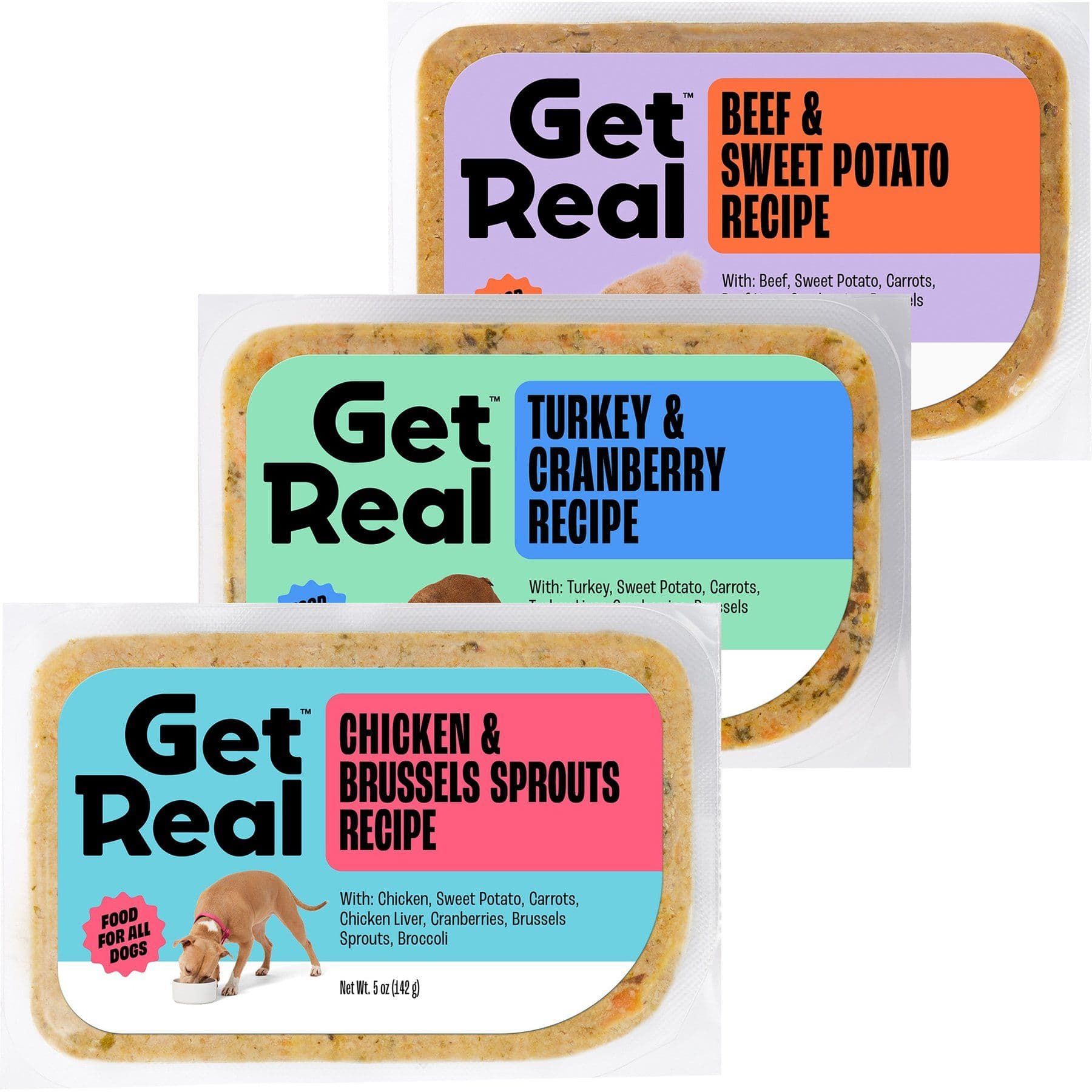
Want to see which protein your dog digests best? The Get Real Sampler Pack includes beef, chicken, and turkey recipes, each gently cooked with 10 ingredients or less plus vitamins and minerals.
Webvet may earn a commission when you click through to Chewy, at no extra cost to you.
- 1Five factors make a food easy to digest: cooking method, protein source, fat level, fiber, and ingredient count.
- 2Stool quality is the best home signal: firm, formed, smaller stool usually means good digestibility.
- 3Gently cooked foods with named proteins and short ingredient lists are a sensible starting point.
- 4Repeated vomiting, diarrhea over 48 hours, or weight loss need a vet, not another food change.
Use the table below to check those five factors on any label before you buy. It is not a brand roundup; it is the checklist a vet uses to judge whether a food is likely to sit well.
| Five digestibility factors | What to look for | Why it matters for digestion |
|---|---|---|
| Cooking method | Gently cooked, or cooked at moderate temperature | Cooking makes starch and protein available; very harsh heat can damage some protein |
| Protein source | A named animal protein listed first, such as chicken, turkey, or beef | Named, high-quality proteins are usually more digestible than vague meat by-products |
| Fat level | Moderate fat for sensitive dogs | Very rich meals can upset some stomachs and raise pancreatitis risk in susceptible dogs |
| Fiber | Low to moderate crude fiber | Some fiber firms stool; too much lowers overall digestibility and adds bulk |
| Ingredient count | A short ingredient list | Fewer ingredients mean fewer possible triggers and easier troubleshooting |
The best easily digestible dog food for your dog is the one that scores well on these factors and produces firm stool on your own dog, because individual tolerance varies. Easily digestible senior dog food follows the same rules, with extra attention to palatability and soft texture, since older dogs may have dental pain or a reduced appetite.
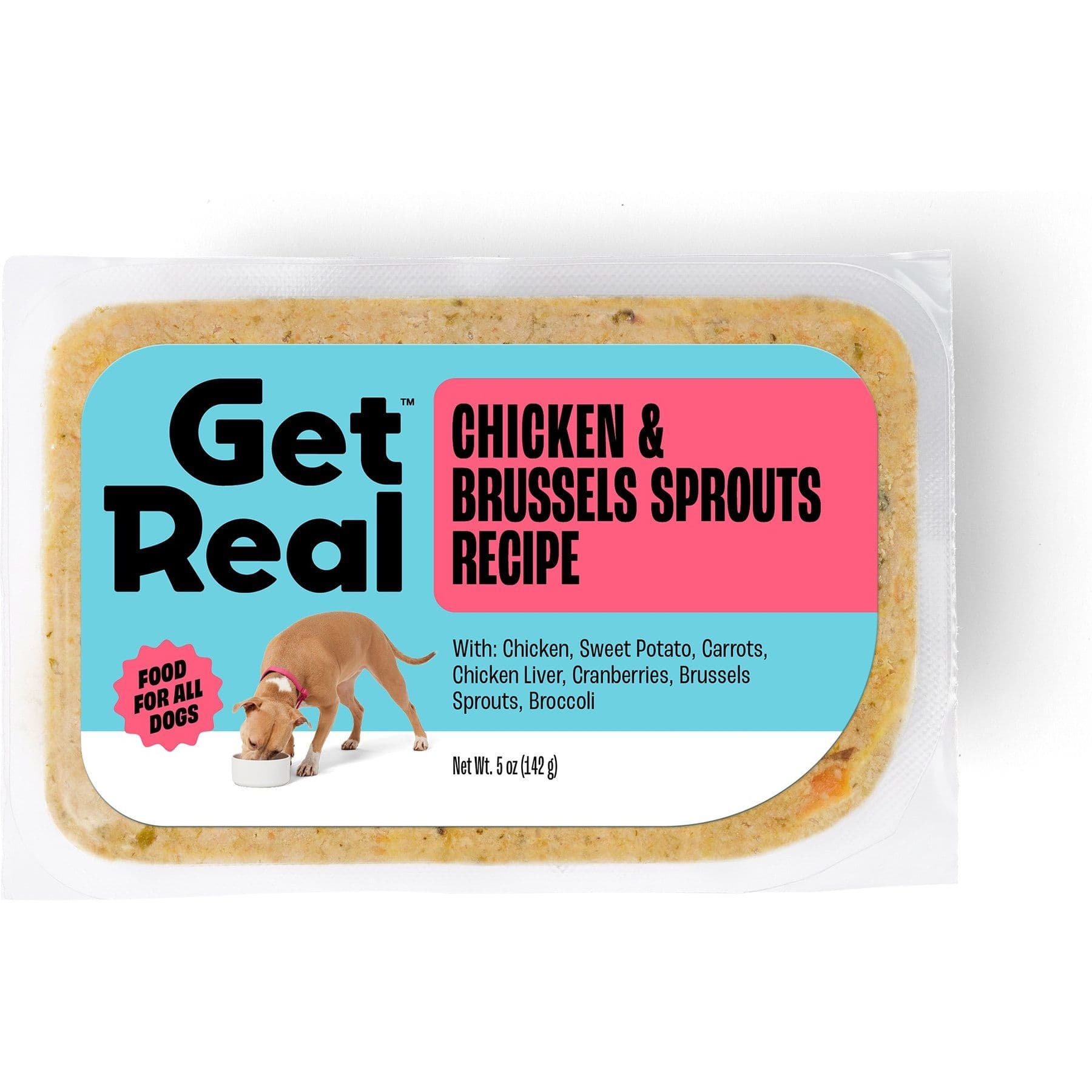
Looking for a named protein and a short list to trial? Get Real Chicken & Brussels Sprouts is gently cooked and frozen, with chicken as the protein and 10 ingredients or less plus vitamins and minerals.
Webvet may earn a commission when you click through to Chewy, at no extra cost to you.
Digestibility and your dog's gut health
A dog food for digestive health does two jobs. It delivers nutrients in a form the small intestine can absorb, and it sends the right amount of material on to the large intestine, where gut bacteria ferment fiber and help keep stool formed. Food that is poorly digested in the small intestine reaches the colon in larger amounts, which can mean more gas, softer stool, and bigger piles to pick up.
That is why stool quality is the most useful signal you have at home. You cannot see digestibility, but you can see its result every day. Firm, formed stool that is easy to pick up, with little gas and a steady appetite, is strong evidence that a food suits your dog. Our guide to dog poop on fresh food shows what normal looks like after a switch.
There is no single best dog food for digestive health. The best food for your dog's digestive system is the one that produces these signs:
- Firm, formed stool most days, without mucus or blood.
- Normal frequency, usually one to three times a day for an adult dog.
- Little gas and no frequent gurgling stomach sounds.
- A steady appetite and stable body weight.
The gut also needs time to adapt to any change. Even an excellent food can cause soft stool if it is introduced overnight, because gut bacteria and digestive enzymes adjust gradually. Switch over 7 to 10 days, or 10 to 14 days for a sensitive dog, as explained in our guide to transitioning dog food.
 Sponsored
Vet care that's always there
Unlimited video calls and messaging with licensed vets for less than a typical vet visit. One membership covers up to five pets.
Use code Pets60
Plans start at $12/month · covers up to 5 pets
- Licensed vets in most states
- Rx for 150+ conditions
- 4.7 on Trustpilot
How cooking method changes digestibility
Cooking temperature and processing change food in ways that matter to the gut. Heat breaks down the structure of starches so enzymes can reach them, and it unfolds proteins so they are easier to digest. Cooking also kills harmful bacteria. But heat has a ceiling: very high temperatures can bind some amino acids, such as lysine, to sugars and make them less available, a process known as the Maillard reaction.
Most dry kibble is made by extrusion, which cooks a dough under high heat and pressure before it is shaped, dried, and coated. Extrusion makes starch highly digestible and gives kibble its long shelf life. Gently cooked fresh food is cooked at lower temperatures, then chilled or frozen, so it keeps more moisture and less heavily processed protein. Here is how the common formats compare on processing:
- Extruded kibble: cooked at high heat and pressure, then dried to about 10 percent moisture; starch is very digestible, but some protein quality can be lost to heat.
- Canned food: cooked in the sealed can to sterilize it, which is a long, high-heat step, but the food keeps its moisture.
- Gently cooked fresh food: cooked at moderate temperatures, then chilled or frozen; high moisture and less heat damage to protein.
- Raw food: not cooked at all, so it can carry Salmonella, Listeria, and other bacteria that put dogs and the people handling the food at risk, which is why the AVMA policy on raw protein diets discourages feeding raw animal protein.

Does that difference show up in dogs? Research suggests it can. In a Journal of Animal Science study of dogs fed human-grade foods, healthy adult dogs fed mildly cooked human-grade diets digested them more completely than an extruded dry diet and produced less fecal output. It was a small study in healthy dogs, so it does not prove that every fresh food beats every kibble, but it supports what many owners notice after a switch: smaller, firmer stool.
Pre-digested and homemade options
Some owners ask about pre-digested dog food. The closest real example is a hydrolyzed protein diet, where proteins are broken into very small pieces so the immune system is less likely to react to them. These are prescription foods used for food allergy trials and some gut diseases, and they should be chosen with your veterinarian rather than as a general digestive food.
Others want to cook at home. An easily digestible homemade dog food recipe is possible, but it is hard to get right. Most home recipes found online are missing essential nutrients, as the WSAVA Global Nutrition Guidelines point out. If you want to cook for your dog long term, use a recipe formulated by a board-certified veterinary nutritionist through the American College of Veterinary Nutrition. For short-term home care during a mild upset, see our guide on what to give a dog with an upset stomach.
Commercial gently cooked food sits between these options: cooked at moderate temperatures like home cooking, but formulated to be complete and balanced. The Get Real Turkey & Cranberry Recipe, for example, is gently cooked and then frozen in pre-portioned packs, and formulated to meet AAFCO nutrient profiles for all life stages.
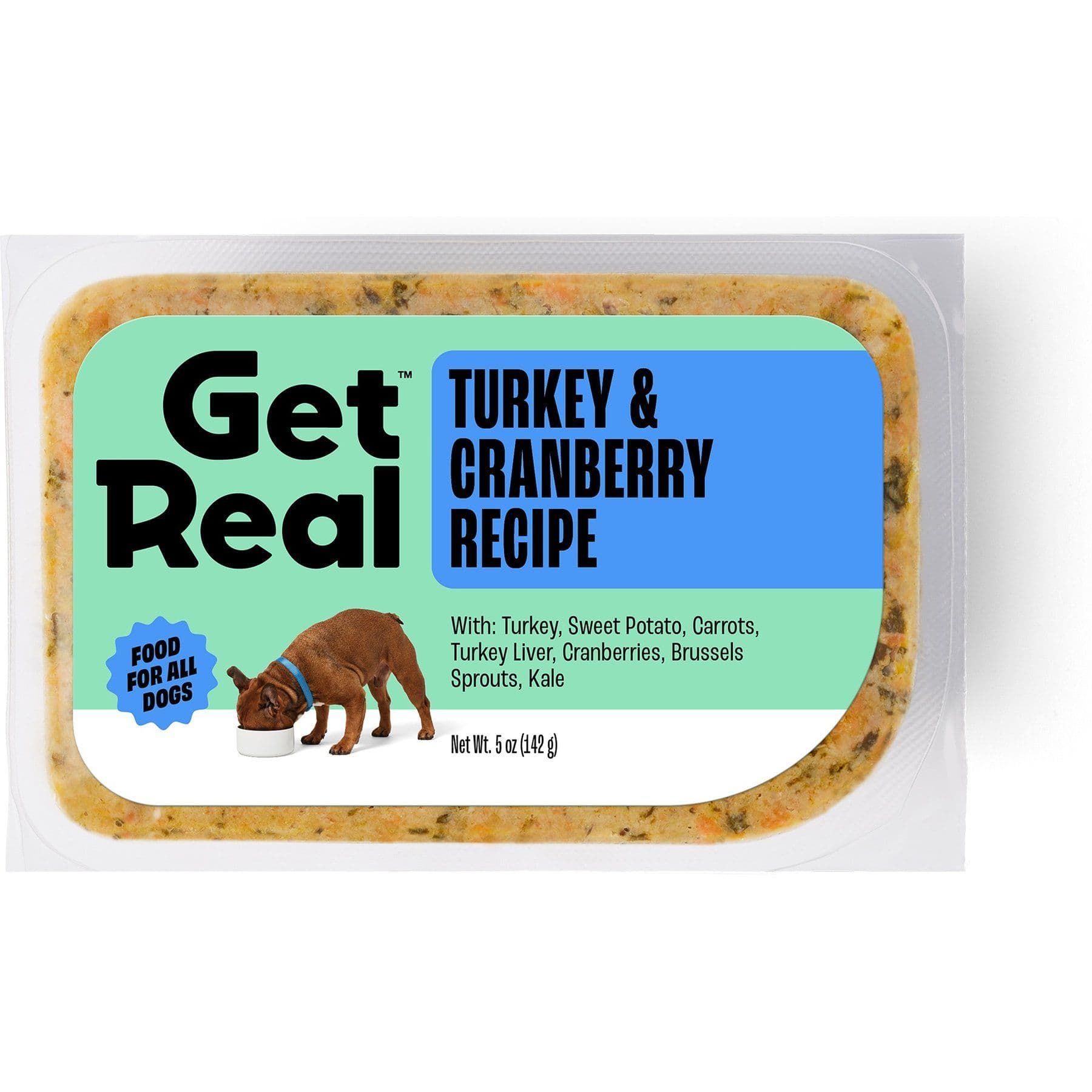
Curious how a gently cooked food suits your dog? Get Real Turkey & Cranberry is gently cooked, frozen in pre-portioned packs, and thaws in the fridge in 12 to 24 hours for the 12 oz size.
Webvet may earn a commission when you click through to Chewy, at no extra cost to you.
Proteins that are easiest for dogs to digest
Which meat is easiest for dogs to digest? Lean poultry, such as chicken and turkey, is among the most digestible choices for most dogs, along with eggs and white fish. Beef and lamb are also well digested by many dogs, though fattier cuts can be harder on a sensitive stomach. What matters most is a named protein of good quality, cooked well, rather than one meat that suits every dog.
What if a dog can't digest protein properly? True protein maldigestion is uncommon and usually points to a medical problem, such as exocrine pancreatic insufficiency, where the pancreas does not make enough digestive enzymes, or an inflammatory gut disease. Signs include large, pale, greasy stools and weight loss despite a big appetite. Those dogs need a diagnosis from a veterinarian, not just a different protein.
Protein quality depends on more than the animal. Muscle meat and organ meats such as liver are highly digestible, while connective tissue, hide, and heavily processed by-products are less so. A label that names the protein, such as chicken or beef, tells you more than a vague term like meat meal. High-quality named proteins listed first are a good sign that protein makes up a meaningful share of the recipe. The easiest protein for dogs to digest is usually the one your dog has eaten without trouble before, provided it is cooked plainly and fed in a balanced diet. When choosing an easily digestible protein for dogs, consider these points:
- Lean poultry: chicken and turkey are widely tolerated and moderate in fat when skin is removed.
- Eggs: cooked egg is a very digestible protein, often used in bland home diets.
- White fish: low in fat and gentle for many dogs.
- Beef: well digested and palatable, though fattier cuts may not suit dogs prone to pancreatitis.
- Novel proteins: less common meats are sometimes used for allergy trials under veterinary guidance.

For most healthy dogs, a named poultry or beef recipe is a sound start. The Get Real Chicken & Brussels Sprouts Recipe uses chicken as its named protein, while the Get Real Beef & Sweet Potato Recipe lists beef first, followed by sweet potato, carrots, and beef liver.
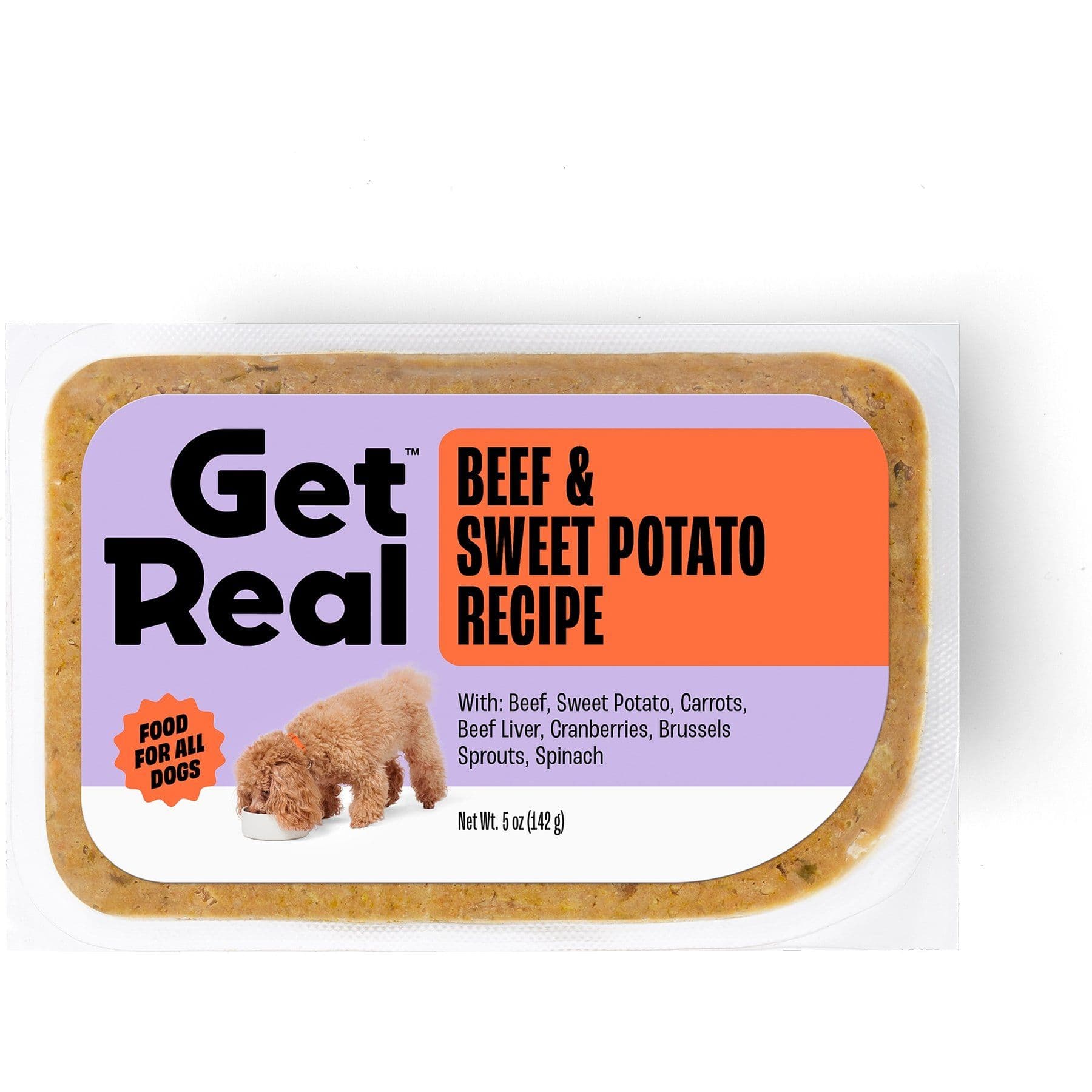
Prefer a beef recipe with a short, readable label? Get Real Beef & Sweet Potato lists beef first, followed by sweet potato and vegetables, with 10 ingredients or less plus vitamins and minerals.
Webvet may earn a commission when you click through to Chewy, at no extra cost to you.
Fat level, fiber, and ingredient count
Fat is a concentrated source of energy and is generally well digested, but a large or rich fatty meal can upset some dogs, and in susceptible dogs it can contribute to pancreatitis. That is why moderate fat for sensitive dogs is a sensible default. A low fat easily digestible dog food is most useful for dogs with a history of pancreatitis, some gut diseases, or high blood fats, usually on a vet's advice.
To compare fat levels between foods, look at the guaranteed analysis. Remember that it is reported as fed, so wet and fresh foods look lower than kibble because of their water content. To compare fairly, convert to a dry matter basis in three steps: subtract the moisture percentage from 100 to find the dry matter, divide the nutrient figure by the dry matter, and multiply by 100. Because guaranteed analysis figures are minimums and maximums, not actual nutrient percentages, the result is only an illustration. One worked example, computed from hypothetical guaranteed minimums and maximums rather than actual values:
- Hypothetical fresh food at 75 percent maximum moisture: 25 percent dry matter, so a 7 percent fat minimum is 7 divided by 25, times 100, or about 28 percent on a dry matter basis.
- Hypothetical kibble at 10 percent maximum moisture: 90 percent dry matter, so a 16 percent fat minimum is 16 divided by 90, times 100, or about 18 percent on a dry matter basis.
- The takeaway: a fresh food that looks lower in fat on the bag can be richer once water is removed, so always compare on the same basis.
Fiber works in the other direction. A modest amount helps form stool and feeds beneficial gut bacteria, but high fiber lowers overall digestibility and increases stool volume. Most dogs with a sensitive gut do well on low to moderate fiber. When you want a low fat dog food that is easy to digest, check both the fat minimum and the fiber maximum, since both shape how the food sits.
Short ingredient lists are the third piece. Fewer ingredients mean fewer potential triggers, and if your dog reacts, it is easier to work out why. A short list is especially helpful for dogs with suspected food sensitivities. Here is how the three label factors usually play out for a sensitive dog:
- Fat: moderate rather than very high, and lower on your vet's advice for dogs with pancreatitis.
- Fiber: low to moderate crude fiber, with stool quality as your guide.
- Ingredients: a short, recognizable list built around one named protein.
Is grain-free dog food easier to digest? Grains such as rice and oats are well digested by most dogs once cooked, so removing them does not by itself make a food gentler. Grain-free diets have also been the subject of an FDA investigation into a possible link with heart disease in dogs, so discuss any grain-free choice with your veterinarian. The better question is whether the overall recipe suits your dog's gut.
Where gently cooked fresh food fits
What is the most easily digested dog food? For an individual dog, it is the complete and balanced diet that produces firm stool on that dog. Use this decision rule: choose a food whose label carries an AAFCO nutritional adequacy statement for your dog's life stage, check it against the five factors above, switch over 7 to 10 days, and keep it if stool is firm and formed at two to four weeks. The WSAVA Global Nutrition Guidelines use the same approach: start from a complete diet, then judge it by the dog's own response.
Get Real, Chewy's fresh dog food line, lines up well with the five factors. Get Real recipes are gently cooked, made with 10 ingredients or less plus vitamins and minerals, and each one publishes its guaranteed analysis. Here is what each factor looks like:
- Cooking method: gently cooked, then frozen.
- Protein: three named-protein recipes, Chicken & Brussels Sprouts, Beef & Sweet Potato, and Turkey & Cranberry, with beef listed first in the beef recipe.
- Ingredient count: a short list of human-grade ingredients.
- Completeness: formulated to meet AAFCO nutrient profiles for all life stages, including growth of large dogs.
- Format: pre-portioned 5 oz, 12 oz, and 24 oz packs, fed as a full meal, a topper, or a kibble mixer.

Here is a recipe fat and fiber comparison from the published guaranteed analysis, with the protein and moisture figures alongside:
| Recipe (guaranteed analysis) | Protein min | Fat min | Fiber max | Moisture max |
|---|---|---|---|---|
| Chicken & Brussels Sprouts | 10% | 8.5% | 1% | 75% |
| Beef & Sweet Potato | 9% | 7% | 1.5% | 75% |
| Turkey & Cranberry | 8% | 10% | 1% | 75% |
Reading the table through the five factors, all three recipes list a fiber max of 1 to 1.5 percent and a moisture max of 75 percent. These are label guarantees, minimums and maximums, not actual nutrient percentages, so they do not rank the recipes against one another. The practical test is how your dog's stool and appetite respond over the first few weeks. If your dog has a history of pancreatitis, choose the recipe together with your veterinarian.
Practical handling matters for digestion too. Thaw packs in the fridge for 12 to 24 hours (35 to 48 hours for the 24 oz size), use thawed food within 3 to 5 days, and discard any food left at room temperature for more than two hours. A switch over 7 to 10 days, or 10 to 14 days for sensitive dogs, gives the gut time to adjust to a Get Real Beef & Sweet Potato Recipe or any other new food.
For a dog with a sensitive gut, there are three gentle ways to bring fresh food in, each with a different level of change:
- As a topper: a spoonful or two on the usual food, which changes the diet very little and lets you watch stool for a week.
- As a kibble mixer: the 5 oz mixer pack added to a reduced kibble portion, a partial change that is easy to reverse.
- As a full meal: a complete switch over 7 to 10 days, best once you know your dog tolerates the recipe.
Sensitive stomachs, vomiting, and when to see the vet
A dog with a sensitive stomach may need more than an easily digestible food. Product picks and diet choices for that situation are covered in our guide to dog food for sensitive stomachs, and owners comparing fresh options can also see the Petful guide to fresh dog food for sensitive stomachs.
Vomiting is a different question from digestibility. A dog throwing up undigested food, or a dog that vomits up undigested food hours after eating, may be regurgitating rather than vomiting, eating too fast, or have a problem with stomach emptying. An old dog vomiting undigested food deserves a prompt check, since age raises the chance of an underlying disease. Our guide to dog throwing up undigested food explains the causes and what each one looks like.
Similarly, a dog that is not digesting food, or a dog passing undigested food in stool regularly, may have a medical problem with digestion or absorption rather than a food problem. These vet red flags are worth knowing:
- Vomiting more than once in a day, or repeatedly over several days.
- Diarrhea lasting more than 48 hours, or any diarrhea with blood.
- Large, pale, greasy stools, or visible undigested food in most stools.
- Weight loss, lethargy, belly pain, or refusing food.
Easily digestible dog food questions
Frequently Asked Questions
What dog food is easy to digest?
Gently cooked fresh food and well-made complete diets with named proteins, moderate fat, and short ingredient lists are easy to digest for most dogs. Lower fat recipes suit dogs that react to rich meals, and digestible protein sources such as poultry help too.
What is the easiest food for a dog to digest?
A simple recipe built on a lean protein such as cooked chicken or turkey, with moderate fat and low fiber, is the easiest for most dogs. For long-term feeding it must be complete and balanced, not just plain meat.
Is fresh dog food easier to digest than kibble?
Often, yes. Lower cooking temperature and higher moisture content mean fresh food is less heavily processed, and a small study found mildly cooked human-grade diets were digested more completely than an extruded diet in healthy dogs.
Is low fat dog food easier to digest?
For dogs that react to rich meals, yes. Moderate fat is easier on a sensitive gut, and dogs with pancreatitis risk usually need a lower fat food chosen with their veterinarian. Healthy dogs digest fat well.
Is easily digestible food good for senior dogs?
Yes. Senior dogs often benefit from soft, palatable, easily digested meals. A food formulated for all life stages covers adult maintenance, and gradual changes protect an older dog's gut.
How can I tell if a food is easy on my dog's gut?
Look for firm stool, less gas, a steady appetite, and stable weight after the switch. Changes in stool show within days, so you will have a good picture within two to four weeks.
Veterinarian · BVMS MRCVS
Dr. Pippa Elliott, BVMS, MRCVS, is a veterinarian with nearly 30 years of experience in companion animal practice. Dr. Elliott earned her Bachelor of Veterinary Medicine and Surgery from the University of Glasgow. She was also designated a Member of the Royal College of Veterinary Surgeons. Married with 2 grown-up kids, Dr. Elliott has a naughty Puggle named Poggle, 3 cats and a bearded dragon.
Related reading

Fresh Dog Food for Underweight Dogs: Safe Weight Gain, Step by Step

How to Tell if a Dog Food Is Right for Your Dog: 8 Signs Vets Check

Get Real Feeding Guide: How Much to Feed as a Full Meal or Topper
