Dog Throwing Up Undigested Food: When to Worry
A vet explains why your dog is throwing up undigested food, how regurgitation differs from vomiting, what the timing after eating means, and when it is an emergency.

BVMS MRCVS
Medically reviewed by Dr. Pippa Elliott, BVMS MRCVS · Last reviewed

This article contains affiliate links. Webvet may earn a commission when you buy through them, at no extra cost to you.
This article contains affiliate links. Webvet may earn a commission when you buy through them, at no extra cost to you.
A dog throwing up undigested food is most often regurgitating, not vomiting. Regurgitation is effortless and brings up tube-shaped, bile-free food, usually within minutes of eating, and the top causes are eating too fast and esophagus problems. Vomiting hours later, with retching or bile, needs a vet.
Why Is My Dog Throwing Up Undigested Food?
When a dog throwing up undigested food brings up food that still looks like food, the single most important question is not what it looks like but how it came up. Did your dog heave and retch with a tense belly, or did the food just slide out with no warning? That one detail separates two very different problems.
Most of the time, undigested food that comes up quickly and effortlessly is regurgitation. The usual culprits are simple: a dog who eats too fast, who gulped too much water after a meal, or who exercised right after eating. Less often, it points to an esophagus that is not moving food properly. Food that comes up hours later, partly digested and mixed with yellow bile, is true vomiting and points to the stomach or intestines instead.
It helps to picture the plumbing. The esophagus is a one-way muscle tube that carries each mouthful from the throat to the stomach. The stomach then mixes food with acid and slowly drips it into the intestines.
Regurgitation is a failure at the first stage: food never cleared the tube, so it slips back out looking exactly as it went in. Vomiting is a coordinated reflex from the stomach that fires the abdominal muscles to expel contents that have already been partly broken down.
The good news: a single episode in a dog who is bright, eating, and acting like himself is rarely an emergency. The list below covers the common reasons, from harmless to serious, and the rest of this guide shows you how to tell them apart by timing, appearance, and your dog's behavior.
| Likely cause | How urgent | Telltale clue |
|---|---|---|
| Eating too fast | Usually mild | Food comes up seconds to minutes after a gulped meal, dog wants to eat it again |
| Exercise or water right after eating | Usually mild | Undigested food appears soon after a post-meal walk or big drink |
| Megaesophagus or esophagus problem | See a vet | Repeated regurgitation, tube-shaped food, weight loss, coughing |
| Dietary indiscretion (garbage, rich food) | Watch closely | Vomiting partly digested food, soft stool, comes and goes |
| Delayed gastric emptying or obstruction | See a vet | Whole food vomited 6 to 12 hours later, may be foul-smelling |
| Pancreatitis or GI illness | Vet soon | Repeated vomiting, yellow bile, belly pain, off food, lethargy |
Regurgitation vs. Vomiting: The Difference That Changes Everything
Veterinarians treat regurgitation and vomiting as two separate problems with two different organs behind them. Telling them apart at home is the most useful thing you can do before you call your vet, because it changes what is likely wrong and how worried you should be.
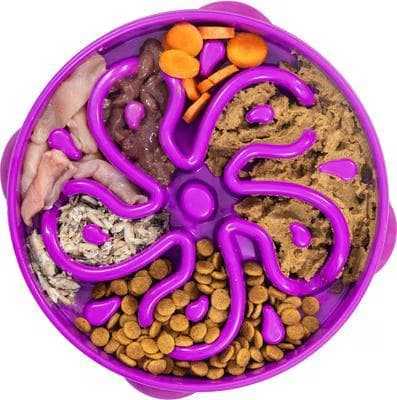
A maze-pattern slow-feeder bowl that makes fast eaters work for each bite, reducing the gulping and swallowed air that trigger regurgitation and vomiting. Holds up to 4 cups.
Webvet may earn a commission when you click through to Chewy, at no extra cost to you.
Regurgitation: passive, fast, and effortless
Regurgitation is a passive event. The food never reached the stomach, so it slides back up out of the esophagus with no heaving and almost no warning. According to the Merck Veterinary Manual, regurgitation is effortless and has few warning signs, in contrast to vomiting, which is an active process preceded by nausea. The material is undigested, often shaped like a tube or sausage, and has no yellow bile. Many dogs look puzzled and try to eat it again.
Because the food never touched stomach acid, regurgitated material is also pH-neutral and rarely smells sour. Often it is coated in clear, slippery saliva or foamy mucus that the esophagus produced.
Watch the moment it happens: a regurgitating dog typically lowers his head and the food simply falls out, sometimes while he is walking or lying down. There is no warning gulp, no arched back, and no abdominal squeeze, which is the clearest sign you are not looking at true vomiting.
Vomiting: active, with retching and bile
Vomiting is a forceful, whole-body effort. Your dog will usually look nauseous first (drooling, lip-licking, restlessness), then heave with a contracting belly before the food comes up. Heavy drooling and lip-smacking before a heave is a classic nausea signal, and you can read more about what excessive drooling in dogs can mean. Vomited food is partly digested and frequently mixed with yellow or green bile, because it spent time in the stomach.
- 1Regurgitation = passive, effortless, undigested tube-shaped food, no bile, usually within minutes of eating.
- 2Vomiting = active heaving, nausea first, partly digested food, often yellow bile, can be hours after eating.
- 3Which one your dog is doing tells your vet whether to look at the esophagus or the stomach.
If you are not sure which one you saw, try to film the next episode on your phone. A 10-second clip showing whether your dog heaved or not is more useful to your vet than any description. For a broader look at the queasy dog, our guide to an upset stomach in dogs walks through the early signs and first steps.
Timing Matters: What Throwing Up 1, 4, 8, or 12 Hours After Eating Means
How long after eating the food comes up is the most reliable home clue you have. As a rule of thumb, the sooner it appears, the more likely it is harmless regurgitation. The longer the delay, the more likely it is true vomiting from a stomach that is not emptying normally. Use this timing tool as a starting point, not a diagnosis.
| Time after eating | Most likely mechanism | What to do |
|---|---|---|
| Seconds to 10 minutes | Regurgitation: ate too fast, gulped water, or excited play | Slow the meals down; monitor |
| 10 to 60 minutes | Regurgitation from an esophagus issue (e.g. megaesophagus) or fast eating | Note if it repeats; mention to vet |
| 2 to 6 hours | Gray zone: could be delayed regurgitation or early vomiting | Watch for bile, retching, weight loss |
| 6 to 12 hours | True vomiting: delayed gastric emptying or partial obstruction | Call your vet, especially if it repeats |
| 12+ hours, whole food | Stomach not emptying, possible blockage | Vet visit; do not wait it out |

 $65 · no membership
Worried about your dog's vomiting or diarrhea?
A licensed vet can examine your dog over video and prescribe treatment online when it's appropriate.
 Talk to a vet
- Licensed vets
- All 50 states
- same-day Rx
Webvet may earn a commission if you book.
Eating Too Fast: The #1 Cause and How a Slow-Feeder Bowl Fixes It

For most dogs who throw up undigested food right after a meal, the answer is embarrassingly simple: they ate too fast. A dog who inhales kibble swallows large amounts of food and air at once. The stomach overfills and stretches, and the easiest exit for the excess is straight back up. The food looks completely undigested because it was only in the stomach for seconds.
You will often see this in greedy eaters, in homes with more than one dog (where competition speeds everyone up), and after a missed meal when your dog is extra hungry. The classic tell is that your dog promptly tries to re-eat the food and then acts perfectly fine. This is annoying but usually harmless, and it is very fixable.
Compare coverage choices for your pet, then request a quote directly on Lemonade.
- Check a price for your pet
- Review available coverage choices
- See the terms before you decide
Eligibility, waiting periods, limits and exclusions apply.
Webvet may earn a commission when you click through to Lemonade, at no extra cost to you.
There is a second mechanism worth knowing about in gulpers. A dog who bolts dry kibble swallows a lot of air too, a habit called aerophagia. That swallowed air bloats the stomach and triggers the overflow reflex, which is why fast eaters often burp, gulp, or bring food back up within a minute.
Dry kibble can also swell as it absorbs saliva and stomach fluid, adding to the volume the stomach is suddenly asked to hold. Adding a little warm water to the kibble a few minutes before serving lets it expand in the bowl instead of inside your dog, which can ease this in some fast eaters.
The fast-eater fix kit

These tools force your dog to work for each mouthful, which slows eating and lets the stomach keep up:
Slow-feeder bowl: a maze or ridged bowl that turns a 30-second gulp into a few minutes of nibbling.
Puzzle feeder or snuffle mat: spreads kibble out so your dog must hunt for each piece.
Muffin-tin trick: split the meal across the cups of a muffin tin so no single mouthful is huge.
Smaller, more frequent meals: two or three smaller portions instead of one big bowl reduces overfilling.
Feed dogs separately: remove the competition that makes multi-dog homes race through dinner.
Building a consistent routine helps too. A predictable dog feeding schedule keeps your dog from getting frantically hungry, and our guide to a diet for sensitive stomachs can help if rich food keeps triggering trouble.
Megaesophagus and Other Esophageal Causes of Regurgitation
When a dog regurgitates undigested food again and again, especially with weight loss, the esophagus itself may be the problem. The esophagus is the muscular tube that pushes food to the stomach. If it loses tone or gets narrowed or blocked, food never makes it down and comes back up.
Megaesophagus is the most common cause of true regurgitation in dogs. The esophagus stretches and loses the ability to move food, so food pools and is regurgitated, often shortly after eating. It can be congenital (present from birth in breeds like Wire-haired Fox Terriers and Miniature Schnauzers) or acquired later from conditions such as myasthenia gravis, lupus, or a hormonal disease.
Other esophageal causes include strictures (a narrowing from scarring), inflammation from acid reflux, a foreign object lodged in the tube, a vascular ring anomaly in puppies, and tumors. All of these tend to produce repeated regurgitation rather than a one-off, and all need a veterinary workup, often with X-rays, to diagnose.
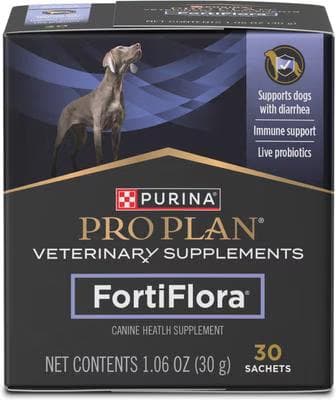
The #1 vet-recommended probiotic for dogs. Daily powder sachets with live probiotics support healthy digestion and firmer stools, and can help dogs coping with diarrhea or GI upset.
Webvet may earn a commission when you click through to Chewy, at no extra cost to you.
Threw Up Undigested Food but Acts Normal: Should I Worry?
This is the most common version of the question, and the honest answer is: usually not, if it truly was a one-off and your dog is genuinely himself afterward. A single episode of undigested food in a dog who eats fast, then bounces back to normal, is most often harmless regurgitation. Here is how to decide between watching and acting.
Reassure-and-monitor vs. call-the-vet
Pros
- It happened once and not again
- Your dog is bright, playful, and interested in food
- Gums are pink, breathing is normal
- It came up within minutes of a fast meal
- Stools are normal and the belly is soft and not painful
Cons
- It is happening repeatedly or daily
- Your dog is losing weight or refusing food
- There is yellow bile, blood, or a foul smell
- Coughing, gagging, or labored breathing after eating
- Lethargy, a bloated or painful belly, or unproductive retching
Acting normal is reassuring, but it is not a free pass when a symptom repeats. Megaesophagus and even some blockages can leave a dog bright and hungry between episodes. The rule of thumb: one episode plus a totally normal dog means watch and slow the meals down. Two or more episodes, any weight loss, or any breathing change means book a vet visit even if your dog seems fine.
Vomit Appearance Chart: Color, Texture, and What It Signals
Color and texture give your vet useful hints, though no color is a diagnosis on its own. Snap a photo before you clean up. Use this chart to describe what you saw, then read it alongside your dog's behavior and the timing.
| Appearance | Often suggests | Action |
|---|---|---|
| Undigested, tube-shaped, no smell | Regurgitation (ate fast or esophagus issue) | Slow meals; if it repeats, see a vet |
| Yellow or orange foamy liquid | Bile on an empty stomach or pancreatitis | If repeated or with belly pain, vet soon |
| White foam | Empty-stomach acid, nausea, sometimes more serious causes | See our white-foam guide; vet if it repeats |
| Green | Bile, or eating grass | Monitor; vet if frequent |
| Red streaks or fresh blood | Bleeding in the upper GI tract | Call your vet promptly |
| Brown coffee-ground material | Digested blood, possible ulcer | Emergency vet |
| Brown and foul, looks like stool | Possible intestinal obstruction | Emergency vet |
About pancreatitis specifically: the vomit is most often yellow or bilious because the dog has usually stopped eating, so there is little food left to bring up. It tends to come with a painful belly, a hunched posture, low energy, and a recent fatty meal. If you see white foam instead of food, that points more to acid on an empty stomach, and our dedicated guide explains when it is and is not a worry.
When to Call the Vet (and When It's an Emergency)

A one-time episode in a happy, hungry dog can usually be watched at home with smaller, slower meals. The Merck Veterinary Manual notes that vomiting needs a closer look when it comes with blood, abdominal pain, depression, dehydration, weakness, fever, or weight loss, or when it happens more than once or twice a day. The same caution applies to repeated regurgitation.
Book a vet visit (not an emergency) if:
It happens more than once, or keeps happening over days
Your dog is slowly losing weight or seems hungry but cannot keep food down
There is occasional coughing or a wet, rattly cough after meals
A puppy starts regurgitating around weaning onto solid food
Go to the emergency vet now if:
The belly is swollen, hard, or drum-tight, with unproductive retching (possible bloat or GDV)
There is blood, coffee-ground material, or stool-like vomit
Your dog is collapsing, very lethargic, or has pale gums
Labored or fast breathing, fever, and lethargy after regurgitating (possible aspiration pneumonia)
You suspect a swallowed toy, bone, or sock is stuck
- 1One episode plus a normal dog: monitor and slow the meals down.
- 2Repeated episodes, weight loss, or any cough after eating: book a vet visit.
- 3Bloated belly with dry heaving, blood, collapse, or breathing trouble: emergency, go now.
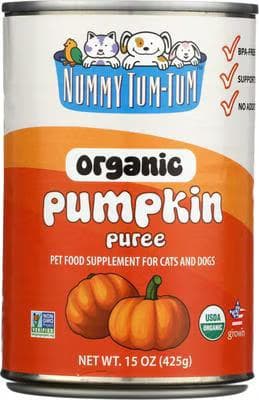
Pure USDA-organic pumpkin puree, no fillers or additives. Adds gentle soluble fiber to firm up loose stool and settle a mildly upset stomach. A simple vet-favorite topper.
Webvet may earn a commission when you click through to Chewy, at no extra cost to you.
Home Remedies and Prevention
If your dog had a single episode and is otherwise bright, you can manage it at home for 12 to 24 hours while you watch. The goal is to rest the gut, then reintroduce food in a way that does not overwhelm the stomach.

Important: do not give human antacids or anti-nausea medicines (famotidine, omeprazole, Pepto-Bismol, or Imodium) on your own. Dosing is weight-based and several human stomach medicines are unsafe for dogs, so any medication must be cleared with your vet first. There is no safe one-size-fits-all dose to give at home.
For prevention, the same fixes that stop fast-eating regurgitation also prevent most repeat episodes: slow-feeder bowls, smaller and more frequent meals, an elevated bowl for tall or older dogs, calm after eating, and a gradual switch whenever you change diets. Sudden food swaps are a classic trigger, so always follow a careful plan for transitioning your dog's food over seven to ten days.
Feeding Fixes: Smaller Meals, the 15-Minute Rule, and Elevated Bowls
A few simple feeding habits prevent most undigested-food episodes in dogs who eat too fast or have a touchy esophagus. None of these replace a vet visit for a dog who is regurgitating repeatedly, but they make day-to-day life much smoother.
The 15-minute rule
The 15-minute rule is a feeding routine: you put the food down for about 15 minutes, then pick the bowl up whether or not it is finished. It teaches grazers and picky dogs to eat at mealtimes instead of nibbling all day, which helps you spot appetite changes early and keeps portions controlled. Some owners also use the phrase to mean waiting about 15 minutes after a walk before feeding (and after eating before exercise) to reduce the risk of stomach upset and bloat in big dogs. Both versions are about structure, not strict science.
Smaller, more frequent meals
Splitting the daily ration into two or three smaller meals keeps the stomach from overfilling and gives it less to push back up. This is one of the most effective, free changes you can make for a fast eater or a dog with a sensitive stomach.
Elevated bowls (with one caution)
A raised bowl can help dogs with esophagus problems, because gravity assists food on its way down. For dogs with megaesophagus, feeding fully upright and staying vertical afterward is a cornerstone of management. One caution: in large, deep-chested breeds without esophagus disease, raised feeders have been debated as a possible bloat factor, so check with your vet before raising the bowl for a giant breed.
Frequently Asked Questions
When to worry about dog throwing up undigested food?
Worry when it happens more than once, when your dog is losing weight, refusing food, or coughing after meals, or when you see yellow bile, blood, or a foul smell. A bloated, hard belly with unproductive retching, collapse, pale gums, or labored breathing is an emergency. A single episode in a bright, hungry dog who ate too fast is usually harmless. Watch closely, slow the meals down, and call your vet if it repeats.
Why is my dog regurgitating undigested food hours after eating?
If recognizable food comes up several hours later, it usually is not regurgitation but vomiting from a stomach that did not empty on time, called delayed gastric emptying or gastric stasis. The food sat in the stomach instead of moving on, then was forced back up still looking whole. Causes include a rich, fatty meal, anxiety, certain medications, or a partial blockage from a swallowed object such as a sock, corn cob, or chew. A telling detail is a strong, sour, fermented smell, which comes from food sitting and souring in the stomach for hours. Food vomited 6 to 12 hours later always deserves a vet call, because a true obstruction is dangerous and can need surgery if missed.
What home remedy can I give my dog for throwing up undigested food?
For a single episode in an otherwise normal dog, offer small sips of water, briefly rest the stomach for a few hours, then feed a small bland meal of boiled chicken and white rice or plain pumpkin. Keep the chicken skinless and unseasoned, and skip onion, garlic, and butter, which can upset the gut further. If it stays down, give several small bland meals before returning to the normal diet over a few days. Slow future meals with a maze bowl and keep your dog quiet, not exercising, right afterward. Skip the fast for puppies, toy breeds, and diabetic dogs, who can drop their blood sugar dangerously. Do not give human antacids or anti-nausea drugs without your vet, since dosing is weight-based and some are unsafe for dogs.
Why is my dog throwing up his food but acting normal?
A dog who brings up undigested food yet stays bright and hungry is most often regurgitating because he ate too fast. The food never reached the stomach, so it comes up effortlessly and your dog feels fine. This is usually harmless if it is a one-off. However, acting normal is not a free pass when it repeats, because conditions like megaesophagus, a partial obstruction, or chronic acid reflux can leave a dog cheerful and eating well between episodes. The pattern matters more than any single day: a dog who looks fine but regurgitates after most meals, or who is quietly losing weight while staying playful, still needs a workup. One episode means monitor and slow the meals; two or more means see your vet.
What is the 15 minute rule for dog food?
The 15-minute rule is a feeding routine: you put the bowl down for about 15 minutes, then remove it whether or not your dog finished. It trains grazers and picky eaters to eat at set mealtimes, helps you spot appetite changes early, and controls portions. Some owners also use it to mean waiting about 15 minutes between exercise and feeding to reduce stomach upset and bloat risk in large dogs. It is about structure and routine rather than strict science.
Should I be worried if my dog throws up undigested food?
Not usually, if it happened once and your dog is bright, playful, and eating normally afterward. A single episode of undigested food right after a fast meal is most often harmless regurgitation. Be worried, and call your vet, if it happens repeatedly, comes with weight loss, bile, blood, coughing, or lethargy, or if your dog has a swollen, painful belly. When in doubt, film an episode on your phone and let your vet review it.
What color is pancreatitis vomit in dogs?
Pancreatitis vomit is most often yellow or bilious, sometimes foamy, because dogs with pancreatitis usually stop eating, so little food is left to bring up and you mainly see bile. It typically comes with a painful, hunched belly, low energy, and a recent fatty meal. Color alone does not diagnose pancreatitis, and yellow vomit can have other causes. If your dog has repeated yellow vomiting with belly pain and is off food, see your vet promptly, as pancreatitis can become serious.
Bottom line: a dog throwing up undigested food is usually regurgitating, and the most common reason is simply eating too fast. Slow the meals, watch your dog, and use the timing and appearance clues above. When the food comes up hours later, when it repeats, or when your dog seems unwell, let your veterinarian take a look.
$65 · no membershipWorried about your dog's vomiting or diarrhea?
A licensed vet can examine your dog over video and prescribe treatment online when it's appropriate.
Talk to a vet- Licensed vets
- All 50 states
- same-day Rx
Webvet may earn a commission if you book.

Editor
The Webvet Editorial Team is the in-house group of pet-care editors and writers behind Webvet, operated by Smart Pet Collective. The team researches, writes, and maintains Webvet's pet health, behavior, and medication content. Every article follows a defined editorial process: research from reputable veterinary and scientific sources, careful drafting, mandatory review of medical content by a credentialed veterinarian, and dated publication. Health and medication articles are medically reviewed by a licensed veterinary professional before they go live and are kept current over time.
Veterinarian · BVMS MRCVS
Dr. Pippa Elliott, BVMS, MRCVS, is a veterinarian with nearly 30 years of experience in companion animal practice. Dr. Elliott earned her Bachelor of Veterinary Medicine and Surgery from the University of Glasgow. She was also designated a Member of the Royal College of Veterinary Surgeons. Married with 2 grown-up kids, Dr. Elliott has a naughty Puggle named Poggle, 3 cats and a bearded dragon.


