What to Give a Dog With an Upset Stomach: Bland Diets, Fresh Food, and When to Call the Vet
A vet explains what to give a dog with an upset stomach: water, small bland meals of chicken and rice for 2 to 3 days, a day-by-day plan back to normal food, and the signs that mean calling the vet.

BVMS MRCVS
Medically reviewed by Dr. Pippa Elliott, BVMS MRCVS · Last reviewed

This article contains affiliate links. Webvet may earn a commission when you buy through them, at no extra cost to you.
If you are wondering what to give a dog with an upset stomach, the answer for most mild cases is simple: fresh water, a short rest for the stomach, then small bland meals of plain boiled chicken and white rice for two or three days. After that, you bring back normal food gradually rather than all at once.
That plan suits a bright, alert adult dog with a mild bout of loose stool or a single vomit. It is not the plan for a dog who keeps vomiting, seems weak, or has blood in the stool. Those dogs need a veterinarian, and this guide shows where that line sits.
 Sponsored
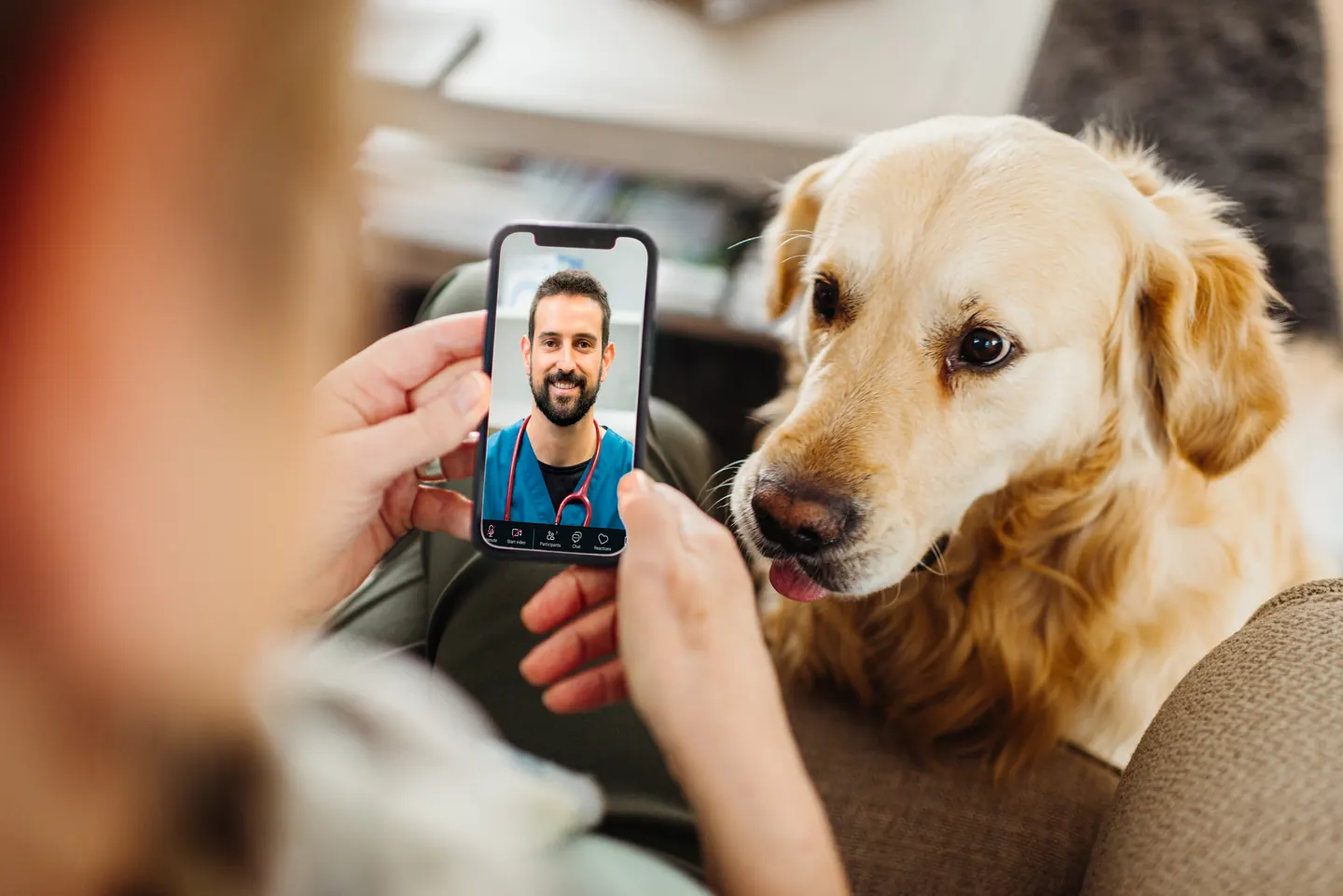
Have a health question about your dog?
Talk to a licensed vet at Dutch over video or message, including nights and weekends.
Use code Pets60
Plans start at $12/month · covers up to 5 pets
- Licensed vets in most states
- Rx for 150+ conditions
- 4.7 on Trustpilot
What to give a dog with an upset stomach at home
Is there anything you can give a dog to settle their stomach? Yes. For a mild upset, the most useful things you can give are water, time, and a simple bland diet. Most medicines sold for people are not safe choices, which we cover further down.
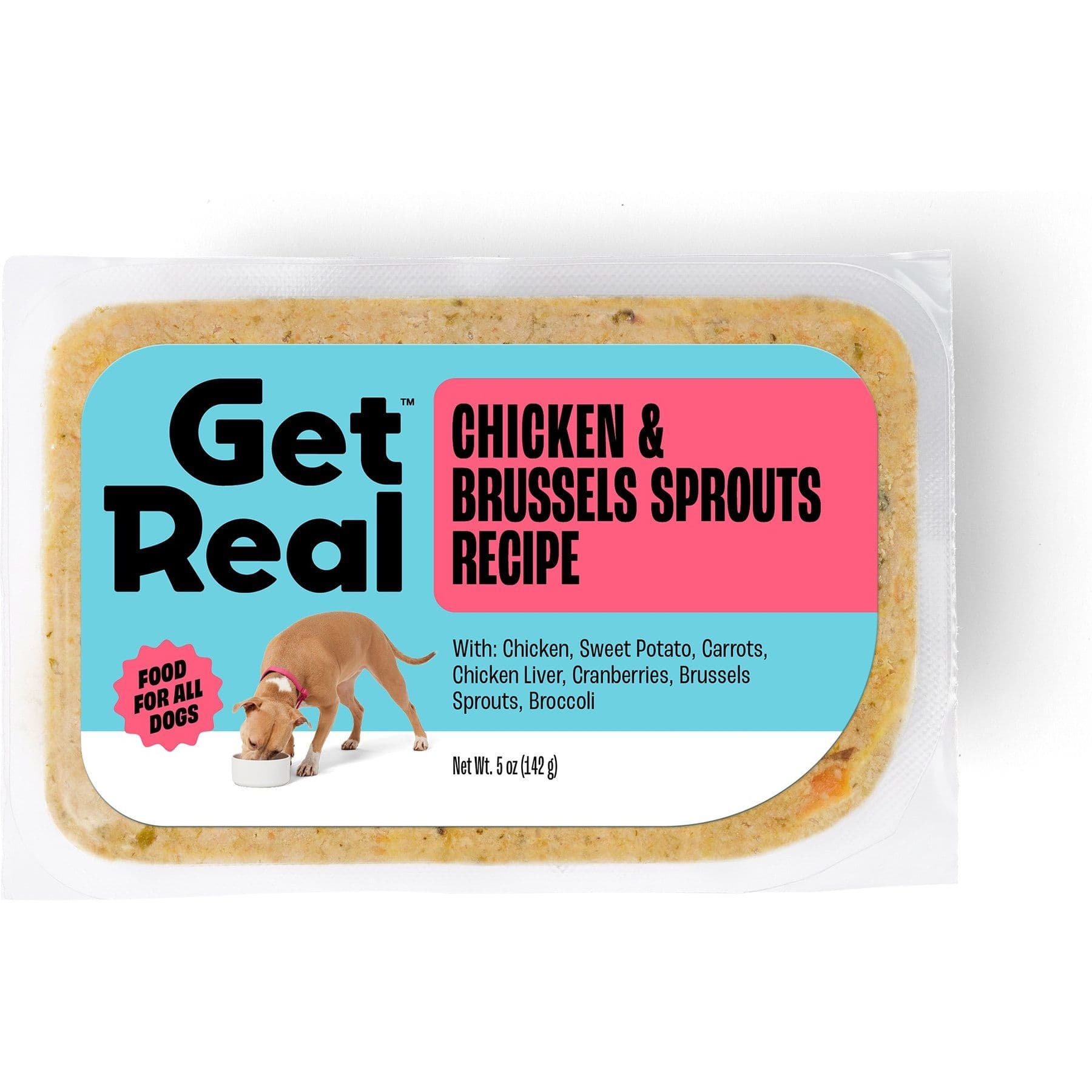
Once the bland days are over and stools are normal again, a simple complete recipe makes the next step easy. Get Real Chicken & Brussels Sprouts is gently cooked, frozen in pre-portioned packs, and made with 10 ingredients or less plus vitamins and minerals.
Webvet may earn a commission when you click through to Chewy, at no extra cost to you.
- 1Offer fresh water in small amounts and give the stomach a short rest if your vet advises it.
- 2Feed small bland meals of boiled chicken and white rice every few hours instead of one big bowl.
- 3Keep to a short bland diet window of about 2 to 3 days for a mild upset.
- 4Reintroduce normal food over about 5 days, then return to a complete and balanced diet.
- 5Call the vet for blood, repeated vomiting, or lethargy, or if your dog is a puppy, senior, or unwell in other ways.
Dehydration is the main risk with vomiting and diarrhea, especially in small dogs and puppies. Check that your dog is drinking and urinating. Dry, tacky gums and a dull, sunken look to the eyes suggest your dog is losing more fluid than they are taking in, and that is a reason to call your vet that day.
The common signs of upset stomach in dogs are easy to recognize once you know them:
- Soft stool or diarrhea, sometimes with more urgency than usual.
- Vomiting or retching, sometimes bringing up yellow bile or foam.
- Gurgling gut sounds and extra gas.
- Lip licking, drooling, or swallowing repeatedly, which often signal nausea.
- Eating grass or turning away from food.
Treatment for these signs at home is supportive. The aim is to keep your dog hydrated and give the gut food that is easy to digest. Whether your dog has diarrhea alone or an upset stomach with diarrhea, what to give is the same core plan: fresh water always available, small bland meals, and close watching for anything that changes the picture.
Keep in mind that a bland diet is a short bridge, not a long-term diet. Plain chicken and rice is not complete and balanced, so the end goal of every upset-stomach plan is a smooth return to a complete food your dog does well on, whether that is the usual kibble or a simple fresh recipe.
How to make a bland diet for dogs
A bland diet is a short-term homemade meal built from one lean, low-fat protein and one easily digested starch. What does a bland diet consist of for dogs? In practice, it is boiled chicken and white rice, cooked plain with no oil, butter, salt, onion, garlic, or seasoning.
This bland diet recipe for dogs takes about 30 minutes:
- Boil skinless, boneless chicken breast in plain water until cooked through.
- Drain the chicken, let it cool, and shred it into small pieces.
- Cook plain white rice until it is soft, a little softer than you would eat it.
- Mix one part lean protein to two parts white rice by volume.
- Cool the mix, portion it, and refrigerate it for up to 3 days.
While the rice cooks, plan the way back. If your dog's usual food is a frozen fresh food, move one pack to the fridge on day 2 of the bland diet, so it has its 12 to 24 hours to thaw and is ready when mixing starts on day 3.
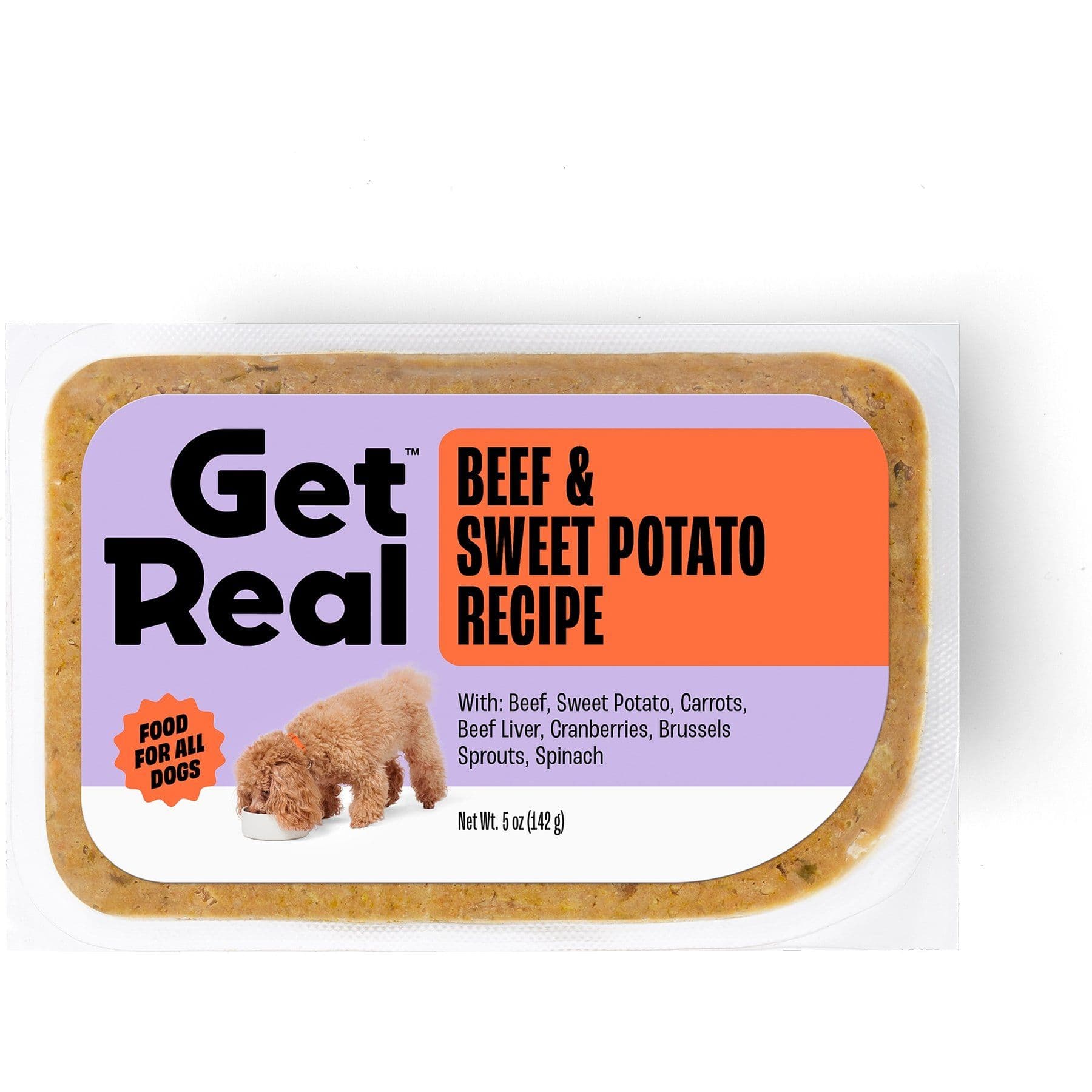
Want a simple complete food ready for the end of the bland days? Get Real Beef & Sweet Potato is gently cooked, frozen in pre-portioned packs, and thaws in the fridge in 12 to 24 hours for the 12 oz size.
Webvet may earn a commission when you click through to Chewy, at no extra cost to you.
The bland diet ratio for dogs is about one part chicken to two parts rice. Is rice good for dogs with an upset stomach? Plain white rice is a reasonable short-term choice because it is low in fiber and fat and easy to digest. Brown rice has more fiber, which is useful in a normal diet but harder on an irritated gut.

Bland diet feeding instructions for dogs are about size and frequency. Feed small frequent meals of a bland diet, about every 3 to 4 hours while your dog is awake, so the stomach is never asked to handle a large meal. Once your dog keeps food down for a day, you can move to three or four meals.
How much chicken and rice for a dog by weight? Your veterinarian will set the amount for your dog's weight and condition, so call before you start and ask for a daily amount. What stays the same for every dog is the method:
- Mix about one part boiled chicken to two parts white rice.
- Split the vet-set daily amount into 4 to 6 small meals on the first day.
- Move to 3 or 4 meals once your dog keeps food down.
- Ask your vet again before starting if your dog is overweight, diabetic, very young, or on a prescription diet.
 Sponsored
Vet care that's always there
Unlimited video calls and messaging with licensed vets for less than a typical vet visit. One membership covers up to five pets.
Use code Pets60
Plans start at $12/month · covers up to 5 pets
- Licensed vets in most states
- Rx for 150+ conditions
- 4.7 on Trustpilot
How long to feed a bland diet and how to reintroduce normal food
How long does a dog's upset stomach usually last? A mild upset settles quickly in most dogs, usually within 24 to 48 hours. That is why the usual plan is a bland diet for 2 to 3 days, followed by a gradual return to normal food. If your dog is not clearly improving within 48 hours, the bland diet has done its job as a test and your vet should take over.
How long you keep a dog on a bland diet depends on the stool, not the calendar. Start to reintroduce normal food once stools are formed, or nearly formed, for a full day and your dog is eating eagerly. After diarrhea, that is usually the same 2 to 3 days. You can stop the bland diet completely when the plan below reaches 100 percent normal food.

Most advice stops at "go back gradually." Here is a day-by-day reintroduction plan instead. After the bland days, reintroduce normal food over about 5 days (days 3 to 7), moving to the next step only if stools stay formed:
| Day | Percent bland diet | Percent normal food | What to watch |
|---|---|---|---|
| Days 1 to 2 | 100 percent bland | 0 percent | Small frequent meals, water intake, no vomiting |
| Day 3 | 80 percent bland | 20 percent | Stool stays formed |
| Day 4 | 60 percent bland | 40 percent | Appetite steady, no new diarrhea |
| Day 5 | 40 percent bland | 60 percent | Normal energy and stool |
| Day 6 | 20 percent bland | 80 percent | Stool still formed |
| Day 7 | 0 percent bland | 100 percent | Day-by-day reintroduction plan complete, back to usual meals |
If stool softens at any step, go back to the previous mix for a day or two before moving forward again. A long term bland diet for dogs is not a good idea. Chicken and rice lacks calcium, several vitamins, and essential fatty acids, so a dog fed it for weeks can develop deficiencies. Dogs who need a gentle diet long term should be on a complete and balanced veterinary or commercial recipe.
The food you reintroduce should be the food your dog normally eats. If that is already a fresh food such as the Get Real Chicken & Brussels Sprouts Recipe, the same day-by-day mix applies. If you plan to change foods, wait until your dog has been back on the usual diet with normal stools for about a week, then switch slowly. Our guide to transitioning dog food explains why a slow switch matters.
When you do make that change to a new fresh food, follow Chewy's Get Real guidance: switch over 7 to 10 days for most dogs, and over 10 to 14 days for a dog with sensitive digestion, which includes a dog just back from an upset stomach. A recipe such as the Get Real Turkey & Cranberry Recipe can be mixed into the current food in small amounts at first.
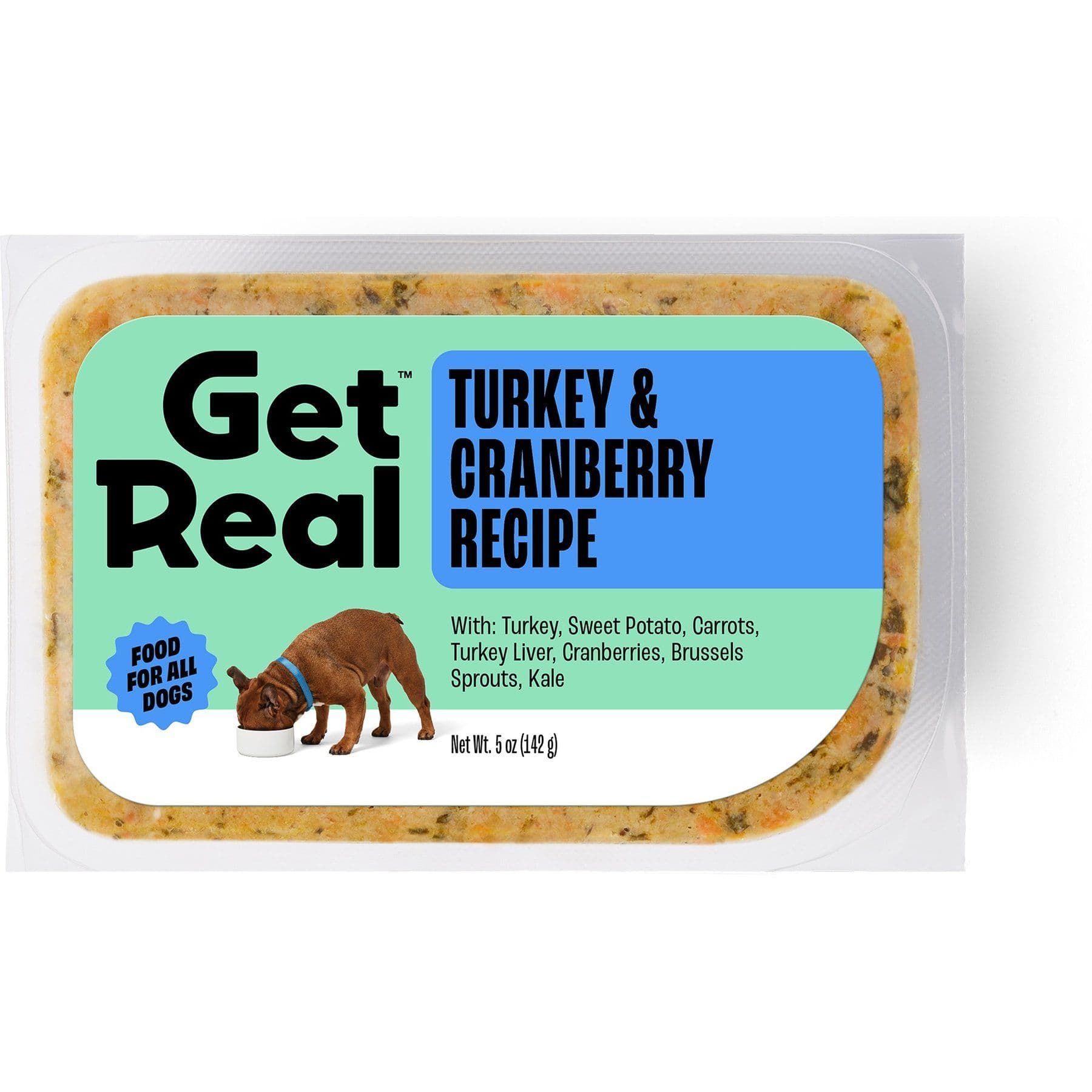
Planning a slow switch once your dog's stomach has settled? Get Real Turkey & Cranberry comes frozen in pre-portioned packs, so you can mix in a small amount and build up over 10 to 14 days.
Webvet may earn a commission when you click through to Chewy, at no extra cost to you.
Why simple fresh recipes are easy to return to
After an upset stomach, many owners want a food with a short ingredient list they can read and understand. That instinct has a sound basis. Fewer ingredients mean fewer variables if your dog reacts again, which is the logic behind limited ingredient dog food. Gently cooked foods are also a good fit for many dogs who need easily digestible dog food.

Get Real is Chewy's fresh dog food line, available only at Chewy in select markets. Its features line up with what an owner wants after a bout of stomach trouble:
- Three recipes, each named for one main protein: Chicken & Brussels Sprouts, Beef & Sweet Potato, and Turkey & Cranberry.
- 10 ingredients or less plus vitamins and minerals, made with human-grade ingredients.
- Gently cooked, then frozen in pre-portioned packs, so there is no measuring at each meal.
- Formulated to meet AAFCO nutrient profiles for all life stages, including growth of large dogs.
- Usable as a full meal, a topper, or a kibble mixer, which makes a gradual switch straightforward.
Complete and balanced matters here. AAFCO nutrient profiles define what a food must supply to be fed on its own, and that is exactly what a bland diet lacks. A recipe like the Get Real Beef & Sweet Potato Recipe, whose published ingredient list starts with beef, sweet potato, carrots, and beef liver, gives you a short list to check against anything your dog has reacted to before.
A fresh food is not a treatment for an upset stomach, and no food replaces a vet visit for a sick dog. Its role is simpler: a consistent, easy-to-read diet to return to and stay on once the gut has settled. To keep frozen packs safe, thaw them in the fridge for 12 to 24 hours (35 to 48 hours for 24 oz packs) and use thawed food within 3 to 5 days.
Once your dog is eating normally, the stool tells you how the switch is going. Our guide to dog poop on fresh food explains which changes in color and size are normal in the first weeks.
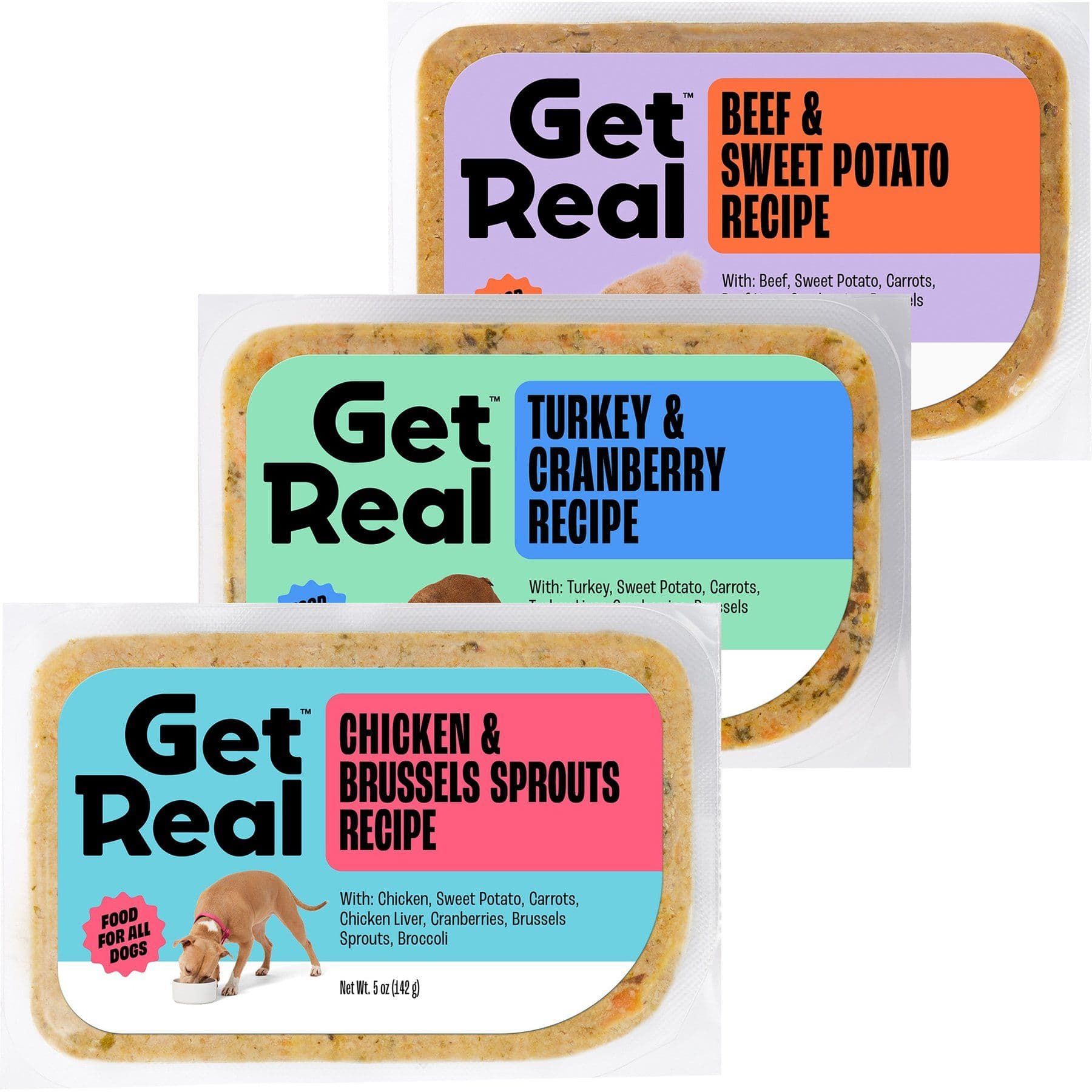
Not sure which protein will suit your dog? The Get Real Sampler Pack includes beef, chicken, and turkey recipes, so you can learn which one your dog does best on before choosing one for the long term.
Webvet may earn a commission when you click through to Chewy, at no extra cost to you.
Bland diet for diarrhea and a sensitive stomach
A bland diet for dogs with diarrhea works by giving the intestine less to do. Low-fat protein and plain starch are digested and absorbed mostly in the small intestine, so less undigested material reaches the colon, where it would pull in water and loosen stool. The best bland diet for dogs with diarrhea is the same simple chicken and rice mix, fed in small portions.
The same bland diet suits dogs with a general upset stomach or tummy trouble after scavenging or a rich treat. It also helps sick dogs recovering from a mild stomach bug, as long as your vet agrees.
What home remedy can I give my dog for diarrhea? These are the home steps with the best track record:
- Keep fresh water available and encourage frequent small drinks.
- Feed bland food in small meals rather than one large bowl.
- Add a small amount of plain canned pumpkin to meals, if your vet agrees and sets the amount.
- Pause treats, chews, table scraps, and rich foods until stools are normal.
- Stop any recent new food or treat that might have started the problem.
For a dog with a sensitive stomach who has repeated flare-ups, the bland diet is a short fix, not the answer. Recurring diarrhea needs a diagnosis, since parasites, food intolerance, and inflammatory bowel disease can all look like a sensitive stomach. The Merck Veterinary Manual covers the range of causes vets work through.
Feeding a bland diet after vomiting
A bland diet for dogs after vomiting starts more slowly than one for diarrhea. If your adult dog has vomited once or twice and is otherwise bright, a short pause from food of a few hours, if your vet advises it, lets the stomach settle. Offer small amounts of water during that time rather than a full bowl, which can trigger more vomiting.
Then offer bland food for dogs who have been vomiting in very small amounts, a fraction of a normal meal. If that stays down for 2 hours, offer a little more. Build up over the day toward the daily amount your veterinarian set.
The same stepwise approach works when vomiting and diarrhea come together, and for dogs with nausea, where lip licking and drooling come before any vomit. Whatever the mix of signs, the most important rule is small amounts: a big meal is the most common reason a recovering dog vomits again.
- Puppies and toy breeds should not go without food unless a vet advises it, because blood sugar can drop quickly.
- Senior dogs and dogs with diabetes or other illness need a vet's plan before any food rest.
- Any dog who cannot keep water down needs a vet the same day.
Bland diet options beyond chicken and rice
Chicken is not right for every dog, especially a dog with a chicken allergy. A bland diet without chicken is easy to put together. These are the most useful options:
- Lean ground turkey, boiled and drained.
- Lean ground beef, boiled with the fat poured off.
- White fish such as cod, boiled and checked for bones.
- Low-fat cottage cheese in small amounts for dogs who tolerate dairy.
- Plain boiled potato or sweet potato in place of rice.
Is scrambled egg good for dogs' upset tummy? Yes, for most dogs. Use plain scrambled eggs cooked without butter, oil, milk, or salt. Eggs are easy to digest and high in protein, and they are a good swap for dogs who cannot have chicken. Introduce them in small amounts, because some dogs are sensitive to eggs too.
Pumpkin for dogs helps some cases of diarrhea and mild constipation thanks to its soluble fiber. Use plain canned pumpkin or pure pumpkin puree for dogs, never pumpkin pie filling, which contains sugar and spices. A bland diet for dogs with pumpkin simply adds a spoonful to each chicken or turkey and rice meal.
A commercial bland diet is another option. Your vet can supply a prescription gastrointestinal food, often canned, which is complete and balanced and can be fed for longer than a homemade mix. It is a good choice for dogs with a chicken allergy, frequent flare-ups, or owners who cannot cook.
Medicines and home remedies to skip without a vet
What human medicine can I give my dog for an upset stomach? The safest answer is none, unless your veterinarian tells you exactly what and how much. Some human medicines that seem harmless are dangerous for dogs, and others can hide signs your vet needs to see.
Can you give dogs Pepto? Pepto-Bismol contains bismuth subsalicylate, a relative of aspirin. It can cause stomach bleeding in some dogs, interacts with other anti-inflammatory drugs, and turns stool black, which can mask the dark stool of internal bleeding. Loperamide (Imodium) slows the gut and can be dangerous for dogs carrying the MDR1 gene change found in collies and other herding breeds. Ibuprofen and naproxen are toxic to dogs. The ASPCA Animal Poison Control Center lists common human medicines that harm pets.
Owners also ask what to give a dog with an upset stomach and vomiting that is natural. Gentle steps such as rest, water, and a bland diet are the natural remedies with real support. Ginger, peppermint, and herbal products have little evidence in dogs. Garlic is toxic and should never be used. Probiotics made for dogs are reasonable to discuss with your vet, especially after antibiotics.
When to call the vet
The bland diet plan is for mild cases. Our full guide to dog vomiting and diarrhea covers emergency signs, anti-diarrhea medicines vets use, whether Imodium or Pepto is ever appropriate, and what to do if your dog has diarrhea but is still eating and drinking.
In short, call the vet for blood, repeated vomiting, or lethargy. Some common situations, and where they sit:
- A dog throwing up yellow bile once on an empty stomach, or a dog throwing up white foam once, is often mild; repeated episodes need an exam.
- A dog with diarrhea who is otherwise acting fine can usually have a day of bland feeding; if it lasts more than 48 hours, call your vet.
- Nausea in dogs with drooling and failed attempts to vomit can signal bloat, which is an emergency.
- When signs of upset stomach in dogs include vomiting several times in a day, skip home care and see your vet.
- Blood in the stool takes priority over any diet change: call your vet first.
Upset stomach questions
Frequently Asked Questions
What should I do if my dog has an upset stomach?
Offer fresh water in small amounts, give the stomach a short rest if your vet advises it, then feed small bland meals of boiled chicken and white rice every few hours. Watch for blood, repeated vomiting, or lethargy, and call your vet if any appear.
What settles an upset stomach quickly?
To settle an upset stomach, the quickest safe approach is to rest the stomach briefly, then offer a bland diet in very small portions. Small amounts are the key, because a large meal is the most common reason vomiting returns.
Can I give my dog Pepto-Bismol to settle his stomach?
Not without your vet's advice. Pepto-Bismol's active ingredient carries a bismuth subsalicylate risk of stomach bleeding and drug interactions, and it turns stool black, which can hide bleeding. Ask your vet first; they may suggest a safer option.
Can allergies cause stomach upset in dogs?
Yes. A food allergy or intolerance can cause recurrent vomiting, diarrhea, and gas, often with itchy skin or ear infections. Diagnosis usually needs an elimination diet with a novel or hydrolyzed protein for about 8 weeks, guided by your vet.
Can I feed fresh dog food during an upset stomach?
It is better to start with a bland diet and introduce fresh food after the bland diet, once stools are normal. If fresh food is your dog's usual diet, mix it in gradually using the day-by-day plan. If it is new, wait about a week on the usual food, then switch slowly.
How much chicken and rice should I feed my dog?
Mix one part chicken to two parts rice. Your veterinarian will set the amount for your dog's weight and condition. Split that amount into small meals, 4 to 6 per day at first, then 3 to 4 once your dog is keeping food down.
Veterinarian · BVMS MRCVS
Dr. Pippa Elliott, BVMS, MRCVS, is a veterinarian with nearly 30 years of experience in companion animal practice. Dr. Elliott earned her Bachelor of Veterinary Medicine and Surgery from the University of Glasgow. She was also designated a Member of the Royal College of Veterinary Surgeons. Married with 2 grown-up kids, Dr. Elliott has a naughty Puggle named Poggle, 3 cats and a bearded dragon.
Related reading

Easily Digestible Dog Food: What Makes a Meal Gentle on Your Dog's Gut

Fresh Dog Food for Underweight Dogs: Safe Weight Gain, Step by Step

How to Tell if a Dog Food Is Right for Your Dog: 8 Signs Vets Check
