Fresh Dog Food for Underweight Dogs: Safe Weight Gain, Step by Step
A vet explains how to use fresh dog food for underweight dogs: check body condition, rule out illness first, then add calories in 10 percent weekly steps with weigh-ins for safe, steady weight gain.

BVMS MRCVS
Medically reviewed by Dr. Pippa Elliott, BVMS MRCVS · Last reviewed

This article contains affiliate links. Webvet may earn a commission when you buy through them, at no extra cost to you.
Fresh dog food for underweight dogs can be a practical way to add calories, because gently cooked meals are palatable, easy to portion, and calorie-dense enough to raise intake without doubling the bowl. The safe way to use it, though, is slow: a vet check first, then small calorie steps and weekly weigh-ins.
This guide explains how to tell whether your dog is truly underweight, which medical causes to rule out, and a week-by-week calorie step plan that adds weight steadily. It also compares the calorie density of fresh recipes from their published labels, so you can choose an amount rather than guess.

 Sponsored
Have a health question about your dog?
Talk to a licensed vet at Dutch over video or message, including nights and weekends.
Use code Pets60
Plans start at $12/month · covers up to 5 pets
- Licensed vets in most states
- Rx for 150+ conditions
- 4.7 on Trustpilot
Why fresh food can help an underweight dog
A thin dog often needs more calories than it is willing or able to eat from its current bowl. The best dog food for underweight dogs is not a special product; it is a complete and balanced food your dog eats readily, digests well, and that delivers enough energy in a sensible volume. That is where fresh food has a few genuine advantages.
- 1Book a vet check first; unexplained weight loss needs a diagnosis before a diet plan.
- 2Raise daily calories in steps of about 10 percent, one step per week.
- 3Use weekly weigh-ins and a rib check to decide whether to raise the portion again.
- 4Smaller, more frequent meals and a fresh topper over the current food are gentle ways to add calories.
Fresh food is usually very palatable, so dogs with a picky or reduced appetite tend to eat more of it. It is also pre-portioned, which makes it easy to add a measured amount and track exactly how many calories you have added. A high calorie dog food for underweight dogs only helps if it is eaten, so palatability matters as much as the number on the label.
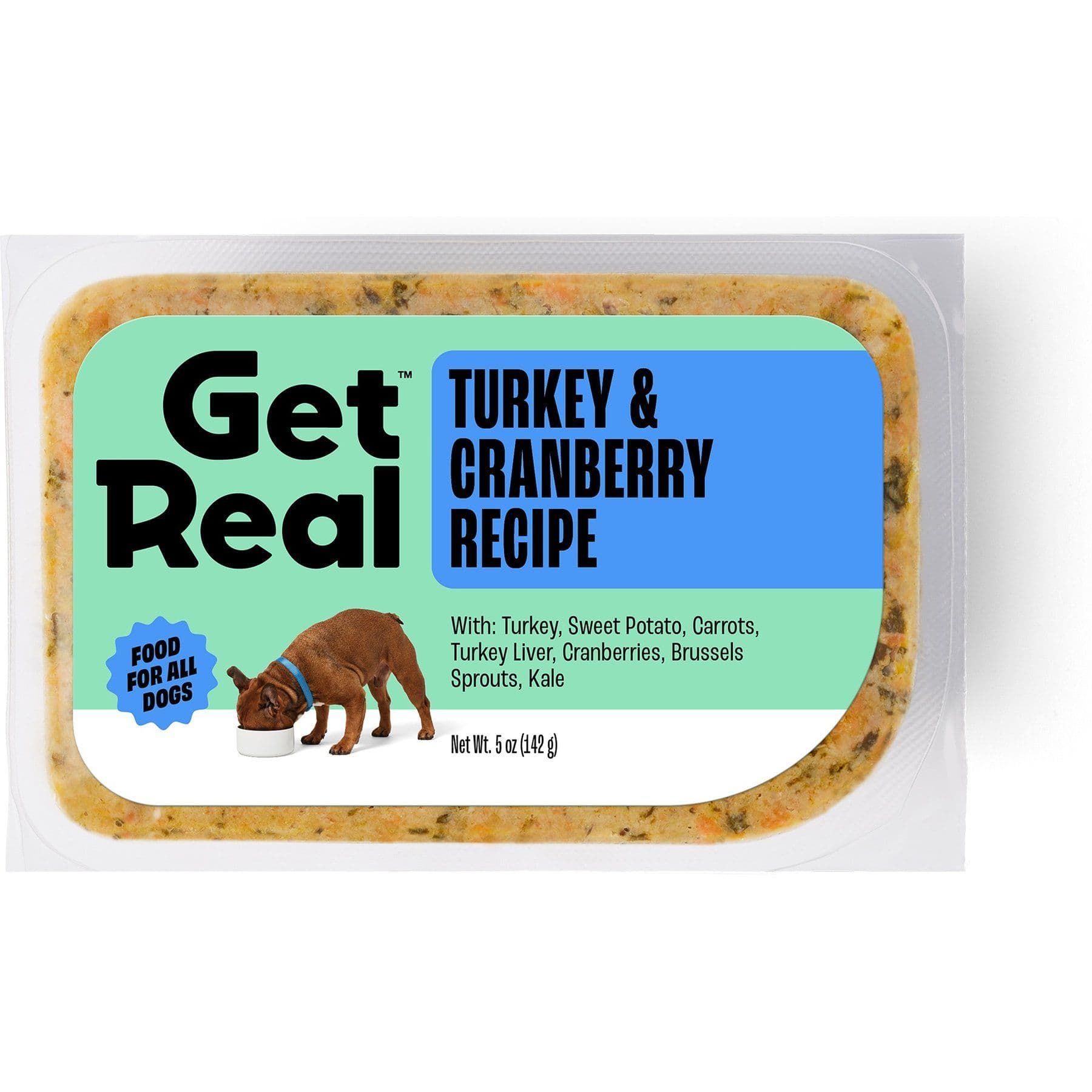
Adding calories gradually? Get Real Turkey & Cranberry lists the most calories per pack of the three recipes, at 198 kcal per 5 oz pack, so a small amount adds meaningful energy.
Webvet may earn a commission when you click through to Chewy, at no extra cost to you.
The other advantage is flexibility. You can feed fresh food as a full meal, or use it as a fresh topper over current food, which lets you add calories without changing the base diet all at once. For dog food for skinny dogs, this topper approach is often the easiest place to start, because it raises intake while keeping the familiar food that the dog already digests well.
What matters most is that the food is complete and balanced for your dog's life stage, so the extra calories come with the right protein, fat, vitamins, and minerals. For skinny dogs, the best dog food is the one that meets those standards and that your dog will finish, meal after meal.
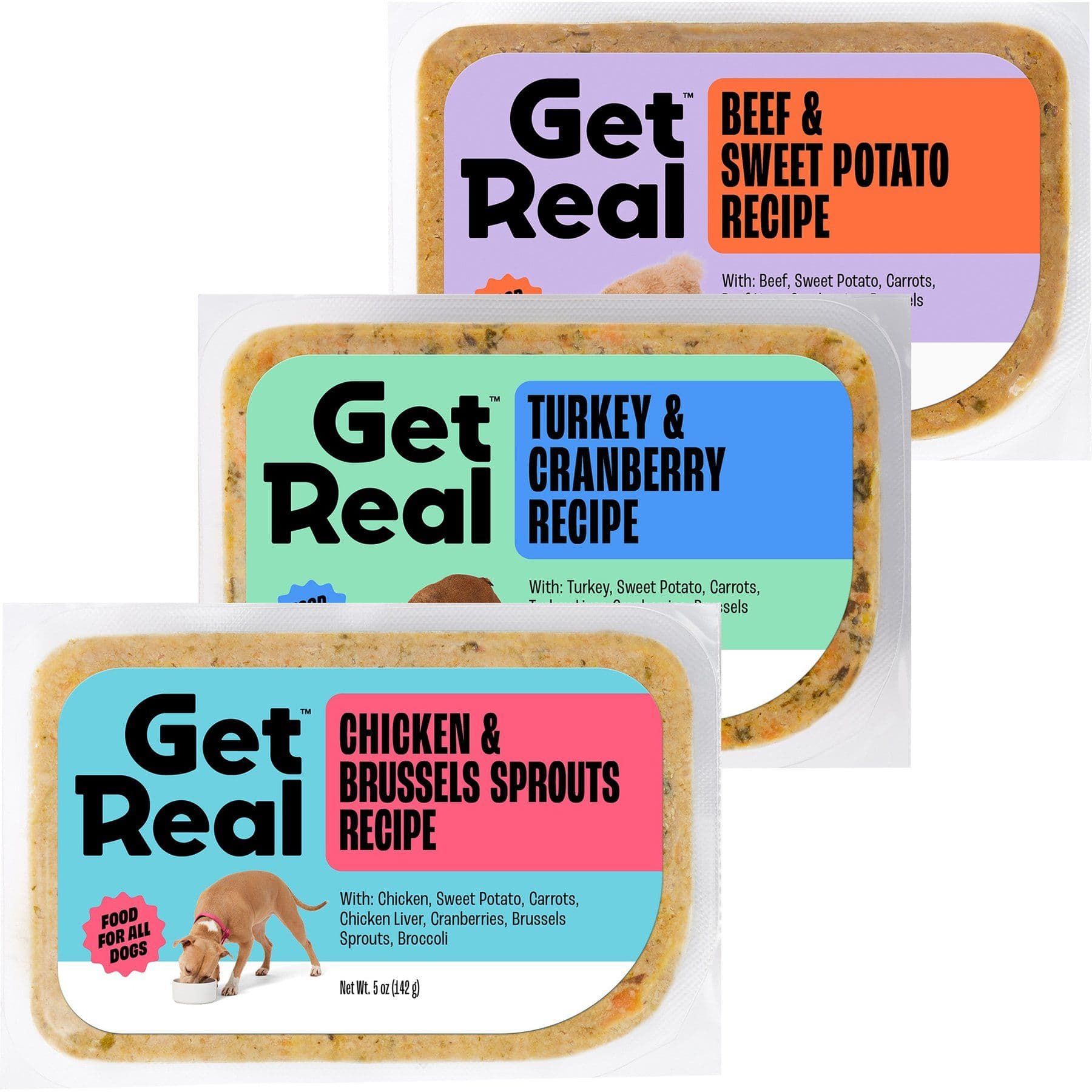
Not sure which recipe a thin dog will eat with the most enthusiasm? The Get Real Sampler Pack includes beef, chicken, and turkey recipes, so you can find a favorite before building a plan around it.
Webvet may earn a commission when you click through to Chewy, at no extra cost to you.
Is your dog underweight? Signs and body condition
Vets judge weight by body condition, not by the scale alone, because a healthy weight depends on breed and frame. The most common tool is the body condition score 1 to 9 and rib feel, described in the WSAVA Global Nutrition Guidelines. On that scale, 4 to 5 is ideal, 1 to 3 is underweight, and 6 to 9 is overweight.

What does an underweight dog look like? Use this short underweight dog chart as a guide to the lower scores:
- Score 1, emaciated: ribs, spine, and hip bones visible from a distance, no body fat, and obvious muscle loss.
- Score 2, very thin: ribs, spine, and hip bones easily seen, no fat felt over the ribs, and some muscle loss.
- Score 3, thin: ribs easily felt and may be visible with no fat cover; the tops of the spine and hip bones are visible, with a pronounced waist.
- Score 4 to 5, ideal: ribs felt easily under a light fat cover, a visible waist from above, and a tuck from the side.
How skinny is too skinny for a dog? A score of 3 or below means your dog is underweight, and a score of 1 or 2 needs a vet visit promptly. To tell at home whether a dog is underweight, run your flat hand along the chest: if the ribs feel like the knuckles of a clenched fist, your dog is too thin. A slightly underweight dog, at a score of about 3, often only needs a modest calorie increase once illness is ruled out.
The main signs of an underweight dog are visible ribs and hip bones, a very narrow waist, a dull coat, and loss of muscle over the back and thighs. If you are unsure whether a recent diet is serving your dog well, our guide on how to tell if a dog food is right walks through the body condition check alongside stool, coat, and energy.
Rule out medical causes first
Why is my dog not gaining weight but eating? A dog that eats well but stays thin usually has a medical reason, not a portion problem. Intestinal parasites, poor digestion or absorption, dental pain, diabetes, an overactive thyroid in some dogs, kidney or liver disease, and cancer can all prevent weight gain. That is why a veterinary exam comes before any diet plan.
A vet exam for unexplained weight loss usually includes a weight history, a body condition and muscle score, a fecal test for intestinal parasites, and often blood and urine tests. These checks matter because many underweight dog health problems can be managed once they are found, and adding food to a dog with an untreated condition can delay that diagnosis. The Merck Veterinary Manual lists weight loss as a sign of a wide range of digestive, metabolic, and organ diseases.
When a dog won't gain weight despite more food, or an old dog can't gain weight even with a good appetite, tell your veterinarian exactly what and how much your dog eats each day. A written food diary, including treats, makes that conversation far more useful. Dogs recovering from surgery or illness may also need a dedicated plan, which our guide to high-calorie dog food for recovery covers.
 Sponsored
Vet care that's always there
Unlimited video calls and messaging with licensed vets for less than a typical vet visit. One membership covers up to five pets.
Use code Pets60
Plans start at $12/month · covers up to 5 pets
- Licensed vets in most states
- Rx for 150+ conditions
- 4.7 on Trustpilot
A step-by-step weight gain plan with fresh food
Once your vet has ruled out illness and agreed on a target weight, the healthy way to put weight on a dog is to add calories gradually. Large jumps in food can upset digestion and cause soft stool or vomiting. The safer approach is a week-by-week calorie step plan: increase calories about 10 percent at a time, and use weekly weigh-ins to decide whether to take the next step.
Start by working out what your dog eats now. Our guide on how much to feed a dog explains baseline portions, and your current food's label lists its calories. If your dog eats about 800 kcal a day, a 10 percent step adds about 80 kcal. Half of a 5 oz pack of Get Real Turkey & Cranberry Recipe, at 198 kcal per 5 oz pack, adds about 99 kcal as a fresh topper portion.
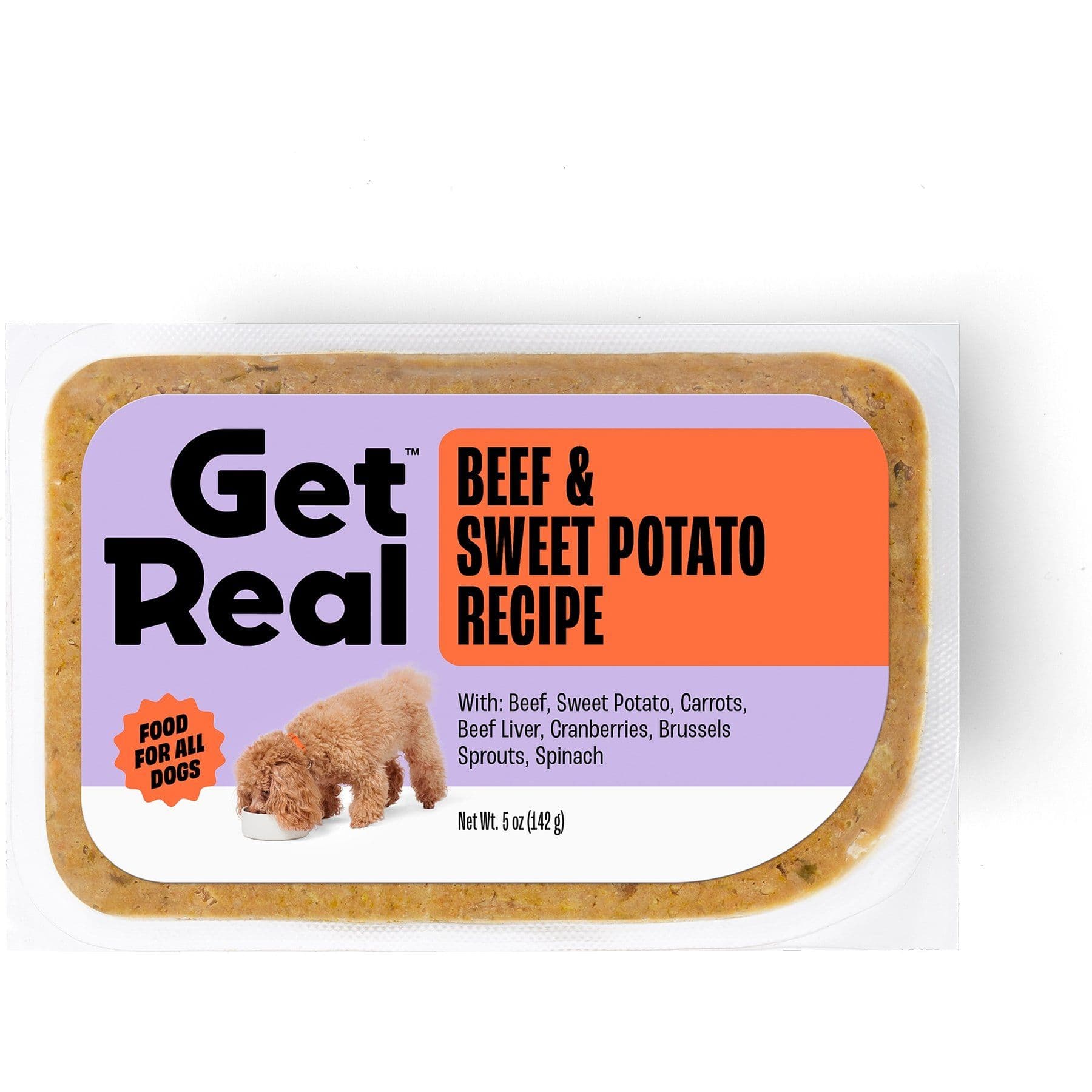
Building calories one step at a time? Get Real Beef & Sweet Potato comes in pre-portioned packs, so it is easy to add a measured amount at each weekly step.
Webvet may earn a commission when you click through to Chewy, at no extra cost to you.
| Week-by-week calorie step plan | Ten percent calorie steps (vs starting intake) | Weekly weigh-in checkpoint | Next step |
|---|---|---|---|
| Week 0 | Starting intake, unchanged | Vet exam, baseline weight, and body condition score | Begin step 1 if the vet agrees |
| Week 1 | About 10 percent more | Weight steady or slightly up, stool firm | Move to step 2 |
| Week 2 | About 20 percent more | Small gain, stool firm, appetite good | Move to step 3 |
| Week 3 | About 30 percent more | Steady gain toward target | Hold if stool softens |
| Week 4 and on | Hold, or add another 10 percent | Gain slowing or rib cover returning | Hold at target, then trim to maintenance |

Follow these ten percent calorie steps with a weekly weigh-in checkpoint before raising the portion again. If you are wondering how to help your dog gain weight, these practical habits matter most:
- Weigh at the same time each week, ideally before breakfast, on the same scale.
- Feed smaller, more frequent meals, for example three or four meals instead of two, which many thin dogs find easier to finish.
- Add the extra calories as a fresh topper over current food at first, then shift the balance toward the fresh food if your dog prefers it.
- Switch gradually. If you are moving fully to fresh food, follow a 7 to 10 day switch (10 to 14 days for sensitive dogs) as described in our guide to transitioning dog food.
- Limit treats to about 10 percent of daily calories, so the extra energy comes from a balanced diet.
How to fatten up an underweight dog without upsetting the stomach? Keep each step small, hold a step for a week if stool softens, and avoid rich table scraps, which add fat without balance. Feeding an underweight dog well is less about one big change and more about steady, measured additions. For portion math on full-meal plans, our Get Real feeding guide explains how the plans are sized.
Whatever the starting point, the best way to put weight on a dog is the one above: confirm health, add calories in small steps, and measure. To get your dog to gain weight without stomach upsets, patience matters more than portion size. The Get Real Beef & Sweet Potato Recipe, at 188 kcal per 5 oz pack, is another easy way to add a measured step.
How fast should an underweight dog gain weight?
Slow is safer. A slow, steady gain target protects digestion and gives your vet time to see whether the dog is building muscle as well as fat. Aim for a slow, steady gain your veterinarian sets for your dog, based on the target weight and how thin your dog is at the start.
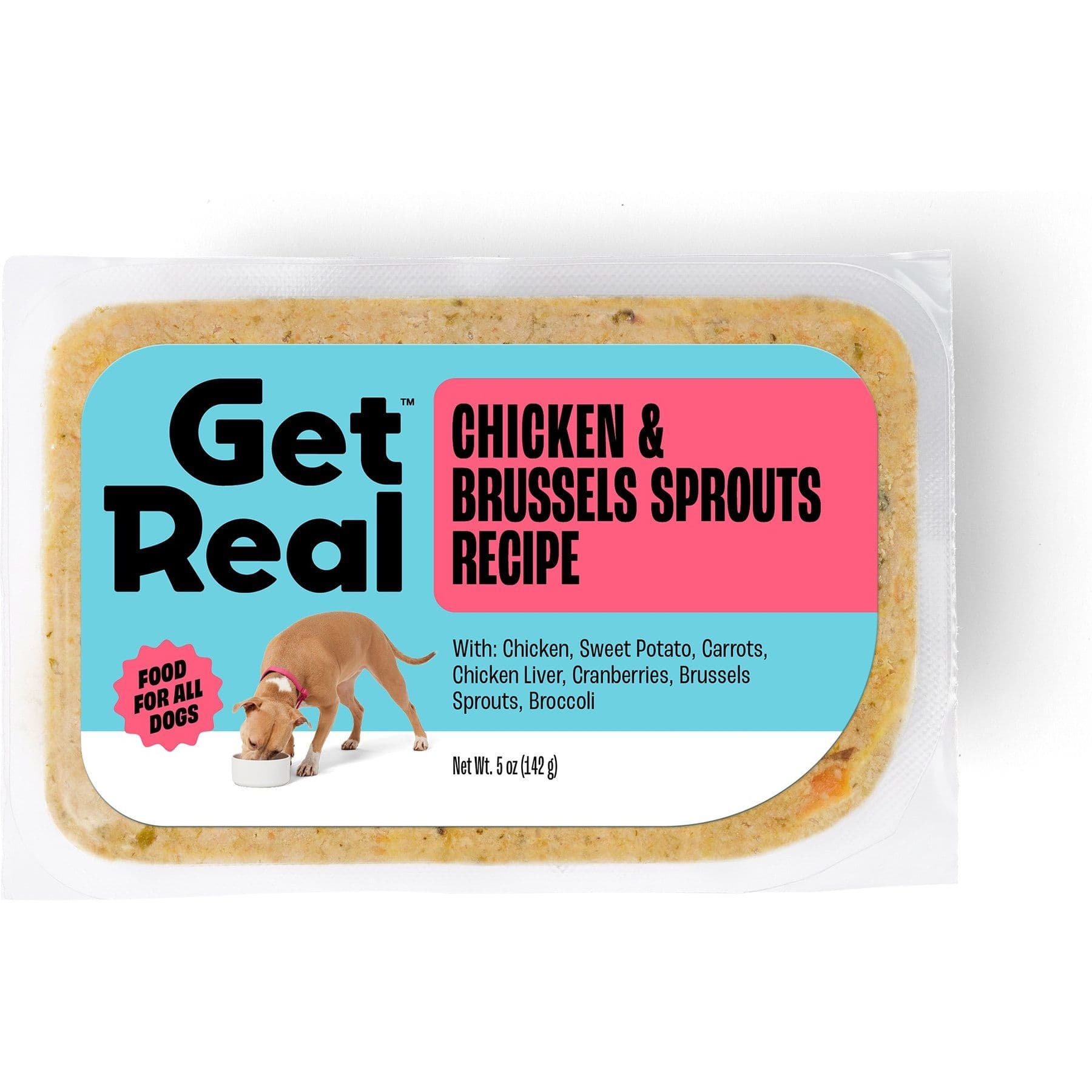
Looking for a lighter recipe to round out a weight plan? Get Real Chicken & Brussels Sprouts lists 179 kcal per 5 oz pack, useful once your dog is close to target and portions need fine tuning.
Webvet may earn a commission when you click through to Chewy, at no extra cost to you.
How fast do dogs gain weight in practice? At a safe pace, the change from one week to the next is small, so progress over a month is easier to see than progress over days. Can a dog gain weight in a week? A little, and part of an early change can simply be food and water in the gut, which is why trends across several weekly weigh-ins matter more than any single reading.
Trying to put weight on a dog fast is not the goal. Very thin or starved dogs are at risk of refeeding problems if calories rise too quickly, which is one more reason a vet should guide the first weeks. Fast gain also tends to add fat rather than the muscle a thin dog has lost.
Watch for signs that the pace is right:
- Weight rises slowly at each weekly weigh-in.
- Stool stays firm and formed.
- Energy and coat improve over four to six weeks.
- Rib cover gradually returns toward a body condition score of 4 to 5.
Helping a senior dog put weight back on
How can I fatten up my elderly dog? Start with the same vet check, because weight loss in a senior dog is more often linked to illness, such as dental disease, kidney disease, or cancer. Older dogs also lose muscle with age, so the goal is to support muscle as well as body fat, with enough good-quality protein in a complete diet.
Here is how to put weight on an old dog once your vet has cleared the plan:
- Make food easy to eat. Soft, moist food is kinder to sore teeth than hard kibble.
- Bring out the aroma. Older dogs often have a weaker sense of smell; letting refrigerated food sit briefly to lose its chill can help.
- Offer smaller, more frequent meals. Three or four small meals are often easier than two large ones.
- Keep the base diet complete and balanced. A food formulated for all life stages covers adult maintenance as well as growth.
Helping an old dog gain weight also takes patience, and a senior dog may need a slower pace. A weight gainer for senior dogs can seem like a shortcut, but to get an older dog to gain weight, most do better with a complete, palatable diet at the right calorie level than with an add-on product. Ask your veterinarian before adding any supplement.
Get Real recipes are gently cooked and formulated to meet AAFCO nutrient profiles for all life stages. Introduce the food slowly, as you would for any dog.
Choosing calorie-dense fresh recipes
What is the best dog food for an underweight dog? It is a complete and balanced food with good calorie density that your dog eats eagerly. Calorie density tells you how much energy a set amount of food provides; a denser food lets a thin dog take in more calories without a much larger meal.
Does high protein dog food help dogs gain weight? Protein supports muscle, which is what many thin dogs have lost, but fat provides more than twice the calories per gram, so fat level drives calorie density more than protein does. The best dog food to help gain weight balances both, and the published guaranteed analysis and calorie statement let you compare recipes directly.

This recipe calorie comparison uses the calories per pack listed on each Get Real pack and Chewy's product pages; Turkey & Cranberry lists the most:
| Recipe | kcal per 5 oz pack | kcal per 12 oz pack | Fat minimum | Protein minimum |
|---|---|---|---|---|
| Turkey & Cranberry | 198 | 474 | 10% | 8% |
| Beef & Sweet Potato | 188 | 451 | 7% | 9% |
| Chicken & Brussels Sprouts | 179 | 428 | 8.5% | 10% |
For a dog who needs to gain, the Get Real Turkey & Cranberry Recipe lists the most calories per pack of the three, at 198 kcal per 5 oz pack and 474 kcal per 12 oz pack. The best food to make a dog gain weight is still the one your dog eats readily; Beef & Sweet Potato lists 188 and 451 kcal, and Chicken & Brussels Sprouts 179 and 428 kcal, per 5 oz and 12 oz pack. Note that the 5 oz packs are mixer packs, designed to be added to a meal rather than fed as a full meal on their own.
Healthy foods for dogs to gain weight share a few traits: complete nutrition, good palatability, moderate to higher fat, and easy digestion. Any dog food used to put weight on a dog should be introduced slowly and checked against your weekly weigh-ins. Once your dog reaches the target, trim the portion back to maintenance, and see our guide to fresh dog food for weight loss if the scale starts to overshoot.
Underweight dog questions
Frequently Asked Questions
What is best to feed a dog to gain weight?
A complete, balanced, calorie dense recipe your dog eats readily, introduced with a gradual calorie increase of about 10 percent a week. Healthy weight gain comes from steady steps, not a sudden large meal.
What food helps dogs gain weight?
Complete fresh meals with moderate to higher fat help most, because fat carries the most calories per gram. A higher fat recipe such as a turkey-based fresh food adds energy without a much bigger bowl.
What to mix with dog food for weight gain?
A fresh food topper is a simple option. Keep the current food portion the same and add a measured fresh topper portion on top, then raise it in small steps while watching stool and weight.
What foods can I give my dog to help them gain weight safely?
Stick to balanced fresh meals or your dog's complete food in larger portions. Avoid fatty table scraps, which add calories without balanced nutrition and can upset the stomach or trigger pancreatitis.
How to feed a very skinny dog?
Book a veterinary exam first, since very thin dogs often have an underlying illness. Then offer small frequent meals of a complete food, raising calories slowly under your vet's guidance.
What is the best dog food for an old, skinny dog?
A complete food that suits a senior dog appetite: palatable, soft, and easy to chew fresh food can help when teeth are sore or smell is reduced. Have your vet check for illness before increasing portions.
Why is my dog still skinny even though she's eating?
Intestinal parasites, poor absorption, dental pain, and conditions such as diabetes or kidney disease are common reasons. A veterinary exam with a fecal test and blood work is the right next step.
Why is my dog getting so bony?
Visible bones usually mean loss of both fat and muscle loss, which often points to illness or age rather than a simple food shortage. Check the body condition score and see your vet if it is falling.
Veterinarian · BVMS MRCVS
Dr. Pippa Elliott, BVMS, MRCVS, is a veterinarian with nearly 30 years of experience in companion animal practice. Dr. Elliott earned her Bachelor of Veterinary Medicine and Surgery from the University of Glasgow. She was also designated a Member of the Royal College of Veterinary Surgeons. Married with 2 grown-up kids, Dr. Elliott has a naughty Puggle named Poggle, 3 cats and a bearded dragon.
Related reading

Easily Digestible Dog Food: What Makes a Meal Gentle on Your Dog's Gut

How to Tell if a Dog Food Is Right for Your Dog: 8 Signs Vets Check

Get Real Feeding Guide: How Much to Feed as a Full Meal or Topper
