Fresh Dog Food for Weight Loss: How a Vet Builds a Calorie-Controlled Plan
Fresh dog food for weight loss works when portions match a vet-set calorie target. See a worked example, the calories per Get Real pack, and how to track your dog's progress safely.

BVMS MRCVS
Medically reviewed by Dr. Pippa Elliott, BVMS MRCVS · Last reviewed

This article contains affiliate links. Webvet may earn a commission when you buy through them, at no extra cost to you.
Fresh dog food for weight loss works for the same reason any successful diet works: the dog eats fewer calories than it burns, at a pace that protects muscle and keeps hunger manageable. What fresh food adds is precision. Pre-portioned packs with published calories make it much easier to feed the exact amount a weight plan calls for, day after day.
In most canine weight plans, the hardest part is rarely the food itself. It is setting the right calorie target, sticking to it, and knowing whether it is working. This guide walks through each step: how a vet sets a target from ideal weight, how to turn that number into fresh-food portions, and how to measure progress so you can adjust with confidence.
 Sponsored
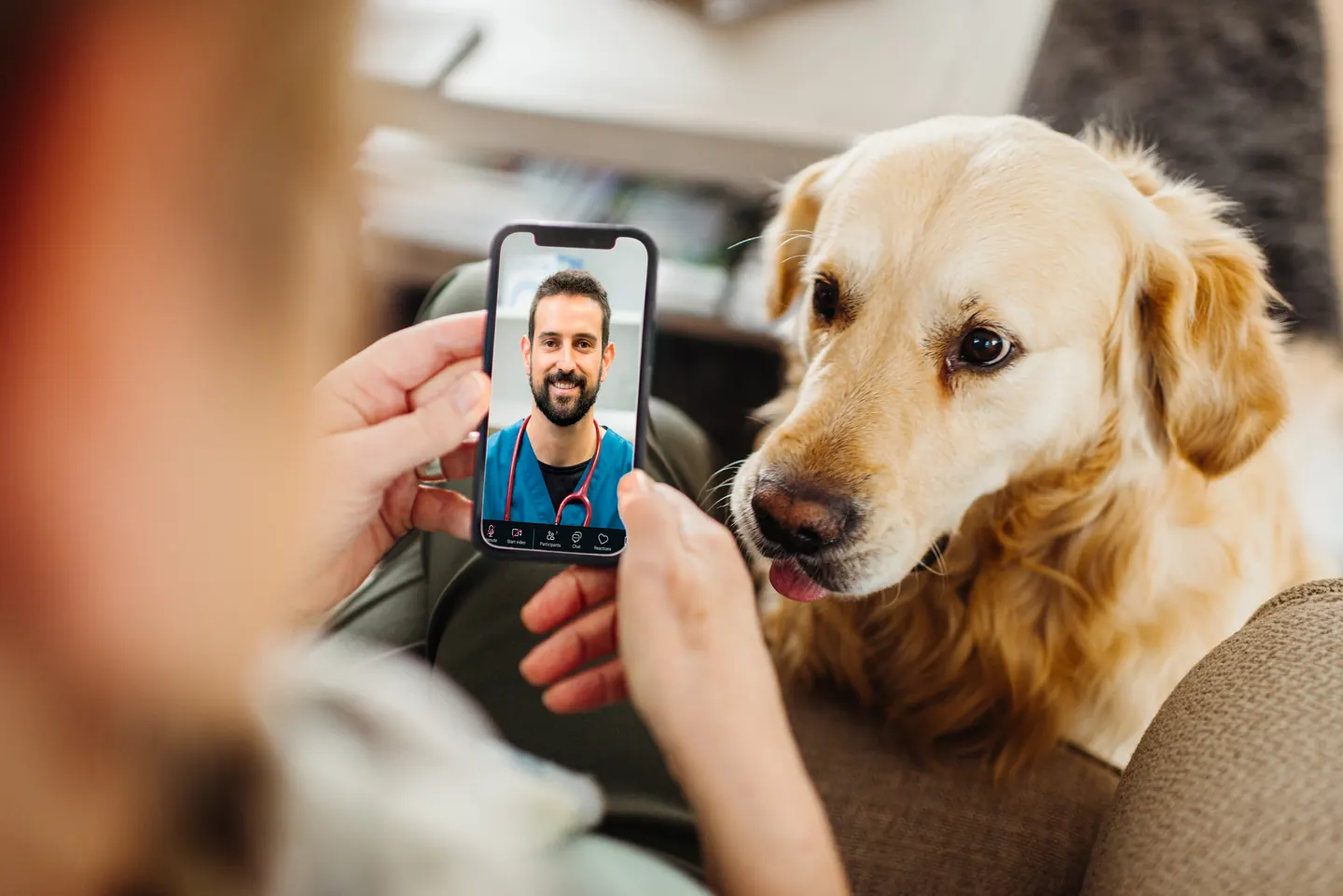
Have a health question about your dog?
Talk to a licensed vet at Dutch over video or message, including nights and weekends.
Use code Pets60
Plans start at $12/month · covers up to 5 pets
- Licensed vets in most states
- Rx for 150+ conditions
- 4.7 on Trustpilot
Why fresh dog food works for weight loss
- 1Start with a calorie target at ideal weight set with your vet, not with the amount printed for your dog's current weight.
- 2Measure every portion; pre-portioned packs with published calories make that easier.
- 3Keep treats under 10 percent of the daily calorie target and count them.
- 4Weigh in every 2 to 4 weeks; veterinarians commonly aim for about 1 to 2 percent of body weight lost per week, and your vet sets the pace for your dog.
Fresh food is not a weight loss food by label, and no food causes weight loss on its own; calories do. Its value in a weight plan is practical: each fresh pack lists its calories, so the portion is easy to match to a target. Adequate protein during calorie restriction helps preserve lean muscle, as the AAHA nutrition and weight management guidelines note, and any complete and balanced food fed at the right target can supply it.
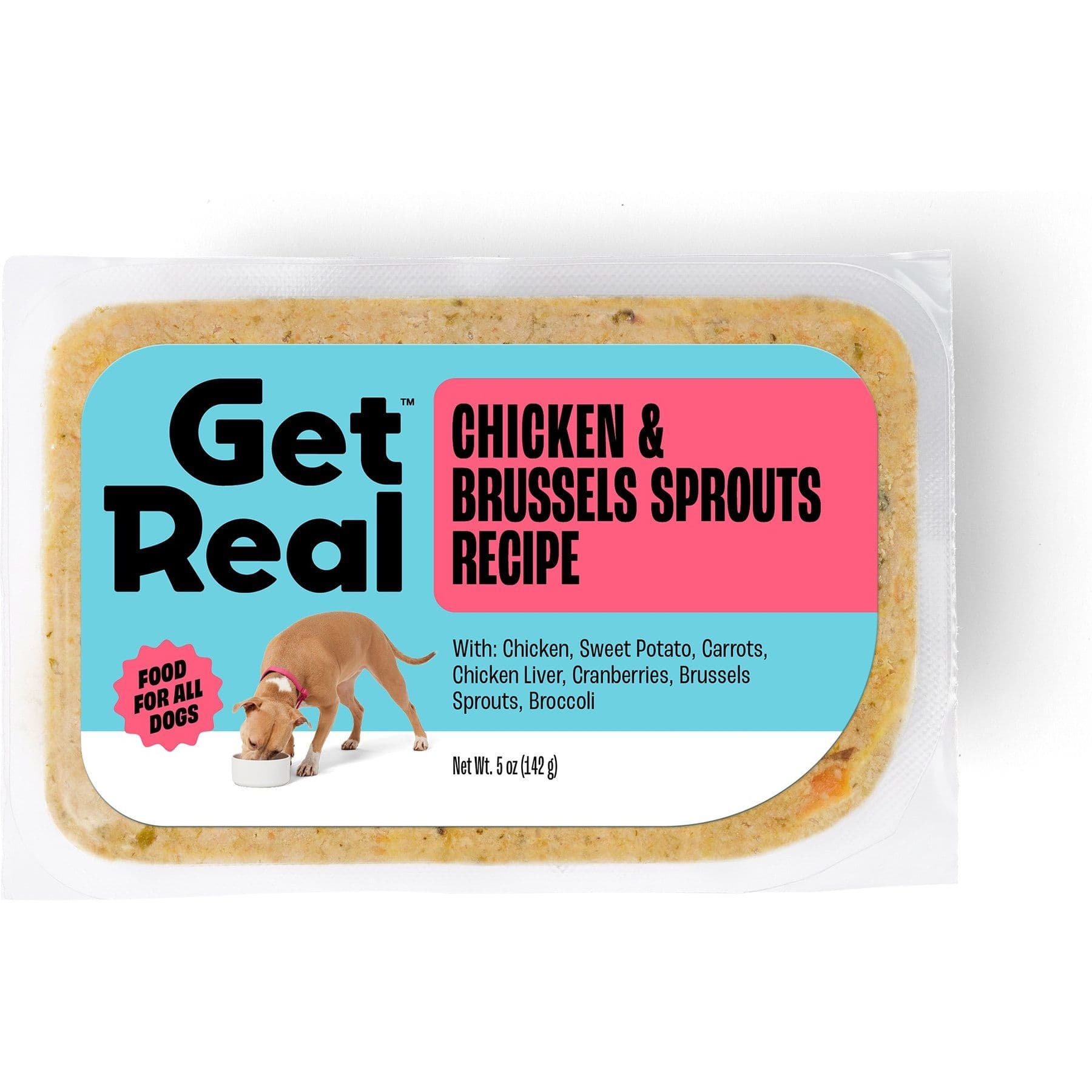
Chicken and Brussels sprouts at 428 kcal per 12 oz pack as listed on the pack, a measured, complete and balanced base for a vet-set weight loss target.
Webvet may earn a commission when you click through to Chewy, at no extra cost to you.
Which fresh dog food is best for weight loss? The best fresh dog food for weight loss meets three criteria:
- It is complete and balanced, so cutting the portion does not cut essential nutrients below what the dog needs.
- It has known calories per portion, published per pack or per cup, so the math is exact.
- It comes in pre-portioned packs, because pre-portioned packs make measuring easier and stop the slow creep of an extra scoop.
Get Real, Chewy's fresh dog food, fits those criteria. Its recipes are gently cooked then frozen, made with 10 ingredients or less plus vitamins and minerals, formulated to meet AAFCO nutrient profiles for all life stages, and every pack lists its calories. Among the fresh dog food recipes for weight loss, the Get Real Chicken & Brussels Sprouts Recipe lists 428 kcal per 12 oz pack on the pack.
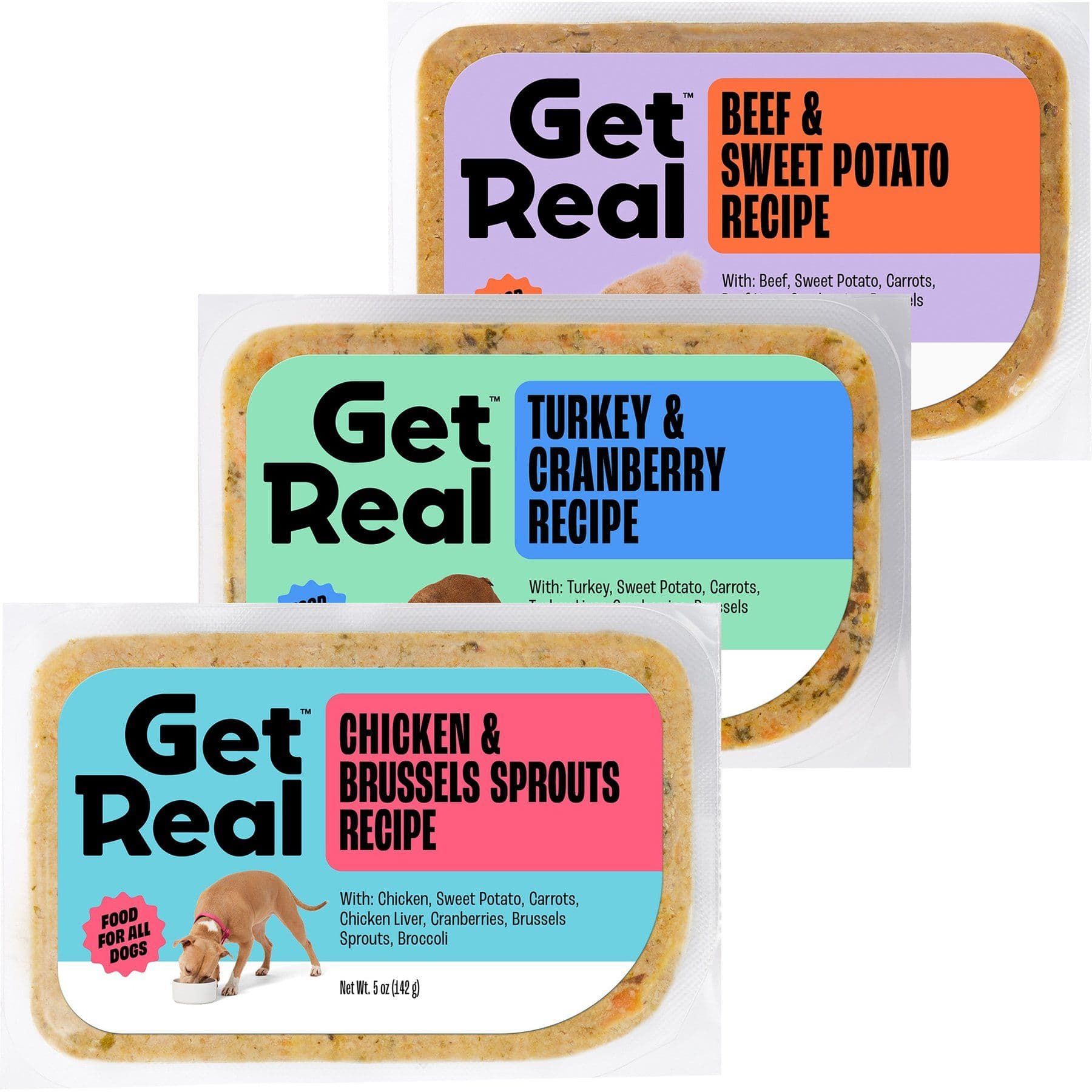
A simple way to see which Get Real recipe your dog enjoys before you commit a weight plan to it, with a subscription you can change, pause, or cancel later.
Webvet may earn a commission when you click through to Chewy, at no extra cost to you.
How a vet sets a calorie target for weight loss
If you want to help your dog lose weight, the most useful rule is to feed for the weight you want, not the weight you have. Bag and pack feeding guides are written for maintaining a dog's current weight, so feeding an overweight dog by its current weight keeps it overweight.
How much should I be feeding my dog? For weight loss, the answer is the daily calorie target your veterinarian sets, including treats. Your vet examines your dog, sets the target weight, and then sets the daily calories. To calculate the target, a veterinarian often starts with the resting energy requirement (RER), the calories a dog burns at rest. The Merck Veterinary Manual gives the formula as 70 times body weight in kilograms raised to the 0.75 power. A common veterinary starting point for weight loss is about 1.0 times RER calculated at the ideal body weight, an approach described in the AAHA nutrition and weight management guidelines, and your vet adjusts it for your dog's health, age, and history.
Here is a worked example for one hypothetical dog, a 40 lb dog whose veterinarian set a 32 lb ideal weight. It illustrates the math only; it is not a prescription for your dog:
- Ideal weight: 32 lb is about 14.5 kg.
- RER at ideal weight: 70 times 14.5 to the 0.75 power is about 520 kcal per day.
- Starting weight loss target: about 520 kcal per day, including treats.
- For comparison, the same dog's maintenance at its current 40 lb would be roughly 980 kcal (RER of about 610 times 1.6), nearly double the weight loss target.

That gap is why so many dogs never lose weight on "a little less" of their usual food. Cutting a maintenance portion by 10 percent still leaves this dog far above its target. Because the target is based on a healthy body weight, it is a meaningful cut without being a crash diet, which is why the target belongs with your veterinarian rather than with a guess.
Can a dog lose weight without exercise? Yes. Calories do most of the work; exercise helps preserve muscle and burns a modest amount on top. A dog with arthritis or heart disease can still lose weight on a calorie-controlled diet alone, and gentle daily walks can be added as comfort allows. Helping a dog lose weight naturally at home takes simple tools: a kitchen scale, measured meals at set times, and a written record of treats.
Two situations deserve a mention:
- After a dog is neutered, expect the calorie need to drop after surgery; many dogs gain weight because their portion stayed the same while their energy need fell.
- In winter, when walks get shorter, lower the portion with the activity rather than waiting for the scale to climb.
For meal timing and how to split the daily target across meals, the WebVet dog feeding schedule has a clear plan by age and size. Splitting the target into two or three meals helps many dieting dogs feel less hungry between bowls.
 Sponsored
Vet care that's always there
Unlimited video calls and messaging with licensed vets for less than a typical vet visit. One membership covers up to five pets.
Use code Pets60
Plans start at $12/month · covers up to 5 pets
- Licensed vets in most states
- Rx for 150+ conditions
- 4.7 on Trustpilot
Turning the calorie target into Get Real portions
Once you have a target, the next step is converting it into food. Get Real does not publish a weight-by-amount feeding chart; its online plan sets portions by weight, breed, age, and activity. The calories per Get Real pack are published, so you can check any plan against your vet's target. The table below shows the calories per Get Real pack for each recipe, as listed on the pack, and the share of the daily target each covers for the hypothetical 520 kcal example dog only.
| Recipe | Calories per Get Real pack, 5 oz | Calories per Get Real pack, 12 oz | Share of daily target, 12 oz pack |
|---|---|---|---|
| Chicken & Brussels Sprouts | 179 | 428 | about 82 percent |
| Beef & Sweet Potato | 188 | 451 | about 87 percent |
| Turkey & Cranberry | 198 | 474 | about 91 percent |

For the hypothetical example dog, one 12 oz pack of Chicken & Brussels Sprouts a day (428 kcal) leaves about 90 kcal for treats and training rewards, which keeps the plan honest. A 12 oz pack of Beef & Sweet Potato (451 kcal) leaves about 70 kcal. For your own dog, divide the target your veterinarian sets by the kcal per pack to see how much of a pack that target represents. A 5 oz mixer pack is a topper, not a full meal, so on a weight plan use the 12 oz or 24 oz packs for the main portion.
Some owners prefer to keep part of the diet as kibble. That works too, as long as both foods are counted toward the same target; the WebVet guide on how much topper to add shows how to split calories between kibble and fresh food. For dogs that prefer red meat, the Get Real Beef & Sweet Potato Recipe fits the example dog's 520 kcal target with room left for treats.
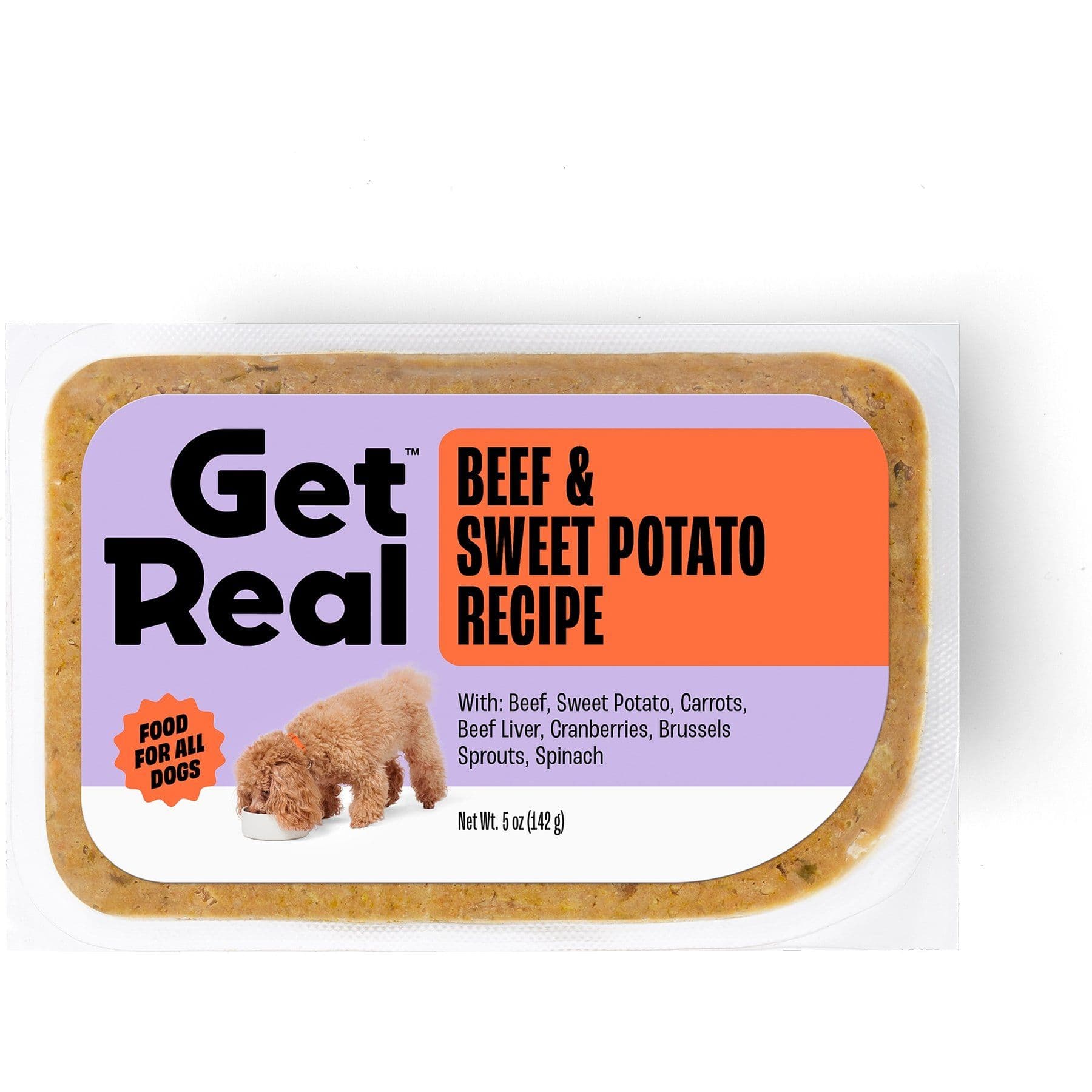
Beef and sweet potato at 451 kcal per 12 oz pack, a pre-portioned main meal you can match to your dog's calorie target without guesswork.
Webvet may earn a commission when you click through to Chewy, at no extra cost to you.
Choosing a weight loss dog food
What food is best for a dog to lose weight? The best dog food for weight loss is the one you can feed at the right calorie target while meeting all of your dog's nutrient needs. A dedicated weight loss dog food often has lower calorie density, more fiber, or both, so the dog gets more volume per calorie. A complete and balanced fresh food, fed in measured portions, can do the same job for many dogs.
When comparing foods, look at:
- The AAFCO statement: the food should be complete and balanced for your dog's life stage, explained in the WebVet guide to complete and balanced dog food.
- Calorie density: the kcal per cup, per can, or per pack. Lower calorie density means more food for the same calories.
- Protein: enough high-quality protein helps a dog keep lean muscle while losing fat.
- Portion format: pre-portioned packs or a scale make measuring reliable.
When owners ask for a vet recommended dog food for weight loss, the honest answer is that vets recommend a plan, not just a bag. For a severely overweight dog or one with other health problems, a veterinary therapeutic weight loss diet may be the right starting point. For a dog that needs to lose a moderate amount, a measured fresh diet often works well and many dogs find it more appealing. The Get Real Turkey & Cranberry Recipe adds variety for dogs that get bored, at 474 kcal per 12 oz pack.
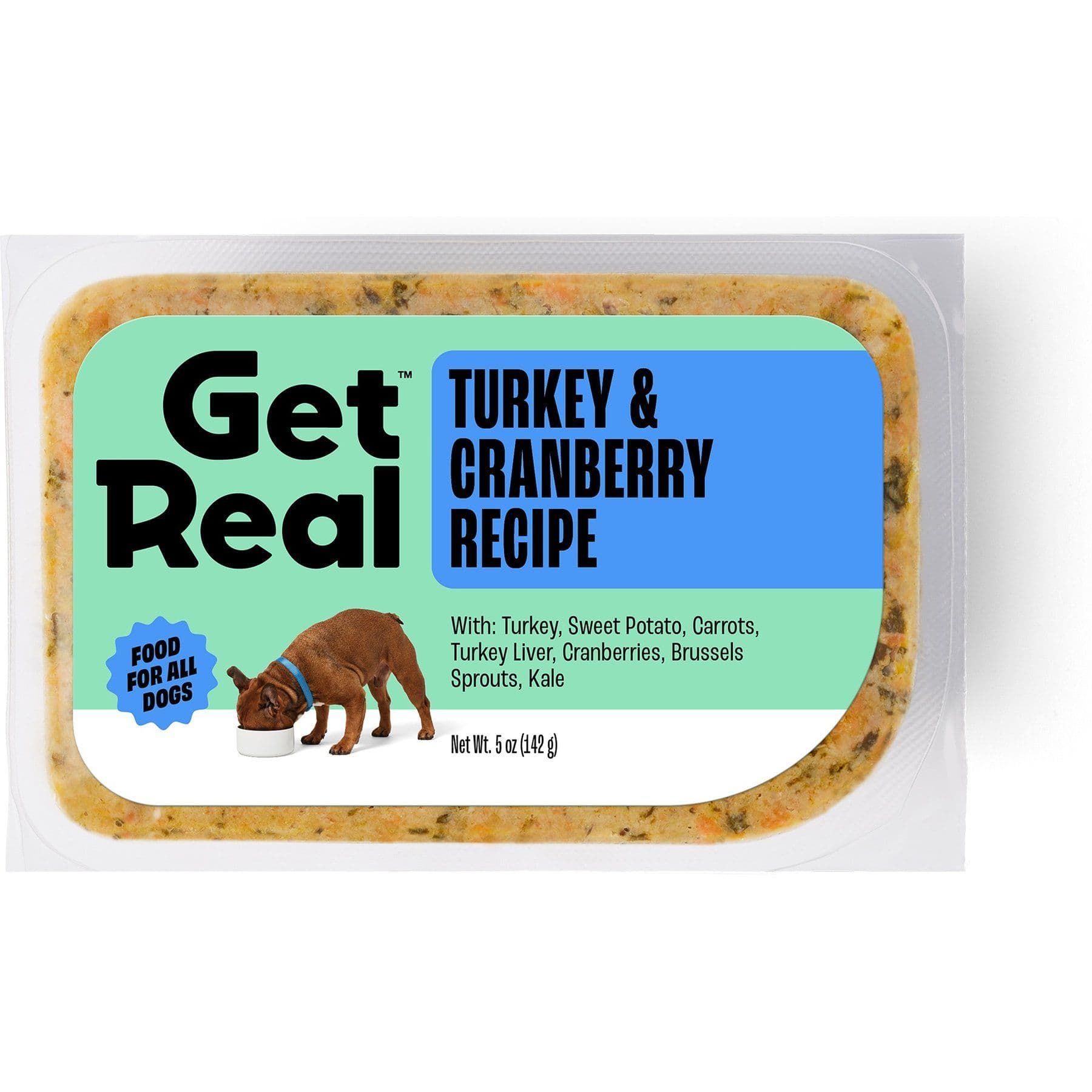
Turkey and cranberry in pre-portioned packs with published calories, a way to add variety to a weight plan while keeping every portion countable.
Webvet may earn a commission when you click through to Chewy, at no extra cost to you.
Slowing the meal down helps too. A dog that eats its smaller ration in seconds often begs afterward. One of the WebVet picks of slow feeder dog bowls can turn a two-minute meal into a ten-minute one, which many dogs find more satisfying.
Weight loss plans for small and large breeds
The math is the same for every size, but the details change. For small breed dogs, precision matters most in choosing and portioning a weight loss food, because a small dog's whole day may be only 250 to 350 kcal. A single extra biscuit can be 10 percent of that. A good choice for a small dog should have a small, consistent portion and a kibble or texture they can chew easily.
For small dogs on fresh food, the vet-set target may work out to a fraction of a 12 oz pack per day, so portioning by weight on a kitchen scale is the most reliable method. Whatever food a vet recommends for a small dog, the plan stays the same: a target at ideal weight, a complete and balanced food, and regular weigh-ins.
For the best weight loss dog food for large breeds, the priority is joint comfort and muscle. Large dogs carry more load on their hips, elbows, and knees, and losing even a few pounds can make them more comfortable. A large-breed plan usually includes:
- A food with ample protein to protect lean muscle.
- Low-impact exercise such as leash walks and swimming, added as comfort allows.
- A steady pace rather than a crash diet, which strips muscle along with fat.
- A measured portion recalculated as the dog gets lighter.
Labradors deserve their own note. A 2016 Cell Metabolism study by Raffan and colleagues found that about a quarter of the Labradors studied carry a POMC gene variant linked to higher body weight and stronger food motivation. For a Labrador, the best weight loss food is one you can portion precisely and pair with a strict treat budget. Measured packs and slower mealtimes help a lot with this famously food-focused breed.
Homemade weight loss diets and the balance problem
How to make homemade dog food for weight loss? The safe route is a recipe formulated for your dog by a board-certified veterinary nutritionist (the American College of Veterinary Nutrition lists them), with exact calories and supplements specified. The risk of going without one is an unbalanced diet. Without that, homemade dog food for weight loss runs into a balance problem: when you cut the portion of a homemade recipe, you also cut its vitamins and minerals, and most home recipes were short on some nutrients to begin with.
Even recipes described as vet approved, or published specifically as weight loss recipes, often fall short when checked against nutrient standards. A study of 200 home-prepared dog diet recipes published in JAVMA found that most did not meet AAFCO nutrient profiles. The WebVet guide to homemade dog food safety covers which ingredients to avoid and which to include if you do cook at home.
A practical middle ground for many owners is to use a complete and balanced fresh food as the base and keep any homemade additions, such as plain cooked green beans, inside the 10 percent treat budget. That gives you the appeal of real food without the risk of quietly short-changing the diet.
How to measure weight loss progress
A plan only works if you check it. Weigh in every 2 to 4 weeks, using the same scale and the same time of day, and score body condition at the same time. Veterinarians commonly aim for about 1 to 2 percent body weight loss per week, and your vet sets the rate for your dog; for the hypothetical 40 lb example dog, that range is roughly 0.4 to 0.8 lb a week.

The body condition score is the hands-on check that goes with the scale. On the common 9-point scale, an ideal dog scores 4 or 5:
- You can feel the ribs easily under a thin layer of fat.
- You can see a waist behind the ribs when looking from above.
- The belly tucks up behind the ribs when viewed from the side.
The Association for Pet Obesity Prevention offers body condition charts you can use at home. Keep a simple log of weight, body condition, daily calories, and treats; patterns are easier to spot on paper.
Plateaus are normal. As a dog gets lighter, its calorie need falls, so the plan that worked in month one may stall in month three. Your veterinarian may adjust the target by about 10 percent to restart progress. Once the dog reaches its ideal weight, your vet will set a maintenance level to raise calories toward gradually, and monthly weigh-ins continue.
Dog weight loss questions
Frequently Asked Questions
Do weight loss dog foods work?
Weight loss dog foods can work because their lower calorie density lets a dog eat a fuller bowl for fewer calories. They still depend on portion control: overfeeding a weight loss food will not produce weight loss.
What is the best food for weight loss in dogs?
The best food is a complete and balanced diet you can feed in measured portions at your dog's calorie target. That can be a therapeutic weight loss diet, a measured fresh food, or a kibble, as long as the target and portions are right.
What can you feed a dog to reduce its weight?
Feed a measured, complete and balanced diet at the vet-set calorie target, and use treat swaps such as plain green beans, carrot slices, or a few pieces of the daily food in place of biscuits. Keep all extras under 10 percent of the day's calories.
Why do vets not like homemade dog food?
Most home recipes have nutrient gaps, especially in calcium, trace minerals, and some vitamins, and the gaps get worse when portions are cut for weight loss. Vets are comfortable with homemade diets formulated by a board-certified veterinary nutritionist.
How fast should a dog lose weight?
Veterinarians commonly aim for 1 to 2 percent of body weight per week, and your vet sets the rate for your dog. Losing weight too fast can cost muscle and leave a dog hungry and irritable, so slow, steady progress is safer and more likely to last.
Can I still give treats while my dog is losing weight?
Yes, as long as treats stay under 10 percent of the daily calorie target. Count treat calories as part of the plan, and use small pieces or low-calorie options so training and bonding continue.
Veterinarian · BVMS MRCVS
Dr. Pippa Elliott, BVMS, MRCVS, is a veterinarian with nearly 30 years of experience in companion animal practice. Dr. Elliott earned her Bachelor of Veterinary Medicine and Surgery from the University of Glasgow. She was also designated a Member of the Royal College of Veterinary Surgeons. Married with 2 grown-up kids, Dr. Elliott has a naughty Puggle named Poggle, 3 cats and a bearded dragon.
Related reading

Easily Digestible Dog Food: What Makes a Meal Gentle on Your Dog's Gut

Fresh Dog Food for Underweight Dogs: Safe Weight Gain, Step by Step

How to Tell if a Dog Food Is Right for Your Dog: 8 Signs Vets Check
