How Much Topper to Add to Dog Food Without Unbalancing the Meal
How much topper to add to dog food: keep non-complete toppers under 10 percent of daily calories, let a complete and balanced topper take a larger share, and cut kibble by the same calories.

BVMS MRCVS
Medically reviewed by Dr. Pippa Elliott, BVMS MRCVS · Last reviewed

This article contains affiliate links. Webvet may earn a commission when you buy through them, at no extra cost to you.
How much topper to add to dog food depends on one thing most labels never spell out: whether the topper is a complete and balanced food or an extra. A topper that is not complete and balanced should stay at or under about 10 percent of your dog's daily calories. A complete and balanced topper can safely replace a much larger share of the bowl, as long as you remove kibble with the same calories.
That calorie swap is the part most owners skip, and it is why a well-meant spoonful can slowly add pounds. As a veterinarian, I would rather you work from numbers than guesswork, so this guide gives you the percentage rule, a worked swap using published calorie figures, and a simple way to check the result on your dog.

 Sponsored
Have a health question about your dog?
Talk to a licensed vet at Dutch over video or message, including nights and weekends.
Use code Pets60
Plans start at $12/month · covers up to 5 pets
- Licensed vets in most states
- Rx for 150+ conditions
- 4.7 on Trustpilot
How much topper to add to dog food: the percentage rule
- 1Keep a topper that is not complete and balanced to 10 percent of daily calories or less.
- 2A complete and balanced topper can replace a larger share, up to the whole meal, because it carries its own vitamins and minerals.
- 3Whatever you add, reduce kibble by the same calories so the daily total does not change.
- 4Start small over 7 to 10 days and judge the result by body condition, not by how empty the bowl is.
The simplest way to think about adding toppers to dog food is to sort the topper first, then pick the share. The percentage rule by topper type looks like this:
- Treat-style toppers and mix-ins (broths, freeze-dried crumbles, plain cooked vegetables, a little plain meat): keep them to 10 percent of daily calories for non-complete toppers. This mirrors the long-standing veterinary guidance that treats and extras stay under 10 percent of the diet, described in the WSAVA Global Nutrition Guidelines.
- Complete and balanced toppers (a fresh or wet food labeled to meet AAFCO nutrient profiles): a complete and balanced topper can replace a larger share of the bowl, often 20 to 50 percent, and can become the whole meal if you want.
Supplements and powders sit outside this rule, so follow their own label dose. For most owners, the real choice is between a treat-style extra and a complete fresh food that can carry more of the meal.
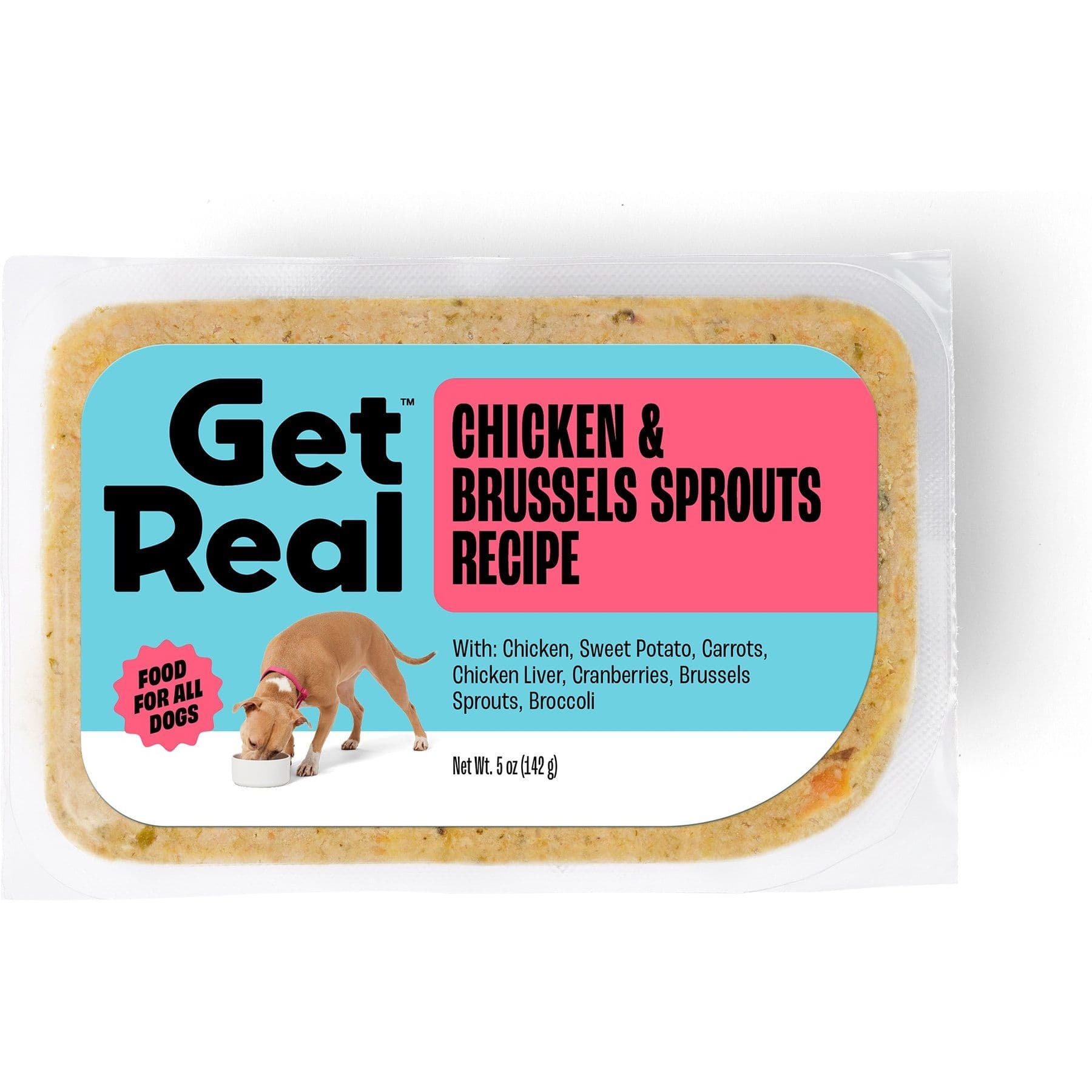
A complete and balanced fresh recipe, and the lowest in calories of the three at 179 kcal per 5 oz pack, so it can take a larger share of the bowl than a treat-style topper.
Webvet may earn a commission when you click through to Chewy, at no extra cost to you.
Why the split? A food that is not complete is missing some nutrients. At 10 percent of the calories it cannot dilute the base diet enough to matter. At 30 or 40 percent it can, and the dog ends up eating less of the food that was carrying the vitamins and minerals. A complete topper does not have that problem, so the limit becomes calories rather than balance.
So, what toppers can I put on dog food? Nearly any dog-safe food can be used as a topper, but the share you can use depends on the category above. How to use dog food toppers well comes down to three habits: measure the topper, subtract the matching kibble, and weigh your dog every few weeks.
Fresh, gently cooked food is the most flexible option because it works in both roles. Get Real, the fresh dog food line sold only at Chewy, is made with 10 ingredients or less plus vitamins and minerals and is formulated to meet AAFCO nutrient profiles for all life stages, so it can serve as a measured topper or a full meal. The Get Real Chicken & Brussels Sprouts Recipe is the lowest in calories of the three recipes, which makes it the easiest to fit into a topper budget.
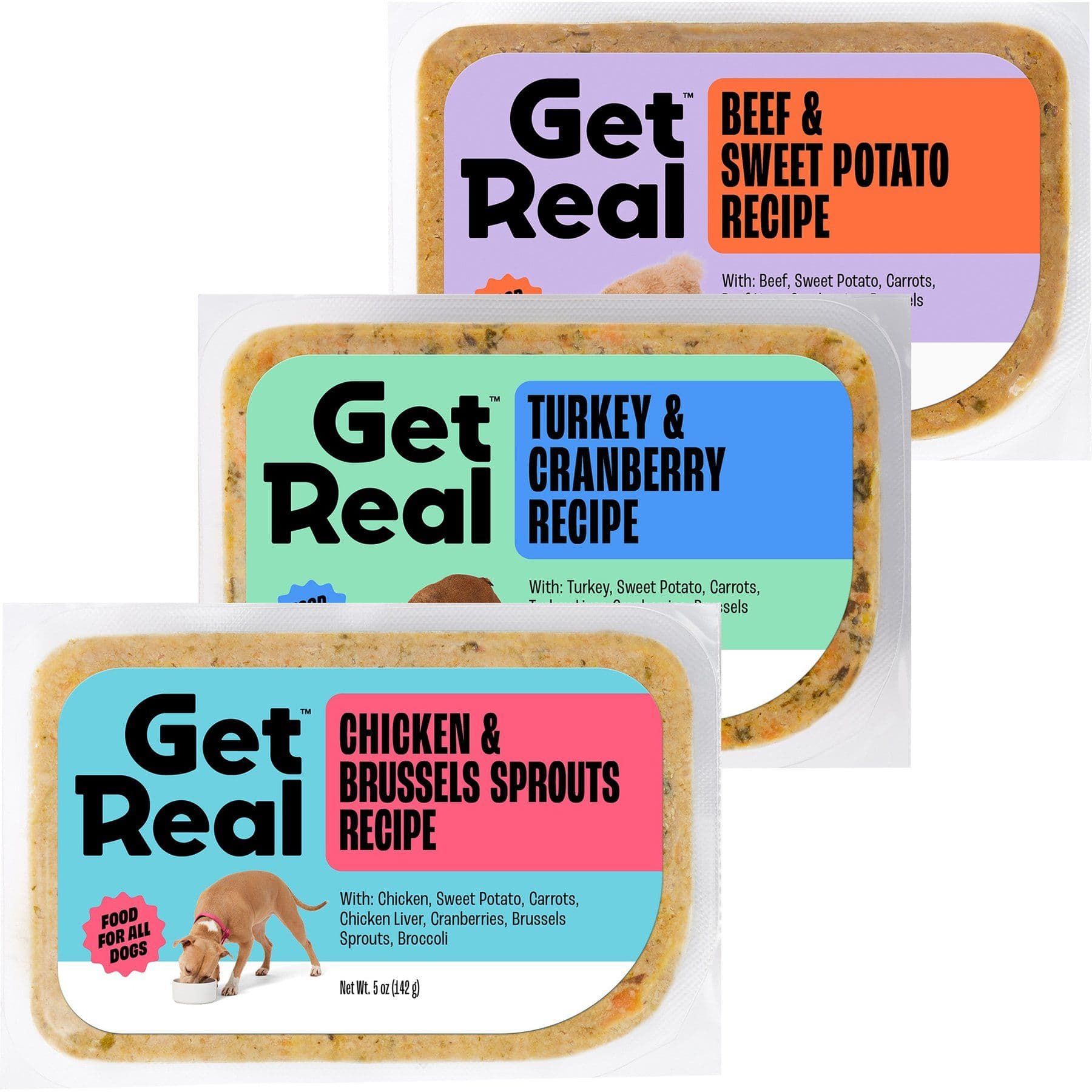
A low-commitment way to try Get Real as a measured topper before choosing a recipe and setting up a subscription you can change, pause, or cancel.
Webvet may earn a commission when you click through to Chewy, at no extra cost to you.
How to cut kibble so total calories stay the same
Before you can fit a topper in, you need to know how much your dog should eat in a day. That daily amount starts with the calorie need for your dog's ideal weight, which you then split between kibble and topper. For meal timing by size and age, the WebVet dog feeding schedule covers meal timing and daily amounts in detail.
Is 2 cups of food too much for a dog? It depends entirely on the dog's size and on the kcal per cup from the bag. Two cups of a 350 kcal food is 700 kcal, a sensible day for a 30 lb dog and far too much for a 10 lb one. That is why every swap below works in calories, not cups. If you need your dog's full daily amount first, the WebVet guide on how much to feed a dog sets it by weight and life stage.
The swap has three steps:
- Find your dog's daily calorie budget with your veterinarian, or estimate it from the feeding guide on the kibble bag for your dog's ideal weight.
- Read the kcal per cup from the bag label and the kcal of the topper portion you plan to add.
- Divide topper calories by kibble kcal per cup. That number is the cups of kibble to remove.
Here is a worked calorie swap example. Take an illustrative 30 lb neutered adult dog with a daily budget of about 790 kcal. That figure comes from the resting energy requirement formula in the Merck Veterinary Manual (70 times body weight in kilograms to the 0.75 power) multiplied by 1.6 for a typical neutered pet. Assume the kibble lists 380 kcal per cup. Get Real publishes the calories for each pack, and Chewy does not publish a weight-by-amount topper chart, so the table below is calculated from those published calories rather than taken from a brand chart.
| Topper portion | kcal per pack portion | Share of a 790 kcal day | Kibble to remove at 380 kcal per cup |
|---|---|---|---|
| Half of a 5 oz Chicken & Brussels Sprouts pack | about 90 | about 11 percent | about 1/4 cup |
| 5 oz Chicken & Brussels Sprouts pack | 179 | about 23 percent | just under 1/2 cup |
| 5 oz Beef & Sweet Potato pack | 188 | about 24 percent | about 1/2 cup |
| 5 oz Turkey & Cranberry pack | 198 | about 25 percent | just over 1/2 cup |
| 12 oz Chicken & Brussels Sprouts pack | 428 | about 54 percent | about 1 1/8 cups |
| 12 oz Beef & Sweet Potato pack | 451 | about 57 percent | about 1 1/5 cups |
| 12 oz Turkey & Cranberry pack | 474 | about 60 percent | about 1 1/4 cups |

Two things stand out. First, a whole 5 oz pack is roughly a quarter of this dog's day, well past the 10 percent line for an extra, which is fine only because Get Real is complete and balanced. Second, the kibble cut is real: about half a cup a day for one 5 oz pack. Skip it and the dog takes in roughly 180 extra kcal daily.
The same arithmetic works for wet food: when you mix canned food with dry, the kibble portion shrinks by the calories in the wet portion. Reduce kibble by the same calories as the wet or fresh portion, then check the result on the scale. If your bag lists a different kcal per cup, swap your number into step 3.
For a pack-by-pack plan, the WebVet Get Real feeding guide explains how the online feeding plan sets portions by weight, breed, age, and activity. If you want fresh food to cover about a quarter of a medium dog's day, the Get Real Beef & Sweet Potato Recipe at 188 kcal per 5 oz pack matches the example above closely.
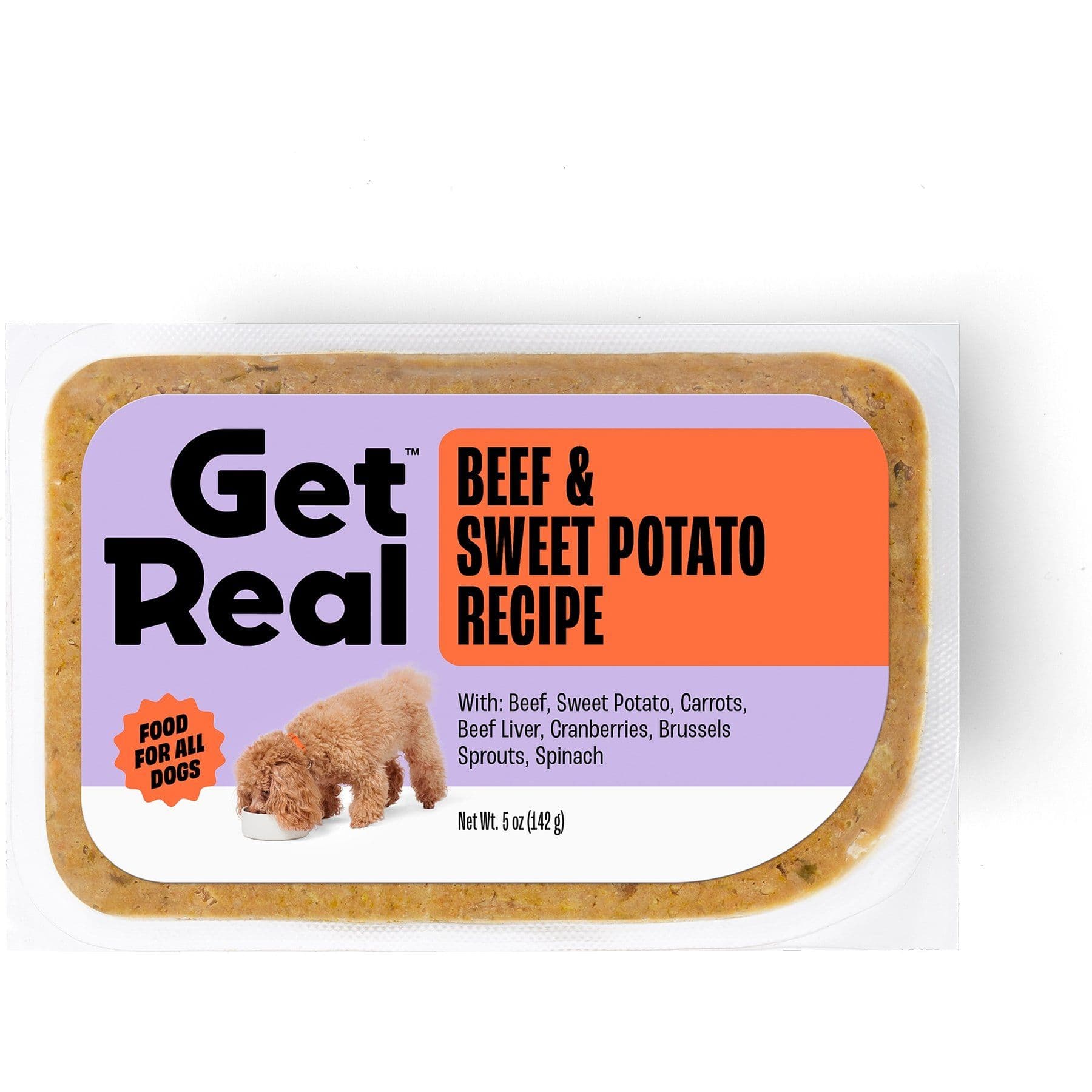
Beef and sweet potato at 188 kcal per 5 oz pack, about a quarter of a medium dog's day, with the published calories you need for an exact kibble swap.
Webvet may earn a commission when you click through to Chewy, at no extra cost to you.
Complete and balanced toppers vs treats and mix-ins
What is a dog food topper? A dog food topper is any food added on top of or mixed into the main meal to add flavor, moisture, texture, or nutrition. Dog food toppers range from a splash of low-sodium broth to a full portion of fresh or frozen food, and that range is exactly why one portion rule cannot fit them all.
Are dog food toppers good for dogs? Most are, when they are measured. Are meal toppers good for dogs in the long run? The risk is not the topper itself but the calories it adds on top of an unchanged kibble portion. A topper also helps many dogs eat with more interest and take in more water, which is useful for dogs that drink little.
The key label phrase is "complete and balanced." In the US, a food can only carry that claim if it meets an AAFCO nutrient profile, either by formulation or by feeding trial. The WebVet explainer on complete and balanced dog food walks through the wording, and the Association of American Feed Control Officials sets the profiles themselves. A topper with that statement is a food; a topper without it is an extra.

Fresh dog food toppers and frozen dog food toppers are often the same product. Get Real, for example, is gently cooked then frozen, kept in the freezer, and thawed in the fridge before serving, and its published calories per pack make the swap math easy. The 5 oz mixer packs are toppers, not full meals, which is a helpful built-in limit for owners who want fresh food as an addition rather than a replacement.
When owners ask for the best fresh dog food toppers, the useful criteria are simple:
- A complete and balanced statement for the life stage you are feeding.
- Published kcal per pack or per cup, so the kibble swap is exact.
- A short ingredient list that is easy to read.
- Pre-portioned packs, so the amount does not drift from day to day.
- Storage you can manage: freezer space and a fridge thaw of 12 to 24 hours for 5 oz and 12 oz packs.
The Get Real Turkey & Cranberry Recipe carries an AAFCO all life stages statement, publishes its calories, and comes in pre-portioned packs; at 198 kcal per 5 oz pack it suits larger dogs with bigger calorie budgets.
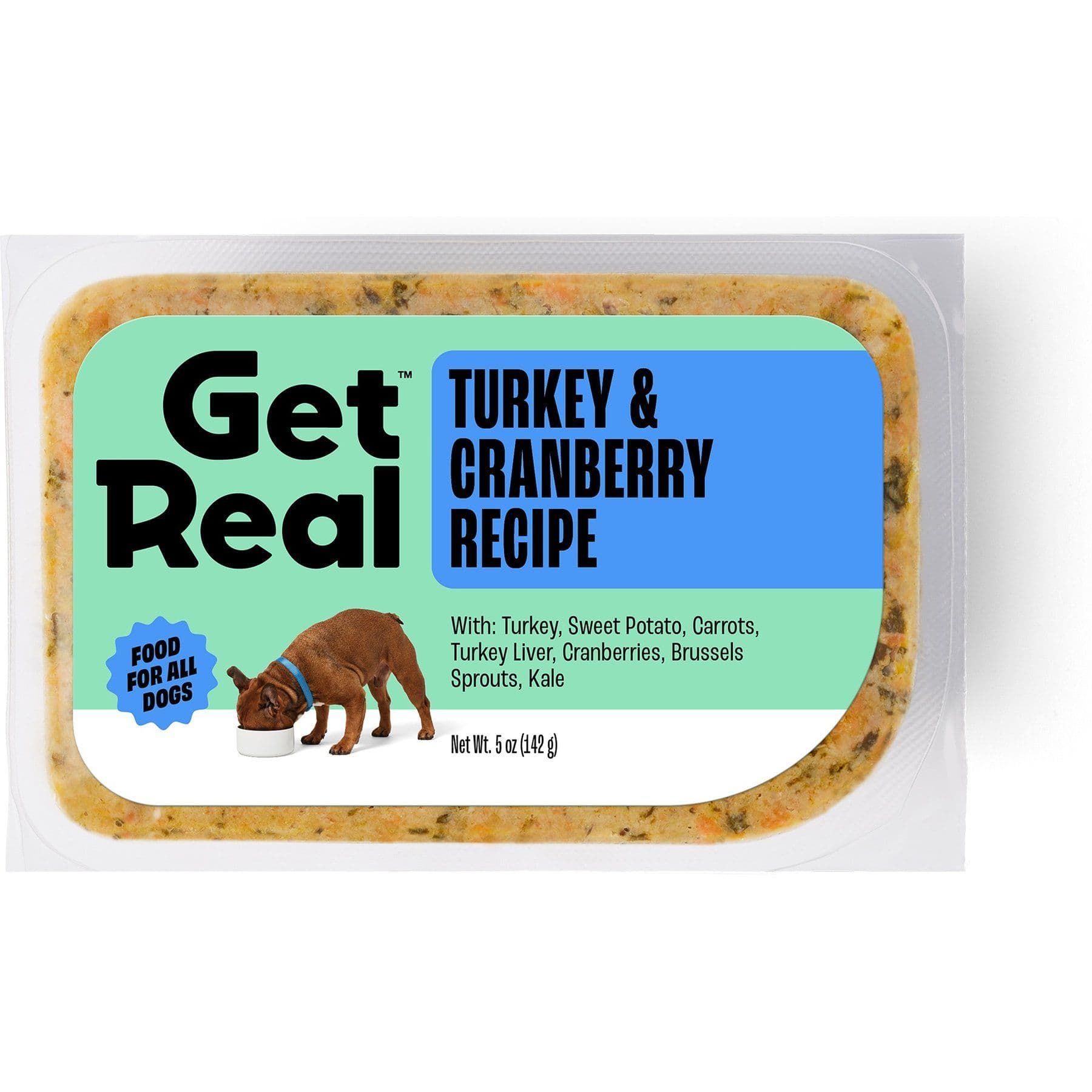
Turkey and cranberry in pre-portioned 5 oz mixer packs at 198 kcal each, a complete and balanced topper with calories you can subtract from the kibble exactly.
Webvet may earn a commission when you click through to Chewy, at no extra cost to you.
What makes a healthy dog food topper
Healthy dog food toppers share a few traits: they add nutrition without adding a lot of salt, sugar, or fat, and they are portioned so the daily calorie total stays steady. The healthiest dog food toppers are usually either a complete and balanced fresh food or a plain whole food that is low in calories.
What can I add to my dog's kibble everyday as a topper? Good everyday options include:
- A measured portion of complete and balanced fresh food, with kibble reduced to match.
- Plain cooked green beans, carrots, or pumpkin, which are low calorie dog food toppers that add volume.
- A spoonful of plain cooked lean meat or plain cooked egg, counted within the 10 percent budget.
- Low-sodium bone broth with no onion or garlic, poured over to soften the kibble.
What are good dog food toppers to avoid? Skip anything seasoned, salty, fatty, or made with onion, garlic, grapes, raisins, or xylitol. To check a commercial topper's ingredients and calorie statement, the WebVet guide on how to read a dog food label covers which ingredients to avoid and which dog foods to stay away from in more depth than fits here.
Labels such as natural, or claims that a topper is vet recommended, deserve a closer look. "Natural" has a specific AAFCO meaning about ingredient processing; it does not tell you whether a topper is complete or how many calories it adds. A veterinarian's recommendation will usually rest on the same points as the list above: complete and balanced or very low calorie, measured, and counted. The best dog food toppers for one dog are the ones that fit its calorie budget and that it eats reliably.
For dogs with a small calorie budget, the most useful step is to count every topper calorie, including broth and treats, and keep the extras under 10 percent. Plain whole-food toppers are a good choice there because they add a lot of volume for very few calories.
 Sponsored
Vet care that's always there
Unlimited video calls and messaging with licensed vets for less than a typical vet visit. One membership covers up to five pets.
Use code Pets60
Plans start at $12/month · covers up to 5 pets
- Licensed vets in most states
- Rx for 150+ conditions
- 4.7 on Trustpilot
Toppers for picky eaters
Dog food toppers for picky eaters can make a bowl more interesting by changing its smell and texture, though no topper guarantees a fussy dog will eat. Mixing a moist topper through the kibble also stops a dog from licking the topping off and leaving the rest.
A sudden loss of appetite in a dog that used to eat well is different from lifelong fussiness. If a dog stops eating, loses weight, or has vomiting or diarrhea, have it examined before you try toppers.
What are some good toppers to add to dog kibble for a fussy dog? Options worth trying:
- A measured portion of complete and balanced fresh food mixed through the kibble.
- Warm low-sodium broth poured over the kibble and left for a few minutes to soften it.
- A small amount of wet food, stirred in rather than placed on top.

The best dog food toppers for picky eaters still have to fit the calorie rule. Picky dogs are often small dogs with small calorie budgets, so even a modest spoonful can be a large share of the day. Mix the topper through the whole portion, keep mealtimes to about 15 to 20 minutes, and lift the bowl afterward so the dog learns that meals happen at set times.
If you are not sure which flavor your dog will prefer, the Get Real Sampler Pack lets you try Get Real before you set up a subscription you can change, pause, or cancel.
How to start a topper without upsetting the stomach
Dog food toppers for a sensitive stomach need a slower start than most owners expect. Even a high-quality food can cause soft stool if it arrives all at once, because the gut bacteria need time to adjust to a new mix of proteins, fats, and fiber.
A simple plan to start small over 7 to 10 days:
- Days 1 to 3: add about a quarter of the planned topper portion and reduce kibble slightly.
- Days 4 to 6: move to about half the planned portion.
- Days 7 to 10: reach the full planned portion, with kibble reduced by the matching calories.
- Sensitive dogs: stretch the same steps over 10 to 14 days.
The best dog food toppers for a sensitive stomach tend to be simple, with a single main protein and a short ingredient list, so it is easier to see what agrees with your dog. The WebVet guide to transitioning dog food has more detail on pacing a switch for dogs with a history of digestive upset.

Food safety matters with fresh toppers, too. Thaw fresh packs in the fridge rather than on the counter, use thawed food within 3 to 5 days, and discard any portion left out at room temperature for more than 2 hours.
Dog food topper questions
Frequently Asked Questions
What is the 80/20 rule for dog food?
There is no official 80/20 rule; it is a common rule of thumb some owners use for about 80 percent kibble and 20 percent topper by calories. In calorie terms, that split is reasonable only when the topper is complete and balanced and the kibble is cut by the topper's calories. For a topper that is not complete, stay at 10 percent instead.
Is food topper good for dogs?
Yes, a measured topper can be good for dogs. It adds more moisture and variety and can help a reluctant eater. The catch is extra calories: if you add a topper without reducing kibble, most dogs will slowly gain weight.
What is the best food topper for dogs?
The best choice for most dogs is a complete and balanced topper with a short ingredient list and published calories per portion. That lets you use a larger share without unbalancing the diet and makes the kibble swap exact.
What can I use to bulk up dog food?
To bulk up dog food without many calories, use plain green beans, plain cooked carrots, or plain canned pumpkin. They add low calorie volume, so a dog on a diet feels it has a fuller bowl. Keep these to about 10 percent of daily calories and introduce them gradually.
How much topper should a small dog get?
A 10 lb dog has a small calorie budget of roughly 350 kcal a day, so 10 percent is only about 35 kcal. One tablespoon of fresh food is roughly 20 kcal, so one to two tablespoons is usually the limit for a non-complete topper unless you reduce kibble to match.
Do I need to change kibble if I only add a spoonful of topper?
If the spoonful keeps total extras under 10 percent of daily calories, you usually do not need to change the kibble for a healthy-weight dog. Still watch body condition, and cut kibble slightly if your dog starts to feel heavier over the ribs.
Veterinarian · BVMS MRCVS
Dr. Pippa Elliott, BVMS, MRCVS, is a veterinarian with nearly 30 years of experience in companion animal practice. Dr. Elliott earned her Bachelor of Veterinary Medicine and Surgery from the University of Glasgow. She was also designated a Member of the Royal College of Veterinary Surgeons. Married with 2 grown-up kids, Dr. Elliott has a naughty Puggle named Poggle, 3 cats and a bearded dragon.
Related reading

Easily Digestible Dog Food: What Makes a Meal Gentle on Your Dog's Gut

Fresh Dog Food for Underweight Dogs: Safe Weight Gain, Step by Step

How to Tell if a Dog Food Is Right for Your Dog: 8 Signs Vets Check
