What Dog Poop Should Look Like on Fresh Food (and Which Changes Are Normal)
A vet explains what dog poop should look like on fresh food: firm, chocolate brown, and often smaller. Learn which color and texture changes are normal during a switch and which mean calling the vet.

BVMS MRCVS
Medically reviewed by Dr. Pippa Elliott, BVMS MRCVS · Last reviewed

This article contains affiliate links. Webvet may earn a commission when you buy through them, at no extra cost to you.
If you have just switched to fresh food and are wondering what dog poop should look like now, the short answer is reassuring: firm, chocolate brown, log-shaped stool that is easy to pick up, and often smaller than before. Most of the changes owners notice in the first weeks are a normal response to a more digestible diet.
This guide walks through what healthy stool looks like, what a stool color and consistency chart tells you, how stool usually changes week by week during a switch, and the handful of changes that mean a call to your veterinarian.
 Sponsored
Have a health question about your dog?
Talk to a licensed vet at Dutch over video or message, including nights and weekends.
Use code Pets60
Plans start at $12/month · covers up to 5 pets
- Licensed vets in most states
- Rx for 150+ conditions
- 4.7 on Trustpilot
What dog poop should look like
Is my dog's poop healthy? You can usually answer that with a quick look at four things. What should a healthy dog poop look like? It has:
- A chocolate brown color, which comes from bile pigments, though the exact shade varies with diet.
- A firm log shape, often in segments, that holds together when picked up.
- A slightly moist surface that leaves little or no residue on grass.
- No coating of mucus, no visible blood, and no worms or unusual objects.
- 1Healthy stool is firm chocolate brown, log-shaped, and easy to pick up.
- 2Smaller stool on fresh food is common, because more of the meal is digested.
- 3Mild softening during the switch is normal; hold the current mix until it firms.
- 4Black, red, or white stool, or diarrhea lasting more than 48 hours, needs a vet.

Vets often use a fecal score, a numbered scale that runs from very hard, dry pellets at one end to watery diarrhea at the other. On the common 1 to 7 scale, a score of 2 is ideal: firm, segmented, and leaving almost no mark. Scores of 1 suggest constipation or a diet low in moisture, while 4 and above mean stool is softer than ideal.
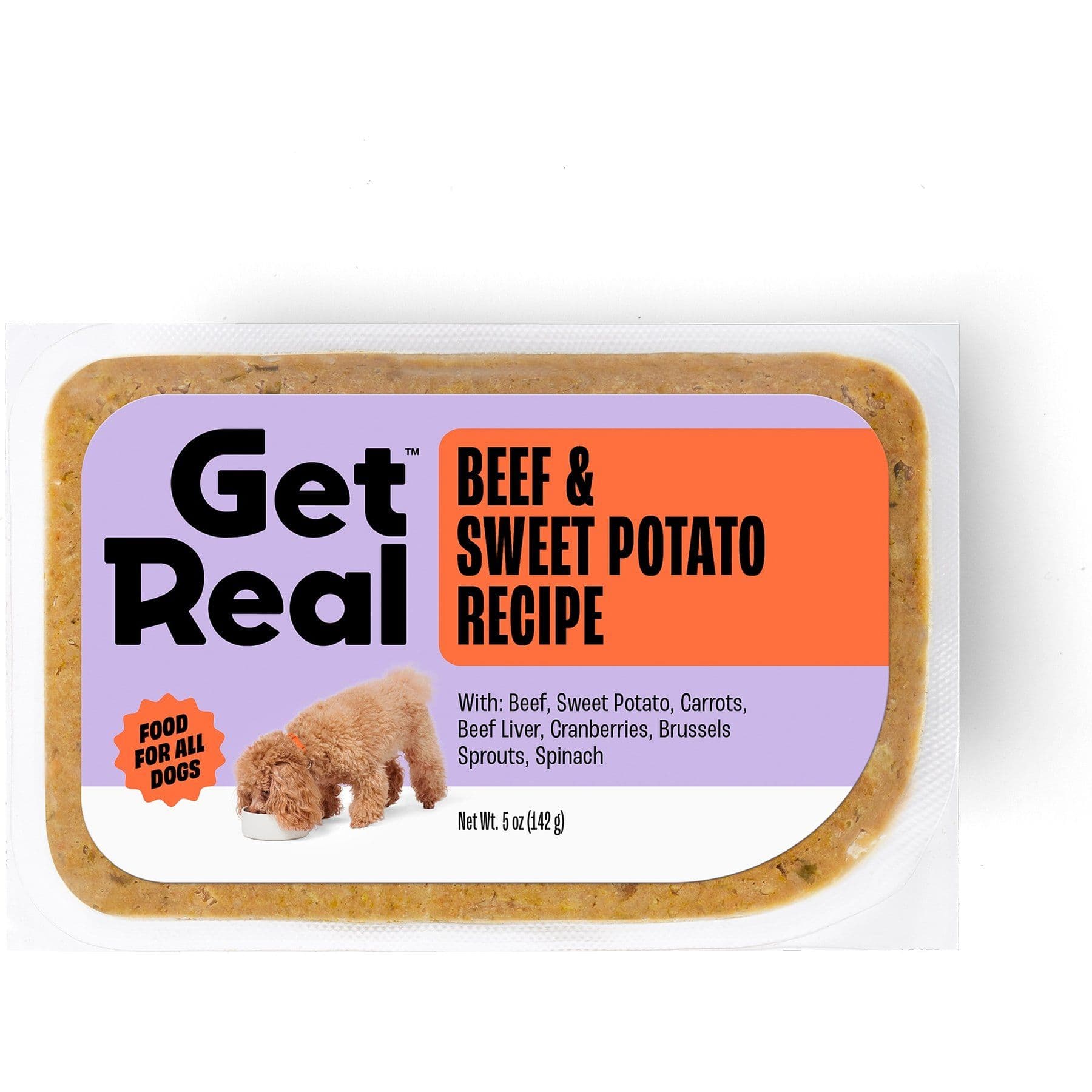
Looking for a fresh recipe with a short, readable ingredient list? Get Real Beef & Sweet Potato is gently cooked, frozen in pre-portioned packs, and made with 10 ingredients or less plus vitamins and minerals.
Webvet may earn a commission when you click through to Chewy, at no extra cost to you.
Size and frequency matter too. Most adult dogs pass stool one to three times a day, and the amount reflects how much of the meal was not digested. That is why the volume often drops when a dog moves from a high-fiber kibble to a fresh diet. A gently cooked recipe such as the Get Real Beef & Sweet Potato Recipe lists a fiber maximum of 1.5 percent, so it adds little bulk compared with many high-fiber kibbles.
Consistency from day to day is the best sign of all. An occasional softer stool after a new treat is not a concern in a bright, happy dog. A pattern of change over several days is what deserves attention.
Smell and routine shift as well. Many owners notice that stool on a fresh diet is less pungent and that their dog needs fewer trips outside, since there is simply less waste to pass. Keeping meals at the same times each day helps stool settle into a predictable rhythm, which makes any real change much easier to spot. A short daily glance when you pick up is all the monitoring most dogs need.
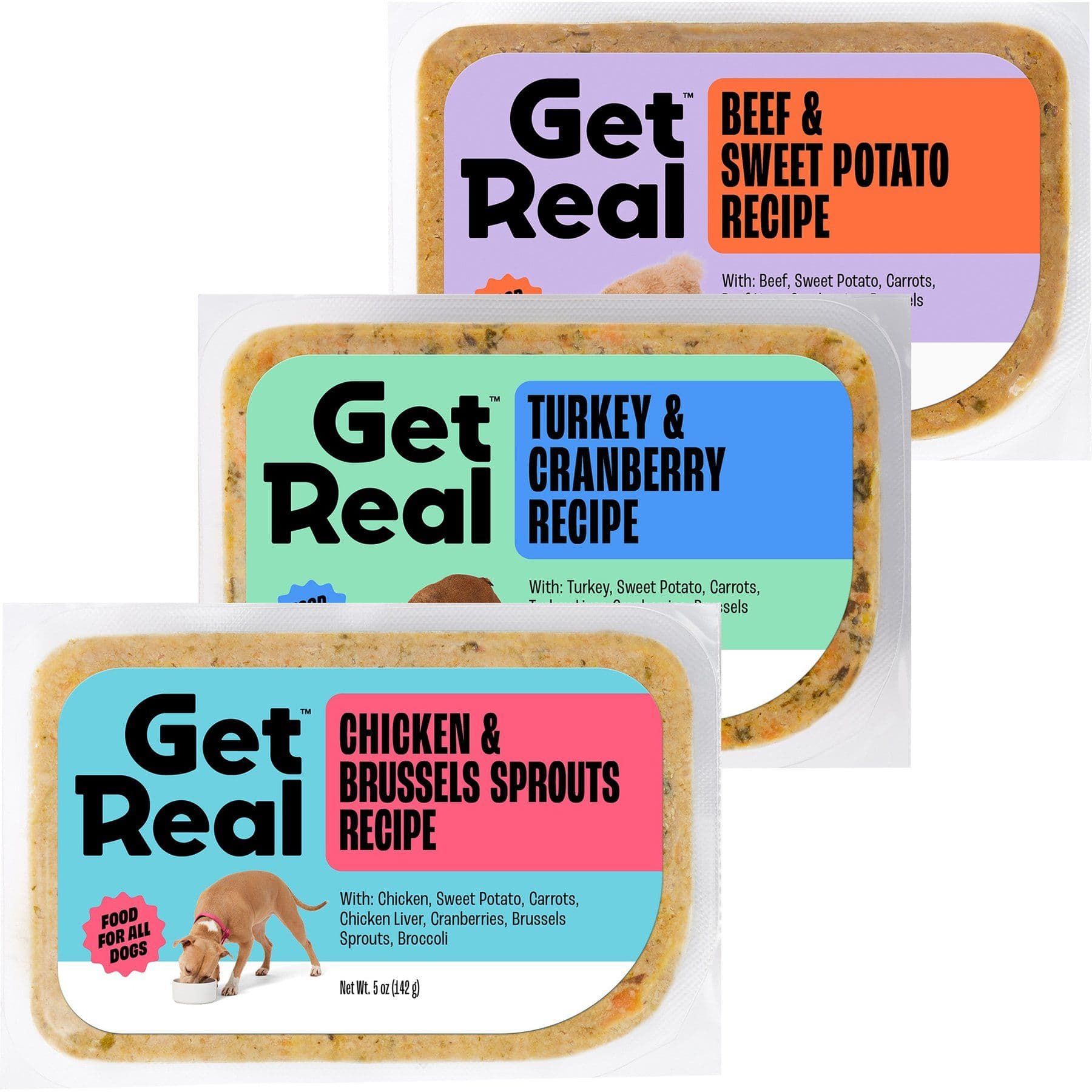
Not sure which protein your dog will do best on? The Get Real Sampler Pack includes beef, chicken, and turkey recipes, so you can see which one your dog prefers before choosing one for the switch.
Webvet may earn a commission when you click through to Chewy, at no extra cost to you.
Dog poop color and consistency chart
A dog poop color chart is a quick way to sort normal shades from those that need a vet. Use the dog stool color chart below alongside the fecal score chart dog owners and vets use for texture. If your clinic has given you a printable unhealthy dog poop chart as a PDF, it will follow the same basic logic shown here.
The general rule is that brown in its many shades is normal, and the further stool moves from brown, the more it matters. Diet can shift brown toward tan, orange, or darker brown. Black, red, white, and gray are the colors that should not be explained away by food.
| Color or texture | What it may mean | Normal or call the vet |
|---|---|---|
| Chocolate brown stool, firm and segmented | Healthy digestion | Normal |
| Lighter tan or light brown | Diet change, more rice, sweet potato, or lean protein | Usually normal if firm |
| Yellow or orange stool | Fast transit, beta-carotene foods, or a liver or gallbladder issue | Normal for a day or two; call if it persists |
| Green stool tint | Grass eating or leafy greens; rarely, some rodent poisons | Call the vet if any poison exposure is possible |
| Black tarry stool | Digested blood from the stomach or small intestine | Call the vet today |
| Red blood streaks | Bleeding in the colon or rectum | Call the vet, sooner if large amounts |
| Gray greasy stool | Poor fat digestion, sometimes a pancreas problem | Call the vet |
| White chalky stool | Too much calcium or bone in the diet | Call the vet if it persists |
| Mucus coating | Irritation of the large intestine | Call if it lasts more than a day or two |
| Watery diarrhea | Infection, dietary upset, or illness | Call the vet if it lasts more than 48 hours |
Blood in dog stool needs particular care. Bright red streaks usually come from the lower bowel and can follow straining or a short bout of colitis, while black, tarry stool means blood has been digested higher in the gut. A single small streak in a bright dog is worth a phone call; repeated or larger amounts need an exam the same day. The Merck Veterinary Manual describes the causes vets work through for both.
Texture tells you as much as color. Hard, crumbly stool points toward too little moisture or too much fiber. Very soft stool that holds a pile shape but will not pick up cleanly is a score of 5, and it is the most common change during a food switch.
Here is how the common 1 to 7 fecal score scale reads in practice:
- Score 1: very hard, dry pellets that crumble; often too little water or too much fiber.
- Score 2: firm, segmented logs that leave almost no residue; the ideal.
- Score 3: log-shaped and moist, leaving a slight mark; still acceptable for most dogs.
- Score 4: very moist and soggy, losing shape when picked up.
- Score 5: piles that hold some shape but will not pick up cleanly.
- Score 6: textured but shapeless puddles.
- Score 7: watery diarrhea with no texture.
A dog that sits at 2 or 3 most days is doing well. A day at 4 or 5 during a transition is common; a run of 6 or 7 is not.
 Sponsored
Vet care that's always there
Unlimited video calls and messaging with licensed vets for less than a typical vet visit. One membership covers up to five pets.
Use code Pets60
Plans start at $12/month · covers up to 5 pets
- Licensed vets in most states
- Rx for 150+ conditions
- 4.7 on Trustpilot
How poop changes on fresh food
Smaller and firmer stool is common on fresh food. The main reason is digestibility. The more of a meal a dog digests and absorbs, the less undigested material is left to pass as stool, a basic principle of digestion described in the Merck Veterinary Manual. Gently cooked recipes built on lean protein and low fiber leave less residue than many high-fiber dry diets, which matches what many owners see after a switch.
Moisture is the other factor. Fresh foods hold far more water than kibble. Get Real recipes, for example, list a maximum of 75 percent moisture and a fiber maximum of 1 to 1.5 percent, depending on the recipe. Lower fiber and better digestion together mean less bulk reaching the colon.

Color can shift with recipe ingredients, too. These are the recipe ingredient color effects owners notice most:
- Sweet potato and carrots carry beta-carotene, which can tint stool slightly orange or lighter brown.
- Leafy greens such as spinach, and Brussels sprouts, can add a faint green tinge.
- Liver, a rich source of iron, can darken stool toward deep brown.
- Leaner proteins and less fiber can make stool a little lighter overall.
Get Real's published Beef & Sweet Potato ingredient list is a good example: beef, sweet potato, carrots, beef liver, cranberries, Brussels sprouts, and spinach lead the list. A dog eating the Get Real Chicken & Brussels Sprouts Recipe or the beef recipe may show any of these mild shifts, and none of them is a concern on its own when the stool stays firm.
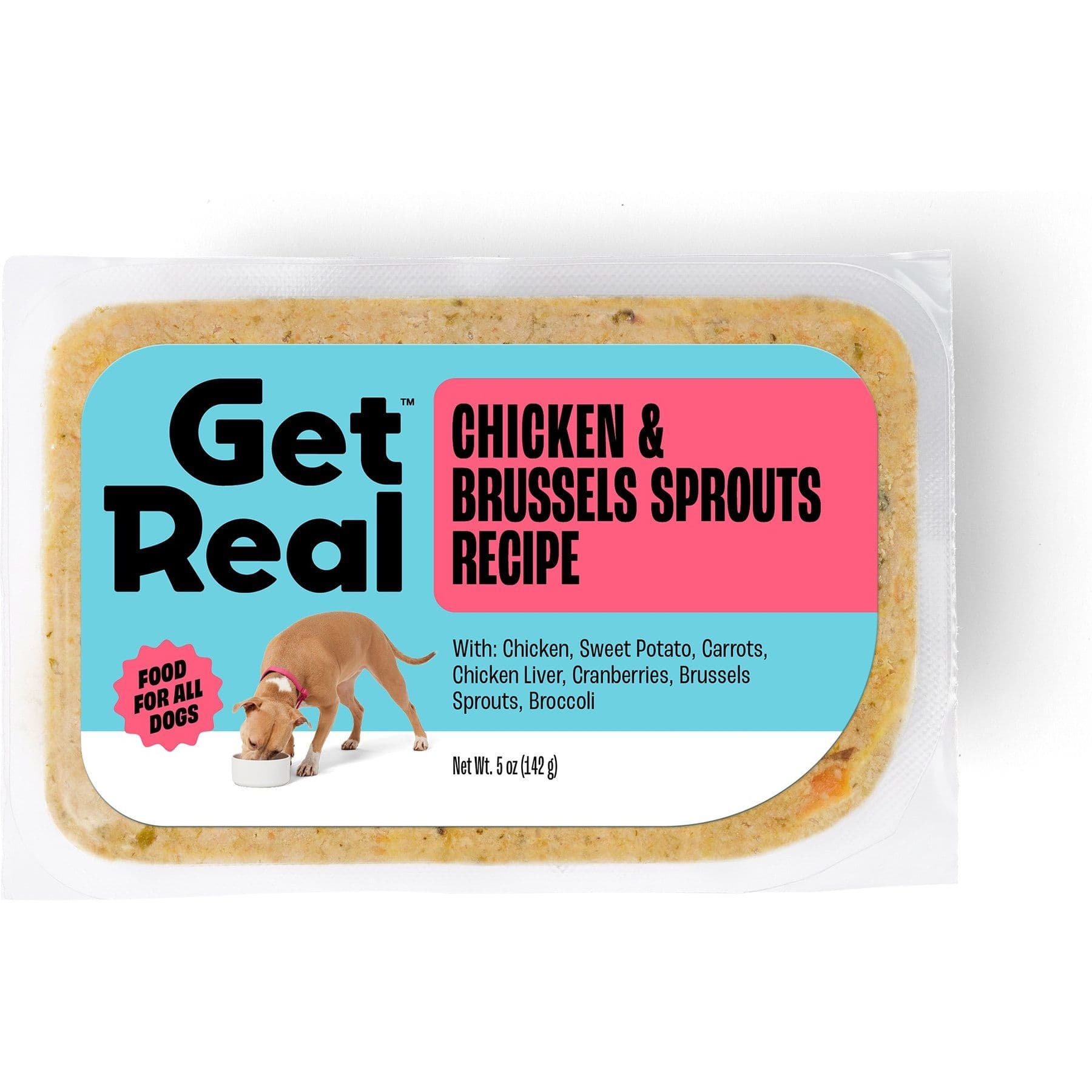
Starting fresh food for the first time? Get Real Chicken & Brussels Sprouts is gently cooked and frozen in pre-portioned packs, which makes measuring small amounts easy during the switch.
Webvet may earn a commission when you click through to Chewy, at no extra cost to you.
Get Real is Chewy's fresh dog food line, gently cooked and then frozen, made with human-grade ingredients, and described by Chewy as 10 ingredients or less plus vitamins and minerals. A short ingredient list makes it easier to connect a color change with a specific food. If you want to judge a new diet more broadly, our guide on whether a dog food is right for your dog covers coat, energy, and weight alongside stool.
Normal changes in the first two weeks of a switch
Most stool changes happen during the transition itself, not because of the new food, but because the gut bacteria and digestive enzymes need time to adjust. Soft stool during the 7 to 10 day switch is common, and Chewy suggests 10 to 14 days for sensitive dogs. Our guide to transitioning dog food explains the mixing schedule in detail.
Here are week-by-week stool expectations after switching:
- Days 1 to 3, mostly old food: stool should look much as before, perhaps slightly softer.
- Days 4 to 7, about half and half: mild softening and a small change in color are common.
- Days 8 to 10, mostly fresh food: stool usually firms and starts to get smaller.
- Weeks 2 to 4, fully on fresh food: stool should settle into a consistent size, color, and texture.

During this period you may notice more frequent stool for a few days, a little extra gas, or a slightly different smell. All of that is usually temporary. The Get Real Turkey & Cranberry Recipe can be introduced the same way as any fresh food, starting with a small amount mixed into the current meal.
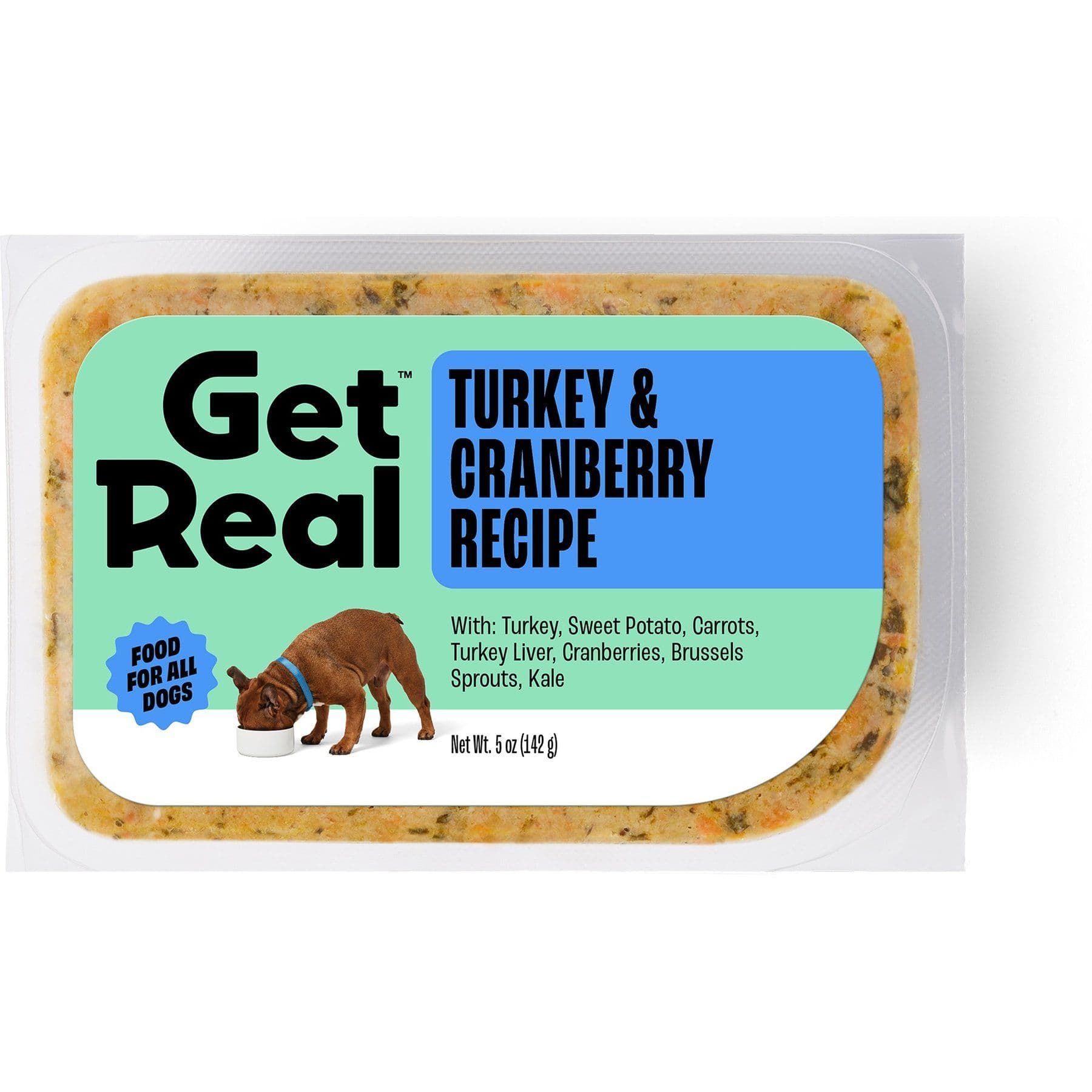
Planning a slow switch? Get Real Turkey & Cranberry thaws in the fridge in 12 to 24 hours for the 12 oz pack, so you can mix in small portions and build up over 7 to 10 days.
Webvet may earn a commission when you click through to Chewy, at no extra cost to you.
How long does it take to settle? Most dogs reach a steady stool within two to four weeks of starting the switch. If stool is still soft after a month, or your dog's weight or energy is changing, the recipe or the amount may not suit your dog, and it is worth a talk with your veterinarian.
Portion size is a common hidden cause of soft stool. Fresh food is mostly water, so it carries far fewer calories per gram than kibble (Get Real lists 1,260 to 1,394 kcal per kg), and portions look larger. Overfeeding usually happens when fresh food is added on top of the old meal without reducing it, and the excess pushes undigested food into the colon. Thawed food should be used within 3 to 5 days and kept refrigerated, since food left out for more than two hours can upset a stomach for reasons that have nothing to do with the recipe.
A few other everyday factors can soften stool during a transition and are easy to overlook:
- Extra treats or chews given as a reward for trying the new food.
- Table scraps or a rich meal on the same day as a ratio increase.
- Stress from travel, boarding, or a new household routine.
- Scavenging on walks, which can mimic a food reaction.
Keep these steady while you switch, so that any change in the stool can be read as a response to the food rather than to everything else.
Yellow or light brown poop on fresh food
Light brown dog poop is one of the most common changes after a switch to fresh food, and it is usually harmless. Leaner proteins, starches such as sweet potato, and lower fiber can all lighten the shade. What matters is firmness: light brown stool that holds its shape is normal. Recipes with sweet potato or carrots can also give a warmer, slightly orange shade of brown. That tint follows the meal, so it stays fairly constant from day to day; a sudden bright yellow or orange stool that does not match the diet is worth noting, along with what your dog ate.

Yellow dog poop after chicken and rice is also common. A bland diet of chicken and white rice contains little pigment, and the rice itself can show up as pale or yellowish stool. Once you move back to a regular food, the color usually returns to brown within a few days.
Yellow dog poop but acting normal? A day or two of yellow stool in a bright, hungry dog is usually a sign of faster transit through the gut, often from a recent food change. Watch for these signs that move it into vet territory:
- Yellow stool that lasts more than a few days despite a stable diet.
- Yellowing of the gums, eyes, or skin, which can point to liver disease.
- Greasy, yellow-gray stool with weight loss.
- Diarrhea, vomiting, or reduced appetite alongside the color change.
Poop changes that are not normal
Some changes should never be explained away by a new diet. Black, red, or white stool needs a vet, as does stool that is gray and greasy. Diarrhea lasting more than 48 hours needs a vet, and so does any diarrhea in a puppy, a senior dog, or a dog who is also vomiting or lethargic.

White, chalky stool is most often linked to raw diets heavy in bone, and our guide to white dog poop covers the other causes. For vomiting with diarrhea, our guide to dog vomiting and diarrhea explains which signs are urgent. For a mild upset in an otherwise bright dog, see what to give a dog with an upset stomach for a short bland diet plan.
If your dog's stomach is sensitive in general, a gently cooked, easily digestible dog food may be worth discussing with your veterinarian once any medical cause has been ruled out. Before you call, it helps to gather a few details:
- A clear photo of the stool, taken in good light.
- When the change started and how many times it has happened.
- What your dog has eaten in the last 48 hours, including treats and anything scavenged.
- Any other signs such as vomiting, lethargy, straining, or reduced appetite.
Mucus, worms, or straining also deserve a mention. A thin coating of mucus can follow a mild bout of colitis and often clears in a day or two, but mucus with blood or diarrhea needs a vet. Visible worms, or segments that look like grains of rice around the tail, mean your dog needs deworming and a fecal test. Straining with little or no stool can be constipation, colitis, or in male dogs a urinary problem, so watch closely and call if it continues for more than a day.
Dog poop questions
Frequently Asked Questions
Is it normal for corn to be found in dog poop?
Yes. Corn kernels have a tough outer hull of undigested plant fiber that dogs cannot break down, so whole kernels often pass through intact. It is usually harmless, as long as the stool is otherwise normal.
Why does my dog's poop look grainy?
A grainy texture usually reflects undigested fat or fiber, or small food particles passing through quickly. Occasional grainy dog poop is not a concern, but persistent grainy or greasy stool with weight loss should be checked by your vet.
How do you tell if a dog is constipated or has blockage?
A constipated dog strains and passes small, hard stool, or tries repeatedly with little result. Straining without stool for more than a day needs a call to your vet. Vomiting with blockage is the key difference: a dog with an obstruction often retches repeatedly, has belly pain, or refuses food, and that is an emergency.
What happens if you don't clean dog poop?
Stool left in the yard can spread parasite eggs such as roundworm and hookworm to other dogs and sometimes to people, and it contaminates soil and water. Pick up daily, and check fresh stool rather than old piles when judging your dog's health.
Why does my dog poop less on fresh food?
Fresh food has higher digestibility and less filler than many dry diets, so more of each meal is absorbed and less reaches the colon. Higher moisture also means less dry bulk, which adds up to smaller stool.
How long does it take for poop to normalize after switching food?
Most dogs settle within two to four weeks of starting the switch. Stool consistency often softens briefly in the first week and then firms up as the gut adjusts. If stool is still loose after a month, talk to your veterinarian.
Veterinarian · BVMS MRCVS
Dr. Pippa Elliott, BVMS, MRCVS, is a veterinarian with nearly 30 years of experience in companion animal practice. Dr. Elliott earned her Bachelor of Veterinary Medicine and Surgery from the University of Glasgow. She was also designated a Member of the Royal College of Veterinary Surgeons. Married with 2 grown-up kids, Dr. Elliott has a naughty Puggle named Poggle, 3 cats and a bearded dragon.
Related reading

Easily Digestible Dog Food: What Makes a Meal Gentle on Your Dog's Gut

Fresh Dog Food for Underweight Dogs: Safe Weight Gain, Step by Step

How to Tell if a Dog Food Is Right for Your Dog: 8 Signs Vets Check
