Best Cat Litter for Odor Control: 6 Picks Compared
Compare six odor-control cat litters by material, clumping, dust, tracking, scent, household fit, and the daily routine that matters as much as the litter itself.


BVMS MRCVS
Medically reviewed by Dr. Pippa Elliott, BVMS MRCVS · Last reviewed

This article contains affiliate links. Webvet may earn a commission when you buy through them, at no extra cost to you.
This article contains affiliate links. WebVet may earn a commission when you buy through them, at no extra cost to you.
The best cat litter for odor control is the one that contains urine and stool odors without making your cat avoid the box. For many homes, that means a fast-clumping, unscented litter such as Dr. Elsey’s Ultra Unscented. Multi-cat households may prefer a litter labeled for heavier use, while people prioritizing lower weight, low dust, or health-monitoring features may be better served by a wood, corn, or crystal option.
Odor control is only one part of the choice. Compare material, dust, tracking, fragrance, clumping, and cat acceptance in our best cat litter guide.
There is no single best litter for every cat. Material, clump strength, dust, tracking, fragrance, box size, the number of cats, and your cleaning routine all change the result. A heavily scented litter can make the room smell perfumed without actually keeping the box cleaner. A highly absorbent litter can still fail if the box is too small, too shallow, or scooped too infrequently.
This guide compares six exact products by household fit. It also explains the odor-control system around the product, including daily scooping, full changes, box placement, gradual transitions, and the litter-box changes that need veterinary attention.
Best Cat Litter for Odor Control
So what is the best cat litter for odor control? For most homes it is a fast-clumping, unscented clay, because real odor control comes from sealing waste quickly and lifting it out daily rather than covering the smell with fragrance. A heavily scented litter can leave a room smelling perfumed while the box itself keeps getting worse.
If you are asking what cat litter is the best for odor control in your specific situation, the answer shifts with the household. Multi-cat homes need a litter rated for heavier use, dust-sensitive homes do better with wood or a low-dust clay, and anyone watching a cat for urinary changes may want a color-indicating crystal. The best odor control for cat litter is a match between the litter mechanism and your routine, not a single winning brand.
Shopping in a hurry? Here are the six litters we recommend, grouped by the household problem each one solves best.
- Best overall fit for many homes: Dr. Elsey's Ultra Unscented, a fast-clumping unscented clay that seals odor without added fragrance.
- Best lightweight alternative: Catalyst Multi-Cat, soft wood rather than clay, for multi-cat odor control with very low dust.
- Best health-monitoring option: PrettyLitter, a crystal litter that changes color alongside some urinary changes.
- Best clumping strength: Scoop Away Complete Performance, for clumps that hold together on the scoop instead of crumbling.
- Best fragrance-free charcoal option: Tidy Cats Free & Clean Unscented, clumping clay with activated charcoal and no added scent or dyes.
- Best plant-based pick: World's Best Multi-Cat Unscented, a lightweight corn litter that clumps well but tracks more.
No litter treats a medical problem. A color-changing litter flags a change worth mentioning to your veterinarian, it does not diagnose anything. If your cat suddenly stops using the box, strains, or cries while urinating, that needs veterinary attention rather than a different bag.
Our six picks cover different odor-control strategies instead of treating every household as identical. The comparison below is based on current product positioning, disclosed materials, package information, and fit factors. We did not perform hands-on laboratory or home testing, and product formulas and package sizes can change. Read the current label before buying or switching.
This guide compares six exact products against the same fit criteria: odor mechanism, clumping strength, dust and tracking, scent, package weight, the households each one suits, and who should skip it.
| Product | Odor mechanism | Clumping | Dust and tracking considerations | Scent | Best household fit |
|---|---|---|---|---|---|
| Dr. Elsey’s Ultra Unscented | Absorbent clay and hard clumps help isolate wet waste | Yes | Described as 99% dust-free and low tracking by the offer | Unscented | Most homes wanting familiar clay performance without perfume |
| Catalyst Multi-Cat Litter | Soft wood is positioned to control odor without clay | Yes, per product positioning | Described as very low dust; lightweight pieces may still leave the box | No synthetic fragrance, per offer | Multi-cat homes wanting a lighter, wood-based alternative |
| PrettyLitter | Absorbent health-monitoring crystals plus routine stirring and removal of stool | Typically managed differently from standard scoopable clay | Fine crystals can travel outside an uncovered box; individual results vary | Check current package | Owners who value urinary color-change monitoring and can follow its specific routine |
| Scoop Away Complete Performance | Absorbent clay, tight clumps, and a scented multi-cat formula | Yes | Clay litter can create dust or tracking; assess your box and mat setup | Meadow Fresh scented | Busy multi-cat homes that intentionally prefer a scented clay litter |
| Tidy Cats Free & Clean Unscented | Activated charcoal and clumping clay | Yes | Labeled low dust; tracking depends on granule size, box, and cat | Unscented, no added dyes | Fragrance-sensitive households wanting conventional clumping clay |
| World’s Best Multi-Cat Unscented | Corn-based absorbency in a lightweight multi-cat formula | Yes | Manufacturer describes it as 99% dust free; lightweight granules can still track | Unscented | Homes wanting a lighter, plant-based clumping litter |
Dr. Elsey’s Ultra Unscented
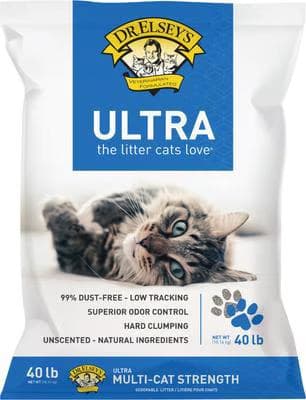
99% dust-free, low-tracking clumping clay litter with superior odor control and hard clumping. Unscented, natural ingredients, multi-cat strength.
Webvet may earn a commission when you click through to Chewy, at no extra cost to you.
Best overall for familiar, unscented clumping performance
Dr. Elsey’s Ultra Unscented is our best overall fit for a household that wants a conventional clumping clay litter without added perfume. The product offer describes it as a hard-clumping, multi-cat-strength formula made with natural ingredients, with superior odor control, 99% dust-free performance, and low tracking. Those are manufacturer or offer claims, not findings from WebVet testing, but the feature combination addresses the factors many cat owners care about most.

Strong clumps matter because they let you remove urine-soaked material before it breaks apart and spreads through the clean litter. That does not make the box maintenance-free. Clumps left in the box continue to occupy space, and small fragments can remain behind if the scoop openings are too large. Use a sturdy scoop, remove waste at least once daily, and top up only after the remaining litter is clean.
The unscented format is useful for cats or people who dislike fragrance. Unscented does not mean odorless, nor does it mean the litter contains no natural material odor. It means you are relying on absorption, clumping, and cleaning rather than perfume to cover the smell. That makes it easier to notice when the box actually needs attention. See our unscented cat litter guide for fragrance-free product and material comparisons.
The 40-pound bag is a practical value format for homes that can comfortably lift, pour, and store it. It may be less convenient for an older adult, a person with limited mobility, or anyone carrying litter upstairs. A sealed transfer container and a smaller scoop can make refilling easier, but a lightweight formula may still be the better fit if bag weight is a barrier.
Who should choose Dr. Elsey’s
Choose this pick if your cat already accepts clay litter and your priority is an unscented, scoopable option for routine odor removal. Consider a different material if clay weight, tracking, or even a small amount of dust is a major concern.
You can compare the current package details for Dr. Elsey’s Ultra Unscented on Chewy before deciding whether its bag size and labeled features fit your setup.
Catalyst Multi-Cat Litter
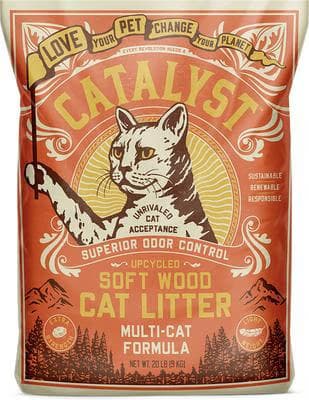
Upcycled soft-wood cat litter with superior odor control, very low dust, and a simple natural composition (no clay, no synthetic fragrance) - a gentler box for cats that nibble at their litter.
Webvet may earn a commission when you click through to Chewy, at no extra cost to you.
Best lightweight wood-based option for multiple cats
Catalyst Multi-Cat Litter is the most distinct alternative in this lineup for owners who want to move away from heavy clay. Its approved offer describes a soft-wood litter with multi-cat odor control, very low dust, no clay, and no synthetic fragrance. The reviewed package is a 20-pound bag. Because wood is lighter than many clay products, package weight alone does not tell you how long it will last or how much box volume it provides.

The strongest reason to choose Catalyst is household fit. A lighter bag can be easier to carry and pour. A wood-based formula can also appeal to people who prefer a non-clay material. Those advantages matter only if the cat accepts the texture and the litter forms removable clumps under real household conditions. A cat that has used fine clay granules for years may need a slower transition to a different feel underfoot.
Multi-cat labeling is not permission to overload one box. Several cats using the same box create more wet spots and stool, increase the chance of clumps colliding, and reduce the clean surface available between scooping sessions. Even a multi-cat formula performs better when the home has enough boxes in separate, accessible locations. Many feline-care recommendations use one box per cat plus one extra as a starting point, then adjust for space, social dynamics, and the cats’ preferences.
Wood litter can have a natural material smell even when it contains no synthetic fragrance. Some households find that neutral or pleasant, while some cats need time to accept it. Do not add a deodorizer during the transition. That would change two variables at once and make it harder to tell whether your cat objects to the litter texture, the added scent, the box, or the location.
Who should choose Catalyst
Choose Catalyst when bag weight, clay avoidance, and low-dust positioning are priorities. Keep your current litter available during the transition, monitor stool and urine output, and judge success by both room odor and consistent box use.
See the current label and package options for Catalyst Multi-Cat Litter on Chewy, especially if you are comparing the volume of a lighter litter with the weight of your current clay product.
PrettyLitter
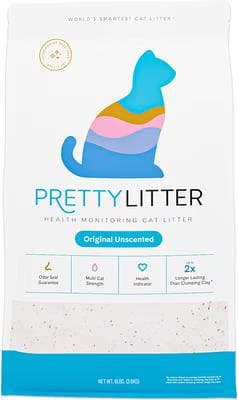
Crystal litter that changes color alongside some urinary changes, as a prompt to call your vet.
Webvet may earn a commission when you click through to Chewy, at no extra cost to you.
Best odor-control litter with a health-monitoring feature
PrettyLitter is the specialized choice for an owner who wants litter-box odor management plus a visual prompt to watch urinary changes. The approved product offer says the litter changes color to flag certain urinary changes. That feature can provide information worth noticing, but it cannot tell you whether a cat has a urinary tract infection, crystals, bladder inflammation, an obstruction, or another condition. Only a veterinarian can evaluate those problems.

This product also requires a different mindset from a standard hard-clumping clay litter. Follow the current package instructions for removing stool, managing urine distribution, stirring, litter depth, and full replacement. Skipping those material-specific steps can create concentrated wet areas and reduce odor control. Do not assume the same scoop-and-top-up routine works for every material.
Health monitoring is most useful when you already know what normal litter-box behavior looks like for your cat. Pay attention to the number and approximate size of urine spots, how often the cat visits, posture, vocalization, and whether the cat begins using other surfaces. Color is only one observation. A cat that repeatedly strains, produces little or no urine, cries in the box, or becomes lethargic needs prompt veterinary help regardless of what the litter color shows.
Crystal litter texture can feel unfamiliar to a cat accustomed to clay or fine plant fibers. Transition gradually and keep at least one familiar box available. An uncovered, generously sized box can make it easier to observe use and keep the setup ventilated. A litter mat may help capture particles that leave the box, but it should not be rough or unstable under the cat’s paws.
Who should choose PrettyLitter
Choose PrettyLitter if you will actually follow its instructions and use its color-change feature as a reason to observe more closely, not as a home diagnostic test. If your only priority is forming solid clumps for rapid urine removal, one of the clumping options will be more intuitive.
Review the current use directions for PrettyLitter on Chewy before switching, because its maintenance routine differs from conventional clumping clay.
Scoop Away Complete Performance
Webvet may earn a commission when you click through to Chewy, at no extra cost to you.
Best scented clumping clay option for a multi-cat home
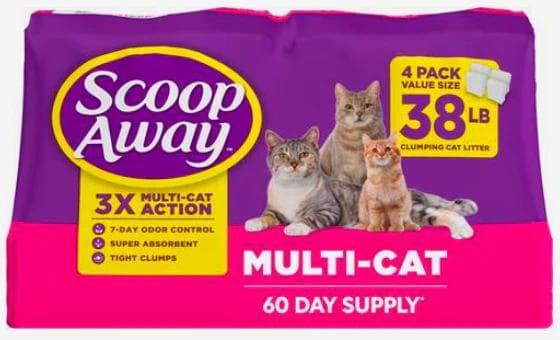
Scoop Away Meadow Fresh Scented Multi-Cat Odor Control Clumping Clay Cat Litter is the pick for a household that deliberately wants scented, conventional clumping clay. The exact reviewed product is the Meadow Fresh formula in a 38-pound package. Its listing describes absorbent clay, tight clumps, a multi-cat formula, and odor control for up to seven days. Treat that duration as a product-label claim, not a reason to leave waste in the box for a week.

The practical appeal is straightforward: a familiar clay texture, clump-based removal, and fragrance for owners who prefer it. The main tradeoff is equally important. Fragrance can make the surrounding area smell more pleasant to a person while adding an odor a cat did not choose. Some cats use scented litter without a problem; others may hesitate, perch on the box edge, spend less time covering, or choose another surface.
If your cat currently uses an unscented litter, do not switch to a fully scented box overnight. Mix a small amount into one box, keep another familiar box unchanged, and watch actual behavior. A successful change means normal urination and defecation in the box, normal digging and covering, and no new avoidance. It is not enough for the room to smell fresher to you.
The 38-pound package is another fit consideration. It offers a substantial supply but may be awkward to lift or pour. Store it dry, close the package or transfer container securely, and avoid topping fresh litter over a base that contains many crumbled clumps. When the remaining litter has persistent odor after waste removal, a complete clean and refill is more effective than perfume or extra depth.
Who should choose Scoop Away
Choose Scoop Away if a scented clay litter matches both your preference and your cat’s demonstrated acceptance. Avoid it when a cat has already rejected fragrance or when anyone in the home finds scented litter irritating. In that situation, Tidy Cats Free & Clean or Dr. Elsey’s Ultra Unscented is the clearer comparison.
Tidy Cats Free & Clean Unscented
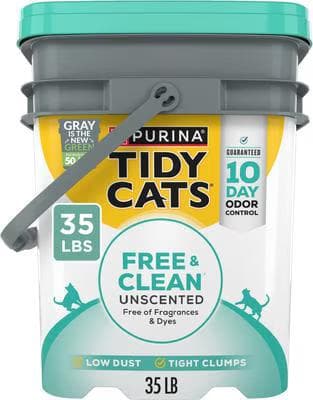
Webvet may earn a commission when you click through to Chewy, at no extra cost to you.
Best activated-charcoal option without added fragrance
Tidy Cats Free & Clean Unscented is designed for owners who want conventional clumping clay plus activated-charcoal odor control, without added fragrance or dyes. The reviewed 14-pound jug is labeled for single-cat and multi-cat households and as low dust. Those product-label features make it a useful middle ground between basic unscented clay and fragranced multi-cat formulas.

Activated charcoal is used in odor-control products to trap odor-causing compounds. In a litter box, however, the charcoal is part of a larger system. It cannot compensate for saturated litter, fragments of old clumps, stool left under the surface, or a box that is too small for the cat to turn and dig comfortably. Think of it as support for a good routine, not a substitute for one.
The smaller reviewed bag may be easier to lift and store than the largest clay packages in this guide. It may also require more frequent purchasing in a home with several large boxes. Compare cost by usable quantity and how often you replace litter, not only by package price. Prices change, and two materials with the same bag weight can occupy different volumes.
Low-dust labeling does not guarantee a dust-free experience. Pour close to the box instead of from shoulder height, add litter slowly, maintain adequate ventilation, and stop using any product that appears to trigger persistent coughing or breathing difficulty in a person or pet. If a cat has known respiratory disease, ask the cat’s veterinarian about litter texture and dust before changing products.
Who should choose Tidy Cats
Choose this option when an unscented formula is nonnegotiable and you want activated charcoal within a familiar clumping clay. It is less distinctive if you want a plant-based material, a lightweight bag, a health-monitoring feature, or a scented product.
World’s Best Multi-Cat Unscented
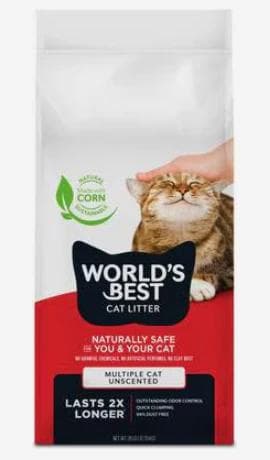
Webvet may earn a commission when you click through to Chewy, at no extra cost to you.
Best lightweight plant-based clumping litter
World’s Best Multi-Cat Unscented is the plant-based clumping option in this comparison. The reviewed 28-pound product is corn-based, unscented, lightweight, and marketed for multi-cat use. The manufacturer describes it as quick clumping and 99% dust free. As with every percentage or performance statement in this guide, that is a manufacturer claim rather than a result verified by WebVet.

Corn litter can appeal to an owner who wants something lighter than a large clay bag but still wants clumps that can be removed daily. The texture and natural material odor differ from clay, so cat acceptance remains the deciding factor. A product is not effective odor control if the cat avoids it and urinates on carpet, bedding, or another absorbent surface.
Lightweight granules can still track. Tracking is shaped by granule size, fur length, paw shape, the cat’s digging style, litter depth, box-entry height, and the flooring around the box. Use a large mat that lies flat and feels stable, place it where the cat naturally steps, and vacuum or sweep it regularly. Avoid placing a frightening machine or noisy air freshener immediately beside the box.
Some plant-based litters carry disposal or flushability marketing. For the safest default, bag used litter and cat waste for the trash unless the current manufacturer directions and local wastewater rules clearly allow another method. Never assume a label overrides local restrictions, septic-system limitations, or public-health guidance.
Who should choose World’s Best
Choose World’s Best Multi-Cat Unscented if you want plant-based clumping, an unscented formula, and a lighter package. Compare it with Catalyst if low bag weight and avoiding clay matter more than keeping a clay-like granule and clumping experience.
- 1Start with the box, not the bag. Enough boxes, a deep enough bed, and daily scooping beat any upgrade in litter. A premium litter in a shallow, crowded, or rarely scooped box will still smell.
- 2Unscented usually wins. Fragrance masks odor for people and can push a sensitive cat out of the box entirely. Choose an unscented clumping litter first and add scent only if your cat clearly tolerates it.
- 3Match the material to your real constraint. Clay for maximum clump strength, wood or corn for lower weight, crystal if you want color indication. There is no material that wins on every axis at once.
- 4Transition gradually. Blend the new litter into the old over a week or more. An abrupt switch is one of the most common reasons a cat rejects an otherwise good litter.
 $65 · no membership
Have a health question about your cat?
A licensed vet can assess your cat over video and prescribe online when it's appropriate.
 Talk to a vet
- Licensed vets
- All 50 states
- same-day Rx
Webvet may earn a commission if you book.
How We Selected These Odor-Control Cat Litters
This is a fit-first editorial comparison, not a hands-on product test. We reviewed the existing approved affiliate-offer records, current product positioning available to this refresh, material and package information, and the needs implied by the search questions cat owners ask. We did not assign lab scores, run odor panels, count tracked granules, or observe cats using these products.
Our selection methodology uses transparent fit-first selection criteria: each pick needs a clear odor-control role, readable label information, a household it genuinely suits, and an honest note on who should skip it. We also compare maintenance burden, package handling, dust and tracking, scent, and cat acceptance. This approach explains why a pick belongs without presenting product claims as independent test results.
We used six factors to decide which products deserved a place:
- A distinct odor-control approach. The lineup includes clumping clay, activated charcoal, scented multi-cat clay, soft wood, corn, and health-monitoring crystals. That lets readers compare mechanisms and routines rather than six nearly identical bags.
- Exact household fit. Each pick answers a different need, such as no added fragrance, low bag weight, multiple cats, familiar clay texture, plant-based material, or urinary color-change monitoring.
- Waste-removal practicality. A litter’s ability to create removable clumps, isolate wet areas, or support material-specific maintenance affects how quickly odor sources leave the box.
- Dust and tracking context. We considered manufacturer dust claims without treating them as independent test results. We also separate dust from tracking because a litter can be low dust and still travel on paws.
- Cat acceptance. Texture, granule feel, scent, depth, and the transition process all influence whether the cat will use the box consistently.
- Claim restraint. We do not repeat a product label as a guarantee. We do not use changing prices as a reason to rank one product above another. We do not call color-changing litter a diagnostic test.
The six products are not presented as a universal first-to-sixth ranking. “Best” means best matched to the stated use case. If your cat reliably uses a clean, appropriately placed box with a product not listed here, there may be no reason to disrupt that success.
Best Low-Dust and Low-Tracking Odor-Control Litter
Low dust and low tracking are related search goals, but they are not the same performance trait. Dust consists of fine airborne particles created during pouring, digging, or breakdown. Tracking is litter carried out on paws or fur. The best cat litter for odor control and tracking therefore needs acceptable odor control, granules the cat will use, and a practical mat and cleaning plan. A fine, low-dust granule may still travel across the floor, while a larger pellet may track less but feel unfamiliar to a cat.
Dr. Elsey’s Ultra Unscented and World’s Best Multi-Cat Unscented are both described as 99% dust free by their offer or manufacturer. Catalyst is described as very low dust, and Tidy Cats Free & Clean carries low-dust positioning. Those statements are helpful screening information, not a guarantee for every bag, box, pouring method, or household.

For the best cat litter for odor control and dust-free priorities, start with the material your cat already accepts, then improve the setup:
- Pour slowly from a low height.
- Use an uncovered box in a ventilated area unless your cat clearly prefers a cover.
- Keep litter at the depth recommended for the product rather than filling the box to the rim.
- Place a stable, easy-to-clean mat outside the normal exit.
- Sweep tracked litter before it is crushed into finer particles.
- Replace products that become unusually powdery in the box.
A top-entry or high-sided box can reduce scatter for some agile adult cats, but it can be a poor choice for kittens, older cats, cats with arthritis, or cats who dislike enclosed spaces. Accessibility and reliable use matter more than a perfectly clean floor.
Best Clumping Cat Litter for Odor Control
Clumping litter controls odor by concentrating urine-soaked material into a removable mass. Strong, intact clumps can help you take the source out of the box before it mixes with clean litter. Weak clumps may break during scooping, leaving damp fragments that accumulate and smell.
Dr. Elsey’s Ultra Unscented is the clearest all-around clumping pick in this guide for owners who want unscented clay. Scoop Away Complete Performance suits an owner who wants scented, multi-cat clay. Tidy Cats Free & Clean offers an unscented activated-charcoal approach. World’s Best and Catalyst provide non-clay clumping alternatives for people prioritizing material or bag weight.
Preserve the clump during scooping
Technique influences the result. Allow a fresh urine spot enough time to form according to the product directions, slide the scoop beneath it, and lift instead of aggressively stirring. Scraping a soft clump against the box floor can fragment it. A box with a smooth, intact interior is easier to clean than one with deep scratches that trap damp residue.

Do not keep adding new litter indefinitely. Topping up maintains depth after clean waste removal, but it does not reset old litter. When the clean-looking remainder carries a persistent smell, clumps crumble throughout the box, or the package directions call for a full change, empty the box, wash it with a mild cat-safe method, dry it completely, and refill.
Best Odor-Control Litter for Multiple Cats
The best cat litter for odor control in a multi-cat home has to withstand more frequent use, but the solution begins with box access. One box can become socially guarded or physically dirty long before a single cat would consider it unacceptable. Boxes placed side by side may function like one station from a cat’s perspective, so separate locations can provide more meaningful choice.
Catalyst Multi-Cat, Scoop Away Complete Performance, Dr. Elsey’s Ultra Unscented, and World’s Best Multi-Cat Unscented are all positioned for multi-cat use. That label can guide the shortlist, but it does not tell you which texture or fragrance each cat will accept. The best product for three cats is the one all three use normally across enough clean, accessible boxes.

Use a simple monitoring routine:
- Scoop each box at least daily and more often when use is heavy.
- Note which boxes receive urine, stool, both, or almost no use.
- Keep food and water away from litter-box traffic when possible.
- Give a timid cat a route that does not require passing another cat.
- Avoid sudden changes to every box at once.
- Investigate a new preference for one location rather than assuming stubbornness.
If one cat begins urinating elsewhere, the problem may be medical, social, environmental, or related to the box itself. Our guide to a cat peeing outside the litter box explains the next steps without treating inappropriate urination as spite.
Choose the Right Litter Material
Material changes how litter absorbs moisture, forms clumps, feels under a cat’s paws, travels outside the box, and needs to be maintained. No material wins every category. Use the table as a quick reference, then defer to your cat’s consistent behavior and the current package directions.
The best unscented cat litter for odor control is not automatically the best natural cat litter for odor control or the best crystal cat litter for odor control. Those labels describe different material and scent decisions. Compare the material type, odor mechanism, clumping routine, weight, and cat acceptance, then keep a familiar box available during a gradual transition. Pellet products also need a texture and maintenance check even though they are not a primary pick here.
| Material type | Odor mechanism | Potential advantages | Material tradeoff comparison | Best transition strategy |
|---|---|---|---|---|
| Clumping clay | Absorbs urine and forms scoopable clumps | Familiar texture for many cats; easy daily waste removal | Can be heavy; dust and tracking vary; scented versions may be rejected | Mix gradually or offer one new box beside the familiar box |
| Wood | Absorbs moisture and carries a natural wood odor | Often lighter than clay; non-clay option | Texture and natural smell can be unfamiliar; performance varies by formula | Increase the wood proportion over several days while monitoring use |
| Corn or other plant fiber | Absorbs and may form lightweight clumps | Plant-based and often easier to carry | Lightweight particles can track; moisture storage matters | Keep a familiar box available until use is consistent |
| Crystal | Absorbs moisture within granules and uses a material-specific maintenance routine | Lightweight; some products add color-change monitoring | Different paw feel; routine differs from clumping clay; monitoring is not diagnosis | Follow the package directions and transition one box at a time |
| Scented formula | Adds fragrance alongside the base material’s odor-control method | Some owners prefer the room scent | Perfume can mask a dirty-box signal and may deter some cats | Test in only one box and retain an unscented option |
| Unscented formula | Relies on absorption, clumping, charcoal, or cleaning without added perfume | Better fit for fragrance-sensitive cats and people | “Unscented” does not mean no material odor or no maintenance | Preserve the accepted texture where possible |
Odor control versus fragrance
Odor control removes, traps, or limits the compounds causing the smell. Fragrance adds another smell. A product can do both, but they are not interchangeable. If a scented litter seems fresh immediately after pouring but smells strongly of waste later, the answer is scooping or a full change, not another layer of perfume.
The fragrance limitation is cat acceptance: perfume that seems mild to a person can still change the box enough to deter a cat. Keep an unscented litter option available during any gradual litter transition, and change only one box at a time. That makes fragrance masking easier to distinguish from real odor capture and protects the established elimination habit while you evaluate the new product.
Watch the cat, not just the room. Reduced digging, stepping in and immediately leaving, balancing on the rim, eliminating beside the box, or choosing a bathtub can signal that something about the setup is unacceptable. Fragrance is one possibility, but dirty litter, pain, box size, location, another cat, and a new household stressor also belong on the list.
Clumping and urine odor
Urine odor becomes more noticeable when wet material remains in the box and is broken into the surrounding litter. Strong clumps make source removal easier. For non-clumping or crystal products, follow the product-specific instructions for distributing moisture, removing saturated material, and replacing the contents.
Ammonia odor can build as urine-soaked material remains and breaks down, especially when damp fragments stay mixed with clean litter. Remove the source rather than adding perfume. Some formulas use activated carbon, often described on labels as activated charcoal, or baking soda as odor-control ingredients. Those materials may support a clean box, but they cannot compensate for saturated litter, too few boxes, poor ventilation, or delayed waste removal.
Do not use fragrance to hide a sudden change in urine smell or volume. Increased urine output, very small frequent spots, straining, blood, or urination outside the box can be medically important. WebVet’s overview of cat UTI symptoms explains why similar signs can have different causes and need veterinary evaluation.
Dust, respiratory comfort, and cleaning
Dust claims are useful but incomplete. A formula labeled low dust may produce more fine material as granules break down, and pouring technique changes airborne dust. Ventilation, slow pouring, prompt floor cleaning, and a product that remains intact all help.
Persistent coughing, wheezing, open-mouth breathing, or breathing effort is not a litter-selection problem to solve online. Contact a veterinarian promptly. A cat with diagnosed respiratory disease may need an individualized discussion about litter material, box cover, household cleaners, aerosols, and other exposures.
Tracking and the box setup
Before replacing a litter your cat likes, try changing the path out of the box. A larger box, a stable mat, adequate litter depth, and frequent sweeping can improve tracking without risking rejection. Trim only fur that a veterinarian or groomer says can be safely managed; never cut around paws when a cat is struggling.

Covered boxes may contain some scatter but can also hold odor at cat level. If you use one, it must be large enough for the cat to turn easily and should be scooped just as often as an open box. A cover is not an odor-control system.
How to Stop Cat Litter Odor in the House
The fastest way to stop litter odor from spreading through the house is to remove the source regularly. Start with daily scooping, enough boxes, clean surrounding floors, and a full-change schedule appropriate to the material. Then assess whether the litter itself is the limiting factor.
An odor-control system beyond product choice combines daily waste scooping, the correct litter box count for the cats and their social access, material-appropriate depth, clean mats and floors, and a household ventilation plan that does not blast the cat with a fan or fragrance. A premium litter cannot compensate for delayed scooping, one guarded box, saturated granules, or a sealed location that traps odor at cat level. A Litter-Robot automatic self-cleaning litter box can reduce how long waste remains between checks, but it still depends on cat acceptance, compatible clumping litter, regular drawer emptying, and routine cleaning. Compare six current mechanisms in our best automatic litter boxes guide.
The daily routine
- Scoop urine clumps and stool at least once daily. In a high-use box, morning and evening may be more realistic.

- Check the box surface for unusually small clumps, an absence of urine, loose stool, blood, or anything else that differs from normal.
- Wipe or sweep the surrounding area so tracked, soiled granules are not ground into flooring.
- Top up clean litter only after waste and fragments are removed.
- Confirm that the cat can approach and leave without being cornered by another pet.
The weekly check
“Weekly” is a useful reminder to inspect the whole setup, not a universal rule to discard every material every seven days. Check the box walls and base for residue, wash the scoop, launder or clean the mat, inspect the litter-storage container, and decide whether the remaining litter is still clean enough to keep.
If odor returns immediately after scooping, the source may be damp fragments, residue on the box, a soiled mat, waste in a nearby trash container, or urine outside the box. Follow your nose carefully and use a pet-safe cleanup method suitable for the surface. Avoid combining household cleaning chemicals.
Full changes
Completely replace litter according to the current manufacturer directions and sooner when the contents remain smelly, damp, or difficult to scoop. Material, number of cats, box count, litter depth, and daily technique all affect the interval. Wash the empty box with a mild method, rinse if the product requires it, and dry completely before refilling.
A scratched plastic box can retain odor even after cleaning. Replacement may help when the surface is deeply scored, but first confirm the odor is actually in the box and not the surrounding floor or wall. Stainless-steel and other alternatives have different weight, noise, cost, and cat-acceptance tradeoffs.
Ventilation without making the box unpleasant
Place the box in a quiet area with ordinary airflow, not in a sealed closet or directly beside a roaring appliance. Avoid aiming a strong fan at the box or installing an air freshener next to it. Your goal is to keep the area from trapping odor while preserving privacy, access, and a comfortable temperature.
What Matters More Than Brand
Brand is only one variable in a litter-box system. A less famous litter in a large, clean, accessible box can work better than a highly marketed odor-control formula in a cramped, dirty, or socially guarded box.
Focus on these basics:
- Box size: The cat should be able to enter, turn, dig, and choose a clean spot.
- Box count: More cats generally need more than one station, and separate locations provide better access than a row of boxes in one room.
- Location: Choose quiet, reachable places with escape routes. Do not force an older cat to climb stairs for every elimination.
- Depth: Too little litter exposes the floor; too much may shift underfoot. Follow the product guidance and the cat’s response.
- Scooping: Removing the odor source beats masking it.
- Transition speed: Change one variable at a time and preserve a familiar option.
- Medical awareness: A sudden litter-box change can be a symptom, not a preference.
The answer to “what kind of litter do vets recommend?” is usually not one brand for every cat. Veterinarians consider the cat’s age, mobility, respiratory health, paw comfort, urinary or digestive history, learned preferences, and the owner’s ability to maintain the box. A soft, unscented, easy-to-scoop litter is a reasonable discussion starting point for many cats, but your veterinarian may recommend something different for a wound, surgery recovery, chronic illness, or a cat that has already developed an aversion.
How to Switch Cat Litter Without Creating Box Avoidance
A gradual transition protects the habit you are trying to improve. If space allows, place a clean box with the new litter near a box with the familiar litter. This lets the cat reveal a preference without losing access to a known surface. In a one-box setup, replace a small portion of the familiar litter with the new material, then increase it over several days only if use stays normal.

This cat acceptance and transition protocol keeps a familiar option available, changes one variable at a time, and treats normal digging, covering, urine, and stool as the success criteria. A room that smells better to a person is not a successful switch if the cat hesitates, balances on the rim, visits less often, or chooses another surface. Slow down or reverse the change when acceptance declines.
Change one variable at a time
Do not change litter, box style, location, depth, and cleaning product on the same day. If the cat stops using the box, you will not know which variable mattered. Avoid forcing the cat into the new litter or placing the cat’s paws in it. That can make the box feel unsafe.
Pause or reverse the transition if you see hesitation, repeated sniffing without entering, rim balancing, reduced digging, or elimination elsewhere. Clean accidents thoroughly, restore an accepted box, and consider veterinary advice if the change is sudden or persists. Our guide to why a cat may poop outside the litter box covers constipation, pain, stress, box conditions, and other possibilities.
Cat Litter Types to Avoid for Your Cat
There is no universal blacklist that makes one entire material unsafe for every cat. The litter to avoid is the one that creates a clear problem for your individual cat or cannot be maintained safely in your home.
If you are deciding what cat litter to stay away from, begin with the cat's response and the product's directions. Stay away from a litter that repeatedly triggers avoidance, appears painfully sharp, creates concerning dust, conflicts with veterinary instructions, or cannot be scooped and replaced on the required schedule. Restore an accepted box promptly when a trial fails, and treat sudden avoidance or physical signs as a veterinary concern rather than a shopping preference.
Avoid or reconsider:
- A fragrance your cat consistently avoids.
- A dusty product that appears to worsen respiratory signs.
- Sharp or uncomfortable granules for a cat with painful paws.
- A heavy package you cannot pour safely or maintain at the needed depth.
- A material your kitten or cat persistently tries to eat.
- Any product used in a way that conflicts with veterinary instructions after surgery or during illness.
- A clumping or non-clumping formula whose maintenance requirements you cannot meet.
- A disposal method that conflicts with the manufacturer directions or local rules.
If a product change coincides with vomiting, persistent coughing, breathing difficulty, appetite loss, constipation, diarrhea, straining, blood, or sudden avoidance, stop treating the situation as a shopping problem. Contact a veterinarian and describe both the symptom and the timing of the change.
When Litter-Box Changes Need a Vet
Cats often hide pain. A litter-box change may be the first visible sign of urinary disease, constipation, arthritis, kidney disease, diabetes, digestive illness, or another problem. It can also reflect stress or conflict, but medical causes need to be considered before behavior is blamed.
Read when changes in litter-box habits signal a medical problem for a fuller list of signs and the observations to share with your veterinarian. Record when the change began, how often the cat enters the box, whether urine or stool is produced, any appetite or energy change, and whether a new litter, box, pet, person, or household routine was introduced.
Frequently Asked Questions
How do I stop my cat litter from smelling in the house?
To stop cat litter from smelling in the house, remove the odor source before adding fragrance. In practice, scoop urine clumps and stool at least daily, clean tracked litter around the box, use enough boxes for the household, and completely replace litter when the material stays smelly after scooping or when the manufacturer directs. The practical next step is to inspect the box, mat, floor, scoop, and waste bin today, then change only one setup variable at a time.
What kind of litter do vets recommend?
The kind of litter vets recommend depends on the individual cat rather than one universal brand. Most vets start with a soft, unscented litter that is easy to keep clean, but age, paw pain, breathing disease, surgery recovery, urinary history, and established preference may change the recommendation. The practical next step is to ask your veterinarian what material suits your cat’s health, then transition gradually while preserving a familiar box and normal cat acceptance.
What is the best odor eliminator for litter?
The best odor eliminator for litter is source removal: take out wet litter and stool rather than trying to cover them. Clumping clay, activated charcoal, absorbent wood, corn, and crystal all control odor in different ways, but none replaces scooping and full changes. The practical next step is to clean the box and surrounding area completely; if odor returns quickly, look for broken clumps, residue, a soiled mat, an old waste bin, or urine outside the box.
What is the best odor control for cat litter?
The best odor control for cat litter combines a cat-accepted material with daily source removal. For many homes, an unscented hard-clumping litter is an effective starting point because urine-soaked material can be removed. Other homes may prefer activated charcoal, wood, corn, or crystals. Whichever you choose, odor control still depends on maintenance. The practical next step is to choose the mechanism that fits your cat, then measure success by normal box use and a clean box rather than perfume strength.
What cat litter to stay away from?
The cat litter to stay away from is any product your cat refuses, a fragrance that triggers avoidance, a dusty formula that seems to worsen respiratory signs, or a texture that appears painful or prompts persistent eating. It also excludes any use that conflicts with veterinary or package directions. The practical next step is to restore an accepted litter if avoidance begins and call a veterinarian when the change is sudden or accompanied by physical signs.
What is the best cat litter for odor control and tracking?
The best cat litter for odor control and tracking starts by separating the two problems. Dr. Elsey’s is positioned as low tracking and 99% dust free, while Catalyst, World’s Best, and Tidy Cats offer other low-dust or lightweight approaches. No product stops every granule. The practical next step is to pair an accepted litter with a larger box, stable mat, correct depth, and regular sweeping before risking a material change.
Is scented cat litter better for odor control?
Scented cat litter is not automatically better for odor control. Scent may create fragrance masking for people without removing urine or stool, and some cats dislike perfume. An unscented option relies more visibly on absorption, clumping, charcoal, and cleaning. Protect cat acceptance by changing only one box, keeping an unscented option available, and stopping the trial if normal digging, covering, urination, or stool placement declines.
How often should I completely replace cat litter?
How often you should completely replace cat litter depends on the material, number of cats, box use, and manufacturer directions. Use a daily scoop routine between each full change, and replace sooner if clean-looking litter remains damp, smelly, or full of crumbled waste. Crystal, clay, wood, and corn products can require different routines, so do not apply one calendar rule to every litter or ignore a cat's declining acceptance.
The best cat litter for odor control is ultimately the product your cat will use consistently and you can keep clean. Start with material and scent acceptance, compare clumping, dust, tracking, package weight, and multi-cat demands, then build the daily routine around the product. If litter-box behavior changes suddenly, move veterinary evaluation ahead of product experimentation.
$65 · no membershipHave a health question about your cat?
A licensed vet can assess your cat over video and prescribe online when it's appropriate.
Talk to a vet- Licensed vets
- All 50 states
- same-day Rx
Webvet may earn a commission if you book.

Wendy Toth is an entrepreneurial writer, editor, and mom of two humans, two dogs and one cat. She’s currently Content Director here at PetFul. For the last 15 years she has held positions at Parents Magazine, NBC, PetSmart, and GreatPetCare, where she was co-founder. Her writing has appeared in many national outlets including Pet Lab Co., Retail Me Not, Ask Men, Wild Society Nutrition, and The New York Times. Because she loves her work so much, she’s obsessed with helping others find career fulfillment, and covers it regularly at PowerSuiting.
Veterinarian · BVMS MRCVS
Dr. Pippa Elliott, BVMS, MRCVS, is a veterinarian with nearly 30 years of experience in companion animal practice. Dr. Elliott earned her Bachelor of Veterinary Medicine and Surgery from the University of Glasgow. She was also designated a Member of the Royal College of Veterinary Surgeons. Married with 2 grown-up kids, Dr. Elliott has a naughty Puggle named Poggle, 3 cats and a bearded dragon.


