Cat Eye Infections: Symptoms, Causes & Vet Treatment
A vet-reviewed guide to cat eye infections: symptoms, causes, contagion risk, emergency signs, treatment costs, and the home care that is actually safe before your vet visit.

BVMS MRCVS
Medically reviewed by Dr. Pippa Elliott, BVMS MRCVS · Last reviewed

This article contains affiliate links. Webvet may earn a commission when you buy through them, at no extra cost to you.
WebVet may earn a commission from qualifying purchases made through links on this page, at no additional cost to you.
A red, weepy, or squinted eye is one of the most common reasons cats end up at the vet, and it rarely gets better by being ignored. A cat eye infection is inflammation of the eye or surrounding tissue caused by a virus, bacteria, or irritation, and it usually needs a veterinary diagnosis within 24 to 48 hours to protect your cat's vision.
This guide is your hub for feline eye trouble: how to spot the symptoms, what causes them, when it is an emergency, what treatment and vet costs typically look like, and which home-care steps are genuinely safe before you can get to a clinic.
- 1The most common cat eye infection symptoms are eye discharge, redness, swelling, squinting, and pawing at the eye.
- 2Most feline eye infections trace back to viruses (especially feline herpesvirus, FHV-1), bacteria, allergies, or trauma, so a home guess is rarely enough.
- 3A vet diagnosis is usually needed within 24 to 48 hours because an untreated infection can progress to a painful, vision-threatening corneal ulcer.
- 4Never put human products like Neosporin or leftover eye drops in a cat's eye. Some can trigger a life-threatening reaction.
- 5Safe home care is limited to gentle saline cleaning and a warm compress while you arrange a vet visit.

 Sponsored
Have a health question about your cat?
Talk to a licensed vet at Dutch over video or message, including nights and weekends.
Use code Pets60
Plans start at $12/month · covers up to 5 pets
- Licensed vets in most states
- Rx for 150+ conditions
- 4.7 on Trustpilot
What Is a Cat Eye Infection?
A cat eye infection is inflammation of the eye or the tissues around it, most often the thin pink membrane lining the eyelids called the conjunctiva. When that membrane becomes inflamed, the condition is known as conjunctivitis, and it is the single most common of all cat eye problems vets see.
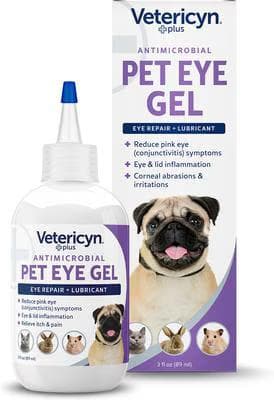
A lubricating antimicrobial gel that clings to the eye surface longer than a rinse, easing conjunctivitis symptoms, lid inflammation, and irritation from minor corneal abrasions. For dogs, cats, and small pets.
Webvet may earn a commission when you click through to Chewy, at no extra cost to you.
The term "infection" is used loosely by most cat owners. Some cases are true infections driven by a virus or bacteria. Others are irritation, allergy, or injury that looks identical from the outside. That overlap is exactly why a cat eye infection is hard to self-diagnose and why the visible signs matter so much.
Owners often ask what a cat eye infection looks like in real life. Expect a red or puffy eye, discharge that ranges from watery to thick yellow-green, and a cat that blinks hard or paws at the side of its face.
If your cat has an eye infection, the eye itself is only part of the picture. Vets look at whether one eye or both are involved, how much pain the cat shows, and whether the surface of the eye has stayed smooth and clear.
Symptoms of Cat Eye Infections
Cat eye infection symptoms usually appear in one eye first, then sometimes spread to the second. The most reliable signs to watch for are:
- Eye discharge that is watery, cloudy, yellow, or green. Cat eye discharge is often the first thing owners notice.
- Redness of the white of the eye or the inner eyelid.
- Swelling of the eyelids or the pink tissue around the eye.
- Squinting or holding the eye partly or fully shut, which signals pain.
- Pawing or rubbing at the eye against furniture or with a paw.
- Cat eye boogers or crusting that mats the fur at the inner corner.
- Cloudiness or a hazy, dull look to the surface of the eye.

If your cat is only showing mild watery discharge and a little redness, gently clearing the area with a cat-specific rinse such as Nutri-Vet Cat Eye Rinse can help you see the eye clearly while you book a vet visit. It does not treat an infection, but it keeps the eye comfortable in the meantime.
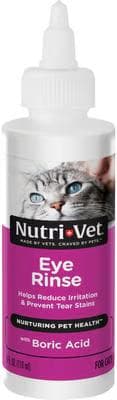
The cat formulation of Nutri-Vet's boric acid rinse, made for gently clearing everyday debris and limiting tear stains around a cat's eyes. Not a substitute for vet care if the eye looks painful.
Webvet may earn a commission when you click through to Chewy, at no extra cost to you.
Symptoms that point to something other than infection
Not every change in your cat's eye is an infection, and a few signs deserve a different lens. Watch for these differentials:
- Sudden changes in pupil size or one pupil larger than the other can signal pain or a neurological issue. See our guide on cat dilated pupils.
- The third eyelid sliding across the eye can accompany infection but also flags other illness. Read cat third eyelid showing.
- A cloudy or bluish look is not always infection. In older cats it may be cat cataracts instead.
What Cat Eye Discharge Colors Mean
Cat eye discharge is the sign owners notice first, and its color narrows the likely cause. Discharge color does not replace a diagnosis, but it tells you how fast to move. Read it alongside the rest of the picture, especially squinting, swelling, or a cornea that has lost its shine.
- Clear, watery discharge: usually allergies, an irritant such as dust or smoke, or the first day of a viral flare. Watch the eye closely and book a routine visit if it persists.
- Brown or reddish-brown crust at the inner corner: what owners search as cat eye discharge brown is usually dried tears. A small amount of cat eye discharge reddish-brown is porphyrin tear staining, which is pigment in the tears rather than blood.
- White or grey mucus: points toward conjunctivitis or a poor tear film, and needs a vet exam within a few days rather than a wait-and-see month.
- Yellow or green discharge: thick, sticky pus suggests a bacterial infection. Book a prompt appointment, because this is the color least likely to settle on its own.
| Discharge color | Most likely cause | Typical urgency |
|---|---|---|
| Clear and watery | Allergy, irritant, early viral flare | Monitor, book if it persists |
| Reddish-brown crust | Normal porphyrin tear staining | Routine, unless the eye is sore |
| White or grey mucus | Conjunctivitis, poor tear film | Vet within a few days |
| Yellow or green pus | Likely bacterial infection | Prompt vet appointment |
| Any color plus squinting | Possible corneal damage | Same day |
What Causes Cat Eye Infections?
Understanding what causes cat eye infections helps you judge urgency and prevent repeat episodes. The main culprits are:
- Viral infections. Feline herpesvirus (FHV-1) is the leading cause of feline eye infection and tends to flare during stress. Calicivirus is another viral cause.
- Bacterial infections. Organisms such as *Chlamydia felis* and *Mycoplasma* cause bacterial conjunctivitis, sometimes alongside a virus.
- Upper respiratory infection. Eye discharge frequently arrives with sneezing and a runny nose. If your cat has both, see cat sneezing and watery eyes.
- Allergies and irritants. Dust, smoke, pollen, and household chemicals can inflame the eye and invite secondary infection.
- Trauma and foreign bodies. A scratch from a claw, a grass seed, or a speck of debris can injure the surface and let bacteria in.
- Underlying health issues. A weakened immune system from illness lets minor irritation turn into a stubborn infection.
Kittens and cats in multi-cat homes, shelters, or catteries are at higher risk because viruses like FHV-1 spread easily in crowded, stressful settings.
Because feline herpesvirus sits behind so many repeat cases, a cat that flares again and again is usually carrying FHV-1 rather than catching something new each time. Our guide to feline herpes eye infections covers triggers, recurrence patterns, and long-term management.
Types of Cat Eye Infections & Related Conditions
"Cat eye infection" is an umbrella term. Knowing the specific type helps you understand the outlook and the right treatment. Rather than repeat every detail here, this pillar hubs out to a dedicated deep-dive for each condition:
- Conjunctivitis (pink eye). Inflammation of the conjunctiva and the most common feline eye infection. Full symptoms, treatment, and recovery in cat conjunctivitis and pink eye.
- Herpes-related infection (FHV-1). A lifelong virus that causes recurring flares. Long-term management and recurrence control live in feline herpes eye infection.
- Corneal ulcers. A serious erosion of the eye's surface that can follow an untreated infection and threaten vision. See cat corneal ulcer.
- Uveitis. Deeper inflammation inside the eye, often linked to an underlying systemic disease, which needs prompt veterinary workup.

Because several of these conditions cause dryness or surface irritation, a vet-safe lubricating gel like Optixcare Eye Lube Plus is sometimes recommended as supportive care alongside the prescribed treatment. Always confirm with your vet first, since a lubricant is not a cure for an active infection.

A sterile lubricating gel that soothes and moisturizes dry, irritated eyes and helps support the tear film in dogs and cats prone to dryness. A gentle, vet-shelf staple for everyday eye comfort.
Webvet may earn a commission when you click through to Chewy, at no extra cost to you.
Is a Cat Eye Infection Contagious to Other Cats or Humans?
Owners in multi-cat homes always ask the same thing: is cat eye infection contagious? The answer depends on the cause, and it matters most where several cats share space.
- Cat to cat: often yes. Viral and bacterial causes such as FHV-1, calicivirus, *Chlamydia felis*, and *Mycoplasma* spread readily between cats through direct contact, shared bowls, litter boxes, and grooming. Isolating the affected cat and washing your hands between cats reduces spread.
- Cat to human: rarely. The common feline eye viruses do not infect people. *Chlamydia felis* is a rare exception that can occasionally cause mild conjunctivitis in humans, so wash your hands after handling your cat's eyes and avoid touching your own.
If one cat in the home has an eye infection, watch the others closely for early discharge or squinting, and keep food and water stations separated until the vet weighs in.
SponsoredVet care that's always there
Unlimited video calls and messaging with licensed vets for less than a typical vet visit. One membership covers up to five pets.
Use code Pets60
Plans start at $12/month · covers up to 5 pets
- Licensed vets in most states
- Rx for 150+ conditions
- 4.7 on Trustpilot
When to See a Vet Immediately (Emergency Signs)
No competitor SERP gives owners a real urgency framework, so here is a tiered triage checklist. Knowing when to take cat to vet for eye infection comes down to how severe and how fast-moving the signs are.
See a vet today (same-day or emergency) if you notice:
- An eye squinted fully shut or held closed from pain.
- A cloudy, hazy, or bluish cornea.
- Hard pawing, rubbing, or clear signs of severe discomfort.
- Sudden vision loss or bumping into objects.
- A visible wound, bulging eye, or blood in the eye.
See a vet this week if you notice:
- Persistent yellow or green discharge in one or both eyes.
- Redness and swelling that is not improving after a day or two.
- Mild squinting that comes and goes.
Monitor closely at home (still book a visit) if you notice:
- Slight watery discharge with a bright, comfortable eye and normal behavior.
When in doubt, call your veterinarian. An eye problem is one area where waiting rarely pays off.
When should I be worried about my cat's eye infection?
Be worried the moment pain enters the picture. Squinting, hiding, or turning away from food alongside eye signs means vet today, not tomorrow. Cloudiness is the other line in the sand, because a hazy or blue-tinged cornea can mean the surface is already damaged.
How Vets Diagnose and Treat Cat Eye Infections
A vet diagnosis pins down the cause so treatment actually works, instead of guessing. Cat eye infection treatment almost always requires a professional exam.
How vets diagnose the problem
Your veterinarian will typically:
- Examine both eyes with magnification and a bright light.
- Apply a fluorescein stain, a harmless dye that glows to reveal scratches or corneal ulcers.
- Run a Schirmer tear test to check tear production if dry eye is suspected.
- Take a swab for cytology or culture when a stubborn bacterial cause is likely.

How vets treat the infection
Treatment is matched to the cause:
- Antibiotic eye drops or ointment for bacterial infections. Cat eye infection antibiotics are prescription products such as Terramycin Ophthalmic Ointment, dispensed by your vet.
- Antiviral medication for herpesvirus flares, which do not respond to antibiotics.
- Anti-inflammatories to ease swelling, used carefully and only when a corneal ulcer has been ruled out.
- Pain relief and an e-collar to stop self-trauma while the eye heals.
Some vets suggest an antimicrobial rinse such as Vetericyn Plus Antimicrobial Eye Wash as a gentle adjunct to flush debris around the eye. It is antimicrobial rather than antibiotic, so it supports but does not replace the prescribed medication. Always follow your veterinarian's plan on which products to use and for how long.
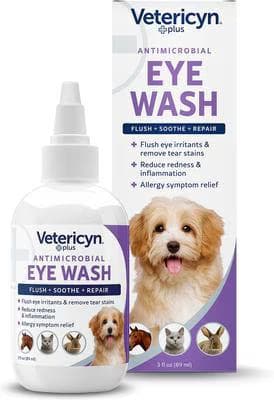
A sterile antimicrobial rinse that flushes irritants, pollen, and discharge out of the eye and helps lift tear stains. A sensible at-home first step for mild irritation, though it does not replace a vet exam for a painful eye.
Webvet may earn a commission when you click through to Chewy, at no extra cost to you.
How Much Does It Cost to Treat a Cat Eye Infection?
Cost is the question every owner has and no competitor answers, so here are realistic ranges. Actual cat eye infection vet cost varies by region, severity, and whether a specialist is involved. The figures below are typical United States estimates, not quotes.
| Service | What It Covers | Typical Cost Range |
|---|---|---|
| Vet exam | Office visit and eye assessment | $50 to $100 |
| Diagnostics | Fluorescein stain, tear test, cytology or culture | $30 to $200 |
| Medication | Antibiotic or antiviral drops or ointment | $20 to $60 |
| Specialist referral | Veterinary ophthalmologist exam and advanced workup | $250 to $600+ |
For a straightforward, single-eye bacterial infection, many owners spend roughly $75 to $250 all-in for the exam, basic diagnostics, and medication. More complex cases, recurring herpes flares, or anything requiring a veterinary ophthalmologist push costs higher. Pet insurance or a wellness plan can offset much of this, especially for chronic conditions.
Home Care: What's Safe (and What's Not) Before Your Vet Visit
Owners often search how to treat cat eye infection at home. The honest answer is that home care is supportive only, meant to keep your cat comfortable until a vet can diagnose the cause. There is no reliable cat eye infection home remedy that cures the underlying problem.
Safe home steps while you wait for your appointment:
- Gently wipe discharge away from the inner corner using a clean, damp cotton pad and plain warm water or sterile saline.
- Use a fresh pad for each eye to avoid cross-contaminating.
- Apply a clean, warm (not hot) compress for a minute or two to soften crusts and soothe the eye.
- Keep the environment calm, dust-free, and smoke-free.
Once your vet has diagnosed the problem, a vet-safe topical such as Vetericyn Plus Pet Eye Gel can support ongoing home care between doses of prescribed medication. For a full comparison of gentle rinses and gels, see our roundup of the best cat eye drops.
Can a Cat Eye Infection Heal on Its Own?
Owners frequently ask whether a cat eye infection will go away on its own. Occasionally a very mild, allergy-driven irritation settles once the trigger is removed. But you usually cannot tell a self-limiting irritation from a serious infection by looking, and that is the risk.
So can cat eye infection go away on its own without any vet care? Most true infections, especially bacterial and herpesvirus cases, do not clear reliably without treatment. Left alone, they can worsen, spread to the other eye, become chronic, or progress to a painful corneal ulcer that threatens vision. Because you cannot know which type you are dealing with at home, the safe move is a vet visit rather than a wait-and-see gamble.
How long treatment takes, and why some cases keep returning
With the right prescription, most bacterial cases start improving within 48 to 72 hours and settle in about a week. Viral flares typically run 7 to 14 days even on medication, because the drugs manage the flare rather than clearing the virus from the body.
- Improving within 48 to 72 hours on prescribed medication: the expected course for a bacterial infection.
- No change after three days of treatment: call your vet for a recheck rather than finishing the bottle and hoping.
- An infection that keeps coming back or will not go away: usually chronic FHV-1 resurfacing, not a fresh infection each time.
Mild irritation from dust or a passing allergen can settle on its own within a day or two. A true infection is different: it rarely heals without treatment, and it can last for weeks while the eye stays sore and keeps producing discharge.
Eye Infections in Kittens: Why They're Different
A kitten eye infection is more urgent than identical signs in an adult cat. Kittens have small eyes, immature immune systems, and thin corneas, so an untreated infection can scar the surface or cost the eye within days instead of weeks.

- Neonatal ophthalmia: infection builds behind eyelids that have not opened yet, showing as a bulging, crusted, or pus-filled lid seal in kittens under two weeks old. This is a same-day veterinary problem.
- Upper respiratory infection: shelter, foster, and litter-raised kittens pass FHV-1 and Chlamydia felis around easily, so eye signs often arrive with sneezing and a runny nose.
- Faster deterioration: a kitten can move from mild discharge to a corneal ulcer in 24 to 48 hours, which is why the usual wait-and-watch advice does not apply.
Kitten eye infection treatment is vet-directed without exception, usually a prescription drop or ointment dosed for a kitten's weight. Never pry sealed eyelids apart yourself. A vet unseals them safely with warm compresses and then checks the cornea underneath for damage.
Preventing Eye Infections in Cats
You cannot prevent every case, but you can lower the odds and reduce flare frequency in cats prone to herpes.
- Keep your cat's core vaccinations current, since the FVRCP vaccine helps protect against herpesvirus and calicivirus.
- Reduce stress, which is the main trigger for herpes flares, using consistent routines and enrichment.
- Gently groom the eye area on flat-faced breeds prone to tear staining and buildup.
- Keep the home dust-free and smoke-free to limit irritants.
- Ask your vet about long-term eye and immune support supplements. A vision soft chew such as Ocu-GLO Optimal Vision Support Soft Chew is sometimes used for antioxidant support in cats with chronic eye issues.
Helping a Stray or Feral Cat With an Eye Infection
A stray cat eye infection is often weeks old by the time anyone notices, so crusted, sealed, or cloudy eyes are common in outdoor cats. What you can safely do depends almost entirely on whether the cat will let you near it.
- Assess from a distance first. Note which eye is affected, whether it is held shut, and whether the cat is still eating and moving normally.
- If the cat is friendly and approachable, confine it in a carrier or a quiet closed room, then call a vet, shelter, or rescue the same day.
- If the cat is unapproachable, contact a local trap-neuter-return group, humane society, or low-cost clinic. Feral cat eye infection treatment runs through humane trapping, never through hand-catching a frightened cat.
- Wash your hands after any contact, because a few feline organisms can occasionally cause mild conjunctivitis in people.
A feral cat eye infection still needs prescription medication to resolve. TNR programs routinely treat eye disease during the spay or neuter appointment, which for an unsocialized cat is usually the only realistic route to real veterinary care.
Best Products for At-Home Eye Care
The right at-home eye-care products keep your cat comfortable and help you clear discharge safely between vet-directed treatments. They are supportive tools, not substitutes for a diagnosis.

Look for cat-safe saline rinses, antimicrobial washes, and lubricating gels formulated for pets, and avoid anything marketed for human eyes. For a full side-by-side comparison of the best cat eye drops for infection support and everyday cleaning, head to our dedicated best cat eye drops roundup.
FAQ
How do I treat my cat's eye infection at home?
A: Home care is supportive only. You can gently wipe away discharge with a clean, damp cotton pad and warm water or sterile saline, use a separate pad for each eye, and apply a clean warm compress to soften crusts. There is no safe home remedy that cures the underlying infection, so book a vet visit to identify and treat the cause.
Can a cat's eye infection go away on its own?
A: Occasionally a very mild allergy-driven irritation settles once the trigger is removed. But most true bacterial and herpesvirus infections do not clear reliably on their own and can worsen or progress to a corneal ulcer. Because you cannot tell the difference by looking, a vet visit is the safe choice rather than waiting it out.
Can you put Neosporin in a cat's eye for infection?
A: No. Neosporin and other human triple-antibiotic ointments are not safe for a cat's eye. Products containing neomycin and polymyxin have caused severe, sometimes fatal allergic reactions in cats. Only use eye medication your veterinarian prescribes specifically for your cat.
How much will a vet charge for a cat's eye infection?
A: A straightforward single-eye infection often costs roughly $75 to $250 for the exam, basic diagnostics, and medication in the United States. A veterinary ophthalmologist referral or a complex, recurring case can run $250 to $600 or more. Regional pricing and severity drive the difference, so treat these as typical estimates.
When should I be worried about my cat's eye infection?
A: Seek same-day veterinary care if the eye is squinted fully shut, the cornea looks cloudy or bluish, your cat is pawing hard at the eye, or there is sudden vision loss. Persistent yellow or green discharge, redness, or swelling that is not improving within a day or two also warrants a prompt visit.
How long does a cat eye infection last?
A bacterial infection on the right prescription usually improves within 48 to 72 hours and clears in roughly a week. Viral flares, especially feline herpesvirus, commonly last 7 to 14 days even with treatment. If the eye is no better after three days of medication, or the infection keeps returning, ask your vet to recheck for a chronic underlying cause.
Is an eye infection in a kitten an emergency?
Treat it as urgent. Kittens deteriorate far faster than adult cats, and swollen or sealed eyelids in a very young kitten can hide pus building behind them. Book a same-day or next-day appointment, clean discharge only with sterile saline in the meantime, and never force sealed eyelids open yourself.
Sources

Editor
The Webvet Editorial Team is the in-house group of pet-care editors and writers behind Webvet, operated by Smart Pet Collective. The team researches, writes, and maintains Webvet's pet health, behavior, and medication content. Every article follows a defined editorial process: research from reputable veterinary and scientific sources, careful drafting, mandatory review of medical content by a credentialed veterinarian, and dated publication. Health and medication articles are medically reviewed by a licensed veterinary professional before they go live and are kept current over time.
Veterinarian · BVMS MRCVS
Dr. Pippa Elliott, BVMS, MRCVS, is a veterinarian with nearly 30 years of experience in companion animal practice. Dr. Elliott earned her Bachelor of Veterinary Medicine and Surgery from the University of Glasgow. She was also designated a Member of the Royal College of Veterinary Surgeons. Married with 2 grown-up kids, Dr. Elliott has a naughty Puggle named Poggle, 3 cats and a bearded dragon.
Related reading

World's Best Cat Litter Review: Clumping, Tracking, Flushing, and Which Cats It Suits

Litter Genie Review: Does It Really Work, What Refills Cost, and the Best Alternatives

Best Litter Box Enclosures and Litter Furniture: What Vets Say About Enclosed Boxes
