Corneal Ulcer in Cats: Warning Signs & Treatment
A corneal ulcer in cats is a painful, same-day eye emergency. Learn the warning signs, causes, diagnosis, treatment options, cost, and healing timeline in this vet-reviewed guide.

BVMS MRCVS
Medically reviewed by Dr. Pippa Elliott, BVMS MRCVS · Last reviewed

This article contains affiliate links. Webvet may earn a commission when you buy through them, at no extra cost to you.
WebVet may earn a commission from qualifying purchases made through links on this page, at no additional cost to you.
A corneal ulcer in cats is an open sore on the clear front surface of the eye. It is one of the few feline eye problems that counts as a same-day emergency, because even a shallow scratch can deepen fast and threaten your cat's sight.
If your cat is suddenly squinting, tearing, or holding one eye shut, do not wait it out at home. A cat eye ulcer needs a veterinarian to stain the eye, confirm the depth, and start treatment before the damage spreads.
- 1A corneal ulcer is a painful, open wound on the surface of the eye that requires a same-day veterinary exam, not a wait-and-see approach.
- 2Common causes include trauma (a scratch from another cat or a claw), feline herpesvirus (FHV-1), dry eye, and foreign objects trapped under the eyelid.
- 3Vets diagnose it in minutes with a fluorescein stain test that makes the ulcer glow green under blue light.
- 4Most simple ulcers heal in 3 to 7 days with prescription antibiotic drops and an e-collar; deep or infected ulcers can need surgery.
- 5Never put human eye drops, leftover medication, or steroid drops in your cat's eye; steroids can make an ulcer rapidly worse.
- 6Untreated ulcers can scar the cornea, rupture the eye, or cause permanent blindness, so the recheck exam is not optional.
 Sponsored
Have a health question about your cat?
Talk to a licensed vet at Dutch over video or message, including nights and weekends.
Use code Pets60
Plans start at $12/month · covers up to 5 pets
- Licensed vets in most states
- Rx for 150+ conditions
- 4.7 on Trustpilot
What Is a Corneal Ulcer in Cats?
The cornea is the transparent, dome-shaped window at the front of the eye. It has several microscopically thin layers and carries no blood vessels of its own, which is exactly why it stays so clear and so vulnerable.
A corneal ulcer in cats develops when the outer protective layer (the epithelium) is scraped away and the tissue underneath (the stroma) is exposed.
Not every scrape becomes an ulcer. Vets group these injuries by how deep they go, and depth is what separates a minor problem from a sight-threatening one.

Here is how the layers break down, from mildest to most serious:
- Corneal abrasion: a superficial scrape of just the surface cells; it hurts but often heals quickly with proper care.
- Superficial ulcer: the full epithelium is lost and the top of the stroma is exposed; this is the most common type.
- Deep (stromal) ulcer: the wound extends well into the stroma and is at real risk of worsening.
- Descemetocele: a very deep ulcer that has eaten down to the last membrane before the eye ruptures; this is a surgical emergency.
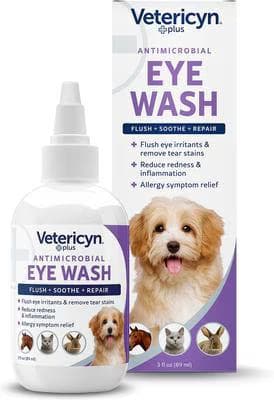
A sterile antimicrobial rinse that flushes irritants, pollen, and discharge out of the eye and helps lift tear stains. A sensible at-home first step for mild irritation, though it does not replace a vet exam for a painful eye.
Webvet may earn a commission when you click through to Chewy, at no extra cost to you.
A cat eye ulcer sits on a spectrum, and it can slide from the mild end to the dangerous end in a matter of hours. That is the single most important reason this condition earns an urgent trip to the clinic rather than a home remedy.
Warning Signs & Symptoms of a Corneal Ulcer
Cats hide pain well, so the early cat corneal ulcer symptoms are easy to miss. The eye is genuinely painful, and your cat will usually try to protect it. Learning the signs helps you act on day one instead of day three, when the ulcer may already be deeper.

Watch for these common warning signs:
- Squinting or holding the eye shut (called blepharospasm), often the very first sign.
- Excessive tearing or watery discharge running down the face.
- Redness around the eye or on the white of the eye.
- Cloudiness or a hazy, bluish film over part of the cornea.
- Pawing or rubbing at the eye against furniture or with a paw.
- Light sensitivity, with your cat seeking out dim corners.
- A visible spot, dent, or dull patch on the normally glossy eye surface.
- The third eyelid showing, a whitish membrane sweeping across the inner corner.
Some of these overlap with other feline eye conditions. Redness and discharge also appear with conjunctivitis in cats, and a protruded third eyelid can accompany many painful eye problems. Only a stain test tells them apart with certainty, so the safest move is a prompt exam rather than a guess.
What Causes Corneal Ulcers in Cats?
So what causes corneal ulcers in cats, and how did your cat get an eye ulcer in the first place? The honest answer is that several very different problems all end at the same injured cornea. Understanding the cause matters because treatment targets the underlying trigger, not just the wound.
The most common cause of corneal ulcers in cats is trauma, usually a cat scratched eye ulcer from a claw during a squabble, a swipe from a playmate, or a run-in with a thorn or sharp object. But infection is a close and uniquely feline second.
The main causes include:
- Trauma: scratches from another cat's claw, self-inflicted rubbing, or contact with plants, litter, or debris.
- Feline herpesvirus (FHV-1): a leading feline-specific cause; the virus damages the corneal surface directly and drives recurrent ulcers.
- Foreign material: a grass seed, dirt, or hair trapped under the eyelid grinding against the cornea.
- Eyelid and lash problems: rolled-in eyelids (entropion) or abnormal lashes that constantly abrade the surface.
- Dry eye (KCS): too little tear film leaves the cornea unprotected and prone to breakdown.
- Bacterial infection: secondary invaders that colonize and deepen an existing wound, sometimes causing a rapidly "melting" ulcer.
Feline herpesvirus deserves special attention because it is so common in cats and so likely to come back. If your cat also has sneezing, nasal congestion, or a history of upper-respiratory flare-ups, an active virus may be behind the eye damage.
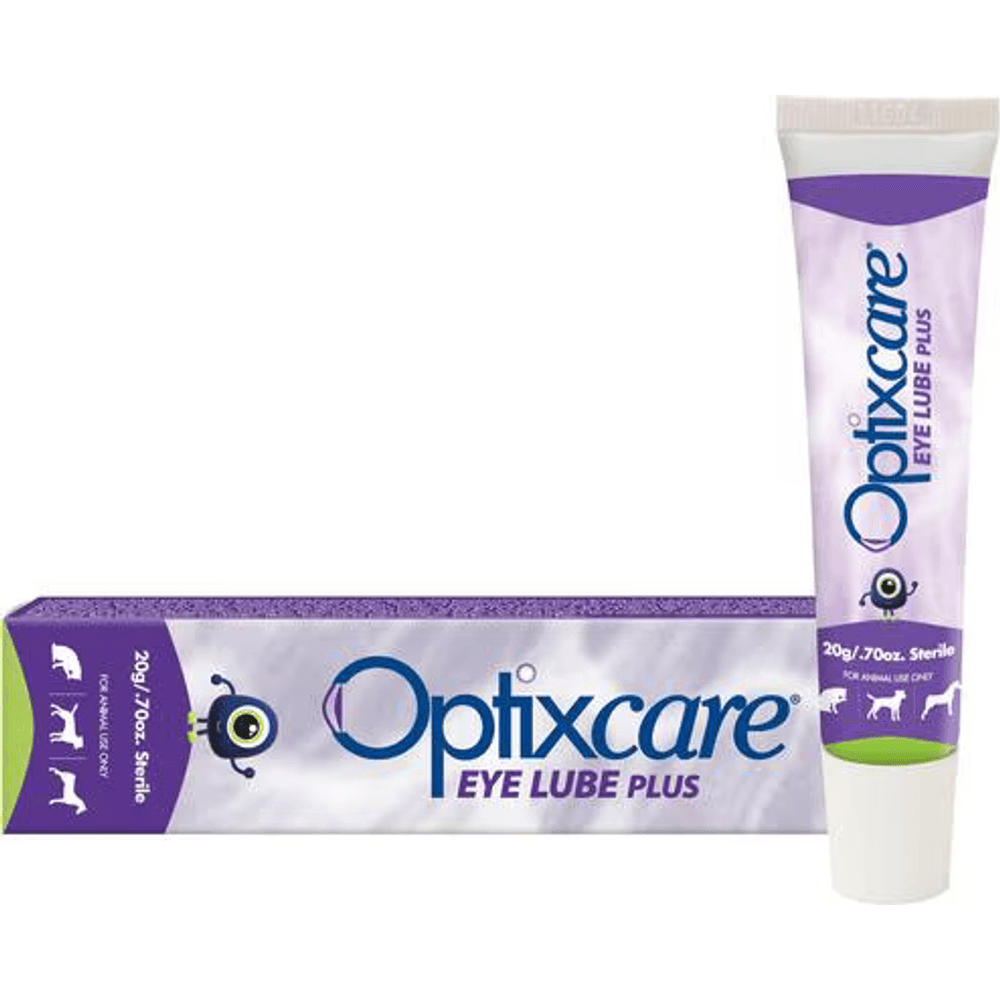
A sterile lubricating gel that soothes and moisturizes dry, irritated eyes and helps support the tear film in dogs and cats prone to dryness. A gentle, vet-shelf staple for everyday eye comfort.
Webvet may earn a commission when you click through to Chewy, at no extra cost to you.
Our full guides on the feline herpes eye connection and on sneezing with watery eyes go deeper on recurrence and long-term management than we can here.
Because so many triggers overlap, a corneal ulcer is often a symptom of a broader eye problem. Our pillar guide to cat eye infections covers how these conditions relate and when redness signals something deeper.
How Vets Diagnose a Corneal Ulcer
Diagnosis is quick, painless, and reliable, which is another reason a vet visit beats guessing at home. The centerpiece is the fluorescein stain test, and it is genuinely satisfying to watch.
Your vet places a drop of harmless orange dye onto the eye. The dye rinses off healthy, intact cornea but sticks to any area where the surface layer is missing. Under a blue light, the ulcer glows bright green, revealing its exact size and shape in seconds.
Beyond the stain, a full workup often includes:
- A close exam with magnification to judge the ulcer's depth and look for foreign material under the lids.
- A Schirmer tear test to check whether dry eye is the underlying cause.
- Tonometry (eye-pressure measurement) if the vet suspects related inflammation inside the eye.
- A bacterial culture for deep, infected, or non-healing ulcers to target the right antibiotic.
If red, branching blood vessels are growing in from the edge of the cornea, that is usually a healing response, not a new problem. Your vet will explain what the stain pattern and vessel growth mean for your specific cat, because the depth reading drives every treatment decision that follows.
SponsoredVet care that's always there
Unlimited video calls and messaging with licensed vets for less than a typical vet visit. One membership covers up to five pets.
Use code Pets60
Plans start at $12/month · covers up to 5 pets
- Licensed vets in most states
- Rx for 150+ conditions
- 4.7 on Trustpilot
Treatment Options: From Eye Drops to Surgery
So how do you treat a corneal ulcer in a cat? Cat corneal ulcer treatment always has two jobs: protect and heal the wound, and remove whatever caused it. A simple ulcer is managed medically at home with your vet's prescriptions, while a deep or melting ulcer may need surgery to save the eye.

For most uncomplicated ulcers, the plan centers on prescription cat eye drops for ulcer healing plus pain control:
- Topical antibiotics: the cornerstone of care, preventing or clearing infection while the surface regrows. A broad-spectrum ophthalmic ointment such as Terramycin is a common choice your vet may prescribe.
- Atropine drops: used when the ulcer triggers painful spasm inside the eye; atropine relaxes the eye and eases the ache.
- Antiviral medication: oral or topical antivirals when feline herpesvirus is the driver, because antibiotics alone will not stop the virus.
- Lubricating gel: a protective layer such as Optixcare Eye Lube Plus is often added between medicated drops to shield the exposed surface and keep it moist.
- A recovery cone (e-collar): the single most important tool to stop your cat rubbing the wound wider.
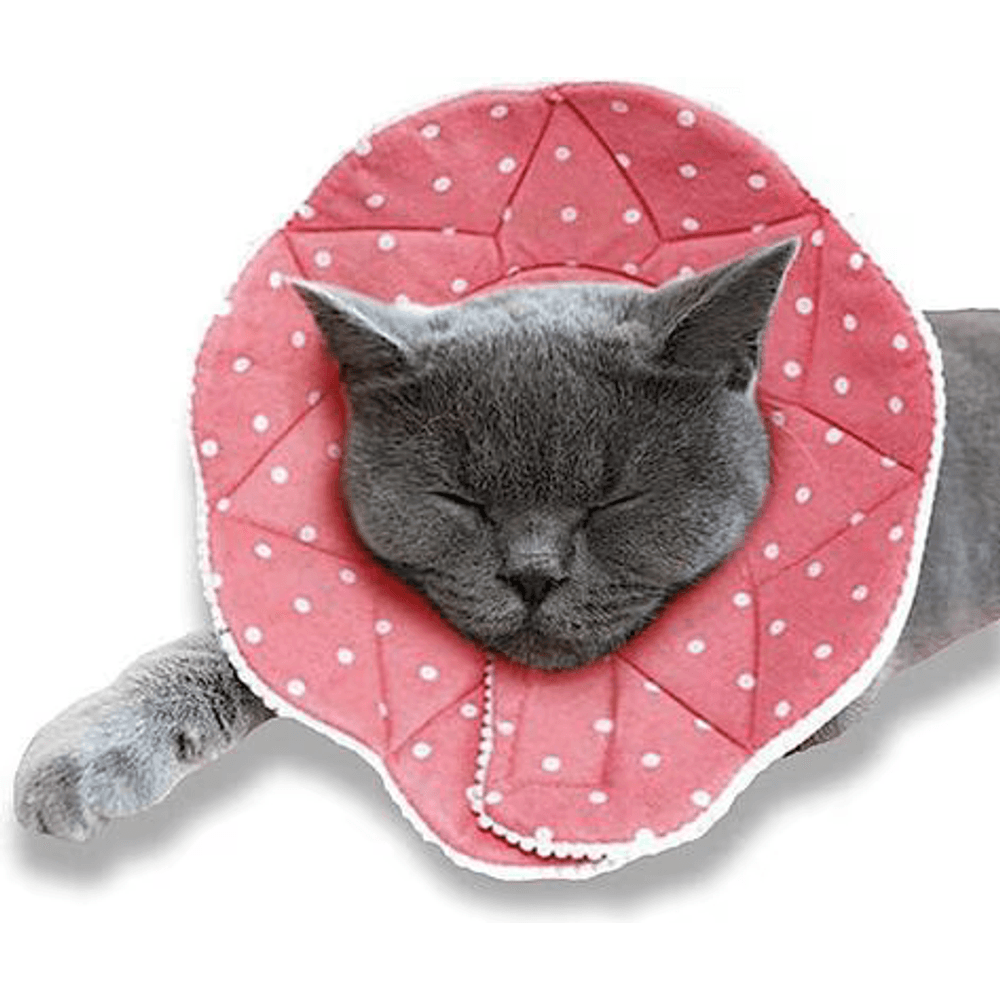
A lightweight, padded fabric cone that gently blocks a pet from pawing, scratching, or rubbing a healing eye, wound, or hot spot, and it is far softer and less stressful than a hard plastic cone.
Webvet may earn a commission when you click through to Chewy, at no extra cost to you.
For deep, non-healing, or infected ulcers, medical care alone may not be enough, and cat eye ulcer surgery becomes the option that saves the eye. Surgical procedures a veterinary ophthalmologist may recommend include:
- Conjunctival graft or flap, where a thin band of the cat's own tissue is stitched over a deep ulcer to reinforce it and supply blood flow.
- A corneal graft for a descemetocele or perforation, patching the defect to keep the eye intact.
- Debridement, gently removing loose, dead surface tissue so healthy cornea can bond and heal.
One rule is absolute: never use steroid-containing eye drops on an ulcer. Steroids suppress healing and can turn a manageable wound into a rapidly melting, sight-threatening one. This is exactly why leftover or human medication is dangerous, and why every ulcer needs a proper prescription.
Eye Ulcers in Kittens
Kittens get corneal ulcers out of proportion to their numbers, usually during a feline herpesvirus flare-up alongside an upper-respiratory infection. Their corneas are thinner and their immune systems are still immature, so a wound that would stay minor in an adult cat can deepen within a day.
Kitten eye ulcer treatment follows the same principles as adult care: prescription antibiotic drops, an antiviral when FHV-1 is driving it, and a cone. Dosing is weight-dependent and the margin for error is far smaller, so adult leftovers are never an option.
Take a kitten to the vet the same day if you notice any of the following:
- A squinting or closed eye paired with sneezing or nasal discharge, the classic herpesvirus pattern covered in our guide to cat sneezing and watery eyes.
- Eyelids crusted shut with discharge, which traps infection against the cornea.
- Any visible cloudiness, spot, or dent on the surface of the eye.
- A littermate showing the same signs, since these infections move through a litter quickly.
The 3-2-1 Rule: When Your Vet Refers You to a Specialist
Most simple ulcers heal under your regular vet's care. The tricky part is knowing when a case has crossed the line and needs a veterinary ophthalmologist.
Many clinicians use a plain-language framework, sometimes called a 3-2-1 rule for corneal ulcers, to make that call. It is a memory aid, not an official law, and thresholds vary by vet, but it captures the three questions that drive referral: size, depth, and time.
Here is what the 3-2-1 rule corneal ulcer framework is getting at:
- 3 (Time): if the ulcer shows no meaningful improvement after roughly 3 to 7 days of correct treatment, something is wrong and the case needs a fresh set of eyes.
- 2 (Depth): if the wound involves the deeper stromal layers rather than just the surface, it carries a real risk of worsening and warrants specialist tools.
- 1 (One serious sign): if there is a single red-flag finding (a descemetocele, a melting ulcer, or a perforation), refer immediately without waiting.
Referral is not a sign your vet failed. It means the case needs equipment and surgical training beyond a general practice, and moving early protects your cat's vision.
Healing Timeline: How Long Does It Take?
Owners almost always ask about cat corneal ulcer healing time, and the reassuring news is that simple ulcers heal fast. A superficial ulcer with no infection often closes within 3 to 7 days once the right drops and a cone are in place. Deeper or complicated ulcers take longer, sometimes several weeks.
Can a cat eye ulcer heal on its own? A tiny, superficial scrape sometimes does resurface without help, but you cannot tell by looking whether an ulcer is shallow and safe or deepening toward disaster. Without treatment, infection can set in, the wound can melt, and the eye can perforate.
So while the surface may technically regrow on its own in the mildest cases, waiting is a gamble with your cat's sight. Every credible veterinary source recommends prompt care rather than hoping it clears.
Here is a realistic recovery timeline for an uncomplicated ulcer:
| Timeframe | What's Happening | What to Watch For |
|---|---|---|
| Days 1-2 | Treatment begins; pain and squinting should start to ease | Any worsening cloudiness or increased discharge |
| Days 3-5 | Surface cells migrate across the wound; comfort improves | Ulcer should look smaller, not larger, at recheck |
| Days 5-7 | Most simple ulcers are healed or nearly closed | Vet re-stains the eye to confirm it no longer takes up dye |
| Week 2+ | Deep or infected ulcers still closing; vessels may be visible | Ongoing rechecks until a clean stain confirms healing |
The recheck exam is the non-negotiable part of the timeline. Your cat may look and act completely normal while a small area of ulcer remains, and only a repeat fluorescein stain proves the eye has truly healed. Stopping medication early because the eye looks fine is a top reason an ulcer comes roaring back.
Healing Stages: How to Tell the Ulcer Is Healing
Between rechecks, most owners are left staring at their cat's eye trying to read progress. The cat eye ulcer healing stages follow a fairly predictable order, and knowing what each one looks like tells you whether to relax or call the clinic early.

Owners often search for cat eye ulcer photo stages hoping to match their cat's eye to a reference image. A before and after cat corneal ulcer comparison of the same eye is the more useful version, because coat color and lighting change how an ulcer reads in a photo.
How to Tell if Cat Eye Ulcer Is Healing
These are the improving signs, roughly in the order they tend to appear:
- Days 1 to 2: the squinting loosens and your cat starts holding the eye partly open instead of clamped shut.
- Days 2 to 3: tearing and discharge taper off, and the fur below the eye stays dry between wipes.
- Days 3 to 5: the gray-white cloudiness shrinks inward from its edges rather than spreading outward.
- Days 4 to 7: pawing and face-rubbing stop, and your cat tolerates a bright room again instead of hiding in dim corners.
- Throughout: fine red blood vessels creeping in from the edge of the cornea are a healing response, not a setback.
Worsening is usually just as obvious. Cloudiness that spreads or turns blue, white, or amber, a dent that looks deeper than it did yesterday, a bulging surface, or renewed squinting after a good day all mean the eye needs to be seen that day, not at the scheduled recheck.
If the eye has not clearly improved after 5 to 7 days of correct treatment, stop waiting for it to turn a corner. An ulcer that has stalled is a different problem from one healing slowly, and it belongs back in the exam room this week.
Cost to Treat a Corneal Ulcer in Cats
Cost is a fair and practical question, and it is one most articles skip entirely. The honest answer is that it depends almost entirely on depth. Knowing the cost to treat cat eye ulcer cases up front helps you say yes to the recheck and the cone rather than cutting corners that cost more later.
Prices vary by region and clinic, so treat these as typical ranges rather than quotes:
| Care Level | What It Typically Includes | Typical Cost Range |
|---|---|---|
| Uncomplicated, vet-managed | Exam, fluorescein stain, antibiotic drops, e-collar, one or two rechecks | $150 to $500 |
| Complicated / recurrent | Extra diagnostics, culture, antiviral meds, multiple rechecks | $400 to $1,200 |
| Specialist referral / surgery | Ophthalmologist exam, cat eye ulcer surgery (graft), anesthesia, follow-up | $1,500 to $4,000+ |
A simple ulcer caught on day one usually sits at the low end. The expensive scenarios are almost always the ones that were delayed, went untreated, or turned into a deep or melting wound.
The fastest way to keep costs down is to go in early, because a same-day exam for a shallow ulcer is far cheaper than surgery for a perforated eye. Pet insurance that covers illness will often offset a meaningful share of these figures.
Corneal Sequestrum & Other Complications
This is where a cat-focused guide has to go further than a generic one, because cats get a complication dogs simply do not: corneal sequestrum in cats. A sequestrum is a patch of dead corneal tissue that turns amber, brown, or black.
It is closely tied to chronic irritation and feline herpesvirus, it is far more common in flat-faced breeds, and it often follows an ulcer that never fully healed.
At-risk breeds
Sequestrum and chronic ulcers show up most in these cats:
- Persians and Himalayans, whose flat faces and prominent eyes leave the cornea exposed.
- Burmese, which appear predisposed to sequestrum formation.
- Other brachycephalic (flat-faced) cats, where eyelid conformation adds constant low-grade irritation.
Understanding the ulcer types
Not all ulcers behave the same way, and the type shapes the outlook:
- Simple (superficial) ulcers: the everyday scrape; these heal well and quickly with standard care.
- Non-healing / recurrent ulcers: often linked to FHV-1 in cats; they resist routine treatment and need the underlying virus addressed.
- Corneal sequestrum: dead tissue that usually will not resolve on its own and frequently needs surgical removal (a keratectomy) by a specialist.
A non healing eye ulcer cat owners describe, one that has stalled past 5 to 7 days of correct treatment with no shrinkage, is rarely just slow. It is usually an indolent ulcer whose loose edges cannot bond down, or an early sequestrum.
Both need debridement or a veterinary ophthalmologist's tools rather than a longer course of the same drops. Judge progress against the improving signs in the healing stages section above, then let the repeat fluorescein stain settle it.
Other complications to know
An ulcer that is ignored or mistreated can lead to:
- Reflex uveitis, painful inflammation inside the eye that can cause the pupil to change size; changes in pupil appearance are covered in our guide to dilated pupils in cats.
- Corneal scarring, a permanent hazy patch that can dull vision if it sits over the central cornea.
- Perforation and vision loss, the worst-case outcome when a deep ulcer ruptures.
For cats prone to recurrent ulcers or sequestrum, some owners add a long-term eye-health support such as an antioxidant vision chew like Ocu-GLO on their vet's advice. It is not a treatment for an active ulcer, but a maintenance option for chronically affected eyes.
Home Care & Recovery: What You Can (and Can't) Do at Home
There is real, useful home care for a healing ulcer, and there is dangerous home care that makes vets wince. The line matters, so here is a clear split. There is no safe cat corneal ulcer home remedy that replaces veterinary treatment, but there is plenty you can do to support recovery.

Safe at-home steps
- Keep the e-collar on 24/7 until your vet clears it; this is your cone for cat eye ulcer protection and it prevents self-inflicted damage.
- Give every prescribed dose on time, and finish the full course even if the eye looks better.
- Gently wipe away discharge from the fur around (not on) the eye with a clean, damp cloth or a vet-approved eye wash such as Vetericyn Plus Antimicrobial Eye Wash.
- Use a species-appropriate rinse like Nutri-Vet Cat Eye Rinse for routine cleanup of the surrounding area if your vet approves it.
- Keep your cat calm and indoors, away from rough play and dusty spaces.
- Go to every recheck, because only a repeat stain confirms healing.
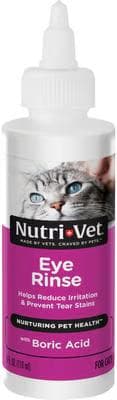
The cat formulation of Nutri-Vet's boric acid rinse, made for gently clearing everyday debris and limiting tear stains around a cat's eyes. Not a substitute for vet care if the eye looks painful.
Webvet may earn a commission when you click through to Chewy, at no extra cost to you.
Leave these to your vet
- Do not use human eye drops (like redness-relief or allergy drops); they can contain ingredients that harm the cornea.
- Never use steroid drops or any leftover medication from a past problem or another pet.
- Do not attempt to remove a foreign object yourself; you can drive it deeper or perforate the eye.
- Do not stop medication early or skip the recheck just because the eye looks normal.
- Do not take the cone off to "give the eye a break," which is when most re-injuries happen.
When you are ready to stock a safe eye-care kit for cleanup and comfort, our roundup of the best cat eye drops and eye-care products walks through vet-appropriate picks for the rinse, wash, and lubrication steps above.
FAQs
Can a corneal ulcer heal on its own in a cat?
A: A tiny, superficial scrape occasionally resurfaces without treatment, but you cannot tell by looking whether an ulcer is safely shallow or quietly deepening. Left alone, it can become infected, melt, or perforate the eye. Every reputable veterinary source recommends prompt treatment rather than waiting, because the downside of guessing wrong is permanent vision loss.
How do you treat a corneal ulcer in a cat?
A: Treatment protects the wound and removes its cause. Simple ulcers heal with prescription antibiotic eye drops or ointment, sometimes atropine for pain, an antiviral if feline herpesvirus is involved, a lubricating gel, and an e-collar. Deep, infected, or non-healing ulcers may need surgery such as a conjunctival graft performed by a veterinary ophthalmologist.
Is a corneal ulcer painful for cats?
A: Yes, corneal ulcers are genuinely painful, which is why cats squint, tear up, paw at the eye, and hide. The cornea is densely supplied with nerves, so even a small ulcer causes real discomfort. Pain relief, often through atropine and by healing the wound itself, is a core part of treatment.
Can a corneal ulcer cause blindness in cats?
A: It can if it is left untreated or mismanaged. A deep ulcer can perforate the eye, and central scarring can permanently cloud vision. The good news is that most ulcers caught early and treated properly heal without lasting vision loss, which is exactly why the same-day exam and the follow-up recheck matter so much.
Can a cat live with an untreated corneal ulcer?
A: It is not safe or humane to leave one untreated. An untreated ulcer stays painful and tends to worsen, risking infection, rupture, and loss of the eye itself. Cats are experts at hiding pain, so a quiet cat is not a comfortable one. Any suspected ulcer warrants a veterinary visit the same day.
How long does a cat corneal ulcer take to heal?
A: A simple, superficial ulcer usually heals in about 3 to 7 days with proper treatment. Deep, infected, or herpesvirus-related ulcers can take several weeks and need repeated rechecks. Only a follow-up fluorescein stain confirms the eye has fully healed, so finish all medication and keep every recheck appointment.
What is the most common cause of corneal ulcers in cats?
A: Trauma is the most common single cause, typically a scratch from another cat's claw or a swipe during play. Feline herpesvirus (FHV-1) is a very close and uniquely feline second, and it is the leading driver of recurrent, hard-to-heal ulcers. Foreign objects, dry eye, and eyelid problems round out the usual causes.
How can I tell if my cat's eye ulcer is healing?
Between visits, watch for less squinting, discharge tapering off, cloudiness shrinking inward from its edges, and your cat tolerating bright light again. Those are the cat corneal ulcer healing stages in order. Only a repeat fluorescein stain confirms the surface has actually closed, so keep the recheck even if the eye looks perfect.
Should I compare my cat's eye to healing photos online?
Photos help you know what to look for, but they cannot tell you how deep your cat's ulcer is. Lighting and camera angle change how an ulcer reads. A better approach is photographing your own cat's eye in the same light each day and bringing that before and after comparison to the recheck.
Sources

Editor
The Webvet Editorial Team is the in-house group of pet-care editors and writers behind Webvet, operated by Smart Pet Collective. The team researches, writes, and maintains Webvet's pet health, behavior, and medication content. Every article follows a defined editorial process: research from reputable veterinary and scientific sources, careful drafting, mandatory review of medical content by a credentialed veterinarian, and dated publication. Health and medication articles are medically reviewed by a licensed veterinary professional before they go live and are kept current over time.
Veterinarian · BVMS MRCVS
Dr. Pippa Elliott, BVMS, MRCVS, is a veterinarian with nearly 30 years of experience in companion animal practice. Dr. Elliott earned her Bachelor of Veterinary Medicine and Surgery from the University of Glasgow. She was also designated a Member of the Royal College of Veterinary Surgeons. Married with 2 grown-up kids, Dr. Elliott has a naughty Puggle named Poggle, 3 cats and a bearded dragon.
Related reading

World's Best Cat Litter Review: Clumping, Tracking, Flushing, and Which Cats It Suits

Litter Genie Review: Does It Really Work, What Refills Cost, and the Best Alternatives

Best Litter Box Enclosures and Litter Furniture: What Vets Say About Enclosed Boxes
