Cat Sneezing and Watery Eyes: Causes and When to Worry
A worried-owner guide to cat sneezing and watery eyes: what the combo usually means, how to tell allergies from a cat cold, safe at-home care, and the exact red flags that mean it is time to call your veterinarian.

BVMS MRCVS
Medically reviewed by Dr. Pippa Elliott, BVMS MRCVS · Last reviewed

This article contains affiliate links. Webvet may earn a commission when you buy through them, at no extra cost to you.
Your cat lets out a little sneeze, you notice a glassy shine in the corner of one eye, and suddenly you are watching every blink for clues. Cat sneezing and watery eyes together is one of the most common reasons cat owners go looking for answers, and the good news is that most of the time the cause is mild and self-limiting. But not always. The same two symptoms can also be the first hint of something that needs a vet.
This guide walks the full middle ground: what the sneeze-plus-watery-eye combo usually means, how to tell a harmless case from a worrying one, what you can safely do at home, and the specific signs that should send you to the clinic. We summarize the heavy medical detail and point you to deeper reads where they exist, so this stays a fast, scannable triage tool rather than a textbook.
Most cats with sneezing and watery eyes have a mild, often viral, upper respiratory flare-up that improves with rest and comfort care in 7 to 10 days. Call your veterinarian sooner if your cat stops eating, becomes lethargic, struggles to breathe, or develops thick yellow or green discharge.
Is It Serious? Cat Sneezing and Watery Eyes at a Glance

Here is the short version most owners are searching for. A cat with watery eyes and sneezing, who is otherwise eating, drinking, playing, and breathing comfortably, is usually dealing with something minor. When people type "why is my cat sneezing and watery eyes" into a search bar at 11pm, the honest answer is that a cat is sneezing and watery eyes most often because of a mild irritation or a low-grade viral cold, not an emergency.
The combination matters because the nose and the eyes share plumbing. The same membranes that line the nasal passages connect to the tear ducts, so an irritant or infection in one area frequently spills over into the other. That is why a cat with watery eyes and sneezing so often shows both signs at once rather than one alone.
What flips a routine case into a worrying one is the company the symptoms keep. A bright, hungry cat with clear, watery discharge is in a very different place than a quiet cat with thick discharge who has skipped two meals.
| What you are seeing | Usually benign | Worth a closer look | Call the vet |
|---|---|---|---|
| Discharge color | Clear, watery | Cloudy | Yellow, green, bloody |
| Eating and drinking | Normal | Slightly reduced | Refusing food over 24 hours |
| Energy | Playful, alert | A bit subdued | Hiding, limp, unresponsive |
| Breathing | Quiet, easy | Slightly snuffly | Labored, open-mouth, fast |
| Duration | Under a week | 7 to 10 days | Beyond 10 days or worsening |
What Causes Cat Sneezing and Watery Eyes Together?
When a cat has sneezing and watery eyes at the same time, the cause almost always lands in one of a few buckets. Knowing which bucket you are likely in helps you decide whether to wait and watch or pick up the phone. If you searched "why is my cat sneezing so much all of a sudden," a sudden onset usually points toward an irritant or a fresh viral flare rather than a slow-building problem.
Upper respiratory infections (the most common cause)
Feline upper respiratory infections (often called a cat cold) are the leading reason for a cat with sneezing and watery eyes. The two main culprits are feline herpesvirus and feline calicivirus, which together account for the large majority of cases (Cornell Feline Health Center). These viruses inflame the nose and eyes, producing exactly the runny-nose, sneezy, weepy-eyed picture owners describe as "cat sneezing watery eyes and runny nose."
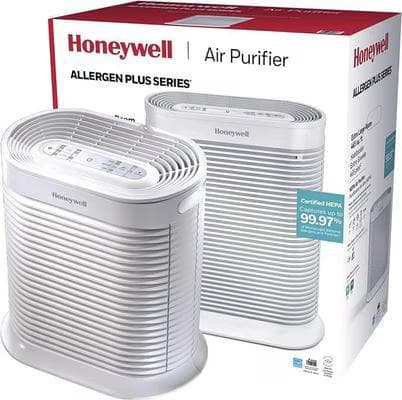
Certified True HEPA air purifier that captures 99.97% of airborne dust, dander, pollen, and smoke, reducing the airborne triggers behind feline asthma and respiratory irritation.
Webvet may earn a commission when you click through to Chewy, at no extra cost to you.
We keep the disease-level detail brief here on purpose. For the deep dive on the viral causes and the full sneezing differential, see our companion guide on why your cat keeps sneezing.
Allergies and environmental irritants
Dust, pollen, smoke, scented litter, cleaning sprays, and aerosols can all irritate a cat's airways and eyes. This is the "cat sneezing and watery eyes allergies" angle, and it tends to come and go with exposure. We cover the allergy picture in its own section below.
Eye-specific problems
Sometimes the eye is the real story and the sneeze is a coincidence or a mild add-on. Conjunctivitis, a scratched cornea, a blocked tear duct, or a bit of debris can make one or both eyes water. Eye conditions are where a vet visit is most worthwhile, because the eye is delicate and slow treatment risks lasting damage (Merck Veterinary Manual).
Dental, nasal, and other causes
Less commonly, a dental root infection, a nasal polyp or foreign body (like a blade of grass), or in older cats a nasal mass can drive chronic sneezing and one-sided discharge. These usually produce stubborn symptoms that do not clear with simple home care, which is your cue to escalate.
Allergies vs. a Cat Cold: How to Tell the Difference

This is the question behind a lot of searches: is it an allergy or an infection? The symptoms overlap, but a few patterns help you tell them apart. The honest caveat first: cats get true seasonal allergies far less often than dogs or people, so a sneezy, weepy cat is statistically more likely to have a mild viral cold than hay fever.
| Clue | Leans allergy / irritant | Leans cat cold (viral URI) |
|---|---|---|
| Discharge | Clear, watery, both eyes | Starts clear, may turn cloudy or colored |
| Fever or lethargy | No | Sometimes |
| Appetite | Normal | Can drop |
| Pattern | Comes and goes with exposure | Steady for days, then improves |
| Other cats affected | Rarely | Often, since viruses spread |
| Sneezing fits | Often in bursts after exposure | Spread through the day |
Do cat colds go away on their own? Most mild viral colds do resolve without prescription medication in about a week to ten days, much like a human cold, as long as the cat keeps eating and stays hydrated. That said, "goes away on its own" is not the same as "ignore it." Kittens, seniors, and cats who stop eating can decline fast and need a vet.
If you are wondering how an indoor cat got a cold at all, the answer is that these viruses are hardy and travel easily. We unpack the indoor-cat angle in the multi-cat section below.
For cat flu treatment at home, the realistic plan is supportive care: rest, warmth, humidity, gentle cleaning, and tempting food. There is no home cure for the virus itself, only comfort while the cat's immune system does the work. If you want the full allergy breakdown, our guide to allergies in cats covers food, flea, and environmental triggers in depth.
 $65 · no membership
Have a health question about your cat?
A licensed vet can assess your cat over video and prescribe online when it's appropriate.
 Talk to a vet
- Licensed vets
- All 50 states
- same-day Rx
Webvet may earn a commission if you book.
Why Is Only One of My Cat's Eyes Watering?

A cat with one watery eye and no other symptoms tells a different story than a cat with both eyes streaming. When the problem is one-sided, it points away from a body-wide virus and toward something local in that specific eye.
Common reasons for a single watery eye:
- A foreign body or debris. A speck of litter, dust, or a seed husk lodged under the eyelid makes one eye water and the cat squint or paw at it.
- A corneal scratch. Play, a scuffle, or a stray claw can scratch the surface of the eye. A cat with one watery eye and squinting, held partly shut, is a classic sign and warrants a vet check because corneal injuries can worsen quickly.
- A blocked tear duct. If the duct that drains tears into the nose is blocked, tears overflow down the face. This often leaves a rust-colored stain on the fur near the inner corner.
- Early conjunctivitis. Herpesvirus often starts in just one eye before involving the other.
If you searched "cat has one watery eye home remedy," the safe home step is limited: gently wipe away discharge with a clean, damp cloth and watch closely. Do not put any medication or human drops in the eye. A one-sided watery eye that comes with squinting, redness, pawing, or that does not clear within a day or two should be seen by a vet, because the eye is too valuable to gamble on.

An L-lysine immune-support powder for cats that supports a healthy immune system and normal eye health, the go-to supplement for cats prone to sneezing and upper-respiratory flare-ups linked to feline herpesvirus.
Webvet may earn a commission when you click through to Chewy, at no extra cost to you.
Home Care: Helping a Sneezing, Watery-Eyed Cat Feel Better

If your cat is bright, eating, and just a little snuffly, supportive home care is reasonable for the first few days. The goal of a cat sneezing watery eyes home remedy is comfort, not cure. You are helping the cat ride out a mild flare, not treating the underlying cause yourself.
Here is the safe at-home playbook for "my cat is sneezing and has watery eyes home remedy" and "how to treat a cat cold at home":
- Wipe gently. Use a warm, damp, unscented cloth or cotton pad to clear discharge from the eyes and nose. Use a fresh area of cloth for each eye to avoid spreading anything between them.
- Add humidity. Sit your cat in a steamy bathroom for ten minutes a couple of times a day, or run a cool-mist humidifier nearby. Moist air loosens congestion.
- Tempt the appetite. A congested cat cannot smell food well and may stop eating. Warm the food slightly and offer something strongly scented like a little tuna or a favorite wet food. Eating is the single most important thing.
- Keep water available. Hydration thins secretions and supports recovery. Add a second water bowl or try a pet fountain.
- Rest and warmth. A quiet, draft-free spot with a soft bed helps the immune system do its job.
What you should not do matters as much as what you do. Skip any "natural antibiotic" remedies you read about online, avoid steam that is hot enough to scald, and do not force-feed a cat who is refusing everything, since that can cause aspiration. If home care is not turning things around in a few days, that is information, not failure: it means the cause needs a professional eye.
What Can You Give a Cat for Sneezing and Watery Eyes?
This is the most safety-critical question on the page, so we will be direct. There is no reliable over-the-counter medicine you should give a cat for sneezing and watery eyes on your own. The single most useful "what can I give my cat for sneezing and watery eyes" answer is: supportive care at home, and a phone call to your vet for anything beyond that.
A few specifics owners ask about:
- Can I give my cat Benadryl for sneezing and watery eyes? Only if your veterinarian tells you to, and at a dose they calculate. Diphenhydramine (Benadryl) is sometimes used in cats for genuine allergies, but the safe dose is small, the product must be the plain formulation without added decongestants, and it is the wrong tool for a viral cold. Never guess a dose.
- What is the strongest natural antibiotic for cats? There is no safe, proven natural antibiotic for cats. Bacterial infections need prescription antibiotics chosen by a vet, and most colds are viral anyway, so antibiotics would not help. Homemade medicine for a cat cold and cough is not a substitute for veterinary care when a cat is genuinely sick.
- Cat sneezing and watery eyes medicine in general. Any actual medication, whether an antiviral like famciclovir, an antibiotic, or a prescription eye ointment, is a vet decision based on an exam.
The safest medicine cabinet for a sneezy, watery-eyed cat is an empty one. Comfort care plus a vet's guidance beats any human medication you might have on hand. When in doubt, do not dose, call.
We keep medication detail short here by design. The full discussion of antivirals, antibiotics, and prescription eye treatment belongs to the cat upper respiratory infection cluster, and your vet is the right source for dosing.
Red Flags: When to Take a Sneezing Cat With Watery Eyes to the Vet
This is the part of the page worth bookmarking. Most cats are fine, but the following signs mean you should stop watching and start calling. If you are asking "when should I take my cat to the vet for sneezing and eye discharge," any single red flag below is your answer.
Call your veterinarian promptly if you see:
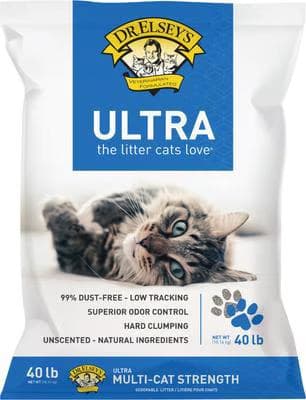
99% dust-free, low-tracking clumping clay litter with superior odor control and hard clumping. Unscented, natural ingredients, multi-cat strength.
Webvet may earn a commission when you click through to Chewy, at no extra cost to you.
- Loss of appetite for more than 24 hours. A cat that will not eat is the most important warning sign, especially in combination with sneezing.
- Lethargy. A cat sneezing with watery eyes who is also lethargic, hiding, or unusually still has crossed from "mild cold" into "needs to be seen."
- Labored or open-mouth breathing. Cats almost never breathe through an open mouth unless they are in distress. This is an emergency. See our guide on cat open-mouth breathing for what to do.
- Colored or bloody discharge. Thick yellow or green discharge suggests a secondary infection. Blood needs same-day attention.
- Diarrhea or vomiting alongside the respiratory signs. A cat with sneezing, watery eyes, and diarrhea may have a more systemic illness.
- A cat that will not stop sneezing. A cat that won't stop sneezing and has watery eyes for more than a week, or whose symptoms keep getting worse, needs a workup.
- Squinting or a painful-looking eye. Eye pain is a same-day issue.
| Symptom alongside sneezing + watery eyes | Urgency |
|---|---|
| Bright, eating, clear discharge | Monitor at home |
| Mild discharge over 7 to 10 days | Schedule a vet visit |
| Not eating, lethargic, thick discharge | Call the vet within a day |
| Open-mouth or labored breathing, collapse | Emergency now |
About the "silent killer" question. People searching "what is the silent killer in cats" or "what is the silent killer of cats" are usually thinking of conditions like chronic kidney disease, heart disease, or hyperthyroidism, which advance quietly with vague early signs. Sneezing and watery eyes are not classic signs of those diseases, but the phrase captures a real truth: cats hide illness well. That is exactly why a cat who seems "a little off" along with respiratory signs deserves attention rather than a wait-and-see.
Kittens, Senior Cats, and Multi-Cat Homes: Extra Caution
The same symptoms carry different weight depending on who the cat is. A robust young adult can usually shrug off a mild cold, while the very young and the very old have less margin.
Kittens. Young kittens dehydrate and decline quickly, and a blocked nose can stop them eating. A sneezy kitten with watery eyes should be seen sooner rather than later.
Senior cats. An old cat sneezing and watery eyes deserves a lower threshold for a vet visit. Older cats are more prone to dental disease, nasal masses, and other conditions that mimic a simple cold, and they tolerate illness less well.
Flat-faced breeds. A Persian cat sneezing and watery eyes is partly explained by anatomy. Brachycephalic breeds have compressed nasal passages and shallow eye sockets, so they tear more, stain more, and congest more easily. That does not make symptoms harmless, but it does mean some baseline tearing can be normal for the breed.
Multi-cat homes and indoor cats. Here is the answer to "how did an indoor cat get a cold." Feline respiratory viruses are common, hardy, and often carried for life after a single infection, flaring under stress. A cat can carry herpesvirus from kittenhood and never leave the house, then flare during a move, a new pet, or boarding. You can also carry virus particles in on clothing. So a strictly indoor cat keeps sneezing and watery eyes not because you did anything wrong, but because the virus was already along for the ride.
How Vets Diagnose and Treat the Cause

If home care is not enough, knowing what to expect at the clinic takes some of the worry out of the visit. We keep this brief, since specific treatment is a conversation for you and your vet.
For a typical cat sneezing and watery eyes diagnosis, the vet will start with a physical exam, checking the eyes, nose, mouth, and chest, and asking about timing and other cats. Depending on what they find, they may stain the eye to check for a scratch, look up the nose, run bloodwork, or in stubborn one-sided cases recommend imaging to rule out a mass or foreign body.
Treatment for cat sneezing and watery eyes is matched to the cause:
- A simple viral cold often needs only supportive care, sometimes with an antiviral for severe herpesvirus flares.
- A secondary bacterial infection or thick discharge may call for antibiotics.
- Eye involvement may get a prescription eye ointment or drops.
- Allergic or irritant cases focus on removing the trigger.
The detailed treatment and antibiotic discussion lives in the cat upper respiratory infection cluster, so we point you there rather than duplicating it. Brown or rust-colored eye discharge, which sends a lot of people searching "cat eye discharge brown," is usually dried tears (porphyrin staining) and often benign, but if it is new, heavy, or paired with squinting, let the vet weigh in.

Probiotic supplement formulated to help cats maintain calm behavior, with the BL999 strain. 30 daily sachets.
Webvet may earn a commission when you click through to Chewy, at no extra cost to you.
You do not need to diagnose your cat yourself. Your job is to notice the pattern, do safe comfort care, and recognize the red flags. The vet's job is to find the exact cause and treat it. Knowing where that line sits is the whole point of this guide.
Frequently Asked Questions
What can I give my cat for sneezing and watery eyes?
At home, the safe options are comfort care only: gentle wiping with a warm damp cloth, added humidity, tempting food, and fresh water. Do not give human medications or eye drops. For anything stronger, including any actual medicine, call your veterinarian for a dose and product they approve.
Do cat colds go away on their own?
Most mild viral cat colds resolve in about 7 to 10 days with rest and supportive care, similar to a human cold. The exceptions are kittens, senior cats, and any cat that stops eating, becomes lethargic, or develops thick colored discharge, all of which need a vet.
When should I take my cat to the vet for sneezing and eye discharge?
Call your vet if your cat will not eat for over 24 hours, is lethargic, has labored or open-mouth breathing, shows thick yellow, green, or bloody discharge, is squinting in pain, or has symptoms lasting beyond 7 to 10 days or getting worse. Any single one of those is enough.
Why is my cat sneezing a lot and has a runny nose?
A sudden bout of heavy sneezing with a runny nose usually points to a viral upper respiratory infection or an inhaled irritant like dust, smoke, or a new litter. If your cat is otherwise bright and eating, watch for a few days; if not, or if discharge turns colored, see your vet.
Can I give my cat Benadryl for sneezing and watery eyes?
Only under veterinary direction. Benadryl (diphenhydramine) is sometimes used for true allergies in cats, but the dose is small and must be calculated by your vet, the product must be plain with no added decongestants, and it does nothing for a viral cold. Never guess a dose.
What is the silent killer in cats?
The phrase usually refers to diseases that progress quietly with subtle early signs, such as chronic kidney disease, heart disease, or hyperthyroidism. Sneezing and watery eyes are not typical signs of these, but because cats hide illness so well, any cat that seems unwell alongside respiratory signs deserves a vet check.
What is the silent killer of cats?
This is the same concept phrased differently: slow-developing conditions like kidney disease, heart disease, and hyperthyroidism that are easy to miss early. Regular checkups and bloodwork, especially for senior cats, are the best way to catch them before they become dangerous.
How did an indoor cat get a cold?
Feline respiratory viruses are common and persistent. Many cats carry herpesvirus for life after an early infection and flare under stress, so an indoor cat can show symptoms without ever going outside. You can also bring virus particles home on clothing, or it can spread from another cat in the house.
Is cat sneezing with watery eyes contagious to other cats?
Yes, if the cause is a virus or bacteria, it can spread to other cats through sneezes, shared bowls, and close contact. It is not contagious to humans or dogs. Separate the sneezy cat where you can and wash your hands between cats.
How long do sneezing and watery eyes last in cats?
A mild viral case usually lasts about 7 to 10 days. Symptoms that persist beyond two weeks, recur frequently, or stay one-sided suggest something other than a simple cold, such as a tooth-root issue, foreign body, or in older cats a nasal mass, and should be investigated.
Can indoor-only cats get a cold with sneezing and watery eyes?
Yes. Indoor cats can carry latent viruses that flare with stress, and you can carry infectious particles in on your clothes or shoes. A strictly indoor lifestyle lowers but does not eliminate the risk.
Is it an allergy or an infection if my cat is sneezing and has watery eyes?
Infection is statistically more likely, since true allergies are less common in cats. Allergy or irritant cases tend to have clear discharge, come and go with exposure, and leave the cat otherwise normal. Infections more often bring colored discharge, reduced appetite, or spread to other cats.
Why does my cat have brown or rust-colored eye discharge?
Brown or rust-colored staining at the inner eye corner is usually dried tears containing a pigment called porphyrin, which is often harmless, especially in flat-faced breeds. If it is new, heavy, smelly, or paired with squinting or redness, have your vet check for a blocked tear duct or infection.
Should I worry if my older cat is sneezing and has watery eyes?
Use a lower threshold for senior cats. Older cats are more prone to dental disease, nasal masses, and other conditions that mimic a cold, and they handle illness less well. If an older cat is sneezing with watery eyes for more than a couple of days, book a vet visit.
Can stress cause a cat to sneeze and have watery eyes?
Indirectly, yes. Stress from moving, new pets, or boarding can reactivate a latent herpesvirus infection, which then produces sneezing and watery eyes. Reducing stress and keeping vaccinations current helps lower the chance of these flares.
What does it mean if my cat is sneezing, has watery eyes, and is lethargic?
Lethargy alongside respiratory signs is a meaningful warning. It suggests the cat feels genuinely unwell rather than just irritated, and it raises the chance of a more significant infection or systemic illness. Call your veterinarian within a day, sooner if the cat is also not eating.
Can I use saline or human eye drops on my cat's watery eyes?
Plain sterile saline rinse can be acceptable for clearing debris, but check with your vet first, and never use medicated human eye drops, redness-reducing drops, or decongestant products. Many are harmful to cats, and the wrong drop can worsen an eye injury.
Will my cat's sneezing and watery eyes go away on their own?
Often, yes, if it is a mild viral cold and the cat keeps eating and stays bright. Give it about a week of comfort care. If symptoms worsen, last beyond 7 to 10 days, or come with red-flag signs like not eating, lethargy, or labored breathing, do not wait it out, see your vet.
$65 · no membershipHave a health question about your cat?
A licensed vet can assess your cat over video and prescribe online when it's appropriate.
Talk to a vet- Licensed vets
- All 50 states
- same-day Rx
Webvet may earn a commission if you book.

Editor
The Webvet Editorial Team is the in-house group of pet-care editors and writers behind Webvet, operated by Smart Pet Collective. The team researches, writes, and maintains Webvet's pet health, behavior, and medication content. Every article follows a defined editorial process: research from reputable veterinary and scientific sources, careful drafting, mandatory review of medical content by a credentialed veterinarian, and dated publication. Health and medication articles are medically reviewed by a licensed veterinary professional before they go live and are kept current over time.
Veterinarian · BVMS MRCVS
Dr. Pippa Elliott, BVMS, MRCVS, is a veterinarian with nearly 30 years of experience in companion animal practice. Dr. Elliott earned her Bachelor of Veterinary Medicine and Surgery from the University of Glasgow. She was also designated a Member of the Royal College of Veterinary Surgeons. Married with 2 grown-up kids, Dr. Elliott has a naughty Puggle named Poggle, 3 cats and a bearded dragon.


