Cat Open Mouth Breathing: An Emergency Guide for Cat Owners
Cats almost never pant, so cat open mouth breathing is usually an emergency. Learn the causes, the warning signs of distress, how to transport a struggling cat safely, and what not to do, from a DVM-reviewed guide.

BVMS MRCVS
Medically reviewed by Dr. Pippa Elliott, BVMS MRCVS · Last reviewed

This article contains affiliate links. Webvet may earn a commission when you buy through them, at no extra cost to you.
Cat open mouth breathing is almost always an emergency. Unlike dogs, healthy cats breathe through their nose and do not pant, so a cat sitting with its mouth open and breathing hard is usually struggling to get enough oxygen. Treat it as an urgent problem and call a veterinarian or emergency clinic right now, before you finish reading this page.
The most common life-threatening causes are heart failure with fluid in or around the lungs, a severe asthma attack, fluid in the chest (pleural effusion), and heatstroke. This guide explains how to recognize true respiratory distress, how to move a struggling cat to the clinic safely, and the mistakes that make things worse.
- 1Cats are obligate nasal breathers and rarely pant, so open-mouth breathing is a high-acuity sign, not a quirk.
- 2Open-mouth breathing at rest, blue or pale gums, or a resting breathing rate over 40 breaths per minute means go to the vet now.
- 3The top emergencies are heart failure, a severe asthma attack, fluid around the lungs, and heatstroke.
- 4Keep the cat calm and cool, transport it in a carrier, and do not try to force water, food, or any medication.
- 5Brief open-mouth breathing only after hard play or extreme stress that resolves within a minute or two is less alarming, but still worth a same-day call.
Why cat open mouth breathing is so serious
Open-mouth breathing in cats is serious because cats are obligate nasal breathers. They are built to breathe through the nose and only resort to mouth breathing when they cannot move enough air any other way. In cats, panting is not a normal cool-down behavior the way it is in dogs.
Think about how rarely you have ever seen a cat pant. A dog flops down after a walk with its tongue out and its sides heaving, and nobody worries. Cats simply do not work that way. Their entire respiratory design routes air through the nose, where it is warmed, filtered, and humidified before it reaches the lungs.
When a cat opens its mouth to breathe, that nasal route is no longer enough. Either the airways are too narrow, the lungs cannot expand, the blood cannot carry oxygen, or the body is overheating beyond what nose-breathing can manage. Mouth breathing is a last resort, and a last resort in a small animal that hides weakness is rarely a small problem.
That is why feline specialists describe open-mouth breathing as a major concern that is never normal in a cat at rest. A dog panting on a warm day is routine. A cat doing something that looks like panting, especially when it has not just sprinted across the house, is a red flag that the respiratory or circulatory system is failing to keep up.
Cats also hide illness well. Many will mask heart or lung disease until they suddenly cannot compensate, so the first open-mouth breathing episode you see may be the tip of a problem that has been building for weeks. Learning to read these signals early is part of understanding cat body language before a crisis hits.
This instinct to conceal weakness is evolutionary. A wild cat that looks sick is a target, so domestic cats still downplay symptoms until they are overwhelmed. By the time a cat lets you see it gasping, it has usually exhausted its reserves. That is the single most important reason not to take a wait-and-see approach with feline breathing trouble.
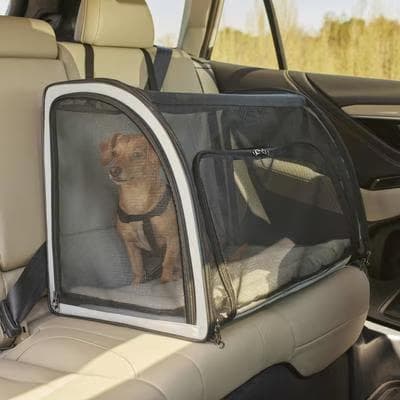
Soft-sided travel safety carrier that keeps a stressed cat secure and well-ventilated on the way to the vet, with mesh panels for airflow and a seat-belt loop.
Webvet may earn a commission when you click through to Chewy, at no extra cost to you.
What does a cat in respiratory distress look like?
A cat in respiratory distress breathes with its mouth open, holds its head and neck stretched out and low, and pushes its elbows away from its chest to open the rib cage. The breaths often look fast, shallow, or exaggerated, and the cat is usually still and reluctant to move.
Distress has a recognizable posture. A struggling cat tends to crouch on its chest with the front legs slightly splayed, rather than curling up or lying flat on its side. This position, sometimes called orthopnea, lets the lungs fill more fully. A cat that refuses to lie down, or that picks its head up to breathe whenever it tries to rest, is telling you it cannot breathe comfortably in a normal position.
Watch for this cluster of signs:
- Open-mouth breathing or visible panting at rest that does not stop within a minute or two
- Belly breathing, where the abdomen heaves with each breath instead of just the chest
- Blue, grey, lavender, or very pale gums or tongue
- A hunched, crouched posture with the head extended and elbows pointed outward
- Loud, raspy, wheezing, or gurgling breathing sounds
- Restlessness or an inability to settle, then sudden weakness or collapse
Any one of these in a resting cat justifies an emergency visit. Several of them together mean call ahead while you head out the door. Because pain and breathing trouble often travel together, it also helps to know how to tell if a cat is in pain.

How to check your cat's gum color
Gum color is one of the fastest at-home clues to how much oxygen is reaching the blood. Healthy gums are a bubblegum pink. Gently lift your cat's upper lip and look at the gum above a canine tooth. Pale, white, grey, or bluish gums mean the blood is not carrying enough oxygen, and that turns an urgent situation into a drop-everything one.
Do this only if it does not fight the cat. A struggling cat should never be wrestled for a gum check, because the stress can be the final straw. If the cat resists, skip it and simply go to the vet. A few seconds of calm observation is useful, a battle is not.

 $65 · no membership
Have a health question about your cat?
A licensed vet can assess your cat over video and prescribe online when it's appropriate.
 Talk to a vet
- Licensed vets
- All 50 states
- same-day Rx
Webvet may earn a commission if you book.
What causes open mouth breathing in cats?
Open mouth breathing in cats is caused by conditions that either flood the lungs, squeeze the chest, narrow the airways, or starve the blood of oxygen. The most dangerous causes are listed below, roughly from most to least immediately life-threatening.
Heart failure and fluid around the lungs
Heart disease, especially hypertrophic cardiomyopathy, is a leading cause of sudden open-mouth breathing in cats. A failing heart lets fluid back up into the lungs (pulmonary edema) or pool around them (pleural effusion), and the cat fights for every breath. Per the Cornell Feline Health Center, hypertrophic cardiomyopathy is the most common heart disease in cats and frequently shows no symptoms until a crisis.
Heart-related breathing trouble can appear with frightening speed. A cat that seemed fine in the morning can be in open-mouth distress by evening as fluid accumulates. This is exactly why a rising resting breathing rate, covered later in this guide, is such a valuable early-warning number for any cat known to have a heart murmur or heart disease.
Feline asthma and an acute attack
During a severe asthma attack, inflamed airways tighten and the cat may crouch low with its neck extended, wheeze, cough, and breathe open-mouthed. An acute asthma crisis can be fatal without oxygen and emergency medication, so it is not something to monitor at home overnight.
Owners sometimes mistake the cough that comes before an asthma attack for a cat trying to bring up a hairball, because the crouched, hacking posture looks similar. If your cat coughs in a hunched stance but nothing comes up, especially more than once, mention it to your vet. Recognizing asthma between attacks lets you control it before it becomes the open-mouth emergency described here.
Fluid, air, or blood in the chest cavity
Pleural effusion (fluid), pneumothorax (air), or bleeding in the chest leaves the lungs no room to expand. This can follow trauma such as a fall or car accident, or build up from heart disease, infection, or cancer. The cat compensates by breathing with its belly and mouth open.
When the chest fills with fluid or air, the lungs are squeezed into a smaller and smaller space, so each breath moves less oxygen. The cat responds with rapid, shallow, belly-driven breaths. Draining that fluid or air at the clinic often brings dramatic, immediate relief, which is one reason getting to the vet quickly can be so worthwhile rather than waiting at home.
Heatstroke and overheating
Because cats do not sweat to cool down the way people do, a hot car, a sunny sealed room, or extreme exertion can push body temperature to dangerous levels, and open-mouth breathing is one of the first signs. If you are unsure how cats regulate heat, see our explainer on whether cats sweat. Heatstroke is an emergency that needs gradual cooling and a vet.
With heatstroke, panting is the cat's desperate attempt to shed heat through evaporation from the mouth and tongue, because its limited sweat glands cannot keep up. A cat found panting in a hot environment needs to be moved somewhere cool right away, but the cooling must be gradual. Never use ice or ice water, which constricts blood vessels and can trap heat in the core.
Anemia, pain, and severe stress
Severe anemia leaves too few red cells to carry oxygen, so the cat breathes harder to compensate. Intense pain or extreme fear, such as a stressful car ride, can also trigger brief open-mouth breathing. Stress-related panting should resolve within a minute or two once the cat calms. If it does not, treat it as a medical problem.
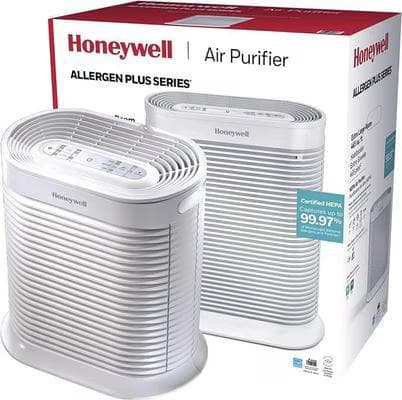
Certified True HEPA air purifier that captures 99.97% of airborne dust, dander, pollen, and smoke, reducing the airborne triggers behind feline asthma and respiratory irritation.
Webvet may earn a commission when you click through to Chewy, at no extra cost to you.
The tricky part is that you usually cannot tell stress-driven panting from disease-driven panting just by looking. A genuinely anxious cat panting in a carrier and a cat in early heart failure can look alike for the first minute. The deciding factor is whether it stops quickly once the cat is calm and still. Anything that lingers earns a vet visit, not a guess.
Upper respiratory infections and nasal blockage
A bad upper respiratory infection or a congested, blocked nose can force a cat to open its mouth because it physically cannot move air through the nostrils. It is often paired with sneezing, discharge, and congestion. Allergies can contribute too, as covered in our guide to allergies in cats.
Because cats rely so heavily on nose-breathing, even a stuffy nose can push them to mouth-breathe in a way that would barely register in a person. This type of open-mouth breathing tends to be less of an instant emergency than heart or chest causes, but it still warrants prompt care, especially in kittens and older cats, who tire and dehydrate quickly when they cannot eat or breathe easily.
Sign, likely cause, and urgency at a glance
Use this table to gauge urgency, not to diagnose. When in doubt, call. The safest assumption with feline breathing trouble is that it is serious.
| What you see | Likely cause | Urgency |
|---|---|---|
| Open-mouth breathing at rest, belly heaving | Heart failure, fluid around lungs, asthma | Emergency now |
| Blue, grey, or pale gums | Dangerously low oxygen | Emergency now |
| Wheezing, coughing, crouched with neck out | Asthma attack | Emergency now |
| Panting after a hot car or sealed sunny room | Heatstroke | Emergency now, start gentle cooling |
| Brief panting after hard play, resolves in 1-2 min | Exertion or stress | Same-day call, monitor closely |
| Open mouth with heavy sneezing and nasal discharge | Upper respiratory infection or blockage | Urgent vet visit |
| Resting breathing rate consistently over 30-40 per min | Early heart failure warning | Vet visit promptly |
What should I do if my cat is open mouth breathing?
If your cat is open-mouth breathing at rest, contact a veterinarian or emergency clinic immediately and prepare to transport your cat right away. Stay calm, keep the cat calm and cool, and avoid anything that adds stress, because stress increases oxygen demand on an already struggling animal.
Step by step:
- Call ahead. Phone your vet or the nearest 24-hour emergency hospital so they can prepare oxygen before you arrive.
- Keep everything quiet. Dim the lights, lower your voice, and remove other pets and children from the room.
- Cool the environment. If heat may be a factor, move the cat to a cooler room and offer a fan nearby, but do not force cold water onto it.
- Move slowly into a carrier. Use a carrier you can open from the top so you can lower the cat in without flipping or chasing it.
- Drive directly to the clinic. Keep the carrier stable and the car calm and ventilated.
Per the PDSA, you should never ignore a breathing problem in a cat, stay calm, keep your cat calm, and contact your vet straight away.
One mindset helps above all others: your job in those first minutes is to remove work, not add it. Every chase, every loud noise, every extra handler costs the cat oxygen it does not have to spare. The calmest, quietest route from the floor to the carrier to the car to the clinic is the one that gives your cat the best chance.

How to transport a struggling cat safely
Transport a struggling cat in a sturdy, top-opening carrier, handling it as little and as gently as possible. The goal is to get to the clinic fast without adding stress, because every extra struggle burns oxygen the cat cannot spare.
- Choose a hard-sided carrier with a removable top or a wide door so you can lower the cat in rather than push it through a small opening.
- Line it with a soft towel for grip and comfort, and drape another towel over the carrier to create a calm, dim space.
- Support the cat in the position it chooses. A cat in distress often wants to stay upright on its chest. Do not force it onto its side or back.
- Keep the car cool and quiet, skip the radio, and avoid sudden stops.
- If you live alone, secure the carrier with a seatbelt and call the clinic on speakerphone so staff can guide you while you drive.
If you genuinely cannot get the cat into a carrier without a fight, a sturdy box with air holes or a wrapped towel cradle is better than a wrestling match that exhausts an already breathless cat. The carrier is the ideal, but the deeper principle is minimal struggle. Whatever moves the cat to the car with the least panic is the right call in the moment.
Normal versus concerning breathing in cats
A normal resting respiratory rate in cats is roughly 15 to 30 breaths per minute, with the chest moving smoothly and the mouth closed. A sleeping or resting rate consistently above 30, and certainly above 40, is an early warning sign that warrants a vet, because it often precedes heart failure.
| Feature | Normal breathing | Concerning breathing |
|---|---|---|
| Resting breaths per minute | About 15-30 | Consistently over 30-40 |
| Mouth | Closed | Open or panting at rest |
| Effort | Quiet, effortless chest movement | Belly heaving, neck extended, elbows out |
| Gum color | Healthy pink | Blue, grey, or pale |
| Sound | Silent | Wheezing, raspy, or gurgling |
To count it, watch your cat's chest while it sleeps and count one breath as a full rise and fall over 30 seconds, then double it. Tracking your cat's normal resting rate gives your vet a powerful baseline.
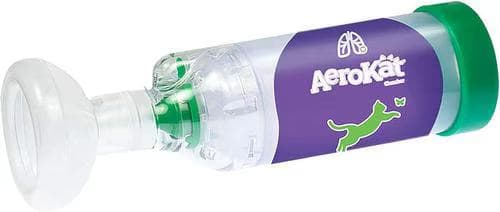
The vet-standard aerosol chamber (spacer) for giving asthma inhaler medication to cats, making daily inhaled treatment far easier and more effective.
Webvet may earn a commission when you click through to Chewy, at no extra cost to you.
Make it a habit to count the resting rate every few weeks, and write the number down or save it in your phone. A sudden jump from a known baseline of 24 to a steady 40 is far more meaningful to your vet than a single reading. For the full method and what the numbers mean, see our guide to the normal cat breathing rate. This single habit catches more silent heart disease than almost anything else an owner can do at home.

When open mouth breathing might be less urgent
Open-mouth breathing is occasionally less urgent when it lasts only seconds, follows an obvious trigger such as a frantic play session or a stressful car ride, and resolves quickly once the cat rests. Even then, a brief panting episode is worth a same-day call, because cats so rarely pant that any episode deserves a second look.
Some cats also briefly open their mouth to draw scent over a special organ in the roof of the mouth, the flehmen response. That is a quiet, momentary lip-curl, not labored breathing, and it is normal. The difference is effort: if the chest and belly are working hard, assume it is medical. A little structured indoor cat exercise can also keep an overweight cat from getting winded, but it never explains distress at rest.
Even in the less urgent cases, the bar for a phone call is low. If you are not certain the cat is breathing normally within a couple of minutes of resting, or if open-mouth breathing keeps coming back over a day or two, do not talk yourself out of it. Cats are masters at looking fine between episodes, and a normal-seeming cat in the waiting room can still have a serious problem on an X-ray.
How vets diagnose and treat the cause
Vets first stabilize a struggling cat with oxygen and rest before any stressful testing, then look for the underlying cause. The order is always oxygen first, answers second, because a panicked cat can be tipped over the edge by handling.
This is why your vet may take your cat to the back and seem to do very little at first. Letting a breathless cat sit quietly in an oxygen-rich cage for ten or twenty minutes is treatment, not delay. Pushing for X-rays or blood draws on a cat that is barely holding on can do more harm than the test reveals, so the team waits until the cat is steadier.
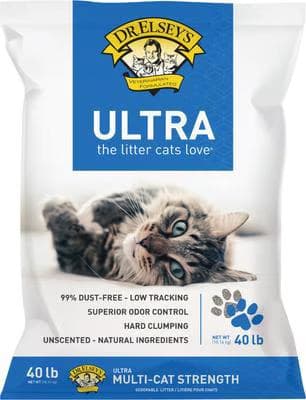
99% dust-free, low-tracking clumping clay litter with superior odor control and hard clumping. Unscented, natural ingredients, multi-cat strength.
Webvet may earn a commission when you click through to Chewy, at no extra cost to you.
- Oxygen support in a quiet oxygen cage to take the work out of breathing
- Chest X-rays or ultrasound to find fluid, an enlarged heart, or airway changes
- Tapping the chest (thoracocentesis) to drain fluid or air and bring fast relief
- Blood tests for anemia, infection, and organ function
Treatment then follows the cause: diuretics and heart medication for heart failure, bronchodilators and steroids for asthma, chest drainage for effusion, and cooling for heatstroke. The Merck Veterinary Manual outlines how feline respiratory and cardiac emergencies are worked up once the cat is stable.
What happens after the crisis depends entirely on the cause. A cat with asthma may go home on an inhaler and a long-term plan. A cat with heart failure usually needs lifelong medication and periodic rechecks, plus resting-rate monitoring at home. The information you bring, including any baseline breathing numbers and the timeline of what you saw, helps your vet land on the right diagnosis faster.
Frequently Asked Questions
What should I do if my cat is open-mouth breathing?
Treat open-mouth breathing in a resting cat as an emergency. Call your vet or a 24-hour clinic right away, keep your cat calm and cool, place it gently in a top-opening carrier, and drive straight there. Do not give any medication, food, or water, and do not wait to see if it passes.
What does a cat in respiratory distress look like?
A cat in respiratory distress breathes with its mouth open, stretches its head and neck out and low, and pushes its elbows away from its body. Its belly may heave with each breath, its gums may look blue or pale, and it usually sits still and refuses to move. Any of these signs at rest is an emergency.
Why do cats breathe with their belly instead of their chest?
Belly breathing, or abdominal effort, means the cat is recruiting extra muscles to force air in because the chest alone cannot do the job. It is a sign the lungs are being squeezed or flooded, often by fluid around the lungs, heart failure, or a severe asthma attack. A cat whose whole abdomen pumps with each breath needs emergency veterinary care, not home monitoring.
What are the earliest heart failure signs in cats?
The earliest signs of heart failure in cats are subtle: a resting breathing rate that creeps above 30 to 40 breaths per minute, faster or harder breathing during sleep, reduced appetite, hiding, and lower activity. Many cats show nothing until a sudden crisis, which is why tracking the resting breathing rate at home is so valuable.
What is the silent killer in cats?
Heart disease, especially hypertrophic cardiomyopathy, is often called a silent killer in cats because it can progress with no visible symptoms until it triggers sudden open-mouth breathing, a blood clot, or collapse. High blood pressure and chronic kidney disease are also described this way for the same reason.
Can stress alone make a cat breathe with its mouth open?
Yes, intense fear or stress, such as a car ride or a vet visit, can make some cats pant briefly. The key is that stress-driven panting should ease within a minute or two once the cat is calm and still. If the open-mouth breathing continues, recurs, or comes with pale gums or coughing, do not assume it is just nerves, because heart and lung emergencies can look the same at first.
What are end of life signs in cats?
Near the end of life, cats often stop eating and drinking, become very weak or unable to stand, hide away, lose interest in people, and may breathe with effort or an open mouth. These signs overlap with treatable emergencies, so always have a vet assess a cat that is breathing hard rather than assuming the worst.
What are the signs that a cat is about to pass away?
Signs a cat may be near passing include extreme weakness, a drop in body temperature, refusing food and water, withdrawal and hiding, and labored or open-mouth breathing. Because open-mouth breathing is also a sign of reversible emergencies like heart failure or asthma, get a veterinary opinion before concluding it is the end.
What do cats do right before they pass away?
In their final hours, cats often seek a quiet, hidden spot, stop grooming and eating, grow very still, and breathe slowly or with effort. Some are restless. These behaviors are not specific, so a cat breathing hard should still be seen by a vet, since many causes of open-mouth breathing are treatable.
What is the 3-3-3 rule for cats?
The 3-3-3 rule is a rough adjustment guideline for newly adopted cats: about 3 days to decompress, 3 weeks to settle into a routine, and 3 months to feel fully at home. It describes behavior and stress, not breathing, and it does not make open-mouth breathing normal. A stressed new cat that pants at rest still needs a vet.
Is cat open mouth breathing after playing normal?
A few seconds of panting after intense play can happen, especially in an overweight or out-of-shape cat, and it should ease within a minute or two of rest. If it lasts longer, recurs, or comes with coughing or pale gums, treat it as a medical problem and call your vet, because cats normally recover from exertion through the nose.
How fast should I get my cat to the vet?
If your cat is open-mouth breathing at rest, has blue or pale gums, or is breathing with its whole belly, go immediately, ideally within minutes. Call ahead so the clinic can have oxygen ready. Feline breathing emergencies can deteriorate from labored to life-threatening within an hour, so this is one situation where there is no safe reason to wait until morning.
$65 · no membershipHave a health question about your cat?
A licensed vet can assess your cat over video and prescribe online when it's appropriate.
Talk to a vet- Licensed vets
- All 50 states
- same-day Rx
Webvet may earn a commission if you book.

Editor
The Webvet Editorial Team is the in-house group of pet-care editors and writers behind Webvet, operated by Smart Pet Collective. The team researches, writes, and maintains Webvet's pet health, behavior, and medication content. Every article follows a defined editorial process: research from reputable veterinary and scientific sources, careful drafting, mandatory review of medical content by a credentialed veterinarian, and dated publication. Health and medication articles are medically reviewed by a licensed veterinary professional before they go live and are kept current over time.
Veterinarian · BVMS MRCVS
Dr. Pippa Elliott, BVMS, MRCVS, is a veterinarian with nearly 30 years of experience in companion animal practice. Dr. Elliott earned her Bachelor of Veterinary Medicine and Surgery from the University of Glasgow. She was also designated a Member of the Royal College of Veterinary Surgeons. Married with 2 grown-up kids, Dr. Elliott has a naughty Puggle named Poggle, 3 cats and a bearded dragon.


