Normal Cat Breathing Rate: The At-Home Number That Catches Heart Failure Early
A normal cat breathing rate is roughly 15 to 30 breaths per minute at rest. Learn to count your cat's sleeping respiratory rate at home, why a resting rate over 30 (and certainly over 40) is an early heart-failure warning, and exactly when to treat breathing as an emergency.

BVMS MRCVS
Medically reviewed by Dr. Pippa Elliott, BVMS MRCVS · Last reviewed

This article contains affiliate links. Webvet may earn a commission when you buy through them, at no extra cost to you.
A normal cat breathing rate is roughly 15 to 30 breaths per minute when your cat is resting or asleep, with one breath counted as a full rise and fall of the chest. Most healthy cats settle near the lower end of that range, around 16 to 25 breaths per minute, when they are truly relaxed. A resting or sleeping rate that is consistently above 30, and especially above 40, is an early warning sign worth a same-week vet visit, because in cats a creeping resting rate is often the first measurable clue of heart disease or fluid building up around the lungs.
Cats are quiet about illness, so the single most useful skill you can build is counting your cat's sleeping respiratory rate at home. It takes 30 seconds, it needs no equipment beyond a phone timer, and a trend you track over weeks can catch a problem before your cat ever looks sick.
- 1Normal resting or sleeping rate: about 15 to 30 breaths per minute (one breath = one full chest rise and fall).
- 2Count it while your cat is asleep or fully relaxed, never right after play or stress.
- 3A resting rate consistently over 30 is a yellow flag; over 40 is a red flag for heart disease or fluid around the lungs.
- 4Open-mouth breathing, belly breathing, or blue or gray gums in a cat is an emergency. Go now.
What is a normal cat breathing rate?
A normal cat breathing rate is between 15 and 30 breaths per minute while the cat is resting calmly or sleeping. VCA Animal Hospitals puts the normal resting or sleeping range at 15 to 30 breaths per minute for healthy cats and dogs alike, and treats a sustained resting rate over 30 as abnormal.
That number describes a calm cat. An awake, active, purring, or stressed cat can breathe much faster for short stretches, and that is normal. The figure that matters medically is the sleeping or resting respiratory rate (SRR), measured when nothing is stirring your cat up.
Breathing has two halves that count as one breath: the chest expands as air flows in, then falls as air flows out. People often miscount by tallying the in and the out separately, which doubles the number and triggers a needless scare. Watch for the full cycle, in and then out, and treat that as a single tick on your count.
A 2024 study published in PubMed Central found that healthy cats and cats with subclinical heart disease only rarely had a mean sleeping respiratory rate above 30 breaths per minute, which is exactly why the over-30 line is a meaningful threshold rather than an arbitrary one.
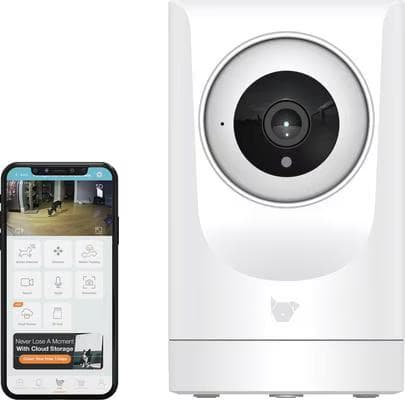
360-degree Wi-Fi pet camera so you can watch your cat's resting breathing rate and behavior from your phone and catch worrying changes early.
Webvet may earn a commission when you click through to Chewy, at no extra cost to you.
Kittens and very young cats tend to breathe a little faster than mature adults, and a cat carrying extra weight may rest slightly higher in the range because the effort of moving air is greater. Even so, a genuinely relaxed cat of any age should still sit under 30 breaths per minute when asleep. Age and body condition shift the baseline a touch; they do not push a calm, sleeping cat past the warning line.
Why the cat number is different from the dog number
Cats are obligate nasal breathers and almost never pant the way dogs do. A dog open-mouth panting on a warm day is usually fine. A cat doing the same thing is usually not. Because cats hide distress and rarely pant, a rising resting breath count is often the earliest objective signal you will get, which makes the home number unusually valuable in cats.
There is one more reason the feline number deserves respect. A cat that feels short of breath instinctively hides and holds very still rather than crying out, so the outward signs of trouble can be almost invisible until the cat is in real danger. The breath count cuts through that stoicism. It gives you a hard number to watch even when your cat is doing its best to look perfectly fine.
How to count your cat's resting breathing rate at home
To count your cat's resting breathing rate, watch one full chest movement (in and out) as a single breath, count breaths for 30 seconds, then multiply by two. Do it while your cat is asleep or completely relaxed for the most reliable number.

Follow these steps to get a clean, repeatable reading:
- Wait until your cat is asleep or lying down completely still. Not purring, not grooming, not just back from the food bowl. Purring alone can throw the count off, because the muscle vibration masks the true rhythm of the chest.
- Settle a few feet away and watch the chest or the rib cage from the side, where the rise and fall is easiest to see. One breath equals one rise plus one fall. If the flank is hard to read, rest a light hand on the chest and feel the movement instead.
- Count the breaths for 30 seconds using a phone timer, then multiply by two for the per-minute rate. Counting for a full 30 seconds rather than 15 smooths out the natural pauses in a sleeping cat's breathing and gives a steadier number.
- Write it down with the date and whether the cat was asleep or just calm. A single reading is a snapshot; the trend over days and weeks is what tells the story.
- Repeat at roughly the same time of day when you can, such as during a deep evening nap, so your readings are comparable from one day to the next.
Count once or twice a week for a healthy cat, and daily if your vet has diagnosed heart disease and asked you to monitor. If you struggle to see the movement, reading your cat's body language closely, especially the flank and shoulders, makes the chest motion easier to spot.
How to track the rate over time
The power of the home count is in the trend, not the single reading. Keep a simple log in a notes app or on paper: date, the per-minute rate, and the cat's state. After two or three weeks you will know your own cat's normal, which might be 22 for one cat and 28 for another, and that personal baseline is what makes a real change obvious.
What you are watching for is drift. A cat that has sat at 24 for a month and starts logging 32, then 36, is telling you something even if it still looks and acts normal. Free pet-heart apps let you tap out the count and chart it automatically, but a dated list in your phone works just as well. The goal is simply to notice the line moving up before your cat shows outward signs of illness.
 $65 · no membership
Have a health question about your cat?
A licensed vet can assess your cat over video and prescribe online when it's appropriate.
 Talk to a vet
- Licensed vets
- All 50 states
- same-day Rx
Webvet may earn a commission if you book.
Cat breathing rate by state: what is normal vs concerning
A calm sleeping cat sits at 15 to 30 breaths per minute, and that resting figure is the only one with real medical meaning. Awake and active rates climb well above it and are not used for monitoring. Use the table below to interpret a number you just counted.
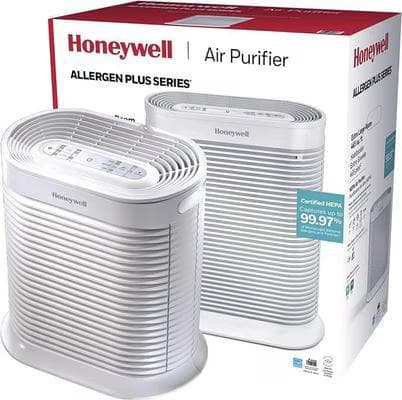
Certified True HEPA air purifier that captures 99.97% of airborne dust, dander, pollen, and smoke, reducing the airborne triggers behind feline asthma and respiratory irritation.
Webvet may earn a commission when you click through to Chewy, at no extra cost to you.
| Cat's state | Typical breaths per minute | What it means |
|---|---|---|
| Asleep or deeply resting | 15 to 30 | Normal. This is the number to track over time. |
| Awake and calm, lying down | 16 to 40 | Often fine, but use sleeping readings to judge trends. |
| Resting rate consistently 30 to 40 | 30 to 40 | Yellow flag. Recount when calm; book a vet visit this week. |
| Resting rate consistently over 40 | Over 40 | Red flag for heart disease or fluid around the lungs. Vet promptly. |
| Resting rate over 60, or labored | Over 60 | Possible respiratory distress. Treat as an emergency. |
If your reading lands in the yellow or red band, recount when your cat is fully settled to rule out stress, then read our deeper guide to a cat breathing fast to understand the common causes and what your vet will look for.

Why a resting rate over 30 is an early heart-failure warning
A resting or sleeping rate that keeps climbing past 30, and certainly past 40, is one of the earliest home-detectable signs of congestive heart failure in cats. When the heart struggles, fluid backs up into or around the lungs (pleural effusion or pulmonary edema), and the cat compensates by breathing faster, even at rest, before any obvious coughing or collapse.
The mechanism is worth understanding because it explains why the number moves before your cat looks sick. Fluid in or around the lungs leaves less room for air, so the lungs cannot fully expand. To keep oxygen levels up, the body takes more, shallower breaths per minute. That faster rate is the cat working harder to get the same air, and it shows up at rest long before a cat coughs, hides, or stops eating.
This is why cardiologists ask owners of cats with heart disease to track the sleeping respiratory rate at home. The published feline SRR data show healthy cats rarely cross 30 at rest, so a steady upward trend in your own cat is a signal to act, not to wait and see.
Hypertrophic cardiomyopathy, or HCM, is the most common heart disease in cats and the usual culprit behind feline heart failure. It thickens the heart muscle silently, and many affected cats look completely healthy until the day they cannot breathe. The sleeping respiratory rate is one of the only tools an owner has to catch the shift toward failure while there is still time to start treatment.
- 1Fluid around or in the lungs is what drives the rate up, so the cat breathes faster to get the same oxygen.
- 2The sleeping respiratory rate is the gold-standard home monitor for cats with diagnosed heart disease.
- 3A trend that drifts upward matters more than any single reading. Two weeks of climbing numbers is your cue to call.
- 4HCM often hides until heart failure. The home count is one of the few early-warning tools you control.
Heart disease is not the only cause of a fast resting rate. Feline asthma, anemia, pain, fever, a chest infection, and trauma can all push the number up. The home count does not diagnose the cause; it tells you when to get your cat in front of a vet, which is its entire job. If the fast rate comes with visible effort, our guide on labored breathing in cats walks through what that effort looks like and why it cannot wait.
A one-off high reading after a stressful car ride or a play session is not the concern; a pattern of high resting numbers is. If you are also seeing changes in posture, hiding, or a hunched body, our guide on how to tell if a cat is in pain can help you put words to what you are noticing so your vet gets the full picture.

Breathing signs that are an emergency in cats
Some breathing patterns mean go to the vet now, not later, regardless of the number you counted. Because cats are obligate nasal breathers that do not pant, these signs carry far more weight in a cat than in a dog.
- Open-mouth breathing or panting at rest (a calm cat should breathe with its mouth closed).
- Belly breathing, where the abdomen heaves with each breath because the chest alone cannot do the work.
- Blue, gray, or pale gums or tongue, a sign of dangerously low oxygen.
- Neck stretched out and elbows held away from the body to force air in.
- Loud wheezing, gurgling, or raspy breathing, or a resting rate over 60.
Open-mouth breathing deserves special emphasis. A dog pants to cool down, but a cat almost never breathes through its mouth unless something is wrong, so it is one of the loudest distress signals a cat can give. Our guide to cat open-mouth breathing explains why it ranks as a true emergency and what to do in the moment.

99% dust-free, low-tracking clumping clay litter with superior odor control and hard clumping. Unscented, natural ingredients, multi-cat strength.
Webvet may earn a commission when you click through to Chewy, at no extra cost to you.
How to get a struggling cat to the vet safely
A cat that is fighting to breathe has almost no reserve, so stress alone can tip it over the edge. Move slowly and speak softly. Place your cat in a familiar, well-ventilated carrier rather than holding it tightly, since wrestling a panicked cat into restraint can make the breathing dramatically worse.
Keep the car quiet and cool, skip the music, and resist the urge to peer into the carrier every few seconds. Call the emergency clinic on the way so the team can have an oxygen cage ready when you arrive. The single most useful thing you can do for a cat in respiratory distress is lower the drama around it while you get expert help fast.

How often to monitor, and what to bring to the vet
For a healthy adult cat, a resting breath count once or twice a week builds a personal baseline so you can spot a change early. For a cat with diagnosed heart disease, daily sleeping counts are the gold-standard home monitor, and a clear upward trend is your cue to call.
Senior cats earn a closer watch. Heart disease, kidney disease, and other age-related problems all become more likely after about age ten, and any of them can nudge the resting rate upward. If you live with an older cat, folding a weekly breath count into the routine you already use to track appetite, weight, and litter-box habits gives you an early read on trouble.
Bring a short log to your appointment: the date, the resting rate, and whether the cat was asleep or just calm. A two-week trend is far more useful to your vet than a single number, and it is the kind of objective data that can move a borderline case to earlier treatment. Pair the breathing log with anything else you have noticed, such as appetite, energy, or shifts in your cat's body language.

Probiotic supplement formulated to help cats maintain calm behavior, with the BL999 strain. 30 daily sachets.
Webvet may earn a commission when you click through to Chewy, at no extra cost to you.
Phone video also helps. A 15-second clip of the breathing your vet cannot see in the exam room is often worth more than a description, because a stressed cat in the clinic frequently breathes differently than the same cat asleep at home. Film the chest from the side in good light, and capture the resting count if you can.
Frequently Asked Questions
How many breaths per minute is concerning for a cat?
A resting or sleeping rate consistently above 30 breaths per minute is a yellow flag worth a vet visit, and a rate consistently above 40 is a clear red flag for heart disease or fluid around the lungs. A resting rate over 60, or any labored breathing, should be treated as an emergency. Recount when your cat is fully calm before you act, because stress and recent activity can temporarily inflate the number.
What is the normal breathing rate for a cat laying down?
A cat lying down calmly or asleep should breathe roughly 15 to 30 breaths per minute, with most relaxed cats sitting near the lower end. Count one full chest rise and fall as a single breath. If your cat is awake and alert but lying down, the rate can be a little higher and still be normal, which is why sleeping readings are the ones used for monitoring.
Is 40 breaths per minute high for a cat?
Yes. A resting or sleeping rate of 40 breaths per minute is above the normal 15 to 30 range and is considered a red flag in cats. Recount when your cat is fully calm to rule out stress, and if it stays around or above 40 at rest, book a vet visit promptly. Many cardiologists treat a sustained resting rate over 40 as a trigger to investigate heart disease.
What is considered labored breathing in cats?
Labored breathing in cats means visible extra effort to move air. Signs include open-mouth breathing or panting at rest, the belly heaving with each breath, the neck stretched out, elbows held away from the body, exaggerated or noisy breaths, and a fast rate. Because cats do not normally pant, labored breathing is a medical emergency and warrants an immediate vet visit.
What does rapid breathing in cats look like?
Rapid breathing (tachypnea) looks like quick, shallow chest movements with a resting rate above 30 to 40 breaths per minute. The cat may seem otherwise still but the chest or belly is moving faster than usual. Rapid breathing without obvious extra effort can still signal a problem in cats, so count the resting rate and, if it stays elevated, contact your vet.
What are the first signs of heart failure in cats?
In cats, one of the earliest home-detectable signs of heart failure is a rising resting or sleeping breathing rate that climbs past 30 and toward 40 breaths per minute. Other early signs can be subtle: lower energy, hiding, reduced appetite, faster breathing after mild activity, and sometimes open-mouth breathing. Cats often hide heart disease until it is advanced, which is why the home breath count is so valuable.
What is the silent killer in cats?
Hypertrophic cardiomyopathy (HCM), the most common feline heart disease, is often called a silent killer because many cats show no obvious symptoms until they are in heart failure or suffer a sudden clot. A creeping resting breathing rate is one of the few early signals an owner can catch at home, which is why tracking the sleeping respiratory rate matters even in cats that seem perfectly healthy.
Can stress or excitement raise my cat's breathing rate?
Yes. Stress, heat, play, a car ride, or a recent meal can all push a cat's breathing rate up temporarily, and that is normal. This is exactly why the medically meaningful number is the sleeping or resting rate, counted when your cat is genuinely calm. If a high reading settles back under 30 once your cat relaxes and falls asleep, it is far less concerning than a rate that stays elevated even during deep rest.
Bottom line: a normal cat breathing rate is about 15 to 30 breaths per minute at rest, the sleeping count is the one to track, and a resting rate that holds above 30 (and especially 40) is your cue to call the vet before your cat looks sick. Open-mouth or belly breathing is an emergency, every time.
$65 · no membershipHave a health question about your cat?
A licensed vet can assess your cat over video and prescribe online when it's appropriate.
Talk to a vet- Licensed vets
- All 50 states
- same-day Rx
Webvet may earn a commission if you book.

Editor
The Webvet Editorial Team is the in-house group of pet-care editors and writers behind Webvet, operated by Smart Pet Collective. The team researches, writes, and maintains Webvet's pet health, behavior, and medication content. Every article follows a defined editorial process: research from reputable veterinary and scientific sources, careful drafting, mandatory review of medical content by a credentialed veterinarian, and dated publication. Health and medication articles are medically reviewed by a licensed veterinary professional before they go live and are kept current over time.
Veterinarian · BVMS MRCVS
Dr. Pippa Elliott, BVMS, MRCVS, is a veterinarian with nearly 30 years of experience in companion animal practice. Dr. Elliott earned her Bachelor of Veterinary Medicine and Surgery from the University of Glasgow. She was also designated a Member of the Royal College of Veterinary Surgeons. Married with 2 grown-up kids, Dr. Elliott has a naughty Puggle named Poggle, 3 cats and a bearded dragon.


