Cat Labored Breathing: Signs, Causes, and When It Is an Emergency
Cat labored breathing is almost always an emergency. Learn the visible signs of breathing effort, the likely causes, and exactly what the vet does to help.

BVMS MRCVS
Medically reviewed by Dr. Pippa Elliott, BVMS MRCVS · Last reviewed

This article contains affiliate links. Webvet may earn a commission when you buy through them, at no extra cost to you.
Cat labored breathing means your cat is using visible, abnormal effort to move air, and in cats it is almost always a true emergency. Because cats are obligate nasal breathers that rarely pant, signs like open-mouth breathing, an extended neck, or the belly heaving with each breath point to a serious problem with the heart, lungs, or chest. Do not wait to see if it passes. Call an emergency vet now.
- 1Labored breathing (dyspnea) in a cat is a medical emergency until a vet proves otherwise.
- 2Watch for flared nostrils, an extended head and neck, open-mouth breathing, and exaggerated chest or belly effort.
- 3A resting or sleeping breathing rate consistently over 30 breaths per minute is an early red flag; over 40 is urgent.
- 4Blue, gray, or pale gums mean dangerously low oxygen: go to the ER immediately.
- 5Common causes include heart failure, fluid around the lungs, severe asthma, anemia, and trauma.
What cat labored breathing looks like
Cat labored breathing is breathing that takes obvious physical work. A healthy cat breathes quietly through its nose with small, even chest movements you can barely see. A cat in respiratory distress recruits extra muscles, changes its posture, and looks like every single breath is a struggle. The earlier you recognize the pattern, the faster you can act.
Veterinarians group these warning signs into three buckets: how the body works to breathe (effort), what posture the cat adopts to make breathing easier, and the sounds the breathing makes. You do not need to identify the cause to know it is serious. Any one of the signs below, on its own, is enough reason to treat the situation as urgent.
Look for these signs of increased breathing effort:
- Flared nostrils that widen with each inhale as the cat fights to pull in more air.
- Extended head and neck held low and forward to straighten the airway and ease airflow (orthopnea).
- Open-mouth breathing or panting, which is abnormal in a resting cat and far more serious than in a dog.
- Exaggerated chest and belly movement where the abdomen visibly pumps with each breath (abdominal or belly breathing).
- Elbows held out away from the body, and reluctance to lie down or be picked up.
- Noisy breathing: wheezing, raspy, gurgling, crackling, or whistling sounds.
Two of these deserve special attention because owners often miss them. The first is the extended-neck posture, sometimes called orthopnea. A cat that braces upright on its chest, points its nose forward, and will not curl up to sleep is telling you it can only breathe in that one position. The second is belly breathing. In a comfortable cat the chest does almost all the work, so a flank that pumps hard with every breath means the cat is recruiting its abdominal muscles to survive.
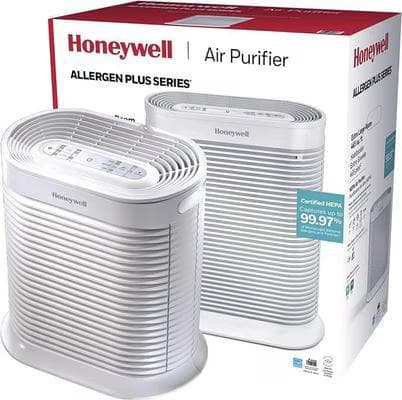
Certified True HEPA air purifier that captures 99.97% of airborne dust, dander, pollen, and smoke, reducing the airborne triggers behind feline asthma and respiratory irritation.
Webvet may earn a commission when you click through to Chewy, at no extra cost to you.
A distressed cat often hides, crouches in a hunched ball, and goes very quiet, so these changes can be easy to miss if you do not know your cat's normal body language. A cat that suddenly tucks itself under the bed and refuses to come out is not always sulking. Trust a gut sense that something is off and check the breathing directly.

Normal vs concerning breathing in cats
A normal resting cat takes roughly 15 to 30 quiet breaths per minute through the nose. Effortful breathing, a higher rate at rest, or any open-mouth breathing falls into the concerning column and warrants a vet. Use the table below to tell the difference at a glance.
The single most reliable home check is gum color. Healthy gums are a soft bubblegum pink and refill within about two seconds after you press them. Gums that look blue, gray, lavender, brick red, or chalky white signal that oxygen delivery has failed, and that is a drive-to-the-ER-now finding rather than a wait-and-see one.
| Feature | Normal breathing | Concerning breathing |
|---|---|---|
| Rate at rest | 15 to 30 breaths per minute | Consistently over 30, especially over 40 |
| Mouth | Closed, breathing through the nose | Open-mouth breathing or panting |
| Effort | Small, even chest motion | Heaving chest, pumping belly, flared nostrils |
| Posture | Relaxed, curls up, lies on side | Neck extended, elbows out, refuses to lie down |
| Sound | Quiet | Wheezing, raspy, gurgling, or whistling |
| Gums | Healthy pink | Blue, gray, lavender, or pale |
For a step-by-step on counting accurately and what your cat's baseline should be, see our guide to the normal cat breathing rate. If you want to dig into specific patterns, we also cover fast breathing and shallow breathing separately.

How to count your cat's resting breathing rate
Counting the resting respiratory rate is the single most useful number you can give your vet. Do it while your cat is asleep or fully relaxed, not after play or while purring, because activity and purring inflate the count and hide the true baseline.
- Wait until your cat is sleeping or resting calmly.
- Watch the chest. One breath is one full rise and fall.
- Count the breaths for 30 seconds, then double it to get breaths per minute.
- A sleeping rate consistently over 30 is an early warning sign of heart failure and warrants a vet visit, even if your cat seems otherwise fine.
Log a number once or twice a week and keep it in your phone, the same way you might track a blood pressure reading. A baseline of 20 that suddenly sits at 36 for two nights running is a meaningful trend, and a trend is far more useful to your vet than a single snapshot. Cats with a known heart murmur or a prior heart-failure episode especially benefit from this habit.
The Cornell Feline Health Center notes that dyspnea can come on over hours (acute) or build gradually over weeks (chronic), so a slowly creeping resting rate matters just as much as a sudden crisis.

 $65 · no membership
Have a health question about your cat?
A licensed vet can assess your cat over video and prescribe online when it's appropriate.
 Talk to a vet
- Licensed vets
- All 50 states
- same-day Rx
Webvet may earn a commission if you book.
Why labored breathing in cats is an emergency
Labored breathing is an emergency because cats hide illness until they are nearly out of reserve. By the time effort is visible, the lungs or heart are often badly compromised, and a stressed cat can decompensate within minutes. Cats also mask disease so well that owners frequently see the crisis, not the slow buildup behind it.
The physiology is unforgiving. Cats are obligate nasal breathers built for short bursts, not sustained heavy work, so they have little spare capacity when the system is already failing. A cat that resorts to open-mouth breathing has run out of easier options. Add the fear of handling, a car ride, or a strange clinic, and the extra oxygen demand from panic can be the tipping point between struggling and collapsing.
There is no safe home remedy for a cat struggling to breathe. The goal is to get oxygen and a diagnosis fast while keeping stress to an absolute minimum on the way. Minutes genuinely matter here, and the calmest, quickest trip to a vet is the most powerful thing an owner can do.
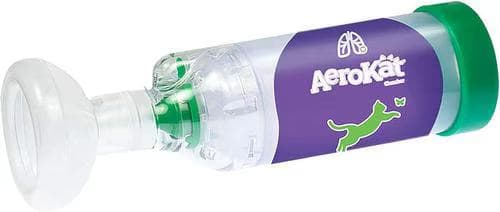
The vet-standard aerosol chamber (spacer) for giving asthma inhaler medication to cats, making daily inhaled treatment far easier and more effective.
Webvet may earn a commission when you click through to Chewy, at no extra cost to you.
Common causes of labored breathing in cats
Labored breathing is a symptom, not a diagnosis, and the underlying cause sits somewhere in the airways, lungs, chest cavity, or blood. The table below maps the most common feline causes to the clues that point toward each and how urgent they are.
| Likely cause | Typical clues | Urgency |
|---|---|---|
| Congestive heart failure | Fast resting rate, fluid in or around lungs, often a middle-aged or older cat | Emergency |
| Pleural effusion (fluid around lungs) | Shallow, rapid breaths, strong belly effort, muffled chest sounds | Emergency |
| Severe asthma attack | Wheezing, coughing, hunched posture with neck out | Emergency |
| Anemia | Pale gums, weakness, rapid breathing without much noise | Emergency |
| Trauma or pneumothorax (air in chest) | Recent fall or fight, sudden distress, irregular effort | Emergency |
| Upper respiratory infection | Congestion, sneezing, discharge, noisy nasal breathing | Same-day vet |
| Tumor or mass in the chest | Slowly worsening effort over weeks, weight loss | Urgent vet |
Three of these dominate the emergency caseload, so it helps to understand what each does inside the chest. In pleural effusion, fluid pools in the space around the lungs and squeezes them, so the cat takes short, rapid, shallow breaths and heaves with the belly to fill what little lung volume is left. Draining that fluid can bring dramatic, almost instant relief.
Feline asthma is an allergic, inflammatory narrowing of the lower airways. Attacks bring wheezing, a low cough, and that classic hunched posture with the neck stretched out, and they can flare from dust, smoke, scented litter, or pollen. Trauma is the third pattern: a fall from a height or a cat fight can let air leak into the chest (pneumothorax) or bruise the lungs, producing sudden, irregular, frightened effort.
Asthma is fundamentally an allergic condition, and reducing airborne triggers in the home is part of long-term control; our guide to allergies in cats covers the common offenders worth removing.
You cannot reliably tell these apart at home, and several look alike from the outside. That is exactly why labored breathing always means a hands-on exam and imaging rather than watchful waiting.
What heart failure breathing looks like in cats
Heart failure breathing in cats usually shows up as a fast, shallow, effortful pattern at rest, often with the abdomen pumping and the resting rate climbing above 30 to 40 breaths per minute. Cats in heart failure rarely cough the way dogs do. Instead, fluid backs up into or around the lungs (pulmonary edema or pleural effusion), and the cat works harder and harder to move air. A rising sleeping breath count is frequently the earliest sign, sometimes before any obvious distress.
The most common underlying disease is hypertrophic cardiomyopathy, a thickening of the heart muscle that can stay silent for years. Some cats give no warning at all and present in sudden crisis, which is why the home breathing-rate habit is so valuable: it is one of the few tools that can flag a silent heart before fluid floods the lungs.
What to do before you reach the vet
Before you reach the vet, your job is to lower stress and get moving, not to treat the breathing yourself. Handling a struggling cat too much can be fatal, so keep every step calm and quiet.
- Call an emergency vet immediately and say your cat is in respiratory distress so they can ready an oxygen cage.
- Minimize handling. Move slowly, speak softly, and avoid chasing or restraining your cat.
- Use a calm carrier approach. Place the open carrier near your cat and let it walk in if possible, rather than forcing it. A top-loading carrier is far easier than pushing a panicking cat through a front door.
- Keep the car cool and quiet with no loud music, and crack a window for airflow.
- Do not give human medicines or attempt home treatments; many are toxic to cats and waste critical time.

What the vet does for a cat with labored breathing
The vet stabilizes breathing first and diagnoses second. A cat in distress is usually placed in an oxygen cage to recover before any stressful handling, because the exam itself can be dangerous while oxygen is critically low.

Soft-sided travel safety carrier that keeps a stressed cat secure and well-ventilated on the way to the vet, with mesh panels for airflow and a seat-belt loop.
Webvet may earn a commission when you click through to Chewy, at no extra cost to you.
This sequence can feel slow to a frightened owner, but it is deliberate. A cat that crashes on the table from the stress of being examined is a real risk, so the team buys safety margin with oxygen and often a mild sedative before touching the chest. Once your cat is stable enough, the team typically works through these steps:
- Oxygen support via cage, mask, or flow-by to raise blood oxygen quickly, sometimes with a light sedative to calm the panic.
- Chest tap (thoracocentesis) to drain fluid or air pressing on the lungs, which can bring fast relief and is sometimes done before any imaging when distress is severe.
- Imaging with X-rays, a focused chest ultrasound, or an echocardiogram to see the heart, lungs, and chest cavity.
- Bloodwork to check for anemia, infection, organ function, and cardiac markers.
- Targeted treatment such as diuretics for heart failure, bronchodilators and steroids for asthma, or a transfusion for severe anemia.
The chest tap is worth understanding because it is both diagnostic and therapeutic. A vet uses a thin needle to withdraw fluid or air from around the lungs, which often lets the cat breathe comfortably within minutes, and the fluid itself is then analyzed to help pinpoint the cause. An echocardiogram, an ultrasound of the beating heart, is the test that confirms or rules out the heart disease behind so many feline breathing emergencies.

99% dust-free, low-tracking clumping clay litter with superior odor control and hard clumping. Unscented, natural ingredients, multi-cat strength.
Webvet may earn a commission when you click through to Chewy, at no extra cost to you.
Because pain and distress overlap, the team may also assess whether your cat is hurting; our guide on how to tell if a cat is in pain explains the subtle cues vets and owners both look for.
- 1Stabilize first: oxygen and sometimes sedation come before any stressful exam.
- 2A chest tap can relieve fluid or air around the lungs within minutes.
- 3Imaging and an echocardiogram pin down whether the heart, lungs, or chest cavity is the culprit.
- 4Treatment is cause-specific: diuretics for heart failure, steroids and bronchodilators for asthma, a transfusion for anemia.
Frequently asked questions
What does labored breathing look like in a cat?
Labored breathing in a cat looks like obvious effort to move air. You may see flared nostrils, an extended head and neck held low, open-mouth breathing, a heaving chest, and a belly that visibly pumps with each breath. The cat often sits hunched with its elbows out and refuses to lie down. Any of these signs is a reason to see an emergency vet right away.
What does heart failure breathing look like in cats?
Heart failure breathing in cats is typically fast, shallow, and effortful at rest, with the resting rate often climbing over 30 to 40 breaths per minute. Cats in heart failure rarely cough; instead fluid collects in or around the lungs, so they breathe with the belly and tire easily. A rising sleeping breath count is often the earliest warning, sometimes before clear distress.
What is a cat's normal breathing rate?
A normal resting cat breathes about 15 to 30 times per minute, quietly and through the nose. A sleeping or resting rate consistently above 30, and certainly above 40, is an early warning sign that warrants a vet, even when your cat otherwise seems fine.
How can you tell when a cat's body is shutting down?
A cat whose body is shutting down often shows labored or irregular breathing, very pale or blue gums, a low body temperature with cold paws and ears, extreme weakness or collapse, and withdrawal or hiding. Open-mouth breathing combined with these signs is a critical emergency. Contact an emergency or your regular vet immediately for assessment and to discuss comfort and options.
What is the silent killer in cats?
Heart disease, especially hypertrophic cardiomyopathy, is often called a silent killer in cats because it can progress with no obvious symptoms until the cat suddenly develops labored breathing from fluid around the lungs or a blood clot. This is one reason a rising resting breathing rate is so valuable: it can catch trouble before a crisis.
Is there a home remedy for a cat's difficulty breathing?
No. There is no safe home remedy for a cat in respiratory distress. Labored breathing means the cat needs oxygen and a diagnosis a vet can provide. The best thing you can do at home is keep your cat calm, avoid handling it, and get to an emergency vet quickly. Human medications and home treatments can be toxic and dangerous.
Can stress or hot weather cause heavy breathing in cats?
Stress, fear, and heat can cause a cat to breathe faster or even briefly open-mouth breathe, but cats do not pant to cool down the way dogs do, so this should be short-lived and resolve once the cat calms or cools. Open-mouth or labored breathing that continues at rest is not explained by stress alone and needs a vet. If you are unsure, treat it as an emergency.
My cat is breathing fast but acting normal. Should I worry?
A brief fast spell right after play, stress, or a hot moment can be normal and should settle within several minutes. What matters is the resting rate: count breaths while your cat sleeps, and if it stays above 30 per minute on a calm, cool cat, book a vet visit even if your cat is eating, grooming, and acting fine. A consistently elevated sleeping rate is a classic early sign of fluid building around the lungs, and catching it early gives your cat the best outcome.
How long can a cat survive with labored breathing?
There is no safe window to wait. A cat in visible respiratory distress can deteriorate from struggling to collapse in minutes to a few hours, and the stress of being handled or transported can accelerate that. Do not try to ride it out overnight or wait for the regular clinic to open. Treat labored breathing as a now emergency and head to the nearest open veterinary hospital.
$65 · no membershipHave a health question about your cat?
A licensed vet can assess your cat over video and prescribe online when it's appropriate.
Talk to a vet- Licensed vets
- All 50 states
- same-day Rx
Webvet may earn a commission if you book.

Editor
The Webvet Editorial Team is the in-house group of pet-care editors and writers behind Webvet, operated by Smart Pet Collective. The team researches, writes, and maintains Webvet's pet health, behavior, and medication content. Every article follows a defined editorial process: research from reputable veterinary and scientific sources, careful drafting, mandatory review of medical content by a credentialed veterinarian, and dated publication. Health and medication articles are medically reviewed by a licensed veterinary professional before they go live and are kept current over time.
Veterinarian · BVMS MRCVS
Dr. Pippa Elliott, BVMS, MRCVS, is a veterinarian with nearly 30 years of experience in companion animal practice. Dr. Elliott earned her Bachelor of Veterinary Medicine and Surgery from the University of Glasgow. She was also designated a Member of the Royal College of Veterinary Surgeons. Married with 2 grown-up kids, Dr. Elliott has a naughty Puggle named Poggle, 3 cats and a bearded dragon.


