Cat Shallow Breathing: Causes, Red Flags, and When to Rush to the Vet
Cat shallow breathing means fast, small, effortful breaths that often signal pain, fluid around the lungs, fever, or trauma. Learn the benign vs emergency signs, the resting breathing-rate threshold that means call the vet, and exactly what the vet checks.

BVMS MRCVS
Medically reviewed by Dr. Pippa Elliott, BVMS MRCVS · Last reviewed

This article contains affiliate links. Webvet may earn a commission when you buy through them, at no extra cost to you.
Cat shallow breathing means fast, small, effortful breaths where the chest barely rises, and in cats it is frequently a warning sign rather than a quirk. Because cats are obligate nasal breathers that almost never pant, shallow or rapid breathing can mask pain, fluid around the lungs, fever, anemia, or trauma. A resting cat normally takes about 15 to 30 quiet breaths per minute, so a consistent rate above 30 (and certainly above 40) means call a vet, and open-mouth or belly breathing means go now.
- 1Normal resting cats breathe 15 to 30 times per minute, quietly, with almost no visible effort.
- 2A resting or sleeping rate consistently over 30, or any rate over 40, is a vet visit, not a wait-and-see.
- 3Open-mouth breathing, belly (abdominal) breathing, or blue/gray gums are emergencies. Go to an ER vet now.
- 4Common causes of shallow breathing in cats: pain, pleural effusion (fluid around the lungs), fever, trauma, chest restriction, and shock.
- 5Filming a 15 to 30 second video of the breathing helps your vet triage faster.
What cat shallow breathing actually looks like
Cat shallow breathing is a pattern of small, fast, low-effort-looking breaths where the chest and flanks move quickly but only a little, as if the cat cannot draw a full breath. It is the opposite of slow, deep, relaxed breathing. Veterinarians call rapid breathing tachypnea, and in cats it is often shallow and irregular at the same time.
The shallowness itself is a clue. A cat that takes deliberately small breaths is usually doing so because a full, deep breath either hurts or is mechanically blocked. Watch the rhythm too: relaxed sleep breathing is smooth and even, while distressed breathing is quick, choppy, and sometimes paired with a flick of the nostrils or a faint catch at the top of each breath. You may also notice the cat sitting upright rather than curling up, because lying on its side compresses the chest and makes breathing harder.
The reason this matters more in cats than in dogs is simple. Cats are obligate nasal breathers and rarely pant, so a cat that is breathing fast, shallow, or through an open mouth has usually run out of quieter ways to compensate. If you are unsure whether what you are seeing is rapid, fast, or labored, our guides on breathing fast and labored breathing break down each pattern.

Normal vs concerning breathing in cats
A healthy cat at rest breathes quietly and with little visible movement. The widely cited normal resting respiratory rate is roughly 15 to 30 breaths per minute, and the Cornell Feline Health Center notes that a sleeping or resting cat consistently breathing more than 30 times per minute should be evaluated. The table below shows where the line sits.
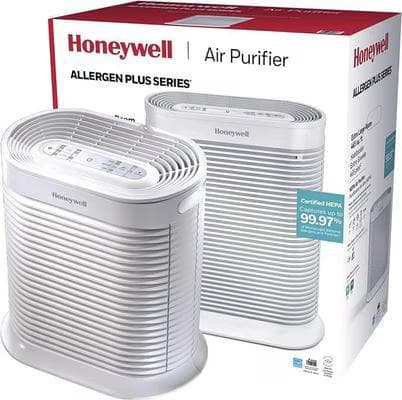
Certified True HEPA air purifier that captures 99.97% of airborne dust, dander, pollen, and smoke, reducing the airborne triggers behind feline asthma and respiratory irritation.
Webvet may earn a commission when you click through to Chewy, at no extra cost to you.
| Breathing pattern | What it looks like | Urgency |
|---|---|---|
| Normal | 15 to 30 quiet breaths per minute at rest, chest barely moves | Routine. No action needed |
| Mildly elevated | 30 to 40 per minute at true rest, repeated over hours | Call your vet today |
| Fast and shallow | Over 40 per minute, small quick chest movements | Same-day or urgent vet visit |
| Belly breathing | Visible abdominal push with each breath | Emergency. Go now |
| Open-mouth breathing | Mouth open, panting-like, often crouched | Emergency. Go now |
| Blue or gray gums | Gums or tongue tinged blue, gray, or purple | Emergency. Go now |
Count breaths only when your cat is asleep or resting quietly, never right after play or while purring. One rise and fall of the chest equals one breath. For the full method and what a healthy baseline looks like, see our guide to the normal cat breathing rate. The single most useful number is the trend over time, because a rate that has crept from 24 to 36 over a few weeks tells you more than one isolated reading.
What causes shallow breathing in cats
Shallow breathing in cats most often comes from pain, fluid or air around the lungs, fever, trauma, shock, or anything that restricts the chest from expanding fully. A cat takes small fast breaths when a deep breath hurts or is mechanically blocked. The most common causes fall into a few groups, and several of them can occur together after a single event such as a fall or a bite.
Pain that splints the chest
Pain anywhere in the body raises the respiratory rate and pushes a cat toward fast, guarded, shallow breaths. When the pain is in the chest, ribs, or upper abdomen, the cat deliberately limits how far it inflates the lungs to avoid the stab of a full breath, a protective habit called splinting. Abdominal pain, a urinary blockage, pancreatitis, or an injury can all show up first as quick shallow breathing plus hiding. Subtle pain signals often come before the breathing changes, so it helps to know how to tell if a cat is in pain.
Pleural effusion (fluid around the lungs)
When fluid collects in the chest cavity around the lungs, the lungs cannot fully expand, so the cat compensates with fast, shallow breaths. Pleural effusion is a classic cause of shallow breathing in cats and is commonly driven by heart failure, infection (including feline infectious peritonitis), or cancer such as lymphoma. It is an emergency because the cat is working hard for very little air, and the breathing often looks oddly flat and rapid rather than deep and heaving. Draining the fluid frequently brings dramatic, immediate relief.
Fever and infection
A fever raises the metabolic rate and the breathing rate with it, and respiratory infections add congestion that forces faster, shallower breaths. Pneumonia and severe upper respiratory infection both restrict comfortable airflow, and feline asthma can layer wheezing on top of the fast rate. The Cornell Feline Health Center lists infection, asthma, and pneumonia among the leading causes of feline breathing difficulty.
Trauma and rib injury
A fall, a car impact, or a bite can bruise the lungs (pulmonary contusions), fracture ribs, or let air leak into the chest cavity (pneumothorax). Fractured ribs make every breath sharply painful, so the cat keeps each breath small. Lung bruising and leaked air both reduce the working surface for oxygen, again forcing a fast, shallow pattern. Any cat that breathes shallowly after a known or suspected injury needs to be seen immediately, even if it is walking around, because chest injuries can worsen over the hours after the event.

99% dust-free, low-tracking clumping clay litter with superior odor control and hard clumping. Unscented, natural ingredients, multi-cat strength.
Webvet may earn a commission when you click through to Chewy, at no extra cost to you.
Chest restriction and abdominal distension
Anything that physically crowds the lungs limits how far they can expand, including a chest mass, an enlarged organ, or a diaphragmatic hernia where abdominal contents push into the chest. A swollen abdomen does the same thing from below: a belly distended by fluid, a large mass, or a severe blockage presses up on the diaphragm and shortens every breath. The cat keeps oxygen up by breathing more often with smaller breaths. These causes need imaging to diagnose and rarely improve on their own.
Shock and anemia
When blood pressure drops or the blood cannot carry enough oxygen, the body speeds up breathing to compensate. Shock from blood loss, severe dehydration, a blood clot (a particular risk in cats with heart disease), or sepsis can all drive fast shallow breaths alongside weakness, cold paws, and very pale gums. Severe anemia produces the same hunger for oxygen. These cats are critically ill even though the breathing itself may look deceptively quiet, so pale or white gums with fast breathing is an immediate emergency.

Benign vs emergency: when is shallow breathing okay?
Brief shallow breathing can be benign when there is a clear, short-lived trigger and the cat returns to a normal resting rate within a few minutes. Breathing that is fast and shallow at true rest, or that comes with any red flag, is not benign and needs a vet. The distinction is about context and recovery, not about how dramatic the breathing looks in the moment.
- Often benign: a short burst after running, jumping, or play that settles within 5 to 10 minutes of rest
- Often benign: brief fast breathing during a stressful event such as a car ride, which eases once the cat calms
- Often benign: panting briefly on a very hot day that resolves quickly in a cool, quiet space
- Never benign: shallow breathing at rest, while sleeping, or that lasts more than a few minutes after calming
- Never benign: any open-mouth breathing, belly breathing, blue or pale gums, or breathing changes after an injury
When in doubt, err toward urgency. Cats hide illness well and often crash quickly once breathing is affected, and a cat that looks merely uncomfortable can deteriorate within an hour.
 $65 · no membership
Have a health question about your cat?
A licensed vet can assess your cat over video and prescribe online when it's appropriate.
 Talk to a vet
- Licensed vets
- All 50 states
- same-day Rx
Webvet may earn a commission if you book.
How to assess shallow breathing at home
To assess shallow breathing at home, count the resting respiratory rate, check gum color, look at posture and effort, and capture a short video. These four checks take under two minutes and tell you whether you are watching a passing event or an emergency. Do them while the cat is calm, never right after exercise.
- Count the rate. With the cat asleep or fully relaxed, count one rise and fall of the chest as a single breath. Count for 30 seconds and double it. Under 30 is reassuring; a settled rate over 30 to 40 is a red flag.
- Check the gums. Lift the lip gently. Healthy gums are bubblegum pink and moist. Blue, gray, purple, or chalky-white gums mean go now.
- Watch posture and effort. A cat sitting upright with elbows pushed out, neck stretched forward, and a heaving belly is struggling. A relaxed, curled-up cat that breathes smoothly is not.
- Film it. A 15 to 30 second video of the breathing and posture lets your vet triage over the phone and shows the pattern that may settle before you arrive.

When to act, and what the vet checks
Act immediately for any red flag, and the same day for a resting rate that stays above 30 to 40 breaths per minute. At the clinic the goal is first to stabilize oxygen, then to find the cause. The vet works through a predictable sequence, and with a struggling cat the early steps are deliberately gentle because stress alone can tip a fragile cat into a crisis.

Soft-sided travel safety carrier that keeps a stressed cat secure and well-ventilated on the way to the vet, with mesh panels for airflow and a seat-belt loop.
Webvet may earn a commission when you click through to Chewy, at no extra cost to you.
- Hands-off observation and oxygen. A distressed cat is placed in an oxygen cage before any stressful handling, because restraint alone can be dangerous.
- Listening and gum check. The vet listens to the chest for muffled sounds, crackles, or wheezes and checks gum color and capillary refill for oxygen delivery.
- Chest imaging. X-rays or a quick point-of-care ultrasound look for fluid, an enlarged heart, masses, or air in the chest.
- Tapping the chest. If fluid or air is found, the vet may drain it (thoracocentesis), which often brings fast relief and doubles as a diagnostic sample.
- Bloodwork and blood pressure. These check for anemia, infection, organ disease, and heart markers, and help rule in shock.
Treatment follows the diagnosis: draining fluid, oxygen, heart or asthma medication, antibiotics, fluids for shock, or pain control. The faster the cause is found, the better the outcome, which is exactly why an early home rate count and a calm, quick trip to the clinic matter so much.
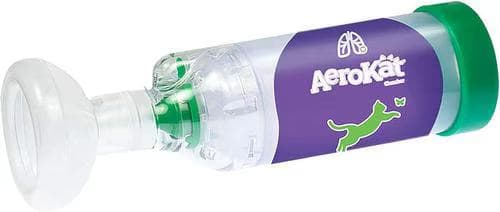
The vet-standard aerosol chamber (spacer) for giving asthma inhaler medication to cats, making daily inhaled treatment far easier and more effective.
Webvet may earn a commission when you click through to Chewy, at no extra cost to you.

Frequently asked questions
What are the signs that your cat is going to pass away?
Signs a cat may be near the end of life include labored or very shallow breathing, hiding away, refusing food and water, profound weakness or collapse, a drop in body temperature, and loss of interest in surroundings. Shallow or open-mouth breathing in particular can mean a critical decline. These signs warrant an urgent vet visit, both to relieve suffering and because some causes are still treatable.
What are the earliest heart failure signs in cats?
The earliest sign of heart failure in cats is often a rising resting respiratory rate before any obvious illness. A sleeping cat that creeps past 30 breaths per minute, then 40, may be developing fluid in or around the lungs. Other early clues are reduced energy, hiding, and reluctance to play. Cats frequently show no symptoms until breathing changes appear, which is why tracking the resting rate at home is so useful.
What does abnormal breathing look like for a cat?
Abnormal breathing in a cat includes a resting rate over 30 to 40 breaths per minute, visible effort, open-mouth breathing, a heaving belly with each breath, wheezing or gurgling, coughing, or a crouched posture with the neck extended and elbows pointed out. Normal cat breathing is quiet, smooth, and barely visible. Any noise, effort, or open-mouth pattern is abnormal and needs a vet.
How can I tell if my cat is getting enough oxygen?
Check the gums. Healthy cat gums are bubblegum pink. Gums that look blue, gray, purple, or very pale suggest the cat is not getting enough oxygen and need emergency care right away. Other warning signs of low oxygen are open-mouth breathing, extreme effort to breathe, weakness, and collapse. A pulse oximeter at the clinic gives an exact reading, but blue or gray gums alone are reason to go now.
What does heart failure breathing look like in cats?
Heart failure breathing in cats is typically fast and shallow at rest, often over 40 breaths per minute, and can progress to open-mouth breathing or a heaving belly. According to VCA Animal Hospitals, difficulty breathing is the most common sign of feline heart failure and may appear suddenly. Coughing is far less common in cats than in dogs, so do not wait for a cough. Fast, effortful resting breaths are the signal.
At what age do cats get congestive heart failure?
Congestive heart failure can affect cats at almost any age. Per VCA Animal Hospitals, severely affected cats may develop problems as early as three months old, while less affected cats show signs by two to four years of age. Because the underlying heart disease is often silent, a sudden episode of fast shallow breathing may be the first clue, even in a young adult cat.
What is the 3-3-3 rule for cats?
The 3-3-3 rule describes how a newly adopted cat usually settles in: about 3 days to decompress and hide, 3 weeks to learn the routine, and 3 months to feel at home. Stress during the first days can cause brief fast breathing in a frightened cat. That said, shallow breathing at rest is never just stress to assume, so rule out a medical cause if it does not settle quickly.
Why is my cat breathing shallow while sleeping?
A sleeping cat normally breathes slowly and quietly, so genuinely shallow or fast breathing during sleep is a meaningful warning sign. Count the resting rate: under 30 per minute is reassuring, while a sleeping rate consistently above 30 to 40 can be an early sign of fluid around the lungs or heart disease and warrants a vet visit. Twitching and faster breaths during active dreaming are normal if they pass quickly.
Can stress or pain cause shallow breathing in cats?
Yes. Both stress and pain raise a cat's breathing rate and can produce fast, shallow breaths. A frightened cat may breathe quickly during a car ride or vet visit and then settle once calm. Pain is different: it tends to persist, and a cat in pain often hides, crouches, and guards the chest or belly. If shallow breathing does not ease within a few minutes of calm, treat it as a medical problem and call your vet rather than assuming it is only nerves.
How fast is too fast for a cat's breathing?
A resting respiratory rate consistently above 30 breaths per minute is a concern, and a settled rate over 40 is a clear red flag that needs prompt veterinary attention. The key word is resting: count only when your cat is calm or asleep, because play, stress, heat, and purring all raise the number temporarily. If a relaxed, sleeping cat repeatedly counts above 30 to 40, do not wait, because that range is strongly associated with fluid around the lungs and early heart failure.
Shallow breathing is one of the clearest signals a cat gives that something is wrong inside the chest or causing pain. When you pair it with a resting-rate count and a quick check of the gums, you can tell the difference between a passing event and an emergency, and you give your vet a head start. For related signs and care, see our guides on open-mouth breathing and belly breathing in cats.
$65 · no membershipHave a health question about your cat?
A licensed vet can assess your cat over video and prescribe online when it's appropriate.
Talk to a vet- Licensed vets
- All 50 states
- same-day Rx
Webvet may earn a commission if you book.

Editor
The Webvet Editorial Team is the in-house group of pet-care editors and writers behind Webvet, operated by Smart Pet Collective. The team researches, writes, and maintains Webvet's pet health, behavior, and medication content. Every article follows a defined editorial process: research from reputable veterinary and scientific sources, careful drafting, mandatory review of medical content by a credentialed veterinarian, and dated publication. Health and medication articles are medically reviewed by a licensed veterinary professional before they go live and are kept current over time.
Veterinarian · BVMS MRCVS
Dr. Pippa Elliott, BVMS, MRCVS, is a veterinarian with nearly 30 years of experience in companion animal practice. Dr. Elliott earned her Bachelor of Veterinary Medicine and Surgery from the University of Glasgow. She was also designated a Member of the Royal College of Veterinary Surgeons. Married with 2 grown-up kids, Dr. Elliott has a naughty Puggle named Poggle, 3 cats and a bearded dragon.


