Cat Belly Breathing: Why It Is an Emergency and What to Do
Cat belly breathing, where your cat uses its abdominal muscles to breathe, is a high-acuity warning of severe respiratory effort. Here is what it means, the likely causes, and why it is a vet emergency now.

BVMS MRCVS
Medically reviewed by Dr. Pippa Elliott, BVMS MRCVS · Last reviewed

This article contains affiliate links. Webvet may earn a commission when you buy through them, at no extra cost to you.
Cat belly breathing means your cat is visibly using its abdominal (stomach) muscles to pull in air, and in cats it is a high-acuity warning sign that should be treated as a veterinary emergency. Healthy cats breathe almost invisibly, with only a gentle rise and fall of the chest. When the belly is heaving with each breath, your cat is working hard to get enough oxygen, and the underlying cause is often fluid around the lungs, severe lung disease, heart failure, or a severe asthma attack. Do not wait it out. Call a veterinarian or emergency hospital now.
- 1Cat belly breathing (abdominal effort) is one of the most urgent respiratory signs in cats and usually means significant distress.
- 2Cats are obligate nasal breathers that rarely pant, so belly heaving, open-mouth breathing, or labored breathing are emergencies, not quirks.
- 3Common causes include pleural effusion (fluid around the lungs), congestive heart failure, severe feline asthma, pneumonia, anemia, and trauma.
- 4A resting or sleeping breathing rate consistently over 30 breaths per minute is an early warning sign worth a vet call; belly breathing at any rate needs same-day emergency care.
- 5If gums look blue or gray, breathing is open-mouthed, or your cat collapses, this is a life-threatening emergency. Go now.
What cat belly breathing actually looks like
Cat belly breathing is breathing where the abdomen visibly pumps in and out with each breath instead of the smooth, barely noticeable chest motion of a relaxed cat. Vets call this abdominal effort, and it is the body recruiting extra muscles because the lungs and chest alone are no longer moving enough air. It tells you the work of breathing has increased, which is always meaningful in a cat.
Look for these patterns, often appearing together:
- The belly heave: the stomach and sides move forcefully and obviously with every breath.
- Open-mouth breathing or panting: cats almost never pant like dogs, so this is a red flag, not exertion.
- Nostril flaring: the nostrils widen or flutter with effort.
- A braced posture: neck and head extended forward, elbows held out, often crouched and reluctant to lie down.
- Paradoxical motion: the chest and belly move in opposite directions, a sign of severe effort.
Because cats instinctively hide illness, owners often miss the early signs. Watching your cat's normal body language when it is healthy makes a sudden change in breathing posture much easier to catch. Many cats with early respiratory disease simply become quieter, sleep in a tucked sphinx position rather than curled on their side, and stop jumping to favorite perches. Those subtle shifts often precede the obvious belly heave by hours or days.

What abdominal effort means mechanically
Abdominal effort means your cat has run out of easy ways to breathe and is now recruiting the abdominal muscles to force air in and out, which signals significant respiratory work. In a healthy cat the diaphragm and the small muscles between the ribs do almost all of the job quietly. When that is not enough, the cat starts squeezing the belly to drive the diaphragm harder. That visible pumping is the cat borrowing extra muscle power it should not need at rest.
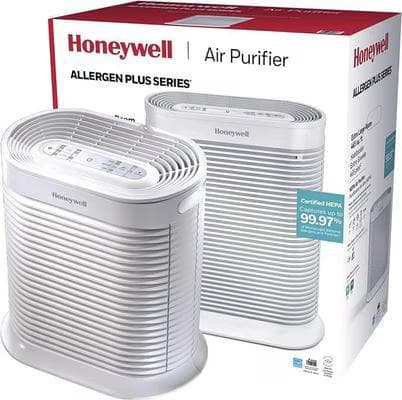
Certified True HEPA air purifier that captures 99.97% of airborne dust, dander, pollen, and smoke, reducing the airborne triggers behind feline asthma and respiratory irritation.
Webvet may earn a commission when you click through to Chewy, at no extra cost to you.
There are two classic situations that force this. The first is fluid or air in the chest cavity pressing on the lungs from the outside, so the lungs simply cannot expand and the cat heaves the belly to compensate. The second is severe lower-airway disease, where the airways are so narrowed and the lungs so inflamed that moving air takes real muscular force, especially on the exhale. Either way, the abdomen becomes a visible second engine.
This matters because it is a late-stage compensation. A cat does not recruit abdominal muscles for a mild problem. By the time you can see the belly working, the reserve is nearly used up, which is why a heaving belly in a cat is treated as a time-critical sign rather than something to monitor at home.
How it differs from normal belly movement
Some normal belly movement is fine, and this is where owners get confused. A relaxed cat does show a soft, even rise and fall just behind the ribs, because the diaphragm sits at the bottom of the chest and a gentle bit of motion there is expected. The difference is degree and character.
- Normal: a small, smooth, effortless motion that is easy to miss, with the chest doing most of the visible work and no posture change.
- Concerning: a forceful, exaggerated pumping of the flanks and belly that you notice from across the room, often with a braced posture, a faster rate, or sound.
A useful test is whether the movement draws your eye. Normal breathing is something you have to look for. Abdominal effort is something you cannot ignore. If the belly motion is paired with an open mouth, an extended neck, or a rate over 40 breaths per minute at rest, stop assessing and call the vet.
Why belly breathing is more urgent in cats than dogs
Belly breathing is more dangerous in cats because cats are obligate nasal breathers that almost never pant to cool down or recover from activity. A dog panting after a walk is normal. A cat breathing with its mouth open or with abdominal effort is not doing it to cool off, it is doing it because it cannot get enough oxygen through normal quiet breathing.
Cats also do not regulate temperature the way dogs do, which is part of why cats rarely pant. Cats are also masters at masking disease, so by the time abdominal effort is visible, the condition driving it is usually advanced. That combination is exactly why feline belly breathing earns an emergency response while a mild change in a dog might be watched.
There is also a body-size factor. Cats are small, with small lungs and a small margin for error. A volume of chest fluid that a large dog might tolerate for a while can overwhelm a cat's lungs quickly. Their oxygen reserve is thinner, they decompensate faster, and a frightened cat that struggles against handling can tip from coping to collapse in a very short window. None of these traits favor a wait-and-see approach.

Normal vs concerning breathing in cats
A relaxed, healthy cat breathes quietly through its nose with its mouth closed at roughly 15 to 30 breaths per minute, with only subtle chest movement. According to the Cornell Feline Health Center, difficulty breathing (dyspnea) can come on acutely over hours or build gradually over weeks, so both sudden and slowly worsening effort deserve attention. The table below contrasts normal breathing with the signs that should worry you.
| Feature | Normal cat breathing | Concerning breathing |
|---|---|---|
| Resting rate | 15 to 30 breaths per minute | Consistently over 30, and certainly over 40, at rest or asleep |
| Mouth | Closed, quiet, through the nose | Open-mouth breathing or panting |
| Body motion | Gentle, barely visible chest rise | Belly and sides heaving, abdominal effort |
| Posture | Relaxed, curled or loafed | Neck extended, elbows out, crouched, refusing to lie flat |
| Sound | Silent | Wheezing, raspy, gurgling, or grunting |
| Gum color | Healthy pink | Pale, blue (cyanotic), or gray |
If you are unsure where your cat falls, learning to count a normal cat breathing rate at rest gives you a baseline you can report to the vet. Belly breathing alongside any concerning column above is an emergency regardless of the exact rate.
 $65 · no membership
Have a health question about your cat?
A licensed vet can assess your cat over video and prescribe online when it's appropriate.
 Talk to a vet
- Licensed vets
- All 50 states
- same-day Rx
Webvet may earn a commission if you book.
What causes belly breathing in cats
Belly breathing in cats is driven by conditions that crowd the lungs, fill the chest with fluid, narrow the airways, or starve the blood of oxygen. The most common and dangerous causes are listed below. Most cannot be told apart at home, which is why imaging and a vet exam are essential.
Pleural effusion (fluid around the lungs)
Pleural effusion is a buildup of fluid in the space around the lungs, which physically stops the lungs from expanding. It is a classic cause of abdominal-effort breathing because the cat compensates by recruiting the belly muscles. Causes include heart failure, cancer (such as lymphoma), pyothorax (infection), and chylothorax. This is a true emergency and often needs the fluid drained urgently.
A telltale pattern with significant pleural effusion is short, shallow, rapid breaths combined with strong abdominal push, because deep breaths are impossible when the lungs are compressed. The cat often sits upright rather than lying down, since lying flat lets the fluid spread across both lungs and worsens the effort. This is one of the situations where draining the chest can transform a struggling cat within minutes. See WebVet’s guide to shallow breathing in cats and when it is urgent.

Soft-sided travel safety carrier that keeps a stressed cat secure and well-ventilated on the way to the vet, with mesh panels for airflow and a seat-belt loop.
Webvet may earn a commission when you click through to Chewy, at no extra cost to you.
Congestive heart failure
Heart disease, especially hypertrophic cardiomyopathy, can cause fluid to back up into or around the lungs. Cats often show no symptoms until they are in crisis, so a sudden onset of fast or belly breathing may be the first visible sign of heart failure. An elevated resting breathing rate is frequently the earliest clue, sometimes before any coughing or lethargy.
Unlike dogs, cats in heart failure rarely cough, which trips up many owners who expect a cough to be the warning sign. Instead the change shows up as breathing rate and effort. A related danger is a blood clot, called a saddle thrombus, which can suddenly paralyze the back legs and cause severe pain. A cat that is both belly breathing and dragging a hind limb is a dire emergency.
Severe feline asthma
An asthma flare causes the lower airways to constrict and inflame, trapping air and forcing the cat to push harder on the exhale. A severe attack can produce wheezing, a hunched posture, open-mouth breathing, and pronounced abdominal effort. Asthma can be managed long term, but an acute attack is an emergency.
Feline asthma is an allergic, inflammatory airway disease, and triggers can include dust, smoke, scented litter, and aerosols. Cats prone to airway inflammation can also have other allergies, and reducing environmental irritants is part of long-term control. The classic asthma posture is a low crouch with the neck stretched out and the elbows pushed away from the body, paired with a forceful belly push on each breath out.
Pneumonia and respiratory infection
Infection or inflammation deep in the lungs reduces the surface available for oxygen exchange. Pneumonia may follow a severe upper respiratory infection, aspiration, or a weakened immune system, and it often pairs belly breathing with fever, lethargy, and loss of appetite.
Anemia, trauma, and other causes
Severe anemia means fewer red blood cells to carry oxygen, so the cat breathes harder to compensate. Chest trauma, a ruptured diaphragm (diaphragmatic hernia), tumors in the chest, pain, and even a urinary blockage causing metabolic crisis can all drive labored, abdominal breathing. Belly breathing is a symptom, not a diagnosis, and the range of causes is exactly why it needs professional assessment.
A diaphragmatic hernia deserves a special mention because it is easy to miss. After a fall or being hit, a tear in the diaphragm can let abdominal organs slide up into the chest, crowding the lungs. The breathing trouble may appear right away or surface days later, so any cat that breathes hard after a known or suspected trauma needs imaging even if it seemed fine at first.
Sign to likely cause to urgency: a quick triage guide
Use this table to gauge urgency, but treat any genuine abdominal-effort breathing as a same-day emergency. It helps you describe what you see to the veterinary team, not to delay care.
| What you see | Often points toward | Urgency |
|---|---|---|
| Belly heaving plus open-mouth breathing | Pleural effusion, heart failure, severe asthma | Emergency now |
| Belly effort with wheezing or hunching | Feline asthma attack | Emergency now |
| Fast belly breathing after recent fall or accident | Chest trauma, diaphragmatic hernia, bleeding | Emergency now |
| Resting rate over 30 to 40, mild effort, no open mouth | Early heart or lung disease | Vet same day |
| Pale, blue, or gray gums with any belly breathing | Critical oxygen deprivation | Life-threatening, go immediately |

What to do right now if your cat is belly breathing
If your cat is belly breathing, the single most important action is to get to an emergency veterinarian without delay. Minimize handling and stress on the way, because a cat in respiratory distress can decompensate quickly when frightened.
- Call ahead: phone your vet or the nearest emergency hospital so they can prepare oxygen before you arrive.
- Keep it calm: move slowly, speak softly, and avoid chasing or restraining your cat more than necessary.
- Use a familiar carrier: place the cat in an open, well-ventilated carrier and keep the car cool and quiet.
- Do not medicate: never give human medicines or wait to see if it passes, as respiratory failure can occur fast.
- Note what you saw: breathing rate, gum color, posture, and any recent trauma help the vet act quickly.
If your cat will tolerate it, you can film a short 10 to 15 second clip of the breathing on your phone before you leave, holding the camera steady on the chest and belly. A video lets the veterinary team see the effort and rate even after the cat has been stabilized or calmed in the car, and it can speed up triage. Do not delay departure to get the perfect clip, and do not wrestle a distressed cat to film it.
A cat in respiratory distress is often also in distress and discomfort, and recognizing signs that a cat is in pain can help you convey the full picture to the emergency team.
How vets diagnose and treat it
Veterinarians stabilize first and diagnose second. A cat in distress is usually placed in an oxygen cage or given flow-by oxygen before any stressful handling. Once breathing is safer, the team works out the cause.

The vet-standard aerosol chamber (spacer) for giving asthma inhaler medication to cats, making daily inhaled treatment far easier and more effective.
Webvet may earn a commission when you click through to Chewy, at no extra cost to you.
This stabilize-first approach is itself important. A cat that is critically short of oxygen can die from the stress of being held still for an X-ray, so the team may give oxygen, a mild sedative to reduce panic, and sometimes a quick bedside ultrasound before moving to fuller imaging. The order of operations is deliberate and protective, even though it can feel slow to a frightened owner.
- Chest X-rays or ultrasound to look for fluid, an enlarged heart, masses, or a hernia.
- Thoracocentesis, draining fluid from around the lungs, which can be both diagnostic and immediately life-saving.
- Bloodwork to check for anemia, infection, and organ function.
Treatment depends entirely on the cause: diuretics and heart medication for congestive heart failure, fluid drainage for pleural effusion, bronchodilators and steroids for asthma, antibiotics for pneumonia, or surgery for a diaphragmatic hernia. The faster the cat reaches care, the better the odds.
Prognosis varies widely by cause. A cat with asthma or drainable chest fluid can often be stabilized and go on to do well with ongoing management, while advanced heart failure or cancer carries a more guarded outlook. The shared theme is that early arrival buys options. A cat caught at the first sign of effort has far more room for a good outcome than one brought in already collapsed.
How to monitor your cat's breathing at home
Counting a resting respiratory rate is the most useful home skill for catching trouble early. Watch your cat while it sleeps or rests, count one breath as a single rise and fall of the chest, and count for 30 seconds, then double it. A consistent resting rate over 30 breaths per minute warrants a vet call, even without obvious distress.
Track the number over several days so you have a baseline to share. If you also see your cat breathing fast while resting, combined with any abdominal effort, do not keep monitoring at home. Call your vet.
This sleeping respiratory rate is especially valuable for cats with known or suspected heart disease. Many cardiologists ask owners to log it a few times a week, because a clear upward trend often appears before a cat looks sick and can prompt a medication change that heads off a crisis. Jot the numbers in a notes app with the date so a pattern, not just a single reading, guides the decision.

99% dust-free, low-tracking clumping clay litter with superior odor control and hard clumping. Unscented, natural ingredients, multi-cat strength.
Webvet may earn a commission when you click through to Chewy, at no extra cost to you.
Frequently asked questions

Frequently Asked Questions
What should a cat's stomach look like when breathing?
In a healthy resting cat the stomach should barely move. Normal breathing is driven mostly by gentle chest expansion, so you should see only a subtle, even rise and fall. If the belly is visibly pumping or heaving with each breath, that is abdominal effort and is a reason to seek emergency veterinary care.
Is some belly movement when a cat breathes normal?
Yes, a small, smooth motion just behind the ribs is normal because the diaphragm sits at the bottom of the chest. The concern is force and character, not the presence of any motion at all. Normal belly movement is gentle and easy to overlook, while abnormal abdominal effort is forceful, exaggerated, and obvious from across the room, often paired with a braced posture, faster breathing, or sound. If the motion draws your eye, treat it as a warning sign.
What are the first signs of heart failure in cats?
An elevated resting breathing rate, often over 30 breaths per minute, is frequently the earliest sign of heart failure in cats. Other early signs include lethargy, reduced appetite, hiding, fast or labored breathing, and sometimes open-mouth breathing. Unlike dogs, cats in heart failure rarely cough, so do not wait for a cough as a warning. A sudden breathing change may be the first clue and needs urgent evaluation.
What is the silent killer in cats?
Heart disease, particularly hypertrophic cardiomyopathy, is often called a silent killer in cats because affected cats can appear normal until they suddenly go into heart failure or develop a blood clot. Because it hides until crisis, monitoring the resting breathing rate is one of the few early warning tools owners have.
Can a cat recover from belly breathing?
Often yes, if it is treated quickly, because many causes are reversible once the underlying problem is addressed. Draining chest fluid, treating an asthma attack, or starting heart medication can return a cat to comfortable breathing, sometimes within minutes for drainable fluid. The outlook depends on the cause and on how fast the cat reaches care. Belly breathing left untreated can progress to respiratory failure, so recovery hinges on acting immediately rather than waiting to see if it eases on its own.
What are the signs that a cat is about to pass away?
Signs a cat may be near the end of life include severe labored or open-mouth breathing, refusing food and water, profound weakness or collapse, hiding, very low body temperature, and pale or blue gums. Many of these overlap with treatable emergencies like respiratory distress, so any cat showing them needs to be seen by a veterinarian right away rather than assumed to be dying.
What do cats do right before they pass away?
A declining cat often withdraws and hides, stops eating and grooming, becomes very weak, and may breathe with obvious effort or with an open mouth. These behaviors are not specific to dying and can also signal a reversible emergency, so a vet visit is the only way to know whether the cause can be treated.
What is the number one killer of indoor cats?
Among indoor cats, chronic diseases such as kidney disease, cancer, and heart disease are leading causes of death, with obesity and its complications a major contributor. Several of these, especially heart disease, can first reveal themselves through breathing changes, which is why abdominal breathing should never be dismissed.
What is the 3-3-3 rule for cats?
The 3-3-3 rule describes how a newly adopted cat typically adjusts: about 3 days to decompress, 3 weeks to settle into a routine, and 3 months to feel fully at home. It is a behavior and adjustment guideline and has nothing to do with breathing or medical emergencies, so it should never be used to delay care for a cat in respiratory distress.
What animal kills cats but doesn't eat them?
Some predators such as dogs, coyotes, and birds of prey may attack or kill a cat without eating it, often as a chase or territorial response. Trauma from such an attack can cause internal chest injuries or a diaphragmatic hernia, both of which can produce labored, abdominal breathing and require emergency care.
Should I take my cat to the vet for belly breathing in the middle of the night?
Yes. Genuine abdominal-effort breathing is an emergency at any hour and should not wait until morning. Respiratory distress in cats can worsen rapidly, and the conditions that cause it, such as pleural effusion or a severe asthma attack, can be fatal if untreated overnight. Call the nearest 24-hour emergency veterinary hospital, let them know you are coming, and bring your cat in quietly in a carrier. It is always better to be seen and reassured than to lose hours your cat may not have.
The bottom line
Cat belly breathing is never normal and should be treated as a veterinary emergency. It signals that your cat is working hard to breathe, usually because of fluid around the lungs, heart failure, severe asthma, or another serious condition. If you notice abdominal effort, open-mouth breathing, or other signs of labored breathing, do not wait. Get your cat to an emergency veterinarian now, because early care saves lives.
$65 · no membershipHave a health question about your cat?
A licensed vet can assess your cat over video and prescribe online when it's appropriate.
Talk to a vet- Licensed vets
- All 50 states
- same-day Rx
Webvet may earn a commission if you book.

Editor
The Webvet Editorial Team is the in-house group of pet-care editors and writers behind Webvet, operated by Smart Pet Collective. The team researches, writes, and maintains Webvet's pet health, behavior, and medication content. Every article follows a defined editorial process: research from reputable veterinary and scientific sources, careful drafting, mandatory review of medical content by a credentialed veterinarian, and dated publication. Health and medication articles are medically reviewed by a licensed veterinary professional before they go live and are kept current over time.
Veterinarian · BVMS MRCVS
Dr. Pippa Elliott, BVMS, MRCVS, is a veterinarian with nearly 30 years of experience in companion animal practice. Dr. Elliott earned her Bachelor of Veterinary Medicine and Surgery from the University of Glasgow. She was also designated a Member of the Royal College of Veterinary Surgeons. Married with 2 grown-up kids, Dr. Elliott has a naughty Puggle named Poggle, 3 cats and a bearded dragon.


