Cat Exercises: 15 Fun Ways to Keep Your Cat Active
Safe cat exercises for indoor fitness and enrichment, with 15 activities, a seven-day plan, equipment tips, and practical senior, mobility, or weight-loss adaptations.


BVMS MRCVS
Medically reviewed by Dr. Pippa Elliott, BVMS MRCVS · Last reviewed

This article contains affiliate links. Webvet may earn a commission when you buy through them, at no extra cost to you.
Cat exercises work best when they feel like hunting, exploring, or solving a small problem. A practical starter kit can be simple: a stable cat tree, a bird-style teaser wand, a few lightweight toy mice, and a wide scratching surface. Use one or two at a time so the activity stays novel rather than turning the room into background clutter.
The best routine is not a fixed number of minutes for every cat. Use short cat-led sessions tailored to age, health, mobility, and interest instead of a universal prescription. Begin with a brief session, let your cat pause, and build from what they willingly repeat. Body condition and temperament matter too. For a cat with pain, breathing trouble, a recent injury, or a sudden drop in activity, talk with a veterinarian before increasing exercise.
Cat exercises at a glance
- 1Start with one or two short cat-led sessions at the times your cat is naturally alert, then add duration or difficulty gradually.
- 2Use activities that complete a prey sequence: watch, stalk, chase, pounce, catch, and receive a small reward or meal.
- 3Choose stable, supervised equipment and put away strings, feathers, and small pieces after play.
- 4Stop for open-mouth or labored breathing, limping, pain, collapse, or sudden exercise intolerance and contact a veterinarian.
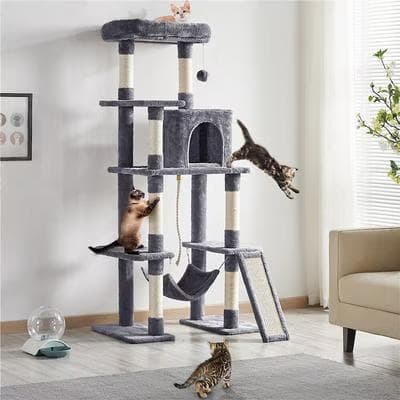
A broad-based cat tree adds climbing, balance, scratching, and elevated rest in one stable exercise station.
Webvet may earn a commission when you click through to Chewy, at no extra cost to you.
Best cat exercises: choose the right activity
For most healthy cats, the best exercise mimics hunting. A wand session that lets a cat watch, stalk, chase, pounce, and catch provides both movement and mental work. This feline predatory play sequence ends with a physical catch, which can reduce frustration. No single activity is best for every cat, so match the movement to the animal in front of you.
| Activity | Play style and impact level | Equipment and supervision | Best fit |
|---|---|---|---|
| Wand chase | Stalk, chase, pounce; moderate to high impact | Teaser wand; active supervision | Healthy adults and playful kittens |
| Toy-mouse hunt | Search, bat, carry; low to moderate impact | Large intact mice; check for loose parts | Solo players and small spaces |
| Puzzle feeding | Sniff, paw, problem-solve; low impact | Food puzzle; count food in daily calories | Food-motivated, senior, or lower-mobility cats |
| Cat tree circuit | Climb, balance, stretch; moderate impact | Stable broad-based tree; supervise new routes | Confident climbers and multi-level homes |
| Floor obstacle course | Step over, weave, target; adjustable impact | Boxes, cushions, treats; supervise | Beginners, seniors, and training-oriented cats |
| Exercise wheel | Steady running; high repetition | Correctly sized stable wheel; gradual voluntary use | Confident active cats who choose it |
Fifteen useful options are: wand chase, toy-mouse hunt, rolling-ball chase, fetch, puzzle feeding, kibble scatter search, clicker targeting, box-to-box stepping, tunnel runs, cat-tree climbing, scratching and stretching, a low obstacle course, supervised harness exploration, voluntary wheel running, and a controlled laser game. Laser play ends with a physical catch, and supervised strings are stored after play.
Rotate activities instead of escalating every session. A high-energy cat may enjoy a short chase followed by climbing; a cautious cat may prefer sniffing for food near boxes. This choose-by-cat activity matrix compares play style, impact level, equipment, supervision, and best fit rather than ranking one toy for every animal. Read your cat’s posture and willingness to reengage. Our guide to cat body language can help you recognize a loose, interested cat versus one who is crouched, agitated, or trying to disengage.
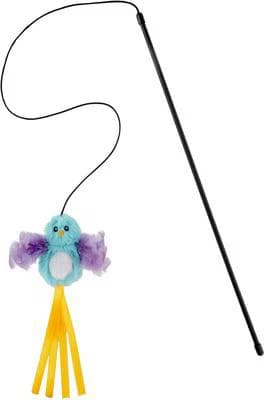
Use slow ground-level sweeps, brief hiding pauses, and a final catch to turn wand play into a complete prey sequence.
Webvet may earn a commission when you click through to Chewy, at no extra cost to you.
Cat enrichment that exercises the brain and body
To mentally stimulate your cat, create small problems that prompt searching, choosing, pawing, climbing, or moving between locations. Combine a puzzle feeder scent search with toy rotation and clicker training. Put part of a measured meal in two or three easy hiding spots, then gradually increase the distance or difficulty once your cat succeeds without frustration.
Interactive cat play needs a responsive partner. Move a toy like prey instead of waving it in a cat’s face. Let it pause behind a box, dart along the floor, and occasionally become catchable. Interactive cat toys can help, but automatic motion should not replace supervised social play. The best cat exercise toys are large enough not to swallow, durable, and matched to whether your cat likes birds, mice, insects, or food puzzles.
Rotate toys and adjust the challenge
A set of toy mice can support batting, carrying, and hidden-toy searches. Put out only a few cat toys, store the rest, and swap them every several days. If you use a cat enrichment feeder or cat enrichment puzzle, take the food from the daily ration rather than adding calories. See our deeper guide to cat puzzle feeders for setup and difficulty tips.
If your cat does not play with toys, reduce the challenge and change one variable at a time. Try a different time of day, quieter room, prey pattern, texture, or speed. Why won’t my cat play with toys? Sometimes the answer is preference, fear, pain, dental discomfort, vision change, or illness. A persistent or sudden loss of interest deserves a veterinary check, especially when paired with hiding, appetite change, stiffness, or weight loss.

Hide one mouse at a time for low-cost search, bat, carry, and pounce games, then rotate the set to preserve novelty.
Webvet may earn a commission when you click through to Chewy, at no extra cost to you.
Cat exercise toys and equipment
Good cat exercise toys create choices rather than forcing motion. Useful basics include a wand, soft balls, intact toy mice, tunnels, boxes, scratching surfaces, and food puzzles. Inspect every item for loose eyes, bells, elastic, feathers, sharp edges, or strands that could be swallowed. Strings and wand toys are supervised-only equipment and should be stored after play.
Vertical equipment adds climbing, balance, and full-body stretching. Choose a cat tree or cat tower with a broad base, secure platforms, and landings your cat can reach without a desperate leap. A cat scratching post should be tall or long enough for a full extension and should not wobble. Renters can create a route from stable furniture, but never rely on a loose shelf or narrow perch.

A securely mounted cat window perch offers observation and may prompt movement between levels, while catios for cats add controlled outdoor sights and scents. A cat harness can support supervised exploration only after gradual indoor conditioning. Never clip a leash to a neck collar, and avoid outdoor sessions in heat, unsafe neighborhoods, or areas where parasite prevention is not current.
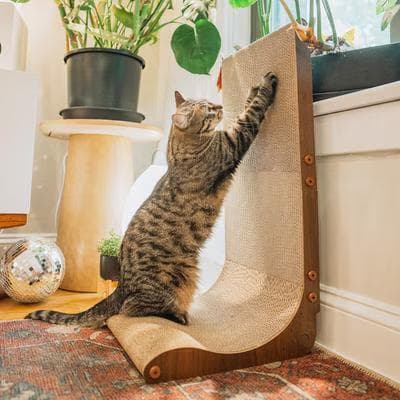
A wide, stable scratcher supports full-body extension and can serve as a low-impact movement station between play bursts.
Webvet may earn a commission when you click through to Chewy, at no extra cost to you.
Cat exercise wheels and other equipment
A cat exercise wheel can provide steady indoor movement, but it is optional. The best cat exercise wheel is large enough for the cat to run without an arched back, has a stable running surface, does not pinch paws or tails, and stays anchored during use. An indoor cat exercise wheel should never become a device for forced running.
Use a voluntary gradual supervised wheel introduction without forced running. First reward looking at or stepping onto the stationary wheel. Next reward one calm step, then a few steps, and stop while the cat is still comfortable. Supervise early sessions and discontinue the wheel if the cat freezes, scrambles, falls, vocalizes, or avoids the area. Never place or hold a cat on moving equipment.
Other cat exercise equipment may be more practical. Indoor cat exercise equipment can be a stable cat tree, tunnel, nonslip step, target stick, or cardboard-box course. A large lightweight cat exercise ball can be difficult for some cats to control, so start with a smaller soft ball that cannot be swallowed. Keep routes away from stairs, hot surfaces, breakables, and other pets who may block an exit.
Alternatives to an exercise wheel
Compare a cat tree with a cat tower by base width, usable landing size, and how easily the cat can descend. Pair either with a cat scratching post that stays still during a full-body stretch. A secure cat window perch can add another destination, while catios for cats can offer controlled outdoor enrichment when escape routes and weather are managed. These choices often create more varied movement than a wheel alone.
A cat harness is exercise equipment only after calm indoor conditioning. Let the cat investigate it, reward brief contact, then progress to wearing it for seconds before attaching a leash. Some cats never become comfortable, and that refusal should be respected. Harness walks are not required for a complete indoor routine, especially when climbing, puzzle feeding, chase play, and observation stations already provide variety.
 $65 · no membership
Have a health question about your cat?
A licensed vet can assess your cat over video and prescribe online when it's appropriate.
 Talk to a vet
- Licensed vets
- All 50 states
- same-day Rx
Webvet may earn a commission if you book.
How much exercise do cats need?
How much exercise do cats need? There is no single evidence-based duration that fits every cat. Kittens may play in frequent bursts; healthy adults often prefer several short sessions around dawn or dusk; seniors may need slower, lower-impact movement with longer recovery. Start with a few engaged minutes once or twice daily and build only when your cat willingly returns, moves comfortably, and recovers normally.
Use quality, not a stopwatch, to judge cat exercise. A productive cat workout includes alert tracking, purposeful movement, a catch or success, and a calm recovery. Cat exercising should not produce exhaustion. When learning how to exercise cats, change only one factor at a time: duration, speed, height, distance, or puzzle difficulty. That makes it easier to see what your cat tolerates.
For indoor cat exercise or learning how to exercise a cat in an apartment, split movement across the day. Place legal scratching, climbing, feeding, resting, and viewing zones a few safe steps apart. Exercises to do with your cat can be quiet: target a hand, follow a tossed mouse, step across a cushion, or search a box. These are also exercises you can do with your cat without a large room.
Panting is not a routine fitness goal for cats. If you see mouth-open breathing, end the activity immediately and review our guide to open-mouth breathing in cats. A veterinarian should also evaluate a cat whose willingness or ability to move changes suddenly.
How to strengthen a healthy cat safely
To strengthen a healthy cat, use controlled climbing, balance, and short obstacle work rather than added weight or forced repetitions. A stable low step, broad platform, or target placed just above shoulder height can encourage deliberate weight shifts. Controlled climbing and balance build coordination through normal movement. This is healthy conditioning versus veterinary rehabilitation, which begins with an examination and diagnosis. Keep surfaces nonslip and allow an easy way down.
Cat stretching exercises should be self-directed. Scratching, reaching for a low target, and stepping through a tunnel let a cat lengthen the spine and limbs naturally. Do not pull a leg, flex a joint, or press a cat into a stretch. Cat leg exercises prescribed after injury are different from general conditioning and require a veterinary rehabilitation plan.
When strengthening becomes rehabilitation
Cat arthritis exercises, cat physical therapy exercises, and cat physiotherapy exercises should come from a veterinarian or qualified rehabilitation professional who has examined the cat. Pain relief, joint range, neurological status, and the home environment change what is safe. This article can guide healthy conditioning, but it cannot diagnose pain or replace a tailored rehabilitation program.
For an athletic healthy cat, a low home obstacle course can progress to tunnels, targets, and secure jumps. Keep bars low and able to fall away. If your cat enjoys structured challenges, our guide to cat agility explains the sport without making competition necessary for fitness.
Cat exercises for weight loss, seniors, and limited mobility
Cat exercises for weight loss support a calorie plan, but movement alone rarely fixes excess weight. Ask a veterinarian to assess body condition score, muscle condition, pain, and a safe rate of weight change. When learning how to exercise your cat to lose weight, measure food first, use part of the daily ration for puzzles or rewards, and track trends on the same scale instead of chasing rapid loss.
A fat cat workout should never mean exhausting an overweight cat. Obese cat exercises can begin with floor-level low-impact activity: follow a target for a few steps, paw food from a shallow puzzle, walk between two meal stations, or reach onto a low stable surface. Add distance before height or speed. Stop before form deteriorates, and give joints time to recover.

The plan needs distinct adaptations for kittens, healthy adults, seniors, overweight cats, and cats with mobility limits. Senior cats benefit from the same choice and prey logic with easier access. Use warm rooms, nonslip rugs, wide steps, low-sided puzzles, and toys that move slowly along the floor. For cats with reduced vision or hearing, add scent, gentle sound, or consistent placement. For kittens, keep landings safe, avoid repetitive high jumps, and use several brief play bursts rather than sustained running.
Track engagement, mobility, recovery, weight, and veterinarian-assessed body condition. Note whether your cat rises easily, jumps at the usual height, grooms normally, and returns voluntarily the next day. A gradual increase in comfortable repetitions is more useful than a single intense session. A decline can reveal pain or illness before a scale changes.
A seven-day indoor cat exercise plan
This seven day progression is a starter framework, not a prescription. Keep each session short enough that your cat remains interested, use one measured food reward or a catch to close the prey sequence, and repeat an easier day when needed. Record engagement and mobility tracking in a simple note: activity, minutes engaged, comfort, and recovery.
Day 1: Find the prey preference
Test one bird-like wand movement and one mouse-like floor movement. Use slow hiding pauses, let your cat catch the toy, and stop after a successful short round. The goal is preference data, not fatigue.
Day 2: Add a food search
Place a few pieces of measured kibble in easy, visible locations or a simple puzzle. Keep the search area small. If your cat walks away, make the next find easier rather than adding tastier calories.
Day 3: Build a safe vertical route
Invite one step onto a stable scratcher, low stool, or cat-tree platform, then back down. Reward deliberate movement. Do not lure a cat into a jump that lacks a secure landing.
Day 4: Recovery and choice
Offer gentle toy tracking, grooming if enjoyed, or passive window observation. A recovery day still provides enrichment and lets you check for stiffness, limping, or reluctance after the first three days.
Day 5: Train a target
Reward your cat for touching a target or following it two or three steps. Targeting can later guide low obstacles, carrier entry, and cooperative care without pushing or pulling the body.
Day 6: Combine two stations
Link a short chase to a puzzle, scratcher, or stable platform. Keep exits open and separate stations in a multi-cat home so one cat cannot guard the route.
Day 7: Repeat the favorite and review
Repeat the activity with the strongest voluntary engagement. Compare comfort and recovery with Day 1. For the next week, change only one element, such as an extra minute, a slightly longer route, or a harder puzzle.
How to get a cat to exercise comes down to timing, fit, and reinforcement. Schedule play when your cat already has a burst of activity, reduce distractions, imitate preferred prey, and finish with a catch. To make cat exercise sustainable, leave room for refusal. Forced contact can damage trust and make the equipment less appealing.
Cat exercise FAQs
Frequently Asked Questions
How do I get a lazy cat to exercise?
To get a lazy cat to exercise, start with short cat-led sessions at a naturally active time, often near dawn, dusk, or before a meal. Test prey styles one at a time, keep the first movement close and slow, allow a catch, and offer a tiny reward from the daily ration. A prey sequence reward makes success clear. A sudden loss of play interest, stiffness, or hiding warrants a veterinary check.
Are cat exercise wheels safe?
Cat exercise wheels can be safe for a suitable cat when the wheel has a stable running surface, adequate diameter, no pinch points, and secure anchoring. Use a voluntary gradual introduction with the wheel stationary first, then reward a few calm steps. Never place a cat on a moving wheel, restrain the cat, or use the wheel as forced weight-loss equipment. Stop if the cat slips, panics, or avoids it.
Can senior or overweight cats exercise?
Senior and overweight cats can usually benefit from appropriately adapted exercise, but pain, heart or lung disease, and mobility limits change the plan. Begin with floor-level low-impact activity on nonslip surfaces, such as target following or a shallow food puzzle. Count rewards in daily calories and use a veterinarian body condition plan for weight loss. Stop for limping, pain, open-mouth breathing, weakness, or a sudden change in tolerance.
Sources
$65 · no membershipHave a health question about your cat?
A licensed vet can assess your cat over video and prescribe online when it's appropriate.
Talk to a vet- Licensed vets
- All 50 states
- same-day Rx
Webvet may earn a commission if you book.

Wendy Toth is an entrepreneurial writer, editor, and mom of two humans, two dogs and one cat. She’s currently Content Director here at PetFul. For the last 15 years she has held positions at Parents Magazine, NBC, PetSmart, and GreatPetCare, where she was co-founder. Her writing has appeared in many national outlets including Pet Lab Co., Retail Me Not, Ask Men, Wild Society Nutrition, and The New York Times. Because she loves her work so much, she’s obsessed with helping others find career fulfillment, and covers it regularly at PowerSuiting.
Veterinarian · BVMS MRCVS
Dr. Pippa Elliott, BVMS, MRCVS, is a veterinarian with nearly 30 years of experience in companion animal practice. Dr. Elliott earned her Bachelor of Veterinary Medicine and Surgery from the University of Glasgow. She was also designated a Member of the Royal College of Veterinary Surgeons. Married with 2 grown-up kids, Dr. Elliott has a naughty Puggle named Poggle, 3 cats and a bearded dragon.


