Best Stainless Steel Litter Boxes: Vet-Reviewed Picks and Why They Beat Plastic
A stainless steel litter box has a nonporous surface that does not soak up urine and wipes clean more easily than scratched plastic. Here is how to choose size, side height, and lids, plus five Chewy picks matched to different cats.

BVMS MRCVS
Medically reviewed by Dr. Pippa Elliott, BVMS MRCVS · Last reviewed

This article contains affiliate links. Webvet may earn a commission when you buy through them, at no extra cost to you.
A stainless steel litter box has one clear advantage over plastic: its surface is nonporous. Litter Genie, which sells a steel-based box, says stainless steel does not absorb odors and that the smooth surface makes residue easier to remove. Plastic, by the usual reasoning, picks up smell and scratches as it ages.
Before you buy a stainless steel litter box, two decisions matter more than the metal itself: size and side height. Merck, Cornell, VCA and the ASPCA all point the same way, toward a large box your cat can step into easily. Here are five boxes worth considering, followed by how to match one to your cat.
| Box | Best fit | Material and format | Key detail | Main tradeoff |
|---|---|---|---|---|
| Frisco Stainless Steel Cat Litter Box, Large, 23-in | Most healthy adult cats | Stainless steel box, sold as Large, 23-in | Lowest listed price of the five, $45.99 | Side height, steel grade and weight not listed in the specs we could verify |
| Litter Genie Platinum Stainless Steel Cat Litter Box, Grey | Diggers and litter kickers | Stainless steel base, other parts plastic | 5 in high at the front, 8 in at the back, 18.5 by 23.2 in | Not all-metal; maker suggests about 3 in of litter, deeper than the ASPCA's 1 to 2 in |
| FUTAM Stainless Steel Sifting Cat Litter Box for Pine Pellets with Lid, X-Large | Homes using pine or other pellet litter | Stainless steel sifting box with lid, X-Large | Sifting design named for pine pellets, $79.99 | Listings disagree on dimensions; confirm size and lid before ordering |
| PETSPARX Stainless Steel Enclosed Cat Litter Box | Cats that already use a hooded box | Enclosed stainless steel box | Full enclosure for privacy, $72.69 | Most cats prefer uncovered boxes; hood material and size unconfirmed |
| Pet Adobe Stainless Steel Cat Litter Box | A lower-cost alternative to the specialty boxes | Stainless steel box | $56.39 | Steel grade and size unconfirmed; costs more than the Frisco |

 Sponsored
Have a health question about your cat?
Talk to a licensed vet at Dutch over video or message, including nights and weekends.
Use code Pets60
Plans start at $12/month · covers up to 5 pets
- Licensed vets in most states
- Rx for 150+ conditions
- 4.7 on Trustpilot
Why a stainless steel litter box beats plastic
- 1Stainless steel is nonporous, and Litter Genie says its steel base does not absorb odors.
- 2The case for why plastic absorbs odor and stainless does not rests on manufacturer claims and material properties, not veterinary trials.
- 3On how to size a box to the cat, VCA says cats usually prefer a box about 1.5 times their body length.
- 4Side height matters as much as size: low sides for seniors, kittens and arthritic cats, a taller back wall for diggers.
- 5Scoop daily and wash the whole box weekly with mild soap, whatever it is made of.
The argument for switching starts with the surface. Stainless steel is nonporous, so urine and residue sit on top of it rather than soaking in. Litter Genie describes its steel base as "durable stainless steel which does not absorb odors" and says the smooth surface makes residue easier to remove (Litter Genie).
The case against plastic is the mirror image. The common claim is that plastic absorbs odor over time, and that scooping and digging leave scratch grooves that hold residue a rinse cannot reach. That is materials reasoning repeated by manufacturers; we found no veterinary study measuring odor or bacteria in scratched plastic.
What veterinary sources do say is that boxes wear out. The Merck Veterinary Manual states plainly that old boxes should be replaced, without giving an interval. The appeal of steel is that it sidesteps one obvious reason to replace a box: a surface that no longer comes clean.

Grade matters too. 304 stainless steel, also sold as 18/8, is the most common grade, with about 18 to 20 percent chromium and 8 to 11 percent nickel, and it is used for food handling and processing equipment (Wikipedia, SAE 304 stainless steel). Look for 304 stated on the label, because grade claims vary from seller to seller.
Are stainless steel litter boxes really better?
They are better as a surface, not as a guarantee. A nonporous steel pan does not soak up urine and, according to Litter Genie, releases residue more easily. No veterinary source shows that cats prefer steel or that steel reduces house soiling. Size, side height and cleaning routine still decide whether your cat uses the box.
Which type of litter box is better, plastic or stainless steel?
On the evidence available, stainless steel has the edge for odor control and long-term cleaning: it is nonporous, and it avoids the scratch grooves that, by the usual reasoning, make plastic hard to clean. Plastic does not rust and is easy to replace. For your cat, shape matters more than material, so compare size and side height first.
| Factor | Plastic box | Stainless steel box |
|---|---|---|
| Odor | Commonly said to absorb odor over time; no veterinary study measures it | Nonporous; Litter Genie says its steel base does not absorb odors |
| Scratches | Scooping and digging leave scratch grooves that can hold residue | Smooth surface; maker says residue is easier to remove |
| Cleaning chemicals | Mild soap; avoid bleach and ammonia (VCA) | Mild soap; avoid bleach and ammonia (VCA), then dry fully |
| Corrosion | Does not rust | 304 resists most household conditions but can pit with warm, salty standing water |
| Lifespan | Merck says old boxes should be replaced; no interval given | No published lifespan figure exists |
| Weight | No published comparison | No published comparison |
| Price | Varies by size and brand | $45.99 to $79.99 for the five picks in this guide, as listed on Chewy in October 2026 |
One thing steel does not change is the routine. Cornell warns that cats may avoid a litter area that is not clean, and a steel pan full of week-old litter smells like any other box. The material makes the weekly wash quicker and more complete; it does not replace it.
Weight and lifespan are the two gaps worth naming. No primary source gives a lifespan in years for either material, and none compares their weight, so treat any specific figure you see on a listing as marketing rather than measurement.
What is the best stainless steel litter box for my cat?
For most adult cats, the best stainless steel litter box is a large, plain box with sides your cat can step over easily, which is why the Frisco leads this list. Choose the Litter Genie Platinum for a hard digger, the FUTAM for pellet litter, and the PETSPARX only if your cat already uses a hooded box.
Our picks: the best stainless steel litter boxes
We chose these five boxes from Chewy's stainless steel range by matching each one to a common cat need. They are expert-analysis picks based on the product details we could verify and on veterinary guidance about box design. Prices are as listed on Chewy in October 2026 and change often.
Frisco Stainless Steel Cat Litter Box, Large: best overall
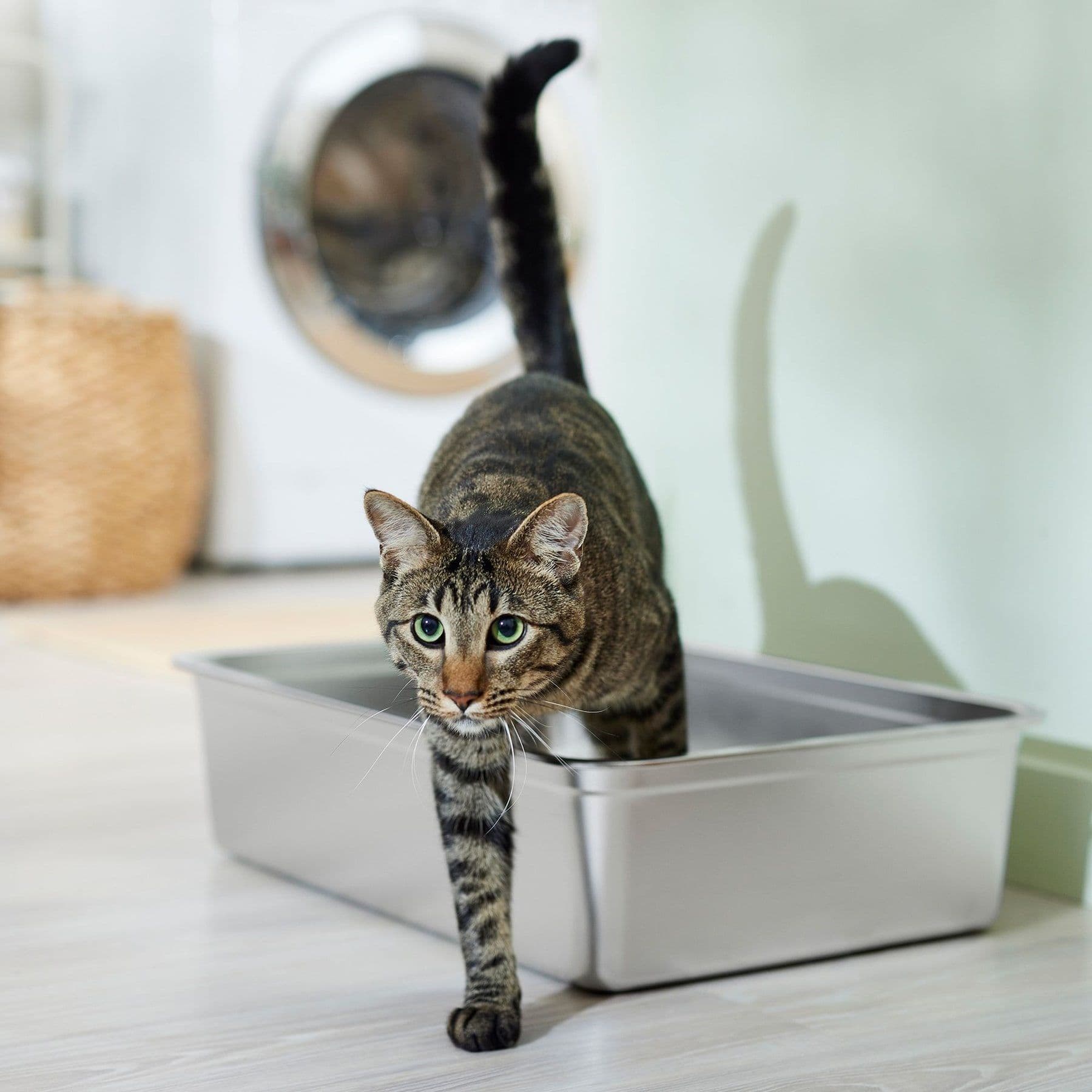
A large, plain stainless box with no lid or sifter to complicate things, at the lowest listed price of our five picks.
Webvet may earn a commission when you click through to Chewy, at no extra cost to you.
The Frisco is sold as a large stainless steel cat litter box, 23-in, and at $45.99 on Chewy it was the least expensive of our five picks. Nothing in its product name points to a lid, hood or sifter. It is the simple box design that veterinary sources keep returning to.
That simplicity is the point. Cornell Feline Health Center says most cats prefer an uncovered box that lets odors escape and gives a 360-degree view. The ASPCA says the majority of cats prefer large boxes they can enter easily.
- Best for: most healthy adult cats, and multi-cat homes adding boxes to reach one box per cat plus one.
- Tradeoff: the specs we could verify do not list side height, steel grade or weight, so check the listing before buying for a senior or arthritic cat.
Litter Genie Platinum Stainless Steel Litter Box: best high-sided
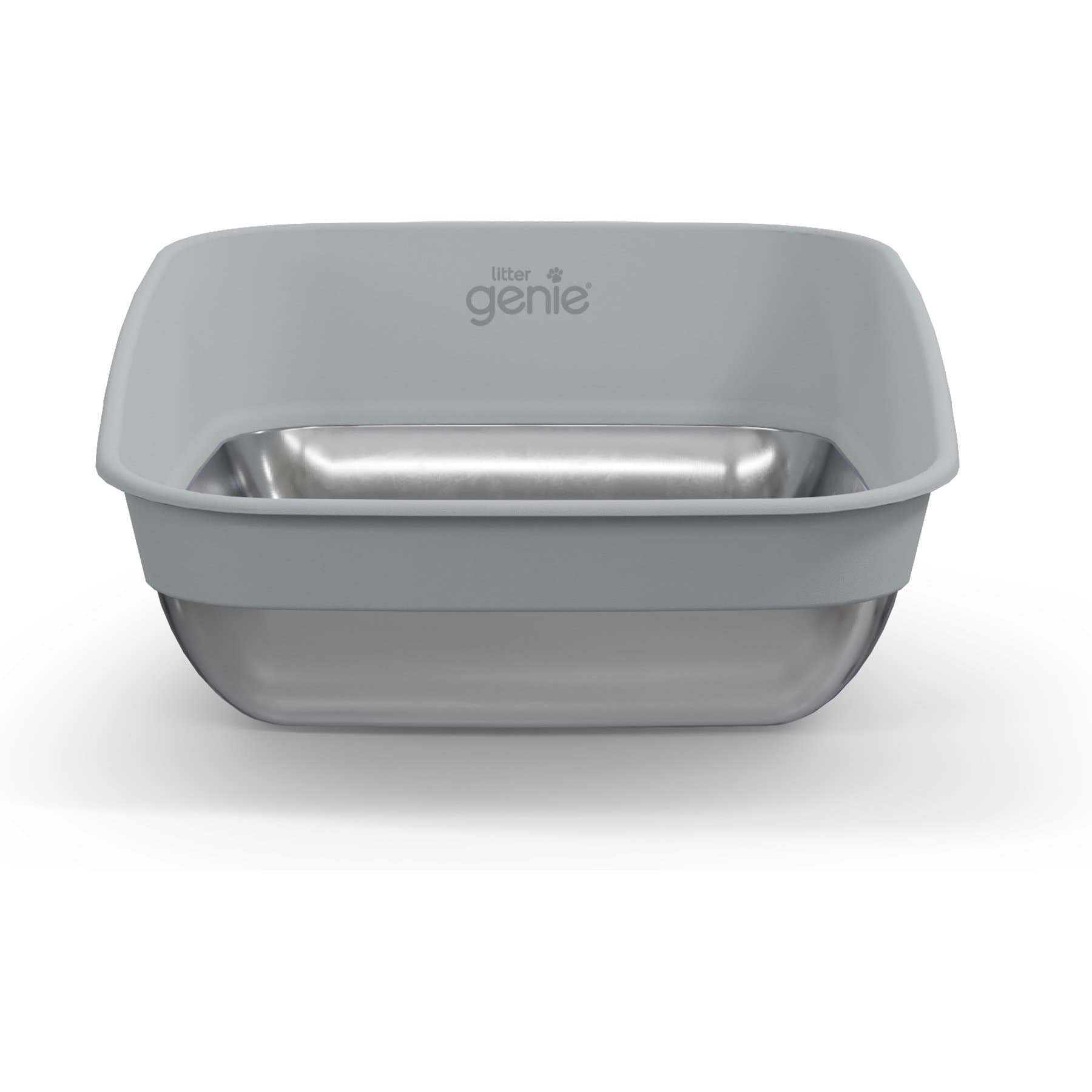
A stainless base with an 8-inch back wall for diggers and a lower 5-inch front for easier entry.
Webvet may earn a commission when you click through to Chewy, at no extra cost to you.
The Litter Genie Platinum is the only box here with a published shape. Litter Genie lists it at 18.5 inches wide and 23.2 inches long, 5 inches high at the front and 8 inches at the back. That taller back wall earns the high-sided label, while the lower front keeps the step-in reasonable.
It is not an all-steel box. The manufacturer describes a stainless steel base, which it says does not absorb odors, with the other parts made of plastic. It was listed at $64.99 on Chewy. For more on the brand, see our Litter Genie review.
Litter Genie suggests up to 12.2 liters of litter, about 3 inches deep. The ASPCA advises one to two inches rather than three to four, so start shallower if your cat seems reluctant to use a deep bed.
- Best for: cats that dig hard or kick litter toward the back of the box.
- Tradeoff: a 5-inch front may still be a stretch for a cat with arthritis, and no veterinary source sets an exact entry height.
FUTAM Stainless Steel Sifting Litter Box with Lid: best sifting box for pellets
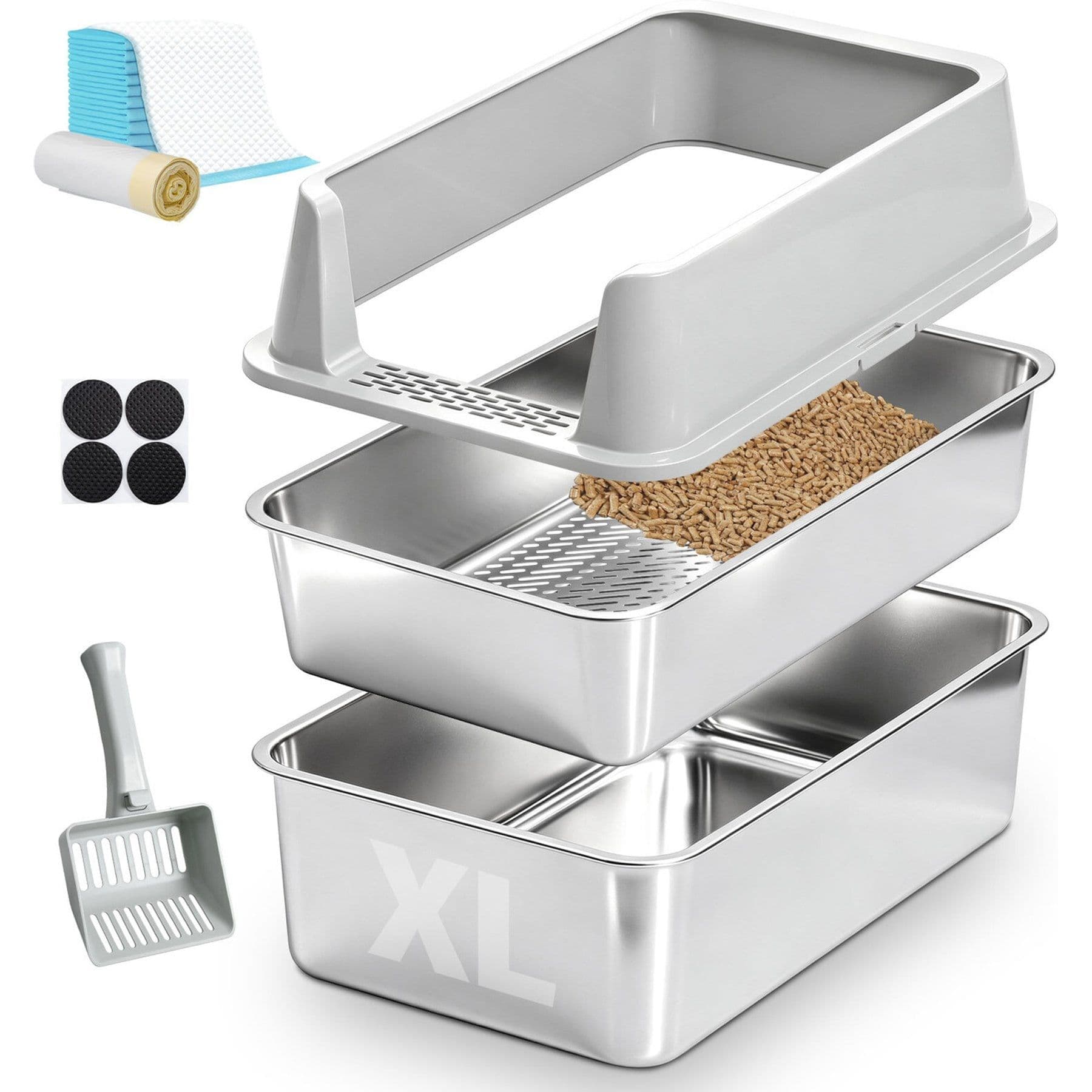
An extra-large stainless sifting box with a lid, designed around pine pellet litter rather than clumping clay.
Webvet may earn a commission when you click through to Chewy, at no extra cost to you.
FUTAM's X-Large box combines three features in its name: a stainless steel sifting design, compatibility with pine pellets, and a lid. It was listed at $79.99 on Chewy, the most expensive of our five picks.
It makes the most sense if you already use pine or another pellet litter and want a box designed around it rather than a plain pan. Keep the pellet layer shallow: Feline Pine's label says to pour one inch into a clean box.
The tradeoff is uncertainty about size. FUTAM does not publish a spec sheet we could verify, and third-party listings for X-Large versions disagree on dimensions, with at least one showing no lid. Measure your space and confirm the lid is included before ordering.
PETSPARX Stainless Steel Enclosed Litter Box: best enclosed box
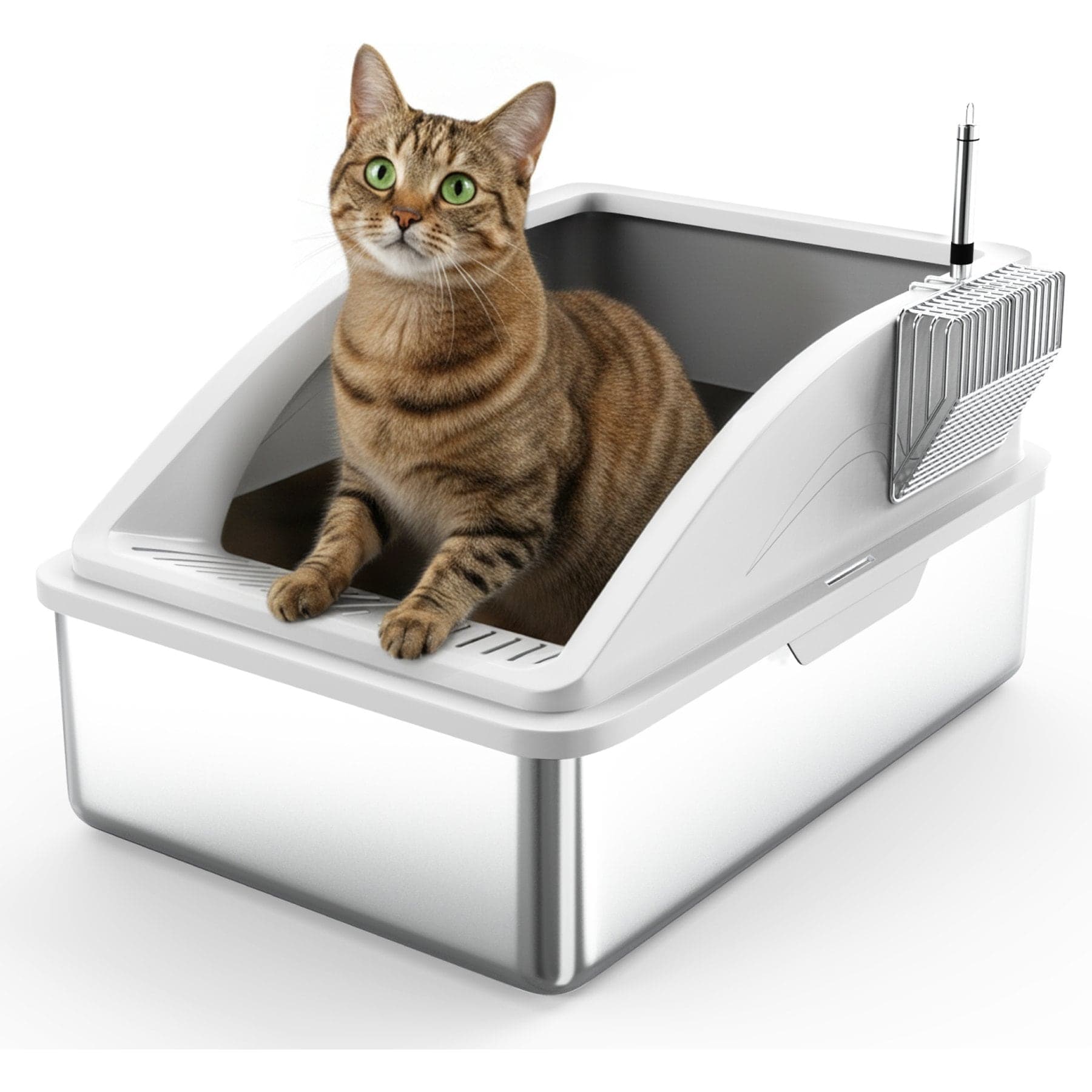
A fully enclosed stainless box for cats that already prefer a hooded box and want privacy.
Webvet may earn a commission when you click through to Chewy, at no extra cost to you.
The PETSPARX box is fully enclosed, built for cats that already use a hooded box and seem to want privacy. Merck notes that some cats like the privacy of a hooded box, and this one offers a stainless steel box in an enclosed format. It was listed at $72.69 on Chewy.
Choose it deliberately. Cornell, the ASPCA and VCA all lean toward open boxes or side-by-side testing for most cats, so this is a pick for a known hood user, not a default for a new cat. We could not confirm whether the hood itself is steel or plastic, or the box's dimensions, so check both on the listing.
- Best for: cats with a history of using covered boxes happily.
- Tradeoff: an enclosure holds odor in, and Cornell says most cats prefer a box that lets odors escape.
Pet Adobe Stainless Steel Cat Litter Box: best for one cat or a small space
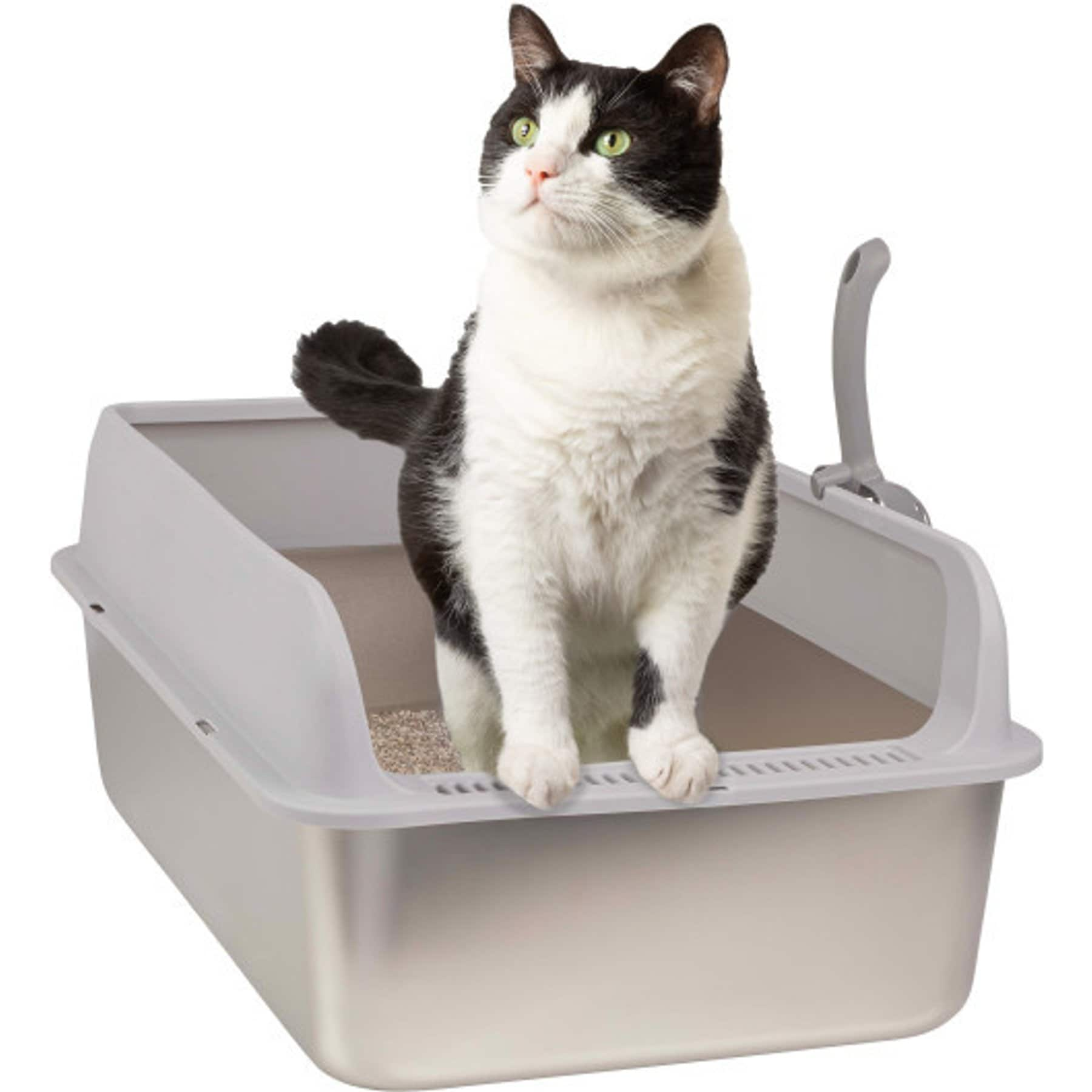
A plain stainless steel box priced below the lidded, enclosed and sifting models in this guide.
Webvet may earn a commission when you click through to Chewy, at no extra cost to you.
The Pet Adobe box is a plain stainless steel cat litter box listed at $56.39 on Chewy. That is less than the Litter Genie, PETSPARX and FUTAM, though more than the Frisco, so it is a budget option relative to the specialty boxes rather than the cheapest box overall.
It suits shoppers who want a second simple steel box, for example to follow the cats-plus-one rule, when the Frisco is unavailable or does not suit the space.
The tradeoff is information. We found no verified listing of its dimensions or steel grade, and grade claims for boxes like this vary by seller. Look for 304 stated on the label before you buy.
SponsoredVet care that's always there
Unlimited video calls and messaging with licensed vets for less than a typical vet visit. One membership covers up to five pets.
Use code Pets60
Plans start at $12/month · covers up to 5 pets
- Licensed vets in most states
- Rx for 150+ conditions
- 4.7 on Trustpilot
How to choose a stainless steel litter box: size, sides, lids, and sifting
Start with size, because it is the one point every veterinary source agrees on. VCA Animal Hospitals says cats usually prefer boxes about 1.5 times their body length. Merck says larger litter boxes are better because cats like space to dig and turn around.
Cornell adds that overweight and large cats need bigger boxes. In practice, buy the largest stainless steel litter box that fits your space. Size labels vary between brands, so compare the listed length with your cat rather than trusting words like large, XL, XXL or extra large on their own.

Side height is the second decision, and it pulls in two directions. A high-sided litter box helps contain a cat that digs hard or kicks litter, which is why a taller back wall like the one on the Litter Genie Platinum Stainless Steel Cat Litter Box, Grey suits diggers. Seniors need the opposite.
Merck says older cats with arthritis might need lower sides to enter and exit easily. Cornell says kittens, elderly cats and cats with mobility problems need low sides, and the ASPCA suggests a low-sided box for geriatric cats. VCA notes that cats in orthopedic or neurologic pain may find a traditional box uncomfortable.
Use this quick guide to match box style to cat type:
- Most healthy adult cats: a large, open stainless steel box.
- Large or overweight cats: the largest box your space allows, with a long floor.
- Hard diggers and litter kickers: a high-sided stainless steel litter box, ideally taller at the back than the front.
- Seniors, kittens and arthritic cats: a low entry they can step over without climbing.
- Cats that seek privacy: a covered or enclosed box, but only after a side-by-side test against an open one.
- Pellet litter users: a sifting litter box designed for pellets.
Placement and number matter as much as the box. Merck advises a secluded, low-traffic area your cat can reach easily, and both Merck and Cornell recommend at least one more box than the number of cats.
What is the most hygienic cat litter box?
The most hygienic cat litter box is the one cleaned on schedule: scooped every day and washed fully at least once a week, as Merck advises. Material helps at the margins. Litter Genie says smooth, nonporous stainless steel makes residue easier to remove, while scratched plastic is, by the usual reasoning, harder to get fully clean.
What litter box do vets recommend?
Vets recommend a shape and a routine, not a brand or material. Merck says larger boxes are better, Cornell says most cats prefer an uncovered box, and the ASPCA favors large boxes that are easy to enter. The AAFP and ISFM house-soiling guidelines list optimizing the litter box as a universal step. None of them names steel or plastic.
Stainless steel litter box with lid or enclosed: does your cat want privacy?
Lidded, covered and enclosed stainless steel boxes appeal to owners because they hide the view and some of the smell. Cats are less sure. Cornell says most cats prefer an uncovered box that lets odors escape and gives a 360-degree view of their surroundings, and its new-cat guide says most prefer simple boxes without hoods.
The ASPCA goes further: most cats do not like box liners or lids, and removing covers is one of its steps when a cat has litter box problems. On the other side, Merck notes that some cats do like the privacy of a hooded box.
The fair way to decide is the test VCA suggests: set a covered and an open box side by side and let your cat choose.
- Place a lidded or enclosed box and an open box next to each other in a quiet spot.
- Keep both scooped daily so cleanliness does not skew the result.
- Watch which box your cat uses over the following days.
- Keep the winner, and keep the second box as your extra box if you have room.
Enclosed boxes need a slightly different routine. Merck's advice to clean the entire box at least weekly applies to the hood and door as well as the pan, because an enclosure holds odor in rather than letting it escape, as Cornell describes for open boxes.
In a multi-cat home, you do not have to choose one style. With at least one more box than cats, as Merck and Cornell advise, you can offer an enclosed stainless box alongside open ones and let each cat decide.
If you like the look of a hidden box but your cat wants an open one, a furniture-style litter box enclosure can hide an open pan inside a cabinet. Give your cat a clear entry and enough headroom, and watch for the same signs of avoidance.
Sifting stainless steel litter boxes and pellet litter
A sifting litter box uses a perforated sifting tray that nests in a solid base, so you lift the tray to separate loose material from the litter that stays on top. In the UK the same design is usually sold as a stainless steel litter tray with sifter.
Sifting boxes make the most sense with pine and other pellet litters, and the FUTAM Stainless Steel Sifting Cat Litter Box for Pine Pellets with Lid, X-Large is built around pellets. No veterinary source has compared sifting and solid boxes, so follow the box and litter makers' directions on emptying the base.

Keep the litter bed shallow. Feline Pine's label says to pour one inch of pellets into a clean box, and the ASPCA advises one to two inches of litter rather than three to four. A deep layer in an extra-large sifter is not better for your cat.
With clumping litter, a sifter adds less. Cornell's advice is to remove feces and clumps daily and add clean litter as needed, which a solid stainless pan and a scoop handle well. Our clumping cat litter guide covers the options, and our World's Best Cat Litter review looks at one brand in detail.
A quick way to decide whether a sifting stainless steel litter box fits your home:
- Good fit: you already use pine or other pellet litter and want a box designed for it.
- Good fit: you want a lidded sifting box and your cat has used covered boxes without trouble.
- Poor fit: you use a clumping litter that you scoop daily anyway.
- Poor fit: your cat avoids lids, which the ASPCA says most cats dislike.
Litter choice matters as much as the box. For which litters to avoid, see our best cat litter guide, and for the healthiest options, our natural cat litter guide.
Cleaning and caring for a stainless steel litter box
A stainless steel cat litter box is easier to clean, not self-cleaning. The veterinary routine is the same for every material: Merck says to scoop daily and clean the entire box at least weekly, and VCA says to clean the box at least once daily. Cornell warns that cats may avoid a litter-box area that is not clean.
Use gentle products. VCA says to wash the box with mild soap and avoid bleach, ammonia and strong chemicals. The ASPCA suggests rinsing the box completely with baking soda or unscented soap once a week, and says not to clean accidents with an ammonia-based cleanser.

A simple weekly routine for a stainless steel litter box with or without a lid:
- Empty the litter. VCA says scoopable litter should be dumped out entirely and replaced every month, so time a full change with a weekly wash.
- Scrub the pan, and the lid or cover if it has one, with a gentle detergent or unscented soap.
- Rinse thoroughly so no soap or salty residue stays in the corners.
- Dry the box completely before refilling, as Cornell advises.
- Refill with a shallow, fresh layer of litter.
Drying is the steel-specific step. Grade 304 resists a wide range of conditions but is subject to pitting and crevice corrosion in warm chloride environments, so a box left with standing water or salty residue can spot. Covered, enclosed and top-entry boxes have more seams and corners, so dry those carefully.
Some listings describe steel pans as non-stick. The manufacturer claim we could verify is narrower: Litter Genie says the smooth surface makes residue easier to remove. You still need to scoop.
How long does steel last? No published lifespan figure exists for steel or plastic boxes, and Merck says only that old boxes should be replaced. With a nonporous surface, the practical signs to watch for are:
- Pitting or rust spots that do not scrub away.
- A lid, cover or hood that no longer comes clean.
- A lingering smell after a full wash and dry.
Even a pan sold as scatterless will let some litter leave on your cat's paws. A mat at the entry catches much of it; our best cat litter mat guide compares options.
Switching your cat to a new litter box without accidents
Cats notice change, so swap boxes gradually. The ASPCA suggests adding a few litter boxes in different locations at the same time, which lets you introduce the new stainless box while the old one stays available. VCA suggests providing the favored setup in at least two locations and keeping both very clean.
- Set the new box up near the old one, filled with the litter your cat already uses.
- Keep the old box in place until your cat is using the new one reliably.
- Change one thing at a time: the box first, then the litter if you plan to switch.
- Scoop both boxes daily during the changeover.
If you are also moving to pellets, Feline Pine's label describes a gradual method:
- Layer one to two inches of the old litter over a base of pellets.
- Repeat for another three to four litter changes, using less of the old litter each time.
Know what a real problem looks like. VCA defines litter box aversion as elimination that is never or rarely in a litter box, and Cornell says a cat with an aversion usually eliminates on a variety of surfaces. Our guide to a cat peeing outside the litter box walks through the causes.
Not every accident is about the box. The ASPCA says the first step is to rule out urine marking and medical problems, and VCA notes that urinary tract infection or inflammation makes urination uncomfortable. Read when changes in litter box habits signal a medical problem before you blame the new box.
Feline lower urinary tract disease is the condition to know. Cornell lists these signs:
- Straining to urinate.
- Frequent attempts to urinate that produce little, if any, urine.
- Urinating outside the litter box.
Cornell also says stress seems to be an important factor in feline idiopathic cystitis, so a big household change deserves a slow transition. A urethral obstruction is an absolute emergency needing immediate veterinary treatment, and male cats are at greater risk. Cornell says the time from complete obstruction to death may be under 24 to 48 hours.
Stainless steel litter box questions
Frequently Asked Questions
Do stainless steel litter boxes rust?
They can spot under the wrong conditions. Grade 304 stainless resists a wide range of household environments, but it is subject to pitting and crevice corrosion in warm chloride environments. Avoid leaving standing water or salty residue in the box, dry it fully after washing, and look for 304 on the label, since grade claims vary by seller.
Do cats mind the cold feel or noise of a metal litter box?
No published study shows whether most cats adapt to the feel or sound of metal. The safe approach is to keep the old box available while you add the new one, in line with the ASPCA's advice to add boxes rather than swap them. Remove the old box once your cat uses the steel one reliably.
How big should a stainless steel litter box be?
VCA says cats usually prefer boxes about 1.5 times their body length. VCA does not say whether body length runs nose to tail base or to the tail tip, so measure nose to tail base and size up when you are between options. Merck says larger boxes are better, and Cornell says large cats need bigger boxes.
Are high-sided stainless steel litter boxes good for senior cats?
Not on every side. Merck says older cats with arthritis might need lower sides to get in and out easily, and Cornell agrees for elderly cats with mobility problems. If your senior cat also kicks litter, look for a low entry at the front and a taller back, like the Litter Genie Platinum's 5-inch front and 8-inch back.
Can I use a stainless steel litter box with an automatic or sifting system?
A sifting stainless box is a manual system: you lift a perforated sifting tray to separate litter, and it suits pellets used at the litter maker's recommended depth. A self-cleaning box is a different category with its own mechanism. If you want that, see our best automatic litter boxes guide rather than trying to adapt a steel pan.

Editor
The Webvet Editorial Team is the in-house group of pet-care editors and writers behind Webvet, operated by Smart Pet Collective. The team researches, writes, and maintains Webvet's pet health, behavior, and medication content. Every article follows a defined editorial process: research from reputable veterinary and scientific sources, careful drafting, mandatory review of medical content by a credentialed veterinarian, and dated publication. Health and medication articles are medically reviewed by a licensed veterinary professional before they go live and are kept current over time.
Veterinarian · BVMS MRCVS
Dr. Pippa Elliott, BVMS, MRCVS, is a veterinarian with nearly 30 years of experience in companion animal practice. Dr. Elliott earned her Bachelor of Veterinary Medicine and Surgery from the University of Glasgow. She was also designated a Member of the Royal College of Veterinary Surgeons. Married with 2 grown-up kids, Dr. Elliott has a naughty Puggle named Poggle, 3 cats and a bearded dragon.
Related reading

World's Best Cat Litter Review: Clumping, Tracking, Flushing, and Which Cats It Suits

Litter Genie Review: Does It Really Work, What Refills Cost, and the Best Alternatives

Best Litter Box Enclosures and Litter Furniture: What Vets Say About Enclosed Boxes
