Best Clumping Cat Litter: 9 Vet-Checked Picks
Compare nine vet-reviewed clumping cat litter picks across clay, corn, wood, grass, walnut, and wheat, plus safer scooping, transition, and kitten guidance.

BVMS MRCVS
Medically reviewed by Dr. Pippa Elliott, BVMS MRCVS · Last reviewed

This article contains affiliate links. Webvet may earn a commission when you buy through them, at no extra cost to you.
Clumping cat litter absorbs liquid and binds it into removable masses, making daily urine cleanup easier and helping owners notice changes in output. The best formula for an adult cat forms scoopable clumps without excessive dust, fragrance, crumbling, paw sticking, or box avoidance.
Our nine picks cover clumping clay, corn, soft wood, grass, walnut shell, and wheat. Dr. Elsey's Ultra Unscented is the strongest overall match; World's Best Multi-Cat Unscented supplies a corn-based natural route; Tidy Cats Free & Clean Unscented is a direct unscented clay option; Scoop Away Complete Performance serves homes that already accept a scented multi-cat formula; and Catalyst Pet Multi-Cat offers a low-dust wood alternative; Dr. Elsey's Clean Tracks focuses on reduced tracking; SmartCat Unscented Clumping Grass adds lightweight grass; Naturally Fresh Multi-Cat Unscented adds walnut shell; and sWheat Scoop Multi-Cat Natural completes the material comparison with wheat.
- 1Clumping makes urine removable between full box changes, but clump strength and residue vary by formula and technique.
- 2Use the correct depth, wait for a clump to set, and scoop underneath it rather than chopping through the center.
- 3Unscented fine-grained litter is a useful adult-cat baseline when the cat has no established contrary preference.
- 4Young kittens and cats that ingest litter need case-specific guidance; use WebVet's kitten non-clumping guide.
- 5Straining, repeated trips, blood, pain, or little urine is a veterinary problem, not a clump-performance problem.
 Sponsored
Have a health question about your cat?
Talk to a licensed vet at Dutch over video or message, including nights and weekends.
Use code Pets60
Plans start at $12/month · covers up to 5 pets
- Licensed vets in most states
- Rx for 150+ conditions
- 4.7 on Trustpilot
The best clumping cat litter at a glance
A really good clumping cat litter forms a removable mass without excessive dust, fragrance, residue, or tracking and, most importantly, is used comfortably by the cat. The nine products below solve different versions of that problem:
- Dr. Elsey's Ultra Unscented: Best overall clumping litter. Hard clumping, unscented positioning, and familiar granules answer the central scoopability question.
- World's Best Multi-Cat Unscented: Best natural clumping litter. Corn starch and absorbency create a plant-based clump for readers avoiding clay.
- Tidy Cats Free & Clean Unscented: Best fragrance-free clay alternative. The formula keeps added scent out of the decision while retaining routine clumping mechanics.
- Scoop Away Complete Performance: Best scented multi-cat clumper. Its multi-cat positioning focuses on high-volume odor and scoopability where fragrance is already accepted.
- Catalyst Pet Multi-Cat: Best wood clumping litter. Soft wood fiber supplies a clumping format that differs from both clay and rigid non-clumping pellets.
- Dr. Elsey's Clean Tracks: Best low-tracking clumping clay. The hard-clumping unscented formula directly addresses tracking without changing to a plant material.
- SmartCat Unscented Clumping Grass: Best grass clumping litter. Lightweight unscented grass granules add a clay-free clumping route.
- Naturally Fresh Multi-Cat Unscented: Best walnut clumping litter. Unscented walnut-shell granules add a distinct plant-based multi-cat clumper.
- sWheat Scoop Multi-Cat Natural: Best wheat clumping litter. The wheat formula provides natural clumping without added dyes or perfumes.
| Pick | Material | Format | Best fit | Main tradeoff |
|---|---|---|---|---|
| Dr. Elsey's Ultra Unscented | Bentonite clumping clay | Unscented clumping | Balanced everyday clay | Heavy bag and fine-granule tracking |
| World's Best Multi-Cat Unscented | Corn | Unscented clumping | Corn-based alternative | Dry storage and texture acceptance |
| Tidy Cats Free & Clean Unscented | Clumping clay | Unscented clumping | Straightforward fragrance-free clay | Clay weight, dust, and tracking |
| Scoop Away Complete Performance | Clumping clay | Scented clumping | Multi-cat odor control | Added fragrance and clay weight |
| Catalyst Pet Multi-Cat | Upcycled soft wood fiber | Clumping soft fiber | Low-dust lightweight handling | Fibrous texture and light tracking |
| Dr. Elsey's Clean Tracks | Bentonite clumping clay | Unscented hard clumping | Reduced-tracking clay | Heavy bag and remaining fines |
| SmartCat Unscented Clumping Grass | Grass | Unscented clumping | Lightweight grass-based option | Light-granule tracking and storage |
| Naturally Fresh Multi-Cat Unscented | Walnut shell | Unscented clumping | Walnut-shell multi-cat option | Dark color and dry storage |
| sWheat Scoop Multi-Cat Natural | Wheat | Clumping, no added perfume | Wheat-based multi-cat option | Natural odor and pest-proof storage |
Veterinarians do not universally prescribe one brand. They consider age, litter ingestion, paw comfort, respiratory disease, wounds, urine-collection needs, established preference, and the complete box setup. Use the roundup as a fit decision, then defer to case-specific veterinary instructions.
If two formulas appear equal, choose the one that is easier to keep consistently clean and easier to obtain without abrupt substitutions. Reliability across ordinary weeks matters more than a single ideal clump.
Clumping versus non-clumping litter
| Feature | Clumping litter | Non-clumping litter |
|---|---|---|
| Urine cleanup | Remove individual clumps daily | Absorbs or passes moisture through; larger sections or full contents replaced |
| Output observation | Clump number and approximate size remain visible | Wet areas can be harder to quantify |
| Common materials | Bentonite clay, corn, wheat, grass, tofu, some wood | Paper, wood pellets, silica crystals, some clay |
| Main failure mode | Crumbling, sticking, weak set, excess dust | Saturation, retained odor, more frequent full changes |
| Best fit | Routine adult-cat scooping when accepted | Specific kitten, recovery, pellet, or system preferences |

Why do some shelters prefer non-clumping litter? Protocols vary, but a shelter may choose inexpensive paper or pellet products for very young kittens, post-surgical animals, intake monitoring, or simplified sanitation. That operational choice does not prove non-clumping is healthiest for every owned adult cat. Follow the shelter's transition instructions and the veterinarian's advice for the individual animal.

How we evaluated clumping litter
We matched each exact formula to a defined role and reviewed it through six practical questions: Does it clump or merely absorb? Is added fragrance present? What material touches the paws? What does the product description say about dust? How likely is the particle shape to travel? Which household problem is the formula designed to solve?
We do not convert merchant ratings into veterinary recommendations. Star scores blend shipping, packaging, price, formula changes, and individual preferences. Instead, the ranking explains why an exact product fits a use case and what would make a reader choose a different pick.
WebVet selected these exact formulas from current product documentation, retailer availability, customer-demand evidence, and veterinary-reviewed fit and safety criteria. We did not run controlled hands-on performance tests, so clumping, dust, and tracking claims are starting points for a consistent home trial.
Our 9 best clumping cat litter picks
Best overall clumping litter: Dr. Elsey's Ultra Unscented
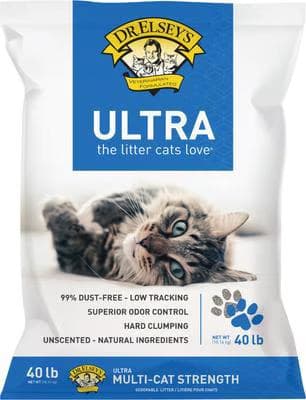
99% dust-free, low-tracking clumping clay litter with superior odor control and hard clumping. Unscented, natural ingredients, multi-cat strength.
Webvet may earn a commission when you click through to Chewy, at no extra cost to you.
Dr. Elsey's Ultra Unscented is our best overall clumping litter choice because it combines a familiar fine texture with unscented clumping and a documented low-dust position. Its bentonite clumping clay material and unscented hard-clumping granules format give it a specific job in this clumping and scoopability comparison rather than a claim to be best for every cat.
Hard clumping, unscented positioning, and familiar granules answer the central scoopability question. The result still depends on normal box use, so watch whether the cat enters, digs, eliminates, covers, and returns without hesitation.
The dense clay forms the kind of firm urine clump that is easy to lift from underneath after it has had time to set. That makes daily output easier to notice and reduces the wet fragments left in the box. The same density means heavier bags and waste, so it is a less comfortable fit when carrying or stairs are the main constraint.
Dr. Elsey's Ultra Unscented: strengths and tradeoffs
Pros
- It combines a familiar fine texture with unscented clumping and a documented low-dust position.
- Best for adult cats that already accept fine clumping clay and households seeking a balanced fragrance-free baseline.
Cons
- Clay is dense to lift and discard, fine granules can track, and the material does not answer households seeking a plant-based substrate.
- Skip it if lifting and discarding dense clay is difficult, your cat tracks fine granules heavily, or you specifically want a plant-based substrate.
- Use it well: Maintain enough depth to keep urine from bonding to the box floor.
- Use it well: Allow a fresh clump to set before lifting it from underneath.
- Use it well: Compare dust through the full bag because shipping fines can settle.
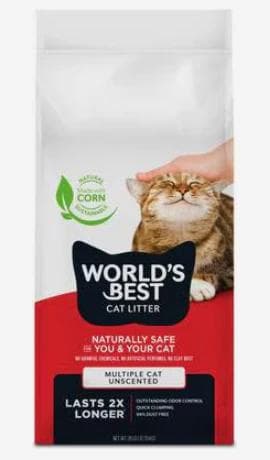
Best natural clumping litter: World's Best Multi-Cat Unscented
Webvet may earn a commission when you click through to Chewy, at no extra cost to you.
World's Best Multi-Cat Unscented is our best natural clumping litter choice because it provides a direct corn-based clumping alternative with an unscented multi-cat formula. Its corn material and unscented plant-based clumping granules format give it a specific job in this clumping and scoopability comparison rather than a claim to be best for every cat.
Corn starch and absorbency create a plant-based clump for readers avoiding clay. The result still depends on normal box use, so watch whether the cat enters, digs, eliminates, covers, and returns without hesitation.
This corn formula is the strongest current choice for a reader who wants clumping without clay. The granules are lighter than conventional clay and the clumps need a gentler scoop to avoid breaking at the edges. Store the bag in a dry, sealed place and let the cat compare the new texture in a second box.
World's Best Multi-Cat Unscented: strengths and tradeoffs
Pros
- It provides a direct corn-based clumping alternative with an unscented multi-cat formula.
- Best for cats that accept plant granules and households that want clumping performance without a clay substrate.
Cons
- Corn needs dry sealed storage, the natural material odor and texture may be unfamiliar, and lightweight granules can track.
- Skip it if you cannot keep a plant-based litter sealed and dry, your cat rejects the corn texture or raw-material smell, or lightweight tracking is a persistent problem.
- Use it well: Store the bag sealed and discard material that becomes damp or abnormal.
- Use it well: Introduce the corn texture beside the familiar box rather than forcing it.
- Use it well: Evaluate clump strength only after the product's normal setting time.
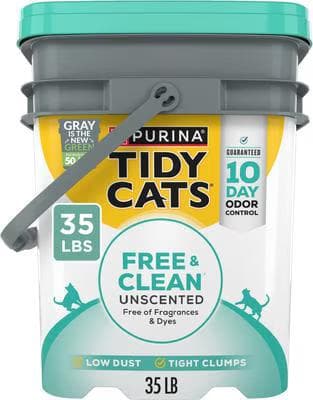
Best fragrance-free clay alternative: Tidy Cats Free & Clean Unscented
Webvet may earn a commission when you click through to Chewy, at no extra cost to you.
Tidy Cats Free & Clean Unscented is our best fragrance-free clay alternative choice because it offers a straightforward unscented clay identity without asking the reader to pay for an unrelated specialty feature. Its clumping clay material and fragrance-free clumping granules format give it a specific job in this clumping and scoopability comparison rather than a claim to be best for every cat.
The formula keeps added scent out of the decision while retaining routine clumping mechanics. The result still depends on normal box use, so watch whether the cat enters, digs, eliminates, covers, and returns without hesitation.
Free & Clean is a conventional clay comparison point with no added fragrance. It makes sense when a household wants familiar clumping mechanics and does not need a plant material or health-monitoring feature. Tracking and bag weight still need to be tested at home because fragrance-free does not guarantee either will be low.
Tidy Cats Free & Clean Unscented: strengths and tradeoffs
Pros
- It offers a straightforward unscented clay identity without asking the reader to pay for an unrelated specialty feature.
- Best for adult cats that prefer fine clay and households seeking a direct fragrance-free alternative.
Cons
- It retains the weight, mining, dust, and tracking considerations of clumping clay even without added fragrance.
- Skip it if you want to avoid clay, need a lighter bag, or have not solved an existing dust or tracking problem with fine granules.
- Use it well: Check that the received bag says Free & Clean Unscented.
- Use it well: Measure tracking and dust separately from fragrance acceptance.
- Use it well: Maintain depth and lift clumps from below to reduce breakage.
Best scented multi-cat clumper: Scoop Away Complete Performance
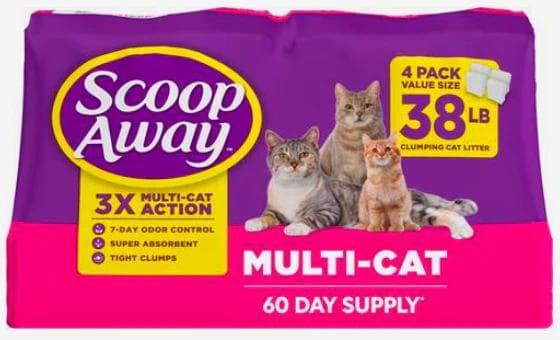
Webvet may earn a commission when you click through to Chewy, at no extra cost to you.
Scoop Away Complete Performance is our best scented multi-cat clumper choice because it is explicitly positioned for multi-cat odor control and firm daily clumping. Its clumping clay material and fresh-scented multi-cat clumping granules format give it a specific job in this clumping and scoopability comparison rather than a claim to be best for every cat.
Its multi-cat positioning focuses on high-volume odor and scoopability where fragrance is already accepted. The result still depends on normal box use, so watch whether the cat enters, digs, eliminates, covers, and returns without hesitation.
Scoop Away earns this narrower spot for homes that already know their cats accept scented clay. Its role is firm everyday clumping under a heavier waste load, not replacing adequate box numbers or daily scooping. A cat that hesitates at perfume should have an unscented box available immediately.
Scoop Away Complete Performance: strengths and tradeoffs
Pros
- It is explicitly positioned for multi-cat odor control and firm daily clumping.
- Best for multi-cat homes that already know their cats accept this scented clay format and prioritize odor performance.
Cons
- Added fragrance is not a good default for every cat or sensitive household, and dense fine clay can be heavy and track.
- Skip it if your cat or household is sensitive to added fragrance, or if the weight and tracking of fine clay are already dealbreakers.
- Use it well: Do not use fragrance to extend the interval between scooping.
- Use it well: Offer an unscented alternative if any cat hesitates or perches.
- Use it well: Spread boxes through the home rather than relying on one multi-cat box.
Best wood clumping litter: Catalyst Pet Multi-Cat
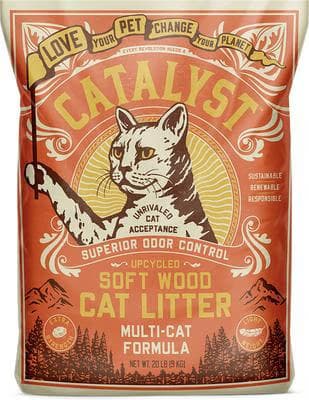
Upcycled soft-wood cat litter with superior odor control, very low dust, and a simple natural composition (no clay, no synthetic fragrance) - a gentler box for cats that nibble at their litter.
Webvet may earn a commission when you click through to Chewy, at no extra cost to you.
Catalyst Pet Multi-Cat is our best wood clumping litter choice because the current product description documents very low dust, soft wood fiber, and no synthetic fragrance. Its upcycled soft wood fiber material and lightweight clumping fiber with no synthetic fragrance format give it a specific job in this clumping and scoopability comparison rather than a claim to be best for every cat.
Soft wood fiber supplies a clumping format that differs from both clay and rigid non-clumping pellets. The result still depends on normal box use, so watch whether the cat enters, digs, eliminates, covers, and returns without hesitation.
Catalyst gives the clumping comparison a genuinely different material rather than another clay formula. Soft wood fiber is light to carry and produces a different, more fibrous clump. Scoop slowly and watch whether lightweight particles collect on long paw fur or travel beyond the mat.
Catalyst Pet Multi-Cat: strengths and tradeoffs
Pros
- The current product description documents very low dust, soft wood fiber, and no synthetic fragrance.
- Best for households prioritizing low-dust lightweight handling whose cats will accept a soft wood texture.
Cons
- The light fibrous texture differs from clay, may travel on long fur, and can produce a different clump feel.
- Skip it if your cat strongly prefers fine clay, lightweight fibers collect on long paw fur, or the household dislikes a softer wood-fiber clump.
- Use it well: Pour slowly because even a low-dust loose material can release fines.
- Use it well: Watch long paw fur and the exit mat for light fiber tracking.
- Use it well: Test scoop openings against the fiber size without vigorous shaking.
SponsoredVet care that's always there
Unlimited video calls and messaging with licensed vets for less than a typical vet visit. One membership covers up to five pets.
Use code Pets60
Plans start at $12/month · covers up to 5 pets
- Licensed vets in most states
- Rx for 150+ conditions
- 4.7 on Trustpilot
Best low-tracking clumping clay: Dr. Elsey's Clean Tracks
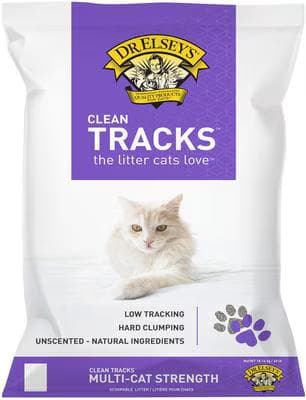
Unscented hard-clumping clay litter designed to reduce tracking in multi-cat homes.
Webvet may earn a commission when you click through to Chewy, at no extra cost to you.
Dr. Elsey's Clean Tracks is our best low-tracking clumping clay choice because its exact unscented formula is designed around hard clumping and reduced tracking in multi-cat homes. Its bentonite clumping clay material and unscented hard-clumping granules designed to reduce tracking format give it a specific job in this clumping and scoopability comparison rather than a claim to be best for every cat.
The hard-clumping unscented formula directly addresses tracking without changing to a plant material. The result still depends on normal box use, so watch whether the cat enters, digs, eliminates, covers, and returns without hesitation.
Dr. Elsey's Clean Tracks fills a distinct clumping and scoopability role because its bentonite clumping clay material and unscented hard-clumping granules designed to reduce tracking format change the texture, cleanup, handling, or storage decision. Trial the exact formula beside the familiar litter and judge normal box use before changing every box.
Dr. Elsey's Clean Tracks: strengths and tradeoffs
Pros
- Its exact unscented formula is designed around hard clumping and reduced tracking in multi-cat homes.
- Best for clay-preferring cats in households where tracked granules are the main performance problem.
Cons
- Dense clay is heavy to carry and discard, low tracking is not zero tracking, and dust still needs to be judged from the received bag.
- Skip it if lifting dense clay is difficult, you need a plant-based substrate, or any remaining fine-granule dust is unacceptable.
- Use it well: Use the same box, depth, and mat when comparing tracked material.
- Use it well: Allow fresh clumps to set before lifting them from underneath.
- Use it well: Pour close to the box and check visible dust through the full bag.
Best grass clumping litter: SmartCat Unscented Clumping Grass
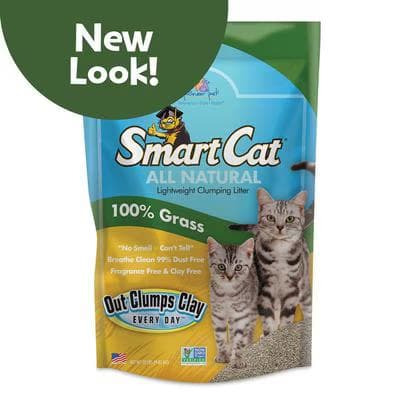
Unscented grass-based clumping litter for cats, with a lightweight clay-free formula.
Webvet may earn a commission when you click through to Chewy, at no extra cost to you.
SmartCat Unscented Clumping Grass is our best grass clumping litter choice because it combines a clay-free grass material with unscented clumping and lightweight handling. Its grass material and lightweight unscented clumping granules format give it a specific job in this clumping and scoopability comparison rather than a claim to be best for every cat.
Lightweight unscented grass granules add a clay-free clumping route. The result still depends on normal box use, so watch whether the cat enters, digs, eliminates, covers, and returns without hesitation.
SmartCat Unscented Clumping Grass fills a distinct clumping and scoopability role because its grass material and lightweight unscented clumping granules format change the texture, cleanup, handling, or storage decision. Trial the exact formula beside the familiar litter and judge normal box use before changing every box.
SmartCat Unscented Clumping Grass: strengths and tradeoffs
Pros
- It combines a clay-free grass material with unscented clumping and lightweight handling.
- Best for cats that accept fine plant granules and households prioritizing a lightweight unscented clumper.
Cons
- Light granules can travel beyond the box, the texture differs from clay, and plant material needs dry storage.
- Skip it if lightweight granules track heavily in your setup, your cat rejects grass texture, or dry storage is unreliable.
- Use it well: Use the same mat and cleaning interval when comparing lightweight tracking.
- Use it well: Keep the bag sealed and dry between refills.
- Use it well: Give clumps time to set and lift them from underneath.
Best walnut clumping litter: Naturally Fresh Multi-Cat Unscented
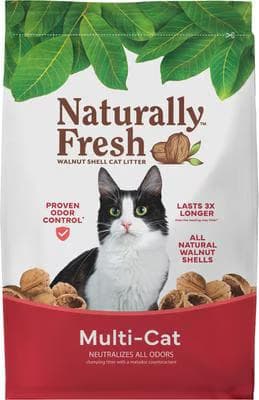
Unscented clumping walnut-shell litter designed for multi-cat odor control.
Webvet may earn a commission when you click through to Chewy, at no extra cost to you.
Naturally Fresh Multi-Cat Unscented is our best walnut clumping litter choice because it adds an exact walnut-shell, unscented clumping option with a defined multi-cat role. Its walnut shell material and unscented clumping granules format give it a specific job in this clumping and scoopability comparison rather than a claim to be best for every cat.
Unscented walnut-shell granules add a distinct plant-based multi-cat clumper. The result still depends on normal box use, so watch whether the cat enters, digs, eliminates, covers, and returns without hesitation.
Naturally Fresh Multi-Cat Unscented fills a distinct clumping and scoopability role because its walnut shell material and unscented clumping granules format change the texture, cleanup, handling, or storage decision. Trial the exact formula beside the familiar litter and judge normal box use before changing every box.
Naturally Fresh Multi-Cat Unscented: strengths and tradeoffs
Pros
- It adds an exact walnut-shell, unscented clumping option with a defined multi-cat role.
- Best for multi-cat households seeking an unscented plant-based clumper whose cats accept walnut-shell granules.
Cons
- Dark granules can make waste color harder to see, the shell texture may be unfamiliar, and plant material needs dry storage.
- Skip it if the darker substrate would make waste-color observation difficult, your cat rejects shell granules, or you cannot keep plant litter dry.
- Use it well: Keep the bag sealed and dry because organic material can change after moisture exposure.
- Use it well: Use a second box to compare the darker color and shell texture with the familiar litter.
- Use it well: Check clump integrity after the normal setting time instead of scooping immediately.
Best wheat clumping litter: sWheat Scoop Multi-Cat Natural
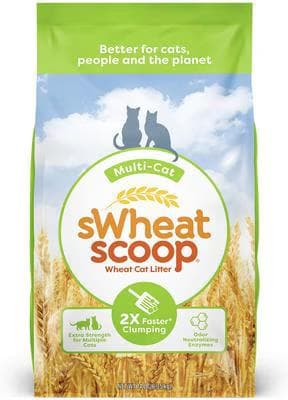
Natural wheat-based clumping litter for multi-cat homes, with no added dyes or perfumes.
Webvet may earn a commission when you click through to Chewy, at no extra cost to you.
sWheat Scoop Multi-Cat Natural is our best wheat clumping litter choice because it supplies a wheat-based multi-cat clumper without added dyes or perfumes. Its wheat material and natural clumping granules with no added dyes or perfumes format give it a specific job in this clumping and scoopability comparison rather than a claim to be best for every cat.
The wheat formula provides natural clumping without added dyes or perfumes. The result still depends on normal box use, so watch whether the cat enters, digs, eliminates, covers, and returns without hesitation.
sWheat Scoop Multi-Cat Natural fills a distinct clumping and scoopability role because its wheat material and natural clumping granules with no added dyes or perfumes format change the texture, cleanup, handling, or storage decision. Trial the exact formula beside the familiar litter and judge normal box use before changing every box.
sWheat Scoop Multi-Cat Natural: strengths and tradeoffs
Pros
- It supplies a wheat-based multi-cat clumper without added dyes or perfumes.
- Best for households seeking a fragrance-free wheat clumper and able to protect a food-derived material from humidity and pests.
Cons
- Wheat has a natural material odor, needs dry pest-resistant storage, and may clump or track differently from clay.
- Skip it if food-derived litter cannot be stored dry and pest-free, your cat rejects the wheat odor or texture, or you need a non-clumping format.
- Use it well: Store the bag in a sealed dry container away from pantry pests.
- Use it well: Compare clump strength after the product has had time to set.
- Use it well: Introduce the wheat texture beside the familiar litter rather than replacing it overnight.
What to verify before buying clumping cat litter
Confirm the exact formula rather than relying on a brand name alone. One product family can include scented and unscented bags, standard and lightweight clay, different granule sizes, or a non-clumping variant. Match the material, fragrance statement, net weight, clumping directions, and reviewed product name before opening the shipment, and keep the accepted litter available if anything differs.
Clumping claims are useful for selecting a trial, but they do not predict every box. Moisture volume, litter depth, humidity, the time allowed to set, scoop shape, and how strongly the cat digs all change the result. Compare candidates with the same box, depth, scoop, and removal schedule so the product is the main variable.
Track how much usable litter leaves with each scoop. A wide hard clump can remove clean granules around a small wet center, while a fragile clump can contaminate the remaining box and shorten the full-change interval. Note starting depth, top-up frequency, discarded litter, and the date residue forces a reset. Those observations reveal monthly value more accurately than bag price alone.
Availability also matters because an abrupt substitution can destabilize a litter-box routine. Before moving every box to the winner, confirm that the exact formula can be reordered and retain enough familiar product for a gradual transition. Photograph the original label and lot information so a later bag can be compared without relying on memory. Keep the receipt and original bag until the cat has completed a stable trial at home. Treat a changed ingredient list, fragrance statement, granule texture, or package direction as a new trial rather than assuming the old result still applies.
How clumping cat litter works
In clumping clay, sodium bentonite swells and binds particles when wet. Plant-based litters rely on starches, fibers, natural absorbency, or added binders. A formula's material name does not tell you exactly how quickly it sets or how well it survives the scoop. Granule size, moisture volume, box depth, humidity, and time before removal all influence the result.
A good clump should be identifiable, lift without excessive force, and leave little damp residue. Rock-hard adhesion to the bottom can indicate that the layer is too shallow or the formula sets aggressively. A soft pancake that breaks through the scoop may need more setting time, greater depth, or a different product. Repeatedly stirring the box can fragment clumps and distribute odor.
Clump strength is not the only goal
Very strong clumping simplifies cleanup, but the overall product still needs acceptable dust, tracking, fragrance, weight, and cat acceptance. A litter that creates perfect spheres but causes the cat to perch on the edge is not performing well. Likewise, an easily carried lightweight product can lose value if fragile clumps increase the amount discarded each day.
Use a slotted scoop whose openings match the granule size. Fine litter needs narrower slots; larger corn or wood particles need enough opening to return clean material without shaking vigorously. A wide, sturdy scoop lets you support the whole clump from below.
How to test clump strength and scoopability
A useful home test should mimic routine use without exposing the cat to an artificial experiment. Fill a clean tray to the labeled depth, add a measured small amount of plain water in one spot, and leave it for the normal setting time. Do not add urine, household chemicals, oil, or food. The goal is to compare the litter's mechanics, not reproduce every biological variable.
Slide the usual scoop underneath the test spot and lift once. Record whether the clump holds, bends, fractures, sticks to the tray, or leaves damp granules. Then let loose clean litter fall through with the minimum practical shaking. A strong result is easy to support and separates cleanly; it is not necessarily the hardest object the material can form.

Use the same conditions for every product
Keep water volume, tray, litter depth, setting time, scoop, room humidity, and lifting technique consistent. If one litter receives ten minutes and another receives several hours, the comparison says more about timing than formula. Repeat the test in more than one area of the bag because shipping fines may settle.
A water test cannot predict cat acceptance, urine chemistry, digging behavior, or odor. It only helps distinguish clump formation and removal. The real trial still needs a second box, normal use, daily observation, and a familiar fallback.
Measure waste, not only firmness
Weighing every clump is unnecessary for most homes, but notice how much clean litter leaves with each removal. A very large clump around a small wet center may consume more product. A fragile clump may contaminate the remaining box and shorten the full-change interval. Efficient performance balances containment with reasonable discarded volume.
Track top-up frequency for two weeks after the cat accepts the formula. A lower-priced bag can become expensive if large clumps remove excessive clean granules, while a premium litter can fail to justify its cost when crumbs require frequent resets.
Match the scoop to the granule
Slot width changes the apparent performance of a litter. Openings that are too large let fragile pieces fall back into the box, while openings that are too small retain excessive clean granules and encourage prolonged shaking. Use a sturdy scoop wide enough to support the clump and narrow enough to separate the product's loose particles with one or two gentle movements.
Handle angle matters as well. Enter the litter several inches from the wet area, travel underneath it, and lift with the scoop close to level. A steep edge-first approach can divide a good clump. For corners and box walls, loosen the perimeter with controlled pressure before supporting the mass. Replace cracked or rough scoops that trap residue, and wash the tool on a routine compatible with its material.
If the household uses several litter materials, keep a suitable scoop at each station or clean the shared tool between boxes. Carrying damp fragments from one product into another changes odor, clumping, and any monitoring color. It can also make a controlled preference trial harder to interpret. Store the scoop where it can dry, away from food preparation, and wash hands after every litter-box task. A dedicated washable caddy keeps the tool from contacting floors, counters, or unrelated pet supplies. Inspect the handle and slots regularly for cracks that can retain contaminated residue.
Clumping materials compared
Bentonite clay
Bentonite clay usually delivers the firmest familiar clump and a fine texture many cats accept. It is dense, so bags and waste can be heavy. Dust control differs among formulas, and added fragrance is independent of clumping performance. A low-dust or unscented label should be evaluated as its own attribute rather than assumed from the word clumping.
Clay clumps can cement to the bottom when the layer is shallow. Maintain the labeled depth, add litter after removal, and avoid scraping so aggressively that plastic becomes gouged and harder to clean. Replace the box when scratches retain residue despite washing.
Corn and other plant-based clumping litter
Corn, wheat, grass, and tofu litters can use plant starch and absorbent structure to form clumps. They are often lighter than clay, but strength and setting time vary. Fine corn may feel familiar; long tofu pellets present a larger surface under the paw. Plant materials need sealed dry storage because moisture can degrade performance and support spoilage.
A natural label does not guarantee lower tracking, lower dust, or permission to flush. Read the exact product directions and local wastewater rules. Used litter contains cat waste regardless of the clean material's origin.
Wood-fiber clumping litter
Wood litter ranges from rigid pellets that break into sawdust to soft fibers engineered to clump. A clumping wood product should be judged on the exact format, not on expectations created by stable-style pellets. Soft fibers can be lightweight and low dust, while their texture and clump density may differ from clay.
Wood's natural odor and color can also affect owner perception. Observe the cat's behavior and the actual wet area instead of assuming a fresh wood smell means the box is clean.
How to get stronger clumps with less waste
Use enough depth
A shallow layer allows urine to reach the box floor before the material can surround it. Follow the product's depth guidance and account for digging that pushes litter to one side. Level the box after scooping, but do not constantly stir wet areas into clean material.
Let the clump set
Immediate removal can split a newly formed clump. When the cat has finished and there is no urgency, allow the product's recommended setting time. Scoop feces promptly and keep the box clean, but approach urine clumps with enough support to lift them whole.
Scoop from underneath
Slide the scoop below the clump and lift slowly. Chopping from above divides it into fragments that fall through the slots. Tilt gently to return loose clean litter. If the clump sticks, loosen its edges rather than using force that flings particles.
Replace contaminated residue
Tiny damp crumbs accumulate even with careful technique. Remove visible residue, top up with fresh litter, and schedule full changes based on odor, dampness, and the product directions. Masking residue with fragrance or baking soda does not restore a clean substrate.
Clumping litter and kittens
Age is not the only consideration. A kitten with diarrhea, constipation, pica, dehydration, poor growth, or repeated litter ingestion needs veterinary assessment. Do not simply rotate materials while a medical problem continues.
When clumping litter is not the safest choice
Avoid a general clumping formula when the treating veterinarian has prescribed paper, non-absorbent collection media, or another substrate for a wound, surgery, urine sample, or medical observation. Very young kittens and cats that deliberately eat litter also need individualized guidance. The concern is the actual cat and use pattern, not a blanket claim that all clumping material is dangerous.
Stop using a bag that is wet, moldy, pest-contaminated, unusually dusty, strongly different from its label, or recalled. A cat that coughs, develops paw irritation, vomits after ingestion, or avoids the box needs the familiar safe option restored and appropriate veterinary advice.
Read our non-clumping litter for kittens guide for the age-specific decision, and return to this clumping guide when the kitten is developmentally ready and the veterinary plan allows it.
How to change to a clumping litter
Offer the clumping candidate in a second comparable box while retaining the established litter. Keep location, box dimensions, cleanliness, and depth as similar as practical. The cat's voluntary choice provides better evidence than forcing a blend into the only box.
If you must blend, begin with a small proportion and increase slowly over a week or longer. Pause at the last accepted mixture when digging, posture, covering, or frequency changes. Restore the familiar setup immediately if the cat eliminates elsewhere.
Do not change the entire litter system at once
A new clumping product, covered box, automatic mechanism, room, mat, and cleaner create too many variables. If avoidance begins, you will not know which change mattered. Make one controlled change, document it, and give a cautious cat time.
Automatic boxes need their own acclimation and size assessment. Keep a nonmoving familiar box available until the cat is voluntarily and consistently using the device. A clumping formula that works in a standard box may not meet the machine manufacturer's specifications.
When urine clumps signal a health concern
Clump number and approximate size can make output changes easier to notice, but they are not diagnostic measurements. Larger or more frequent clumps can accompany increased drinking; tiny repeated clumps can occur with urinary discomfort or obstruction; no clumps may mean the cat urinated elsewhere or is not producing urine.
A cat that strains, cries, repeatedly enters the box, passes blood, produces little or no urine, vomits, hides, or becomes lethargic needs prompt veterinary care. Inability to pass urine, particularly in a male cat, is an emergency. Do not wait to see whether a new clumping product fixes the pattern.
How often to change clumping cat litter
Scoop urine clumps and feces at least daily, then replace the material that leaves the box so the labeled working depth remains stable. A full change does not follow one universal calendar. The right interval depends on clump integrity, the number of cats and boxes, litter depth, box material, humidity, and residue left after routine removal.
Empty the box when damp crumbs, persistent odor, a sticky base, or widespread discoloration remains after scooping. Wash with an appropriate mild method, rinse away cleaner, and dry the box completely before refilling. Adding a fresh layer over contaminated material does not restore a clean substrate.

Create a box-specific maintenance schedule
Label each box on a household log and record daily scooping plus the last full wash. A box used by one small cat may remain workable longer than a preferred box used by several cats. Logging prevents an unused box from being reset unnecessarily and a high-use box from being neglected.
Do not wait for the entire room to smell. Odor inside a covered box can be stronger than the surrounding air, and some cats stop using the site before a person notices. During cleaning, inspect scratches, seams, filters, liners, and automatic components that can retain waste.
Change products separately from changing the whole box
A full hygiene reset and a formula transition are different events. When testing a new litter, prepare a clean second box rather than replacing the accepted product during a scheduled wash. This preserves a familiar option and lets you attribute any preference to the substrate instead of residual cleaner or a changed location.
If there is a sudden need to remove a recalled, contaminated, or medically inappropriate product, contact the veterinarian or manufacturer for the safest substitute and transition. The priority is a clean accessible box the cat will use, not adherence to a gradual calendar when the old material is unsafe.
For broader choices, compare the best cat litter roundup, low-dust litter guide, unscented litter guide, and natural litter material guide.
Clumping cat litter questions
Frequently Asked Questions
Is it better to use clumping cat litter?
Clumping litter is often convenient for adult cats because urine can be removed daily and output changes are easier to notice. Better still depends on acceptance, dust, fragrance, tracking, age, litter eating, wounds, and medical needs. A reliably used non-clumping litter is better than a clumping formula the cat avoids or a veterinarian has advised against.
How long should clumping litter sit before scooping?
Follow the product directions. A newly wet clump often needs a short setting period before it can be lifted intact. Support it from underneath and avoid chopping. Feces and obvious contamination should still be removed promptly.
Can clumping litter be flushed?
Do not assume so. Cat waste and litter can harm plumbing, septic systems, or wastewater treatment. Follow the exact product label and local rules; EPA septic guidance says cat litter should never enter a septic system.
Sources
Veterinary guidance used for this clumping-litter guide includes the AAFP and ISFM house-soiling guidelines, the AAFP and ISFM feline environmental-needs guidelines, and AAHA general litter-box considerations. Product selection remains an editorial judgment based on each exact formula's documented material and performance attributes.
Disposal guidance also references EPA septic-system care.

Editor
The Webvet Editorial Team is the in-house group of pet-care editors and writers behind Webvet, operated by Smart Pet Collective. The team researches, writes, and maintains Webvet's pet health, behavior, and medication content. Every article follows a defined editorial process: research from reputable veterinary and scientific sources, careful drafting, mandatory review of medical content by a credentialed veterinarian, and dated publication. Health and medication articles are medically reviewed by a licensed veterinary professional before they go live and are kept current over time.
Veterinarian · BVMS MRCVS
Dr. Pippa Elliott, BVMS, MRCVS, is a veterinarian with nearly 30 years of experience in companion animal practice. Dr. Elliott earned her Bachelor of Veterinary Medicine and Surgery from the University of Glasgow. She was also designated a Member of the Royal College of Veterinary Surgeons. Married with 2 grown-up kids, Dr. Elliott has a naughty Puggle named Poggle, 3 cats and a bearded dragon.
Related reading

Ruffwear Polar Trex Review: Winter Dog Boots for Snow, Ice, and Salt

Canada Pooch Dog Boots Review: Soft Shield, Hot Pavement, and Suspender Fit

Pawz Dog Boots Review: Rubber Balloon Boots for Salt, Heat, and Hardwood
