Best Natural Cat Litter: 7 Vet-Checked Picks
Compare seven vet-reviewed natural cat litter picks across corn, wood, wheat, grass, walnut, and recycled paper, plus storage, transition, and disposal tradeoffs.

BVMS MRCVS
Medically reviewed by Dr. Pippa Elliott, BVMS MRCVS · Last reviewed

This article contains affiliate links. Webvet may earn a commission when you buy through them, at no extra cost to you.
Natural cat litter replaces or reduces mineral clay with materials such as corn, wood, tofu, wheat, grass, walnut shell, or recycled paper. These products are not interchangeable. Some clump firmly, some absorb without clumping, some create very little dust, and some trade lighter weight for more tracking.
WebVet currently recommends seven exact natural-material products: World's Best Multi-Cat Unscented for corn-based clumping, Catalyst Pet Multi-Cat for low-dust soft wood, Naturally Fresh Multi-Cat Unscented for walnut shell, sWheat Scoop Multi-Cat Natural for wheat, SmartCat Unscented Clumping Grass for grass, Fresh News Unscented Non-Clumping Paper for recycled paper, and Feline Pine Original for pine pellets.
- 1Natural describes the source material, not guaranteed safety, sustainability, clumping, low dust, or cat acceptance.
- 2The exact product slate covers corn, soft wood, walnut shell, wheat, grass, recycled paper, and pine pellets.
- 3Tofu remains an explained material without a named product winner because no exact high-demand offer met the current selection bar.
- 4Store plant and wood litter sealed and dry; discard damp, spoiled, moldy, or pest-contaminated material.
- 5Do not flush used cat litter into a septic system, and follow local waste rules even when a product is biodegradable.
 Sponsored
Have a health question about your cat?
Talk to a licensed vet at Dutch over video or message, including nights and weekends.
Use code Pets60
Plans start at $12/month · covers up to 5 pets
- Licensed vets in most states
- Rx for 150+ conditions
- 4.7 on Trustpilot
The best natural cat litter at a glance
The healthiest kind of cat litter is not defined by a single material. It is an accepted, clean, appropriately low-dust substrate that the household can store and maintain and that does not conflict with the cat's medical needs. The seven current product fits are:
- World's Best Multi-Cat Unscented: Best corn litter. Its exact corn identity and unscented multi-cat clumping role are the strongest current plant-material match.
- Catalyst Pet Multi-Cat: Best wood litter. Its upcycled soft-wood formula combines a natural material with low-dust lightweight handling.
- Naturally Fresh Multi-Cat Unscented: Best walnut litter. The exact walnut-shell formula adds unscented clumping and multi-cat positioning.
- sWheat Scoop Multi-Cat Natural: Best wheat litter. The wheat-based clumper adds a no-added-dye, no-added-perfume grain option.
- SmartCat Unscented Clumping Grass: Best grass litter. The lightweight grass granules provide an unscented clay-free clumping format.
- Fresh News Unscented Non-Clumping Paper: Best recycled-paper litter. The recycled-paper pellets add an unscented non-clumping material choice.
- Feline Pine Original: Best pine-pellet litter. The established pine-pellet format adds a distinct non-clumping wood option.
| Pick | Material | Format | Best fit | Main tradeoff |
|---|---|---|---|---|
| World's Best Multi-Cat Unscented | Corn | Unscented clumping | Corn-based alternative | Dry storage and texture acceptance |
| Catalyst Pet Multi-Cat | Upcycled soft wood fiber | Clumping soft fiber | Low-dust lightweight handling | Fibrous texture and light tracking |
| Naturally Fresh Multi-Cat Unscented | Walnut shell | Unscented clumping | Walnut-shell multi-cat option | Dark color and dry storage |
| sWheat Scoop Multi-Cat Natural | Wheat | Clumping, no added perfume | Wheat-based multi-cat option | Natural odor and pest-proof storage |
| SmartCat Unscented Clumping Grass | Grass | Unscented clumping | Lightweight grass-based option | Light-granule tracking and storage |
| Fresh News Unscented Non-Clumping Paper | Recycled paper | Unscented non-clumping pellets | Recycled-paper pellet preference | Saturation and broader replacement |
| Feline Pine Original | Pine wood | Non-clumping pellets | Pine-pellet preference | Rigid texture and wet breakdown |
Corn, walnut, wheat, and grass offer different plant-based clumping paths; soft wood offers lightweight clumping fiber; and paper and pine add non-clumping pellet choices. Tofu remains part of the material guide without a named product because no exact candidate met the current demand and offer-quality bar.
Natural cat litter materials compared
| Material | Typical format | Clumping | Potential advantage | Main watchpoint |
|---|---|---|---|---|
| Corn | Fine granules | Usually | Plant-based and lightweight | Dry storage, texture, tracking |
| Soft wood | Fiber or pellets | Formula dependent | Low dust and upcycled options | Format differences, light tracking |
| Tofu | Short pellets or granules | Usually | Lightweight plant fiber | Binders, storage, no named winner |
| Wheat | Fine grain | Usually | Plant starch clumping | Storage, pests, natural odor |
| Grass seed | Fine lightweight granules | Usually | Clay-like plant texture | Tracking and dry storage |
| Walnut shell | Dark granules | Formula dependent | Agricultural byproduct | Dust and reduced waste-color visibility |
| Paper | Large pellets | Usually not | Low dust and tracking | Saturation and more full changes |

Use the side-by-side materials as a texture guide, not a performance ranking. Particle size, hardness, clumping binder, storage condition, and the individual cat's response still need to be checked for the exact formula.

How we chose natural cat litter
We started with exact product identity. A candidate needed a specific formula, a clear natural material, a defensible use case, current retailer availability, and enough customer-demand evidence to support inclusion. That bar produced distinct corn, soft-wood, walnut, wheat, grass, recycled-paper, and pine-pellet roles.
Material coverage alone was not enough. We excluded candidates with thin demand evidence and avoided adding several nearly identical formulas simply to increase the count. Tofu remains in the buying guide without a named winner because the current exact products did not clear the same offer and customer-interest threshold.
WebVet did not conduct controlled hands-on product testing. The rankings combine current product documentation, retailer availability, customer-demand evidence, and veterinary-reviewed fit and safety criteria, so performance claims remain reasons to trial an exact formula under consistent home conditions.
Our 7 best natural cat litter picks
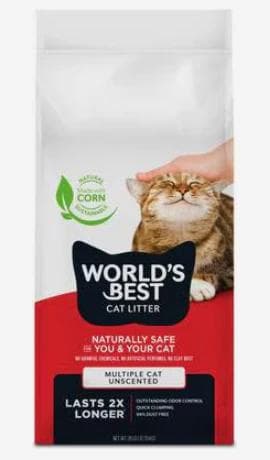
Best corn litter: World's Best Multi-Cat Unscented
Webvet may earn a commission when you click through to Chewy, at no extra cost to you.
World's Best Multi-Cat Unscented is our best corn litter choice because it provides a direct corn-based clumping alternative with an unscented multi-cat formula. Its corn material and unscented plant-based clumping granules format give it a specific job in this natural-material performance comparison rather than a claim to be best for every cat.
Its exact corn identity and unscented multi-cat clumping role are the strongest current plant-material match. The result still depends on normal box use, so watch whether the cat enters, digs, eliminates, covers, and returns without hesitation.
Corn allows this formula to clump without bentonite clay, giving readers a direct plant-based comparison that still supports daily urine removal. It is lighter to handle than dense clay, but the granule feel and raw-material smell are different. Dry, sealed storage matters, and the product should not be flushed or composted unless local rules and the current label explicitly allow it.
World's Best Multi-Cat Unscented: strengths and tradeoffs
Pros
- It provides a direct corn-based clumping alternative with an unscented multi-cat formula.
- Best for cats that accept plant granules and households that want clumping performance without a clay substrate.
Cons
- Corn needs dry sealed storage, the natural material odor and texture may be unfamiliar, and lightweight granules can track.
- Skip it if you cannot keep a plant-based litter sealed and dry, your cat rejects the corn texture or raw-material smell, or lightweight tracking is a persistent problem.
- Use it well: Store the bag sealed and discard material that becomes damp or abnormal.
- Use it well: Introduce the corn texture beside the familiar box rather than forcing it.
- Use it well: Evaluate clump strength only after the product's normal setting time.
Best wood litter: Catalyst Pet Multi-Cat
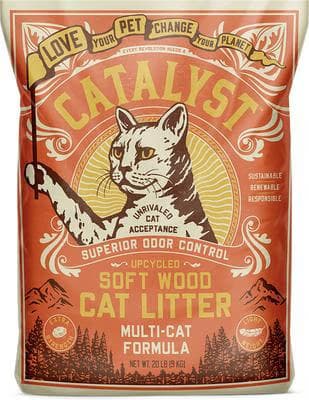
Upcycled soft-wood cat litter with superior odor control, very low dust, and a simple natural composition (no clay, no synthetic fragrance) - a gentler box for cats that nibble at their litter.
Webvet may earn a commission when you click through to Chewy, at no extra cost to you.
Catalyst Pet Multi-Cat is our best wood litter choice because the current product description documents very low dust, soft wood fiber, and no synthetic fragrance. Its upcycled soft wood fiber material and lightweight clumping fiber with no synthetic fragrance format give it a specific job in this natural-material performance comparison rather than a claim to be best for every cat.
Its upcycled soft-wood formula combines a natural material with low-dust lightweight handling. The result still depends on normal box use, so watch whether the cat enters, digs, eliminates, covers, and returns without hesitation.
Catalyst uses soft wood fiber rather than hard pellets, which makes it a more realistic transition for cats that reject large pellet textures. It is lightweight and positioned for very low dust, but its fibrous clumps and tracking pattern differ from fine clay. A second-box trial is the cleanest way to learn whether those changes work in the home.
Catalyst Pet Multi-Cat: strengths and tradeoffs
Pros
- The current product description documents very low dust, soft wood fiber, and no synthetic fragrance.
- Best for households prioritizing low-dust lightweight handling whose cats will accept a soft wood texture.
Cons
- The light fibrous texture differs from clay, may travel on long fur, and can produce a different clump feel.
- Skip it if your cat strongly prefers fine clay, lightweight fibers collect on long paw fur, or the household dislikes a softer wood-fiber clump.
- Use it well: Pour slowly because even a low-dust loose material can release fines.
- Use it well: Watch long paw fur and the exit mat for light fiber tracking.
- Use it well: Test scoop openings against the fiber size without vigorous shaking.
Best walnut litter: Naturally Fresh Multi-Cat Unscented
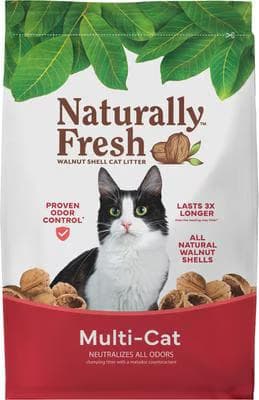
Unscented clumping walnut-shell litter designed for multi-cat odor control.
Webvet may earn a commission when you click through to Chewy, at no extra cost to you.
Naturally Fresh Multi-Cat Unscented is our best walnut litter choice because it adds an exact walnut-shell, unscented clumping option with a defined multi-cat role. Its walnut shell material and unscented clumping granules format give it a specific job in this natural-material performance comparison rather than a claim to be best for every cat.
The exact walnut-shell formula adds unscented clumping and multi-cat positioning. The result still depends on normal box use, so watch whether the cat enters, digs, eliminates, covers, and returns without hesitation.
Naturally Fresh Multi-Cat Unscented fills a distinct natural-material performance role because its walnut shell material and unscented clumping granules format change the texture, cleanup, handling, or storage decision. Trial the exact formula beside the familiar litter and judge normal box use before changing every box.
Naturally Fresh Multi-Cat Unscented: strengths and tradeoffs
Pros
- It adds an exact walnut-shell, unscented clumping option with a defined multi-cat role.
- Best for multi-cat households seeking an unscented plant-based clumper whose cats accept walnut-shell granules.
Cons
- Dark granules can make waste color harder to see, the shell texture may be unfamiliar, and plant material needs dry storage.
- Skip it if the darker substrate would make waste-color observation difficult, your cat rejects shell granules, or you cannot keep plant litter dry.
- Use it well: Keep the bag sealed and dry because organic material can change after moisture exposure.
- Use it well: Use a second box to compare the darker color and shell texture with the familiar litter.
- Use it well: Check clump integrity after the normal setting time instead of scooping immediately.
Best wheat litter: sWheat Scoop Multi-Cat Natural
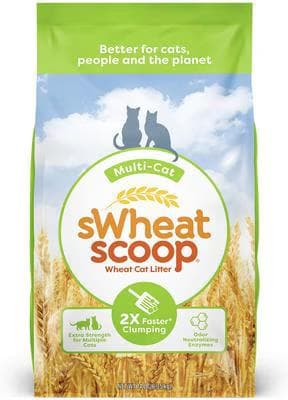
Natural wheat-based clumping litter for multi-cat homes, with no added dyes or perfumes.
Webvet may earn a commission when you click through to Chewy, at no extra cost to you.
sWheat Scoop Multi-Cat Natural is our best wheat litter choice because it supplies a wheat-based multi-cat clumper without added dyes or perfumes. Its wheat material and natural clumping granules with no added dyes or perfumes format give it a specific job in this natural-material performance comparison rather than a claim to be best for every cat.
The wheat-based clumper adds a no-added-dye, no-added-perfume grain option. The result still depends on normal box use, so watch whether the cat enters, digs, eliminates, covers, and returns without hesitation.
sWheat Scoop Multi-Cat Natural fills a distinct natural-material performance role because its wheat material and natural clumping granules with no added dyes or perfumes format change the texture, cleanup, handling, or storage decision. Trial the exact formula beside the familiar litter and judge normal box use before changing every box.
sWheat Scoop Multi-Cat Natural: strengths and tradeoffs
Pros
- It supplies a wheat-based multi-cat clumper without added dyes or perfumes.
- Best for households seeking a fragrance-free wheat clumper and able to protect a food-derived material from humidity and pests.
Cons
- Wheat has a natural material odor, needs dry pest-resistant storage, and may clump or track differently from clay.
- Skip it if food-derived litter cannot be stored dry and pest-free, your cat rejects the wheat odor or texture, or you need a non-clumping format.
- Use it well: Store the bag in a sealed dry container away from pantry pests.
- Use it well: Compare clump strength after the product has had time to set.
- Use it well: Introduce the wheat texture beside the familiar litter rather than replacing it overnight.
Best grass litter: SmartCat Unscented Clumping Grass
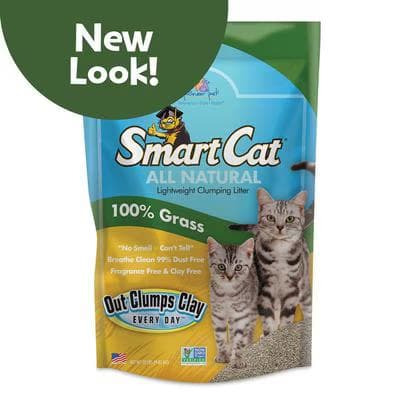
Unscented grass-based clumping litter for cats, with a lightweight clay-free formula.
Webvet may earn a commission when you click through to Chewy, at no extra cost to you.
SmartCat Unscented Clumping Grass is our best grass litter choice because it combines a clay-free grass material with unscented clumping and lightweight handling. Its grass material and lightweight unscented clumping granules format give it a specific job in this natural-material performance comparison rather than a claim to be best for every cat.
The lightweight grass granules provide an unscented clay-free clumping format. The result still depends on normal box use, so watch whether the cat enters, digs, eliminates, covers, and returns without hesitation.
SmartCat Unscented Clumping Grass fills a distinct natural-material performance role because its grass material and lightweight unscented clumping granules format change the texture, cleanup, handling, or storage decision. Trial the exact formula beside the familiar litter and judge normal box use before changing every box.
SmartCat Unscented Clumping Grass: strengths and tradeoffs
Pros
- It combines a clay-free grass material with unscented clumping and lightweight handling.
- Best for cats that accept fine plant granules and households prioritizing a lightweight unscented clumper.
Cons
- Light granules can travel beyond the box, the texture differs from clay, and plant material needs dry storage.
- Skip it if lightweight granules track heavily in your setup, your cat rejects grass texture, or dry storage is unreliable.
- Use it well: Use the same mat and cleaning interval when comparing lightweight tracking.
- Use it well: Keep the bag sealed and dry between refills.
- Use it well: Give clumps time to set and lift them from underneath.
Best recycled-paper litter: Fresh News Unscented Non-Clumping Paper
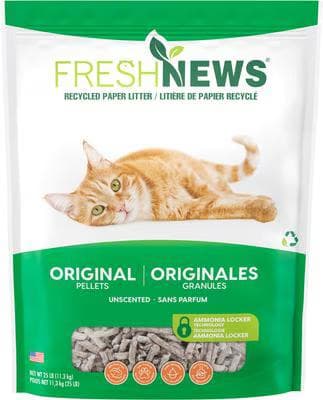
Unscented recycled-paper pellet litter for cats that does not clump.
Webvet may earn a commission when you click through to Chewy, at no extra cost to you.
Fresh News Unscented Non-Clumping Paper is our best recycled-paper litter choice because it provides a recycled-paper, unscented pellet option that is genuinely different from fine clumping granules. Its recycled paper material and unscented non-clumping pellets format give it a specific job in this natural-material performance comparison rather than a claim to be best for every cat.
The recycled-paper pellets add an unscented non-clumping material choice. The result still depends on normal box use, so watch whether the cat enters, digs, eliminates, covers, and returns without hesitation.
Fresh News Unscented Non-Clumping Paper fills a distinct natural-material performance role because its recycled paper material and unscented non-clumping pellets format change the texture, cleanup, handling, or storage decision. Trial the exact formula beside the familiar litter and judge normal box use before changing every box.
Fresh News Unscented Non-Clumping Paper: strengths and tradeoffs
Pros
- It provides a recycled-paper, unscented pellet option that is genuinely different from fine clumping granules.
- Best for cats that accept paper pellets and households that prefer unscented non-clumping cleanup.
Cons
- The pellets do not form urine clumps, saturated material can require broader replacement, and some cats reject the larger texture.
- Skip it if your cat rejects larger paper pellets, you need removable urine clumps, or frequent saturated-area replacement is impractical.
- Use it well: Remove stool daily and replace wet or saturated areas according to the current label.
- Use it well: Track the full-change interval because urine does not form a removable clump.
- Use it well: Offer the paper pellets in a second box before changing an established setup.
Best pine-pellet litter: Feline Pine Original
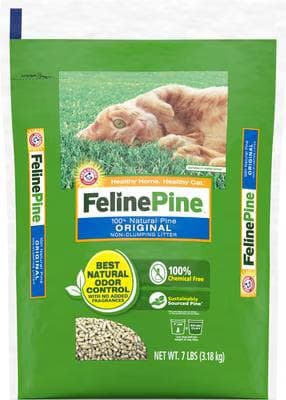
Non-clumping wood-pellet litter made from natural pine for cats.
Webvet may earn a commission when you click through to Chewy, at no extra cost to you.
Feline Pine Original is our best pine-pellet litter choice because it adds a widely established pine-pellet option with a simple non-clumping format. Its pine wood material and non-clumping wood pellets format give it a specific job in this natural-material performance comparison rather than a claim to be best for every cat.
The established pine-pellet format adds a distinct non-clumping wood option. The result still depends on normal box use, so watch whether the cat enters, digs, eliminates, covers, and returns without hesitation.
Feline Pine Original fills a distinct natural-material performance role because its pine wood material and non-clumping wood pellets format change the texture, cleanup, handling, or storage decision. Trial the exact formula beside the familiar litter and judge normal box use before changing every box.
Feline Pine Original: strengths and tradeoffs
Pros
- It adds a widely established pine-pellet option with a simple non-clumping format.
- Best for cats that accept larger wood pellets and households comfortable with non-clumping maintenance.
Cons
- Rigid pellets feel different from sand-like litter, wet pellets break down rather than clump, and pine has a noticeable raw-material odor.
- Skip it if your cat dislikes rigid pellets, you need removable urine clumps, or the pine material odor is unwelcome.
- Use it well: Remove stool daily and replace saturated or broken-down pellets on schedule.
- Use it well: Use a second box so the cat can choose between pellets and the familiar texture.
- Use it well: Compare paw comfort carefully for kittens, seniors, and mobility-limited cats.
If none of the named picks fits, do not force the choice. An accepted unscented clay litter can remain in service while you identify another exact candidate and test it in a second box. The material guide supplies selection criteria without turning an unreviewed item into a recommendation.
A temporary alternative should preserve clean, accessible toileting and be replaced through a controlled transition. Cats with wounds, pica, respiratory disease, urinary signs, constipation, diarrhea, or sudden avoidance need veterinary guidance before a household experiments with a new substrate.
SponsoredVet care that's always there
Unlimited video calls and messaging with licensed vets for less than a typical vet visit. One membership covers up to five pets.
Use code Pets60
Plans start at $12/month · covers up to 5 pets
- Licensed vets in most states
- Rx for 150+ conditions
- 4.7 on Trustpilot
What counts as natural cat litter?
There is no single regulated performance definition that makes every litter labeled natural equivalent. The term can describe a plant, wood, or agricultural byproduct while saying little about binders, fragrance, processing, packaging, transport, or end-of-life disposal. Read the material list and claims for the exact formula.
A lower-clay product may align with a household's sourcing goals, yet still perform poorly if weak clumps increase waste or the cat refuses it. Sustainability begins with a product the cat uses reliably, because box avoidance can create medical risk, stress, cleaning burden, and discarded bags.
Homemade litter is not automatically natural or safe
How can you make homemade cat litter? Improvised shredded paper, sawdust, sand, soil, grain, or wood chips can contain ink, dust, splinters, chemicals, pests, mold, or unsafe particle sizes and have no validated clumping or sanitation directions. A known commercial substrate or veterinarian-directed temporary material is safer than mixing an untested recipe.
If a supply emergency makes the usual litter unavailable, call the veterinarian or local shelter for a temporary recommendation that fits the cat's age and health. Keep the box clean, avoid aromatic oils and treated wood, and replace the improvised material as soon as an appropriate product is available.
Natural cat litter materials explained
Corn
Corn granules can form scoopable clumps through starch and absorbency while remaining lighter than clay. Fine formulas may feel familiar under the paw, and multi-cat versions can provide strong odor management without added fragrance.
Because corn is an organic food crop, the bag must stay dry and sealed. Texture, natural odor, tracking, and clump firmness vary. Discard material that smells spoiled, looks damp, or shows insect activity.
Consider corn when you want a plant-based clumping product and the cat accepts small granules. WebVet's exact corn pick is World's Best Multi-Cat Unscented. It is not a universal choice for cats that eat litter or homes unable to provide dry storage.
- Compare corn at the same depth and setting time as the current litter. Watch whether a urine clump lifts whole or sheds damp crumbs, whether granules adhere to moist paws, and how far the lightweight particles move beyond the mat. Note the raw corn odor before use so a later sour or musty change is easier to recognize.
- Ask the manufacturer for clarity when the product uses broad claims about renewability, biodegradation, or flushing. The origin of the clean granule does not determine the safest disposal route for cat waste. Record how much product is discarded per clump and per full change because material efficiency affects both cost and environmental burden.
Soft wood fiber and wood pellets
Wood litter ranges from rigid pellets to soft engineered fibers. Pellets often absorb and break into sawdust rather than clump; soft-fiber products can be lightweight, low dust, and clumping. Upcycled wood streams may reduce demand for virgin mineral material.
The word wood does not tell you the format. Hard pellets feel different from sand-like clay, while light fibers can leave the box on long fur. Natural wood odor may be noticeable even without added fragrance.
Choose the exact format for the job. Catalyst Pet Multi-Cat is WebVet's soft clumping fiber pick, while Feline Pine Original is the non-clumping wood-pellet pick. They belong in different cleanup routines.
- Identify whether the wood is a soft fiber, crumble-style pellet, intact absorbent pellet, or blended clumper. Use the scoop or sifting system designed for that format. A conventional slotted scoop can remove too much clean fiber, while a standard solid box may leave saturated pellet sawdust mixed through the base.
- Observe the cat's footing. Large rigid pellets can roll or feel unstable to a cat accustomed to sand-like grains; very light fibers can cling to long toe fur. Keep nails and paw fur maintained through normal grooming, place a stable mat beyond the exit, and stop the trial if the cat balances on the rim or shortens digging.
Tofu and pea fiber
Tofu-style litter uses soybean residue, pea fiber, or related plant ingredients formed into pellets or short granules. Many formulas clump and are light to carry. Larger pieces may track differently from clay and can be easy to see on the floor.
Clump strength, added scent, binder ingredients, and pellet diameter vary. Organic material needs dry storage. A claim that the clean product is biodegradable does not establish that used litter belongs in a toilet or compost pile.
Tofu can suit households seeking a light plant-based clumper whose cats accept pellets. This edition does not name a tofu winner, so this is a material explanation rather than a product endorsement.
- Check pellet diameter, length, fragrance, and ingredient list rather than assuming every tofu litter is the same. Short narrow pellets may pass through one scoop while longer pieces require wider slots. Breakage in the shipping bag can create a mix of pellets and fines that behaves differently from the product photographs.
- Because tofu-style products are organic and often marketed with disposal claims, verify the label and local rules before purchase. Store the bag away from humidity and food. If a cat chews pellets, develops vomiting or diarrhea, or persistently eats material from the box, remove access to the candidate and call the veterinary team.
Wheat
Wheat litter uses starch and milled grain to absorb moisture and form clumps. It can be lighter than clay and offers a fine plant-based texture in some formulas.
Natural grain odor, storage moisture, pests, tracking, and ingredient sensitivity all need consideration. Formulas may include added fragrance or binders, so wheat does not automatically mean minimal ingredients.
Wheat is a reasonable trial material for a cat that accepts fine granules and a household able to store it dry. WebVet's exact wheat pick is sWheat Scoop Multi-Cat Natural.
- Evaluate wheat as both a substrate and a stored grain product. Look for a clean dry bag, intact seal, normal odor, and no insects or webbing. Do not combine an old bag with a new one because hidden moisture or pests can contaminate the fresh material and erase lot traceability.
- During box use, compare clump edges, residue, and tracking with the current product. A very fine wheat formula may appeal to the cat but travel on paws, while a coarser formula may contain tracking at the expense of texture familiarity. The best balance is established by the cat's behavior and a measured cleanup log.
Grass seed
Grass-seed litter can be lightweight and clumping, with small granules that may feel closer to clay than large pellets. It provides a plant-based option without relying on corn or wheat.
Very light granules may track, and clump strength varies. Ingredient sourcing, additives, fragrance, and disposal need product-level review. Keep the bag sealed and dry.
Grass can fit a household prioritizing a fine plant-based clumper. WebVet's exact grass-seed pick is SmartCat Unscented Clumping Grass.
- Grass litter is often unusually light for its volume. Pour near the box surface and avoid a deep stream that scatters granules. Measure the amount tracked across a defined floor area, and distinguish ordinary dry granules from damp fragments that suggest weak clumping or an overused base.
- Review whether the formula is unscented and whether other plant ingredients or binders are present. A grass image on the package does not prove a single-ingredient product. Readers with allergy concerns should consult their own clinician, and cats with skin, digestive, or respiratory signs need veterinary guidance rather than ingredient guessing.
Walnut shell
Walnut litter uses processed shells that would otherwise be an agricultural byproduct. It is often darker than other litters, absorbs moisture, and is available in clumping and non-clumping formats.
Dark color can make urine color or small blood spots harder to notice. Fine shell particles can create dust, and tracking and clump strength vary. Ingredient sensitivity and product processing deserve exact review.
Walnut can suit a household interested in byproduct-based material. WebVet's exact walnut-shell pick is Naturally Fresh Multi-Cat Unscented, but the visual-monitoring tradeoff matters.
- Photograph a fresh dry sample in neutral light so later color or moisture changes can be judged against a baseline. Because the granules are dark, count clumps and observe the cat rather than relying on visible yellow urine. White paper beneath a removed clump may make unusual red discoloration easier to notice, but symptoms always override home inspection.
- Test dust by normal pouring and scooping, not by shaking the bag. Fine shell particles can settle on the rim or coat. If the product releases an obvious cloud, the cat coughs, or a person in the household develops symptoms, stop exposure and seek appropriate professional advice. Upcycled sourcing does not cancel an unacceptable dust result.
Recycled paper
Paper litter commonly comes as large absorbent pellets with low dust and low tracking. Veterinarians may recommend an appropriate paper product for certain postoperative, paw-injury, or recovery situations.
Most paper pellets do not clump, so saturated areas or the full contents require replacement. Odor control and moisture visibility differ from clumping litter, and hard pellets may not appeal to a cat accustomed to fine granules.
Paper is useful when low dust and larger particles outrank clumping. For routine litter use, WebVet's exact recycled-paper pick is Fresh News Unscented Non-Clumping Paper. A veterinarian should still choose any recovery substrate for a specific postoperative or paw-injury plan.
- For routine use, mark the starting pellet depth and learn how the product signals saturation. Some pellets swell, darken, flatten, or break apart. Remove wet sections as directed and replace the entire contents before a damp base develops. A sifting box can help with specific crumble-style systems but is not correct for every paper product.
- For recovery, ask the veterinarian for the exact acceptable substrate, box style, cleaning frequency, and duration. A generic paper pellet can still be hard, dusty when broken, or contaminated. Monitor the incision or paw as directed and report redness, swelling, discharge, odor, pain, or renewed litter sticking instead of changing products independently.
Natural does not automatically mean safer
Plant and wood materials can still create dust, be eaten, spoil in humid storage, harbor pests, include fragrance or binders, or feel uncomfortable under a cat's paws. Clay can be dusty and heavy, but a well-tolerated low-dust unscented clay may be safer for a particular cat than a natural product the cat avoids or consumes.
What can you use instead of cat litter? For routine toileting, use a substrate designed for cats rather than soil, baking ingredients, construction sand, bird bedding, essential-oil products, or random absorbents. Paper pellets or non-absorbent collection media may be appropriate for a specific veterinary plan, but the exact product and duration should come from the treating team.
How to compare natural litter beyond the material name
Clump yield and monthly waste
A lightweight plant bag can appear expensive by weight while providing substantial volume, and a dense product can appear economical while removing a large amount of clean material with every clump. Compare fill volume, top-ups, discarded clump size, and full-change frequency over the same number of cat-days. Bag weight alone cannot establish value.
Use a simple log: date opened, boxes filled, starting depth, daily top-up, full-change date, and remaining product. For a multi-cat home, record which boxes receive the most use. The most resource-efficient litter is the accepted formula that contains waste cleanly without requiring unnecessary replacement.
Dust and particle breakdown
Natural materials can be low dust, but plant and wood granules still abrade during transport. Inspect the top, middle, and bottom of the bag. Pellet litter can create fines as saturated pieces break down, while a fine grass or wheat product may leave an invisible film that becomes apparent on a dark damp cloth.
Handle every candidate consistently. Pour slowly from the same height, use the same depth and scoop motion, and clean the surrounding floor at the same interval. A fair comparison avoids declaring one material cleaner simply because it received gentler handling.
Tracking and paw comfort
Particle size creates a real tradeoff. Fine granules may feel comfortable and support natural digging but adhere between toes. Large pellets may stay near the box yet feel unstable, especially to a small, elderly, arthritic, or declawed cat. Light fibers can cling to long fur even when they create little floor dust.
Observe entry, weight shifting, digging depth, posture, covering, and exit speed. Tracking can often be reduced with an appropriately sized box and stable washable mat. Paw discomfort or box avoidance cannot be solved by a larger mat and is a reason to restore the familiar substrate.
Odor without added perfume
Corn, wood, wheat, grass, walnut, and paper each have a raw material odor. An unscented natural litter may still smell noticeable when clean. Odor control comes from absorbency, clump removal, airflow, enough clean boxes, and any carbon or mineral additives, not from the natural label itself.
Smell a small fresh sample and record the baseline. A later sour, musty, rancid, or unusually sweet odor can indicate moisture, spoilage, or contamination. Do not mask a questionable stored product with deodorizer; discard it and preserve the lot information.
Natural litter in different households
Multi-cat homes
A plant-based multi-cat formula can offer stronger clumping or odor control, but it does not replace separated toileting resources. Several cats create more moisture and faster substrate turnover. Provide enough clean boxes in distinct locations and identify the high-use sites before evaluating product longevity.
If cats have different texture preferences, use more than one accepted material. Standardizing every box for purchasing convenience can reduce access for the cat that dislikes the chosen substrate. Change one station at a time and preserve a familiar box throughout the trial.
Kittens and cats that eat litter
A plant or food-derived material is not intended to be eaten. Young kittens may taste granules during exploration, and adult cats can ingest litter because of pica, anemia, gastrointestinal disease, stress, or material stuck to the paws. Repeated eating needs veterinary assessment rather than a supposedly edible product.
Use age-appropriate guidance for kittens and keep the box clean enough that granules do not adhere to damp feet. Vomiting, diarrhea, reduced appetite, constipation, abdominal discomfort, pale gums, weakness, or persistent ingestion should end the product trial and prompt veterinary contact.
Senior and mobility-limited cats
A light bag can help the caregiver, but the cat experiences the texture and box entry. Rigid pellets may be uncomfortable under arthritic paws, and a deep shifting layer can feel unstable. Keep the route nonslip, choose a low-entry box where appropriate, and retain the familiar substrate while testing a softer natural option.
New accidents in a senior cat should not be attributed to stubbornness or solved solely with litter. Arthritis, urinary disease, constipation, kidney disease, diabetes, cognitive change, and social stress can alter box use. Arrange veterinary evaluation while making the environment easier to reach and maintain.
Homes with pregnancy or immune suppression
The central public-health concern is contact with cat feces, not whether the clean litter began as corn, clay, or wood. Clean boxes daily, wash hands, and follow CDC and personal healthcare guidance. When possible, someone else should handle litter-box waste for a pregnant or immunocompromised person.
Do not rely on biodegradable, antibacterial, or natural language to reduce pathogen precautions. Used litter should be contained and discarded according to local rules, and food preparation surfaces should remain completely separate from storage, scoops, and waste bags.
Packaging, sourcing, and supply continuity
Prefer specific evidence over green imagery
Useful environmental information names the feedstock, recycled or upcycled percentage, manufacturing location, certification, packaging material, and disposal limits. Leaves, earth tones, and phrases such as planet friendly provide no measurable comparison by themselves. Product pages should distinguish a verified attribute from an aspiration.
Certification logos also need interpretation. Identify the issuing organization and scope: forestry, recycled content, compostability, manufacturing, or packaging. A certification for the clean bag does not establish a disposal method for litter contaminated with cat waste.
Plan for formula changes and shortages
Cats can be sensitive to changes in particle size, raw-material odor, or clumping even when the product name remains familiar. Keep enough accepted litter for a gradual transition, retain a photograph of the previous label, and compare a new bag before emptying it into the storage bin.
A backup should match the important sensory and mechanical traits, not only the same material. Fine unscented clumping corn is a closer substitute for another fine plant clumper than a large non-clumping wood pellet. Test a backup while the preferred product is still available rather than during an urgent shortage.
A practical natural-litter scorecard
Score cat acceptance first
Give normal entry, digging, elimination, covering, and return use the greatest weight. A natural product should receive no environmental bonus that compensates for avoidance. Score the cat's behavior across several ordinary days, not one curious inspection, and keep the familiar box available so the trial does not coerce a choice.
Record unusual paw shaking, excessive grooming after exit, perching, shortened digging, elimination near the box, or repeated visits. Those signs can reflect texture dislike, but they can also occur with pain or urinary and digestive disease. Restore the accepted setup and call the veterinarian when behavior changes suddenly or symptoms appear.
Score household performance second
Use the same one-to-five scale for clump integrity or saturation control, visible dust, tracking distance, odor before scooping, bag handling, storage stability, and time required for daily care. A category that does not matter in the home can receive lower weight, but no score should be invented without observation.
Calculate cost only after estimating usable days and discarded volume. Include liners or filters required by a special system, extra full changes caused by residue, and product lost outside the box. A light bag that lasts may offer better value than its price suggests; a weak clumper can do the opposite.
Score environmental evidence last
List only substantiated attributes: recycled content, upcycled feedstock, certified sourcing, package recyclability in the local program, product weight shipped, and a permitted disposal path. Do not award points for an undefined natural or earth-friendly claim. Unknown information should stay unknown rather than being treated as favorable.
The final choice should pass all three screens: the cat uses it reliably, the household can maintain it, and the environmental claims are specific enough to inform the decision. If two products are close, prefer the one with the simpler transition and more stable supply instead of chasing a small theoretical advantage. Repeat the scorecard after the first full bag because performance near the bottom, long-term tracking, and actual replacement frequency can change an early impression. Save the completed notes securely so a future formula change or shortage can be compared against real household evidence.
Environmental claims to evaluate carefully

Renewable, recycled, and upcycled are different
Renewable material can regrow, recycled material has already completed a product life, and upcycled material turns a byproduct into a higher-value use. A corn crop, sawmill fiber, walnut shell, and recycled newspaper tell different sourcing stories. None of those words alone measures land use, energy, transport, packaging, or disposal.
Look for a precise statement: the percentage of recycled fiber, the source of wood, whether the plant material is a byproduct, and whether packaging has a realistic local recovery path. Broad green imagery without measurable details should not drive a veterinary product recommendation.
Biodegradable does not mean flushable
Biodegradation depends on temperature, moisture, oxygen, microbes, time, and the waste facility. A clean plant granule may break down under controlled conditions while a sealed bag of used litter in a landfill behaves differently. Cat feces also introduces pathogens that are separate from the substrate.
Do not flush litter into a septic system. EPA guidance says cat litter should never enter the system, and local wastewater rules may prohibit all litter. A merchant's flushable claim does not override plumbing, septic, municipal, or environmental guidance.
Compost claims need local and health context
Do not add used cat litter to a food-garden compost pile. Home compost systems may not reach conditions that reliably manage pathogens, and municipal organics programs differ. Follow the product instructions and local authority. When rules are unclear, bagging waste for trash is the conservative default.
The CDC advises daily box cleaning and handwashing to reduce Toxoplasma exposure. Pregnancy and immune suppression call for healthcare guidance and, when possible, another person handling the box.
Storage and spoilage prevention
Keep natural litter in its original closed bag or a clean sealed container in a cool, dry location. Basements, garages, and laundry rooms can become humid. Moisture can weaken clumping, encourage odors, and support mold or insects in organic material.
Retain the product name, formula, lot code, and instructions. If you transfer the contents, photograph the label and avoid combining bags with different dates or formulas. First in, first out storage prevents an old layer from remaining indefinitely at the bottom of a bin.
Discard litter that is damp, unusually warm, clumped inside the clean storage container, moldy, infested, or different in odor from the fresh product. Do not dry or sift contaminated material for reuse. Contact the manufacturer with the lot information when a new bag appears abnormal.
How to switch to a natural litter
A change from fine clay to plant or wood material can alter texture, sound, odor, clump feel, and digging resistance at once. Protect the cat's routine by setting a second comparable box with the candidate litter while leaving the accepted box unchanged.
If the cat investigates and uses the new box normally, continue the choice period long enough to observe several urine and stool events. Record tracking, clump strength, odor before scooping, waste volume, and any changes in paw grooming. Keep the old litter available while the pattern stabilizes.
For a blend transition, start with a small proportion and increase slowly. Long pellets and fine clay may separate instead of blending evenly, so a side-by-side trial is often clearer. Never allow a sustainability goal to justify prolonged box avoidance.

Signs the trial is working
- The cat approaches and enters without prolonged hesitation.
- Digging, posture, elimination, covering, and exit remain normal for that cat.
- Urine and feces can be removed on a workable schedule without excessive residue.
- Dust, tracking, odor, storage, and bag handling remain acceptable to the household.
- No unusual eating, excessive paw grooming, coughing, straining, diarrhea, or output change appears.
Signs to stop and reassess
- Eliminating beside the box, perching, vocalizing, rushing away, or repeatedly entering without producing waste.
- Loose litter being eaten, mold or insects in storage, obvious airborne dust, or strong unexpected odor.
- Weak clumps that leave the base persistently wet despite correct depth and setting time.
- A medical change such as blood, straining, vomiting, lethargy, cough, or breathing difficulty.
Natural cat litter pros and cons
Natural-material litter
Pros
- Offers corn, wood, tofu, grain, grass, shell, and paper alternatives to mineral clay.
- Many formulas are lightweight, and some are low dust or use agricultural byproducts.
- Clumping options exist across several plant materials.
- Material variety allows a controlled trial around household sourcing and handling goals.
Cons
- Natural is not a standardized performance or safety guarantee.
- Organic materials require dry storage and can spoil or attract pests.
- Texture, dust, tracking, odor, and clump strength vary widely.
- Biodegradable claims do not automatically make used litter flushable or home-compostable.
When a natural litter is not the right choice
A cat that eats plant litter, develops persistent digestive signs, refuses the texture, or has a veterinary instruction for a specific substrate should not remain in a general natural-litter experiment. Likewise, a household without dry storage may be better served by a stable accepted product than repeated spoiled bags.
Postoperative and paw-injury recommendations should come from the treating veterinarian. Paper is often discussed for recovery, but the exact wound, procedure, contamination risk, and cat behavior determine what is appropriate.
Compare the best cat litter roundup, clumping cat litter guide, low-dust cat litter guide, and unscented cat litter guide when the decision is driven more by performance than source material.
Natural cat litter questions
Frequently Asked Questions
What is the best natural cat litter to use?
The best material is one the cat accepts and the household can store and maintain. This edition names exact corn, soft-wood, walnut, wheat, grass, recycled-paper, and pine-pellet picks. Tofu remains a material to evaluate without a named winner.
What is the healthiest kind of cat litter?
No material is automatically healthiest. Choose an exact formula the cat uses reliably, with manageable dust, no unnecessary fragrance, dry clean storage, and a cleanup routine the household can sustain. Ingestion, respiratory disease, wounds, paw discomfort, urinary monitoring, and established texture preference can make a familiar low-dust clay safer than a natural product the cat avoids or eats.
Can natural cat litter be flushed?
Do not assume so. Never flush cat litter into a septic system, and follow local wastewater rules and the exact product directions. Used litter contains cat waste regardless of the original material.
Can natural litter go in compost?
Do not use cat-waste litter in food-garden compost. Municipal programs and product instructions differ, and home compost may not manage pathogens. Follow local rules; trash disposal is the conservative default when guidance is unclear.
Sources
Veterinary guidance used for this natural-litter guide includes the AAFP and ISFM house-soiling guidelines, the AAFP and ISFM feline environmental-needs guidelines, and AAHA general litter-box considerations. Product selection remains an editorial judgment based on each exact formula's documented material and performance attributes.
Public-health and disposal guidance includes the CDC toxoplasmosis prevention page and EPA septic-system care guidance.

Editor
The Webvet Editorial Team is the in-house group of pet-care editors and writers behind Webvet, operated by Smart Pet Collective. The team researches, writes, and maintains Webvet's pet health, behavior, and medication content. Every article follows a defined editorial process: research from reputable veterinary and scientific sources, careful drafting, mandatory review of medical content by a credentialed veterinarian, and dated publication. Health and medication articles are medically reviewed by a licensed veterinary professional before they go live and are kept current over time.
Veterinarian · BVMS MRCVS
Dr. Pippa Elliott, BVMS, MRCVS, is a veterinarian with nearly 30 years of experience in companion animal practice. Dr. Elliott earned her Bachelor of Veterinary Medicine and Surgery from the University of Glasgow. She was also designated a Member of the Royal College of Veterinary Surgeons. Married with 2 grown-up kids, Dr. Elliott has a naughty Puggle named Poggle, 3 cats and a bearded dragon.
Related reading

Ruffwear Polar Trex Review: Winter Dog Boots for Snow, Ice, and Salt

Canada Pooch Dog Boots Review: Soft Shield, Hot Pavement, and Suspender Fit

Pawz Dog Boots Review: Rubber Balloon Boots for Salt, Heat, and Hardwood
