Best Cat Litter Mats for Tracking, Cleaning, and Sensitive Paws
Compare four cat litter mats by exit-path coverage, collection surface, litter retrieval, and cleaning, while keeping the route to the litter box comfortable and open.

BVMS MRCVS
Medically reviewed by Dr. Pippa Elliott, BVMS MRCVS · Last reviewed

This article contains affiliate links. Webvet may earn a commission when you buy through them, at no extra cost to you.
The best cat litter mats cover the route your cat actually takes out of the box, collect loose granules, and remain easy enough to clean that you use them consistently. Our four choices offer different approaches: visible silicone channels, deep textured hollows, a large soft surface, and a simple rectangular mat. A good mat can reduce scattered litter, but it cannot eliminate tracking or solve a litter-box problem on its own.
 $65 · no membership
Have a health question about your cat?
A licensed vet can assess your cat over video and prescribe online when it's appropriate.
 Talk to a vet
- Licensed vets
- All 50 states
- same-day Rx

Webvet may earn a commission if you book.
How to choose the best cat litter mat
Start by watching your cat leave the box. Some step straight forward, some turn immediately, and others jump over whatever sits at the entrance. A mat centered neatly beneath the tray may cover very little of the useful exit path. Before comparing materials, measure the available floor area and identify where the cat’s first few steps land. Leave enough room for normal entry, turning, and an unobstructed route away.
The PetFusion ToughGrip is our starting point for owners who want exposed channels they can inspect and empty. Petlinks Purrfect Paws offers a textured surface with deep hollows. CatGuru’s X-Large format emphasizes a broad, soft landing area, while the Frisco Large rectangle offers straightforward shake-or-rinse care. The best choice depends on the cat’s route, the texture they accept, and the cleaning method you can maintain.
- 1Cover the exit path instead of hiding most of the mat beneath the box.
- 2Compare litter retrieval and washing separately; a mat can be easy to empty yet slow to dry.
- 3Check urine protection as its own specification rather than assuming a textured mat is waterproof.
This is a specifications-based comparison. We did not test capture rates, compare how many granules escaped each mat, or measure cats’ preferences. Manufacturer and exact product descriptions support the construction and care details below. They do not establish that one mat catches every litter type or that a surface described as soft will suit every cat with sensitive paws.
Washability matters as much as capture texture. A useful purchase also fits your cleaning routine. If you prefer seeing and removing debris immediately, exposed channels may be convenient. If you want a larger fabric surface, consider where you will shake it out and how you will wash and dry it according to its instructions. A complicated retrieval design is not necessarily better if it discourages you from cleaning the area regularly.
| Mat | Best fit | Useful distinction | Main tradeoff |
|---|---|---|---|
| PetFusion ToughGrip, Large | Visible litter and easy retrieval | Silicone channels, raised edge, and side spout | Debris stays visible and needs regular removal |
| Petlinks Purrfect Paws, Medium | Textured collection in a smaller setup | Flexible surface with deep hollows | Confirm the footprint and care instructions for Medium |
| CatGuru, X-Large | A broad, soft exit surface | 36-by-28-inch XL format with textured fabric | Do not assume every CatGuru variant has the same backing |
| Frisco Rectangular, Large | Simple rectangular coverage | Shake or rinse with cold water, then air dry | Check actual dimensions and floor protection separately |

For a mat beneath or beside the litter box, prioritize stable placement and adequate exposed area. Under-box coverage may help catch spills at the edge, but tracking happens when the cat walks away. A small rectangle almost completely covered by the tray cannot provide several steps of collection. If the available space is tight, a carefully positioned smaller mat may be more useful than a larger one folded against furniture or obstructing the doorway.
Price is worth comparing after those basics. Check the exact size in the listing and any care supplies you would need. An inexpensive mat that is too small for the exit route is unlikely to solve your particular problem; an oversized one that is awkward to move and wash can be equally frustrating. Keep the original packaging until you have checked the footprint and the cat has had a calm opportunity to approach the new surface.
Four cat litter mats for different needs
PetFusion ToughGrip Gray Cat Litter Mat, Large
The PetFusion ToughGrip Large uses exposed silicone channels and a raised outer lip. That makes it a useful choice for someone who wants to see where loose litter has collected and remove it without opening a layered mat. PetFusion describes a nonporous, waterproof silicone construction, with a side spout and enough flexibility to direct loose litter when emptying the mat.
Its practical advantage is visibility. Granules and spills are easier to notice on an exposed surface than when they disappear into dense fabric or a lower collection layer. The same feature means the debris remains visible until you clean it. If you prefer an area that looks tidy between cleanings, weigh that appearance against the convenience of seeing what needs attention.
- Choose it for: exposed channels, a raised edge, and directed litter retrieval.
- Check first: the Large footprint, the available exit path, and whether your cat willingly steps across the surface.
- Main tradeoff: channels still need regular emptying and washing; waterproof material does not mean spills can be ignored.
The PetFusion manufacturer specification supports the silicone construction and collection design. When emptying it, return only clean, dry litter if that is appropriate for your litter and cleaning routine. Material contaminated by urine, feces, or cleaning products belongs in the waste. The spout is a handling feature, not a reason to put every collected particle back into the box.
Also check beneath the mat during cleaning. Moisture or granules can reach a floor from around an edge, an adjacent spill, or a mat being lifted. A waterproof surface can be useful while still requiring routine floor inspection. Let the cleaned mat and the floor dry before replacing it so that the area remains stable and does not hide a damp patch.
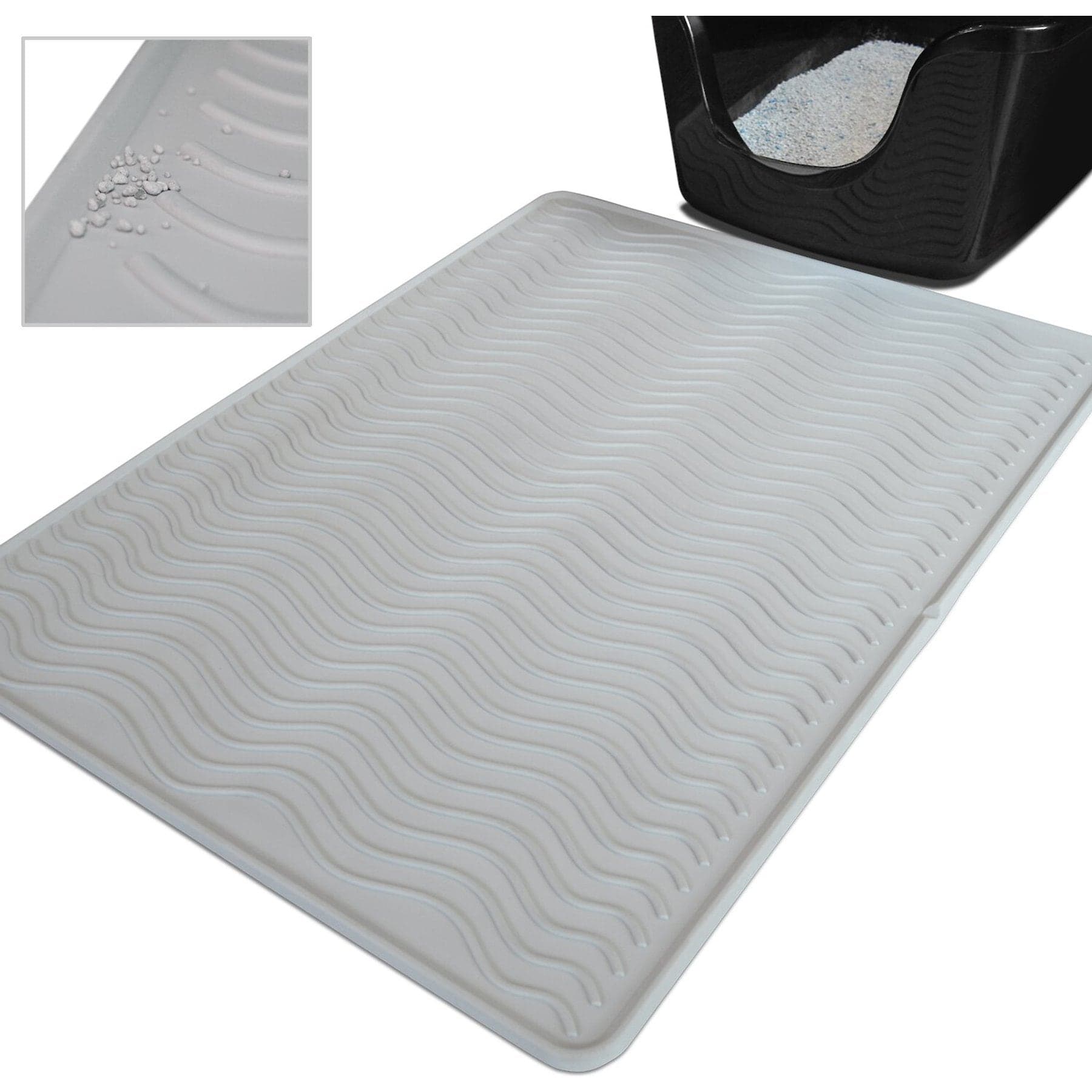
Visible silicone channels and a side spout for straightforward litter retrieval.
Webvet may earn a commission when you click through to Chewy, at no extra cost to you.
Petlinks Purrfect Paws Cat Litter Mat, Medium, Gray
The Petlinks Purrfect Paws Medium offers a different collection surface: a flexible mat with deep hollows. The exact product description presents those hollows as places for loose litter to collect as the cat crosses the texture. Consider it when you want a textured collection area but have a smaller space to work with than a broad XL mat would require.
The important tradeoff is the relationship between texture and your cat’s behavior. A pronounced surface may offer places for granules to fall, but it is only useful if the cat walks on it. Watch the first few approaches without steering or placing the cat on the mat. A cat who takes a wide detour or jumps over it is telling you something about the setup, regardless of how promising the design looks in a photograph.
- Choose it for: a flexible, deeply textured collection surface in the selected Medium format.
- Check first: current dimensions, access around the box, and the care instructions supplied with the exact product.
- Main tradeoff: deep recesses can require attention during cleaning, especially when litter becomes damp.
Do not infer a particular material, machine-washing method, or waterproof backing from the word “mat.” Those details need to be confirmed for this exact model. A collection surface that handles dry litter well may still require a separate plan for urine protection. If accidents are part of the problem, evaluate the floor and the cause of the accidents as well as the texture at the box entrance.
For a small room, try mapping the Medium footprint on the floor before buying. Check whether a door can open, whether a person can clean the box without stepping on it, and whether the cat has a direct route in and out. Smaller dimensions can make a mat easier to handle, but only if they cover the part of the floor where tracking begins.
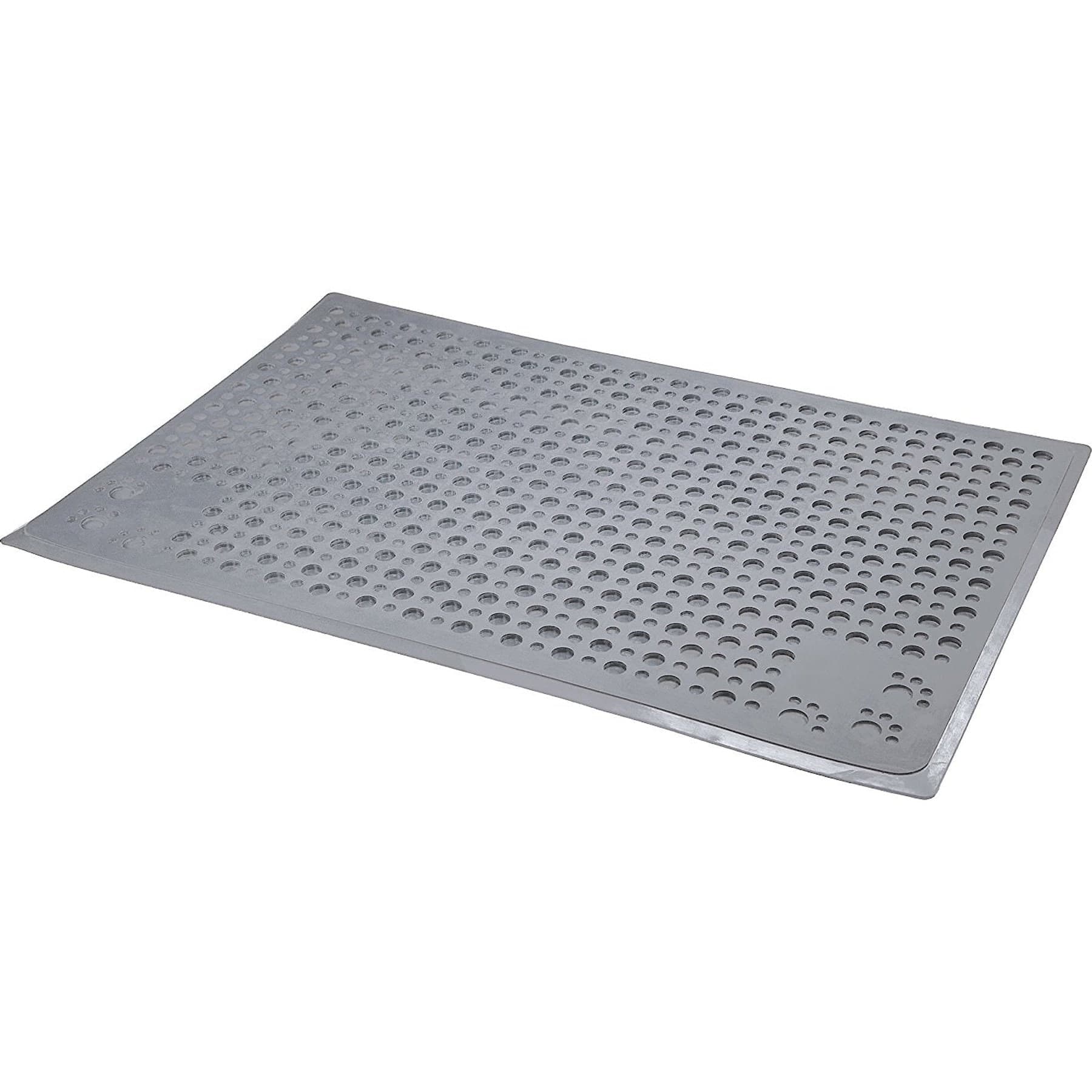
A flexible textured mat with deep hollows in a Medium format.
Webvet may earn a commission when you click through to Chewy, at no extra cost to you.
Picture the mat as part of the entire litter-box approach. Leave a clear route in and out, and compare the exposed surface with the steps your cat actually takes rather than positioning the mat only for a tidy outline.

CatGuru Cat Litter Mat, Gray, X-Large
The CatGuru X-Large is the broad, soft-surface option in this group. The manufacturer’s XL format measures 36 by 28 inches, giving you a defined footprint to compare with the space outside the box. Its textured fabric is worth considering for a cat who avoids a firmer or more pronounced collection surface, while recognizing that individual preference still needs to be observed.
The larger area may help when a cat takes several steps before turning, or when the exit route changes slightly from visit to visit. It can also be awkward in a narrow room. Do not fold or bunch a large mat to make it fit around furniture; that changes the walking surface and creates an edge the cat must navigate. Check the full flat footprint first.
- Choose it for: a 36-by-28-inch textured fabric surface and broad coverage beyond the box.
- Check first: the exact variant’s backing and washing label, room to lay it flat, and space to dry it after cleaning.
- Main tradeoff: a soft fabric surface does not, by itself, establish urine protection or waterproof construction.
CatGuru offers different mat versions, so keep the care and backing details tied to the product you actually receive. The manufacturer’s XL range is useful for identifying the format, but do not transfer every claim between versions with similar names. If waterproofing is essential, confirm the exact backing before relying on the mat to protect a vulnerable floor.
Treat “sensitive paws” as a reason to observe comfort, not a diagnosis that a mat can treat. A cat who suddenly avoids walking on ordinary surfaces, limps, or seems painful needs veterinary attention. For a healthy cat with a clear texture preference, a softer surface may be a practical adjustment. Keep the path to the box open while you introduce it so that access does not depend on accepting an unfamiliar material immediately.
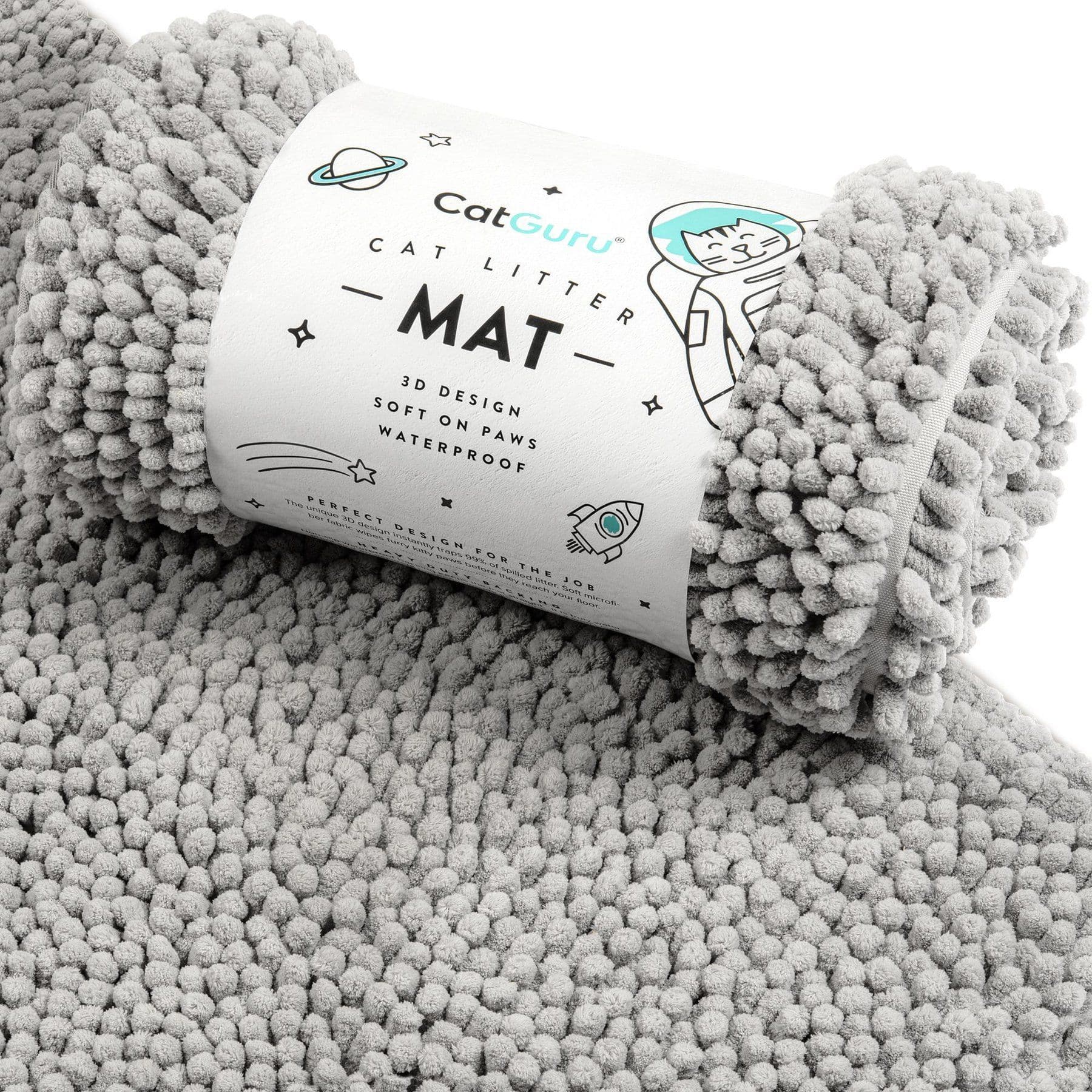
A broad 36-by-28-inch textured fabric surface for cats who prefer a softer path.
Webvet may earn a commission when you click through to Chewy, at no extra cost to you.
Frisco Rectangular Cat Litter Mat, Grey, Large
The Frisco Rectangular Large is the straightforward rectangular option. Frisco’s exact product description says it can be shaken out or rinsed with cold water and then air dried. That is a useful distinction for owners who want a simple care routine and do not need a more elaborate pour-back or layered collection design.
Match the Large rectangle to the actual box and walking route. The size label alone does not tell you whether it extends far enough beyond the entrance, fits beneath a swinging door, or works beside the neighboring tray in a multi-cat setup. Mark the current listed dimensions on the floor before ordering, then leave enough open room for the cat to turn and move away normally.
- Choose it for: rectangular coverage and a shake-or-cold-rinse cleaning routine.
- Check first: the exact dimensions, how the mat lies on your flooring, and room for air drying.
- Main tradeoff: litter collection and urine protection are separate questions; do not assume an unspecified backing is waterproof.
Frisco is Chewy’s own brand, so the exact model’s product instructions govern its care. Do not substitute the instructions from another Frisco mat with a similar shape or color. After rinsing, allow it to dry fully before putting it back, and inspect the floor underneath. If the mat begins to curl, shift, or obstruct the cat’s path, reassess its position instead of trying to make the cat step across it.
This is a practical option when the main need is catching everyday dry granules near the box. It is less helpful to treat it as a complete solution for litter scattered across a whole room. Watch where the loose material originates: paws, vigorous digging, an overfilled tray, or particles caught in long fur may each call for a different adjustment alongside the mat.
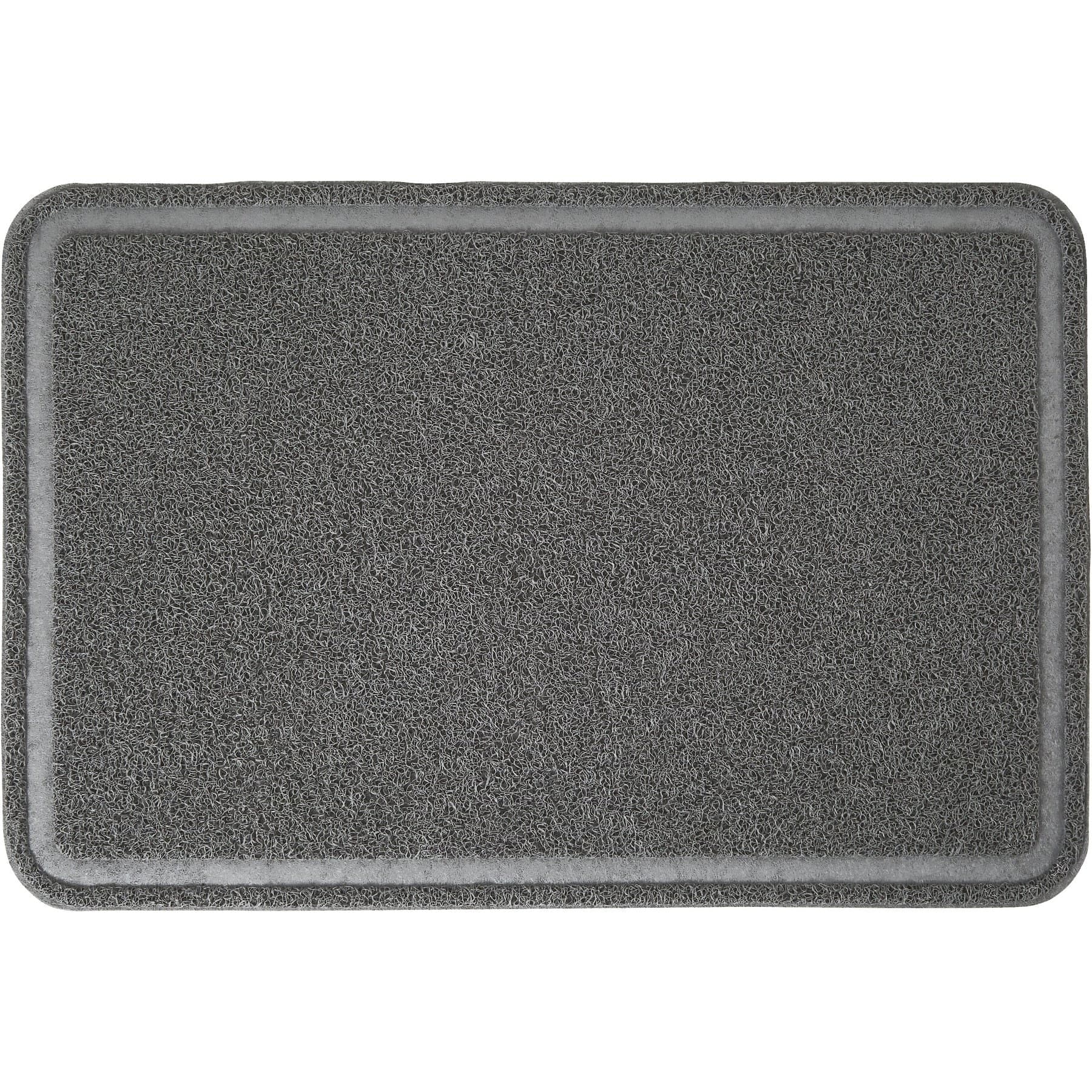
A simple Large rectangle with shake-or-cold-rinse care.
Webvet may earn a commission when you click through to Chewy, at no extra cost to you.
Litter mat size, material, and cleaning
Compare visible silicone litter channels with soft textured fabric before deciding how much urine protection you need. Dry litter capture and a waterproof barrier are separate functions; only the exact mat’s backing and construction can establish the latter.
A useful comparison separates three jobs: catching dry granules, retrieving them without spreading them again, and cleaning away contamination. A mat can perform one job conveniently while making another more laborious. Look beyond the surface texture and picture the entire routine, including lifting the mat, carrying it to the cleaning area, washing it as directed, and replacing it only when dry.
| Decision | What to compare | What the result tells you |
|---|---|---|
| Exit path | Cat’s first steps and turning direction | Where the useful exposed area needs to be |
| Dry litter retrieval | Channels, hollows, fabric, or a collection layer | How you will remove granules without scattering them |
| Urine protection | Exact backing, edges, and product instructions | Whether floor protection is actually specified |
| Deep cleaning | Rinse, wash, and drying requirements | Whether the routine is practical after contamination |
| Paw comfort | Voluntary approach and willingness to cross | Whether the cat accepts the surface |
| Floor stability | Flat placement and movement during use | Whether the mat creates an obstacle or shifts |
Cover the litter-box exit path
Measure the box footprint and then measure the space beyond the entrance separately. If the tray sits on most of the mat, the remaining strip may be too short to intercept more than one step. A side-entry box, a corner arrangement, and an open tray approached from several directions can need different placement. Observe normal use before deciding which edge of the box the mat should extend beyond.
A small kitty litter mat can work when it covers the first steps beyond one entrance; a jumbo mat makes sense when the cat has a wider exit route and the surface can lie flat. Compare exposed coverage rather than the size label. Do not cut a mat to size unless the manufacturer explicitly permits it: trimming can damage a backing, raised edge, or collection layer.
For multiple boxes, do not create a narrow shared route where one cat can block another. A single large mat may be convenient for cleaning, but it should not force cats to pass each other closely or remove access to a second exit route. If the room cannot accommodate a large mat without crowding the boxes, smaller separate surfaces or a different layout may work better.
Keep the tray choice separate from the mat
Open versus covered litter trays is a separate choice. Cats vary, and adequate space, cleanliness, accessibility, and a sense of security matter more than a mat matching the tray’s outline. A covered box does not automatically prevent tracking, and changing the box style solely to contain litter may introduce a problem your cat did not have before. Preserve the setup your cat uses reliably while you evaluate the mat.
Map the first steps beyond the tray
Try a simple placement exercise before ordering. Sketch the box, the doorway, and nearby furniture, then mark the direction the cat usually takes. Compare a mat placed lengthwise along that route with one placed crosswise at the entrance. The same rectangle can offer a longer collection path in one orientation without occupying more floor area. Check the human cleaning route too, since repeatedly stepping on a dirty mat can carry particles farther into the room.
For a cat with limited mobility, keep the transition between floor and mat easy to negotiate. A curled edge, thick ridge, or bunched fabric can be more relevant than the advertised overall size. Observe whether the cat can approach and leave without a high step or awkward turn. If ordinary walking appears uncomfortable, discuss that with your veterinarian instead of assuming a softer mat alone resolves the difficulty.
Silicone, rubber, microfiber, and mesh litter mats
A litter catcher or litter trapper mat collects granules in its texture, channels, or layers. A kitty litter catch mat is therefore useful only when its surface catches the granules your cat actually carries across it. Catching litter within a layer can hide debris, but you still need access to remove it. Those names do not establish a standardized capture rate. For pine or other large pellets, compare pellet size with the recesses and check how easily damp fragments can be removed. A jumbo foam mat also needs to lie flat and dry fully; size and softness do not establish chemical safety or waterproofing.
Silicone and other exposed solid surfaces make it easier to see collected debris and inspect the area after cleaning. Textured fabric or microfiber can provide a softer walking surface but may hold fine particles within the pile. Mesh, honeycomb, and layered designs create additional spaces for litter to collect. Those categories describe how a surface is built; they do not establish equal waterproofing, washing instructions, or capture performance across products.
Compare the size and shape of your litter granules with the collection surface. Large pellets and fine clay particles do not behave identically in a recess or mesh opening. A design that hides dry litter may become harder to clean if wet granules lodge in small spaces. Use the exact care instructions and your own routine to decide whether that tradeoff is acceptable.
- Check whether the collection area is visible or hidden beneath another layer.
- Identify how clean, dry litter is emptied without tipping debris across the floor.
- Confirm what can be rinsed or washed and what must be kept out of a machine.
- Separate claims about absorbency, water resistance, and waterproof backing.
- Avoid sticky surfaces that could attach to fur or make the cat reluctant to cross.
Empty and wash without spreading contamination
Remove loose dry litter regularly rather than waiting until the surface is full. Lift the mat carefully and use its intended retrieval method over a suitable container. Inspect material before considering returning it to the tray. Discard anything wet, soiled, or mixed with cleaning residue. A mat’s ability to pour litter back is a convenience feature, not a requirement to reuse it.
After an accident, follow the product’s cleaning instructions and check the floor underneath. Rinse or wash all affected areas as directed, including recesses and edges, then allow the mat to dry fully. Avoid relying on fragrance to cover persistent odor. If contamination cannot be removed or the surface is damaged, replacement may be more practical than repeatedly returning an unclean mat to the box area.
Dry the mat and inspect the floor
Think about the floor as well as the mat. A waterproof top surface does not keep water from reaching underneath when you rinse it nearby, and a fabric surface may look dry before its underside is ready. Lift the mat during routine cleaning and inspect both surfaces. On moisture-sensitive flooring, follow the flooring manufacturer’s care requirements too. Do not leave a damp mat in place because its upper side feels clean.
If washing leaves the box entrance temporarily bare, keep that route unobstructed while the mat dries. A second suitable mat may be convenient, but improvised plastic sheets or loosely placed towels can create a new surface problem. Replacing the mat in the same orientation can also help you compare how it performs from one cleaning to the next, instead of changing several aspects of the setup at once.
Place the mat without disrupting litter-box use
A good mat for kitty litter is one your cat crosses voluntarily and that covers the area where loose litter falls. Introduce it with as little disruption to the established box as possible. Keep the litter, tray position, and cleaning routine consistent at first so that you can tell whether the new surface is helping or creating hesitation. Do not place the cat on it repeatedly to demonstrate how it should be used.

Keep litter-box accessibility ahead of floor tidiness when surface aversion appears. Watch for detours, jumping, pausing at the edge, or entering from a new direction. These observations help you distinguish a mat that is poorly positioned from one whose texture the cat dislikes. Move it slightly or try a different surface while keeping access open. The goal is a cleaner exit route, not making the cat negotiate an obstacle before reaching the tray.
Check the rest of the setup when tracking remains heavy. Our cat litter comparison can help you evaluate litter types and their tradeoffs. Look at digging and scatter, fill level according to the litter and tray instructions, and whether the cat exits onto the part of the mat you intended. Changing one thing at a time makes the result easier to understand.
Judge the result in your own room
Start with a clean floor and observe several normal box visits. Note where litter accumulates: inside the mat’s channels, directly beside its edge, or farther along the cat’s route. You do not need to count every granule. The useful question is whether the mat moves the cleanup into a manageable area without changing the cat’s willingness to use the box.
- Litter beside one edge suggests checking the cat’s exit direction and mat orientation.
- A cat repeatedly jumping the mat suggests reassessing texture, position, or both.
- Wet granules stuck in recesses suggest the deep-cleaning routine needs attention.
- Litter far from the box despite a cleaner entrance may have another route out, including fur or vigorous scatter.
Also judge the work involved. If emptying the mat spreads litter farther than a quick floor cleanup did, change how and where you empty it. If the mat is difficult to dry, that matters even when it catches granules well. A successful choice reduces the everyday burden while preserving reliable box use; it does not need to leave the entire home permanently free of every particle.
If your cat starts urinating outside the box or repeatedly wets the mat, do not treat that as a reason to keep buying more absorbent surfaces. Health, stress, access, and box preferences can all require attention. Our guide to a cat peeing outside the litter box explains the broader problem. Seek prompt veterinary advice for a new change, and urgent care if the cat strains without producing urine or appears unwell.
Litter mat questions
Frequently Asked Questions
Do cat litter mats really work?
They can collect some loose litter when the cat walks across them, especially when the mat covers the exit path. They cannot catch every particle carried in fur or prevent all digging-related scatter. Judge the result by the amount of litter beyond the mat and whether cleaning remains practical. Litter retrieval and urine protection are separate functions, so check the exact construction if protecting the floor from liquid is important.
What to use instead of a litter mat?
A washable, stable rug or another cat-safe floor covering may suit some setups, provided it lies flat, does not snag claws, and is easy to clean. Check the cat’s willingness to cross it and keep the exit path open. Ordinary fabric does not establish urine protection, and a surface that collects granules may still be awkward for litter retrieval. Avoid loose, slippery, scented, or adhesive materials that make access uncomfortable.
Where not to put a litter box?
Avoid locations that are difficult to reach, noisy, cramped, or easily blocked by another animal. Keep the box away from food and water and provide enough space for normal entry and an open exit path. A mat should support that arrangement rather than force the tray into an unsuitable corner. Think about litter retrieval and urine protection after establishing a location where the cat can use the box comfortably and reliably.
$65 · no membershipHave a health question about your cat?
A licensed vet can assess your cat over video and prescribe online when it's appropriate.
Talk to a vet- Licensed vets
- All 50 states
- same-day Rx
Webvet may earn a commission if you book.

Editor
The Webvet Editorial Team is the in-house group of pet-care editors and writers behind Webvet, operated by Smart Pet Collective. The team researches, writes, and maintains Webvet's pet health, behavior, and medication content. Every article follows a defined editorial process: research from reputable veterinary and scientific sources, careful drafting, mandatory review of medical content by a credentialed veterinarian, and dated publication. Health and medication articles are medically reviewed by a licensed veterinary professional before they go live and are kept current over time.
Veterinarian · BVMS MRCVS
Dr. Pippa Elliott, BVMS, MRCVS, is a veterinarian with nearly 30 years of experience in companion animal practice. Dr. Elliott earned her Bachelor of Veterinary Medicine and Surgery from the University of Glasgow. She was also designated a Member of the Royal College of Veterinary Surgeons. Married with 2 grown-up kids, Dr. Elliott has a naughty Puggle named Poggle, 3 cats and a bearded dragon.
Related reading

Best Cat Harnesses: Fit, Adjustability, and Escape Resistance

Best Cat Carriers for Vet Visits, Travel, and Difficult Loaders

Periodontal Disease in Dogs: Signs, Causes & Proactive Support
