Cat Dilated Pupils: Causes & When It's an Emergency
Dilated pupils in cats are often normal, but they can signal pain, hypertension, glaucoma, or a neurological emergency. Learn the normal versus urgent causes and when to see a vet.

BVMS MRCVS
Medically reviewed by Dr. Pippa Elliott, BVMS MRCVS · Last reviewed

This article contains affiliate links. Webvet may earn a commission when you buy through them, at no extra cost to you.
WebVet may earn a commission from qualifying purchases made through links on this page, at no additional cost to you.
If your cat dilated pupils caught your eye across the room, take a breath first. Big, black, round pupils are often completely normal, driven by dim light, play, or a burst of excitement.
But wide pupils can also flag pain, high blood pressure, or a brain or eye problem, so context is everything. This guide sorts the harmless from the urgent and tells you exactly when to call a veterinarian.
- 1Dilated pupils (mydriasis) are usually normal in low light, during play, or with excitement and fear, and they shrink again once the trigger passes.
- 2Pupils that stay wide in bright light, appear suddenly, or come with other symptoms can signal pain, hypertension, glaucoma, blindness, or a neurological problem.
- 3Unequal pupil size (anisocoria), where one pupil is bigger than the other, is always a same-day veterinary visit, never a wait-and-see.
- 4Dilated pupils plus vomiting, disorientation, collapse, seizures, trauma, or not eating is an emergency: go to a vet or ER now.
- 5Dilated pupils are a sign, not a disease. Treatment targets the underlying cause, so a real diagnosis from a veterinarian comes first.
 Sponsored
Have a health question about your cat?
Talk to a licensed vet at Dutch over video or message, including nights and weekends.
Use code Pets60
Plans start at $12/month · covers up to 5 pets
- Licensed vets in most states
- Rx for 150+ conditions
- 4.7 on Trustpilot
Quick Answer: What Dilated Pupils Mean in Cats
A cat's pupil widens to let in more light and narrows to protect the retina in bright light. When the pupils widen, that is dilation, known medically as mydriasis. In a relaxed cat in a bright room, the pupils should be narrow vertical slits, so wide round pupils there are worth a second look.
Most of the time, dilated pupils in cats are a normal response to the environment or a strong emotion. The nervous system opens them in dim light and arousal, then closes them once things settle. Concern starts when the dilation does not match the setting, lingers, affects one eye, or brings other warning signs.
Here is the fast normal-versus-emergency read:
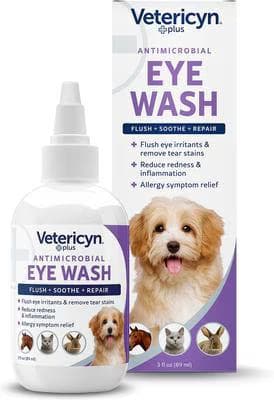
A sterile antimicrobial rinse that flushes irritants, pollen, and discharge out of the eye and helps lift tear stains. A sensible at-home first step for mild irritation, though it does not replace a vet exam for a painful eye.
Webvet may earn a commission when you click through to Chewy, at no extra cost to you.
- Likely normal: pupils widen in a dark room or at night, during play and pouncing, or with a jolt of excitement or fear, then return to slits within minutes.
- Worth a vet visit soon: pupils stay wide in bright light, your cat's eyes are dilated all the time, vision seems off, or you notice cloudiness, redness, or squinting.
- Emergency now: sudden dilation with disorientation, stumbling, collapse, seizures, recent trauma, suspected poisoning, or a cat that will not eat.
The table below summarizes the common causes at a glance. Every cause is explained in full in the sections that follow, since a quick-reference table cannot replace a real veterinary exam.
| Cause | Typical Pupil Pattern | Urgency Level |
|---|---|---|
| Low light or nighttime | Both pupils wide, normal in the dark | Normal |
| Play, pouncing, excitement | Both pupils wide, brief | Normal |
| Fear or anxiety | Both pupils wide with tense body language | Usually normal |
| Pain (anywhere in the body) | Both pupils wide, may persist | See vet soon |
| High blood pressure (hypertension) | Both pupils wide, may not react to light | Same-day to emergency |
| Glaucoma | One or both pupils wide, painful, cloudy eye | Emergency |
| Blindness or retinal disease | Both pupils wide, poor light response | See vet promptly |
| Neurological injury or toxin | Wide pupils plus disorientation or seizures | Emergency |
| Anisocoria (unequal pupils) | One pupil bigger than the other | Same-day, always |
Normal, Non-Emergency Causes of Dilated Pupils
Most owners who ask "why are my cat's pupils dilated" are looking at a completely normal cat. The pupil is controlled by the autonomic nervous system, and it responds to light and emotion faster than you can react to it. When the cat eyes dilated pattern matches the moment, there is usually nothing to fix.

The everyday, benign triggers include:
- Low light and nighttime: In a dark room the pupils open wide to gather every bit of light. Cat pupils dilated at night is expected and healthy, and it reverses the moment you turn the lights on.
- Play and pouncing: A hunting cat locks onto a toy or a bug, and the eyes go wide and black. This predatory focus is why you see dilated pupils mid-pounce.
- Excitement: People often ask why do cats pupils dilate when excited. Strong arousal of any kind, positive or negative, activates the same nervous-system pathway that opens the pupils, so a burst of zoomies or a favorite treat can do it.
- Fear and anxiety: Could dilated pupils mean my cat is scared? Yes. Fear widens the pupils as part of the fight-or-flight response, usually alongside a crouched posture, flattened ears, or a puffed tail.
- Affection and bonding: Do cats' pupils dilate when they love you? Sometimes. Dilation tracks strong emotion and arousal rather than love specifically, so wide eyes during a happy greeting reflect excitement, not a measurable declaration of love.
The reassuring thread through all of these is timing and symmetry. Normal dilation affects both eyes equally and fades within minutes once the trigger is gone. If the pupils snap back to slits in good light and your cat is eating, playing, and moving normally, an environmental or emotional cause is most likely.
For cats whose eyes look mildly dry or dusty during these normal episodes, a gentle, non-medicated lubricant such as Optixcare Eye Lube Plus can soothe surface irritation. It does not treat dilation itself, and it is not a substitute for a veterinary exam if anything else seems off.
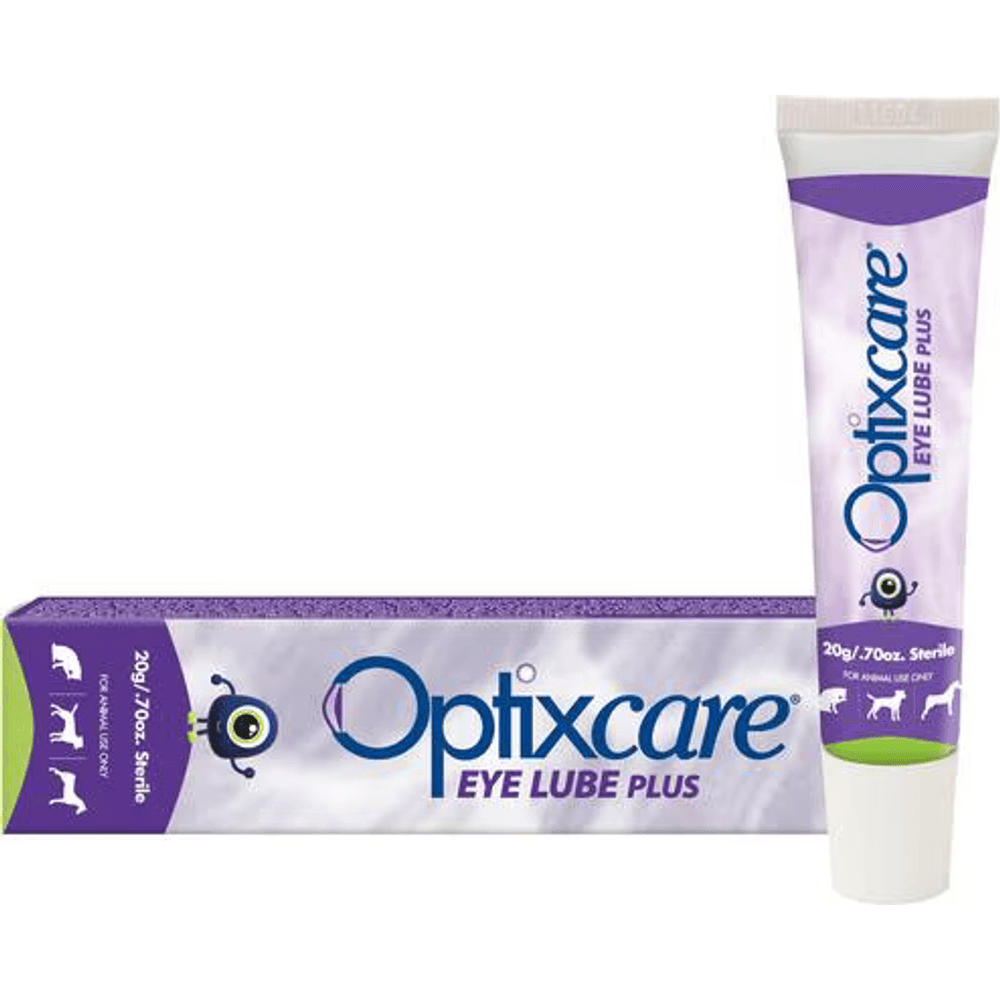
A sterile lubricating gel that soothes and moisturizes dry, irritated eyes and helps support the tear film in dogs and cats prone to dryness. A gentle, vet-shelf staple for everyday eye comfort.
Webvet may earn a commission when you click through to Chewy, at no extra cost to you.
Two everyday scenes prompt the most questions:
- Purring with wide eyes: a cat purring on your lap with big black pupils is usually just enjoying the moment, since purring and dilation both follow the same emotional arousal. Purring can occasionally be self-soothing in a cat that hurts, so check posture and appetite too.
- A locked-on stare: an unblinking stare with saucer pupils is the hunting face, aimed at a toy or a bird at the window. A hard stare with a stiff body means keyed up, not unwell.
In both cases the pupils should narrow back to slits within minutes once the moment passes.
Medical & Emergency Causes of Dilated Pupils
When dilation does not match the lighting, lingers, or arrives with other symptoms, a medical cause moves up the list. Both "are cats' pupils dilated when sick" and "do cats' pupils dilate when sick" point at the same truth: illness and pain can absolutely widen the pupils, and some of these causes are genuine emergencies.
The medical causes veterinarians see most often include:
- Pain: Pain anywhere in the body, not just the eyes, can trigger mydriasis. A cat with dilated pupils that also hides, stops grooming, or resists being touched may be hurting.
- High blood pressure (hypertension): Cat dilated pupils high blood pressure is a classic and dangerous pairing. Feline hypertension, often secondary to hyperthyroidism or chronic kidney disease, can cause the retina to detach, producing sudden blindness with fixed, widely dilated pupils.
- Glaucoma: Raised pressure inside the eye can leave a pupil dilated and unresponsive, with a cloudy, red, or visibly painful eye. Glaucoma is an emergency because vision loss can become permanent quickly.
- Blindness and retinal disease: When a cat cannot see, the pupils often stay wide and react poorly to light. Cats hide vision loss well, so persistently dilated pupils can be the first clue.
- Neurological problems: Brain injury, tumors, or inflammation can disrupt the nerves that control the pupils, sometimes with circling, head tilt, or altered behavior.
- Toxins and medications: Certain plants, human medications, and chemicals can dilate the pupils. If exposure is possible, this is an emergency call.
- Feline dysautonomia (Key-Gaskell syndrome): A rare nervous-system disorder that causes widely dilated pupils, raised third eyelids, and trouble eating or swallowing.
- FeLV and FIV complications: Feline leukemia virus and feline immunodeficiency virus can lead to eye inflammation or lymphoma that alters pupil size.
Cat pupils dilated all the time, meaning wide even in bright daylight, deserves a veterinary appointment regardless of how your cat is otherwise acting.
A non-medicated cat-specific rinse such as Nutri-Vet Cat Eye Rinse may keep the eye comfortable while you arrange the visit, but it does not address any of the causes above. Only a diagnosis can do that.
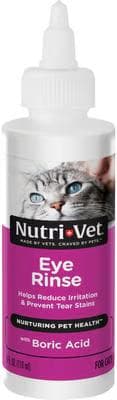
The cat formulation of Nutri-Vet's boric acid rinse, made for gently clearing everyday debris and limiting tear stains around a cat's eyes. Not a substitute for vet care if the eye looks painful.
Webvet may earn a commission when you click through to Chewy, at no extra cost to you.
Anisocoria: When One Pupil Is Bigger Than the Other
Anisocoria in cats means the two pupils are different sizes at the same time. If you notice a cat one pupil bigger than the other, or cat pupils different sizes that do not even out when the light changes, that asymmetry is a red flag on its own.

Unequal pupils can come from either eye. The larger pupil is not automatically the abnormal one, since the problem may be an over-constricted pupil on the other side. Common drivers include:
- Horner's syndrome: A disruption of the sympathetic nerve supply to one eye. The affected eye typically has the smaller pupil, a droopy upper lid, a sunken appearance, and an elevated third eyelid. If you also see the third eyelid showing, that pairing points strongly toward a nerve problem.
- Uveitis and other eye inflammation: Inflammation inside one eye can constrict or distort that pupil, creating asymmetry.
- Glaucoma in one eye: The higher-pressure eye may hold a larger, fixed pupil.
- Trauma or a scratched eye: Injury can change one pupil's size and shape.
- FeLV-related disease: Viral disease can inflame one eye or affect the nerves behind it.
The takeaway with anisocoria is simple: the underlying causes range from treatable to serious, and you cannot tell which from the outside. Same-day veterinary assessment is the safe and correct move every time.
SponsoredVet care that's always there
Unlimited video calls and messaging with licensed vets for less than a typical vet visit. One membership covers up to five pets.
Use code Pets60
Plans start at $12/month · covers up to 5 pets
- Licensed vets in most states
- Rx for 150+ conditions
- 4.7 on Trustpilot
Cat Pupil Size and Shape: What Slits, Saucers, and In-Between Mean
Owners searching cat pupil size meaning usually want a decoder, not a diagnosis. Shape is context. It only becomes useful when you read it against the light in the room and the rest of your cat's behavior at that moment.

Cats evolved vertical-slit pupils as ambush predators. The slit controls incoming light across an enormous range and sharpens depth judgment at close quarters, which is why a cat's eye can travel from a hairline slit to a full black circle in a couple of seconds.
- Narrow vertical slits: bright light, a settled cat, or the locked-on stare of a stalking hunter. This is what people mean when they ask what does it mean when cats eyes are slits, and in daylight it is the expected, healthy shape.
- Mid-range oval or almond: moderate indoor light and a relaxed cat. Nothing to read into here.
- Wide round saucers: dim light, play, excitement, or fear. It is only suspicious when the lighting does not explain it.
- Irregular, off-center, or teardrop shapes: not a mood signal at all. Distorted cat pupil shape suggests inflammation, injury, or pressure inside the eye and needs a veterinarian.
You can build a reliable cat eyes dilated vs normal baseline at home in under a minute, and having one makes it far easier to tell a veterinarian what actually changed.
- Look at both eyes together in the same lighting. Symmetry matters more than absolute size.
- Add light by opening a blind or switching on a lamp, then watch whether both pupils narrow within a few seconds.
- Photograph your cat's eyes in ordinary daylight while she is well, so you have a personal baseline to compare against later.
- Note anything else that shifted: squinting, cloudiness, bumping into furniture, hiding, or a drop in appetite.
Pupil shape is only one signal. When size changes arrive with watery eyes, sneezing, or discharge, the eye surface is usually involved as well, and cat sneezing and watery eyes covers that overlap in depth.
Why Are My Cat's Pupils Always Dilated? Senior Cats and Chronic Causes
Cat pupils always dilated is a different problem from pupils that widen and then relax. Constant dilation is never normal, and in cats past about seven years old it usually traces back to a systemic disease rather than to the eye by itself.
- Hypertension secondary to chronic kidney disease: high blood pressure is the most common reason an older cat's eyes stay wide. Treatment is a daily blood-pressure medication such as amlodipine, alongside management of the kidney disease driving it.
- Hyperthyroidism: an overactive thyroid pushes blood pressure up and is treated with methimazole, a prescription iodine-restricted diet, or radioiodine therapy.
- Hypertensive retinopathy and retinal detachment: sustained pressure can tear the retina loose, producing sudden blindness with huge pupils that barely react to light.
- Progressive retinal atrophy: a slow inherited degeneration of the retina. There is no treatment, but a diagnosis tells you the dilation is not an emergency unfolding in front of you.
- Senile iris atrophy: the iris muscle thins with age, so the pupil never closes fully. It is common in very old cats, is not painful, and needs no treatment once a veterinarian has ruled out the serious causes above.
This is what older cats eyes are always dilated treatment realistically means: none of it targets the pupil. Owners search cat pupils dilated all the time hoping for a drop that shrinks the pupil back down, but the pupil only follows once the blood pressure, thyroid, or kidney disease behind it is controlled.
If you have been telling yourself my cat has dilated pupils all the time but she seems fine, book the exam anyway. Cats compensate for gradual vision loss so well that owners often notice nothing until a rearranged room exposes it.
- 1Narrow vertical slits in bright light are the normal shape; wide saucers are normal only when the lighting, play, or excitement explains them.
- 2Pupils that never change size with light, or that look irregular or off-center, are a veterinary problem regardless of how your cat is acting.
- 3Constant dilation in a senior cat points at systemic disease, most often hypertension from kidney disease or hyperthyroidism, and it is treated at the source.
- 4Sudden constant dilation plus disorientation or bumping into things is a same-day blood-pressure check, because early treatment can save sight.
Dilated Pupils Plus Other Eye Symptoms (Redness, Discharge, Squinting)
Dilated pupils rarely travel alone when there is an eye problem. Redness, discharge, squinting, cloudiness, or a visible third eyelid alongside pupil changes usually means the eye surface or interior is involved, and each of those symptoms has its own workup and treatment.
While you arrange a proper diagnosis, keeping the eye area clean matters, especially when discharge is crusting on the fur. A gentle antimicrobial product such as Vetericyn Plus Antimicrobial Eye Wash can help you wipe away debris around the eye.
Do not use it as a treatment for the underlying condition, and never apply any wash or drop directly to a red, painful, or ulcerated eye without a veterinarian's guidance, because the wrong product can make some eye injuries worse.
If discharge, redness, or squinting is present with the dilation, the combination raises the priority of the visit. An eye that is both painful and changing in appearance should be examined within a day, not monitored for a week.
Is This a Vet Emergency? Home vs. ER Decision Framework
Owners searching dilated pupils in cats emergency want a clear line between "watch at home" and "go now." Here is a practical framework. When in doubt, calling your veterinarian or an emergency clinic for advice is always reasonable.
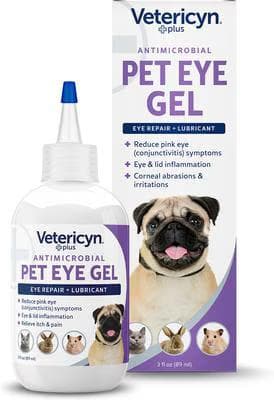
A lubricating antimicrobial gel that clings to the eye surface longer than a rinse, easing conjunctivitis symptoms, lid inflammation, and irritation from minor corneal abrasions. For dogs, cats, and small pets.
Webvet may earn a commission when you click through to Chewy, at no extra cost to you.

Are dilated pupils an emergency for cats? Not always, but the following combinations are:
- Go to an emergency vet now if you see: sudden dilation with disorientation, stumbling, or collapse, seizures, known or suspected poisoning, recent trauma, or a suddenly blind cat bumping into things.
- Book a same-day or urgent visit if you see: unequal pupils (anisocoria), pupils wide in bright light that do not narrow, a red, cloudy, or painful eye, or dilated pupils and not eating.
- Monitor at home only if: the pupils widen and narrow normally with light, both eyes match, and your cat is eating, playing, and behaving as usual.
That not-eating cue matters. Cat pupils dilated and not eating is a warning combination, because appetite loss in cats can escalate quickly and often signals pain or systemic illness sitting behind the eye changes. Pair it with wide pupils and the visit becomes urgent rather than optional.
A phone call costs nothing and can save a trip or save an eye. If your cat is showing any of the emergency signs above, do not wait for morning.
Two findings get under-reported on the phone. A cat that is disoriented, meaning she circles, presses her head into a wall, or navigates a familiar room as if it changed overnight, needs an emergency visit when her pupils are also wide.
The same is true of a cat that is lethargic: limp, hard to rouse, and flat when you walk in. Call an emergency clinic for any of these combinations:
- Wide pupils plus lethargy that does not lift within an hour or two.
- Wide pupils plus disorientation, head pressing, or misjudged jumps.
- Wide pupils plus pale gums, labored breathing, or a cold-feeling body.
How Vets Diagnose the Cause
Because dilated pupils are a sign rather than a diagnosis, the veterinary visit is about finding the why. Understanding the steps helps you know what to expect and roughly what a workup may cost.
The exam typically includes:
- History and observation: When the dilation started, whether one or both eyes are affected, and any other symptoms.
- Pupillary light reflex test: Shining a light in each eye to see whether the pupils respond, which helps localize the problem to the eye or the nervous system.
- Full eye exam: Checking the cornea, lens, and retina, often with magnification and a bright focal light.
- Intraocular pressure (tonometry): Measuring eye pressure to screen for glaucoma or uveitis.
- Blood pressure measurement: Central to the cat dilated pupils high blood pressure link, since hypertension is a common and treatable cause.
- Fluorescein stain: A dye that highlights corneal scratches or ulcers.
- Bloodwork and further testing: Screening for hyperthyroidism, kidney disease, FeLV, FIV, and other systemic issues, with referral to a veterinary ophthalmologist when needed.
On vet visit cost cat eye exam expectations, ranges vary widely by region and by how much testing is needed. A basic office exam is often in the range of 50 to 100 US dollars, while adding tonometry, staining, and blood pressure typically pushes a focused eye workup into the low hundreds.
A referral eye exam with a veterinary ophthalmologist and advanced imaging usually costs more. Ask for an estimate up front, since your clinic can tailor the numbers to your cat.
Treatment & At-Home Care
There is no single treatment for dilated pupils, because you are treating the cause, not the pupil. Once your veterinarian identifies what is driving the change, the plan follows the diagnosis.
Cause-directed treatment can include:
- Blood pressure medication for hypertension, plus treatment of the underlying hyperthyroidism or kidney disease.
- Pressure-lowering eye medications or surgery for glaucoma.
- Anti-inflammatory or antibiotic eye medication for uveitis or infection. A veterinarian may prescribe a product such as Terramycin Ophthalmic Ointment for certain bacterial eye infections, and prescription eye medicines should only be used exactly as directed.
- Pain relief and treatment of any systemic illness found on bloodwork.
- Supportive care for neurological or toxin cases, sometimes in hospital.
People search for cat eye drops for dilated pupils hoping for a quick fix, but dilation itself is not treated with over-the-counter drops. Any true remedy targets the underlying condition.
For long-term eye and vision support once a cause is diagnosed and stable, a veterinarian-formulated antioxidant supplement such as Ocu-GLO Optimal Vision Support Soft Chew is sometimes used as part of ongoing eye-health care. Our roundup of the best cat eye drops compares the options, and cataract-related vision changes are covered in our cat cataracts guide.
The bottom line for at-home care is restraint. Keep the eye area clean, follow your veterinarian's prescriptions precisely, and let the professionals handle diagnosis and medication.
When the Dilation Started After Surgery or a New Medication
Wide pupils after a dental, spay, or other procedure usually come from the drugs, not the eye. Cats sent home on the opioid painkiller buprenorphine often have big, round pupils for hours after each dose, and tramadol can do the same. Anesthetic and sedative drugs also take time to clear.
- Expect both pupils to be equally affected and to narrow again as the medication wears off.
- Call the clinic if the dilation outlasts the prescribed course, involves only one eye, or comes with vomiting, wobbliness, or unusual sedation.
Frequently Asked Questions
Why do my cat's pupils dilate?
A: Cat pupils dilate to let in more light and in response to strong emotion. Low light, play, excitement, and fear all widen the pupils normally, and they narrow again once the trigger passes. Dilation that stays wide in bright light or comes with other symptoms should be checked by a veterinarian.
Why would my cat's pupils be dilated all the time?
A: Pupils that are wide even in bright daylight are not a normal environmental response and warrant a veterinary exam. Persistent dilation can point to high blood pressure, pain, retinal disease, blindness, or a neurological problem, so a diagnosis is needed rather than home monitoring.
Are dilated pupils an emergency for cats?
A: Not always. Brief dilation during play, in the dark, or with excitement is normal. It becomes an emergency when it appears suddenly with disorientation, seizures, collapse, trauma, or suspected poisoning, or when your cat also stops eating. Unequal pupils are a same-day visit every time.
Are cats' pupils dilated when sick?
A: They can be. Illness, pain, high blood pressure, and some infections can widen the pupils, so dilation that does not match the lighting and comes with other symptoms is worth a veterinary check. Wide pupils alone are not proof of illness, but they are a reason to look closer.
What does it mean when my cat has one pupil bigger than the other?
A: Unequal pupils, called anisocoria, mean something is affecting one eye or its nerve supply. Causes range from Horner's syndrome and eye inflammation to glaucoma, trauma, and viral disease. It is always a same-day veterinary visit, even if your cat seems fine otherwise.
My cat's pupils are dilated and she is not eating. What should I do?
A: Treat this as urgent. Appetite loss in cats can worsen quickly and often signals pain or systemic illness, and paired with dilated pupils it raises the priority of a veterinary visit. Contact your veterinarian or an emergency clinic promptly rather than waiting.
Do cats' pupils dilate when they love you or when they are scared?
A: Pupils widen with strong emotion and arousal rather than love specifically, so wide eyes during a happy greeting reflect excitement. Fear also dilates the pupils as part of the fight-or-flight response, usually alongside a crouched posture, flattened ears, or a puffed tail.
Is it normal for my cat's eyes to be dilated at night?
A: Yes. In dim light the pupils open wide to gather more light, so cat pupils dilated at night is expected and healthy. The dilation should reverse when you turn the lights on. Wide pupils that persist in bright light are the pattern that needs a veterinary look.
Why are my cat's pupils always dilated?
Pupils that stay wide in every lighting condition are not a normal response. In older cats the usual drivers are high blood pressure from kidney disease or hyperthyroidism, retinal disease, or age-related iris atrophy. A veterinary exam that includes a blood-pressure reading separates the harmless causes from the sight-threatening ones.
What does it mean when a cat's eyes are slits?
Narrow vertical slits mean the pupil is doing its job in bright light, and they also appear in a calm cat or one locked onto prey. Slits in daylight are the expected shape. Pupils that stay narrow in a dark room, or that never change size at all, are worth a veterinary look.
Sources

Editor
The Webvet Editorial Team is the in-house group of pet-care editors and writers behind Webvet, operated by Smart Pet Collective. The team researches, writes, and maintains Webvet's pet health, behavior, and medication content. Every article follows a defined editorial process: research from reputable veterinary and scientific sources, careful drafting, mandatory review of medical content by a credentialed veterinarian, and dated publication. Health and medication articles are medically reviewed by a licensed veterinary professional before they go live and are kept current over time.
Veterinarian · BVMS MRCVS
Dr. Pippa Elliott, BVMS, MRCVS, is a veterinarian with nearly 30 years of experience in companion animal practice. Dr. Elliott earned her Bachelor of Veterinary Medicine and Surgery from the University of Glasgow. She was also designated a Member of the Royal College of Veterinary Surgeons. Married with 2 grown-up kids, Dr. Elliott has a naughty Puggle named Poggle, 3 cats and a bearded dragon.


