Conjunctivitis in Cats (Pink Eye): Is It Contagious?
A vet-reviewed guide to conjunctivitis in cats (feline pink eye): the signs, causes, whether it is contagious to other cats or humans, safe home care, treatment, and real vet costs.

BVMS MRCVS
Medically reviewed by Dr. Pippa Elliott, BVMS MRCVS · Last reviewed

This article contains affiliate links. Webvet may earn a commission when you buy through them, at no extra cost to you.
WebVet may earn a commission from qualifying purchases made through links on this page, at no additional cost to you.
A red, weepy, half-closed eye is one of the most common reasons cats end up at the vet, and conjunctivitis in cats (the feline version of pink eye) is usually the culprit. It looks alarming, it can spread fast between cats in the same home, and pet parents almost always ask the same first question: can I catch it too?
The short answer is that most feline pink eye spreads readily to other cats but only rarely to people. This vet-reviewed guide walks through the signs, the causes, a clear home-care-versus-vet-visit framework, real treatment costs, and exactly how to stop it spreading under your own roof.
- 1Conjunctivitis is inflammation of the conjunctiva, the pink membrane lining the eyelids and covering the white of the eye; "cat pink eye" is the same thing.
- 2Most cases are contagious to other cats (viruses and certain bacteria are the usual drivers) but only rarely to humans.
- 3Feline herpesvirus is the single most common cause, so conjunctivitis often shows up alongside sneezing and a runny nose.
- 4Gentle cleaning helps, but human eye drops and leftover medicine are never safe to use without a vet.
- 5See a vet promptly if the eye is held shut, the surface looks cloudy, discharge turns thick and yellow-green, or your cat stops eating.
 Sponsored
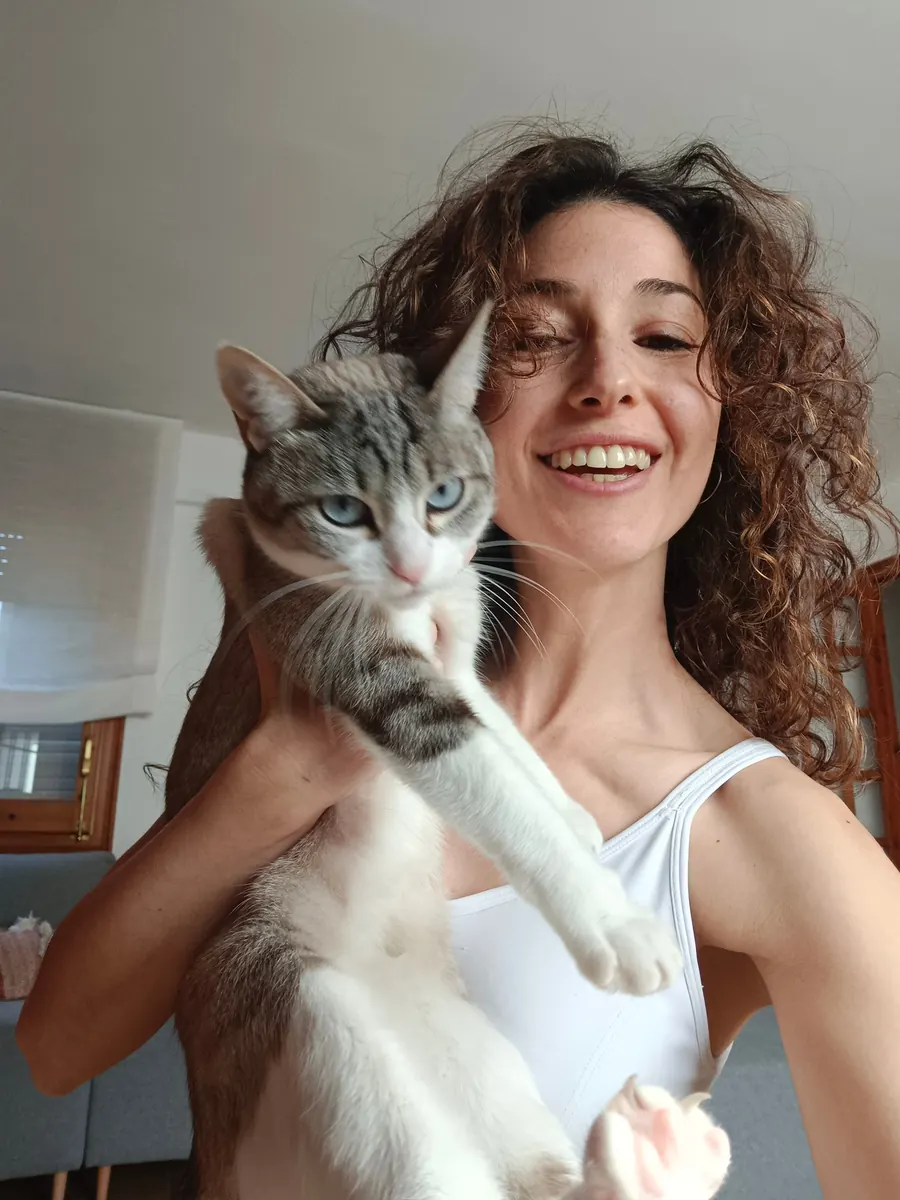
Have a health question about your cat?
Talk to a licensed vet at Dutch over video or message, including nights and weekends.
Use code Pets60
Plans start at $12/month · covers up to 5 pets
- Licensed vets in most states
- Rx for 150+ conditions
- 4.7 on Trustpilot
What Is Conjunctivitis in Cats?
Conjunctivitis is inflammation of the conjunctiva, the thin pink mucous membrane that lines the inside of the eyelids and folds back to cover the white of the eye. When that tissue gets irritated or infected, it swells, turns red, and produces extra discharge. Owners often call it cat pink eye because the inflamed membrane takes on the same angry pink look people recognize from human pink eye.
It is the most common eye problem veterinarians see in cats, and it can affect one eye or both. Some cats have a single mild episode that clears up quickly. Others, especially those carrying feline herpesvirus, deal with flare-ups that come and go for life.
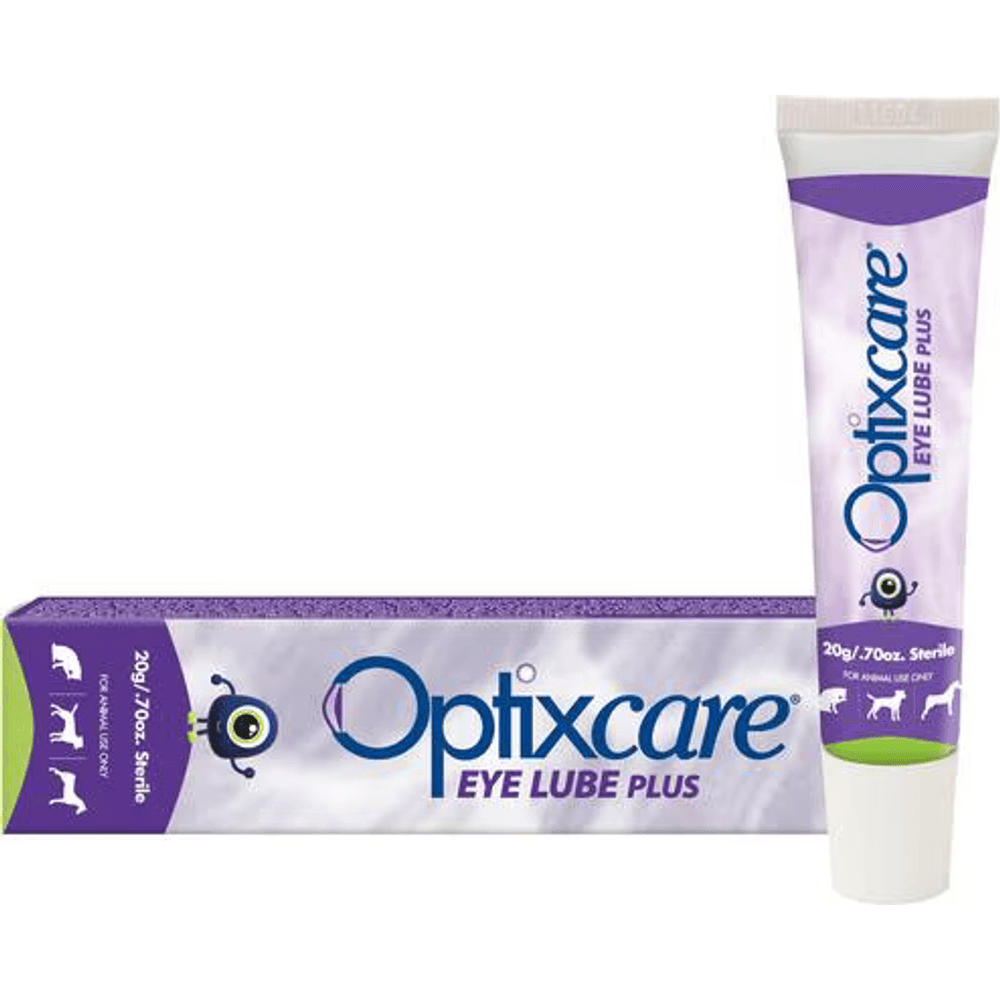
A sterile lubricating gel that soothes and moisturizes dry, irritated eyes and helps support the tear film in dogs and cats prone to dryness. A gentle, vet-shelf staple for everyday eye comfort.
Webvet may earn a commission when you click through to Chewy, at no extra cost to you.
Conjunctivitis is a symptom, not a single disease. The inflamed conjunctiva is telling you something is wrong, but the underlying reason ranges from a passing virus to an allergy to a scratch on the eye. That distinction matters, because the right treatment depends entirely on the cause, and a few look-alike conditions are genuine emergencies.
Owners often start by searching cat conjunctivitis pictures and holding a photo up against their own cat's eye. That is a fair way to learn what the symptoms of feline pink eye actually look like, but a picture has real limits. It cannot show you pain level, tear production, or a scratch on the cornea.
A corneal ulcer, which is a genuine emergency, can look almost identical to ordinary conjunctivitis in a photo. Use pictures to know what to look for, then judge the eye in front of you: redness, discharge, squinting, and how your cat is behaving. Anything painful, cloudy, or held shut needs a vet.
Signs & Symptoms of Cat Conjunctivitis
The hallmark of feline conjunctivitis is a red, irritated eye with more discharge than normal. Cat eye discharge from conjunctivitis can be thin and watery early on, then thicken into a stringy or crusty mucus as the inflammation progresses. Watch for this scannable checklist:
- Redness of the membrane around the eye and along the inner eyelid
- Watery, cloudy, yellow, or greenish discharge (cat eye discharge conjunctivitis often starts clear and turns thicker)
- Squinting, blinking, or holding the eye partly or fully closed
- Swelling of the conjunctiva, sometimes puffy enough to bulge slightly (called chemosis)
- The third eyelid partly covering the eye
- Pawing or rubbing at the eye against furniture or with a paw
- Crusting on the eyelids, especially after sleep
- Sensitivity to light or a dull, uncomfortable expression

Daily cleaning of that discharge keeps the eye comfortable and lets you track whether it is improving. A gentle, cat-specific product such as Nutri-Vet Cat Eye Rinse can loosen crust and flush minor irritants, but it does not replace a diagnosis when an infection is brewing. If both eyes are involved, if your cat is sneezing, or if discharge keeps rebuilding within hours, that points toward an infectious cause that needs a vet.
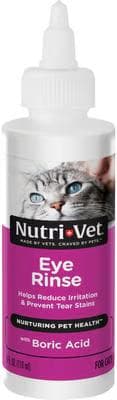
The cat formulation of Nutri-Vet's boric acid rinse, made for gently clearing everyday debris and limiting tear stains around a cat's eyes. Not a substitute for vet care if the eye looks painful.
Webvet may earn a commission when you click through to Chewy, at no extra cost to you.
Mild conjunctivitis in cats vs. a worsening case
Not every case looks dramatic. Mild conjunctivitis in cats often shows as slight pinkness along the inner eyelid, a small amount of clear watery discharge, and a cat who is still eating, playing, and holding the eye open normally. That presentation is the one most likely to respond to gentle cleaning and close monitoring.
- Discharge has thickened, turned yellow or green, or rebuilds within a couple of hours of cleaning
- The eye is squinted, held shut, or the lids are stuck together after sleep
- Both eyes are involved, or the second eye reddens a few days after the first
- Your cat is sneezing, congested, off food, or hiding more than usual
- Swelling is pronounced enough that the conjunctiva bulges over the lid margin
Mild and moderate cases can look identical in a dim room. Check the eye in daylight, or with a phone light held off to the side rather than straight into the pupil, and compare it against the healthy eye each morning so you can tell direction of travel.
Is Cat Conjunctivitis Contagious? (To Other Cats and Humans)
This is the question the title promises to answer, and it deserves a straight one. Whether cat conjunctivitis is contagious depends on what is causing it.
- Contagious to other cats: usually yes. The most common causes (feline herpesvirus, calicivirus, and the bacteria Chlamydia felis and Mycoplasma) spread cat-to-cat through direct contact, shared bowls and bedding, sneeze droplets, and grooming. So pink eye in cats is very much contagious to other cats in the same household.
- Contagious to humans: rarely. The viral causes are feline-specific and do not infect people. The bacterial cause Chlamydia felis has been linked to a small number of documented human conjunctivitis cases, so the zoonotic risk is real but low.
- Not contagious at all: allergy, irritant, and injury cases. If the trigger is dust, litter particles, a foreign body, or a scratch, there is nothing to catch.
Because you cannot tell the cause just by looking, treat any new case as potentially contagious to your other cats until a vet says otherwise.
How long is cat conjunctivitis contagious?
Assume an infected cat is contagious for as long as there is active discharge, and for the full course of any prescribed medication. Bacterial cases driven by Chlamydia felis generally stop shedding after roughly a week of antibiotics, even though the prescribed course runs considerably longer than that.
Herpesvirus is different. Infected cats carry it for life and can shed virus during stress or a flare even after the eye looks normal, which is why household hygiene matters year-round. Feline conjunctivitis is rarely spread to humans, so isolation is mainly about protecting your other cats.
What Causes Conjunctivitis in Cats?
Feline conjunctivitis falls into two broad buckets: infectious causes that can spread, and non-infectious causes that cannot. The infectious group is far more common in cats than in dogs.
- Feline herpesvirus (FHV-1): the number one cause. This virus is extremely common, causes upper respiratory infections, and drives most chronic and recurring conjunctivitis. Stress often reawakens it, so flares tend to follow boarding, a new pet, or a move.
- Chlamydia felis: a leading bacterial cause. Chlamydia conjunctivitis in cats classically starts in one eye, then spreads to the second a few days later, and is especially common in kittens and crowded environments. It typically needs specific antibiotics to fully clear.
- Mycoplasma and other bacteria. These can cause primary infection or pile on as a secondary infection once the surface is already inflamed.
- Calicivirus. Another respiratory virus that can inflame the conjunctiva, often with mouth ulcers.
- Allergies and irritants. Dust, smoke, aerosols, pollen, cleaning fumes, and fine airborne particles can inflame the conjunctiva without any infection at all.
- Physical causes. A foreign body (like a grass seed), a scratch, entropion (eyelids that roll inward), or blocked tear drainage can all produce a red, weepy eye.

Can cat litter cause conjunctivitis?
Cat litter itself does not infect the eye, but fine litter dust can absolutely act as an irritant that inflames the conjunctiva, particularly with dusty clay or heavily scented clumping litters. If you notice eye irritation that eases when you switch to a low-dust or unscented litter, dust was likely aggravating things. Litter dust is a trigger and an aggravator, not a germ, so a truly infected eye still needs veterinary treatment. When an infectious cause is suspected, a cat-safe antimicrobial rinse such as Vetericyn Plus Antimicrobial Eye Wash is a gentler choice than any human product for flushing the surface while you arrange a vet visit.
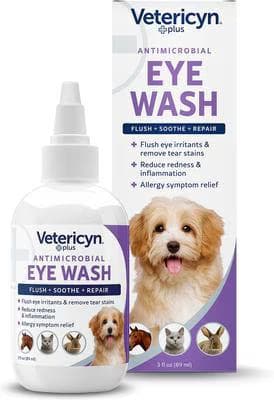
A sterile antimicrobial rinse that flushes irritants, pollen, and discharge out of the eye and helps lift tear stains. A sensible at-home first step for mild irritation, though it does not replace a vet exam for a painful eye.
Webvet may earn a commission when you click through to Chewy, at no extra cost to you.
Conjunctivitis in kittens
Kittens are hit hardest. Their developing immune systems and the close quarters of litters, shelters, and catteries make herpesvirus and Chlamydia felis especially common in young cats. Neonatal conjunctivitis can even develop before a kitten's eyes fully open, trapping discharge behind sealed lids, which is a situation that always needs a veterinarian rather than home care.
Telling viral, chlamydial, and allergic cases apart
Owners often try to sort viral cases from chlamydial or allergic ones by the look of the discharge. These patterns are suggestive, not diagnostic.
- Viral (herpesvirus, calicivirus): watery eyes plus sneezing or nasal discharge, often in both eyes and recurring under stress.
- Chlamydial or bacterial: thicker, gluey, yellow-green discharge that classically starts in one eye and reaches the other within days.
- Allergic or irritant: clear watery discharge with no other illness, often tied to dust, smoke, or a new litter.
Truly allergic conjunctivitis is uncommon in cats. Because these signs can also mask a corneal ulcer, your vet's exam settles the cause, not discharge color.
Conjunctivitis vs. Look-Alikes: What Else Could It Be?
Not every red or watery eye is conjunctivitis. Several conditions mimic it, and a couple are far more serious, so knowing what gets mistaken for conjunctivitis helps you decide how urgently to act. The differences below are why a vet exam matters: some look-alikes threaten vision if treated as simple pink eye.
| Condition | How It Differs From Conjunctivitis | Learn More |
|---|---|---|
| Corneal ulcer | A scratch or erosion on the clear surface of the eye; often intensely painful with heavy squinting, and can worsen fast if steroid drops are used by mistake | [Cat corneal ulcer](https://www.webvet.com/cat-corneal-ulcer/) |
| Dilated pupils | A change in pupil size, not membrane inflammation; can signal pain, high pressure, or a systemic problem rather than surface irritation | [Cat dilated pupils](https://www.webvet.com/cat-dilated-pupils/) |
| Third eyelid showing | The inner eyelid stays visibly up across one or both eyes; can accompany conjunctivitis or point to a separate illness | [Cat third eyelid showing](https://www.webvet.com/cat-third-eyelid-showing/) |
| Herpesvirus flare | The recurring viral driver behind much feline conjunctivitis; managed differently from a one-off bacterial case | [Feline herpes eye](https://www.webvet.com/feline-herpes-eye/) |
Because a corneal ulcer and simple conjunctivitis can look nearly identical to an owner yet demand opposite treatments, guessing at home is risky. This look-alike overlap is the single biggest reason not to reach for leftover drops. For the bigger picture on how these conditions connect, our pillar guide to cat eye infections maps the whole territory.
SponsoredVet care that's always there
Unlimited video calls and messaging with licensed vets for less than a typical vet visit. One membership covers up to five pets.
Use code Pets60
Plans start at $12/month · covers up to 5 pets
- Licensed vets in most states
- Rx for 150+ conditions
- 4.7 on Trustpilot
Home Care vs. When to See a Vet
Owners want a clear line between what is safe to try at home and what needs a professional, so here is that framework. Gentle supportive care is reasonable for a mild, recently-started, single-eye case in an otherwise bright, eating, playful adult cat. Anything beyond that leans toward a vet visit.

Should I wipe my cat's eye, and how do I treat conjunctivitis at home?
Yes, gently wiping away discharge is one of the most useful things you can do, and it is the core of any safe cat conjunctivitis home remedy. Here is how to treat cat conjunctivitis at home the right way while you monitor or wait for an appointment:
- Moisten a clean cotton pad with warm water or a sterile, cat-labeled eye rinse and wipe from the inner corner outward.
- Use a fresh pad for each eye so you never move germs from one side to the other.
- Wipe away crust before it hardens, then gently pat the area dry.
- Keep the environment calm and low-dust, and reduce stress, since stress triggers herpes flares.
- A soothing, cat-safe comfort product like Vetericyn Plus Pet Eye Gel can ease surface irritation between cleanings.
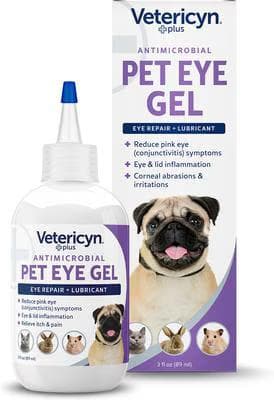
A lubricating antimicrobial gel that clings to the eye surface longer than a rinse, easing conjunctivitis symptoms, lid inflammation, and irritation from minor corneal abrasions. For dogs, cats, and small pets.
Webvet may earn a commission when you click through to Chewy, at no extra cost to you.
What you must never do at home: use human pink eye drops, apply leftover antibiotics from a past pet, or reach for anything containing a steroid. If there is an unnoticed corneal ulcer underneath, steroids can cause severe, vision-threatening damage.
How to get rid of conjunctivitis in cats
Owners searching how to get rid of conjunctivitis in cats usually want a shortcut, and the honest answer is that clearing it for good means treating the cause rather than the redness. The sequence below is what actually resolves a case and keeps it from bouncing back.
- Get a diagnosis first, including a fluorescein stain, so a corneal ulcer is never treated as simple pink eye
- Use only the medication your vet prescribes for that specific cause, at the full dose and the full duration
- Clean discharge away twice daily so medication reaches the eye surface instead of sitting on dried crust
- Remove the trigger at home: switch to low-dust unscented litter, cut aerosols and smoke, improve ventilation
- Lower stress, since stress is the main switch that reactivates dormant feline herpesvirus
- Recheck with your vet if the eye is not visibly better after two to three days on treatment
Skipping any one of those steps is the usual reason a case drags on for weeks. Stopping antibiotics early because the eye finally looks better is the single most common mistake, and it invites both relapse and continued spread to housemates.
Will conjunctivitis in cats go away by itself?
Sometimes, but you should not count on it. A mild viral case can settle over one to two weeks on its own, yet you cannot tell viral from bacterial by looking, secondary bacterial infections can pile on, and a hidden corneal ulcer can quietly worsen. Bacterial causes like Chlamydia felis will not fully clear without antibiotics and will keep spreading to your other cats in the meantime. When in doubt, or when there is no improvement in a couple of days, let a vet make the call.
One clarification worth making: mild cases with clear discharge in an otherwise comfortable cat are the only ones likely to go away by itself. Even then a vet call is the safer default, and anything painful, thick with discharge, or still present after a few days does not qualify.
How Vets Diagnose Conjunctivitis in Cats
A veterinarian does more than confirm the eye is red; they rule out the dangerous look-alikes and pin down the cause so treatment actually works. Expect a hands-on eye exam plus one or more targeted tests.

- Full ophthalmic exam. The vet inspects the eyelids, conjunctiva, cornea, and third eyelid, and checks for foreign bodies.
- Fluorescein stain. A harmless dye highlights any scratch or ulcer on the cornea, the critical step that separates simple conjunctivitis from a corneal ulcer before any medication is chosen.
- Schirmer tear test. A quick paper-strip test measures tear production to rule out dry eye, which can masquerade as conjunctivitis.
- Tonometry. Eye-pressure measurement helps rule out glaucoma and inflammation deeper in the eye.
- Cytology, cultures, and PCR panels. Cell samples and lab tests can identify herpesvirus, Chlamydia felis, Mycoplasma, and calicivirus, especially in stubborn, recurring, or multi-cat cases where knowing the exact organism changes the plan.
Most straightforward cases are diagnosed on the exam and stain alone. The more advanced tests come in when a case keeps coming back, fails to respond, or involves several cats at once.
Treatment for Cat Conjunctivitis
How do you treat conjunctivitis in cats? Feline conjunctivitis treatment always targets the underlying cause, which is exactly why a diagnosis comes first. There is no single cat pink eye treatment that fits every case.
- Bacterial cases are treated with topical antibiotics. A commonly prescribed antibiotic ointment is Terramycin Ophthalmic Ointment, and Chlamydia felis in particular often needs a course of oral doxycycline for several weeks to fully clear and prevent spread.
- Viral (herpes) cases are managed with supportive care, keeping the eye clean, controlling stress, and sometimes antiviral therapy for severe or frequent flares. Antibiotics may be added to prevent or treat secondary bacterial infection.
- Allergic and irritant cases improve by removing the trigger (switching to low-dust litter, improving ventilation) and, when needed, medication prescribed by the vet.
- Lubrication and comfort. A lubricating gel such as Optixcare Eye Lube Plus can support surface comfort alongside prescribed cat conjunctivitis eye drops or ointment, easing the gritty, dry feeling while the eye heals.
Follow the full course exactly as prescribed, even once the eye looks better, and never stop early or share medication between pets. For a broader look at over-the-counter options, our roundup of the best cat eye drops covers vet-reviewed picks in depth.
What does treating cat conjunctivitis cost?
Cost is the piece competitors leave out, so here are realistic ranges. A basic vet exam typically runs about 50 to 100 dollars. Diagnostics such as fluorescein stain, tear testing, and cytology usually add roughly 30 to 150 dollars, while PCR panels for recurring cases can push higher. Medications commonly land in the 20 to 60 dollar range. All told, a straightforward case often totals somewhere around 100 to 300 dollars, with recurrent or multi-cat situations costing more. These are typical ballparks; your clinic and region set the real numbers.
Two line items surprise people most. The exam fee is charged even when the diagnosis takes five minutes, and a recheck visit carries its own exam fee. Budgeting the cost of treating conjunctivitis at roughly one exam fee plus one round of medication covers most uncomplicated cases.
Eye Drops for Cat Conjunctivitis: OTC vs. Prescription
Cat conjunctivitis eye drops fall into three very different groups, and mixing them up is where owners get into real trouble. Only one of the three actually treats an infection, and it is the group you cannot buy without a veterinarian.

- Sterile saline rinses: safe for flushing dust, litter particles, or pollen off the surface of the eye
- Cat-labeled lubricating gels and drops: ease the gritty, dry feeling and soften crust, with no antimicrobial action at all
- Cat-safe antimicrobial eye washes sold over the counter: reasonable for cleaning a mildly irritated eye, but not a cure for an established infection
That is the whole honest range of conjunctivitis in cats treatment over the counter. Nothing you can buy off a shelf clears feline herpesvirus, Chlamydia felis, or Mycoplasma, and spending a week on one while the eye quietly worsens is time you do not get back.
What never goes in a cat's eye
- Human redness-relief drops containing tetrahydrozoline or naphazoline
- Any product containing a steroid such as dexamethasone, hydrocortisone, or prednisolone, unless your vet prescribed it after staining the cornea
- Leftover ophthalmic medication from another pet or a previous episode
- Contact lens solution, baby shampoo, diluted tea, or any improvised home rinse recipe
Prescription eye drops for conjunctivitis in cats are the ones that change the outcome: antibiotic ointments for bacterial causes, antivirals for herpesvirus flares, and anti-inflammatories only after an ulcer has been ruled out with a stain.
For the cat-safe rinses and lubricants worth keeping in the cupboard, our roundup of the best eye drops for cat conjunctivitis compares vet-reviewed picks in depth. That guide owns product selection; this one covers whether you should be reaching for a drop at all.
How Long Does Cat Conjunctivitis Last? Recovery Timeline
How long does conjunctivitis last in cats? It depends almost entirely on the cause. Irritant cases clear the fastest, treated bacterial cases follow a fairly predictable curve, and herpesvirus is the one that comes and goes for years rather than resolving once and staying gone.
| Cause | Typical duration | Contagious window |
|---|---|---|
| Irritant or allergic | 1 to 3 days once the trigger is removed | Not contagious |
| Bacterial, treated | Better in 3 to 5 days, resolved in 1 to 2 weeks | Until about 7 days of antibiotics |
| Chlamydia felis | Up to 4 weeks of oral antibiotics | Through the full treatment course |
| Herpesvirus flare | 1 to 2 weeks per flare, recurring for life | Active signs plus stress-related shedding |
| Bacterial, untreated | Weeks, with rising risk of complications | Ongoing |
Those ranges assume treatment started promptly and the course was finished. Cases that stall usually involve a second cause nobody looked for, doses being skipped, or a corneal ulcer that was never stained for at the first visit.
Severe, Chronic, and Recurring Conjunctivitis: What If It Doesn't Clear?
Chronic conjunctivitis in cats and recurring conjunctivitis in cats usually mean the same thing: latent feline herpesvirus reactivating under stress, not a failed prescription. The eye clears, the household gets noisy or busy, and the flare returns weeks or months later.
Untreated conjunctivitis in cats is the more worrying scenario. Left alone, inflammation can progress to corneal ulceration and scarring, and in kittens to symblepharon, where the healing conjunctiva fuses to the surface of the eye.
- A cloudy, blue-tinged, or visibly rough corneal surface
- Severe pain: a fully closed eye, flinching from light, hiding, or refusing food
- Discharge that returns within days of every finished course of medication
- Visible film or tissue bridging the eyelid and the surface of the eye
- Any apparent change in how your cat navigates in low light
Is conjunctivitis in cats dangerous? Simple, treated cases are not. Can conjunctivitis cause blindness in cats? Only rarely, and essentially only when severe conjunctivitis in cats is left unmanaged long enough to scar the cornea. Prompt treatment keeps both of those answers reassuring.
When cases keep returning, vets escalate: PCR testing to name the exact organism, tear testing, and referral to a veterinary ophthalmologist for cats needing long-term management. A painful, cloudy, or closed eye is never chronic-management territory. That is a same-day visit.
Antibiotics for Cat Conjunctivitis: What Vets Prescribe
Owners asking about antibiotics for conjunctivitis in cats usually want a name. Medicine for conjunctivitis in cats only works when it matches the organism, so a vet chooses from the exam, the stain, and sometimes a lab result rather than from how red the eye looks.
- Terramycin (oxytetracycline) ophthalmic ointment: the classic topical for bacterial cases, so the answer to whether Terramycin treats conjunctivitis in cats is yes for susceptible bacteria, and no for the viral component
- Erythromycin ophthalmic ointment: a common topical alternative when a cat does not tolerate oxytetracycline
- Oral doxycycline: the standard for confirmed or suspected Chlamydia felis and Mycoplasma, usually run for about four weeks
- Oral famciclovir: an antiviral, not an antibiotic, used for severe or frequent feline herpesvirus flares
- Topical antivirals such as cidofovir or idoxuridine: reserved for herpesvirus cases under veterinary direction
None of these touch a virus on their own. When herpesvirus is the driver, antibiotics are there to clear or prevent a secondary bacterial infection while the flare runs its course. That is also why leftover ointment from a previous pet is a gamble: wrong drug, wrong bug, lost time.
Dose and duration matter as much as the drug itself. Ophthalmic ointments are typically applied two to four times daily, and stopping the moment the eye looks better leaves surviving bacteria behind to restart the whole cycle.
Preventing Conjunctivitis & Reducing Spread in Multi-Cat Homes
You cannot prevent every case, but you can cut the odds and keep one sick cat from infecting the whole household. Prevention leans on vaccination, stress reduction, and simple hygiene.
- Keep core vaccinations current, since they reduce the severity of herpesvirus and calicivirus and help protect against Chlamydia felis in at-risk homes.
- Reduce stress with predictable routines, enough resources, and calm introductions, because stress is the main trigger for herpes flares.
- Use low-dust, unscented litter and keep the air clean to limit irritant exposure.
- Isolate any cat with an active eye infection until your vet clears them.
- Wash bowls, bedding, and litter scoops regularly, and wash your hands between cats.
Herpesvirus-driven conjunctivitis deserves a special note: because the virus commonly shows up with sneezing and nasal discharge, our guides to cat sneezing and watery eyes and feline herpes eye go deeper on managing the respiratory side and preventing repeat flares.
FAQ
Is cat conjunctivitis contagious to humans?
A: Rarely. The viral causes (feline herpesvirus and calicivirus) are cat-specific and do not infect people. The bacterium Chlamydia felis has been linked to a small number of documented human conjunctivitis cases, so the risk is low but not zero. Wash your hands after handling your cat's eyes and avoid touching your own, especially if you are immunocompromised.
Is pink eye in cats contagious to other cats?
A: Usually yes. The common infectious causes spread cat-to-cat through direct contact, shared bowls and bedding, sneeze droplets, and grooming. Isolate an affected cat and keep hygiene tight until your vet confirms the infection has cleared.
Will conjunctivitis in cats go away by itself?
A: A mild viral case can improve over one to two weeks, but you should not assume it will. You cannot tell the cause by looking, bacterial forms like Chlamydia felis need antibiotics to clear, and a hidden corneal ulcer can worsen. See a vet if there is no improvement within a couple of days.
How to fix conjunctivitis in cats at home?
A: Safe home care means gently wiping discharge from the inner corner outward with a clean, warm, damp pad (a fresh pad per eye), keeping the environment low-dust and calm, and monitoring closely. Never use human eye drops, leftover antibiotics, or any steroid product without a vet, and see a vet if it is not improving.
Should I wipe my cat's eye with conjunctivitis?
A: Yes. Removing discharge keeps the eye comfortable and lets you track progress. Use a clean cotton pad moistened with warm water or a sterile cat-labeled eye rinse, wipe inner corner to outer, and use a separate pad for each eye to avoid spreading infection.
Can cat litter cause conjunctivitis?
A: Litter does not infect the eye, but fine litter dust can irritate the conjunctiva and trigger inflammation, especially with dusty or scented clumping litters. Switching to a low-dust, unscented litter often helps, though a genuinely infected eye still needs veterinary treatment.
What gets mistaken for conjunctivitis in cats?
A: The main look-alikes are corneal ulcers, dry eye, glaucoma, and problems signaled by dilated pupils or a persistently raised third eyelid. Some, like a corneal ulcer, are painful and can threaten vision, which is why a vet exam and fluorescein stain are important before treating.
How long does cat conjunctivitis last?
A: With appropriate treatment, bacterial cases often improve within a few days and resolve within one to two weeks, while Chlamydia felis usually needs about four weeks of antibiotics. Herpesvirus flares typically last one to two weeks, but the virus stays dormant and can recur under stress.
What is chlamydia conjunctivitis in cats?
A: It is conjunctivitis caused by the bacterium Chlamydia felis. It classically starts in one eye, spreads to the other within days, and is especially common in kittens and multi-cat homes. It responds to specific antibiotics, often oral doxycycline, and can rarely pass to humans.
What are the best eye drops for cat conjunctivitis?
A: The right drops depend on the cause, so prescription antibiotic or antiviral products from your vet do the real work. Cat-safe rinses and lubricating gels support comfort and cleaning between doses. See our vet-reviewed roundup of the best cat eye drops for full picks, and never substitute human eye drops.
What antibiotics do vets prescribe for conjunctivitis in cats?
A: Terramycin (oxytetracycline) ophthalmic ointment is the classic topical for bacterial cases, with erythromycin ointment as a common alternative. Oral doxycycline is standard for Chlamydia felis or Mycoplasma, often for about four weeks. Antibiotics do not treat the virus in herpesvirus cases; they clear or prevent secondary bacterial infection while the flare settles.
Why does my cat's conjunctivitis keep coming back?
A: Recurring conjunctivitis in cats is usually latent feline herpesvirus reactivating under stress rather than a treatment failure. Boarding, a new pet, a move, or illness can all trigger a flare. Ask your vet about PCR testing and long-term flare management if the eye keeps relapsing after every finished course.
Sources

Editor
The Webvet Editorial Team is the in-house group of pet-care editors and writers behind Webvet, operated by Smart Pet Collective. The team researches, writes, and maintains Webvet's pet health, behavior, and medication content. Every article follows a defined editorial process: research from reputable veterinary and scientific sources, careful drafting, mandatory review of medical content by a credentialed veterinarian, and dated publication. Health and medication articles are medically reviewed by a licensed veterinary professional before they go live and are kept current over time.
Veterinarian · BVMS MRCVS
Dr. Pippa Elliott, BVMS, MRCVS, is a veterinarian with nearly 30 years of experience in companion animal practice. Dr. Elliott earned her Bachelor of Veterinary Medicine and Surgery from the University of Glasgow. She was also designated a Member of the Royal College of Veterinary Surgeons. Married with 2 grown-up kids, Dr. Elliott has a naughty Puggle named Poggle, 3 cats and a bearded dragon.
Related reading

World's Best Cat Litter Review: Clumping, Tracking, Flushing, and Which Cats It Suits

Litter Genie Review: Does It Really Work, What Refills Cost, and the Best Alternatives

Best Litter Box Enclosures and Litter Furniture: What Vets Say About Enclosed Boxes
