Feline Herpesvirus (FHV-1): Symptoms, Treatment, and Flare-Ups
Feline herpesvirus (FHV-1) is a lifelong infection that causes sneezing, conjunctivitis, and corneal ulcers, with flare-ups during stress. Here are the symptoms, how vets treat it, what the lysine evidence says, and how to prevent flare-ups.

BVMS MRCVS
Medically reviewed by Dr. Pippa Elliott, BVMS MRCVS · Last reviewed

This article contains affiliate links. Webvet may earn a commission when you buy through them, at no extra cost to you.
Feline herpesvirus is a lifelong viral infection of cats, known as feline herpesvirus type 1 (FHV-1), and it is the cause of feline viral rhinotracheitis, a common upper respiratory and eye disease. Once a cat is infected, the virus stays in the body for life.
Most cats with feline herpesvirus carry it in a latent, quiet state and have flare-ups during stress. Antivirals and eye care manage it, and most cats live normal lives. A squinting, painful, or cloudy eye needs a vet the same day.
- 1The definition: feline herpesvirus type 1 (FHV-1) is the cause of feline viral rhinotracheitis, an upper respiratory and eye disease of cats.
- 2The signs: sneezing, eye discharge, conjunctivitis, and corneal ulcers are the classic signs of infection.
- 3Infection is lifelong because the virus becomes latent and can flare again during stress or illness.
- 4The FVRCP vaccine reduces the severity of disease but does not fully prevent infection.
- 5A squinting, painful, or cloudy eye, or a kitten that stops eating, needs a vet visit the same day.
 Sponsored
Have a health question about your cat?
Talk to a licensed vet at Dutch over video or message, including nights and weekends.
Use code Pets60
Plans start at $12/month · covers up to 5 pets
- Licensed vets in most states
- Rx for 150+ conditions
- 4.7 on Trustpilot
What Is Feline Herpesvirus?
Feline herpesvirus 1 (FHV-1) is the virus that causes feline viral rhinotracheitis (FVR). VCA Animal Hospitals describes FVR as an infectious disease caused by FHV-1, and the Merck Veterinary Manual treats the two names as the same virus. In classification terms, research papers also call it felid herpesvirus type 1.
The feline herpesvirus FHV-1 is a major cause of upper respiratory disease in cats, and the Cornell Feline Health Center calls it a frequent cause of cat eye infections. It is a chronic infection: after the first illness, the virus becomes latent and can reactivate later. In short, FHV-1 is a lifelong herpesvirus that causes upper respiratory and eye disease in cats, most cats carry it latent with flare-ups during stress, and antivirals and eye care manage it.
Keeping the routine predictable matters because stress is the main trigger for a flare-up. Familiar food times, quiet resting spots, and fewer sudden changes all reduce the pressure on a herpes-positive cat.
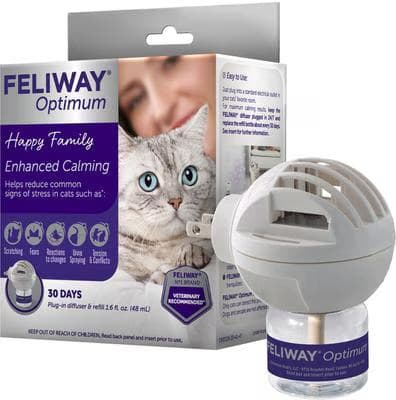
Feliway Optimum is a calming pheromone plug-in diffuser kit for cats.
Webvet may earn a commission when you click through to Chewy, at no extra cost to you.
Management of feline herpesvirus at home centers on three habits:
- Give prescribed medication on schedule
- Keep the eyes and nose clean of discharge
- Keep daily life calm to lower stress
Ask your vet for a written client handout on your cat's feline herpesvirus plan so everyone at home follows the same steps.
Symptoms of Feline Herpesvirus
Feline herpesvirus symptoms center on the nose and eyes. VCA lists sneezing, nasal congestion, and conjunctivitis as typical signs, and Merck notes that onset is often marked by fever, frequent sneezing, and inflamed eyes. Eye discharge, a runny nose, and corneal ulcers round out the classic picture of FHV-1 symptoms.
Feline ocular herpes is the eye form of the infection, and it is the part most owners notice first. Feline herpesvirus eyes and eye infection signs include:
- Blinking, squinting, and teary, sore-looking eyes, per Cornell
- Redness, conjunctival swelling, and discharge, per Merck
- Conjunctivitis (pink eye) in one or both eyes
- Keratitis, which is inflammation of the cornea, sometimes with ulcers

The ABCD cats and vets guideline links FHV replication with conjunctivitis, ulcerative keratitis, and rhinotracheitis, and calls branching (dendritic) corneal ulcers a hallmark of herpes eye infection. Merck adds that ulcerative keratitis from FHV-1 can recur for life. Feline herpesvirus dermatitis, with ulcerated skin around the eyes and face, is also reported.
Eye pictures online can look alike across conditions, so a vet exam matters more than matching a photo. For eye-only flares and feline herpesvirus eye treatment, see our guides on feline herpes eye, cat conjunctivitis and pink eye, and a cat third eyelid showing.
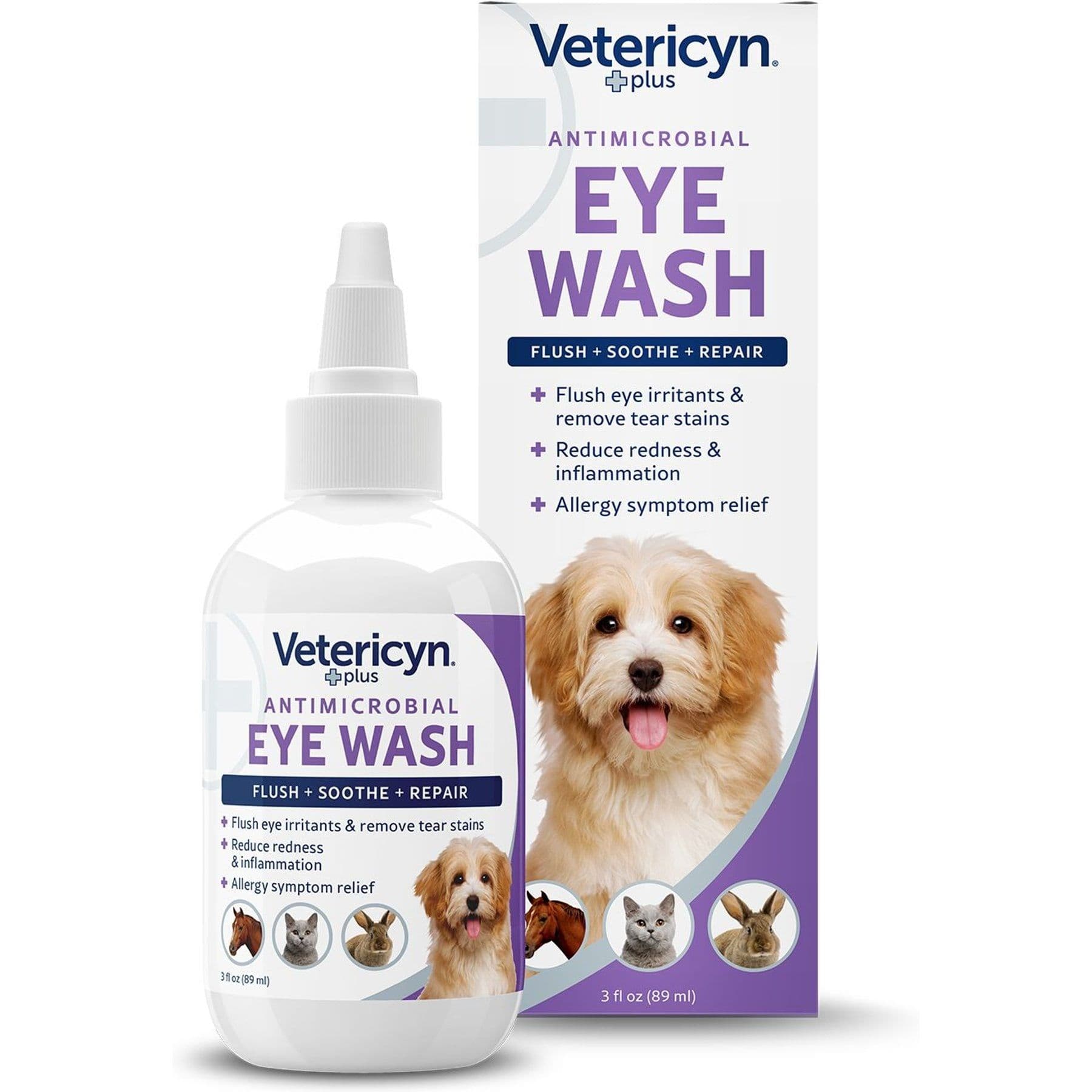
Vetericyn Plus Antimicrobial Eye Wash is a rinse for cats and other pets in a 3-fl oz bottle.
Webvet may earn a commission when you click through to Chewy, at no extra cost to you.
Cat herpes eye drops that treat the virus are prescription antivirals, not over-the-counter drops. Our best cat eye drops guide covers what home products can and cannot do for the nose and eye area.
How Cats Get Feline Herpesvirus
What causes feline herpesvirus is contact with an infected cat. FHV-1 spreads through close contact, because respiratory, oral, and eye secretions are infective, according to dvm360, and Merck describes natural transmission through small airborne droplets. Shared spaces, mutual grooming, and face-to-face contact all carry the virus between cats.
Feline herpesvirus transmission often starts early in life. VCA notes that kittens born to a latent carrier mother may be infected after birth, and ABCD states that no reliable test identifies which latently infected queens will pass it on. The virus life cycle then moves into latency, where it rests in nerve cells for life.
Crowding and stress raise the odds of both spread and flare-ups in multi-cat homes. To lower tension between cats and keep a herpes-positive cat calmer, give each cat:
- Its own food and water bowls
- Its own litter box
- A quiet resting area away from the others
On the prevalence of feline herpesvirus, veterinary references describe it as a major cause of cat respiratory disease but do not publish an overall infection rate. It often appears alongside feline calicivirus as part of upper respiratory infection in cats.
Feline Herpesvirus in Kittens
Feline herpesvirus in kittens is the most severe form of the disease. ABCD states that disease is particularly severe in young kittens, and Merck says the outlook is good except for young kittens and older cats. Kittens get the worst disease because they may be infected by their mother very young, before vaccines can protect them.
Feline herpesvirus symptoms in kittens usually include:
- Painful conjunctivitis in both eyes, with clear discharge that turns thick, per dvm360
- Large amounts of thick eye discharge in newborn kittens, per Merck
- Sneezing and a blocked nose that make eating hard
Newborn kittens can develop a generalized infection with neurological signs, and a published review describes high mortality in that group without giving a figure. A kitten with herpes that is not eating needs a vet visit the same day.
SponsoredVet care that's always there
Unlimited video calls and messaging with licensed vets for less than a typical vet visit. One membership covers up to five pets.
Use code Pets60
Plans start at $12/month · covers up to 5 pets
- Licensed vets in most states
- Rx for 150+ conditions
- 4.7 on Trustpilot
How Is Feline Herpesvirus Diagnosed?
Feline herpesvirus diagnosis starts with a vet exam, with a PCR test for confirmation. VCA calls PCR for viral DNA the most sensitive feline herpesvirus test, using a swab sample your vet sends to a lab.
PCR has limits. ABCD notes that a positive result may only reflect low-level shedding in a cat that carries the virus, and that the meaning of a result depends on the group of cats tested. A negative result does not rule out a latent infection either.
There is no reliable home feline herpesvirus test kit that replaces this process. Because branching corneal ulcers point strongly toward herpes, your vet will also examine the cornea closely for ulcers.
Treatment for Feline Herpesvirus
Feline herpesvirus treatment uses antivirals such as famciclovir plus eye medication, and there is no cure. VCA lists oral antivirals such as famciclovir, and Merck describes famciclovir as safe and effective when a systemic antiviral is needed. Your vet sets the feline herpesvirus medication dose and course for your cat.
Eye medication handles the ocular side of FHV-1 treatment:
- Topical antivirals: ABCD names trifluridine as its topical choice, and Merck names 0.5 percent cidofovir, which ABCD says needs only two daily applications
- Antibiotics for secondary bacterial infection, which Merck calls common and VCA flags especially in kittens
- Corneal ulcer care, where a vet may remove damaged tissue and prescribe topical antibiotics, per Merck

VCA says corneal ulcers should be treated aggressively to prevent permanent damage. Cornell notes that many current eye drugs need several daily applications and have limited scientific support, and Merck reports that interferon showed no significant effect in clinical trials.
Ask your vet before adding any supplement to the plan, and keep it alongside the antivirals rather than in place of them.

Vetoquinol Enisyl-F Lysine Bites are a chicken and liver flavored L-lysine chew for cats.
Webvet may earn a commission when you click through to Chewy, at no extra cost to you.
Feline herpesvirus treatment at home means supporting the vet plan:
- Give every dose of medication on schedule, even after the eyes look better
- Wipe discharge gently from the eyes and nose with a clean damp cloth
- Keep food appealing for a congested cat that cannot smell well
Holistic treatment of feline herpesvirus is not a substitute for antivirals. Our cat eye infection guide covers home care in more detail.
Does Lysine Help Feline Herpes?
The strongest evidence says lysine does not help feline herpes, though some clinical references still list it. A 2015 systematic review by Bol and Bunnik in BMC Veterinary Research concluded that L-lysine is not effective for preventing or treating FHV-1 and recommended stopping supplementation.
The ABCD guideline also does not recommend lysine. Merck's pharmacology section calls study results ambiguous and notes that two shelter-cat studies saw worse disease and more shedding in cats given lysine.
On the other side, VCA says some cats may respond to L-lysine, and Merck's ophthalmology section says it may reduce severity and recurrence but is not a first-line treatment. Lysine is not proven to work, and antiviral therapy remains the evidence-based option.

If you and your vet still choose to try a supplement, lysine products for cats come as chews and gels. Ask your vet first, and never use a supplement in place of prescribed antivirals.

Tomlyn Immune Support L-Lysine Gel is a maple flavored lysine gel for cats in a 5-oz tube.
Webvet may earn a commission when you click through to Chewy, at no extra cost to you.
Gels are an alternative for cats that refuse chews. Tomlyn lists 500 mg of L-lysine hydrochloride per half teaspoon of its Tomlyn Immune Support L-Lysine HCl Maple Flavor Gel.
Veterinary guidelines do not describe lactoferrin or homeopathy as proven options for feline herpesvirus. Antiviral therapy prescribed by your vet is the treatment with the strongest support.
Feline Herpes Flare-Ups and Triggers
Stress is the main trigger for feline herpes flare-ups. Merck explains that after signs resolve, the virus stays inactive for life and can flare, especially during stress, and VCA adds that illness can also reactivate it. The latent virus rests in nerve cells, and spontaneous reactivation without a trigger is infrequent.

Reported triggers include general stress, moving to a new home, illness, nursing a litter, and steroid medication. A flare-up usually shows first as squinting, watery eyes, or sneezing. The table below is a flare-up trigger and response table listing the common triggers, the early signs to watch for, and the first step to take for each.
| Trigger | Early sign to watch | First step |
|---|---|---|
| Stress from a change in routine | Squinting or watery eyes | Restore the usual routine and quiet spaces; call your vet if signs appear |
| Moving to a new home | Squinting or a runny nose | Set up one quiet room with familiar bedding first |
| Illness | Red or teary eyes | Tell your vet the cat is herpes-positive |
| Steroid medication | Eye discharge or squinting | Ask your vet before starting any steroid |
| Nursing a litter | Sneezing or eye signs in the mother or kittens | Book a vet check for the mother and kittens |
To reduce stress, keep routines steady, give every cat its own resources, and plan ahead for known events such as travel or a new pet. Watch for squinting and sneezing in the week after any change so you catch a flare early.
Feline Herpesvirus Life Expectancy
Feline herpesvirus life expectancy is normal for most infected cats. VCA reports that most cats respond well to management and lead normal lives, and the virus usually stays inactive for the rest of the cat's life, according to Merck. Veterinary references publish no specific lifespan figure.
Is feline herpesvirus deadly or dangerous? It is dangerous mainly for newborn kittens and for the eyes. Merck notes the outlook is good except for young kittens and older cats, and Cornell warns that untreated eye disease can lead to blindness.
Is feline herpesvirus curable? No. There is no way to cure feline herpesvirus or remove it from the body, because it stays latent for life. Treatment controls flare-ups, and good management keeps most cats comfortable for a normal lifespan.
Is Feline Herpes Contagious to Humans or Other Cats?
Feline herpes is contagious to other cats but not to people or dogs. VCA states that FVR is infectious only to other cats, and ABCD reports no evidence of FHV infecting humans and no known transfer to other species, even though it is related to canine herpesvirus.
Cat herpes is contagious between cats through close contact and droplets. Can a cat with herpes be around other cats? Many herpes-positive cats share homes, but during an active flare keep the sick cat apart, use separate bowls, and wash your hands after handling it. Feline herpesvirus is not contagious to dogs.
If your cats also need testing for other infections, our guide to feline leukemia virus explains a different contagious virus.
Feline Herpesvirus Vaccine
The feline herpesvirus vaccine is part of the core FVRCP vaccine, and it reduces severity but does not prevent infection. VCA states that the vaccine does not fully prevent infection, and ABCD agrees it does not give full protection.
The FHV-1 vaccine still matters, because the FVRCP vaccine reduces the severity of disease. ABCD notes that the earliest licensed age is six weeks and that antibodies from the mother interfere with the response until about eight weeks, so kittens need a series of doses. Our kitten vaccine schedule lays out the timing.
A vaccinated cat that already carries the virus can still have flare-ups. Vaccination lowers the severity of illness but does not clear a latent infection.
When to See a Vet
The eye signs that need a vet the same day are squinting, a painful eye, or a cloudy eye. These can mean a corneal ulcer, and VCA warns that untreated ulcers risk permanent eye damage, while Cornell notes untreated herpes eye infection can eventually cause blindness. dvm360 advises treating any feline corneal ulcer as herpes-related until proven otherwise.
Book a routine visit for mild sneezing or clear discharge that lasts more than a few days. Our guide to cat sneezing and watery eyes helps sort mild cases from urgent ones.
Feline Herpesvirus FAQs
Frequently Asked Questions
How long can a cat live with FHV?
Most cats with FHV live a normal lifespan. The infection is lifelong, but VCA reports that most cats respond well to management and lead normal lives.
How did my indoor cat get feline herpes?
An indoor cat can carry the virus from kittenhood. VCA notes that kittens can be infected after birth by a mother who carries the virus in a latent state, and the virus can then stay quiet for years before a flare.
Does feline herpes ever go away?
No. The virus stays latent in the body for life and can flare again during stress or illness, according to Merck.
Can you touch a cat with herpes?
Yes. FHV-1 infects only cats and has no known transfer to other species, so it cannot infect you. Wash your hands after handling a cat with an active flare so you do not carry the virus to other cats.
Does L-lysine help cats with herpes virus?
The strongest evidence says no. A 2015 systematic review of the studies found lysine is not effective for preventing or treating FHV-1, though some references still list it, so the evidence does not support relying on it.
What does a feline herpes flare-up look like?
A flare-up usually looks like squinting, blinking, teary eyes, and sneezing. Eye discharge and redness are also common. A squinting or painful eye needs a vet the same day.
What causes feline herpes flare-ups?
Stress and illness cause most flare-ups. Reported triggers include moving to a new home, nursing a litter, and steroid medication.

Editor
The Webvet Editorial Team is the in-house group of pet-care editors and writers behind Webvet, operated by Smart Pet Collective. The team researches, writes, and maintains Webvet's pet health, behavior, and medication content. Every article follows a defined editorial process: research from reputable veterinary and scientific sources, careful drafting, mandatory review of medical content by a credentialed veterinarian, and dated publication. Health and medication articles are medically reviewed by a licensed veterinary professional before they go live and are kept current over time.
Veterinarian · BVMS MRCVS
Dr. Pippa Elliott, BVMS, MRCVS, is a veterinarian with nearly 30 years of experience in companion animal practice. Dr. Elliott earned her Bachelor of Veterinary Medicine and Surgery from the University of Glasgow. She was also designated a Member of the Royal College of Veterinary Surgeons. Married with 2 grown-up kids, Dr. Elliott has a naughty Puggle named Poggle, 3 cats and a bearded dragon.
Related reading

Upper Respiratory Infection in Cats: Symptoms, Causes, and Treatment

FIV in Cats: Symptoms, Transmission, Testing, and Life Expectancy

Feline Leukemia Virus (FeLV): Symptoms, Transmission, Testing, and Prognosis
