Feline Calicivirus: Symptoms, Treatment, and Managing Multiple Cats
Calicivirus can cause painful mouth ulcers and respiratory illness. Learn how treatment supports recovery and how to manage shedding, cleaning and other cats.

BVMS MRCVS
Medically reviewed by Dr. Pippa Elliott, BVMS MRCVS · Last reviewed

This article contains affiliate links. Webvet may earn a commission when you buy through them, at no extra cost to you.
Feline calicivirus (FCV) is a contagious virus that commonly causes respiratory infection and painful oral ulcers in cats. Many affected cats recover, but difficulty eating, dehydration, pneumonia or a rare severe systemic form can make the illness dangerous. A cat looking better may still shed virus and infect another cat.
Call a veterinarian promptly if your cat stops eating, seems weak or has a painful mouth. Breathing difficulty, collapse or rapidly worsening illness needs emergency care. Tell the clinic about respiratory signs before arriving so it can protect other patients.
 Sponsored
Have a health question about your cat?
Talk to a licensed vet at Dutch over video or message, including nights and weekends.
Use code Pets30
Plans start at $11/month · covers up to 5 pets
- Licensed vets in most states
- Rx for 150+ conditions
- 4.7 on Trustpilot
What feline calicivirus is
Calicivirus can cause painful oral ulcers and respiratory infection. Treatment supports eating, hydration and comfort while the veterinarian assesses complications. Recovery, infectious shedding and the decision to mix cats again are separate questions.
FCV is one of the viruses behind what owners often call cat flu. It spreads among cats, especially where animals share space or equipment. Different strains can produce different patterns of illness, and a healthy-looking carrier may be a source of exposure. A kitten's vulnerability depends partly on its age, protection and ability to keep eating and drinking.
A new diagnosis does not tell the whole story
If your kitten has calicivirus, ask what established the diagnosis, how sick it is now and which changes require another examination. The label alone cannot tell you whether home care is enough. A kitten with painful swallowing and poor intake needs a different support plan from an adult cat with mild sneezing and normal meals.
For separate meals, the OurPets Durapet Premium Stainless Steel Cat and Dog Bowl, Small, 0.75 cups offers a small washable dish. Record how much food is offered and left, and keep this bowl assigned to one cat during the isolation plan. A bowl does not establish adequate nutrition if the cat only takes a few licks.

A small dedicated washable bowl for separate meals and intake monitoring.
Webvet may earn a commission when you click through to Chewy, at no extra cost to you.
Calicivirus occurs internationally, including in the UK. A study from one shelter or country does not give the infection risk for every household. When discussing a positive result, tell the veterinarian whether the cat recently came from a rescue, breeder, boarding facility or home with respiratory illness; those details are more useful than assuming all strains behave alike.
Mouth sores, respiratory signs, and urgent illness
Symptoms of feline calicivirus can include sneezing, nasal or eye discharge, fever, reduced appetite, drooling and ulcers on the tongue or other parts of the mouth. A kitten may become quiet or stop eating before its owner sees an ulcer. Do not force the mouth open to look for a diagnosis.

The tongue ulcer and hypersalivation shown here are from Karakaya-Bilen, Akgül and Yılmaz-Koç (2025), Figure 1, reproduced under CC BY 4.0. The report concerned suspected postoperative calicivirus infection. These findings show actual oral disease, but they do not prove that another cat's ulcer has the same cause.
Mouth pain changes the feeding decision
Watch for a cat approaching food and then backing away, dropping pieces, chewing unusually or drooling. Congestion can also reduce interest in food. A cat that wants to eat but cannot comfortably swallow needs pain assessment and a nutrition plan, not repeated attempts to make it finish the bowl.
After arranging the examination, a Frisco Travel Safety Dog and Cat Carrier, Medium can provide contained transport if the cat fits its dimensions comfortably. Call ahead, use the clinic's arrival instructions and clean the carrier afterward as directed. Do not share it with another cat before the infection-control plan allows that.

A contained transport option for a cat that fits its dimensions comfortably.
Webvet may earn a commission when you click through to Chewy, at no extra cost to you.
Signs that deserve urgent attention
- Open-mouth breathing, obvious effort to breathe or collapse.
- Refusal of food, especially in a kitten, or inability to swallow.
- Marked weakness, dehydration or rapidly worsening feverish illness.
- Swelling of the face or limbs, widespread skin lesions or yellow discoloration.
- Several cats becoming ill together, particularly after a new arrival or clinic exposure.
A cat not eating and becoming lethargic needs assessment rather than a home diagnosis of uncomplicated cat flu. Breathing difficulty is an emergency even if the cat was recently diagnosed with calicivirus and is already receiving medicine.
Limping, persistent gum disease and severe systemic illness
FCV can be associated with a transient limping syndrome, sometimes with fever. A painful leg can have many other causes, so do not assume a new limp is simply part of a respiratory infection. Report which leg is affected and whether the cat can bear weight without forcing it to walk for a video.
Calicivirus is also associated with chronic gingivitis or gingivostomatitis, but a positive test does not explain every tooth or gum problem. Persistent oral inflammation may require dental assessment and a separate treatment plan. Teeth extractions are a decision for particular dental disease, not a routine way to eliminate FCV from every infected cat.
Virulent systemic feline calicivirus is a rare, much more severe disease pattern than typical FCV respiratory illness. High fever, facial or limb swelling, skin injury, jaundice and rapid deterioration can occur. Kittens may also become seriously ill from pneumonia without having this rare systemic form. Neither an ulcer photograph nor an ordinary positive PCR result determines which course a cat will take.
Diagnosis and similar respiratory infections
A veterinarian assesses the mouth, breathing, hydration and overall condition alongside the history. Testing for feline calicivirus may involve an oral or other suitable swab and reverse-transcription PCR, often as part of a respiratory panel. Testing is especially useful when several cats are affected or the result will influence household management.
A positive result must fit the clinical picture: a carrier can test positive while another condition causes its symptoms. A negative result does not exclude every infection because sampling, timing and viral variation can affect detection. Ask what the result changes about treatment or isolation rather than treating the report as a prognosis.
Herpesvirus, cat flu and overlapping signs
Feline herpesvirus type 1 and feline calicivirus are different viruses that can cause similar upper respiratory signs. Oral ulcers are commonly associated with FCV, while herpesvirus often causes prominent eye disease; neither pattern is a perfect home test. Coinfections and secondary bacterial disease can complicate either illness.
Treating an upper respiratory infection starts with assessing its severity and likely cause. The Cornell Feline Health Center's respiratory guidance explains why supportive care and treatment of complications matter. For a cat well enough to recover at home, the plan may include prescribed pain relief, suitable soft food, monitoring hydration and gentle removal of external discharge. Bacterial complications may require antibiotics, while some herpesvirus cases need different medication. A medicine used for feline herpesvirus should not automatically be transferred to a cat with suspected FCV.
Bring the clinic:
- The vaccine record and dates of recent boarding, adoption or illness.
- A record of food intake, drinking and any difficulty swallowing.
- Names and doses of medicines already prescribed for this cat.
- Details of other cats' symptoms and which animals share equipment.
Calicivirus is not human norovirus
Feline calicivirus and human norovirus belong to the same broad virus family, but they are not the same virus. FCV is not another name for the human stomach bug. Its use in some laboratory disinfection research does not establish that a sick cat has norovirus or that a human norovirus treatment is suitable for a cat.
SponsoredVet care that's always there
Unlimited video calls and messaging with licensed vets for less than a typical vet visit. One membership covers up to five pets.
Use code Pets30
Plans start at $11/month · covers up to 5 pets
- Licensed vets in most states
- Rx for 150+ conditions
- 4.7 on Trustpilot
Veterinary treatment and supportive home care
A cat can survive calicivirus, and many uncomplicated cases recover with supportive care. There is no universal antiviral cure proven to kill calicivirus inside every infected cat or guarantee the end of carrier shedding. Treatment addresses pain, hydration, nutrition and complications while the immune system controls the infection.
| Home-care observation and next action | What to do |
|---|---|
| Food intake remains low or swallowing looks painful | Seek veterinary reassessment; a few licks do not meet a cat's nutritional needs. |
| Breathing difficulty or open-mouth breathing | Obtain emergency care; do not wait for the next scheduled dose. |
| Discharge prevents comfortable resting or feeding | Ask the clinic about gentle cleaning and the prescribed support plan. |
| Medicines are refused, vomited or difficult to give | Contact the prescriber before repeating a dose or changing the method. |
| Appetite and comfort improve | Continue the prescribed plan and ask separately when isolation can end. |
The veterinarian may prescribe pain relief and other medicines based on the examination. Antibiotics treat suspected or confirmed bacterial complications, not the calicivirus itself. A dehydrated cat, a cat unable to eat or one with pneumonia may need hospitalization, fluids or assisted nutrition rather than home nursing alone.
If the clinician approves and the cat can swallow comfortably, a small amount of Inaba Churu Chicken Variety Pack Grain-Free Lickable Cat Treats, 0.5-ounce tubes, 20 count may help encourage voluntary interest. It is a treat, not a complete diet or antiviral treatment. Do not count a tube as a replacement for the prescribed daily food intake or force it into a reluctant cat's mouth.

A small voluntary treat, only with veterinary approval; not a complete diet.
Webvet may earn a commission when you click through to Chewy, at no extra cost to you.
Helping a cat eat without forcing it
Offer the veterinary-recommended diet in small portions, using a soft texture if the mouth is sore. Slight warming may make food more appealing, but test that it is not hot. Keep the feeding area quiet and record actual amounts rather than judging intake by visits to the dish. If the clinic recommends it, gently wipe external nose or eye discharge with a warm damp cloth, using separate clean material for each area. Do not put cleaning products, unprescribed drops or oils into the eyes or nose. Our guide to a cat not eating explains why sustained poor intake needs attention.
A feeding tube can be appropriate when pain or illness prevents adequate intake; needing one is not evidence that the owner has failed. Ask which nutritional target the team is trying to meet and how it will measure progress. Do not syringe-feed a struggling cat or give water by force, because aspiration and worsening distress are risks.

Home remedies and proposed antiviral drugs
Natural or holistic remedies have not been established as a cure for FCV. Gentle nursing can support comfort, but essential oils, human cold medicines and household disinfectants should not be given to the cat. Do not substitute supplements for prescribed pain control, nutrition or reassessment.
L-lysine is not an established treatment that clears calicivirus. Interferon has been studied in feline respiratory disease and chronic oral inflammation, but those are different clinical settings and the evidence does not establish a dependable cure for routine FCV infection. A specialist may discuss selected therapies for a particular patient; that does not make them suitable for unsupervised home use.
The current ABCD calicivirus guideline describes preliminary molnupiravir observations in a very small group of FCV-positive cats with refractory chronic gingivostomatitis. That is not proof of safety or effectiveness for ordinary acute calicivirus. Drug risks, legal availability and the individual disease require veterinary judgment; do not buy or dose an antiviral from an online protocol.
How long treatment and recovery may take
Mild signs may improve over roughly a week or two, while severe disease or persistent oral inflammation can take longer. FCV may appear to go away on its own in a mildly affected cat, but that does not make waiting safe when food intake, hydration or breathing is impaired. The need for treatment is determined by the patient's condition, not by an expected recovery date.
A Frisco Cat Metal Litter Scoop can serve as equipment dedicated to one cat or group. Keep it in that group's area and follow the cleaning protocol before reuse. A separate scoop supports household organization; it does not prevent spread through saliva, nose discharge, shared hands or other contaminated items.
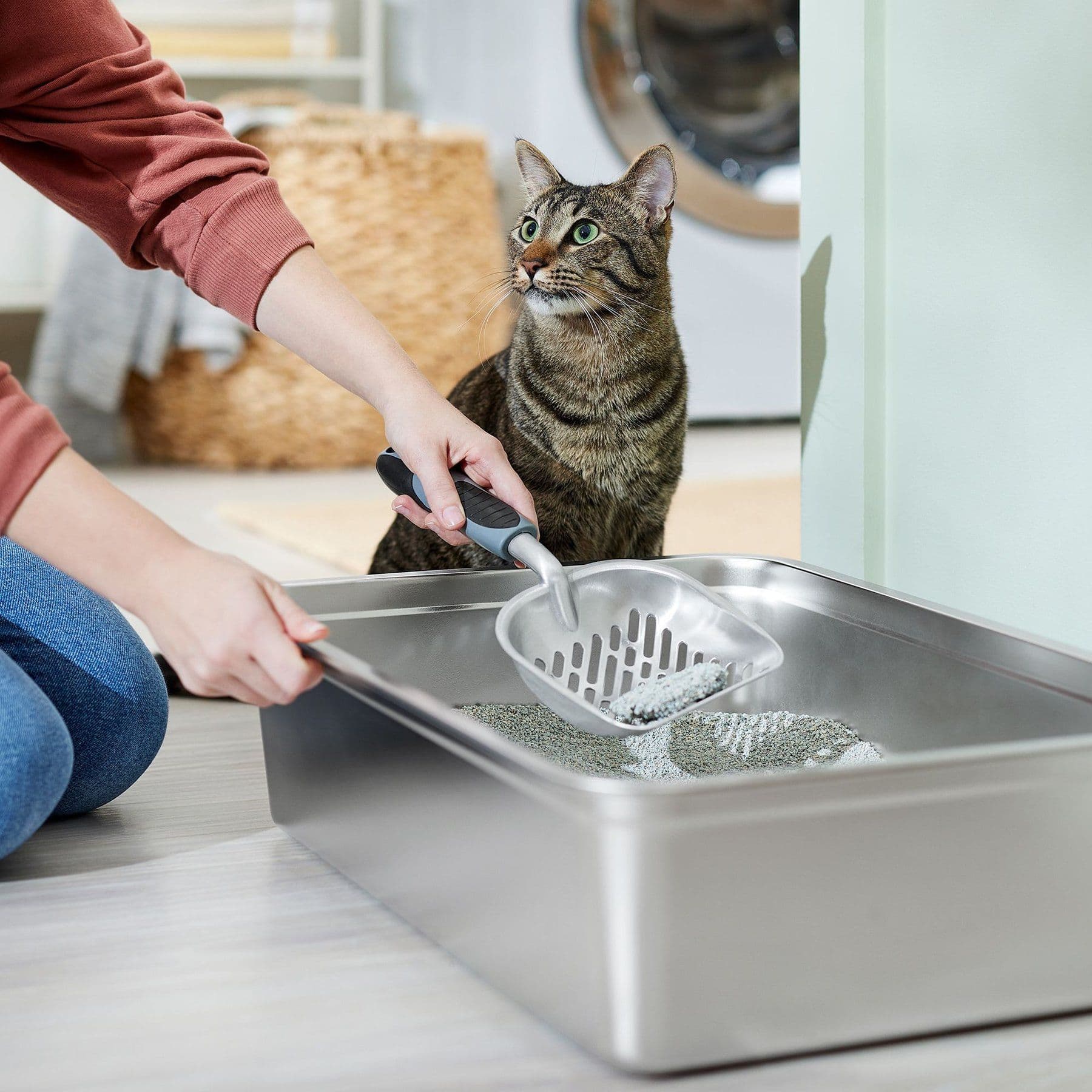
A washable scoop to keep litter equipment assigned to one cat or group.
Webvet may earn a commission when you click through to Chewy, at no extra cost to you.
Ask for a clear recheck plan if appetite does not improve, a medicine cannot be given or a new sign appears. Calicivirus can be deadly in severely affected cats, especially with pneumonia or systemic disease. A general survival percentage cannot predict the outcome for a particular kitten; the examination and response to support matter.
Carrier shedding and living with other cats
A cat with calicivirus can sometimes live with other cats under a considered veterinary plan, but sharing a home creates exposure risk. During acute illness, separate the affected cat and use dedicated bowls, bedding and litter equipment. Whether established housemates have already been exposed, and whether any are kittens or medically vulnerable, changes the decision.
Recovery and contagiousness have different endpoints
Separate symptom recovery from stopping viral shedding. Some recovered cats continue shedding for weeks or longer, and a minority may remain long-term carriers. There is no single symptom-free day that guarantees the cat is no longer infectious. Ask whether follow-up testing would help and what limitations it has before deciding to mix animals again.
Long-term carriage does not automatically shorten a cat's life. Many recovered cats live for years, while ongoing mouth disease, recurrent illness or other medical conditions may affect quality of life and require continuing care. The veterinarian should assess the individual cat rather than assign a lifespan from its positive test alone.
Adoption, repeat infection and vulnerable housemates
Adopting a cat with a history of calicivirus can be reasonable if you understand its current health and can manage the household risk. Ask the rescue and your veterinarian about recent symptoms, test context, oral care and existing cats' protection. A home with an unprotected kitten or a medically fragile cat presents a different decision from an adult-only household with an established care plan.
Cats can get calicivirus more than once because infection does not provide complete lifelong protection against every strain. A return of sneezing or mouth pain also has other possible causes, so arrange reassessment rather than assume an old infection explains everything. Vaccination remains relevant after recovery.
How it spreads, and which species are at risk
Calicivirus is contagious to other cats through infected secretions and contaminated objects. Close contact, shared dishes and hands or clothing that move between cats can transfer it. Cornell's calicivirus overview describes an incubation period of two to 14 days, so a new arrival can appear well before signs begin.
Humans do not catch feline calicivirus as a zoonotic infection, although people can carry it between cats. Dogs are not considered an ordinary household host or reservoir for feline FCV; rare reports of FCV-like viruses do not establish routine cat-to-dog transmission. Tell the veterinarian about all animals in the home and keep equipment management consistent.
Cleaning and vaccination in multicat homes
Multicat hygiene needs both physical cleaning and an appropriate disinfection plan. FCV can remain infectious on surfaces for up to about a month under some conditions, with persistence affected by temperature and moisture. Do not assume a room becomes safe a fixed number of days after the last sneeze, especially while a carrier continues to contaminate it.

Choose the actual product and protocol
Remove visible material and wash equipment before applying a disinfectant labeled for the relevant virus and surface. FCV lacks a lipid envelope and resists some common disinfectants. Appropriate chlorine-based or other specifically effective products may be options, but concentration, contact time, rinsing and material compatibility matter.
The name Lysol or a claim against human norovirus is not, by itself, a complete feline-calici cleaning protocol. Different products have different ingredients and uses. Some disinfectants are hazardous around cats; ask the clinic to identify a suitable product and follow its label rather than mixing chemicals or using a household spray on the animal.
A workable routine includes:
- Care for healthy cats before entering the sick cat's area.
- Keep dishes, litter tools and washable bedding assigned to that area.
- Clean away organic material before disinfection.
- Keep cats away during the required wet contact period and any rinsing or drying.
- Wash hands and manage clothing before returning to unexposed cats.
Vaccines reduce disease, but do not guarantee no infection
A fully vaccinated cat can still get calicivirus. Vaccine limitations reflect the variety of FCV strains and the difference between protection from serious disease and complete prevention of infection or shedding. A vaccinated cat with compatible signs still needs assessment; vaccination is not a treatment for an already sick cat.
FCV is a core vaccine component, commonly combined with herpesvirus and panleukopenia protection in FVRCP. Panleukopenia in cats is a different infection with different environmental and clinical concerns. Read the actual vaccine record rather than assume one label describes every disease or product.
Schedule, route and reactions
The AAHA/AAFP feline vaccination guidance uses a kitten series with doses spaced three to four weeks apart through at least 16–20 weeks, followed by revaccination at six months. The clinic sets the product-specific starting age and later schedule. Adult intervals depend on product, history and exposure; some lower-risk protocols use three-year intervals, while higher-risk group settings may need more frequent vaccination.
Injectable and intranasal vaccines are different formulations with specific administration instructions. Do not put an injectable feline rhinotracheitis-calici-panleukopenia product into the nose or choose a route from an online description. A veterinary professional should select and administer the appropriate product, particularly for kittens or cats with health concerns.
Mild tiredness or soreness can follow vaccination, and some intranasal products can cause temporary sneezing. Breathing difficulty, facial swelling or collapse requires urgent care. Report any persistent or worsening illness and keep the vaccine details available; do not dismiss a sick cat's signs solely because vaccination happened recently.
Calicivirus questions
Frequently Asked Questions
What is the most effective treatment for calicivirus in cats?
Individual supportive care is the mainstay: pain control, adequate nutrition, hydration and treatment of complications according to the examination. There is no universal antiviral cure. A cat unable to eat or breathe comfortably may need hospital support rather than an additional home remedy.
How long do cats typically live with calicivirus?
Many recover from the acute illness and can live for years. Individual prognosis depends on severity, complications, chronic mouth disease and other health problems. A positive test or ongoing shedding alone cannot supply a life-expectancy number; separate the cat's quality of life from its household infection-control plan.
What is the mortality rate for cats infected with calicivirus?
Different disease forms have very different outcomes. Ordinary respiratory infection usually has a much better prognosis than rare virulent systemic outbreaks. Cornell’s vaccine guidance reports that the severe systemic form can kill up to about half of affected cats; outbreak estimates vary. Those outbreak figures should not be applied to every sneezing cat; ask the treating veterinarian about this patient's severity and response to care.
Veterinarian · BVMS MRCVS
Dr. Pippa Elliott, BVMS, MRCVS, is a veterinarian with nearly 30 years of experience in companion animal practice. Dr. Elliott earned her Bachelor of Veterinary Medicine and Surgery from the University of Glasgow. She was also designated a Member of the Royal College of Veterinary Surgeons. Married with 2 grown-up kids, Dr. Elliott has a naughty Puggle named Poggle, 3 cats and a bearded dragon.
Related reading

FIP in Cats: Symptoms, Diagnosis, and Current Treatment Options

Panleukopenia in Cats: Symptoms, Treatment, and Household Precautions

Leptospirosis in Dogs: Symptoms, Testing, Treatment, and Prevention
