FVRCP Vaccine for Cats: What It Protects Against
The FVRCP vaccine protects cats against herpesvirus, calicivirus, and panleukopenia. See the kitten series, adult booster intervals, safety signs, and costs.

BVMS MRCVS
Medically reviewed by Dr. Pippa Elliott, BVMS MRCVS · Last reviewed

This article contains affiliate links. Webvet may earn a commission when you buy through them, at no extra cost to you.
The FVRCP vaccine protects cats against three serious infections: feline viral rhinotracheitis caused by herpesvirus 1, feline calicivirus, and feline panleukopenia. It is a core vaccine for kittens and adult cats, including indoor cats. Kittens usually receive doses every 3 to 4 weeks through 16 to 20 weeks of age, followed by a veterinarian-directed booster and adult schedule under the AAHA/AAFP feline vaccination guidelines.
FVRCP does not protect against rabies, feline leukemia virus, or feline immunodeficiency virus. Product label, age, health, prior records, exposure, and response risk determine the exact plan. Those guidelines support individualized vaccination even for core vaccines.
 Sponsored
Have a health question about your cat?
Talk to a licensed vet at Dutch over video or message, including nights and weekends.
Use code Pets60
Plans start at $12/month · covers up to 5 pets
- Licensed vets in most states
- Rx for 150+ conditions
- 4.7 on Trustpilot
What does the FVRCP vaccine protect against?
- 1FVR means feline viral rhinotracheitis, associated with feline herpesvirus 1.
- 2C means feline calicivirus.
- 3P means feline panleukopenia.
- 4Kittens generally receive FVRCP every 3 to 4 weeks until 16 to 20 weeks old.
- 5Indoor cats still need a veterinarian-guided core-vaccine plan.
- 6FVRCP does not include FeLV, FIV, or rabies protection.
Webvet may earn a commission when you click through to Chewy, at no extra cost to you.
| FVRCP component or stage | What it addresses | Typical timing or interval | Owner's next step |
|---|---|---|---|
| Feline herpesvirus 1 | Viral rhinotracheitis and associated respiratory and eye disease | Included in each FVRCP dose | Keep the series on schedule and seek veterinary care for illness signs |
| Feline calicivirus | Important respiratory and oral disease syndromes | Included in each FVRCP dose | Remember that vaccination reduces risk but does not cover every circulating strain or prevent every infection |
| Feline panleukopenia | Highly contagious, potentially severe systemic disease | Included in each FVRCP dose | Protect incompletely vaccinated kittens from unknown cats and contaminated environments |
| Kitten initial series | Builds protection while maternal antibodies decline | Every 3 to 4 weeks through 16 to 20 weeks | Book the next dose before leaving the clinic |
| Follow-up | Closes a possible susceptibility gap after the initial series | A 6-month follow-up may be considered; otherwise follow the veterinarian's documented plan | Confirm the actual date and product used |
| Adult revaccination | Maintains core protection | Often every 3 years after the appropriate booster for low-risk cats, but product and risk can change the interval | Review indoor, outdoor, travel, boarding, and household-cat exposure each year |
The component names describe the disease targets, not three separate injections. Most cats receive them in one combination product. The AAHA/AAFP schedule provides the timing framework, while the veterinarian applies it to the product and cat.
What FVRCP does not cover
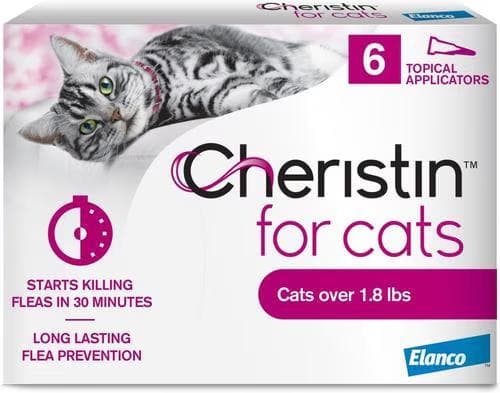
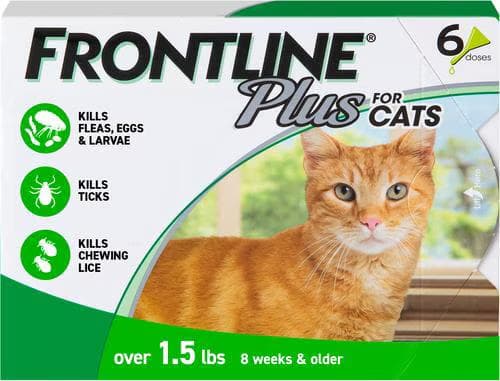
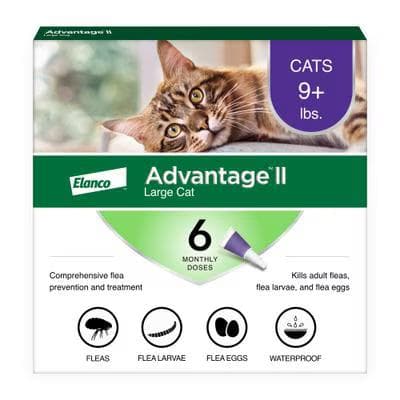
FVRCP does not prevent parasites. During the broader preventive-care visit, a veterinarian may recommend a cat-specific flea product such as Cheristin or Frontline Plus. Those listings can confirm current package directions and price, but each product is separate from vaccination and must be used only as directed for that cat.
FVRCP does not protect against feline immunodeficiency virus, or FIV. It also does not include the feline leukemia vaccine or the rabies vaccine for cats. A cat can be current on FVRCP and still be due for one of those separate vaccines.
The vaccine is also not a treatment for a cat already coughing, sneezing, vomiting, or showing other illness signs. Do not try to diagnose the cause from the acronym. Contact a veterinarian, especially when a kitten is lethargic, not eating, dehydrated, having trouble breathing, or repeatedly vomiting or having diarrhea. Petful's veterinarian-written guide to persistent kitten sneezing provides complementary symptom context without replacing an examination.
Webvet may earn a commission when you click through to Chewy, at no extra cost to you.
FVRCP vaccine schedule for kittens and cats

Kittens can begin FVRCP at about 6 weeks of age. Doses are then repeated every 3 to 4 weeks until at least 16 weeks, with the feline guidelines allowing continuation through 20 weeks in higher-risk situations. The series is not based on a simple total number of shots. The age at the final dose matters because maternal antibodies can interfere with earlier vaccine responses.
WebVet's complete kitten vaccine schedule places those FVRCP doses beside the separate FeLV and rabies decisions. Use it to coordinate visit dates without treating the three vaccine families as one interchangeable product.
Why the kitten series repeats
Maternal antibodies decline at different rates. They may be high enough to block a vaccine response at one visit but too low to protect against infection shortly afterward. Repeated doses increase the chance that a vaccine is given after that interference has faded. The Merck Veterinary Manual identifies maternal antibodies as an important reason a vaccine may not create the expected protection.
This is why one early “distemper shot” is not a complete kitten vaccination schedule. It is also why an owner should not move doses closer together to finish faster. Minimum ages and intervals come from the product label and veterinary guidelines.
The follow-up booster
The 2020 feline guidance discusses considering FVRCP revaccination at about 6 months of age instead of waiting until 1 year after the initial series. The purpose is to reduce a possible susceptibility window in a kitten whose maternal antibodies blocked the final series dose. The treating veterinarian should decide whether to use that option.
After the appropriate follow-up, low-risk adult cats are commonly revaccinated at 3-year intervals with eligible products. Higher exposure risk, a different vaccine type, incomplete records, or a product-specific label can change that timing. “FVRCP every 3 years” is therefore a common endpoint, not a rule that applies before the initial series and booster are complete.
Webvet may earn a commission when you click through to Chewy, at no extra cost to you.
What if a dose is late?
Do not assume the whole series must restart, and do not give an extra dose without veterinary direction. Bring all records, including shelter paperwork and product stickers. Age at previous vaccination, the interval, vaccine type, and health determine the catch-up plan.
There is no universal age that is too late to vaccinate a cat. An adult with no reliable history can still receive a veterinarian-designed initial and follow-up plan. The safest next action is record review, not guesswork.
SponsoredVet care that's always there
Unlimited video calls and messaging with licensed vets for less than a typical vet visit. One membership covers up to five pets.
Use code Pets60
Plans start at $12/month · covers up to 5 pets
- Licensed vets in most states
- Rx for 150+ conditions
- 4.7 on Trustpilot
Do indoor cats need the FVRCP vaccine?
Yes, FVRCP remains a core vaccine for indoor cats. Indoor living lowers some exposure opportunities but does not remove them. Cats can escape, a new cat can enter the household, people or objects can carry contaminated material, and a cat may need boarding, hospitalization, evacuation, or travel.

Panleukopenia is particularly important in this discussion because the virus can persist in the environment. Herpesvirus and calicivirus exposure can occur wherever cats mix. A risk conversation should include the household, not just whether one cat normally walks outdoors.
Core does not mean “vaccinate automatically today regardless of health.” A veterinarian still screens the cat and selects timing, product, and route. Previous adverse reactions, current illness, immunosuppressive treatment, pregnancy, and age can influence that decision.
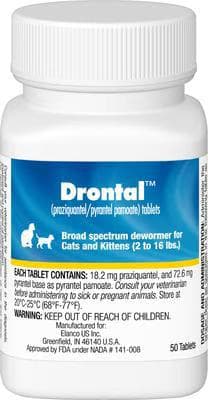
Broad-spectrum cat dewormer (praziquantel and pyrantel) that clears tapeworms, roundworms, and hookworms. For cats and kittens 2 to 16 lbs. Prescription required.
Webvet may earn a commission when you click through to Chewy, at no extra cost to you.
How FVRCP immunity works
FVRCP trains immune recognition before natural exposure. The response develops after vaccination, so protection is not immediate. It may also be incomplete because no vaccine works perfectly in every animal and calicivirus has strain diversity. Vaccinated cats can still show respiratory signs, but vaccination is intended to reduce disease risk and severity.
Our feline calicivirus guide explains mouth and respiratory signs, when a cat needs veterinary care, and how household management complements vaccination.
Good population coverage also reduces opportunities for infectious disease to spread. That matters in shelters, multi-cat homes, foster networks, and emergencies that bring unfamiliar cats together. Vaccination works alongside isolation of sick cats, cleaning, ventilation, and careful introductions.
The FelineVMA summary of the AAHA/AAFP guidelines emphasizes risk assessment across life stage, lifestyle, environment, and health. Revisit those factors annually even when the next FVRCP dose is not due that year.
FVRCP vaccine side effects and safety
Temporary tiredness, reduced appetite, mild fever, or soreness at the injection site can occur. Monitor the cat in a quiet setting and keep food and water available. Call the clinic if signs are persistent, worsening, or more severe than the discharge instructions describe.
Cats also require injection-site monitoring. Tell the veterinarian about a lump that grows, hurts, drains, or concerns you. The AAHA/AAFP feline vaccination guidelines summarize the feline “3-2-1” rule: investigate a mass that remains for 3 months, is larger than 2 centimeters, or keeps increasing 1 month after vaccination. Follow the clinic's advice sooner when appropriate.
How much does the FVRCP vaccine cost?
FVRCP vaccine price varies by provider, region, exam requirement, and whether the clinic lists one dose or a kitten package. Compare current provider labels line by line. One clinic may advertise a vaccine-only price, while another quote includes an examination or multiple series visits.
Ask for an itemized estimate showing:
- price per FVRCP dose
- how many doses the veterinarian expects based on age and records
- whether an examination is required at every visit
- whether FeLV testing, FeLV vaccine, or rabies is included
- any certificate, disposal, or technician fees
As one provider-labeled example captured August 29, 2026, The Pet Advocate listed FVRCP at $30 on its feline vaccination price table. That figure is a local advertised vaccine price, not a national average or a complete kitten-series total. Confirm whether the current price includes an exam and what additional doses the cat needs.
Do not choose a schedule solely by price. Correct storage, administration, medical screening, adverse-event readiness, and durable records are part of safe vaccination. A low-cost clinic can be an appropriate option when it provides those essentials.
FVRCP vaccine FAQs
Frequently Asked Questions
Is the Fvrcp vaccine necessary for indoor cats?
The FVRCP vaccine is necessary core protection for indoor cats under general feline guidance. Yes, core FVRCP protection generally remains appropriate for indoor cats. Indoor cat exposure can still occur through escape, a new household cat, boarding, hospitalization, disaster housing, or contaminated material. The veterinarian individualizes timing based on health, records, product, and risk, but indoor status alone does not replace the kitten series and follow-up booster. Check the written due date rather than assuming that one early shot or a strictly indoor lifestyle provides complete lifelong protection.
Is the Fvrcp vaccine every 3 years?
A three-year FVRCP interval is often used for appropriately vaccinated, low-risk adults after the completed kitten series and follow-up booster. It does not apply to an incomplete initial series. Product label, vaccine type, exposure, prior reactions, and health can change the schedule. Check the veterinarian's written due date rather than assuming every cat needs an annual injection or that every product qualifies for three-year use. The wellness visit and the injection schedule are not the same thing.
What happens if I don't vaccinate my indoor cat?
If you do not vaccinate an indoor cat, what happens is a preventable gap in core protection. Without current FVRCP vaccination, an indoor cat remains more vulnerable to herpesvirus, calicivirus, and panleukopenia. Indoor exposure routes can include escape, a newly adopted cat, boarding, a veterinary stay, disaster housing, or contaminated objects carried into the home. Risk is not identical for every cat, so ask a veterinarian to review health and records. The decision should compare those realistic exposures with the cat's individual medical history rather than assume indoors means no possible contact.
Does FVRCP protect against FIV?
No. FVRCP does not cover FIV. It protects against feline herpesvirus type 1, calicivirus, and panleukopenia, which is why the acronym refers to those three disease groups. It also does not replace FeLV or rabies vaccination. Ask the veterinarian to list each product and the disease coverage in the record, especially when a cat has outdoor access or contact with unknown-status cats. Similar abbreviations should never be treated as interchangeable protection.
Can I skip my cat's yearly vaccine?
You should not skip your cat's yearly vaccine review without checking the written due dates. Do not equate the annual wellness review with an automatic annual FVRCP injection. Some properly vaccinated adults use a three-year FVRCP interval, while other vaccines and exposure decisions follow different schedules. Check the written vaccine due date with the veterinarian instead of skipping the entire visit or adding a dose on your own. The annual wellness review still matters because health, travel, household cats, boarding, prior reactions, and product availability can change the plan.

Editor
The Webvet Editorial Team is the in-house group of pet-care editors and writers behind Webvet, operated by Smart Pet Collective. The team researches, writes, and maintains Webvet's pet health, behavior, and medication content. Every article follows a defined editorial process: research from reputable veterinary and scientific sources, careful drafting, mandatory review of medical content by a credentialed veterinarian, and dated publication. Health and medication articles are medically reviewed by a licensed veterinary professional before they go live and are kept current over time.
Veterinarian · BVMS MRCVS
Dr. Pippa Elliott, BVMS, MRCVS, is a veterinarian with nearly 30 years of experience in companion animal practice. Dr. Elliott earned her Bachelor of Veterinary Medicine and Surgery from the University of Glasgow. She was also designated a Member of the Royal College of Veterinary Surgeons. Married with 2 grown-up kids, Dr. Elliott has a naughty Puggle named Poggle, 3 cats and a bearded dragon.
Related reading

Dog Muscle Spasms and Twitching: Causes, Symptoms, and When to Worry

Anemia in Dogs: Symptoms, Causes, Diagnosis, and Treatment

Seizures in Dogs: Types, Causes, What to Do, and Treatment
