Feline Leukemia Virus (FeLV): Symptoms, Transmission, Testing, and Prognosis
Feline leukemia virus (FeLV) is a retrovirus spread mainly through saliva that suppresses the immune system and can cause anemia and cancer. Here are the symptoms, how vets test for it, life expectancy, and how to protect other cats.

BVMS MRCVS
Medically reviewed by Dr. Pippa Elliott, BVMS MRCVS · Last reviewed

This article contains affiliate links. Webvet may earn a commission when you buy through them, at no extra cost to you.
Feline leukemia virus (FeLV) is a retrovirus that spreads between cats mainly through saliva, suppresses the immune system, and can lead to anemia, infections, and cancers such as lymphoma. The Cornell Feline Health Center estimates it affects 2 to 3 percent of all cats in the United States and Canada.
A positive feline leukemia virus test is serious news, but it is not an automatic death sentence. There is no cure, yet some exposed cats contain the virus, and some positive cats live for years with good care. The two big decisions after a diagnosis are confirming the result with retesting and separating the cat from uninfected housemates.
- 1FeLV is a retrovirus that suppresses immunity and can cause cancer, anemia, and repeated infections in cats.
- 2The signs: weight loss, pale gums, fever, swollen lymph nodes, recurring infections, and loss of appetite.
- 3The virus spreads mainly through saliva during grooming, shared bowls, and bites, and from a mother cat to her kittens.
- 4Cornell gives a median survival of 2.5 years after diagnosis, and Merck reports an average of 2.4 years.
- 5A FeLV cat with fever, no appetite, pale gums, or labored breathing needs a same-day vet visit.
 Sponsored
Have a health question about your cat?
Talk to a licensed vet at Dutch over video or message, including nights and weekends.
Use code Pets60
Plans start at $12/month · covers up to 5 pets
- Licensed vets in most states
- Rx for 150+ conditions
- 4.7 on Trustpilot
What Is Feline Leukemia Virus?
Feline leukemia virus, abbreviated FeLV, is a retrovirus that infects only cats and spreads mainly through saliva. The Merck Veterinary Manual places it in the retrovirus family Oncovirinae, and International Cat Care groups it with the oncornaviruses, the retroviruses linked to cancer.
In plain terms, FeLV weakens the immune system and can cause cancer. VCA Animal Hospitals explains that it depresses the immune system, making infected cats more prone to infections, anemia, and certain cancers. That immune damage, rather than the virus alone, drives most of the illness owners see.
There is no cure, but some cats clear or contain the virus and some live for years with care. How an exposed cat fares depends on its immune response, which leads to one of three outcomes:
- Abortive: the cat overcomes the exposure and tests negative.
- Regressive: the immune system contains the virus in the blood, but it is not eliminated.
- Progressive: the virus keeps replicating, the cat sheds it, and FeLV disease is most likely.
Testing and separation are the two decisions every owner faces after a positive result.
Day-to-day care for a positive cat is mostly routine: a quiet indoor home, a complete and balanced diet, and regular checkups with your vet.

Tomlyn Immune Support Soft Chews are a hickory flavored immune supplement for cats in a 30 count bag.
Webvet may earn a commission when you click through to Chewy, at no extra cost to you.
Symptoms of Feline Leukemia Virus
Symptoms of feline leukemia virus in cats vary widely, and many infected cats look healthy at first. International Cat Care calls the signs extremely diverse. Cornell lists the main warning signs owners should watch for:
- Loss of appetite
- Progressive weight loss
- Persistent fever
- Pale gums and other pale mucous membranes, a sign of anemia
- Enlarged lymph nodes
- Recurring infections, including upper respiratory infections
What are the signs of feline leukemia virus?
The signs of feline leukemia virus are weight loss, pale gums, fever, swollen lymph nodes, recurring infections, and a poor appetite. Merck notes that immune suppression raises the risk of bacterial, fungal, protozoal, and viral infections, so repeated illness that is slow to resolve is often the first clue in an adult cat or kitten.
Pale gums are among the most visible signs. Merck describes FeLV anemia as typically nonregenerative, meaning the bone marrow fails to replace red cells. Lymphoma, the most frequently diagnosed cancer in cats according to Merck, is a recognized FeLV outcome and may show as swollen lymph nodes.

Owners also ask what a cat with feline leukemia looks like, including changes to the eyes, whiskers, or coat. Veterinary references do not list whisker changes or a specific hair loss pattern as FeLV signs, and they do not give a first-signs timeline. Signs in kittens follow the same pattern as adults, mainly infections and anemia. If you notice any of these, ask your vet about testing.
How Is Feline Leukemia Transmitted?
Feline leukemia virus spreads through close contact between cats, and saliva is the most common route of shedding, according to Merck. Cornell adds that infected cats shed virus in saliva, feces, urine, and milk, so a cat gets feline leukemia from another infected cat. Giving each cat its own food bowl removes one shared route.

The SureFeed Microchip Small Dog & Cat Feeder is a pet feeder that opens for a registered microchip.
Webvet may earn a commission when you click through to Chewy, at no extra cost to you.
FeLV spreads through saliva during grooming, shared bowls, and bites, and from mother to kitten. VCA names mutual grooming, mating, and shared litter trays and food bowls as close-contact routes, and says a cat bite can readily transmit the virus. Merck cites a US study that found FeLV in 9 percent of cats treated for bite wounds.
Kittens born with feline leukemia exist, but VCA says kittens are more likely infected when the mother grooms them. Cornell confirms transmission from an infected mother to her kittens.
How did my indoor cat get feline leukemia?
An indoor cat gets feline leukemia through contact with an infected cat. The 2020 AAFP Feline Retrovirus Guidelines describe spread through close contact among cats. Likely sources are an infected mother at birth, a newcomer of unknown status, or time outdoors. Veterinary references give no infection rate for indoor cats specifically.
Which Cats Are at Risk of FeLV?
Kittens and young outdoor cats are the highest-risk group for FeLV. Cornell explains that kittens are at greater risk than adults because their immune systems are immature, and the AAFP guidelines say kittens have the highest risk of becoming progressively infected. Outdoor access and fighting raise exposure through bites.
How common is feline leukemia? Cornell puts it at 2 to 3 percent of all cats in the United States and Canada, rising to as much as 30 percent in ill or high-risk cats. Merck cites a large 2017 US and Canada study with a prevalence of 3.1 percent, and AAFP reports 0.7 to 5.5 percent across Europe.
The stages of feline leukemia are not like cancer staging. Instead, vets describe infection outcomes: abortive, regressive, and progressive. These outcomes, covered in the testing table below, decide whether a cat sheds virus and how long it is likely to live.
SponsoredVet care that's always there
Unlimited video calls and messaging with licensed vets for less than a typical vet visit. One membership covers up to five pets.
Use code Pets60
Plans start at $12/month · covers up to 5 pets
- Licensed vets in most states
- Rx for 150+ conditions
- 4.7 on Trustpilot
How Is Feline Leukemia Diagnosed?
Feline leukemia is diagnosed with a blood test, usually an in-clinic ELISA screening test followed by confirmation. Vets rely on ELISA screening with IFA or PCR confirmation plus retesting, because a single result can mislead in early or regressive infection. Each feline leukemia virus test looks for something different:
- ELISA test: detects free FeLV antigen in the bloodstream, as early as 30 days after exposure, according to Merck.
- IFA test: detects the p27 protein inside white blood cells and platelets, and turns positive only once bone marrow is involved.
- PCR test: detects whether virus has been incorporated into the cat's genome, per Cornell.

A false positive or false negative is possible. VCA warns that regressive cats can test negative, so retesting matters. The AAFP guidelines add that antigen and PCR results can disagree, and such cats are treated as potential infection sources until the result is clarified. Veterinary references do not publish a standard leukemia test cost or treatment cost, so ask your clinic for a quote.
Regressive feline leukemia is the outcome most owners find confusing. Cornell gives two figures in different contexts. In its outcomes discussion, about 30 to 40 percent of exposed cats mount a partially effective immune response that contains virus in the blood. In its stages section, Cornell says that in about 10 percent of infections the cat clears virus from the bloodstream but not the bone marrow.
The table below compares abortive, regressive, and progressive infection by test results, virus shedding, and outlook, based on Merck, Cornell, and the AAFP guidelines.
| Outcome | Test pattern | Sheds virus | Outlook |
|---|---|---|---|
| Abortive infection | Antigen and PCR negative; antibodies are the only sign | No | Cat has overcome the exposure |
| Regressive infection | Antigen negative after containment; PCR positive for viral DNA | No infectious virus shed | Virus contained, not eliminated |
| Progressive infection | Antigen positive (viremic) on ELISA; IFA positive once marrow is involved | Yes, actively infectious | Highest risk of FeLV disease and shortest survival |
Treatment for Feline Leukemia Virus
There is no cure for feline leukemia virus, so treatment focuses on the problems it causes. There is no cure. Vets treat infections, anemia, and cancers as they appear and describe the rest as supportive care, an approach Cornell, International Cat Care, and VCA all share.
Antiviral drugs offer limited help. Merck says antiviral studies have not shown long-lasting benefit, though zidovudine can lower viral load. Interferons are often used, but the AAFP guidelines say controlled trials are lacking or have not confirmed benefit. Cornell warns that some therapies have significant side effects.
Most FeLV care happens at home and often involves daily medicines for secondary problems. A soft treat such as Greenies Pill Pockets Feline Natural Salmon Flavor Soft Adult Cat Treats can make dosing easier for cats that refuse pills.
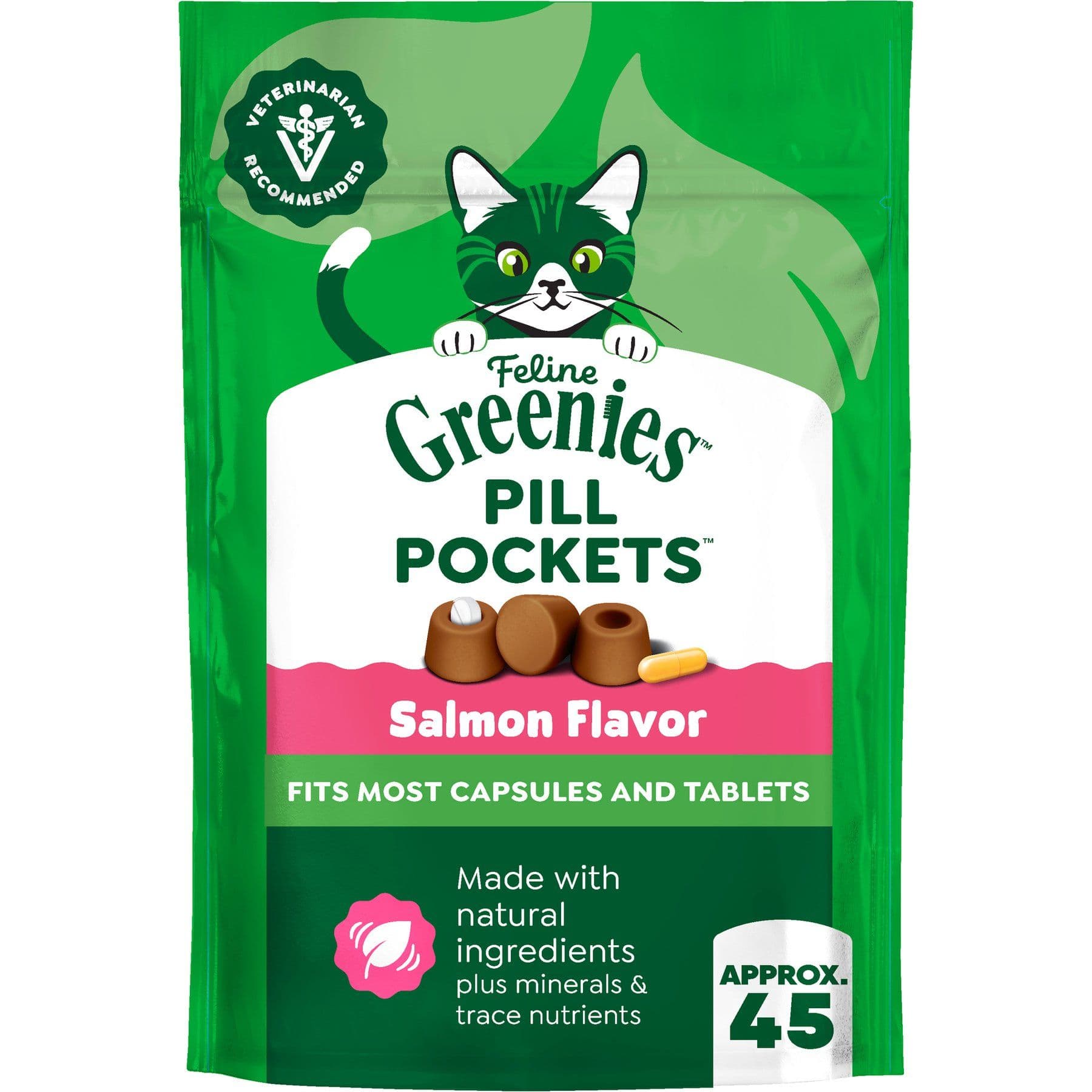
Greenies Pill Pockets Feline are salmon flavored soft treats with a pocket for hiding a pill, 45 count.
Webvet may earn a commission when you click through to Chewy, at no extra cost to you.
What kills the feline leukemia virus?
Ordinary cleaning products kill feline leukemia virus. Merck says FeLV is unstable in the environment and susceptible to all common detergents and disinfectants, and the AAFP guidelines note retroviruses are inactivated quickly on dry surfaces. So does a disinfectant kill feline leukemia virus? Yes: common household disinfectants inactivate it.
Caring for a FeLV-Positive Cat
Caring for a FeLV-positive cat means protecting it from new infections. The plan is indoor-only living, good nutrition, parasite control, and prompt vet care. Merck says infected cats should be kept strictly indoors, which also protects other cats, and Merck notes some FeLV-positive cats live for years without major disease.
Parasite control matters because a weakened immune system copes poorly with extra burdens, so ask your vet about a suitable cat dewormer. Spaying or neutering reduces roaming and fighting, and you can compare prices in our cat spay and neuter cost guide.
Cornell advises an immediate vet consultation for any change in weight, appetite, activity, litter box habits, mouth, eyes, or behavior. If your cat stops eating, read our guide to a cat not eating and call your clinic. Sneezing and eye discharge can point to an upper respiratory infection; see cat sneezing and runny nose.

A simple home log of weight, appetite, and temperature gives your vet useful information at checkups. A flexible digital thermometer makes temperature checks easier on the cat.
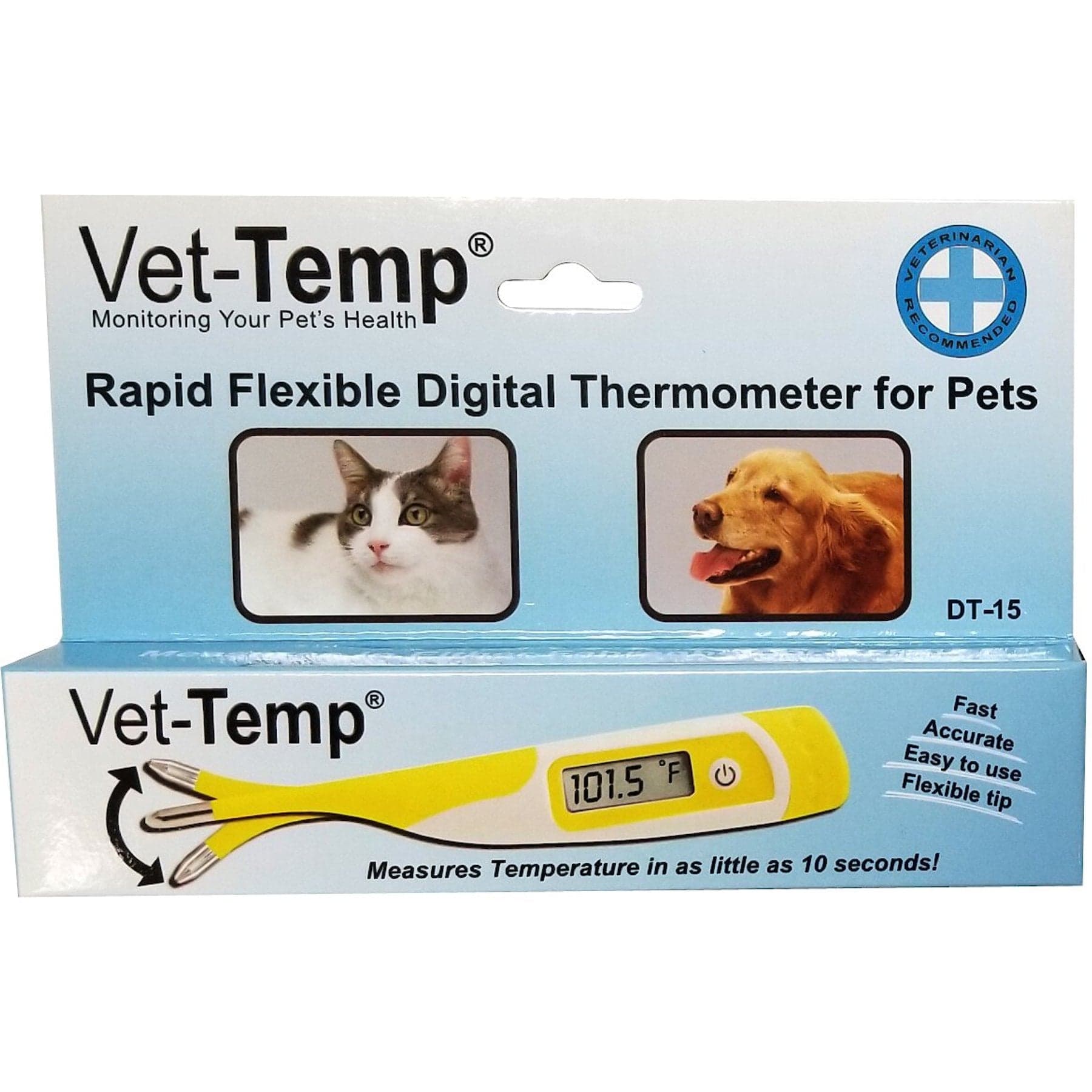
The Vet-Temp Rapid Flexible Digital Dog & Cat Thermometer is a digital pet thermometer with a flexible tip.
Webvet may earn a commission when you click through to Chewy, at no extra cost to you.
What is the best wet cat food for cats with feline leukemia?
Veterinary references do not name a best wet food or a special diet for FeLV cats; they stress good nutrition in general. Choose a complete and balanced cat food your cat eats reliably, and ask your vet to tailor the diet if your cat is losing weight or has another illness.
Feline Leukemia Life Expectancy and Final Stages
Feline leukemia life expectancy is short for many infected cats, and sources report slightly different figures. Cornell gives a median survival of 2.5 years after diagnosis, while Merck reports an average of 2.4 years from large studies. Merck also cites mortality of 50 percent by 2 years and 80 percent by 3 years.
Life expectancy depends on the type of infection, progressive versus regressive: progressive cats carry most of the risk, while regressive cats do not shed infectious virus and abortive cats test negative. VCA and International Cat Care both estimate that 80 to 90 percent of FeLV cats die within three to four years of diagnosis.
What is the life expectancy of a cat with FeLV?
A cat diagnosed with FeLV lives a median of 2.5 years, according to Cornell, or 2.4 years on average, according to Merck. Survival varies with the infection outcome and the cat's care. Merck notes some positive cats live for years without major disease, while VCA says most eventually die or are euthanized because of FeLV-related disease.
Is feline leukemia deadly, and is it a cancer? FeLV is a virus, not a cancer itself, but it can cause cancers such as lymphoma, and the related disease is often fatal. VCA notes anemia is commonly life-threatening. Veterinary references do not publish a staged timeline for the final stages; they describe worsening anemia, repeated infections, and cancer.
The AAFP guidelines say a retrovirus diagnosis alone should not be the criterion for euthanasia. End-of-life decisions rest on quality of life, which your vet can help you judge.
Can a FeLV Cat Live With Other Cats?
A FeLV cat should not share space with uninfected cats. Cornell says infection-free cats should be housed separately from infected cats, and the AAFP guidelines advise preventing direct contact. Keeping a FeLV cat separate from uninfected cats is the safest plan, especially in a home with kittens.
International Cat Care says separate housing is ideal, and vaccinating the uninfected cats is another strategy, though Cornell notes the vaccine does not protect 100 percent of cats. Adopting a cat with feline leukemia through a cat rescue works best in a single-cat home or a home where every cat is FeLV-positive.

Feline leukemia is contagious to other cats but not to dogs or people. VCA says FeLV infects only cats, and International Cat Care says it causes disease only in cats, so a dog in the same household is not at risk.
How long does FeLV live in a litter box?
FeLV survives only a few hours outside the cat, according to VCA, so it does not persist in a litter box for days. Cornell says the virus does not survive long outside the body, and neither source gives an exact litter box duration. Separate litter boxes and regular cleaning with common disinfectants still reduce risk between cats.
Can you pass FeLV by petting a cat?
Petting a cat is very unlikely to pass FeLV to another cat. VCA explains that spread needs close cat-to-cat contact such as grooming, bites, and shared bowls. Because the virus dies within hours outside the body, washing your hands after handling a positive cat is a sensible extra step.
FeLV vs FIV
FeLV and FIV are both retroviruses, but they spread differently and carry different outlooks. Here is how FeLV differs from FIV, using Cornell's pages on each virus. Read our full guide to FIV in cats for more detail.
- Spread: Cornell says FIV spreads mainly through bite wounds, while FeLV spreads through saliva during grooming, shared bowls and litter, bites, and from mother to kitten.
- Testing: FIV is diagnosed by detecting antibodies; FeLV tests detect virus antigen (ELISA, IFA) or viral DNA (PCR).
- Housing: Cornell advises ideally separating FIV-positive cats, but says spread is much less likely in stable households where cats do not fight.
What is worse, FIV or FeLV?
FeLV is generally worse than FIV. Cornell says FIV cats can live normal, healthy lives for many years if managed well, while Cornell gives FeLV cats a median survival of about 2.5 years after diagnosis. FeLV also spreads more easily through everyday contact like grooming and shared bowls.
Other viral diseases can look similar, which is why testing matters. Learn about FIP in cats and feline herpesvirus, both common causes of illness in young cats.
Feline Leukemia Vaccine
The feline leukemia vaccine protects uninfected cats and is the vaccine for at-risk cats, such as kittens and cats that go outdoors or live with a positive cat. International Cat Care says FeLV vaccination has been proven successful, while Cornell notes it does not protect 100 percent of cats.
Do indoor cats need the feline leukemia vaccine? That depends on exposure risk, so discuss it with your vet. Merck says vaccines are only for uninfected cats, with no benefit in vaccinating a positive cat, and the AAFP guidelines say vaccination does not replace testing. Test first, then vaccinate.
For the vaccine schedule for kittens, booster timing, how often cats need it, side effects, risks, and cost, see our feline leukemia vaccine guide and the kitten vaccine schedule. Feline leukemia virus prevention also rests on testing new cats and keeping cats indoors.
When to See a Vet
See a vet the same day if a FeLV cat has a fever, stops eating, has pale gums, or has labored breathing. These signs that need a vet now can reflect anemia or serious infection, and Cornell advises immediate consultation for any change in weight, appetite, activity, or behavior in a positive cat.
Book a routine visit for testing if you adopt a new cat, if your cat was bitten in a fight, or before mixing cats of unknown status.
Feline Leukemia Virus FAQs
Frequently Asked Questions
Are cats in pain with feline leukemia?
Veterinary references do not describe FeLV itself as painful, but the infections, anemia, and cancers it causes can make a cat feel unwell. Ask your vet to assess comfort and pain at each visit.
Can a cat recover from feline leukemia?
Some cats control the virus. In abortive infection, cats clear the exposure and test negative. In regressive infection, Merck says the cat does not shed infectious virus, but the AAFP guidelines say the virus is contained rather than eliminated.
Do cats with feline leukemia have to be euthanized?
No. The AAFP guidelines say a FeLV diagnosis alone is not a criterion for euthanasia. Some positive cats live for years, and decisions rest on quality of life.
Can a vaccinated cat live with a FeLV cat?
International Cat Care lists vaccinating uninfected housemates as one strategy, but Cornell says the vaccine does not protect every cat. Keeping the positive cat separate remains the ideal.
What are the last stages of feline leukemia?
Late FeLV disease brings worsening anemia, repeated infections, and cancers such as lymphoma, according to VCA and Merck. There is no standard staged timeline.
Is feline leukemia contagious to humans?
No. VCA says FeLV infects cats only and is not a risk to people or dogs.
What age does feline leukemia start?
FeLV can infect cats at any age, but kittens and young cats are most susceptible. Cornell says kittens are at greater risk because their immune systems are immature, and kittens can be infected by their mother.

Editor
The Webvet Editorial Team is the in-house group of pet-care editors and writers behind Webvet, operated by Smart Pet Collective. The team researches, writes, and maintains Webvet's pet health, behavior, and medication content. Every article follows a defined editorial process: research from reputable veterinary and scientific sources, careful drafting, mandatory review of medical content by a credentialed veterinarian, and dated publication. Health and medication articles are medically reviewed by a licensed veterinary professional before they go live and are kept current over time.
Veterinarian · BVMS MRCVS
Dr. Pippa Elliott, BVMS, MRCVS, is a veterinarian with nearly 30 years of experience in companion animal practice. Dr. Elliott earned her Bachelor of Veterinary Medicine and Surgery from the University of Glasgow. She was also designated a Member of the Royal College of Veterinary Surgeons. Married with 2 grown-up kids, Dr. Elliott has a naughty Puggle named Poggle, 3 cats and a bearded dragon.
Related reading

Feline Herpesvirus (FHV-1): Symptoms, Treatment, and Flare-Ups

Upper Respiratory Infection in Cats: Symptoms, Causes, and Treatment

FIV in Cats: Symptoms, Transmission, Testing, and Life Expectancy
