Mastitis in Dogs: Symptoms, Causes, Treatment, and Home Care
Mastitis in dogs is an infection or inflammation of the mammary glands, most often in a mother dog nursing puppies. Here are the symptoms, the causes, how vets treat it, what you can do at home, and the signs it has become an emergency.

BVMS MRCVS
Medically reviewed by Dr. Pippa Elliott, BVMS MRCVS · Last reviewed

This article contains affiliate links. Webvet may earn a commission when you buy through them, at no extra cost to you.
Mastitis in dogs is an infection or inflammation of one or more mammary glands, most often in a mother dog nursing puppies after giving birth. A hot, swollen, painful gland in a nursing dog needs a vet the same day.
Most cases of mastitis in dogs respond to antibiotics, pain relief, and warm compresses at home. The danger is the gangrenous or septic case, which can turn serious quickly and needs emergency care.

 Sponsored
Have a health question about your dog?
Talk to a licensed vet at Dutch over video or message, including nights and weekends.
Use code Pets60
Plans start at $12/month · covers up to 5 pets
- Licensed vets in most states
- Rx for 150+ conditions
- 4.7 on Trustpilot
What Is Mastitis in Dogs?
Mastitis is inflammation of a mammary gland, and in dogs it is usually caused by a bacterial infection after giving birth and treated with antibiotics plus warm compresses.
- 1Mastitis in dogs is an infection or inflammation of one or more mammary glands, most often in a nursing mother.
- 2Watch for the signs: hot, swollen, painful glands plus discolored milk that may contain blood or pus.
- 3A gland that turns dark purple or black means gangrenous mastitis and is a same-day emergency.
- 4Fever, collapse, or a mother who refuses to nurse is also a same-day emergency, never a wait-and-see sign.
- 5Most dogs are treated at home with oral antibiotics, pain medication, and warm compresses, and signs typically resolve in two to three weeks.
VCA Animal Hospitals defines mastitis as inflammation of a mammary gland, or breast. The Merck Veterinary Manual owner guide adds that it occurs in dogs after giving birth and is caused by a bacterial infection. How common is mastitis in dogs? Merck says it is most commonly seen in nursing mothers, but gives no percentage of litters affected.
A related problem is galactostasis, which means milk engorgement, when milk builds up in the gland. A paper in PubMed Central on false pregnancy describes galactostasis as a mammary sign that can progress to mastitis. Can mastitis in dogs go away on its own? Do not count on it: any hot or painful gland needs a vet check.
Because bacteria cause most cases, everyday hygiene matters from the first day after whelping. A clean, dry whelping box and fresh bedding cut down the bacteria the mother and puppies live with.
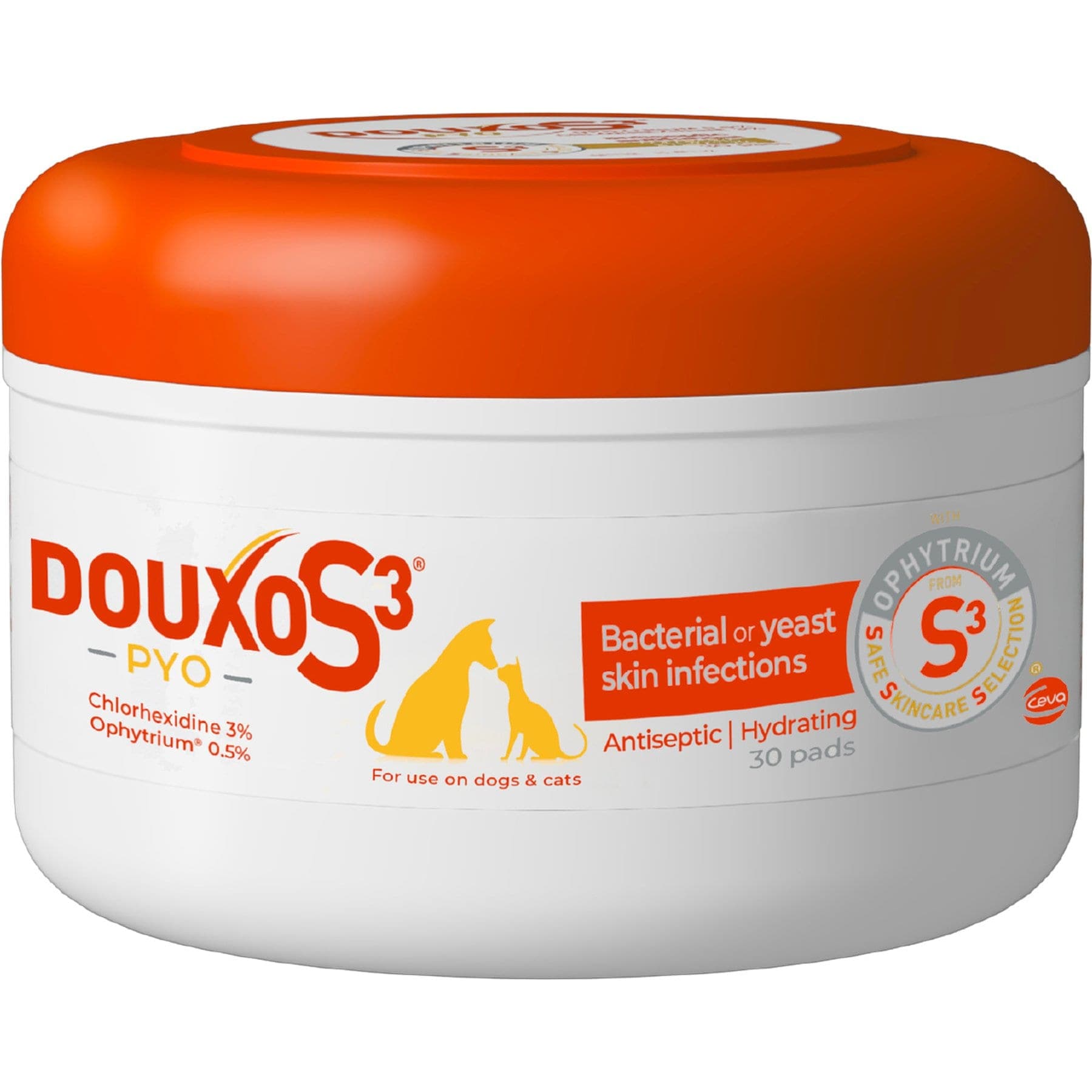
Douxo S3 PYO Wipes, an antiseptic chlorhexidine wipe for dogs and cats.
Webvet may earn a commission when you click through to Chewy, at no extra cost to you.
Symptoms of Mastitis in Dogs
The main symptoms of mastitis in dogs are firm, hot, swollen, painful mammary glands, often with discolored milk and a mother who seems unwell.

Early stage mastitis on a dog's belly usually shows as one gland that looks swollen and red compared with its neighbors. VCA says the infected gland becomes increasingly swollen, inflamed, and discolored. Merck's professional entry describes acute mastitis as firm, painful, and warm glands, along with a poor appetite, fever, and less interest in the puppies.
Signs and symptoms of mastitis in dogs to check for:
- A gland that is hot, hard, swollen, or painful when touched
- Redness or other color change in the skin over the gland
- Milk with visible blood or pus, or milk that looks cloudy or thick
- Lethargy, fever, refusing food, or vomiting, which VCA lists in affected dogs
- Puppies that are not gaining weight or fail to thrive
Normal milk does not rule it out. Merck says milk can appear normal, blood-tinged, or purulent. Chronic or subclinical mastitis may show only as puppies that fail to thrive, which is why a litter that is not growing deserves a vet check even when the mother looks fine.
Weighing the puppies every day makes slow growth easy to spot. If your vet says the litter needs extra milk while the mother recovers, a small bottle lets you top up hungry puppies between nursing sessions.
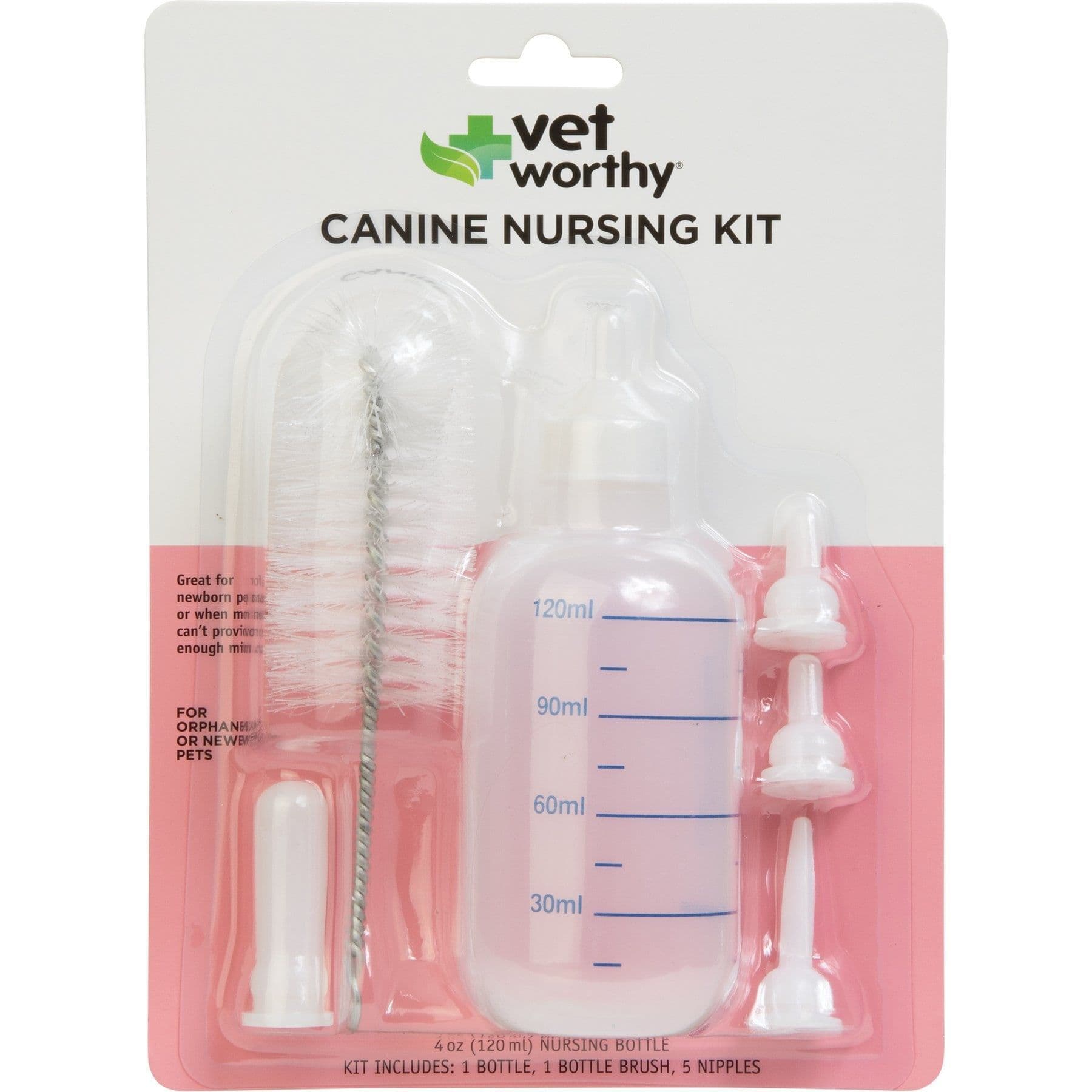
Vet Worthy Nursing Kit for Dogs, a 4-fl oz bottle kit for hand-feeding puppies.
Webvet may earn a commission when you click through to Chewy, at no extra cost to you.
How to tell if a dog has mastitis?
Feel each gland gently and compare it with the others. A gland that is hotter, harder, or more painful than its neighbors is the main clue, and VCA notes milk from it may hold blood or pus. Pair that with fever, low energy, or poor appetite, and book a vet visit that day.
Black mastitis in dogs is the severe form. VCA says the gland may turn dark purple or black as the tissue begins to die. That is gangrenous mastitis, and it is never a wait-and-watch sign.
The severity table below sorts mild galactostasis, acute septic mastitis, and gangrenous mastitis into one table with the signs, the urgency, and the treatment for each, so you can see where your dog's signs fall.
| Form | Typical signs | Urgency | Usual vet treatment |
|---|---|---|---|
| Galactostasis (milk engorgement) | Engorged, full glands | See your vet; an exam tells milk stasis from infection | A vet exam distinguishes it from infection |
| Acute septic mastitis | Hot, swollen, painful, red gland; blood or pus in milk; fever, poor appetite | Same-day vet visit | Oral antibiotics, pain medication, hand-milking, warm compresses |
| Gangrenous mastitis | Gland turns dark purple or black as tissue dies; lethargy, fever, refusing food | Same-day emergency, go now | Hospital care, possible IV fluids, surgical removal of dead tissue |
What Causes Mastitis in Dogs?
Mastitis in dogs is caused by bacteria entering a mammary gland, and milk building up in the gland makes infection more likely.
Merck says bacteria get into a gland through nursing, trauma, or the bloodstream. Staphylococcus aureus is the most common bacterium found, and Merck also names E. coli and Streptococcus species. VCA adds that trauma to the nipple or teat canal can allow bacteria to enter.
Milk stasis after weaning is the other big factor. VCA names prolonged milk accumulation without removal as a cause, and says many cases follow sudden weaning or the death of a puppy. Bacterial causes plus milk stasis after weaning explain most cases owners see, which is why a gradual weaning plan matters.
What can trigger mastitis?
The common triggers are sudden weaning, the loss of a puppy, injury to the teats, and a dirty whelping area. VCA says a female dog living in unsanitary conditions may be exposed to large quantities of bacteria. Each of these lets milk pool in the gland or lets bacteria reach it.
How to prevent mastitis in dogs, based on those causes:
- Wean gradually rather than removing puppies all at once
- Keep bedding in the whelping area clean and dry, and change it often
- Check the teats daily for scratches or other injury
- Make sure every gland is being nursed, especially in a small litter
Preventing mastitis in dogs when weaning comes down to two habits: let milk supply drop slowly, and keep the whelping box clean. If you are planning a litter, the dog pregnancy stages guide and the timeline in how long are dogs pregnant help you prepare.
 Sponsored
Vet care that's always there
Unlimited video calls and messaging with licensed vets for less than a typical vet visit. One membership covers up to five pets.
Use code Pets60
Plans start at $12/month · covers up to 5 pets
- Licensed vets in most states
- Rx for 150+ conditions
- 4.7 on Trustpilot
Mastitis in Dogs That Are Not Pregnant
Mastitis in dogs that are not pregnant or nursing can happen, most often in female dogs producing milk during a false pregnancy.
Merck says mastitis can occur in nonpregnant dogs with galactorrhea, which means milk production outside of nursing. The usual setting is a phantom pregnancy. A PubMed Central paper says false pregnancy usually appears 6 to 20 weeks after a heat, peaking around week 14, and that mammary signs usually resolve in 2 to 4 weeks but may persist or lead to mastitis.
Mastitis in dogs that are not pregnant usually shows up in one of these situations:
- Mastitis in non nursing dogs during or after a phantom pregnancy
- Mastitis in dogs without puppies after a litter is lost or weaned early
The dog false pregnancy guide explains how it looks, and signs a dog is pregnant helps tell a real pregnancy apart.
What about mastitis in spayed dogs or mastitis in male dogs? Neither has a published figure. A swollen, hot gland in a spayed female or a male dog still needs a vet exam, because other problems can look similar. The dog spay recovery guide covers aftercare if your dog has recently been spayed.
- How to treat mastitis in dogs not pregnant follows the same rules as for nursing mothers: the vet confirms infection and chooses antibiotics.
- There is no proven way to treat it naturally.
- Symptoms of mastitis in a dog that is not pregnant match those in a nursing dog: a hot, swollen, painful gland, sometimes with discharge.
During a false pregnancy, checking her temperature once a day while her glands are full gives you a clear number to report if a fever starts.
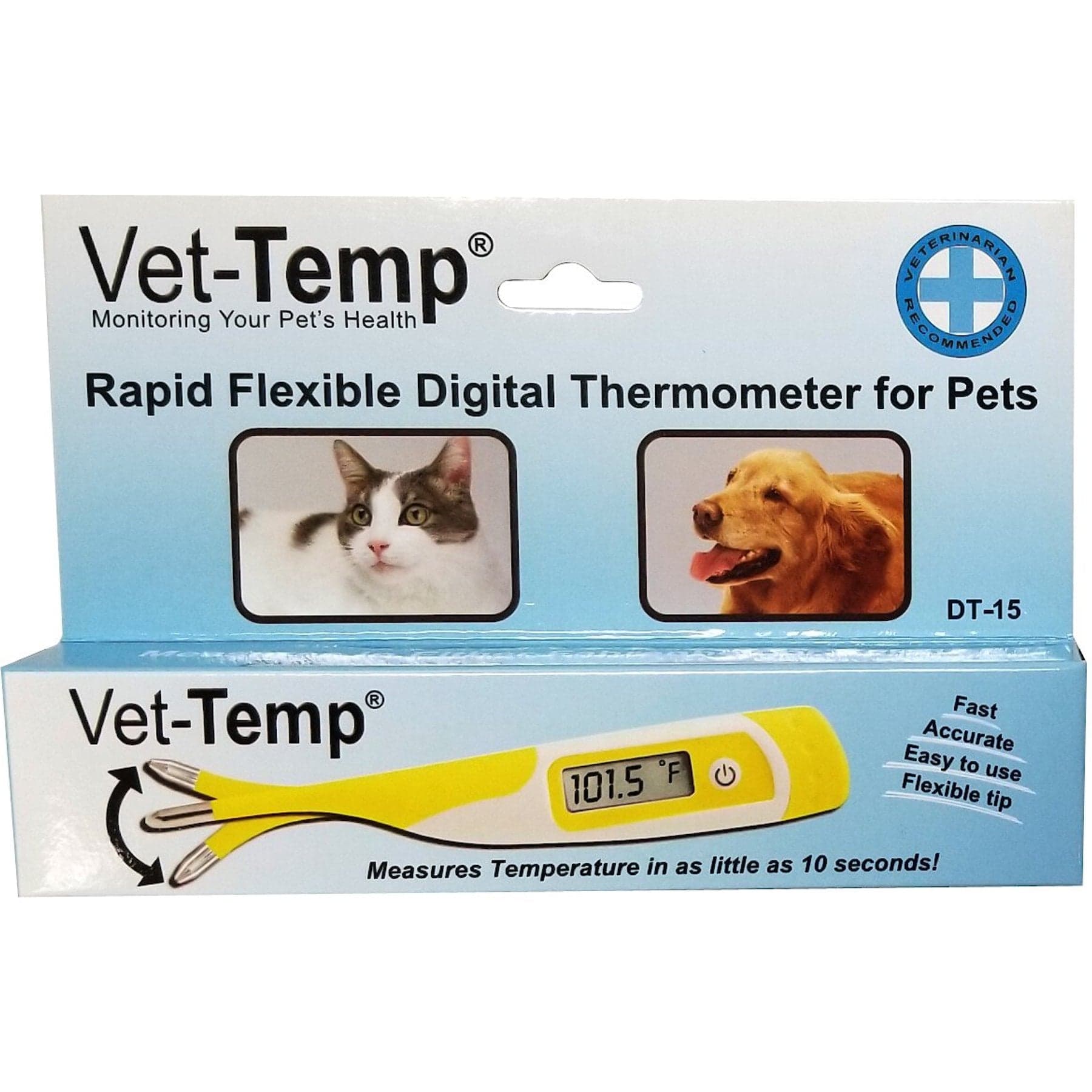
Vet-Temp Rapid Flexible Digital Thermometer, a flexible-tip digital thermometer made for dogs and cats.
Webvet may earn a commission when you click through to Chewy, at no extra cost to you.
How Is Mastitis Diagnosed?
Mastitis is usually diagnosed by a physical exam, often confirmed by looking at the milk under a microscope and sending a milk culture.
VCA says many cases can be diagnosed on physical examination alone. To confirm it, the vet collects milk from the gland. VCA says white blood cells (pus) or bacteria in the milk confirm mastitis, and Merck says microscopy showing degenerate neutrophils can be diagnostic.
Diagnosis with an exam plus milk culture lets the vet match the antibiotic to the germ. VCA describes milk being sent to a laboratory so the bacteria can be isolated, and Merck advises culture and susceptibility testing. That matters most when a first antibiotic is not working.
What could be mistaken for mastitis?
Simple engorgement and mammary cancer are the main look-alikes. Mastitis vs engorgement in dogs: the two can look alike early on, and only a vet exam and milk check can tell them apart. Merck lists inflammatory mammary carcinoma, a type of mammary tumor, as a differential diagnosis.
That is why a mastitis tumor in dogs is not something to guess at home. A gland that stays hard after treatment, or swelling in a dog that is not nursing, needs a vet to rule out mastitis cancer in dogs. Other reproductive infections can also cause discharge and illness, so your vet may consider pyometra in dogs or vaginitis in dogs as well.
Treatment for Mastitis in Dogs
Treatment for mastitis in dogs is usually oral antibiotics plus pain medication given at home, with milk removal and compresses, and surgery only for severe cases.

VCA says most dogs with mastitis can be treated as outpatients with oral antibiotics and pain medications. Merck calls for broad-spectrum antibiotics that cover both gram-negative and gram-positive bacteria.
Treatment can change how the puppies are fed. Merck's professional entry says puppies can nurse the unaffected teats and may need milk supplementation while their mother recovers.
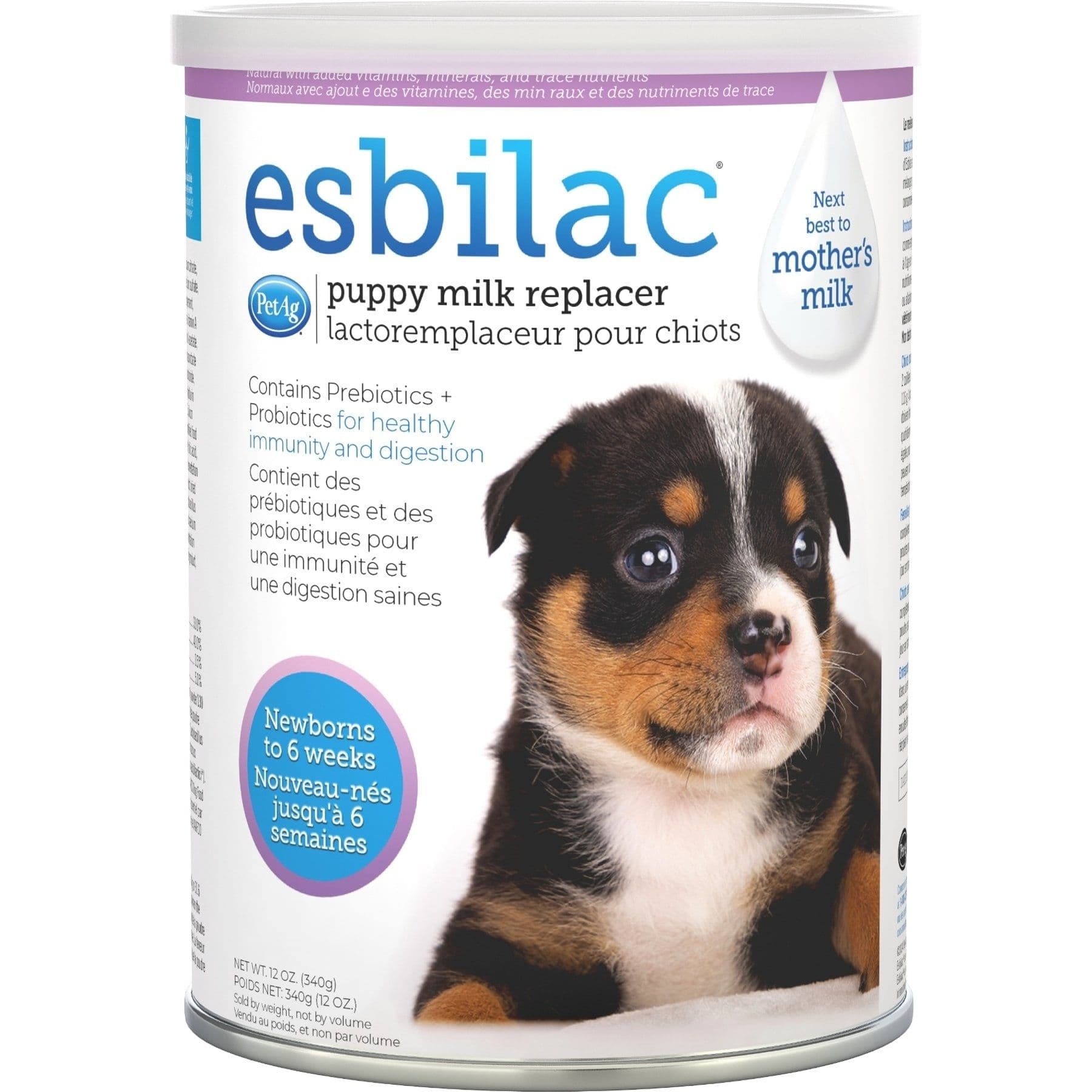
PetAg Esbilac Puppy Milk Replacer Powder, a powdered milk replacer for puppies from newborn to six weeks.
Webvet may earn a commission when you click through to Chewy, at no extra cost to you.
Antibiotics, pain relief, plus drainage of the gland are the three parts of standard treatment:
- Antibiotics chosen by your vet, often after a milk culture
- Pain medication that is safe for nursing puppies
- Drainage by hand-milking, and surgery only for abscessed or dead tissue
What antibiotic is used for mastitis in dogs? Merck names cephalexin and amoxicillin-clavulanate as common first choices. A PubMed Central case report notes that cephalosporins and penicillins are considered safe for newborn puppies, which matters because drugs pass into the milk.
There is no single best antibiotic for mastitis in dogs. Merck's owner guide says the vet may test for bacteria to pick the antibiotic. Doxycycline or plain penicillin is not a do-it-yourself option either: never give leftover amoxicillin or any other antibiotic at home without your vet choosing the drug and dose.
Pain relief needs care too. Merck warns that pain medication passes through the milk to the puppies and needs special consideration. The guide to pain meds for dogs explains why human painkillers are off limits.
How do I treat mastitis in my dog?
See your vet first, then follow the plan at home. That usually means giving every dose of the prescribed antibiotic and pain medication, hand-milking the affected gland, and applying warm compresses. VCA says hand-milking should be done every six hours. Call back if she gets worse.
What is the fastest way to cure mastitis?
The fastest route is a same-day vet visit and starting the right antibiotic early. VCA says signs typically resolve in two to three weeks with appropriate treatment, and there is no proven shortcut. Home remedies alone do not speed it up, and delay risks an abscess.
For severe cases, Merck says surgical debridement of abscessed or gangrenous tissue may be needed, and VCA says the vet may recommend surgically removing dead tissue or badly infected glands.
Mastitis in Dogs Home Treatment
Mastitis in dogs home treatment means warm compresses, hand expression of milk, and comfort care alongside, never instead of, the vet's antibiotics.

Warm compresses, hand expression, plus cabbage leaves at home are the three measures owners ask about. Merck's owner guide says a warm compress for mastitis in dogs should go on the affected glands 4 to 6 times daily. Merck's professional entry mentions warm or cold compresses and stripping the teat to empty it.
Can you treat mastitis in dogs at home? Only alongside vet care, because the infection itself needs a diagnosis and, usually, prescription medicine. How to treat mastitis in dogs at home, step by step:
- Soak a clean cloth in warm (not hot) water, wring it out, and hold it on the gland.
- Gently hand-express milk from the affected teat, as your vet shows you.
- Keep bedding clean and change it after each session.
- Note her temperature, appetite, and the gland's color each day.
Cabbage leaves for mastitis in dogs are a traditional comfort measure. VCA describes securing cabbage leaves to the gland with a bandage or fitted t-shirt. Cabbage leaves are unproven: no controlled trials show they work, so treat them as comfort only. Remove the leaves before the puppies nurse.
Homeopathic remedies such as phytolacca, essential oils, and other holistic or natural treatment for mastitis in dogs are unproven and do not replace antibiotics from your vet. A breast pump made for people is not a proven tool for dogs either; ask your vet before trying one.
Can the Puppies Keep Nursing?
Puppies can often keep nursing during mastitis, but your vet decides whether they nurse from the affected gland or only from the healthy ones.

Sources differ on mastitis in nursing dogs:
- Merck's owner guide says puppies should be encouraged to nurse from the affected glands.
- VCA says puppies can nurse from the affected gland once the cabbage leaves are removed.
- Merck's professional entry says puppies can nurse the unaffected teats and may need milk supplementation.
The reason for caution is the puppies' own health. A PubMed Central case report says maternal mastitis is one of the main sources of infection in newborn puppies. In that report, the puppies went back to their mother once her milk culture came back negative. Whether puppies can keep nursing is a call for your vet.
Watch for puppies that fail to gain weight, cry constantly, or seem weak, and tell your vet the same day. If your vet advises supplementing, the label for PetAg Esbilac Puppy Milk Replacer Powder says it is for puppies from newborn to six weeks.
Mastitis in dogs with puppies also means watching the mother's mood. Merck lists reduced interest in the puppies as a sign of acute mastitis, so a mother who pulls away from her litter needs a vet check.
How Long Mastitis Takes to Heal
Mastitis usually takes two to three weeks to heal with appropriate treatment, according to VCA.
The healing timeline depends on how early treatment starts and how severe the case is. VCA says signs typically resolve in two to three weeks with appropriate treatment, while Merck gives no treatment length. Healing time depends on the form, untreated mastitis has no predictable course, and your vet sets the recheck.
- Give every dose your vet prescribes, even after the swelling fades.
- Ask whether a recheck is needed before the course ends.
- Take her back if a gland stays hard or signs return after the course ends.
Recovery after a gangrenous case or surgery takes longer, because the wound has to heal as well. Your vet will set the recheck schedule for that wound.
When Mastitis Is an Emergency
Mastitis is an emergency when a gland turns dark purple or black, or when the mother has a fever, collapses, or refuses to nurse.
Merck says abscess or gangrene of the glands can develop rapidly in severe cases and lead to sepsis, a body-wide infection. That is what severe, toxic, or septic mastitis in dogs means. VCA says the prognosis is uncertain once the infection spreads through the blood, so severe mastitis in dogs is dangerous and the outlook is uncertain once it spreads.
A ruptured mastitis abscess, sometimes called a burst or blowout, leaves an open wound that drains pus or blood. Canine mastitis rupture treatment happens at the clinic, and a burst abscess is a same-day emergency: cover the area loosely with a clean cloth and go to a vet now. Merck says dehydrated or shocky dogs may need intravenous fluids, and gangrene mastitis in dogs treatment can include surgery to remove dead tissue.
Untreated mastitis in dogs is the main route to these problems. Home remedies for mastitis in dogs, including natural remedies, are not a substitute once these signs appear. If cost worries you, the emergency vet cost guide explains what to expect, but do not delay care.
How long before mastitis turns into sepsis?
Veterinary references do not give a timeline in hours or days. Merck says only that abscess or gangrene can develop rapidly in severe cases and lead to sepsis. Because there is no safe window to wait out, treat any discolored gland, fever, or collapse as a same-day emergency.
Mastitis in Dogs FAQs
Frequently Asked Questions
Can mastitis go away on its own in dogs?
Do not expect mastitis to go away on its own. Even mild swelling needs a vet check, because infection can worsen quickly.
Will antibiotics clear a mastitis lump?
Antibiotics often clear the infection, but a gland that has formed an abscess may need the vet to drain it or remove the abscessed or dead tissue surgically.
Can mastitis be treated without antibiotics?
Infected mastitis is treated with antibiotics, and there is no proven non-antibiotic cure. Even mild cases need a vet check, and a warm compress supports the antibiotics rather than replacing them.
Do cabbage leaves help mastitis in dogs?
Cabbage leaves are a traditional comfort measure, but their benefit is unproven, with no controlled trials showing they treat mastitis. Merck mentions warm or cold compresses; a cool cabbage leaf is not a proven substitute. They do not replace the vet's treatment.
Is mastitis in dogs dangerous?
It can be. Merck says severe cases can become abscessed or gangrenous quickly and lead to sepsis, which is a same-day emergency.
Can a dog that is not pregnant get mastitis?
Yes. Merck says nonpregnant dogs that produce milk can get mastitis, most often during a false pregnancy. Veterinary references do not give a figure for spayed dogs, so ask your vet about any swollen gland.
How long does mastitis in dogs take to heal?
Healing time depends on the form. VCA says signs typically resolve in two to three weeks with appropriate treatment including antibiotics, and your vet sets the recheck. Do not stop antibiotics after a few days just because she looks better.

Editor
The Webvet Editorial Team is the in-house group of pet-care editors and writers behind Webvet, operated by Smart Pet Collective. The team researches, writes, and maintains Webvet's pet health, behavior, and medication content. Every article follows a defined editorial process: research from reputable veterinary and scientific sources, careful drafting, mandatory review of medical content by a credentialed veterinarian, and dated publication. Health and medication articles are medically reviewed by a licensed veterinary professional before they go live and are kept current over time.
Veterinarian · BVMS MRCVS
Dr. Pippa Elliott, BVMS, MRCVS, is a veterinarian with nearly 30 years of experience in companion animal practice. Dr. Elliott earned her Bachelor of Veterinary Medicine and Surgery from the University of Glasgow. She was also designated a Member of the Royal College of Veterinary Surgeons. Married with 2 grown-up kids, Dr. Elliott has a naughty Puggle named Poggle, 3 cats and a bearded dragon.
Related reading

Cat Pregnancy Week by Week: Signs, Timeline, and What to Expect

Cat in Heat: Signs, How Long It Lasts, and How Often It Happens

Pyometra in Dogs: Symptoms, Causes, Treatment, and Survival
