Dog False Pregnancy: Symptoms, Causes and When to See a Vet
A dog false pregnancy is a common hormonal condition where an unbred female shows pregnancy-like signs weeks after her heat. Learn the symptoms, causes, home care, and the red flags that mean an emergency vet visit.

BVMS MRCVS
Medically reviewed by Dr. Pippa Elliott, BVMS MRCVS · Last reviewed

This article contains affiliate links. Webvet may earn a commission when you buy through them, at no extra cost to you.
A dog false pregnancy, also called pseudopregnancy or a phantom pregnancy, is when an unspayed female dog shows the physical and behavioral signs of pregnancy weeks after her heat, even though she is not pregnant. She may nest, mother toys, produce milk, and turn moody, which understandably alarms owners.
The reassuring news is that most cases are a normal hormonal response and resolve on their own. This vet-reviewed guide covers the symptoms, causes, how long it lasts, home care, and the serious look-alike condition, pyometra, that makes knowing when to see a vet so important.
- 1False pregnancy (pseudopregnancy) is common and usually harmless: an unbred or unsuccessfully bred female shows pregnancy-like signs 4 to 9 weeks after her heat ends.
- 2It is driven by natural hormone shifts, mainly a drop in progesterone and a rise in prolactin, that occur in every intact female dog after heat, so it is not a disease.
- 3Typical signs include nesting, mothering toys, swollen mammary glands, milk production, appetite changes, and restlessness or clinginess.
- 4Most cases resolve on their own in 2 to 3 weeks; home care focuses on comfort and reducing stimulation of the mammary glands.
- 5A foul-smelling vaginal discharge, fever, lethargy, vomiting, or excessive drinking can signal pyometra, a life-threatening womb infection that needs an emergency vet, not home care.
What Is a False Pregnancy in Dogs?
A false pregnancy is a condition in which a female dog develops the signs of pregnancy and even early motherhood without actually being pregnant. Veterinarians call it pseudopregnancy or pseudocyesis, and many pet owners know it as a phantom or false pregnancy.
It happens after a normal heat cycle, whether or not the dog was ever mated, and it can range from barely noticeable to a dramatic display of nesting and milk production.
The key thing to understand is that false pregnancy is a normal part of canine reproductive biology, not an illness. According to the Merck Veterinary Manual, some degree of pseudopregnancy is so common in intact female dogs after heat that it is considered a normal variation rather than a disorder.
It reflects the same hormonal machinery that would support a real pregnancy, simply switching on when no puppies are present.
Because it is tied to the dog heat cycle, false pregnancy only occurs in unspayed females and tends to appear at a predictable point after heat ends.
Understanding the timing of her cycle makes it much easier to recognize what is happening and to tell it apart from a true pregnancy or a more serious problem.

Probiotic supplement formulated to help dogs maintain calm behavior, with the BL999 strain. Liver-flavored powder in 30 daily sachets.
Webvet may earn a commission when you click through to Chewy, at no extra cost to you.
How Common Is False Pregnancy in Dogs?
False pregnancy is very common. Veterinary sources note that a large majority of intact female dogs experience some degree of pseudopregnancy at some point, and many go through it after most or all of their heat cycles.
Studies cited in the veterinary literature suggest that overt, clinically obvious false pregnancy affects a substantial share of unspayed bitches, while milder, subclinical hormone changes happen in nearly all of them after heat.
This is because the hormonal changes that trigger false pregnancy occur in every intact female dog after ovulation, whether or not she conceives. In effect, a dog's body prepares for pregnancy each cycle by default and only reverses course later if no pregnancy takes hold.
That is why an owner who has never let their dog near a male can still see a full-blown phantom pregnancy: no mating is required.
Symptoms of False Pregnancy in Dogs
False pregnancy symptoms usually appear 4 to 9 weeks after a dog's heat ends, around the time she would have been due to give birth if she had conceived. They fall into two groups: physical changes and behavioral changes. A dog may show a few mild signs or a whole cluster of them.

Physical Signs
- Enlarged mammary glands and milk: the mammary glands swell and may leak a watery or milky fluid, one of the most recognizable signs.
- A rounded or distended abdomen: some dogs look mildly pot-bellied, which can make owners think she really is pregnant.
- Appetite changes: she may eat less than usual, refuse food for a day, or occasionally eat more.
- Occasional vomiting or lethargy: some dogs seem a little off, tired, or briefly nauseated.
Behavioral Signs
- Nesting: shredding bedding, digging at blankets, or preparing a den-like spot in a quiet corner.
- Mothering objects: adopting toys, slippers, or other items as surrogate puppies, guarding them and carrying them around.
- Restlessness, clinginess, or anxiety: she may pace, whine, seem depressed, or become unusually needy for attention.
- Reduced interest in play or exercise: some dogs withdraw and want to stay near their nest and adopted objects.
Because these signs follow the cycle, it helps to know your dog's normal dog in heat symptoms so you can recognize when the post-heat phase, and any false pregnancy, is likely to begin.
If the physical signs are dramatic or she seems genuinely unwell rather than simply hormonal, that is a reason to have her checked by a vet.
How Long Does a False Pregnancy Last in Dogs?
In most dogs, a false pregnancy is self-limiting and resolves within about 2 to 3 weeks without any treatment. The signs typically begin 4 to 9 weeks after the end of heat and then fade as hormone levels return to baseline.
Milder cases may pass in a matter of days, while a strong case with heavy milk production can take a little longer to settle.
Because it is tied to the reproductive cycle, false pregnancy can recur after future heats, and some dogs experience it after nearly every cycle. If you know how long a dog is in heat and roughly when hers ended, you can anticipate the window when a phantom pregnancy might appear and watch for it.
If symptoms drag on well beyond three weeks, keep getting worse, or come with signs of illness, contact your veterinarian rather than waiting it out.

Chicken-flavored soft chew that supports normal, occasional stress and positive behavior during times of normal stress.
Webvet may earn a commission when you click through to Chewy, at no extra cost to you.
 $65 · no membership
Have a health question about your dog?
A licensed vet can assess your dog over video and prescribe online when it's appropriate.
 Talk to a vet
- Licensed vets
- All 50 states
- same-day Rx

Webvet may earn a commission if you book.
What Causes a False Pregnancy in Dogs?
False pregnancy is caused by the natural hormone changes that follow every heat cycle, not by mating or by any illness. After a dog ovulates, her ovaries produce progesterone for roughly two months, whether or not she is pregnant.
When that progesterone level falls at the end of the cycle, it triggers a rise in prolactin, the hormone that drives milk production and maternal behavior.
In a pregnant dog, that same prolactin surge prepares her to nurse a litter. In a non-pregnant dog, the identical hormonal signal can produce milk, nesting, and mothering behavior with no puppies to care for.
This is why false pregnancy is best understood as the body following its normal reproductive script, just at a time when there is no pregnancy to match it.

False Pregnancy vs. Real Pregnancy: How to Tell the Difference
The frustrating part for owners is that the outward signs of false pregnancy and true pregnancy overlap almost completely: nesting, mammary changes, appetite shifts, and mood changes appear in both. You cannot reliably tell them apart by symptoms alone. The table below shows the practical differences, but the only definitive answer comes from your veterinarian.
| Feature | False pregnancy | Real pregnancy |
|---|---|---|
| Mating history | Can occur with no mating at all | Requires a successful mating during the fertile window |
| Nesting and mammary changes | Common | Common |
| Milk production | Often present | Present, usually near term |
| Puppies on ultrasound | None | Fetal heartbeats visible from about day 25 to 35 |
| Relaxin blood test | Negative | Positive from about day 21 to 30 |
| Duration | Usually resolves in 2 to 3 weeks | Ends with whelping around day 63 |
| Outcome | Self-limiting, no litter | Delivery of puppies |
If there is any chance your dog was mated, do not assume it is a false pregnancy. Review the signs a dog is pregnant, then book a veterinary check. A relaxin blood test or an ultrasound settles the question quickly, and knowing for certain changes how you care for her over the following weeks.

Peanut-butter-flavored soft chew that supports relaxation and helps reduce hyperactivity, with L-theanine, chamomile, and ashwagandha.
Webvet may earn a commission when you click through to Chewy, at no extra cost to you.
Is False Pregnancy Painful or Dangerous for Dogs?
False pregnancy itself is generally not dangerous and is not usually painful. Most dogs are simply hormonal and behave a little oddly for a couple of weeks before returning to normal.
The main physical discomfort comes from swollen, engorged mammary glands, which can feel tender, and from the emotional distress some dogs show as anxiety, clinginess, or low mood.
These pass as hormone levels settle.
There are two situations where more care is needed. First, if a dog licks or overstimulates her swollen glands, she can develop mastitis, a painful mammary infection that needs veterinary treatment.
Second, and far more importantly, false pregnancy signs can mask or be confused with pyometra, a serious infection of the uterus that also tends to appear in the weeks after heat.
Pyometra is a genuine emergency, which is why any dog who seems truly ill, rather than just hormonal, needs to be seen promptly.
How Vets Diagnose False Pregnancy
A veterinarian usually diagnoses false pregnancy from the history and a physical exam. The classic clue is a cluster of pregnancy-like signs appearing 4 to 9 weeks after heat in a dog who either was not mated or was confirmed not pregnant.
Your vet will ask when her last heat ended, whether she had any contact with a male, and what symptoms you have noticed.
The most important job of the exam is to rule out the two conditions that matter: a genuine pregnancy and pyometra. Your vet may use an ultrasound to confirm there are no puppies, a relaxin blood test to check pregnancy status, and blood work or imaging if there is any suspicion of a uterine infection.
Once true pregnancy and pyometra are excluded and the signs fit the post-heat timing, the diagnosis of pseudopregnancy is straightforward.
How to Treat and Manage a False Pregnancy at Home
Because most false pregnancies resolve on their own, treatment often is not needed. When it is, the goal is to keep your dog comfortable and to avoid anything that keeps her mammary glands producing milk.
The following home measures are adjuncts to veterinary advice, not a substitute for a check-up, especially if you are unsure whether she is truly pregnant.

- Do not milk the glands or apply warm compresses: handling or emptying the mammary glands signals the body to make more milk. Leave them alone so production winds down.
- Stop her licking: a soft recovery collar or e-collar prevents licking that stimulates milk flow and can lead to mastitis.
- Quietly remove adopted objects: take away toys and items she is mothering when she is not watching, so she is not constantly reminded to nurse them.
- Increase exercise and distraction: more walks and play redirect her focus, help her mood, and can slightly reduce milk production.
- Never restrict water to dry up milk: withholding water is unsafe and does not help; fresh water should always be available.
For severe or distressing cases, a veterinarian may prescribe medication. The drug most commonly used is cabergoline, which lowers prolactin and shrinks milk production, typically given for about a week. Vets may occasionally add anti-anxiety support or, rarely, other medications.
These are prescription treatments chosen and dosed by your vet; do not give any human or over-the-counter medicine to try to dry up milk, as several are unsafe for dogs.
Managing a mild false pregnancy at home vs. calling the vet
Pros
- Most mild cases settle on their own in 2 to 3 weeks with comfort care and no medication.
- Simple steps, an e-collar, quietly removing mothered toys, and extra exercise, ease symptoms without a prescription.
- You avoid unnecessary drugs for a normal, self-limiting hormonal event.
Cons
- Home care cannot fix mastitis, and it does nothing for pyometra, both of which need a vet.
- If you are not certain she is unpregnant, waiting risks mismanaging a real pregnancy.
- Severe milk production, distress, or repeated false pregnancies are better controlled with vet-prescribed medication.
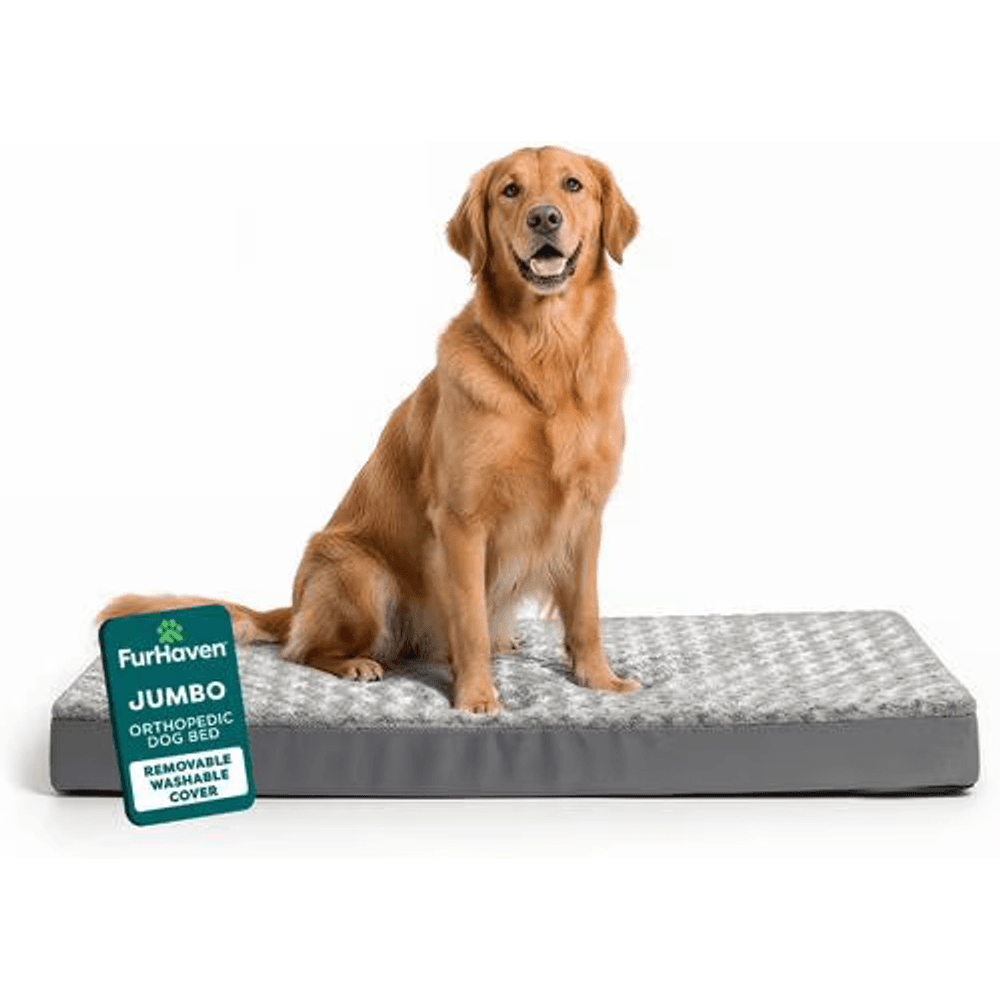
A plush orthopedic foam mattress that cushions aging joints and pressure points, giving a stiff or trembling senior dog warm, supportive rest.
Webvet may earn a commission when you click through to Chewy, at no extra cost to you.
First Signs of Pyometra vs. False Pregnancy
This is the most important section to understand. Pyometra is a bacterial infection of the uterus that also develops in the weeks after heat, the same window as false pregnancy, and it is life-threatening.
Because both conditions can start with lethargy and appetite changes, owners sometimes assume a sick dog is just having a phantom pregnancy. Knowing the difference can save your dog's life.
The first signs of pyometra in dogs include increased thirst and urination, a reduced appetite, lethargy or weakness, vomiting, and in many cases a thick, foul-smelling vaginal discharge that may be yellow, green, or bloody (this is seen in open pyometra; in closed pyometra there is no discharge, and the dog can become critically ill very quickly).
Some dogs run a fever and have a swollen, tender belly. These signs mean a genuinely sick dog, not simply a hormonal one.
When to See a Vet
Even though a mild false pregnancy often resolves without treatment, there are clear situations where you should have your dog examined. When in doubt, it is always safer to call your veterinary team than to wait and hope. Contact your vet if:
- There is any chance she is truly pregnant, so a real pregnancy is confirmed or ruled out before you manage her as a false pregnancy.
- She seems genuinely ill, with a foul discharge, fever, repeated vomiting, marked increased thirst, weakness, or collapse, which can signal pyometra and needs emergency care.
- The mammary glands are hot, hard, red, or painful, which may mean mastitis and needs treatment.
- Symptoms are severe, distressing, or last more than about three weeks, or the false pregnancy keeps recurring after each heat.
If it turns out your dog really is expecting rather than having a phantom pregnancy, your care plan shifts entirely. Our partners at Petful have a helpful guide to pregnant dog care that walks through nutrition, comfort, and preparation. Either way, a quick veterinary check turns uncertainty into a clear plan.
How to Prevent False Pregnancy in Dogs
The only reliable way to prevent false pregnancy is to spay your dog, because removing the ovaries stops the hormone cycles that trigger it. Spaying also eliminates the risk of pyometra and greatly reduces the risk of mammary tumors, so it protects against the very conditions that make false pregnancy worrying in the first place.

Timing matters. Spaying while a dog is in heat or in the weeks right after it can itself trigger a temporary false pregnancy because of the sudden progesterone drop, so many vets prefer to spay when a dog is well clear of her cycle, commonly a couple of months after heat ends.
If your dog has repeated false pregnancies, that is a good reason to discuss spaying, as it prevents both the recurrence and the more serious reproductive diseases of intact females.
If you are keeping your dog intact for planned breeding, you cannot prevent false pregnancy entirely, but you can anticipate it and manage it. Understanding her cycle and how long dogs are pregnant helps you tell a real pregnancy from a phantom one and plan veterinary checks at the right times.
Your vet can help you weigh the timing of spaying against any breeding plans.
Frequently Asked Questions
How can you tell if a dog is having a false pregnancy?
You can suspect a false pregnancy when an unspayed female dog shows pregnancy-like signs 4 to 9 weeks after her heat ended, especially if she was not mated. Look for nesting, mothering toys or other objects, enlarged mammary glands, milk production, a mildly rounded belly, appetite changes, and restlessness, clinginess, or low mood. Because these signs look identical to a real pregnancy, the only way to be certain is a veterinary check, using an ultrasound or a relaxin blood test to confirm there are no puppies. If she seems genuinely ill rather than simply hormonal, see a vet, because a womb infection called pyometra appears in the same window and is an emergency.
How do I get my dog out of a false pregnancy?
Most false pregnancies resolve on their own within 2 to 3 weeks, so often the best approach is patience plus comfort care. Do not milk or massage the mammary glands and do not apply warm compresses, as that only encourages more milk. Use a soft recovery collar to stop her licking the glands, quietly remove any toys or objects she is mothering when she is not looking, and increase her exercise and playtime to distract her and lift her mood. Never restrict her water. For severe, distressing, or repeated cases, your veterinarian can prescribe medication such as cabergoline, which lowers the hormone driving milk production. Do not give any human or over-the-counter medicine to dry up milk, because several are unsafe for dogs.
What triggers a phantom pregnancy in dogs?
A phantom pregnancy is triggered by the normal hormone changes that follow every heat cycle. After a dog ovulates, her ovaries produce progesterone for about two months whether or not she is pregnant. When that progesterone falls at the end of the cycle, it prompts a rise in prolactin, the hormone that drives milk production and maternal behavior, which can cause pregnancy-like signs even with no puppies. No mating is required. A separate common trigger is spaying a dog during heat or shortly after, because removing the ovaries causes an abrupt progesterone drop that mimics the end of a pregnancy and can set off temporary false-pregnancy signs.
How common are false pregnancies?
False pregnancies are very common in unspayed female dogs. Some degree of the hormonal change that causes pseudopregnancy happens in nearly all intact bitches after heat, and a large share show obvious outward signs such as nesting or milk production. Many dogs experience it after most or all of their cycles, and it can recur predictably each time. Because the trigger is the normal post-heat hormone shift rather than mating or illness, even a dog who has never been near a male can have a full false pregnancy. It is considered a normal variation of the canine reproductive cycle, not a disease.
What are the first signs of pyometra in dogs?
The first signs of pyometra in dogs include increased thirst and urination, reduced appetite, lethargy or weakness, and vomiting. In open pyometra there is often a thick, foul-smelling vaginal discharge that may be yellow, green, or bloody; in closed pyometra there is no discharge, and the dog can become severely ill very quickly. Some dogs also run a fever or have a swollen, tender belly. Pyometra develops in the weeks after heat, the same window as false pregnancy, but it signals a genuinely sick dog and is a life-threatening emergency. If you see these signs in an unspayed dog who was recently in heat, go to a veterinarian immediately; emergency spay surgery is the standard treatment.
Are dogs in pain during false pregnancy?
False pregnancy is usually not painful. Most dogs are simply hormonal and behave differently for a couple of weeks. The main discomfort comes from swollen, engorged mammary glands, which can feel tender, and from emotional distress that shows up as anxiety, clinginess, or a low mood. These pass as hormone levels settle. Pain becomes a concern if the glands develop mastitis, a mammary infection that makes them hot, hard, red, and sore and needs veterinary treatment. Real, severe pain or signs of genuine illness are not typical of a simple false pregnancy and should prompt a vet visit, partly to rule out pyometra.
$65 · no membershipHave a health question about your dog?
A licensed vet can assess your dog over video and prescribe online when it's appropriate.
Talk to a vet- Licensed vets
- All 50 states
- same-day Rx
Webvet may earn a commission if you book.

Editor
The Webvet Editorial Team is the in-house group of pet-care editors and writers behind Webvet, operated by Smart Pet Collective. The team researches, writes, and maintains Webvet's pet health, behavior, and medication content. Every article follows a defined editorial process: research from reputable veterinary and scientific sources, careful drafting, mandatory review of medical content by a credentialed veterinarian, and dated publication. Health and medication articles are medically reviewed by a licensed veterinary professional before they go live and are kept current over time.
Veterinarian · BVMS MRCVS
Dr. Pippa Elliott, BVMS, MRCVS, is a veterinarian with nearly 30 years of experience in companion animal practice. Dr. Elliott earned her Bachelor of Veterinary Medicine and Surgery from the University of Glasgow. She was also designated a Member of the Royal College of Veterinary Surgeons. Married with 2 grown-up kids, Dr. Elliott has a naughty Puggle named Poggle, 3 cats and a bearded dragon.
Related reading

Best Cat Litter Mats for Tracking, Cleaning, and Sensitive Paws

Best Cat Harnesses: Fit, Adjustability, and Escape Resistance

Best Cat Carriers for Vet Visits, Travel, and Difficult Loaders
