Signs a Dog Is in Labor: Whelping Stages and When to Call the Vet
The clearest signs a dog is in labor are a temperature drop below 100F, restless nesting, panting, and hard straining. This vet-reviewed guide covers the 3 whelping stages and the exact red flags that mean call the vet now.

BVMS MRCVS
Medically reviewed by Dr. Pippa Elliott, BVMS MRCVS · Last reviewed

This article contains affiliate links. Webvet may earn a commission when you buy through them, at no extra cost to you.
The clearest signs a dog is in labor are a sharp drop in body temperature below about 100 degrees Fahrenheit, restless nesting, panting and shivering, refusing food, and eventually visible straining as the first puppy arrives. Knowing what normal whelping looks like, and where it crosses the line into an emergency, is the difference between a calm delivery and a dangerous delay. This vet-reviewed guide walks through the pre-labor signs, the all-important temperature drop, the three stages of labor, what a normal delivery looks like, how much to help, and the exact red flags that mean you should call your veterinarian right away.
- 1A rectal temperature drop below about 100 degrees Fahrenheit (often to 98 to 99) is the single most reliable sign that labor will begin within about 8 to 24 hours.
- 2Pre-labor signs include nesting, restlessness, clinginess or withdrawal, loss of appetite, and sometimes mild vomiting, appearing 6 to 12 hours before whelping and sometimes lasting up to 24 to 36 hours.
- 3Labor has three stages: stage one (cervix dilates, panting and nesting, no visible pushing), stage two (active straining and delivery of puppies), and stage three (passing the placenta after each pup).
- 4Most whelping is uneventful, but dystocia (difficult birth) is a life-threatening emergency for the mother and puppies.
- 5Call a vet immediately for strong straining about 30 minutes with no pup, more than 2 hours between pups with more due, green or bloody discharge before the first pup, or collapse and fever.
How to Tell Your Dog Is Getting Close to Labor (Pre-Labor Signs)
In the last day or two of pregnancy, most dogs begin to behave differently. These pre-labor changes are driven by the hormonal shifts that prepare her body for whelping, and they give you a valuable early warning that the litter is coming. No single sign is proof on its own, but together they tell you labor is near.

- Nesting: she scratches, digs, and rearranges bedding to build a safe spot, often seeking out a quiet, enclosed corner or her whelping box.
- Restlessness and pacing: she may seem unable to settle, getting up and lying down repeatedly, sometimes trembling or shivering.
- Clinginess or withdrawal: some dogs suddenly want to be close to their owner, while others retreat and want to be left alone. Both are normal.
- Loss of appetite: many dogs refuse food in the final 24 hours, and some vomit mildly. A dog that stops eating in late pregnancy is often about to whelp.
- Milk production and vulvar changes: mammary glands fill and milk may appear, and the vulva softens and swells in the day or two before delivery.
These behaviors are the tail end of the pregnancy timeline. If you want the full picture of how your dog changes across gestation, our guide to the stages of dog pregnancy walks through each phase. According to the Cornell Riney Canine Health Center, these pre-labor signs typically appear 6 to 12 hours before whelping and can last up to 24 to 36 hours, which is your cue to start monitoring closely and taking her temperature.
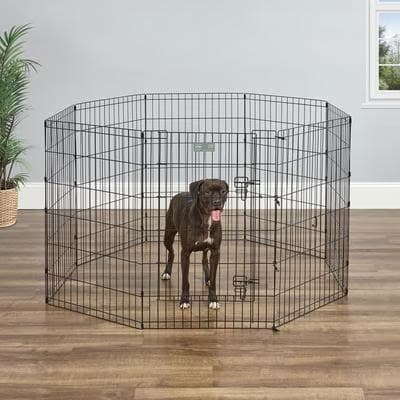
Webvet may earn a commission when you click through to Chewy, at no extra cost to you.
The Temperature Drop: The Single Most Reliable Sign
Behavioral signs vary from dog to dog, but there is one measurable signal that is far more dependable: a drop in body temperature. A dog's normal rectal temperature is about 100 to 102.5 degrees Fahrenheit. In the 8 to 24 hours before labor, that temperature falls, often to somewhere between 98 and 99 degrees, and usually below 100 degrees.

This drop happens because the hormone progesterone, which holds the pregnancy together, falls sharply just before whelping. That fall triggers labor and also causes the temporary dip in body temperature, which is why it is such a reliable predictor. Once you record a clear drop below 100 degrees, labor almost always begins within about 24 hours.
To catch it, take your dog's rectal temperature twice a day during the final week of pregnancy using a digital thermometer and a little lubricant. Write down each reading so you can spot the drop against her normal baseline. A single low reading followed by a return to normal can be a false alarm, so look for a sustained drop combined with the behavioral signs above.
 $65 · no membership
Have a health question about your dog?
A licensed vet can assess your dog over video and prescribe online when it's appropriate.
 Talk to a vet
- Licensed vets
- All 50 states
- same-day Rx

Webvet may earn a commission if you book.
The 3 Stages of Dog Labor, Explained
Once labor begins in earnest, whelping moves through three distinct stages. Knowing which stage your dog is in tells you whether what you are seeing is normal or whether the clock has started ticking toward an emergency.

| Stage | How long | What you will see |
|---|---|---|
| Stage 1 (cervix dilates) | 6 to 12 hours, up to 24 | Panting, shivering, restlessness, nesting, refusing food, possible mild vomiting. The cervix is dilating but there is no visible pushing yet. |
| Stage 2 (delivery) | First pup within 1 to 2 hours of hard straining; then one pup every 30 to 60 minutes | Active straining and abdominal contractions, a fluid-filled sac appears, then a puppy. The mother licks each pup clean and chews the cord. |
| Stage 3 (placenta) | After each puppy; alternates with stage 2 | A placenta is passed after each puppy. Stages 2 and 3 repeat until the whole litter is delivered. |

Webvet may earn a commission when you click through to Chewy, at no extra cost to you.
Stage 1: Cervical Dilation
Stage one usually lasts 6 to 12 hours and can stretch to about 24 hours, especially in first-time mothers. The uterus is contracting and the cervix is dilating, but these contractions are not visible from the outside. What you see instead is panting, shivering, restlessness, intense nesting, and often a refusal to eat. She may seem anxious and want to hide. There is no pushing yet, and no puppies should appear during this stage.
Stage 2: Active Labor and Delivery
Stage two is active labor, when the puppies are actually born. Now you will see obvious straining and abdominal contractions. The first puppy usually arrives within 1 to 2 hours of the onset of hard, visible straining. After that, puppies typically come one every 30 to 60 minutes, though a rest of up to a couple of hours between pups can be normal as long as she is comfortable and not straining. A fluid-filled sac appears first, then the puppy inside it.
Stage 3: Delivering the Placenta
Stage three is the passing of the placenta, and it happens after each puppy rather than all at once at the end. In practice, stages two and three alternate: a puppy is born, its placenta follows, then the next puppy comes, and so on until the litter is complete. It is worth counting placentas, because a retained placenta can cause infection. If you counted fewer placentas than puppies, mention it to your vet.
What Normal Whelping Looks Like (What to Expect During Delivery)
For most healthy dogs, whelping is a natural process that needs very little help from you. Knowing what is normal makes it easier to stay calm and to recognize the moment something is not.

- What comes out first: a fluid-filled sac appears at the vulva first, then the puppy. Both head-first and tail-first (breech) deliveries are considered normal in dogs.
- The mother does the work: she tears open the sac, licks the puppy to stimulate breathing, and chews through the umbilical cord. This vigorous licking is normal and important.
- Eating the placentas: many mothers eat some or all of the placentas. This is natural, though eating several can cause loose stools.
- Timing and litter size: the whole delivery can take from a couple of hours to more than half a day for a large litter. Knowing the expected puppy count from a pre-whelp X-ray tells you when she is finished.
Because dog pregnancy runs about 63 days, a good way to prepare is to count forward from breeding so you are ready in the final week. Our guide to how long dogs are pregnant explains why the due date is a window rather than a fixed day, and why that late X-ray to count puppies is so useful once labor begins.
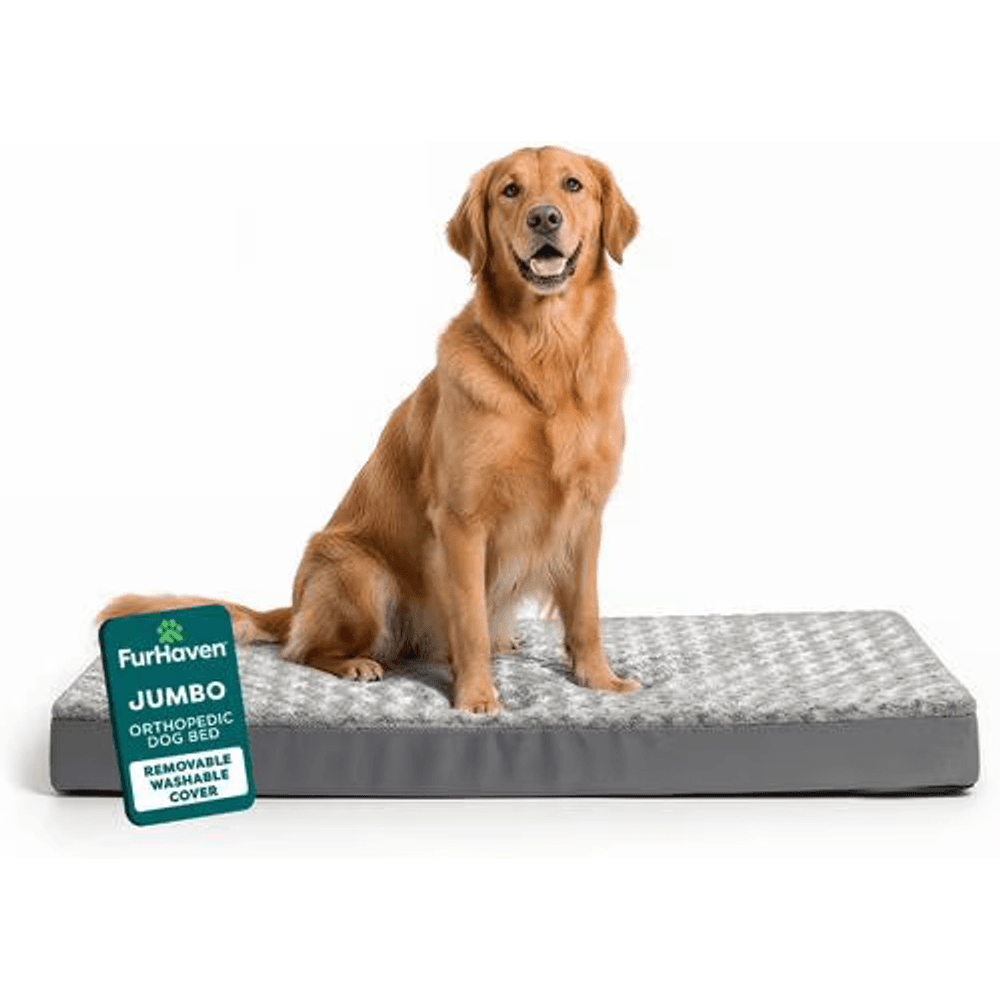
A plush orthopedic foam mattress that cushions aging joints and pressure points, giving a stiff or trembling senior dog warm, supportive rest.
Webvet may earn a commission when you click through to Chewy, at no extra cost to you.
Should You Help? What to Do (and Not Do) While Your Dog Is in Labor
The most common question owners ask is how much to intervene. For a normal labor, the answer is: very little. Your job is to watch quietly, keep the environment calm, and be ready to call the vet, not to take over a process the mother is built to handle.
- Observe from a calm distance: keep the room quiet, warm, and dimly lit, and limit the number of people present. Stress can slow or stall labor.
- Do not interfere with normal labor: do not pull on a puppy, do not tug the cord, and do not try to speed things along. Let the mother deliver, clean, and nurse on her own.
- Step in only if she does not: if a first-time mother does not open the sac within about a minute, you can gently tear it and rub the puppy with a clean towel to stimulate breathing, then return the pup to her.
- Have the whelping box ready: a clean, warm, draft-free box with low sides and absorbent bedding gives her a secure place and keeps newborns from wandering.
It is fine to be present and reassuring, and many dogs are comforted by their trusted person nearby. What matters is that you resist the urge to manage a labor that is going smoothly. Any hands-on help is an adjunct to letting nature work, never a substitute for veterinary care if things go wrong. For a friendly, plain-language companion on caring for your dog through pregnancy and birth, our partners at Petful have a helpful guide to pregnant dog care.
Warning Signs of a Troubled Labor: When to Call the Vet Immediately
This is the section that matters most. Most whelping is uneventful, but dystocia, meaning a difficult or obstructed birth, is a genuine emergency that can kill both the mother and her puppies within hours. The safest approach is to know the red flags cold and to keep your veterinarian's and the nearest emergency clinic's numbers within reach before labor ever starts.

A few of these deserve extra emphasis. Strong, unproductive straining is the classic sign of an obstruction: a puppy may be too large or positioned wrong, and the longer it stays stuck, the greater the danger to it and to the mother. Green or black discharge before any puppy has been born signals that a placenta has separated and a puppy may be in distress; once you see it, delivery should follow quickly, and if it does not, that is an emergency.
Eclampsia, also called milk fever, is a dangerous drop in blood calcium that can occur around whelping and in early nursing. Signs include restlessness, stiffness, muscle tremors, disorientation, and eventually collapse and seizures. It is a medical emergency that needs immediate veterinary treatment. When any of these red flags appear, do not wait to see if things improve on their own. Call your vet or emergency clinic, describe exactly what you are seeing and the timing, and follow their instructions. When in doubt, call.
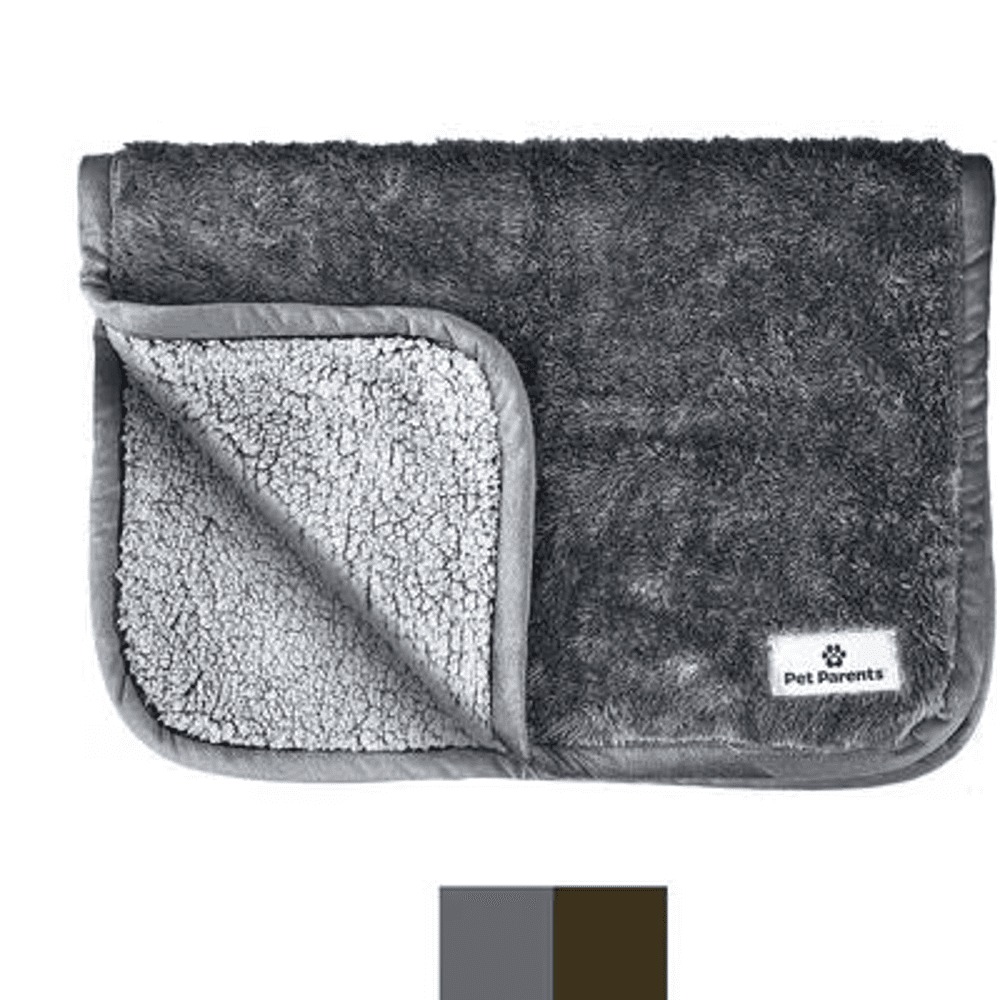
A plush, waterproof sherpa blanket that gives a cold or shivering dog a warm, cozy layer to curl into. The hidden waterproof lining protects the bed, couch, or car seat, and the whole thing is machine washable.
Webvet may earn a commission when you click through to Chewy, at no extra cost to you.
How to Prepare: Whelping Kit and Setup Before Labor Starts
The calmest whelpings are the ones you prepared for a week or two in advance. Set up the whelping box early so she can get comfortable in it, and assemble a simple kit so you are not scrambling mid-labor. Have your vet's and the emergency clinic's numbers saved and posted where you can see them.
- A whelping box: low-sided, clean, and lined with washable bedding or absorbent pads, placed in a warm, quiet, draft-free corner.
- A digital thermometer, clean towels, and unwaxed dental floss: the thermometer for the twice-daily temperature checks, towels to dry and stimulate pups, and floss to tie off a cord only if needed.
- A bulb syringe, heating pad, and gram scale: a bulb syringe to clear a newborn's airway if needed, a gentle heat source to keep pups warm, and a small scale to weigh each puppy daily.
- Your vet's emergency number: the single most important item on the list. Know in advance where to go and who to call at 3 a.m.
Before whelping day, schedule a pre-whelp checkup. Your vet can confirm the dog is healthy, and an X-ray in the final week counts the puppies so you know how many to expect. If you are still early and only just confirming the pregnancy, our guide to the signs a dog is pregnant covers what to watch for and when a vet visit makes sense. Knowing the litter count in advance is one of the best ways to tell when labor is truly finished.
Should you monitor at home or head straight to the vet?
Pros
- Twice-daily temperature checks in the final week give an early, reliable warning that labor is near.
- A calm, prepared whelping box lets many healthy dogs deliver naturally with minimal intervention.
- Knowing the expected puppy count from an X-ray tells you when whelping is truly finished.
Cons
- Home monitoring cannot fix a stuck puppy, eclampsia, or a uterine problem; those need a vet fast.
- First-time mothers, toy breeds, and flat-faced breeds carry higher whelping risk and often need veterinary support.
- Waiting too long on a red flag can cost puppies and endanger the mother, so err toward calling early.
Putting Labor in Context: From Heat to Whelping
Labor is the final act of a longer reproductive story that starts with the dog heat cycle. If a mating during heat leads to conception, roughly nine weeks of gestation follow before the pre-labor signs and temperature drop appear. It is worth remembering that not every dog showing nesting and milk production is actually about to whelp: a dog false pregnancy can mimic several late-pregnancy signs in a dog that was never pregnant, which is one more reason a vet should confirm the pregnancy and expected due date well before labor.
Frequently Asked Questions
How do I tell how close my dog is to giving birth?
The most reliable way to tell how close your dog is to giving birth is to take her rectal temperature twice a day in the final week. A normal reading is about 100 to 102.5 degrees Fahrenheit; a drop below 100 degrees, often to 98 or 99, means labor will usually begin within 8 to 24 hours. Alongside the temperature drop, watch for nesting, restlessness, refusing food, panting, and milk in the mammary glands. When these behavioral signs appear together with a confirmed temperature drop, whelping is close.
How long does a dog's first stage of labor last?
The first stage of dog labor, when the cervix dilates, usually lasts 6 to 12 hours and can extend up to about 24 hours, especially in first-time mothers. During this stage the uterine contractions are not visible, so you will not see pushing. Instead you will notice panting, shivering, restlessness, intense nesting, and often a refusal to eat. No puppies should appear during stage one. If stage one drags well past 24 hours with no progression into active straining, or if she seems distressed, call your veterinarian.
Can I touch my dog while she's giving birth?
You can be present and gently reassuring, and many dogs are comforted by their trusted person nearby, but you should not interfere with a normal labor. Do not pull on a puppy, tug the umbilical cord, or try to speed delivery. Keep the area calm and let the mother deliver, open the sacs, clean the puppies, and nurse on her own. The main exception is if a first-time mother does not open the sac within about a minute; then you can gently tear it and rub the pup with a clean towel to help it breathe, then return it to her. If a puppy is stuck or labor stalls, call your vet rather than trying to deliver it yourself.
How do dogs act before labor?
In the roughly 6 to 24 hours before labor, most dogs become restless and start nesting, scratching and rearranging bedding to build a safe spot. Many refuse food and some vomit mildly. Behavior often changes: some dogs become clingy and want to stay close to their owner, while others withdraw and seek solitude. You may also see panting, shivering, and trembling, along with a softened, swollen vulva and milk in the mammary glands. These behavioral changes, combined with a drop in body temperature, signal that whelping is near.
Should I leave my dog alone while she's in labor?
You should not fully leave her alone, but you should give her space. The ideal approach is quiet, low-key supervision: stay close enough to watch each puppy arrive and to track the timing between them, but keep the environment calm and avoid crowding or handling her. Too much stress or activity can slow or stall labor. Checking on her regularly lets you catch a warning sign, such as prolonged straining with no puppy, so you can call the vet quickly. So the goal is present but hands-off, not absent.
What comes out first in dog labor?
In normal dog labor, a fluid-filled sac (the water bag) appears at the vulva first, followed by the puppy inside it. Both head-first and tail-first (breech) presentations are considered normal in dogs, so a tail-first puppy is not automatically an emergency. After the puppy is delivered, the placenta follows, usually before or shortly after the next puppy arrives. One warning sign to know: if you see dark green, black, or bloody discharge before the first puppy is born, that can mean a placenta has separated early and a puppy may be in distress, which is a reason to call your vet immediately.
What are signs your dog is going to pass away?
In the context of labor, the signs that a mother dog is in life-threatening trouble include extreme lethargy or collapse, pale gums, a high fever, severe unproductive straining, uncontrolled bleeding, and the tremors, stiffness, and seizures of eclampsia (milk fever). Any of these means the situation is critical and she needs emergency veterinary care immediately, not observation at home. Dystocia and eclampsia can both become fatal within hours, so do not wait to see if she improves. If your dog shows collapse, seizures, heavy bleeding, or profound weakness during or just after whelping, treat it as an emergency and get her to a vet right away.
$65 · no membershipHave a health question about your dog?
A licensed vet can assess your dog over video and prescribe online when it's appropriate.
Talk to a vet- Licensed vets
- All 50 states
- same-day Rx
Webvet may earn a commission if you book.

Editor
The Webvet Editorial Team is the in-house group of pet-care editors and writers behind Webvet, operated by Smart Pet Collective. The team researches, writes, and maintains Webvet's pet health, behavior, and medication content. Every article follows a defined editorial process: research from reputable veterinary and scientific sources, careful drafting, mandatory review of medical content by a credentialed veterinarian, and dated publication. Health and medication articles are medically reviewed by a licensed veterinary professional before they go live and are kept current over time.
Veterinarian · BVMS MRCVS
Dr. Pippa Elliott, BVMS, MRCVS, is a veterinarian with nearly 30 years of experience in companion animal practice. Dr. Elliott earned her Bachelor of Veterinary Medicine and Surgery from the University of Glasgow. She was also designated a Member of the Royal College of Veterinary Surgeons. Married with 2 grown-up kids, Dr. Elliott has a naughty Puggle named Poggle, 3 cats and a bearded dragon.
Related reading

Best Cat Litter Mats for Tracking, Cleaning, and Sensitive Paws

Best Cat Harnesses: Fit, Adjustability, and Escape Resistance

Best Cat Carriers for Vet Visits, Travel, and Difficult Loaders
