Dog Pregnancy Stages Week by Week: What Happens Day 1 to 63
The dog pregnancy stages run about 63 days across three trimesters. This vet-reviewed week-by-week guide tracks fetal development, physical changes, care, and the whelping and dystocia red flags that mean an emergency.

BVMS MRCVS
Medically reviewed by Dr. Pippa Elliott, BVMS MRCVS · Last reviewed

This article contains affiliate links. Webvet may earn a commission when you buy through them, at no extra cost to you.
The dog pregnancy stages unfold fast: in roughly 63 days a single fertilized egg becomes a litter of fully formed puppies. Vets divide that span into three trimesters of about three weeks each, but the day-by-day changes are what tell you where your dog actually is and what she needs. This vet-reviewed guide walks the timeline from Day 1 to Day 63 week by week, covering fetal development, the physical changes you can see, how vets confirm and stage a pregnancy, how to care for the mother at each phase, and the whelping red flags that mean you should call your veterinarian right away.
- 1Dog pregnancy lasts about 63 days on average, with a normal range of 58 to 68 days, split into three roughly three-week trimesters.
- 2Early weeks show almost no outward signs; the belly usually does not visibly round until the second half of pregnancy.
- 3You cannot reliably stage a pregnancy by belly size alone; a vet uses a relaxin blood test, ultrasound, palpation, or X-ray depending on the day.
- 4By about week seven puppies can be felt moving and the belly drops; fetal skeletons become visible on X-ray from about day 45, and an X-ray after about day 55 is the most reliable way to count the litter.
- 5A rectal temperature drop below about 99 degrees Fahrenheit usually means labor within 24 hours; stalled labor or green discharge before the first puppy is an emergency.
How Long Is a Dog Pregnant? (63 Days, Three Trimesters)
Canine pregnancy runs about 63 days, or close to nine weeks, from breeding. Veterinary sources including the Merck Veterinary Manual and the American Kennel Club put the normal range at 58 to 68 days, so a healthy delivery anywhere in that window is considered on time. For the full explanation of why that range is so wide, see our guide to how long dogs are pregnant. In short, the breeding date is not the same as the true conception date, so gestation only looks variable when counted from mating; measured from ovulation it is a far more precise 63 days give or take a day or two.
Because nine weeks is short, it helps to think in three trimesters of about 21 days each. Each trimester has its own developmental milestones and its own care priorities, which is why the week-by-week and trimester views below work together rather than compete.

Webvet may earn a commission when you click through to Chewy, at no extra cost to you.
The 3 Trimesters of Dog Pregnancy at a Glance
This scannable timeline shows what is happening inside and outside your dog across the three stages of pregnancy, and what she needs from you at each point.

| Trimester | Approx. days | What is happening | What she needs |
|---|---|---|---|
| First (weeks 1 to 3) | Days 1 to 21 | Fertilization, embryos travel to the uterus, implantation around day 16 to 18. Few or no outward signs. | Normal diet and routine; avoid all non-essential medications. |
| Second (weeks 4 to 6) | Days 22 to 42 | Rapid fetal development; puppies take clear shape; belly begins to fill out; pregnancy can be confirmed. | Vet confirmation; begin increasing calories toward the end of this stage. |
| Third (weeks 7 to 9) | Days 43 to 63 | Final growth and maturation, belly drops, milk develops, nesting begins, then whelping. | Peak nutrition, whelping box, twice-daily temperature checks in the final week. |
Dog Pregnancy Stages Week by Week (Days 1 to 63)
Here is the day-anchored timeline the trimester view summarizes. Because the true conception date can lag breeding by several days, treat these as approximate stages rather than exact calendar days.

Week 1 (Days 1 to 7): Fertilization
After mating, sperm fertilize the eggs and the earliest cell division begins. There are no visible signs, and your dog looks and behaves completely normally. Keep her on her usual diet and routine, and avoid any non-essential medication from this point on.
Week 2 (Days 8 to 14): Embryos Travel to the Uterus
The tiny embryos migrate down to the uterus and space themselves along the uterine horns. Still no outward signs. This quiet, invisible phase is exactly why so many owners have no idea their dog is pregnant in the first two weeks.
Week 3 (Days 15 to 21): Implantation
Embryos implant in the uterine lining, usually around day 16 to 18, and begin drawing nourishment from the mother. Some dogs show mild appetite changes here, and a few have brief morning sickness. Most still look entirely normal from the outside.
Week 4 (Days 22 to 28): Fetal Development Begins
This is a big week. Major fetal development starts, eyes and spinal cords form, and by around day 28 the fetuses have grown enough that a vet can often confirm pregnancy by ultrasound or careful palpation. Nipples may enlarge and appetite can dip briefly before rebounding. This is the earliest window most owners get real confirmation.
Week 5 (Days 29 to 35): Puppies Take Shape
The fetuses now look clearly like puppies, with developing toes, claws, and whiskers, and they start to gain weight quickly. The mother's appetite rises and her abdomen begins to fill out. This marks the start of the demanding growth phase, and most vets begin planning the shift toward higher-calorie food.
Week 6 (Days 36 to 42): Rapid Growth
Puppies develop their coat pattern and skin pigment, and the belly is now clearly rounded. Mammary glands enlarge as the body prepares to produce milk. Calorie needs climb sharply, and the mother may prefer smaller, more frequent meals as her crowded abdomen leaves less room.
Week 7 (Days 43 to 49): Belly Drop and Milk

Now the pregnancy is unmistakable. The belly hangs low, you can often feel and even see the puppies shifting, and some dogs begin to leak a little milk. Many dogs start to slow down and seek out quiet spots.
The fetal skeletons start to show on an X-ray from about day 45, but a radiograph after about day 55 is the most reliable way to count them. That count tells you the litter size and helps you know when whelping is finished.
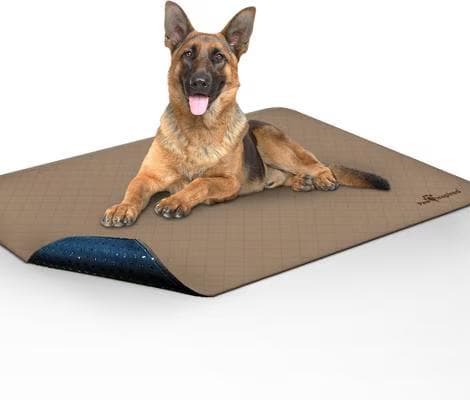
Webvet may earn a commission when you click through to Chewy, at no extra cost to you.
Week 8 (Days 50 to 56): Nesting Begins
The puppies are nearly fully formed and are moving into position for birth. The mother may begin nesting behaviors, scratching at bedding and seeking a den-like spot, so have the whelping box set up and let her settle into it. Appetite may dip as the abdomen becomes crowded.
Week 9 (Days 57 to 63): Ready to Whelp
Final maturation. The puppies are ready to be born any day now. The single most reliable at-home signal is a drop in rectal temperature to below about 99 degrees Fahrenheit, which usually means labor will begin within 24 hours. Watch closely for the signs a dog is in labor, including restlessness, nesting, refusing food, panting, and shivering.
How Can You Tell What Stage of Pregnancy Your Dog Is In?
You can estimate the stage from a combination of the calendar and the physical signs, but you cannot pin it down by belly size alone, and you should never rely on appearance to make medical decisions. Use the day count from breeding as your anchor, then read it against what her body is doing:
- Early (weeks 1 to 3): almost no visible change; maybe mild appetite shifts or slightly enlarging nipples toward the end.
- Middle (weeks 4 to 6): confirmable by vet ultrasound or palpation; nipples enlarge, appetite rises, and the belly starts to round.
- Late (weeks 7 to 9): belly drops and swells, puppies can be felt moving, milk develops, and nesting begins.
The catch is that several of these signs overlap with a false pregnancy, so none of them confirms a real pregnancy on its own. For the full checklist of what to watch for, see our guide to the signs a dog is pregnant. To know the true stage with confidence, especially before making any care or medication decision, have your vet confirm it with a test rather than guessing from her shape.
 $65 · no membership
Have a health question about your dog?
A licensed vet can assess your dog over video and prescribe online when it's appropriate.
 Talk to a vet
- Licensed vets
- All 50 states
- same-day Rx

Webvet may earn a commission if you book.
How Vets Confirm and Stage a Pregnancy
Home urine tests made for people do not work in dogs, so confirmation always needs a veterinarian. Vets have four tools, each most accurate in a specific window, which is also how they pinpoint the stage.

- Relaxin blood test (about day 25 to 30): detects relaxin, a hormone produced only during pregnancy. It confirms pregnancy but does not count puppies or precisely date it.
- Ultrasound (about day 25 to 35): confirms pregnancy, shows fetal heartbeats to check viability, and helps estimate gestational age and stage.
- Abdominal palpation (about day 28 to 35): an experienced vet can feel walnut-sized swellings in the uterus. The window is narrow, and it should only be done by a professional.
- X-ray (fetal skeletons visible from about day 45; count most reliable after about day 55): the best way to count puppies, because the fetal skeletons calcify enough to show up. Skeletons first appear on a radiograph around day 45, but a count taken after about day 55 is the most accurate, and that count tells you when whelping is complete.
According to VCA Animal Hospitals, each method has its own accurate window, which is why timing the visit matters. A common plan is an early ultrasound or relaxin test to confirm and stage the pregnancy, then a late X-ray to count the litter and prepare for whelping.
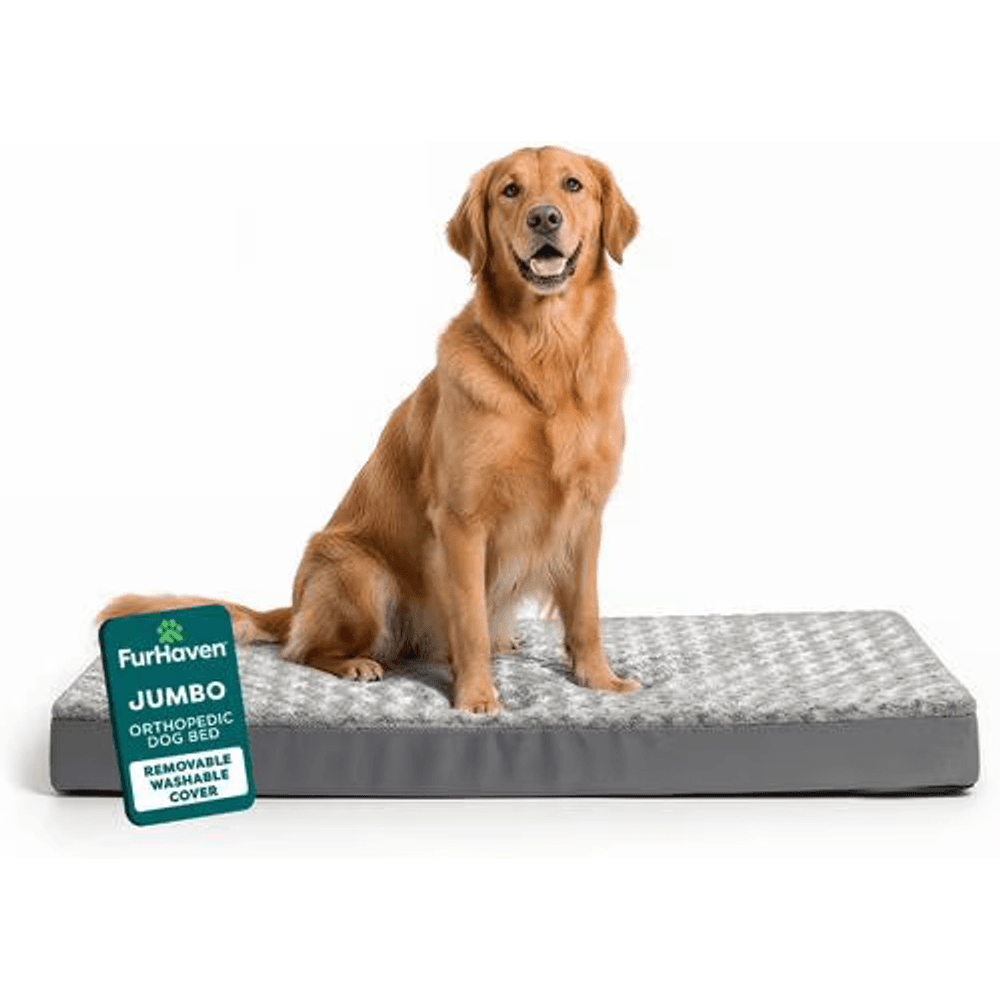
A plush orthopedic foam mattress that cushions aging joints and pressure points, giving a stiff or trembling senior dog warm, supportive rest.
Webvet may earn a commission when you click through to Chewy, at no extra cost to you.
What Does a 7-Week Pregnant Dog Look Like?
By week seven, roughly days 43 to 49, a pregnancy that was easy to miss becomes obvious. The abdomen is visibly large and hangs low, the mammary glands are swollen and developing, and in many dogs you can watch the belly ripple as the puppies shift and kick. Some mothers begin to leak small amounts of milk.
Behaviorally, a 7-week-pregnant dog usually slows down, sleeps more, and starts looking for quiet den-like spots. This is when the fetal skeletons start to show on an X-ray, having calcified enough to appear from about day 45, though a radiograph after about day 55 gives the most reliable litter count. If your dog is around this stage and the belly is not enlarging, or she seems unwell, have your vet check her rather than assuming everything is on track.
Caring for Your Pregnant Dog by Trimester
Good prenatal care changes as the stages progress. The core principles are steady nutrition, sensible exercise, and strict caution about anything you give her, all tailored by your veterinarian.
Nutrition
For roughly the first two-thirds of pregnancy, a healthy dog on a complete adult diet usually needs no increase in food. From around week five or six, most vets transition her to a high-quality puppy or gestation formula that is more calorie- and nutrient-dense. By the final weeks she may eat significantly more, often split into smaller, frequent meals. Fresh water should always be available.
Exercise
Gentle, regular walks keep a pregnant dog fit and help maintain a healthy weight, which supports an easier delivery. Avoid strenuous activity, rough play, and anything with a risk of hard impact, especially in the final trimester. As the due date nears, let her set the pace and rest whenever she wants.
Deworming, Supplements, and What to Avoid
Deworming protocols during pregnancy exist, but only specific products are safe and only on a vet-set schedule, often from around day 40; never deworm on your own. The same caution applies to every supplement and preventive. Home care and supplements are adjuncts to veterinary guidance, never a replacement for it. For a friendly, plain-language companion to this section, our partners at Petful have a helpful guide to pregnant dog care. Key things to avoid unless your vet directs otherwise:
- Any unapproved medication, including over-the-counter pain relievers, dewormers, and flea and tick products, because several can cross to the puppies.
- Live vaccines, which are generally avoided in pregnancy; your vet plans vaccination timing around breeding instead.
- Calcium supplements before whelping, which can interfere with normal labor and raise the risk of eclampsia; supplement only if your vet directs it.
- The usual toxic foods, such as chocolate, xylitol, grapes and raisins, onions, and alcohol, which are dangerous to any dog and to a pregnancy.
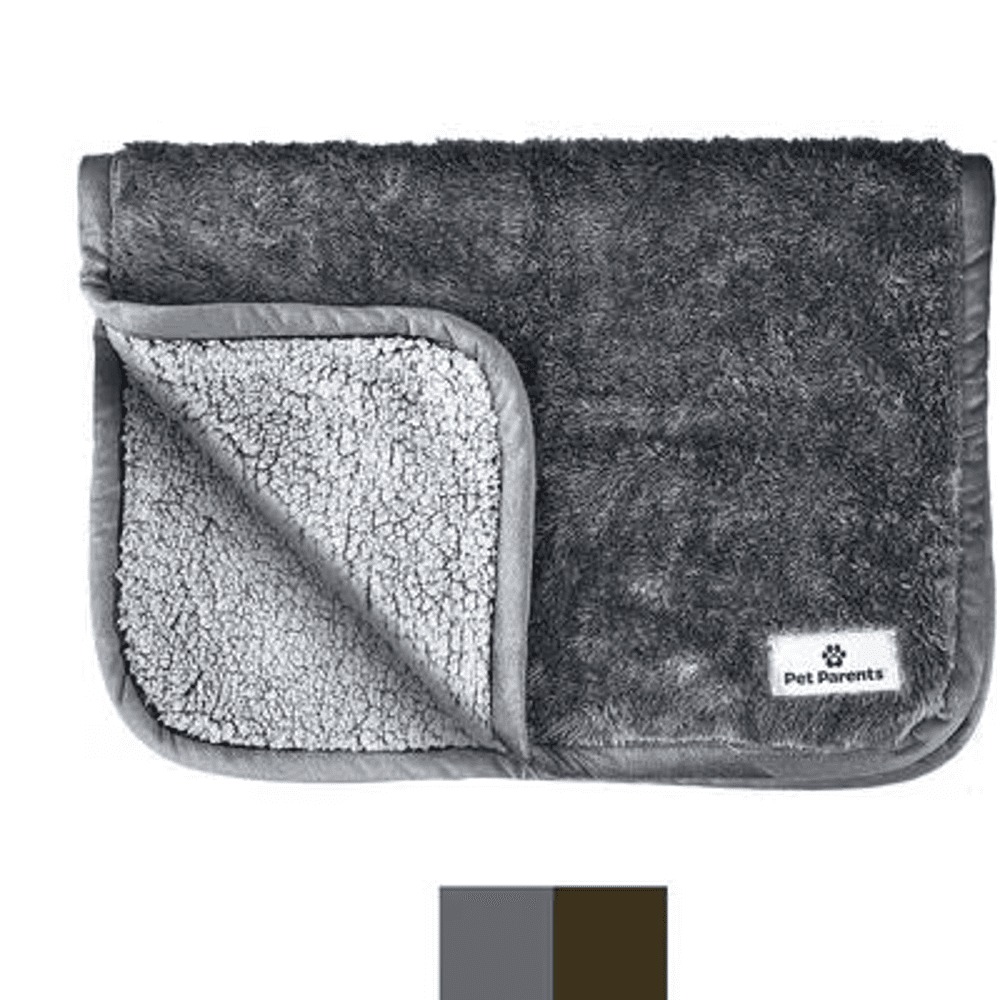
A plush, waterproof sherpa blanket that gives a cold or shivering dog a warm, cozy layer to curl into. The hidden waterproof lining protects the bed, couch, or car seat, and the whole thing is machine washable.
Webvet may earn a commission when you click through to Chewy, at no extra cost to you.
What Does a Dog Do Right Before She Gives Birth?
In the final 24 to 48 hours, most dogs telegraph that whelping is close. The clearest sign is behavioral plus a temperature change:
- Temperature drop: rectal temperature falls below about 99 degrees Fahrenheit (37.2 Celsius), usually within 24 hours of labor. Twice-daily checks in the final week catch it.
- Nesting: she scratches at bedding, circles, and settles into a den-like spot, ideally the whelping box you prepared.
- Restlessness and refusing food: many dogs pace, pant, shiver, and stop eating in the hours before stage-one labor begins.
These are normal, expected behaviors. What is not normal is a temperature drop followed by more than 24 hours with no labor, which is a red flag covered below.
The 3 Stages of Labor and Whelping
The Cornell Riney Canine Health Center describes whelping in three stages. Knowing them helps you tell normal progress from trouble.
- Stage one (6 to 12 hours): the cervix dilates and contractions begin. The dog is restless, panting, and nesting, but no puppies appear yet.
- Stage two (delivery): puppies are born, usually one every 30 to 60 minutes, though rests of up to a couple of hours between puppies can be normal.
- Stage three (placenta): the placenta is passed after each puppy. Stages two and three alternate until the whole litter is delivered.
The whole delivery can take from a couple of hours to more than half a day for a large litter. Knowing the expected puppy count from that late X-ray tells you when she is finished. For a full checklist, see our guide to the signs a dog is in labor.
Preparing a Whelping Box and Supply Checklist
Set up the whelping area one to two weeks before the due date so your dog can get comfortable in it. It should be a low-sided box large enough for her to stretch out, in a warm, quiet, draft-free corner away from household traffic.
- A digital rectal thermometer for twice-daily temperature checks in the final week.
- Plenty of clean towels and absorbent puppy pads to keep the box dry and to help dry newborn puppies.
- A safe heat source, such as a heat lamp or puppy-safe warming pad, since newborns cannot regulate their own body temperature.
- A scale, clean scissors, unwaxed dental floss, and your vet's number, so you can weigh puppies, tie cords only if needed, and call for help fast.
Newborn Puppy Care and the Hardest Weeks
The hardest stretch is not the pregnancy itself but the first two to three weeks after the puppies arrive. Newborns cannot regulate their own temperature, cannot see or hear, and need to nurse roughly every two hours around the clock, so the schedule is relentless.
Keep the whelping area warm and draft-free, weigh each puppy daily to confirm steady gain, and watch for any that seem weak, cold, or are not nursing. The mother does most of the work, but she needs a lot of high-calorie food and water to produce milk. Weaning begins gradually around three to four weeks as the puppies start on solid food and their eyes and ears open.
Watch the mother too. Low blood calcium (eclampsia) can strike a nursing dog and looks like restlessness, trembling, stiffness, or fever, and it is a life-threatening emergency that needs a vet immediately.
When to Call Your Vet: Pregnancy and Whelping Red Flags
Most dog pregnancies go smoothly, but whelping carries real risks including dystocia (difficult birth), eclampsia, and stillbirth. Recognizing an emergency early can save the mother and her puppies. Any suspected pregnancy should be confirmed and monitored by a vet, and the following signs mean you should call your vet or an emergency clinic without delay.
During pregnancy, also call your vet if your dog stops eating for more than a day, has foul-smelling or bloody discharge before term, vomits repeatedly, or seems unusually lethargic or unwell. When in doubt, it is always safer to phone your veterinary team than to wait and hope; they would far rather answer a false alarm than miss a genuine emergency.
Should you monitor at home or head straight to the vet?
Pros
- Twice-daily temperature checks in the final week give an early, reliable warning that labor is near.
- A calm, prepared whelping box lets many healthy dogs deliver naturally with minimal intervention.
- Knowing the expected puppy count from an X-ray tells you when whelping is truly finished.
Cons
- Home monitoring cannot fix a stuck puppy, eclampsia, or a uterine problem; those need a vet fast.
- First-time mothers, toy breeds, and flat-faced breeds carry higher whelping risk and often need veterinary support.
- Waiting too long on a red flag can cost puppies and endanger the mother, so err toward calling early.
Frequently Asked Questions
How can you tell what stage of pregnancy your dog is in?
You can estimate the stage by combining the number of days since breeding with her physical signs, but you cannot pin it down by belly size alone. In the early weeks (1 to 3) there is little to see. In the middle (weeks 4 to 6) nipples enlarge, appetite rises, the belly starts to round, and a vet can confirm pregnancy by ultrasound or palpation. In the late stage (weeks 7 to 9) the belly drops, puppies can be felt moving, milk develops, and nesting begins. Because these signs overlap with a false pregnancy, the only way to know the true stage with confidence is to have your vet confirm and date it with a relaxin blood test, ultrasound, or X-ray.
What are the hardest weeks of having a puppy?
For a new litter, the hardest weeks are usually the first two to three after birth. Newborn puppies cannot regulate their own body temperature, cannot see or hear, and need to nurse roughly every two hours around the clock, so care is relentless and sleep is scarce. You have to keep the whelping area warm, weigh each puppy daily to confirm steady weight gain, and watch closely for any that are weak, cold, or not nursing, while also watching the mother for eclampsia. Things ease around three to four weeks as the puppies begin weaning onto solid food and their eyes and ears open.
What does a dog do right before they give birth?
Right before giving birth, most dogs show clear nesting behavior, scratching at bedding and settling into a quiet den-like spot, along with restlessness, pacing, panting, shivering, and often refusing food. The most reliable physical signal is a drop in rectal temperature to below about 99 degrees Fahrenheit (37.2 Celsius), which usually means labor will begin within 24 hours. Twice-daily temperature checks in the final week help you catch it. Once these signs appear, keep her calm in her whelping box and be ready to monitor the timing of the puppies, calling your vet if labor stalls.
What does a 7 week pregnant dog look like?
By seven weeks (about days 43 to 49), a pregnant dog looks unmistakably pregnant. The abdomen is visibly large and hangs low, the mammary glands are swollen and developing, and you can often see or feel the puppies moving inside. Some dogs start to leak small amounts of milk. Behaviorally she tends to slow down, sleep more, and seek out quiet spots. This is when the fetal skeletons begin to show on an X-ray, appearing from about day 45, while a radiograph after about day 55 gives the most reliable litter count. If a dog around this stage is not enlarging or seems unwell, have your vet check her.
How do I calculate my dog's due date?
The simplest estimate is to add about 63 days to the breeding date, then expect the puppies anywhere within the normal 58-to-68-day window. That range is wide because the breeding date is not the same as the true conception date. For a much more accurate due date, ask your vet to track ovulation with progesterone testing during the dog heat cycle; counted from ovulation, gestation is a consistent 63 days give or take a day or two. Later in pregnancy your vet can also use ultrasound and X-ray to refine the estimate.
$65 · no membershipHave a health question about your dog?
A licensed vet can assess your dog over video and prescribe online when it's appropriate.
Talk to a vet- Licensed vets
- All 50 states
- same-day Rx
Webvet may earn a commission if you book.

Editor
The Webvet Editorial Team is the in-house group of pet-care editors and writers behind Webvet, operated by Smart Pet Collective. The team researches, writes, and maintains Webvet's pet health, behavior, and medication content. Every article follows a defined editorial process: research from reputable veterinary and scientific sources, careful drafting, mandatory review of medical content by a credentialed veterinarian, and dated publication. Health and medication articles are medically reviewed by a licensed veterinary professional before they go live and are kept current over time.
Veterinarian · BVMS MRCVS
Dr. Pippa Elliott, BVMS, MRCVS, is a veterinarian with nearly 30 years of experience in companion animal practice. Dr. Elliott earned her Bachelor of Veterinary Medicine and Surgery from the University of Glasgow. She was also designated a Member of the Royal College of Veterinary Surgeons. Married with 2 grown-up kids, Dr. Elliott has a naughty Puggle named Poggle, 3 cats and a bearded dragon.
Related reading

Best Cat Litter Mats for Tracking, Cleaning, and Sensitive Paws

Best Cat Harnesses: Fit, Adjustability, and Escape Resistance

Best Cat Carriers for Vet Visits, Travel, and Difficult Loaders
