How Long Is a Dog in Heat? Duration by Stage (Vet-Reviewed)
A dog is in heat for about 2 to 4 weeks (14 to 28 days), with a shorter fertile window inside it. This vet-reviewed guide breaks heat down stage by stage, plus first heat, bleeding, and when to call your vet.

BVMS MRCVS
Medically reviewed by Dr. Pippa Elliott, BVMS MRCVS · Last reviewed

This article contains affiliate links. Webvet may earn a commission when you buy through them, at no extra cost to you.
How long is a dog in heat? Most dogs are in heat for about 2 to 4 weeks, or roughly 14 to 28 days, and go through heat about twice a year. Inside that window sits a shorter fertile period of only a few days.
That is why the length that matters most depends on what you are actually asking: how long she shows signs, how long she bleeds, or how long she can get pregnant.
This vet-reviewed guide breaks the heat cycle down stage by stage, covers first heat, bleeding, breed differences, the fertile window, and the red flags that mean you should call your veterinarian.
- 1A dog is typically in heat for about 2 to 4 weeks (14 to 28 days), covering the proestrus and estrus stages.
- 2The fertile 'standing heat' window is much shorter, often just 5 to 9 days, though pregnancy is possible across most of the heat.
- 3Most dogs cycle about twice a year, but some breeds, especially giant and primitive breeds, cycle only once a year.
- 4First heat usually starts between 6 and 24 months of age, earlier in small breeds and later in giant breeds.
- 5Heat lasting longer than about 4 weeks, foul or heavy discharge, or no first heat by 24 months warrants a vet visit.
How Long Is a Dog in Heat? The Short Answer
The short answer is that a dog is in heat for about 2 to 4 weeks, most commonly around 3 weeks. Veterinary sources including the Cornell Riney Canine Health Center and PetMD describe the visible heat as the proestrus and estrus stages combined, which together usually run 14 to 28 days.
There is an important distinction here. The fertile part of heat, called standing heat or estrus, is shorter than the whole event, often only about 5 to 9 days. And the full estrous cycle, which includes the long resting phases between heats, spans roughly 6 to 7 months.
So when someone asks how long heat lasts, the honest answer is that it depends on whether they mean the signs, the bleeding, the fertile days, or the entire cycle. We break all four down below.
Individual dogs vary widely. A quiet three-week heat is typical, but perfectly healthy dogs can run a little shorter or longer, and young dogs on their first cycle are often the most irregular of all. What matters is knowing the normal ranges so you can recognize when something falls outside them.

Webvet may earn a commission when you click through to Chewy, at no extra cost to you.
Heat Duration by Stage: The Full Timeline
The canine estrous cycle has four stages, and only the first two are what most people mean by 'in heat.' Understanding the whole timeline is the single clearest way to answer the duration question, because it separates the short, visible heat from the long, quiet stretch between cycles.

| Stage | Typical duration | What is happening |
|---|---|---|
| Proestrus | About 6 to 11 days | The visible start of heat. The vulva swells and bloody discharge begins. Males are attracted but she is not yet receptive and will refuse to mate. |
| Estrus (standing heat) | About 5 to 9 days (range 1 to 20) | The fertile phase. Discharge lightens to straw color, she accepts males, and ovulation occurs. This is when pregnancy can happen. |
| Diestrus | About 60 to 90 days | Heat is over. The body either supports a pregnancy or goes through a hormonal wind-down that can mimic pregnancy (false pregnancy). |
| Anestrus | About 4 to 5 months | The resting phase. No heat activity. The reproductive system recovers before the next cycle begins. |
So the phrase 'in heat' really covers proestrus plus estrus, which is where the 2-to-4-week figure comes from. Add diestrus and anestrus and you get the full dog heat cycle, which averages about 6 to 7 months from one heat to the next.
Estrus is the phase that matters most for pregnancy risk, and it is often shorter than owners expect, which is exactly why supervision has to cover the whole heat rather than just the days you happen to notice.
How Long Is a Dog in Heat for the First Time?
A dog's first heat usually starts somewhere between 6 and 24 months of age, and the timing depends heavily on size.
Small breeds often reach their first heat around 6 months, while giant breeds may not cycle until 18 to 24 months. As a rough guide, most dogs have their first heat by about a year old.

The duration of that first heat is often less predictable than later ones. First cycles can be shorter, longer, or irregular, and some young dogs have what is called a silent heat, where they ovulate and are fertile but show few outward signs and little bleeding.
Because of this, a first-time owner can easily miss it, which is one reason accidental litters happen in dogs under a year old.
It typically takes a dog a year or two of cycling before her heats settle into a regular, predictable rhythm.
If your young dog has not had a first heat by 24 months, that is worth a conversation with your vet, since it can occasionally point to an underlying issue or a heat that was simply too quiet to notice.

Webvet may earn a commission when you click through to Chewy, at no extra cost to you.
How Long Does a Dog Bleed in Heat?
Bleeding is heaviest at the start of heat, during proestrus, and usually lasts around 7 to 10 days. It often begins as a fairly bright red discharge and then lightens, becoming pinker or straw-colored as the dog moves into the fertile estrus phase.
One common misconception is that heavy bleeding marks the most fertile days. It is usually the opposite: bleeding tends to ease as she becomes most fertile.
Some dogs, and especially those with a silent heat, bleed very little or not at all, so a light flow does not mean she cannot get pregnant. For the full breakdown, see our guide to how long dogs bleed in heat.
Fastidious groomers may clean themselves so thoroughly that owners barely see any blood at all.
 $65 · no membership
Have a health question about your dog?
A licensed vet can assess your dog over video and prescribe online when it's appropriate.
 Talk to a vet
- Licensed vets
- All 50 states
- same-day Rx

Webvet may earn a commission if you book.
How Often Do Dogs Go Into Heat?
Most dogs go into heat about twice a year, roughly every 6 months, though the normal interval ranges from about every 5 to 11 months depending on the individual and breed. That works out to two cycles annually for the average dog.
There are notable exceptions. Some giant and primitive breeds cycle only once a year. Basenjis are the classic example, along with several other breeds that are seasonal breeders. On the other end, some small breeds can cycle a little more often than every six months.
As long as a dog's cycles are consistent for her, the exact interval is less important than the fact that it stays regular.
Contrary to a common myth, dogs do not go through a true menopause. Older intact females keep cycling for life, though heats often become less frequent, more irregular, and quieter with age.
Continued cycling in a senior dog also keeps her at ongoing risk of pyometra, a serious uterine infection, which is one reason vets often recommend spaying.
Does Breed and Size Change How Long a Dog Is in Heat?
Breed and size have less effect on the length of a single heat than they do on how early it starts and how often it happens. The 2-to-4-week heat duration is fairly consistent across dogs of all sizes, but the surrounding timing shifts noticeably by breed.
- Small breeds: tend to reach first heat earlier, sometimes around 6 months, and may cycle slightly more often than twice a year.
- Large breeds: usually start between about 12 and 18 months and settle into a roughly twice-yearly rhythm.
- Giant and primitive breeds: may not have a first heat until 18 to 24 months, and some cycle only once a year rather than twice.
Within any breed, individual dogs still vary. The most useful thing you can do is track your own dog's cycles over a couple of years so you learn her personal normal, rather than relying on a breed average that may not fit her.
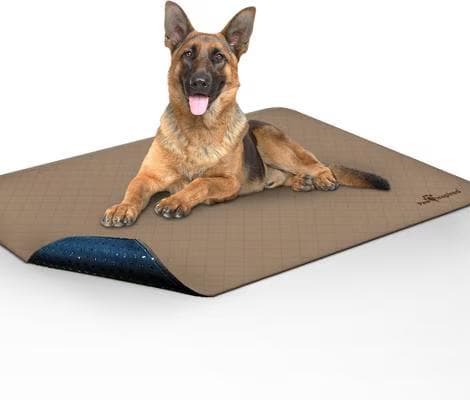
Webvet may earn a commission when you click through to Chewy, at no extra cost to you.
Signs Your Dog Is in Heat (and How to Tell When It's Over)
The classic signs of heat are a combination of physical and behavioral changes that build up over the first week or two:
- A swollen vulva and bloody or straw-colored discharge.
- More frequent urination and flagging, where she holds her tail to one side, often with increased marking.
- Behavior changes, such as restlessness, clinginess, mounting, or a sudden interest in escaping to find males.
- Attracting male dogs, sometimes from a considerable distance, well before you notice much else.
For the complete list, see our guide to dog in heat symptoms. Heat is over when these signs reverse: the swollen vulva shrinks back to its normal size, discharge stops, she stops flagging, and she once again rejects any interested males.
Because those changes happen gradually over several days, the safest approach is to assume she is still fertile until the swelling and discharge have fully resolved, not the moment the bleeding tapers off.
The Fertile Window: When Can a Dog Get Pregnant?
Peak fertility usually falls around days 9 to 14 of the cycle, during standing heat, when the dog actively accepts males. But here is the critical safety point: a dog can potentially become pregnant at almost any point during heat, not just on the peak days.
This is because canine sperm can survive in the reproductive tract for up to about a week, and ovulation timing varies. A mating a few days before the dog even ovulates can still result in a litter.
If a pregnancy does occur, it lasts about 63 days on average; see our guide to how long dogs are pregnant for the full gestation timeline.
If you are not intentionally breeding, treat the entire heat as a pregnancy risk and keep your unspayed female fully separated from intact males for the whole 2 to 4 weeks. A single unsupervised meeting can be enough.
If you suspect an accidental mating, watch for the signs a dog is pregnant and call your vet, who can discuss options with you promptly.
Is It Painful for a Dog to Be in Heat, and How Do I Help?
Heat is generally not painful for a dog, though some experience mild discomfort or cramping and may seem a little restless, clingy, or off their usual selves. It is closer to a nuisance than a medical crisis, and most dogs get through it with minimal fuss.
That said, there is no safe way to simply stop or shorten a heat once it has begun; it has to run its course.

What you can do is keep her comfortable and prevent an unplanned pregnancy. Practical, vet-endorsed care includes:
- Dog diapers or washable heat pants to manage discharge and protect your floors and furniture.
- Constant supervision, keeping her on a leash outdoors and never leaving her unattended in an unfenced yard.
- Extra comfort and calm, such as a quiet resting spot, gentle attention, and safe chew or enrichment toys to settle restlessness.


Probiotic supplement formulated to help dogs maintain calm behavior, with the BL999 strain. Liver-flavored powder in 30 daily sachets.
Webvet may earn a commission when you click through to Chewy, at no extra cost to you.
Spaying and the Heat Cycle: When to Ask Your Vet
Spaying, the surgical removal of the ovaries (and usually the uterus), permanently ends heat cycles and eliminates the risk of pyometra and unplanned litters. It is the definitive answer to preventing future heats.
According to the American Veterinary Medical Association, spaying also offers other health and behavioral benefits, and the best age and timing should be individualized with your vet.
One practical point on timing: many vets prefer not to spay a dog while she is actively in heat. During estrus the reproductive tract is engorged with blood vessels, which increases surgical bleeding risk, so vets often wait until she is well out of heat, typically a couple of months later.
Spaying also prevents the hormonal swings after heat that can trigger a dog false pregnancy, where an unbred dog shows nesting and milk production as if pregnant.
If you have seen the so-called '7-7-7 rule' online, be aware it is not a veterinary standard for heat or spaying; base your timing on your own vet's guidance instead.
If an accidental mating has already happened and you are facing a possible pregnancy, our partners at Petful have a helpful guide to pregnant dog care, but any decision about a suspected pregnancy or an emergency spay should be made directly with your veterinarian.
When to Call Your Vet
Most heats are uneventful, but a few signs point to a problem that needs veterinary attention. Call your vet if you notice any of the following.
- Heat lasting longer than about 4 weeks, or bleeding and swelling that just will not resolve, which can signal a hormonal or ovarian issue.
- Foul-smelling, pus-like, or unusually heavy discharge, especially in the weeks after heat, which can be a sign of pyometra, a life-threatening uterine infection.
- No first heat by 24 months of age, or cycles that come more often than roughly every 4 months.
- Lethargy, loss of appetite, increased thirst, vomiting, or a swollen painful abdomen, particularly following a heat, which can accompany a uterine infection and is an emergency.
Should you let her cycle or plan to spay?
Pros
- Tracking cycles at home teaches you your dog's personal normal and makes irregularities easy to spot.
- Diapers, supervision, and calm routines manage the mess and stress of a normal heat well.
- Spaying permanently ends heats, prevents unplanned litters, and removes the risk of pyometra.
Cons
- Every heat in an intact dog carries an ongoing pyometra risk that rises with age.
- Heat management demands weeks of constant supervision to prevent an accidental pregnancy.
- Spay timing matters; vets usually avoid operating during active heat, so it needs planning with your vet.
Frequently Asked Questions
How do you know when dog heat is over?
You know a dog's heat is over when the physical and behavioral signs reverse. The swollen vulva returns to its normal size, the bloody or straw-colored discharge stops, she no longer flags her tail to the side, and she once again rejects interested male dogs rather than accepting them. These changes happen gradually over several days rather than all at once, so the safest approach is to assume she may still be fertile until the swelling and discharge have completely resolved. From the first day of visible heat to fully back to normal is usually about 2 to 4 weeks. If bleeding or swelling drags on well past four weeks, contact your vet.
What is the 7 7 7 rule for dogs?
The '7-7-7 rule' is a piece of internet shorthand, not an official veterinary guideline, and it is used in a few different ways online, so it should not be relied on for medical decisions about heat, breeding, or spaying. Some versions describe rough phases of the heat cycle in seven-day blocks, while others use it as a socialization mnemonic for puppies. Because the canine heat cycle actually varies (proestrus about 6 to 11 days, estrus about 5 to 9 days), a rigid seven-day framework does not accurately capture it. For anything involving your dog's cycle, fertility, or spay timing, follow your veterinarian's individualized advice rather than a memorized rule.
How do I get my dog out of heat?
There is no safe way to get a dog out of heat once it has started; the cycle has to run its natural course of about 2 to 4 weeks. No home remedy, food, herb, or supplement reliably stops or shortens heat, and human hormonal medications are dangerous and should never be given for this purpose. What you can do is manage it: use dog diapers for discharge, supervise her constantly and keep her leashed outdoors to prevent mating, and give her a calm, comfortable space. The only permanent way to prevent future heats is spaying, which your veterinarian will usually schedule for when she is out of heat rather than during it.
How long is a dog bleeding in heat?
A dog usually bleeds for about 7 to 10 days during heat, with the flow heaviest early on in the proestrus stage. The discharge often starts bright red and then lightens to a pinker or straw color as she moves into the fertile estrus phase. The amount varies a lot between dogs: some bleed noticeably, while others, especially those having a silent heat or who groom themselves carefully, bleed very little or almost not at all. Importantly, lighter bleeding does not mean she is no longer fertile; bleeding often eases just as the most fertile days begin, so continue supervising her throughout the entire heat.
Is it painful for a dog when in heat?
Heat is generally not painful for a dog, though some dogs experience mild discomfort or cramping and may seem restless, clingy, or a little out of sorts. For most dogs it is more of a nuisance than a source of real pain. You can help her stay comfortable with a quiet resting spot, gentle attention, dog diapers to manage discharge, and calm, low-key enrichment. However, signs of genuine pain, such as crying out, a tense or swollen painful belly, lethargy, or loss of appetite, are not normal for a routine heat and could indicate a problem like pyometra, so contact your veterinarian if you see them.
$65 · no membershipHave a health question about your dog?
A licensed vet can assess your dog over video and prescribe online when it's appropriate.
Talk to a vet- Licensed vets
- All 50 states
- same-day Rx
Webvet may earn a commission if you book.

Editor
The Webvet Editorial Team is the in-house group of pet-care editors and writers behind Webvet, operated by Smart Pet Collective. The team researches, writes, and maintains Webvet's pet health, behavior, and medication content. Every article follows a defined editorial process: research from reputable veterinary and scientific sources, careful drafting, mandatory review of medical content by a credentialed veterinarian, and dated publication. Health and medication articles are medically reviewed by a licensed veterinary professional before they go live and are kept current over time.
Veterinarian · BVMS MRCVS
Dr. Pippa Elliott, BVMS, MRCVS, is a veterinarian with nearly 30 years of experience in companion animal practice. Dr. Elliott earned her Bachelor of Veterinary Medicine and Surgery from the University of Glasgow. She was also designated a Member of the Royal College of Veterinary Surgeons. Married with 2 grown-up kids, Dr. Elliott has a naughty Puggle named Poggle, 3 cats and a bearded dragon.
Related reading

Best Cat Litter Mats for Tracking, Cleaning, and Sensitive Paws

Best Cat Harnesses: Fit, Adjustability, and Escape Resistance

Best Cat Carriers for Vet Visits, Travel, and Difficult Loaders
