How Long Does a Dog Bleed in Heat? Discharge Timeline and Colors
Most dogs bleed for 7 to 10 days during heat, roughly half the cycle. Here is the day-by-day timeline, what each discharge color means, and the red flags that need a vet.

BVMS MRCVS
Medically reviewed by Dr. Pippa Elliott, BVMS MRCVS · Last reviewed

This article contains affiliate links. Webvet may earn a commission when you buy through them, at no extra cost to you.
If your female dog just started spotting, the first question is almost always the same: how long does a dog bleed in heat? For most dogs, visible bleeding lasts about 7 to 10 days, which is roughly the first half of a heat cycle that runs two to four weeks overall. But the exact length, the amount of blood, and the color of the discharge vary a lot from dog to dog. This guide walks you through the day-by-day timeline, what each discharge color means, how much bleeding is normal, and the warning signs that mean you should call a vet right away.
- 1Most dogs bleed for 7 to 10 days, about half of a 2 to 4 week heat cycle.
- 2Discharge typically starts bright red, then fades to pink, straw, or clear as she becomes fertile.
- 3Bigger dogs often bleed more noticeably; some small dogs barely spot at all.
- 4A dog can still get pregnant even after the bleeding slows or stops.
- 5Foul-smelling, thick yellow, green, or white pus discharge is a red flag for infection: see a vet.

 Sponsored
Have a health question about your dog?
Talk to a licensed vet at Dutch over video or message, including nights and weekends.
Use code Pets30
Plans start at $11/month · covers up to 5 pets
- Licensed vets in most states
- Rx for 150+ conditions
- 4.7 on Trustpilot
How Long Does a Dog Bleed in Heat?
The short answer: a dog usually bleeds for 7 to 10 days. Bleeding marks the opening stage of the heat cycle, called proestrus. The whole heat (or season) typically lasts two to four weeks, so the bleeding phase is about the first half. Some dogs bleed for only a few days; others spot for closer to two weeks. All of that can still be normal.
The bleeding is heaviest early on and tapers off as your dog moves toward her fertile window. Importantly, the discharge does not usually stop the moment she can conceive. It often lightens and changes color instead, which is why the amount of blood is a poor way to judge whether the risky breeding window has passed.

Webvet may earn a commission when you click through to Chewy, at no extra cost to you.
The Dog Heat Cycle at a Glance: 4 Stages
Bleeding makes the most sense when you see where it sits in the full cycle. Vets describe four stages.

1. Proestrus (bleeding starts)
This is the bleeding stage, lasting about 7 to 10 days on average. The vulva swells, and you see bloody discharge. Male dogs are attracted to her, but she is not yet receptive to mating and will usually turn or sit away from males.
2. Estrus (the fertile window)
Estrus lasts roughly 5 to 10 days. This is when she can become pregnant. The discharge usually lightens to pink, straw-colored, or clear, and she becomes receptive to males. Ovulation happens during this phase. Because the bleeding has often faded by now, owners wrongly assume the danger has passed. It has not.
3. Diestrus (the wind-down)
Diestrus is the period after the fertile window, lasting around two months whether or not she is pregnant. Discharge stops, the vulva returns to normal size, and she is no longer receptive. Hormone levels stay elevated during this phase, which is why some dogs show signs of a false pregnancy.
4. Anestrus (the resting phase)
This is the quiet stretch between heats, typically about four to six months, with no reproductive activity. It is the longest phase of the cycle and the main reason most dogs come into heat only about twice a year. The reproductive tract rests and recovers before the next proestrus begins the cycle again.
Bleeding Timeline Day by Day
Every dog is different, but here is a typical arc of a heat cycle. Treat the days as approximate rather than a stopwatch, because the exact transition from one stage to the next only shows up clearly on a vet's cytology slide, not on your living room floor.
The single most useful thing you can do is write down the day you first notice blood. That date anchors everything else: the fertile window, the safe-to-relax point, and the roughly six-month countdown to her next season. Owners who track the start date rarely get caught off guard, and it gives your vet a precise reference if anything looks off later in the cycle.
| Days (approx.) | Stage | What you usually see |
|---|---|---|
| Days 1 to 3 | Early proestrus | Vulva swelling begins; first spots of bright red blood; she may lick more and act clingy or restless |
| Days 4 to 7 | Peak proestrus | Bleeding is at its heaviest; discharge is red; males are very interested but she rebuffs them |
| Days 8 to 11 | Late proestrus into estrus | Bleeding lightens; color fades to pink or straw; she starts to accept males (fertile window opening) |
| Days 12 to 18 | Estrus | Discharge often clear or straw; she is fertile and receptive; ovulation occurs; some spotting can persist |
| Days 18 to 28 | Diestrus begins | Discharge stops; vulva shrinks back to normal; she rejects males again; heat is ending |

Webvet may earn a commission when you click through to Chewy, at no extra cost to you.
Dog Heat Discharge Colors: What Each Color Means
The color of the discharge changes across the cycle and can tell you which stage she is in. Most color shifts are normal, but a few point to a problem.

- Bright red: Typical of early to peak proestrus. Fresh blood, heaviest in the first several days. Normal.
- Pink or watery red: The blood is diluting as she moves toward the fertile window. Normal transition.
- Straw-colored or clear: Common during estrus, when she is most fertile. Normal, and a signal the breeding window is open.
- Brown: Usually just older, oxidized blood, often seen as bleeding tapers off. Typically normal, but a foul smell alongside it warrants a check.
- Thick yellow, green, or gray: Suggests pus and possible infection. This is not normal heat discharge. Call your vet.
- White or cloudy: Outside of a normal late-cycle wind-down, milky or pus-like white discharge can signal infection (vaginitis or pyometra) and should be checked, especially if she seems unwell.
How Much Bleeding Is Normal?
There is a wide normal range. Some dogs leave obvious drops around the house, while others are such fastidious groomers that owners barely notice any blood at all. Both can be healthy.

Size plays a real role. Larger dogs generally have more noticeable bleeding simply because there is more tissue and blood volume involved, while a tiny dog may only spot lightly. What matters more than volume is whether the bleeding fits the pattern of a normal cycle and whether your dog seems comfortable and well in herself.
 Sponsored
Vet care that's always there
Unlimited video calls and messaging with licensed vets for less than a typical vet visit. One membership covers up to five pets.
Use code Pets30
Plans start at $11/month · covers up to 5 pets
- Licensed vets in most states
- Rx for 150+ conditions
- 4.7 on Trustpilot
Does Every Dog Bleed the Same? First Heat, Breed, and Size Differences
No. Bleeding varies by individual, and a few factors stand out.
- First heat: A young dog's first season can be lighter, shorter, or irregular. Some experience a silent heat with barely any visible blood. Cycles usually become more regular over the first year or two.
- Size: Bigger dogs tend to bleed more visibly; small dogs often bleed lightly.
- Breed and cycle frequency: Small breeds may cycle every four to six months, while some giant breeds cycle only once a year, which affects how often you deal with bleeding.
- Grooming habits: A meticulous licker keeps herself so clean you may hardly see blood, even during a normal heat.
If you want a fuller picture of what a season looks like start to finish, our overview of how long a dog is in heat and the common dog in heat symptoms to expect are good next reads.
When Does the Bleeding Stop? How to Tell Heat Is Over
Bleeding usually eases up as your dog leaves proestrus and enters her fertile window, then stops entirely as the whole heat winds down. Signs that the season is ending include:
- Discharge stops completely for several days
- The vulva shrinks back toward its normal size
- She stops attracting or is no longer interested in male dogs
- Her behavior settles back to normal
The full heat lasts two to four weeks. To be safe, keep her separated from intact males until all discharge has stopped and her vulva has returned to normal, not just until the bleeding fades.
Webvet may earn a commission when you click through to Chewy, at no extra cost to you.
Silent Heat and Why You Might Not See Blood
Sometimes a dog cycles with so little visible bleeding or swelling that her owner misses it entirely. This is called a silent heat. She is still fertile during a silent heat, which is one reason unplanned litters happen. Very clean groomers can also make a normal heat look silent by licking away the evidence.
If you suspect your dog is cycling without obvious signs, your vet can confirm her stage with a physical exam and simple tests such as vaginal cytology or a progesterone blood test. These are the same tools breeders rely on to time a mating, and they remove the guesswork when the outward signs are subtle.
Silent heats are more common in young dogs during their first few cycles and can also occur if a dog is on the verge of a hormonal problem. If your dog reaches about two years of age and you have never once seen a season, mention it to your vet, since a complete lack of any visible or detectable cycle is worth investigating.
When Discharge Is a Red Flag: Pyometra and Infection

The most serious condition tied to the heat cycle is pyometra, a life-threatening infection of the uterus. It most often develops in the weeks after a heat, when hormonal changes let bacteria take hold. Pyometra is a true emergency and can be fatal without prompt treatment, which is usually emergency surgery to remove the infected uterus.
There are two forms. In open pyometra, you may see foul-smelling yellow, green, or bloody pus draining from the vulva. In closed pyometra, the cervix is shut, so there is no visible discharge, which makes it even more dangerous because the warning sign is hidden.
Other reasons to get a discharge checked include bleeding that is unusually heavy or prolonged, bleeding that appears when your dog is not due for a season, or any discharge paired with signs of illness. Spaying eliminates the pyometra risk entirely, which is one of its biggest health benefits.
Managing the Mess: Diapers, Bedding, and Keeping Her Comfortable

For the week or so of active bleeding, a few simple tools keep your home clean and your dog comfortable. These are practical comfort measures, not medical treatments, so they are best thought of as an adjunct to normal care rather than something that changes the cycle itself.
- Dog diapers or washable belly bands catch discharge and protect furniture. Change them regularly to avoid skin irritation. See the female dog diaper guide for anatomy-specific measuring, coverage, leak checks, and diaper-free breaks.
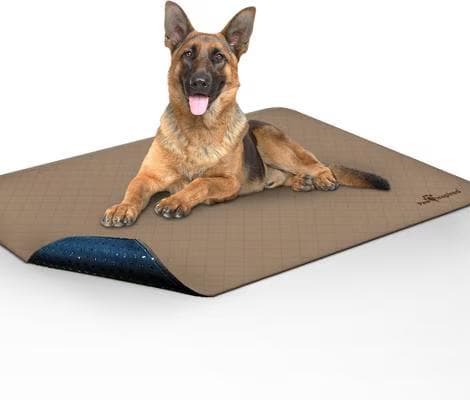
- Washable pads and waterproof bedding in her favorite resting spots make cleanup easy.
- An enzymatic stain and odor remover handles accidents and also helps neutralize the scent that draws in male dogs.
- A quiet, cozy space and extra reassurance help a restless or clingy dog settle.

Keep walks on a leash and skip the dog park during her season. Her scent can attract intact males from a surprising distance, and a securely fenced yard is not always enough to keep a determined suitor out.
Dog diapers during heat: the trade-offs
Pros
- Protects furniture, floors, and bedding from stains
- Reduces the scent trail that attracts male dogs
- Lets a bleeding dog stay indoors with the family comfortably
- Washable belly bands are reusable and economical
Cons
- Must be changed often to prevent skin irritation or urine scald
- Some dogs resist wearing them at first
- A diaper is not birth control: it does not prevent mating or pregnancy
- Poor fit means leaks, so sizing matters
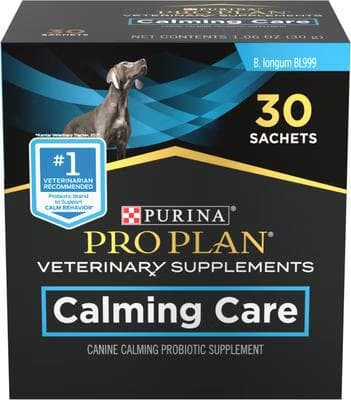
Probiotic supplement formulated to help dogs maintain calm behavior, with the BL999 strain. Liver-flavored powder in 30 daily sachets.
Webvet may earn a commission when you click through to Chewy, at no extra cost to you.
Should You Let Her Lick Herself During Heat?
Yes, a normal amount of self-grooming during heat is fine and even helpful. Licking is how dogs keep themselves clean, and it is one reason some owners barely notice blood. There is no need to stop her from tidying up.
Watch for excessive licking, though. Constant, obsessive licking of the vulva can point to irritation, a urinary tract infection, or another problem and is worth mentioning to your vet. If a diaper seems to trigger over-licking or the skin looks red and raw, give her diaper-free breaks and keep the area clean and dry.
Do Dogs Feel Pain or Cramps in Heat?
Heat is not thought to be truly painful for dogs the way a human period can be, but many dogs do feel off. Hormonal shifts can make her restless, clingy, irritable, or tired, and some dogs seem mildly uncomfortable or have a lower appetite. Mild cramping is possible but not usually severe.
What is not normal is obvious pain: crying out, a hunched posture, a tense or painful belly, or a dog who is clearly miserable. Those signs go beyond typical heat discomfort and deserve a vet visit, since they can point to an infection or another underlying issue rather than the season itself.
Fertility and the Bleeding Window: When She Can Get Pregnant
Here is the point that trips up the most owners: your dog is usually most fertile after the heaviest bleeding has passed, not during it. Peak fertility falls in estrus, often around days 9 to 15 of the cycle, when discharge has typically faded to pink or straw. A dog can still conceive even when you see little or no blood.
Because sperm can survive for several days in the reproductive tract, a mating early in the fertile window can still result in pregnancy. If you are not planning a litter, keep her fully separated from intact males for the entire heat, not just the bloody days. If you are planning to breed, a vet can pinpoint ovulation with progesterone testing.
It only takes one unsupervised moment for an accidental mating to happen, and dogs are remarkably determined during this window. A female in estrus will actively seek out males, and an intact male can scale fences or slip out of doors to reach her. Treat the whole three to four weeks as high-alert: supervise every trip outside, leash her even in a fenced yard, and do not rely on a fading blood flow as the all-clear.
If a mating did happen and you want to understand the next steps, our guides to how long dogs are pregnant and the stages of dog pregnancy walk through what to expect, and Petful's overview of pregnant dog care covers nutrition and prenatal support in more depth.
Spaying and the Heat Cycle: Timing and Benefits

Spaying (removing the ovaries and usually the uterus) ends heat cycles altogether. No more bleeding, no more twice-yearly management, and no more pyometra risk. It also prevents unwanted litters and lowers the risk of mammary tumors, especially when done before several heat cycles.
Most vets prefer not to spay during an active heat because the reproductive tissues are engorged with blood, which raises the surgical bleeding risk. Many recommend waiting two to three months after a heat ends. The best age and timing depend on your dog's breed and size, so it is a conversation to have with your veterinarian rather than a one-size-fits-all rule.
For large and giant breeds, some veterinarians now advise letting a dog mature before spaying to support joint and bone development, which can mean allowing one or more heats first. For smaller breeds, earlier spaying is often recommended. There is no universal right answer, which is exactly why the decision belongs with the vet who knows your individual dog. What is clear is that spaying removes the twice-yearly bleeding, the mess, the risk of an accidental litter, and the threat of pyometra all at once.
Frequently Asked Questions
How do you know when dog heat is over?
Heat is over when the discharge has stopped completely for several days, the vulva has shrunk back to its normal size, she no longer attracts or shows interest in male dogs, and her behavior has settled. The full cycle lasts about two to four weeks. Keep her away from intact males until all discharge stops, not just until the bleeding fades, because she can still be fertile.
Should I let my dog lick herself during heat?
Yes. A normal amount of self-grooming during heat is healthy and helps keep her clean, which is why some dogs barely leave any blood. Only be concerned about constant, obsessive licking, which can signal irritation, a urinary tract infection, or another issue worth raising with your vet.
Do dogs feel pain when in heat?
Heat is not thought to be truly painful for most dogs, though hormonal changes can leave her restless, clingy, tired, or mildly uncomfortable, and light cramping is possible. Obvious pain such as crying out, a hunched posture, or a tense, painful belly is not normal for heat and should be checked by a vet, since it can point to infection or another problem.
What is the 7 7 7 rule for dogs?
The 7-7-7 rule is a puppy socialization guideline, not a heat rule. It suggests that by seven weeks of age a puppy should have experienced seven different surfaces, seven objects, seven locations, and so on, to build confidence. It is unrelated to the bleeding cycle, but it is a handy reminder that early, positive exposure shapes a well-adjusted adult dog.
What is the 10 minute rule for dogs?
The 10-minute rule is a puppy exercise guideline: offer about five minutes of structured exercise per month of age, up to twice a day, so a five-month-old puppy gets roughly ten-minute sessions. It protects developing joints from overexertion. It has nothing to do with the heat cycle, but it is useful general guidance for young dogs.
What smell do dogs hate?
Dogs tend to dislike strong scents such as citrus, vinegar, and certain concentrated essential oils. Some owners use these to discourage a dog from a particular spot, but they will not stop a male from detecting a female in heat, whose scent is a powerful attractant. During a season, an enzymatic odor remover to neutralize discharge scent and simply keeping her away from intact males are far more reliable than any smell deterrent.
What is "I love you" in dog language?
Dogs show affection through body language rather than words: soft relaxed eye contact, leaning against you, a loose wagging tail, following you around, and calm belly-up trust. During heat a dog often becomes extra clingy and affectionate thanks to hormonal shifts, so gentle reassurance and quiet company are good ways to love her back while she rides out the cycle.
The Bottom Line
Most dogs bleed for 7 to 10 days during heat, with discharge that starts bright red and fades to pink or straw as she enters her fertile window. A wide range is normal, and size, age, and grooming habits all shift how much you actually see. What is never normal is foul-smelling pus, very heavy or prolonged bleeding, or a dog who seems genuinely unwell. When you spot those signs, or if you simply are not sure, call your vet, and consider spaying to end the cycles and remove the pyometra risk for good.

Editor
The Webvet Editorial Team is the in-house group of pet-care editors and writers behind Webvet, operated by Smart Pet Collective. The team researches, writes, and maintains Webvet's pet health, behavior, and medication content. Every article follows a defined editorial process: research from reputable veterinary and scientific sources, careful drafting, mandatory review of medical content by a credentialed veterinarian, and dated publication. Health and medication articles are medically reviewed by a licensed veterinary professional before they go live and are kept current over time.
Veterinarian · BVMS MRCVS
Dr. Pippa Elliott, BVMS, MRCVS, is a veterinarian with nearly 30 years of experience in companion animal practice. Dr. Elliott earned her Bachelor of Veterinary Medicine and Surgery from the University of Glasgow. She was also designated a Member of the Royal College of Veterinary Surgeons. Married with 2 grown-up kids, Dr. Elliott has a naughty Puggle named Poggle, 3 cats and a bearded dragon.
Related reading

Best Dog Boots for Traction, Weather, and Paw Protection

Vestibular Disease in Dogs: Symptoms, Diagnosis, and Recovery Timeline

In Home Pet Euthanasia: Cost, What Happens, and How to Choose a Provider
