Pyometra in Dogs: Symptoms, Causes, Treatment, and Survival
Pyometra in dogs is a uterine infection that fills the womb with pus, usually a few weeks after a heat, and it can kill an unspayed dog without treatment. Here are the symptoms, open vs closed pyometra, surgery and its cost, and the survival odds.

BVMS MRCVS
Medically reviewed by Dr. Pippa Elliott, BVMS MRCVS · Last reviewed

This article contains affiliate links. Webvet may earn a commission when you buy through them, at no extra cost to you.
Pyometra in dogs is a serious, potentially life-threatening bacterial infection that fills the uterus of an unspayed female with pus. It is a same-day medical emergency, and it usually shows up within a few months after a heat cycle.
Most dogs with pyometra recover well when the infected uterus is removed early. This guide covers the symptoms, open versus closed pyometra, how vets diagnose it, emergency spay surgery and its cost, the medical option for breeding dogs, and the survival odds.
- 1Pyometra is a uterine infection in an unspayed dog: the uterus fills with bacteria and pus, and it is a same-day emergency.
- 2The symptoms include increased thirst plus vaginal discharge, along with poor appetite, lethargy, and vomiting.
- 3Signs usually appear one to two months after a heat cycle, though they can show up anywhere from 2 to 16 weeks later.
- 4Emergency spay surgery (ovariohysterectomy) is the recommended treatment, and most dogs treated early have a good prognosis.
- 5Spaying before infection develops prevents pyometra entirely.

 Sponsored
Have a health question about your dog?
Talk to a licensed vet at Dutch over video or message, including nights and weekends.
Use code Pets60
Plans start at $12/month · covers up to 5 pets
- Licensed vets in most states
- Rx for 150+ conditions
- 4.7 on Trustpilot
What Is Pyometra in Dogs?
Pyometra is a uterine infection in an unspayed dog that causes the uterus to fill with bacteria and pus. Cornell University College of Veterinary Medicine calls it serious and potentially life-threatening, and VCA Animal Hospitals says it must be treated quickly and aggressively.
The pathophysiology of pyometra in dogs centers on the hormone progesterone. The Merck Veterinary Manual describes a progesterone-mediated disease that starts during diestrus, the phase after a heat, as an infection on top of a thickened uterine lining called cystic endometrial hyperplasia.
Spaying removes the uterus and ovaries, which is why Cornell describes pyometra as entirely preventable when a dog is spayed before infection develops. If your dog is not used for breeding, a planned spay is the long-term answer, and the dog spay recovery guide explains what the first weeks at home look like.
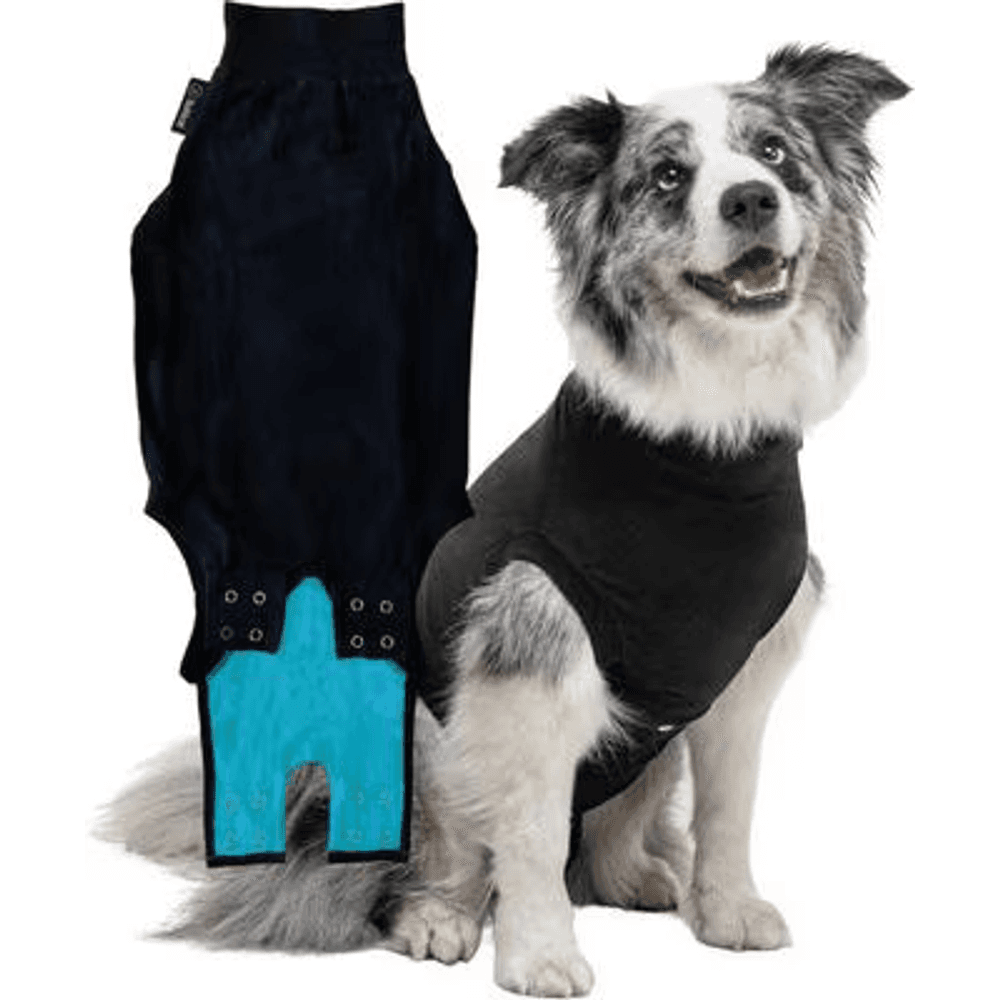
Suitical Recovery Suit for Dogs: a full-body recovery suit, in black, size medium.
Webvet may earn a commission when you click through to Chewy, at no extra cost to you.
- Who gets it: only a female dog with a uterus. Pyometra in male dogs does not occur, because males have no uterus.
- Size and breed: pyometra in small dogs and large dogs follows the same hormonal pattern; risk varies by breed.
- Is pyometra in dogs painful: a distended or painful belly is one of the listed signs, and affected dogs often feel very sick.
- Is pyometra hereditary in dogs: breed differences in incidence point to genetic components, but the trigger is hormonal.
- During or after heat: pyometra develops in the weeks after a heat rather than while the dog is in heat, including after mating that did not result in pregnancy.
Home antibiotics are not a fix. Antibiotics are given only alongside prostaglandin injections and fluids under veterinary care, and Cornell says even that is not viable for a closed pyometra.
How to check for pyometra in dogs at home is limited: you can notice the signs, but confirming it takes bloodwork and imaging such as ultrasound or radiographs at a clinic.
A 2022 review in Veterinary Clinics of North America states plainly that pyometra is considered a medical emergency. With prompt surgery, Cornell reports that most patients have a good prognosis, so survival depends heavily on how fast a pyometra female dog reaches a vet.
- How common pyometra is: Swedish insurance studies put it at roughly one in five to one in four unspayed females by age 10.
- Planned versus emergency: a healthy dog spayed on a schedule avoids surgery while septic.
- Incision care: the spay neuter incision healing guide shows what normal healing looks like.
After a planned spay, an e-collar such as the All Four Paws Comfy Cone E-Collar for Dogs & Cats, Tan, Medium keeps her from licking or chewing the stitches while the skin closes.

All Four Paws Comfy Cone E-Collar: a padded e-collar for dogs and cats, tan, size medium.
Webvet may earn a commission when you click through to Chewy, at no extra cost to you.
Symptoms of Pyometra in Dogs
The main symptoms of pyometra in dogs are increased thirst, vaginal discharge, poor appetite, lethargy, and vomiting, usually in an unspayed female a few weeks after a heat. Cornell notes that affected dogs may feel very sick, and that thirst and urination sometimes increase.
Clinical signs of pyometra in dogs listed by Cornell, VCA, and Merck include:
- Vaginal discharge that is cream-colored or bloody (when the cervix is open)
- Drinking large amounts of water and urinating more
- Poor appetite or refusing food
- Lethargy, listlessness, and depression
- Vomiting
- A distended or painful belly

The first signs of pyometra in dogs are often easy to miss. Early pyometra in dogs may show only mild thirst or a small amount of discharge, and Merck notes that some dogs with the underlying uterine change show no clinical evidence of disease at all.
Pyometra symptoms in older dogs can be mistaken for normal aging, so compare with the senior dog drinking a lot of water guide and call your vet the same day if thirst rises after a heat. Pyometra symptoms in a puppy are uncommon, though cases have been reported in dogs as young as 4 months.
When thirst comes with vomiting, the dog drinking water and vomiting page explains other causes, but in an unspayed female that pairing is a same-day emergency.
Will my dog eat if she has pyometra?
Often she will not. VCA describes dogs with pyometra as anorectic, meaning they will not eat, and listless and depressed. Cornell lists poor appetite among the main signs. A previously good eater who skips meals in the weeks after a heat, especially while drinking more, needs a same-day vet visit rather than a wait-and-see approach.
What color is pyometra discharge?
Pyometra discharge is usually cream-colored or bloody, according to Cornell, and it is the primary sign when the cervix is open. A veterinary review in dvm360 describes it as ranging from serosanguineous (thin and blood-tinged) to mucopurulent (thick, with pus). There is no single color, and a closed pyometra may produce no discharge at all. As for what pyometra smells like in dogs, MetLife Pet Insurance says the discharge may have a foul, fishy odor.
A photo cannot tell you if your dog has pyometra; only a vet exam with bloodwork and imaging can. Pyometra bleeding from the vulva in a dog that is not in heat is a reason to call the same day.
Open vs Closed Pyometra
Open pyometra means the cervix is open and pus drains out as vaginal discharge; closed pyometra means the cervix is closed, pus is trapped, and the dog becomes sicker. Cornell states that the severity of signs depends on whether the cervix is open or closed, and that more severe illness occurs when it is closed.
Open versus closed pyometra matters because closed is more dangerous. VCA explains that with a closed cervix the discharge cannot drain to the outside, so it collects in the uterus. According to dvm360, closed-cervix dogs may show no discharge, which delays recognition, and severely affected dogs can arrive in shock, dehydrated, or collapsed.
A Swedish study of 111 dogs published in BMC Veterinary Research found:
- 65 percent had open and 35 percent had closed pyometra.
- Sepsis was present in 77 percent of closed cases versus 51 percent of open cases.
- Closed cases were sicker at admission but did not have a worse outcome after surgery.
This table separates open from closed pyometra in one view, covering discharge, how the dog looks, speed of decline, urgency, and treatment.
| Feature | Open pyometra | Closed pyometra |
|---|---|---|
| Cervix | Open, pus drains out | Closed, pus is trapped in the uterus |
| Discharge | Cream-colored, bloody, or pus-like vaginal discharge | Often no discharge at all |
| Belly | Swelling less typical | Abdominal distention suggests a closed cervix |
| How the dog looks | Sick, drinking more, off food | Sicker; may be in shock, dehydrated, or collapsed |
| Sepsis in Swedish study | 51 percent of dogs | 77 percent of dogs |
| Speed of decline | Can worsen quickly | Severe illness is more common and is harder to spot early |
| Urgency | Same-day emergency | Immediate emergency |
| Treatment | Emergency spay; medical option only for stable breeding dogs | Emergency spay; medical treatment not viable |
Signs of open pyometra in dogs center on the discharge, while signs of closed pyometra in dogs center on a swollen belly and a dog that is clearly unwell. Merck notes that abdominal distention suggests a closed cervix and vaginal exudate suggests a partially or fully open one. Pictures of open or closed pyometra cannot replace an ultrasound.
Open pyometra cannot be treated at home. The treatment is emergency spay, with medical treatment reserved for stable dogs a vet selects. Most dogs survive surgery, but in the Swedish 111-dog study all five deaths were in open-cervix dogs, so an open pyometra is no less urgent.
Stump pyometra in dogs is a related form in spayed dogs. A review in Animals links it to ovarian remnant syndrome, where leftover ovarian tissue keeps producing hormones. Stump pyometra dog symptoms in spayed dogs include returning heat behavior, and stump pyometra treatment is surgical removal of the remaining ovarian tissue.
What Causes Pyometra in Dogs?
Pyometra is caused by hormonal changes after a heat cycle combined with bacterial infection of the uterus. The 2022 Hagman review states that hormonal and bacterial factors both matter and that progesterone plays a key role.
The hormonal cause after a heat cycle comes from a long phase called diestrus. dvm360 notes that, unique to dogs, every heat is followed by a prolonged diestrus whether or not the dog is pregnant. Merck describes pyometra as progesterone-mediated and arising during that phase, on top of a thickened uterine lining that builds over repeated cycles.
When does pyometra occur in dogs? Sources give slightly different windows:
- Cornell: often one to two months after the previous heat
- dvm360: typically one to three months after the end of estrus
- VCA: anywhere from 2 to 16 weeks after the last heat
- Hagman 2023 review: generally diagnosed within 4 months after estrus, in middle-aged to older dogs
The exact bacteria are identified by your vet's lab work; the key point is that infection follows the hormonal change. Pyometra is an infection, not cancer, and it is not described as contagious. Breed differences in incidence suggest genetic components.
 Sponsored
Vet care that's always there
Unlimited video calls and messaging with licensed vets for less than a typical vet visit. One membership covers up to five pets.
Use code Pets60
Plans start at $12/month · covers up to 5 pets
- Licensed vets in most states
- Rx for 150+ conditions
- 4.7 on Trustpilot
Which Dogs Are at Risk of Pyometra?
Older intact females are the typical patient. Merck states pyometra typically occurs in older or middle-aged intact dogs, and VCA says it may occur in any intact young to middle-aged dog but is most common in older dogs.
Pyometra is common in dogs, not rare. A Swedish insurance study of more than 200,000 dogs in the Journal of Veterinary Internal Medicine found that about 23 to 24 percent of unspayed females had pyometra by age 10, ranging from 10 to 54 percent across breeds.
Pyometra statistics in dogs from other studies line up closely:
- A later Swedish insurance study in Reproduction in Domestic Animals found 19 percent of intact females had pyometra by age 10, with an incidence of 199 per 10,000 dog-years at risk and a mean diagnosis age of 7.0 years.
- A breed-matched study in Theriogenology put the risk at almost 25 percent of unspayed females before age 10.
- dvm360 reports cases in dogs as young as 4 months and as old as 16 years.
So pyometra is possible in young dogs and remains a real risk in old ones for any intact female. Pyometra in breeding dogs is a particular concern because they keep their uterus for years.
What breeds are prone to pyometra?
The Swedish insurance study of more than 200,000 dogs found risk by age 10 ranged from 10 to 54 percent depending on breed. Any intact female can still develop pyometra regardless of breed.
For a breeding dog after pyometra, the choice between future litters and spay surgery is one to make with your vet once she is stable. Keeping a written log of each heat date, plus her usual appetite and water intake, makes later changes easier to spot.
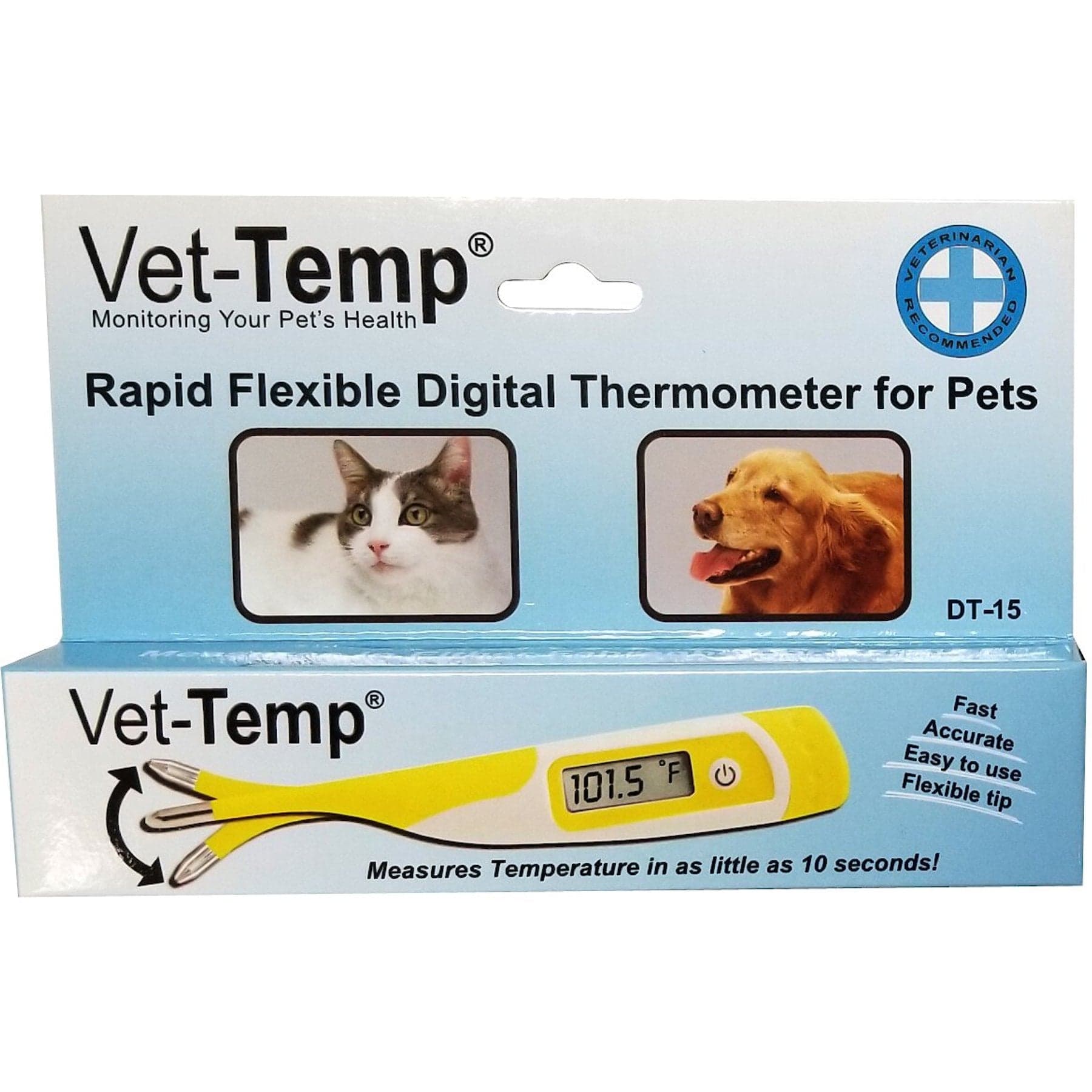
Vet-Temp Rapid Flexible Digital Thermometer: a digital thermometer for dogs and cats with a flexible tip.
Webvet may earn a commission when you click through to Chewy, at no extra cost to you.
How Is Pyometra Diagnosed?
Vets diagnose pyometra with a physical exam, bloodwork, and imaging, with abdominal ultrasound as the preferred test. dvm360 calls ultrasonography the preferred method for evaluating dogs for pyometra.
Diagnosis with bloodwork plus ultrasound usually includes:
- Complete blood count: VCA says blood tests usually show a severe elevation in white blood cells, and dvm360 notes a neutrophilia with a left shift is common.
- Kidney values: Merck links the increased thirst and urination to renal dysfunction, so vets check kidney function.
- Abdominal ultrasound: Merck describes an enlarged uterus, thickened walls, and fluid inside it.
- Radiographs (x-ray): a pyometra dog x ray can show an enlarged uterus but is not definitive on its own.

How do you test for pyometra in dogs when the picture is unclear? An ultrasound image of pyometra in dogs shows fluid inside the uterus, which helps separate it from look-alikes on an x-ray. The cost of these tests is covered in the dog bloodwork cost guide, though testing should never wait on price comparison.
What is mistaken for pyometra?
Radiographs cannot tell pyometra apart from other causes of an enlarged uterus such as mucometra or early pregnancy, according to dvm360. Other look-alikes vets rule out include pregnancy, severe vaginitis in dogs, diabetes mellitus, and Cushing's disease (hyperadrenocorticism), which can also cause heavy drinking.
UTI vs pyometra in dogs is a common question: both can raise thirst and urination, but pyometra usually brings lethargy, poor appetite, and a recent heat. Pyometra and early pregnancy can look alike on an x-ray, which is why ultrasound matters when a dog who may be pregnant shows symptoms. A dog false pregnancy also follows a heat but does not fill the uterus with pus.
Metritis vs pyometra in dogs is a timing question: metritis follows whelping, while pyometra follows a heat.

Purina Pro Plan Veterinary Diets FortiFlora: a probiotic powder supplement for dogs, 30 count.
Webvet may earn a commission when you click through to Chewy, at no extra cost to you.
Treatment for Pyometra in Dogs
Emergency spay surgery, called ovariohysterectomy, is the standard treatment for pyometra in dogs. Merck calls it the recommended treatment, and dvm360 says it is the treatment of choice regardless of whether the cervix is open or closed.
Any unspayed female with pyometra signs is treated as a surgical case first. Pyometra can occur in spayed dogs only as stump pyometra, when ovarian tissue remains in a spayed female.
Treating pyometra in dogs surgically removes the infected uterus and both ovaries. dvm360 notes that surgery resolves pyometra and the underlying uterine change permanently, and the Hagman review calls it the safest and most efficient treatment. Before surgery, vets give fluids and antibiotics, and pyometra anesthesia is planned around how sick she is.

No natural or home remedy can treat or cure pyometra or replace surgery. The infected uterus has to be removed or, in select cases, emptied with prescription drugs under close veterinary monitoring. There is no home cure for pyometra in dogs, and VCA says the bacterial toxins are fatal in many untreated cases.
What are the medical treatment options for pyometra in dogs?
Medical management of pyometra in dogs uses prostaglandin injections, fluids, and antibiotics, according to Cornell. Merck says it can be attempted when the owner strongly wants to breed the dog. Cornell adds that it takes several days to show improvement and is not viable for a critically ill dog or a closed pyometra.
Medical treatment options and their limits:
- Prostaglandin F2-alpha: the most common medical drug, per dvm360; in one cited series of 153 dogs, 98 recovered after one course and 55 needed two. Merck notes its use is extralabel.
- Aglepristone: a progesterone blocker; Merck notes it is not currently available in the United States.
- Recurrence: dvm360 reports recurrence after prostaglandin as high as 77 percent within 27 months, with later breeding success of 50 to 65 percent.
Aglepristone results vary by study. A Swedish study of 28 dogs in Theriogenology found 75 percent success with aglepristone plus antibiotics, but 48 percent of the dogs that recovered later had pyometra again. A Japanese study of 62 dogs reported 93.5 percent success at day 7 and gave no recurrence figure.
Pyometra Surgery Cost
Emergency pyometra surgery costs about $1,800 to $5,000, according to an insurer estimate from MetLife Pet Insurance. That range comes from an insurer rather than a veterinary school, and the insurer notes that emergency costs vary.
How much it costs to treat pyometra in dogs depends on how sick she is at arrival. Pyometra in dogs treatment cost typically covers:
- The emergency exam and any after-hours fee
- Bloodwork and ultrasound
- Fluids and antibiotics before and after surgery
- Anesthesia and the ovariohysterectomy itself
- Hospital stay and pain medication
Pyometra surgery in dogs costs more than a routine spay because the dog is sick and needs hospital care. For the routine spay baseline, see the dog spay neuter cost guide, and the emergency vet cost guide explains after-hours fees.
Pyometra Survival Rate and Recovery
Survival with prompt surgery is high: dvm360 puts overall pyometra mortality at about 5 percent, and Cornell says most patients have a good prognosis when diagnosed and treated with surgery early. Untreated pyometra in dogs is different; VCA says the toxic effects of the bacteria are fatal in many cases.
Pyometra survival rate in dogs from published studies:
- Swedish 111-dog study (BMC Veterinary Research): 4.5 percent died and 14 percent had complications.
- Swedish 356-dog study, BMC Veterinary Research: 315 had surgery, 9 had medical treatment, and 32 were euthanized without treatment; peritonitis was the most common complication.
- Swedish 140-dog review, Acta Veterinaria Scandinavica: 27 had complications within 30 days, most often a superficial incision infection, and 3 died or were euthanized right after surgery.
Most deaths come from endotoxemia and shock, per dvm360, and sepsis is common in closed cases. Peritonitis was the most common complication in the 356-dog study, and 32 of those 356 dogs were euthanized, or put down, without treatment.
How long will a dog live with pyometra?
Veterinary references do not give a fixed survival time for untreated pyometra. VCA states the bacterial toxins are fatal in many cases without treatment, and the Hagman review calls pyometra a medical emergency. Treat it as a same-day emergency rather than counting days; herbal and natural remedies do not change that.
How quickly does pyometra progress?
No fixed timeline exists, and the stages of pyometra in dogs vary from dog to dog. It is a same-day emergency that worsens quickly, and with a closed cervix dvm360 notes dogs can arrive in shock or collapse. VCA says dogs diagnosed early are good surgical candidates, so speed to the vet shapes the prognosis.

What to expect after pyometra surgery in dogs: the 140-dog review tracked complications for 30 days, so your vet will want to recheck her during that window. A dog panting or breathing fast after pyometra surgery, or one that stops eating again, should be reported to your vet the same day.
Pyometra surgery recovery in dogs at home follows the same basics as a routine spay: rest, incision checks, and preventing licking. The cone alternatives after spay neuter guide compares suits and soft collars if a hard cone stresses her, and renal dysfunction in dogs with pyometra is rechecked with bloodwork as she recovers.
Home care checklist during recovery:
- Give every dose of medication your vet prescribes.
- Check the incision twice a day for swelling, redness, or discharge.
- Keep her calm, leashed outdoors, and off stairs and furniture.
- Take her temperature if your vet asks for readings, using a digital pet thermometer.
- Offer her usual food in small portions as her appetite returns.
Pyometra in dogs after surgery cannot return in the uterus, because the uterus is gone; stump pyometra from leftover ovarian tissue is the rare exception. In the Swedish 111-dog study, 95.5 percent of dogs survived treatment.
How to Prevent Pyometra
Spaying is the only reliable way to prevent pyometra, and veterinary sources treat spaying as prevention. Cornell states that pyometra is entirely preventable if a dog is spayed before infection develops in the uterus.
How to prevent pyometra in dogs comes down to removing the uterus and ovaries, the same procedure VCA names as the preferred treatment. A planned spay in a healthy dog avoids the emergency setting that the survival studies describe.
There is no proven way to prevent pyometra in dogs without spaying or to avoid pyometra in dogs naturally. Diet, supplements, and herbal products do not stop the progesterone phase that follows every heat. For intact breeding dogs, preventing pyometra in dogs relies on close watching after every heat and a plan to spay once breeding ends.
- Write down the start date of every heat.
- Watch for thirst, discharge, appetite loss, or lethargy for four months after each heat.
- Schedule a spay once she is retired from breeding.
- Ask your vet about stump pyometra if a spayed dog shows heat behavior again.
Planning reproduction with your vet also matters for related problems in intact and nursing females, such as mastitis in dogs.
When to See a Vet
See a vet the same day if an unspayed female shows any pyometra signs in the weeks after a heat. Cornell calls pyometra a potentially life-threatening uterine infection, and the Hagman review classifies it as a medical emergency.
Call your regular vet or an emergency clinic right away for:
- Vaginal discharge that is cream-colored, bloody, or pus-like outside of heat
- Heavy drinking and urinating, with or without vomiting
- Refusing food
- A distended or painful belly
- Weakness or collapse
Do not wait to see whether leftover antibiotics help. Pyometra needs an exam, bloodwork, and imaging, and most dogs need surgery.
Pyometra in Dogs FAQs
Frequently Asked Questions
Are dogs in pain when they have pyometra?
Yes, many are. Cornell lists a distended or painful belly as a sign, so abdominal pain is common, along with lethargy, poor appetite, and vomiting. A dog showing these signs after a heat needs a vet the same day.
Can you smell pyometra in dogs?
Sometimes. MetLife Pet Insurance notes the discharge may have a foul odor, possibly fishy. A closed pyometra may have no discharge or smell at all, so a lack of odor does not rule it out, and any discharge after a heat is a same-day emergency.
Can pyometra be treated without surgery?
Sometimes, in a stable dog with open pyometra whose owner wants to keep breeding her. Medical treatment uses prostaglandin injections, fluids, and antibiotics, but Cornell says it is not viable for a closed pyometra or a critically ill dog, and recurrence is common. This decision is made with a vet the same day.
What is stump pyometra?
Stump pyometra is an infection of the uterine stump left after a spay. It happens in spayed dogs when leftover ovarian tissue keeps producing hormones, a problem called ovarian remnant syndrome, according to a review in Animals. Removing the remaining ovarian tissue surgically is the only cure, and it is an emergency like any pyometra.
What are the first signs of pyometra?
The first signs are drinking more, poor appetite, and lethargy, often one to two months after a heat according to Cornell, and anywhere from 2 to 16 weeks after heat according to VCA. Discharge may appear if the cervix is open. Any of these signs in an intact female is a same-day emergency.
Can a male dog get pyometra?
No. Pyometra is an infection of the uterus, so it only affects female dogs that have not been spayed.
Is pyometra contagious or genetic?
Pyometra is not contagious; it is a hormonal and bacterial disease that develops inside the dog's own uterus after a heat. Breed differences in how often it happens suggest genetic components, according to a Swedish study in Reproduction in Domestic Animals. Any sign of it is still a same-day emergency.

Editor
The Webvet Editorial Team is the in-house group of pet-care editors and writers behind Webvet, operated by Smart Pet Collective. The team researches, writes, and maintains Webvet's pet health, behavior, and medication content. Every article follows a defined editorial process: research from reputable veterinary and scientific sources, careful drafting, mandatory review of medical content by a credentialed veterinarian, and dated publication. Health and medication articles are medically reviewed by a licensed veterinary professional before they go live and are kept current over time.
Veterinarian · BVMS MRCVS
Dr. Pippa Elliott, BVMS, MRCVS, is a veterinarian with nearly 30 years of experience in companion animal practice. Dr. Elliott earned her Bachelor of Veterinary Medicine and Surgery from the University of Glasgow. She was also designated a Member of the Royal College of Veterinary Surgeons. Married with 2 grown-up kids, Dr. Elliott has a naughty Puggle named Poggle, 3 cats and a bearded dragon.
Related reading

Mastitis in Dogs: Symptoms, Causes, Treatment, and Home Care

Cat Pregnancy Week by Week: Signs, Timeline, and What to Expect

Cat in Heat: Signs, How Long It Lasts, and How Often It Happens
