Vaginitis in Dogs: Symptoms, Causes, and Treatment
Vaginitis in dogs is inflammation of the vagina, and it shows up as discharge, licking, and attention from male dogs. Juvenile vaginitis usually clears on its own, while adult vaginitis has a cause to find. Here are the signs, causes, and treatment.

BVMS MRCVS
Medically reviewed by Dr. Pippa Elliott, BVMS MRCVS · Last reviewed

This article contains affiliate links. Webvet may earn a commission when you buy through them, at no extra cost to you.
Vaginitis in dogs is inflammation of the vagina, and it usually shows up as vulvar discharge, licking, and unexpected attention from male dogs. Juvenile vaginitis in puppies often clears on its own, while adult cases almost always have an underlying cause a vet needs to find.
This guide covers the signs of vaginitis in dogs, the difference between puppy and adult cases, what vets test for, how treatment works, safe home hygiene, and how to tell vaginitis apart from pyometra and a urinary tract infection.
- 1Vets give vaginitis the definition as inflammation of the vagina or vestibule, and it can affect any female dog at any age.
- 2The signs: discharge, licking, scooting, attention from males, and frequent urination.
- 3Juvenile vaginitis in puppies often resolves after the first heat cycle without treatment.
- 4Adult vaginitis usually has an underlying cause, such as a urinary tract infection or a recessed vulva, that must be treated.
- 5Foul or pus-like discharge in an unspayed dog that is lethargic or drinking more needs a same-day vet visit for possible pyometra.

 Sponsored
Have questions about your dog's urinary health?
Talk to a licensed vet at Dutch over video, often the same day. They can recommend treatment and prescribe it when it's appropriate.
Use code Pets60
Plans start at $12/month · covers up to 5 pets
- Licensed vets in most states
- Rx for 150+ conditions
- 4.7 on Trustpilot
What Is Vaginitis in Dogs?
Vaginitis in dogs is inflammation of the vagina, according to the Merck Veterinary Manual. VCA Animal Hospitals widens the definition to the vagina or vestibule, the area between the vulva and the vagina, and notes it can appear in any female dog, spayed or intact, at any age.
Vets recognize two forms, according to dvm360: juvenile vaginitis in puppies before puberty, and adult-onset vaginitis after the first heat. The juvenile form usually resolves without treatment. The adult form generally has a predisposing problem, so an adult dog needs a vet to find the cause before the inflammation will settle.
Merck describes vaginitis as primarily a dog problem that is rarely seen in cats. Many dogs with mild disease show only minimal signs, and Merck says minimal signs need no treatment beyond keeping the area clean.
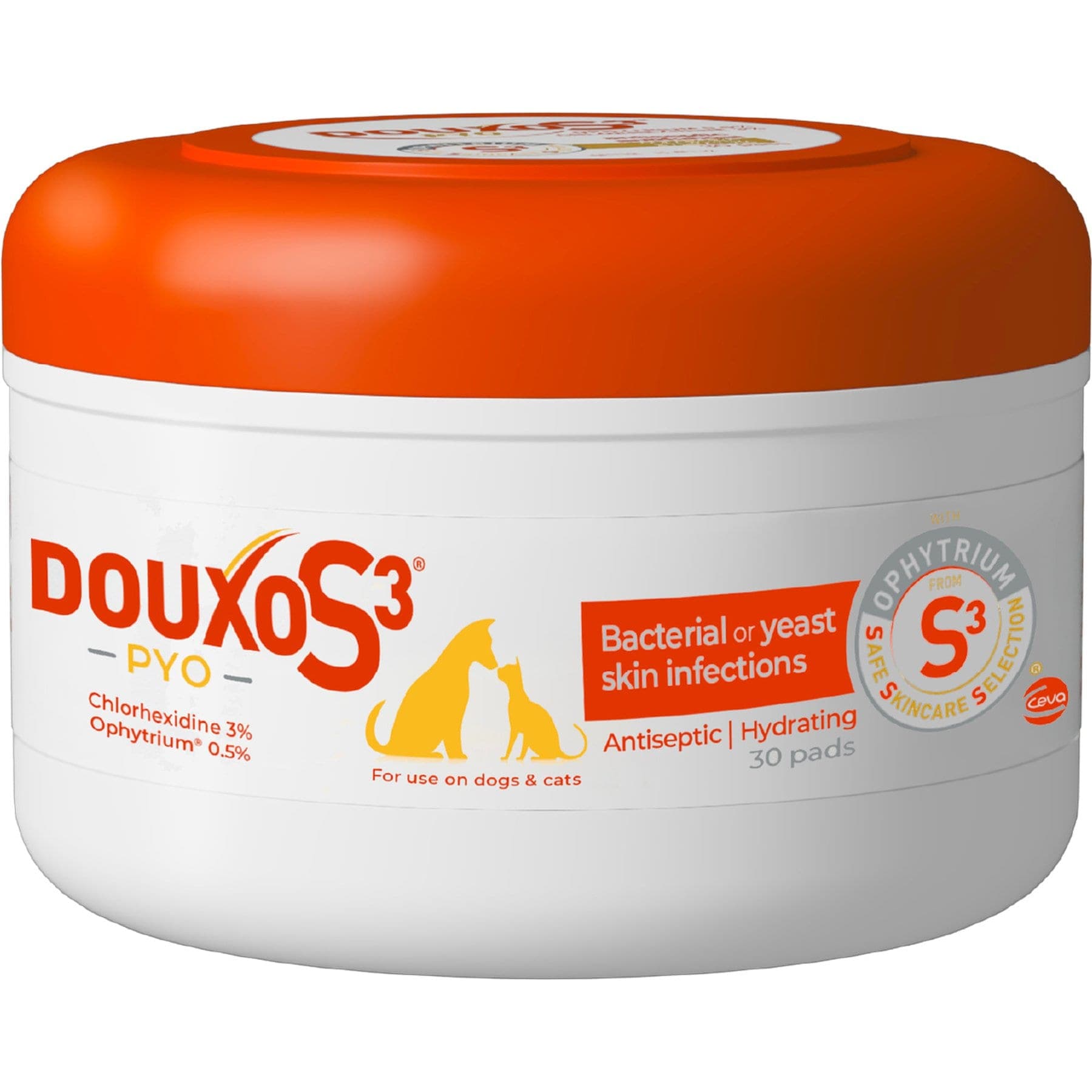
Douxo S3 PYO wipes, pre-moistened chlorhexidine wipes made for dogs and cats.
Webvet may earn a commission when you click through to Chewy, at no extra cost to you.
Symptoms of Vaginitis in Dogs
The main vaginitis symptoms in dogs are vulvar discharge, licking of the vulva, scooting, frequent urination, and attracting male dogs. Merck lists all of these, plus spotting, and VCA adds a red, swollen appearance of the vulva.
Dog vaginitis symptoms to watch for include:
- Vulvar discharge of mucus, pus, or rarely blood
- Frequent licking of the vulva
- Scooting or rubbing the hind end on the floor
- Frequent urination
- A red, swollen vulva
- Male dogs showing interest, which VCA says is common with vaginitis
The discharge is usually mucoid to mucopurulent. In a 15-dog survey reported by dvm360, 33 percent of dogs had mucoid discharge, 20 percent mucopurulent, and 27 percent purulent. Some dogs have no visible discharge at all, and the licking is the only clue.

Symptoms of vaginitis in dogs differ by age. Merck says puppies typically have small amounts of clear to cloudy sticky discharge and rarely any illness elsewhere in the body, while adult signs are similar but more pronounced. Constant licking can look like a grooming habit, the same way a dog licking paws can signal a medical problem rather than boredom.
Juvenile Vaginitis in Puppies
Juvenile vaginitis is vaginitis that starts before puberty, and most affected puppies show minimal or no signs. dvm360 reports no known breed predisposition, and the discharge is often found by chance: a whitish-yellow discharge that glues the vulvar lips together.
VCA says puppy vaginitis often has no identifiable cause and is believed to be related to hormonal and immune factors. dvm360 suggests a maturing immune system, rather than heat-cycle hormones, may explain why it fades. Gently wiping the vulva clean keeps the sticky discharge from crusting while the puppy grows out of it.
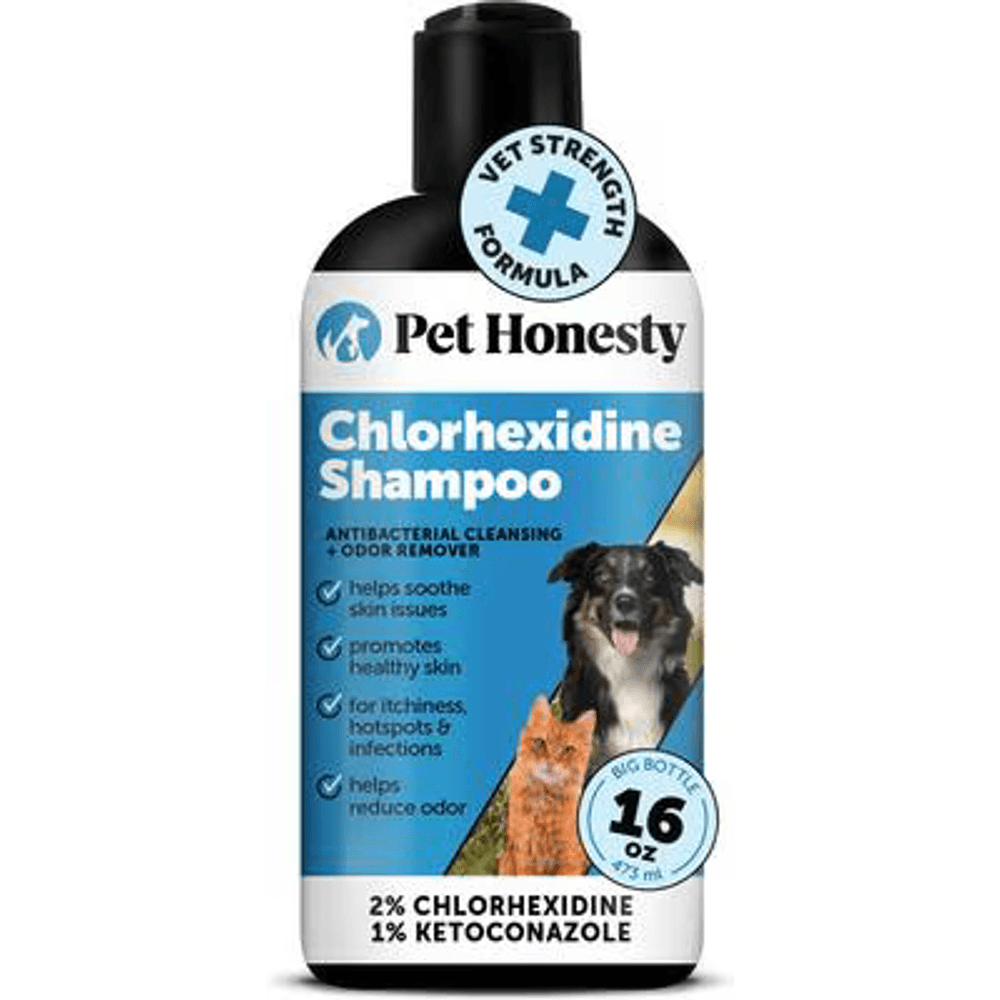
Pet Honesty chlorhexidine dog shampoo, a medicated shampoo listed with chlorhexidine and ketoconazole.
Webvet may earn a commission when you click through to Chewy, at no extra cost to you.
Juvenile vaginitis matters for spay timing. Merck says that if it is found before a planned spay, surgery should be postponed until it resolves; if it resolves before the first heat, the spay can go ahead without waiting for a heat. Our guide to spay and neuter incision healing covers what recovery looks like once surgery happens.
Does vaginitis go away on its own?
Juvenile vaginitis often goes away on its own. VCA says vaginitis that starts before puberty usually resolves after the first heat cycle and needs no further treatment, and dvm360 says most juvenile cases resolve spontaneously. In one small series of 7 puppies left intact, 3 improved after one heat, 1 after two heats, and 3 cleared by age 3. One study of dogs of all ages found vaginitis resolved in 73 percent regardless of therapy. Adult vaginitis rarely clears until its cause is treated.
Vaginitis in Adult and Spayed Dogs
Adult vaginitis appears after the first heat, usually in spayed females, and Merck says it generally involves a predisposing factor. dvm360 reports that urinary tract infections are the primary problem in 26 to 60 percent of adult cases, vaginal anatomical anomalies in 20 to 36 percent, and systemic disease in 15 percent.
Leaking is a common thread in adult and spayed dogs. dvm360 links vaginitis with urethral sphincter mechanism incontinence, formerly called estrogen-responsive incontinence, and notes that urine leaking when a dog stands up or jumps points to urine pooling from a vaginal anomaly. Pooled urine irritates the lining and keeps the inflammation going.
Other adult factors on the Merck list include a congenital anomaly that lets urine or feces contaminate the area, chemical irritation, tumors, vaginal trauma, and a foreign body. If your dog was spayed recently, our dog spay recovery guide explains what is normal at the incision.
Why is my spayed female dog leaking clear fluid?
Clear fluid leaking from a spayed female dog can be urine, so incontinence is the first thing to rule out. VCA describes incontinence as urine pooling or spotting while the dog sleeps or relaxes, and says more than 20 percent of spayed females may be affected. About 70 percent respond well to medication alone, so a vet visit and a urine test are worthwhile.
For managing leaks at home while you wait for answers, Paw Inspired Ultra Protection Disposable Female Dog Diapers and an absorbent bed pad keep urine off the skin around the vulva.
 Sponsored
Vet care that's always there
Unlimited video calls and messaging with licensed vets for less than a typical vet visit. One membership covers up to five pets.
Use code Pets60
Plans start at $12/month · covers up to 5 pets
- Licensed vets in most states
- Rx for 150+ conditions
- 4.7 on Trustpilot
What Causes Vaginitis in Dogs?
What causes vaginitis in dogs depends on age: puppies usually have no identifiable cause, while adults usually have an underlying problem. VCA lists the main causes as:
- A prepubertal vagina in puppies
- Urinary tract infections
- Vaginal trauma
- Foreign bodies or other foreign material in the vagina
- Urine or fecal contamination of the vulva
- An ectopic ureter or urinary incontinence
- Tumors
- Infection
- Anatomical abnormalities, including a recessed vulva
Conformation is a frequent culprit. Merck tells vets to check for a recessed vulva or other deformity, and dvm360 says vaginal anomalies are a common cause, probably because they let urine pool and irritate the lining. Overweight dogs with incontinence are prone to perivulvar dermatitis from skin folds and urine scald, which inflames the skin around the vulva.
Merck names the bacteria commonly involved: Pasteurella, Streptococcus, E coli, Pseudomonas, Mycoplasma, and Chlamydia, along with canine herpesvirus. Brucella canis is rare but should be considered. VCA notes that sometimes no cause is found. Knowing how to treat vaginitis in dogs starts with this list, because the treatment targets whichever cause the vet finds rather than the inflammation alone.
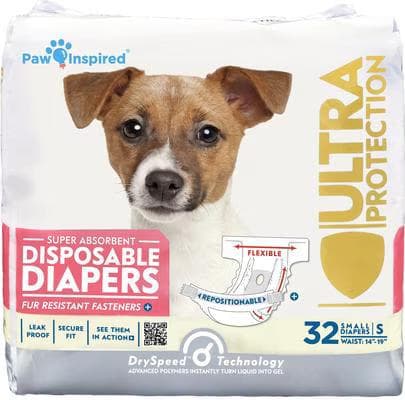
Paw Inspired disposable female dog diapers, a single-use diaper fitted by waist measurement.
Webvet may earn a commission when you click through to Chewy, at no extra cost to you.
How Is Vaginitis Diagnosed?
Vaginitis is diagnosed with a vaginal exam, vaginal cytology, culture, and urinalysis, combined to find the cause behind the inflammation. Merck recommends urinalysis on a sample drawn straight from the bladder, a vaginal exam, microscopic examination of the discharge, and culture and sensitivity testing of vaginal and urine samples, partly to rule out a bladder infection running alongside it.

VCA adds vaginoscopy, a scope exam of the vaginal canal, and imaging to look for anatomical abnormalities. dvm360 says vaginoscopy is usually done last, because lubricant and the scope can alter the other samples. Tests your vet may run include:
- Urinalysis and urine culture
- Vaginal cytology, a microscope check of cells from the discharge
- Vaginal culture and sensitivity testing
- Vaginoscopy
- Imaging to look for anatomical abnormalities
Not every dog needs everything. dvm360 says juvenile dogs with mild disease may not need a full workup, while an adult with recurring signs usually needs the full set of tests to find the cause.
Treatment for Vaginitis in Dogs
Treatment for vaginitis in dogs is based on the specific cause, according to VCA. A urinary tract infection is treated as an infection, a foreign body is removed, incontinence is managed with medication, and minimal juvenile signs often need nothing beyond cleanliness.
Antibiotics are not the automatic answer. Merck says antimicrobials should follow culture and susceptibility testing, and only after underlying problems are ruled out or treated. dvm360 warns that indiscriminate antibiotics can let Mycoplasma and E coli take over, and VCA notes that antibiotics can disturb normal vaginal flora. Many cases are driven by anatomy or have no known cause, which is why antibiotics alone often fail.
Other treatment options include:
- Episioplasty, a surgery to correct a recessed vulva, which Merck reserves for serious cases with suspected urine pooling
- Incontinence medication when leaking urine keeps the area wet
- Symptomatic care for idiopathic cases, which dvm360 says have several options
Most dogs respond well. VCA says many return to normal within two to three weeks of starting treatment.
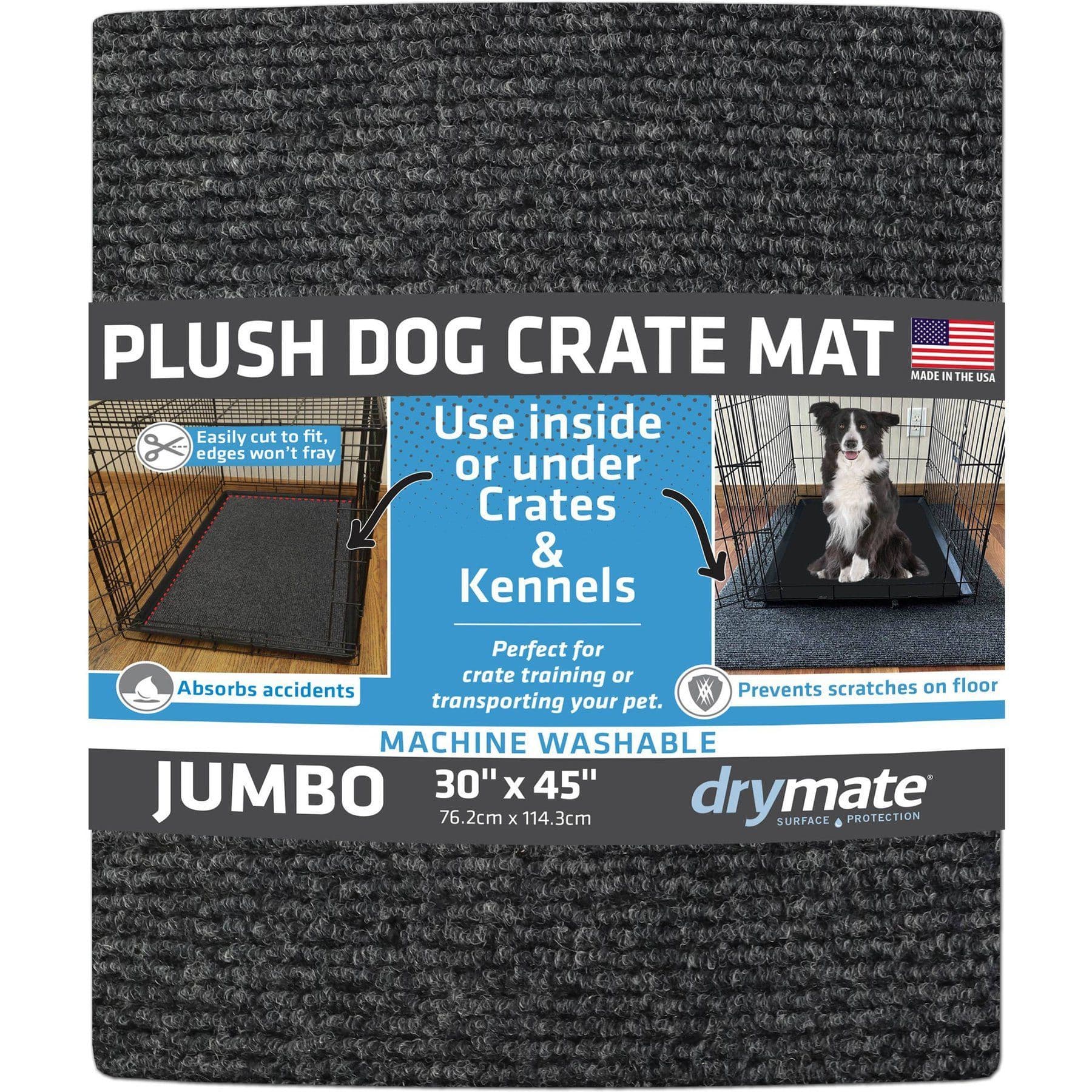
Drymate crate mat, a charcoal training pee pad sized to line a dog crate or bed area.
Webvet may earn a commission when you click through to Chewy, at no extra cost to you.
Vaginitis in Dogs Home Care
Vaginitis in dogs home care centers on keeping the vulva clean and dry, not on applying remedies. VCA advises gentle cleaning around the vulva, and dvm360 describes twice-daily cleaning of the skin around the vulva with baby wipes or a nonalcohol-based ear cleanser.

Simple home hygiene steps include:
- Wipe around the outside of the vulva, never inside it
- Clean twice a day, as dvm360 describes
- Use baby wipes or a nonalcohol-based ear cleanser
- Skip douches and home remedies
Safe home hygiene plus knowing what not to apply keeps the problem from getting worse. Gentle cleaning of the skin around the vulva is the safe part. What not to apply matters just as much: VCA says douches are generally not recommended, dvm360 says douching is not an effective therapy, and creams belong only on a vet's advice.
What can I put on my female dog's private area?
The safest thing to put on your female dog's private area is a gentle wipe around the outside of the vulva, which VCA and dvm360 both describe. dvm360 names baby wipes or a nonalcohol-based ear cleanser. Do not douche, and do not apply creams or ointments unless your vet prescribes one for the cause found on testing.
Can I put Monistat on my dog for yeast?
Veterinary references do not recommend applying human products such as Monistat or other human antifungal creams to a dog's vulva. The references direct treatment to the cause found on testing, such as a urinary infection or a recessed vulva. Ask your vet before putting any medication on the area.
Vaginitis vs Pyometra vs UTI
Vaginitis, pyometra, and a urinary tract infection can all cause licking and vulvar changes, but pyometra is a life-threatening uterine infection while vaginitis and a UTI are usually not emergencies. The table below compares vaginitis, pyometra, and a urinary tract infection by discharge, other signs, which dogs get them, and urgency, drawing on VCA and Cornell.
The comparison uses facts from VCA on pyometra in dogs and from Cornell University College of Veterinary Medicine on urinary infections.
| Feature | Vaginitis | Pyometra | UTI |
|---|---|---|---|
| What it is | Inflammation of the vagina or vestibule | Infection of the uterus | Urinary tract infection |
| Discharge | Mucus to pus, sometimes none | Pus from the vagina if open; none if closed | Urine may smell foul or contain blood |
| Other signs | Licking, scooting, frequent urination, male interest | Drinking more, listlessness, no appetite, swollen belly | Straining, frequent small urinations, accidents, genital licking |
| Who gets it | Any female, spayed or intact, any age | Unspayed females, most often older dogs | Dogs of either sex |
| Urgency | Vet visit to find the cause | Same-day vet visit; can become critical quickly | Vet visit with urinalysis |

VCA says pyometra occurs in unspayed females, most often older dogs. Open pyometra drains pus from the vagina, while closed pyometra causes abdominal swelling and severe illness quickly. The preferred treatment is surgical removal of the uterus and ovaries.
A UTI overlaps with vaginitis, and dvm360 says it can be hard to tell which came first. Cornell lists straining, frequent small urinations, accidents, foul-smelling urine, excessive genital licking, and blood in the urine, and says a UTI is diagnosed by urinalysis followed by culture. Our guide to UTI in dogs covers treatment, and other reproductive problems are covered in our guides to dog false pregnancy and mastitis in dogs.
When to See a Vet
See a vet for any adult dog with vaginitis signs, and the same day for foul or pus-like discharge in an unspayed dog that is lethargic or drinking more. VCA says early pyometra may show only a small vaginal discharge and no other signs, so any discharge in an unspayed dog deserves a vet check.
Book a vet visit for these situations:
- Any discharge in an unspayed female, especially in the weeks after a heat
- Bloody discharge outside of heat, since dvm360 says true blood has not been described in uncomplicated vaginitis
- An adult dog with discharge, licking, or scooting
- A spayed dog leaking urine or licking constantly
- A puppy whose discharge gets worse or comes with illness
Blood in the urine is a separate warning sign covered in our guide to a dog peeing blood. If the visit happens after hours, our emergency vet cost guide explains what to expect.
Vaginitis in Dogs FAQs
Frequently Asked Questions
What does vaginitis look like in dogs?
Vaginitis usually looks like a mucus or pus-like discharge at the vulva, frequent licking of the area, and sometimes a red, swollen vulva. Some dogs scoot or attract male dogs, and a few show no visible discharge at all.
Can vaginitis in dogs go away on its own?
Juvenile vaginitis often does. VCA says vaginitis that starts before puberty usually resolves after the first heat cycle without further treatment. Adult vaginitis generally has an underlying cause and does not clear until that cause is treated.
What color is pyometra discharge compared with vaginitis?
Open pyometra drains pus from the vagina of an unspayed dog, often with lethargy and increased thirst. Vaginitis discharge ranges from clear or cloudy mucus to pus, so color alone cannot rule out pyometra. Any pus-like discharge in an unspayed dog needs a same-day vet visit.
Is vaginitis in dogs contagious?
Veterinary references do not label vaginitis as contagious or not contagious. They describe it by its causes: anatomy such as a recessed vulva, urine pooling, infection with bacteria, and foreign material. Merck notes Brucella canis is a rare infectious cause vets should consider.
How long does vaginitis in dogs last?
Many dogs return to normal within two to three weeks of starting treatment, according to VCA. Juvenile cases can last until the first heat or longer. Chronic or anatomical cases last as long as the underlying cause goes untreated.
What antibiotics treat vaginitis in dogs?
Your vet chooses any antibiotic from culture and susceptibility results, and Merck says antibiotics should come only after underlying problems are ruled out or treated. dvm360 advises against indiscriminate antibiotic use, because it can let Mycoplasma and E coli take over.
Can I use wipes on my dog's private area?
Yes, on the outside only. dvm360 describes twice-daily cleaning around the vulva with baby wipes or a nonalcohol-based ear cleanser. Choose a plain, unscented baby wipe, wipe the skin around the vulva, and never wipe inside it.

Editor
The Webvet Editorial Team is the in-house group of pet-care editors and writers behind Webvet, operated by Smart Pet Collective. The team researches, writes, and maintains Webvet's pet health, behavior, and medication content. Every article follows a defined editorial process: research from reputable veterinary and scientific sources, careful drafting, mandatory review of medical content by a credentialed veterinarian, and dated publication. Health and medication articles are medically reviewed by a licensed veterinary professional before they go live and are kept current over time.
Veterinarian · BVMS MRCVS
Dr. Pippa Elliott, BVMS, MRCVS, is a veterinarian with nearly 30 years of experience in companion animal practice. Dr. Elliott earned her Bachelor of Veterinary Medicine and Surgery from the University of Glasgow. She was also designated a Member of the Royal College of Veterinary Surgeons. Married with 2 grown-up kids, Dr. Elliott has a naughty Puggle named Poggle, 3 cats and a bearded dragon.
Related reading

Kidney Disease in Dogs: Why Tracking Water Intake Can Help Your Vet

Best Cat Water Fountain Picks of 2026, Vet Informed

Dog Bladder Stones: Symptoms, Treatment, and Surgery Costs
