Dog Straining to Urinate: Is It a UTI, Blockage, or Emergency?
Is your dog straining to urinate a simple UTI or a life-threatening blockage? Learn the emergency red flags, how vets tell the causes apart, and exactly what to do next.

BVMS MRCVS
Medically reviewed by Dr. Pippa Elliott, BVMS MRCVS · Last reviewed

This article contains affiliate links. Webvet may earn a commission when you buy through them, at no extra cost to you.
A dog straining to urinate is never something to shrug off, because the same posture can mean anything from a treatable bladder infection to a blockage that can kill within a day. Straining, called stranguria by vets, means your dog is working hard to pass urine and producing little or nothing for the effort. This vet-reviewed guide gives you the fast triage answer first, then walks through how to tell a UTI from bladder stones from a true urinary obstruction, the emergency red flags that mean go now, how vets diagnose the cause, and what you should never try at home.
- 1Straining to urinate is always abnormal and warrants a same-day vet call, even when your dog seems otherwise fine.
- 2A dog straining with little or no urine coming out may have a urinary obstruction, a true emergency that is life-threatening within 24 to 48 hours.
- 3Male dogs, especially small breeds, block far more easily than females because of a longer, narrower urethra.
- 4Only a physical exam, urinalysis, and often imaging can tell a UTI from stones, a blockage, a tumor, or sterile cystitis.
- 5Never give human medication, never wait it out, and treat cranberry and supplements as adjuncts only, never a fix.
Is Your Dog Straining to Urinate an Emergency?
Here is the fast answer. If your dog is straining and little or no urine is coming out, treat it as an emergency and go to a vet now, especially if your dog is male. That pattern can mean a complete urinary obstruction, where a stone or plug blocks the urethra so the bladder cannot empty.
With a full blockage, pressure backs up to the kidneys, toxins and potassium build in the blood, and the bladder can rupture. The American College of Veterinary Surgeons warns that dogs with a total urethral obstruction will die within days if it is not relieved, so a dog that cannot pass urine needs care fast.
If your dog is straining but still passing a normal or reduced stream of urine, it is usually not a same-minute emergency, but it still needs a prompt, same-day veterinary visit. Straining with output most often points to a bladder infection, stones, or inflammation. Straining without output is the pattern that can kill.

At-home urine test strips that screen for glucose, blood, pH, and protein in seconds, so you can catch early signs of diabetes, kidney disease, or a UTI and bring real numbers to your vet.
Webvet may earn a commission when you click through to Chewy, at no extra cost to you.
What Straining to Urinate (Stranguria) Actually Looks Like
Owners do not always recognize straining for what it is, because it can look like ordinary squatting at first. The tell is effort out of proportion to result. A straining dog holds the squat far longer than usual, tenses the belly, and produces only a dribble, a few drops, or nothing at all. Some dogs circle and re-squat again and again, or cry out mid-attempt.
Common signs that accompany stranguria include:
- Prolonged squatting or posturing with only a small trickle or no urine at all.
- Frequent trips outside with repeated small squats, sometimes every few minutes.
- Whimpering, whining, or crying while attempting to urinate, a sign of genuine pain.
- Blood-tinged, pink, or cloudy urine, or urine with a strong, unusual odor.
- Excessive licking of the genitals and a hunched, guarded, uncomfortable posture.

One important distinction: straining to urinate is not the same as straining to defecate. A constipated dog also hunches and pushes, so watch which end is involved and whether any urine appears. When in doubt, assume the urinary tract and have your dog examined.
UTI vs. Blockage vs. Bladder Stones: How to Tell the Difference
You cannot definitively diagnose the cause at home, because these conditions overlap and often occur together. Stones can trigger an infection, and an infection can seed stones. Still, the pattern of signs can hint at which is more likely and, more importantly, how urgently you need to act. Use the table below as a guide, not a substitute for a vet.
| Cause | Typical picture | Urgency |
|---|---|---|
| Urinary tract infection (UTI) | Straining WITH urine, frequent small squats, blood or cloudy urine, licking | Prompt same-day vet visit |
| Bladder stones | Straining, recurring blood, sometimes gritty urine, recurrent UTIs | Same-day; emergency if urine stops |
| Urethral obstruction (blockage) | Straining with LITTLE OR NO urine, hard swollen belly, crying, vomiting, collapse | Emergency, go to the ER now |
| Sterile / idiopathic cystitis | Straining, blood, urgency but urine culture is negative | Prompt vet visit |
| Prostate disease (male dogs) | Straining, blood, discomfort, sometimes trouble defecating | Prompt vet visit |
The single most decisive clue is how much urine is coming out. Straining with a reasonable stream leans toward infection or inflammation. Straining with almost nothing leans toward obstruction and means go now. For the full clinical picture on infections specifically, see our complete guide to UTIs in dogs.
The Full List of Causes
Straining is a symptom with many possible drivers. The Merck Veterinary Manual groups the causes of difficult or painful urination into infection, stones, obstruction, inflammation, anatomical problems, and neurologic disease. Here are the ones vets see most.

Webvet may earn a commission when you click through to Chewy, at no extra cost to you.
Urinary tract infection
A bacterial infection of the bladder, most often from Escherichia coli, inflames the bladder lining and makes it feel full even when nearly empty, driving frequent, painful straining. This is a very common cause of straining that produces small amounts of urine. Learn the full list of dog UTI symptoms to spot an infection early.
Bladder and kidney stones
According to VCA Animal Hospitals, bladder stones (uroliths) form from mineral crystals and rub against the bladder wall, causing straining, blood, and recurrent infection. A small stone can lodge in the urethra and cause a partial or complete blockage, which is how stones turn into an emergency.
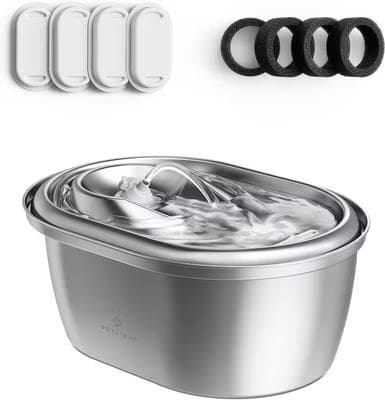
304 food-grade stainless steel pet water fountain, 101 oz. The circulating, filtered water encourages cats to drink more, which supports urinary tract and kidney health.
Webvet may earn a commission when you click through to Chewy, at no extra cost to you.
Urethral obstruction
A stone, plug, thickened debris, or, less often, a tumor can partly or fully block the urethra so urine cannot pass. Complete obstruction is the emergency scenario. The bladder overfills, urine backs up to the kidneys, and dangerous levels of potassium and toxins accumulate. This is the cause that makes straining without output a true crisis.
Prostate disease in males
In intact male dogs, an enlarged, infected, or cystic prostate can press on the urethra and cause straining, blood, and difficulty both urinating and defecating. Neutering greatly reduces the risk of the most common form of prostate enlargement.
Sterile or idiopathic cystitis, tumors, and anatomy
Sometimes the bladder is inflamed with no bacteria present, called sterile or idiopathic cystitis. Bladder tumors such as transitional cell carcinoma, polyps, congenital anatomical problems, and spinal or neurologic disease that disrupts bladder control can all produce straining as well. Because the list is long and the treatments differ completely, diagnosis has to come from a vet, not a guess.
 $65 · no membership
Worried about your dog's urinary or kidney symptoms?
A licensed vet can examine your dog over video and prescribe treatment online when it's appropriate.
 Talk to a vet
- Licensed vets
- All 50 states
- same-day Rx
Webvet may earn a commission if you book.
Male vs. Female Dogs: Why the Risk Differs
Sex matters enormously when a dog is straining, and it changes how urgently you should act. Male dogs have a longer, narrower urethra that also curves and narrows as it passes over the os penis, a small bone in the penis. That shape makes it far easier for a stone or plug to lodge and cause a complete blockage. Small male breeds are especially prone.

Female dogs, by contrast, have a shorter, wider urethra. That makes them more prone to simple infections because bacteria have a shorter climb to the bladder, but far less prone to a life-threatening obstruction. See our guide to UTIs in female dogs for more. The practical rule: a straining male dog with little output is a red-alert emergency until a vet proves otherwise.
Emergency Red Flags: When Straining Means Go to the ER Now
Some signs mean you should stop reading and get in the car. A urinary obstruction can become fatal within 24 to 48 hours, so recognizing these red flags quickly can save your dog's life:
- Straining with little or no urine coming out, especially in a male dog.
- A hard, swollen, or painful belly or crying out when the abdomen is touched.
- Vomiting, weakness, collapse, or lethargy alongside the urinary signs.
- Large amounts of blood in the urine or dripping from the genitals.
- No urine at all for 12 or more hours despite repeated attempts to go.

If you are unsure whether what you are seeing counts, call an emergency clinic and describe it. The cost of an unnecessary ER visit is far smaller than the cost of a missed obstruction. When it comes to a dog that cannot urinate, err toward going.
How Vets Diagnose the Cause
Diagnosis starts with a physical exam. The vet feels the abdomen to judge whether the bladder is large, firm, and painful, which is the classic sign of an obstruction, or small and irritated. In a blocked dog, that exam alone can trigger emergency treatment before anything else. The diagnostic process largely mirrors the workup vets use in cats, which our guide on how veterinarians diagnose urinary problems in cats walks through in detail.
From there, vets typically use:
- Urinalysis, to check for white and red blood cells, bacteria, crystals, protein, and concentration.
- Urine culture and sensitivity, to identify the exact bacteria and which antibiotic will kill it.
- Imaging (X-ray and ultrasound), to find stones, tumors, an enlarged prostate, or a distended bladder.
- Bloodwork, to assess kidney values and electrolytes, which reveal how sick a blocked dog has become.

The most reliable urine sample is drawn straight from the bladder by cystocentesis, a quick needle technique that avoids contamination. Together, these tests separate a simple infection from stones, a blockage, a tumor, or an underlying disease, which is exactly why straining is not something you can accurately treat by guesswork.
Treatment by Cause
Treatment depends entirely on what is causing the straining. For a UTI, the cornerstone of dog UTI treatment is an antibiotic matched to the culture results, often with pain relief, and finishing the entire course even after your dog looks better.
For an obstruction, treatment is an emergency. The vet stabilizes the dog, corrects the electrolyte imbalances, and relieves the blockage, usually by passing a urinary catheter under sedation to flush the stone or plug back into the bladder. Surgery may be needed to remove stones or, in recurrent cases, to widen the urethra.
For bladder stones, treatment is either surgical or, for certain stone types, a special dissolution diet prescribed by your vet. Prostate disease is treated with a combination of neutering, antibiotics, or other care depending on the specific problem.
The takeaway is that there is no single fix for a straining dog. Antibiotics do nothing for a stone, and a diet will not clear a blockage. The right treatment follows the right diagnosis, which is why the vet visit is not optional.

Webvet may earn a commission when you click through to Chewy, at no extra cost to you.
What NOT to Do at Home
Some well-meant home responses to straining are useless, and a few are dangerous. Avoid these:
Home care for a straining dog: helpful vs. harmful
Pros
- Offer constant fresh water so your dog stays hydrated.
- Collect a fresh urine sample in a clean container for your vet.
- Note the timing, frequency, output, and color of every attempt.
- Go straight to an emergency vet if output stops.
- Use cranberry or urinary supplements only as a vet-approved adjunct.
Cons
- Never give human medications like ibuprofen or aspirin; they can be toxic.
- Do not wait it out to see if the straining resolves on its own.
- Do not rely on cranberry, apple cider vinegar, or urine strips to fix it.
- Do not restrict water in the hope of reducing accidents.
- Do not press hard on a swollen belly to try to force urine out.
Cranberry is the most common myth. It may play a minor supportive role in preventing some infections, but it cannot dissolve a stone, clear a blockage, or cure an active infection. Any vet-approved home remedies for a dog UTI belong alongside real veterinary treatment, never instead of it. Human pain relievers are especially dangerous, because common drugs like ibuprofen can cause stomach ulcers and kidney damage in dogs.
Preventing Recurrence
Once the immediate crisis is handled, a few habits lower the odds of a repeat, especially for dogs prone to stones or infections:
- Keep water flowing. Diluted urine flushes bacteria and lowers the concentration of stone-forming minerals.
- Offer frequent potty breaks. Do not force your dog to hold urine for long stretches, which lets bacteria multiply.
- Use a prescription urinary diet if advised. For certain stone types, a therapeutic diet prevents new stones from forming.
- Keep up regular vet checks. Per AAHA life-stage guidelines, routine exams catch recurring urinary problems early.
If your dog strains more than once, ask your vet to hunt for a root cause rather than just treating each flare. Recurrence usually means something underneath, such as stones or an anatomical issue, is still driving the problem.
Related Dog Urinary Problems
Straining rarely travels alone. If you also notice pink or red urine, read our guide on what it means when a dog is peeing blood. For a plain-language overview of canine urinary infections, our partners at Petful also cover UTIs in dogs in reader-friendly detail. After urine flow is safe and a veterinarian has identified the cause, the male dog diapers and belly bands guide explains urine-only management without treating a garment as medical care.
Urinary trouble is not just a dog problem. A blocked cat is an even faster-moving emergency, so cat owners should read our hub on UTIs and urinary problems in cats and our vet's guide to preventative care for feline urinary health. Whatever the species, straining to urinate deserves a prompt, accurate veterinary diagnosis.
Frequently Asked Questions
What to do if my dog is straining to pee?
First, check how much urine is coming out. If your dog is straining but producing little or no urine, especially a male dog, treat it as an emergency and go to a vet immediately, because that can signal a life-threatening obstruction. If your dog is still passing urine but straining, frequently squatting, or showing blood in the urine, book a same-day veterinary visit. While you arrange care, offer fresh water, note the timing and output of each attempt, and try to collect a fresh urine sample in a clean container. Do not give any human medication and do not wait to see if it resolves on its own, because straining is never normal and the underlying cause needs a professional diagnosis.
Why is my dog squatting to pee but not peeing?
A dog that repeatedly squats but does not pass urine is a serious warning sign that should be treated as an emergency, particularly in male dogs. It can mean a urinary obstruction, where a stone or plug blocks the urethra so the bladder cannot empty. This is life-threatening within about 24 to 48 hours, because urine backs up to the kidneys and toxins build in the blood. Other causes include a painful bladder infection, bladder stones, or inflammation that makes your dog feel a constant urge without much to pass. Because you cannot tell at home whether the bladder is blocked or simply irritated, a dog that is squatting without producing urine needs to be seen by a veterinarian right away.
What are the first signs of kidney failure in dogs?
The early signs of kidney failure in dogs often include increased thirst and increased urination, followed by reduced appetite, weight loss, lethargy, vomiting, and bad breath with a chemical odor. As it progresses, dogs may urinate less, become dehydrated, and appear weak. Kidney disease is different from the straining discussed here, but the two connect in an important way: a urinary obstruction that is left untreated causes acute kidney injury as urine backs up, so a blocked dog can develop sudden kidney failure within a day or two. Any combination of these signs, or a dog that suddenly stops producing urine, warrants prompt veterinary bloodwork and a urine test to check kidney function.
Why is my dog straining to pee without a UTI?
Plenty of conditions besides infection cause straining, which is why a negative urine culture does not end the search. Common non-UTI causes include bladder stones or crystals, a urethral obstruction, sterile or idiopathic cystitis (bladder inflammation with no bacteria), prostate disease in male dogs, bladder tumors such as transitional cell carcinoma, congenital anatomical problems, and spinal or neurologic disease that affects bladder control. Because these have completely different treatments, your vet uses urinalysis, imaging such as X-rays or ultrasound, and sometimes bloodwork to find the real cause. Straining without a confirmed UTI still needs a full veterinary workup rather than repeated antibiotics.
What is the 21 second pee rule?
The 21-second rule comes from a physics study that found most mammals weighing over about 3 kilograms empty their bladder in roughly 21 seconds, regardless of body size, because larger animals have longer urethras that increase flow. It is a fun scientific observation, not a diagnostic tool for your dog. What matters clinically is not hitting an exact number but noticing a change: a dog that used to empty its bladder in one steady stream and now squats repeatedly, strains, or takes far longer with little output may have a urinary problem. Focus on that change in pattern rather than timing your dog with a stopwatch, and call your vet if urination has become difficult or unproductive.
How soon will a dog show signs of blockage?
Signs of a urinary blockage usually appear quickly, often within hours of the urethra becoming obstructed. Early signs are frequent, unproductive straining, restlessness, and repeated squatting with little or no urine. As the bladder fills and cannot empty, dogs typically become painful, develop a hard, swollen belly, and within roughly 12 to 24 hours may start vomiting, becoming weak or lethargic as toxins and potassium build in the blood. A complete obstruction can be fatal within about 24 to 48 hours, so there is a narrow window to act. If you suspect a blockage, do not wait for more signs to develop; go to an emergency vet immediately.
$65 · no membershipWorried about your dog's urinary or kidney symptoms?
A licensed vet can examine your dog over video and prescribe treatment online when it's appropriate.
Talk to a vet- Licensed vets
- All 50 states
- same-day Rx
Webvet may earn a commission if you book.

Editor
The Webvet Editorial Team is the in-house group of pet-care editors and writers behind Webvet, operated by Smart Pet Collective. The team researches, writes, and maintains Webvet's pet health, behavior, and medication content. Every article follows a defined editorial process: research from reputable veterinary and scientific sources, careful drafting, mandatory review of medical content by a credentialed veterinarian, and dated publication. Health and medication articles are medically reviewed by a licensed veterinary professional before they go live and are kept current over time.
Veterinarian · BVMS MRCVS
Dr. Pippa Elliott, BVMS, MRCVS, is a veterinarian with nearly 30 years of experience in companion animal practice. Dr. Elliott earned her Bachelor of Veterinary Medicine and Surgery from the University of Glasgow. She was also designated a Member of the Royal College of Veterinary Surgeons. Married with 2 grown-up kids, Dr. Elliott has a naughty Puggle named Poggle, 3 cats and a bearded dragon.


