How Veterinarians Diagnose Urinary Problems in Cats
Veterinarians diagnose urinary problems in cats through a layered process of physical exam, urinalysis, imaging, and blood work. Here's what that looks like at the clinic and how to spot urgent signs at home.

BVMS MRCVS
Medically reviewed by Dr. Pippa Elliott, BVMS MRCVS · Last reviewed

This article contains affiliate links. Webvet may earn a commission when you buy through them, at no extra cost to you.
Understanding how veterinarians diagnose urinary problems in cats can help pet parents act quickly when something feels off at the litter box. Urinary issues in cats are common, often uncomfortable, and in some cases genuinely life-threatening, so a clear diagnostic process matters. Vets rely on a layered approach that combines physical examination, urine testing, imaging, and close evaluation of symptoms, each step ruling conditions in or out until they reach a confident answer.
- 1Urinary problems in cats are diagnosed through a layered approach, physical exam, urinalysis, imaging, and blood work, not a single test.
- 2Straining with little or no urine output is always an emergency, especially in male cats; a blocked cat can decline within hours.
- 3Urinalysis is the single most useful test in a urinary workup and usually happens before imaging or blood work.
- 4Home monitoring of litter box habits often catches subtle changes days before clinical symptoms appear.
Veterinarians diagnose urinary problems in cats through a combination of physical examination, urine testing, imaging, and evaluation of symptoms.
This guide walks through what that process looks like in a clinic, what signs send cats there in the first place, and how home observation fits into early detection.
Common Symptoms That Lead to Diagnosis
Most urinary diagnoses start with something the pet parent notices at home. Cats are quiet about pain, so the first clues usually show up around the litter box. Vets commonly hear about straining, increased frequency of attempts, blood-tinged urine, urinating outside the box, vocalizing while urinating, and noticeable drops in output.
One symptom deserves its own line: a cat, especially a male cat, who is straining but producing little or no urine. That pattern points to a possible urethral blockage, which is a medical emergency. These cats need to be seen immediately, not the next day.
Physical Examination
Once a cat arrives at the clinic, the veterinarian starts with a thorough physical exam. Hands-on palpation of the abdomen lets the vet feel the bladder for size, firmness, and tenderness. A distended, turgid bladder in a straining cat is a red flag for blockage; a small, painful bladder often points to inflammation.
The exam also captures hydration status, body temperature, heart and respiratory rate, and any signs of general illness. Some urinary problems are actually downstream of kidney disease, diabetes, or hyperthyroidism, so the full picture matters.

Crystal litter that changes color alongside some urinary changes, as a prompt to call your vet.
Webvet may earn a commission when you click through to Chewy, at no extra cost to you.
Urine Testing and Urinalysis
Urinalysis is the single most useful test in a urinary workup. A standard urinalysis evaluates specific gravity (how concentrated the urine is), pH, and the presence of protein, glucose, ketones, bilirubin, and blood. Under the microscope, the vet looks for red and white blood cells, bacteria, crystals, and abnormal cells that can point to inflammation, infection, or stone formation.
Collection method affects what the sample can tell you. A free-catch sample, collected when the cat urinates naturally, is non-invasive but can pick up debris from the litter or perineum. Cystocentesis**, where a sterile needle pulls urine directly from the bladder through the abdominal wall, gives a cleaner sample and is the gold standard when infection is suspected. Many cats tolerate cystocentesis well, and it is usually quick.
If the urinalysis suggests bacterial infection, a urine culture confirms which organism is involved and which antibiotics it will respond to. Culture results typically take a few days.
Imaging: X-Rays and Ultrasound
Diagnostic Tools for Cat Urinary Problems at a Glance
| Test | What it checks | Turn-around | Typical cost range |
|---|---|---|---|
| **Urinalysis** | Concentration, pH, blood, crystals, cells | Same visit | $40–$95 |
| **Urine culture** | Bacterial species and antibiotic sensitivity | 3–5 days | $80–$200 |
| **Abdominal X-ray** | Radiopaque stones, urethral plugs, bladder size | Same visit | $150–$350 |
| **Abdominal ultrasound** | Bladder wall, kidney structure, small stones | Same visit | $300–$600 |
| **Chemistry panel + CBC** | Kidney values, electrolytes, infection markers | Same visit to 24 hrs | $100–$250 |
Costs vary by region, clinic type, and whether care is delivered at a primary-care practice or an emergency hospital. Most primary-care urinalysis-plus-imaging workups fall between $250 and $600, while a blocked-cat emergency admission with catheterization and hospitalization routinely ranges from $1,500 to $3,500 or more.
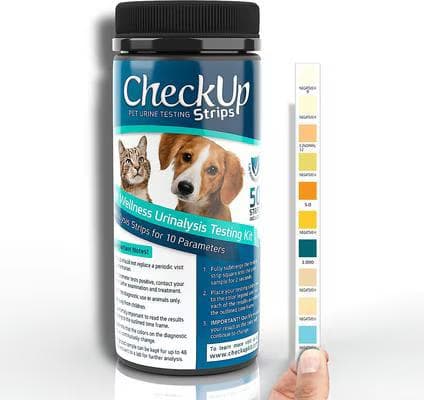
At-home urine test strips that screen for glucose, blood, pH, and protein in seconds, so you can catch early signs of diabetes, kidney disease, or a UTI and bring real numbers to your vet.
Webvet may earn a commission when you click through to Chewy, at no extra cost to you.
When a vet needs to see inside the urinary tract, imaging comes next. X-rays (radiographs) are excellent for spotting radiopaque stones in the bladder, urethra, or kidneys, and they help rule out obstructions. Ultrasound** shines where X-rays fall short, it shows soft-tissue detail like the bladder wall, the lining of the kidneys, masses, and small stones that X-rays might miss.
In practice, vets often use both. A quick radiograph can catch a blockage fast in an emergency, while ultrasound gives a more nuanced view of inflammation, tumors, and structural abnormalities during a broader workup.
Blood Work and Additional Testing
Blood work rounds out the diagnostic picture. A chemistry panel evaluates kidney function (BUN, creatinine, SDMA), electrolytes (sodium, potassium, chloride), and overall metabolic health. A complete blood count flags signs of systemic infection or inflammation.
Blood work is especially critical when a blockage is suspected. Obstructed cats can develop dangerous potassium elevations and kidney injury within hours, and those labs guide how aggressively the cat needs to be stabilized before anything else happens.
 $65 · no membership
Worried about your cat's urinary or kidney symptoms?
A licensed vet can examine your cat over video and prescribe treatment online when it's appropriate.
 Talk to a vet
- Licensed vets
- All 50 states
- same-day Rx
Webvet may earn a commission if you book.
Home Monitoring and Early Detection
Early detection often starts at home, well before a cat reaches the clinic. Pet parents who know their cat's typical urinary habits, how often, how much, what the clumps look like, tend to catch subtle changes sooner, which gives veterinarians more time to work with.
Simple habits also help: checking the litter box each day for unusual color, size, or odor; noting how many clumps appear over 24 hours; and watching for behavioral shifts like hiding, decreased appetite, or reluctance to use the box.
Crystal litter that changes color alongside some urinary changes, as a prompt to call your vet.
Webvet may earn a commission when you click through to Chewy, at no extra cost to you.
When It Is an Emergency
When in doubt, call the clinic. An emergency triage call costs nothing compared with a missed obstruction.
What to Expect at the Urinary Vet Visit
A typical urinary workup takes 30 to 90 minutes for a non-emergency presentation, and several hours if the cat is blocked or unstable. The first step is usually a triage conversation at check-in where the technician asks about symptoms, how long they have been happening, what the litter box has looked like, and whether the cat is eating and drinking normally.
After that, the veterinarian performs the physical exam, discusses what they are seeing, and walks through the recommended diagnostic steps. Urinalysis is usually done first because it is quick and informative. Imaging and blood work follow if the urinalysis or exam flags something worth investigating further.
What to Bring
A fresh free-catch urine sample collected within a few hours of the visit is the single most useful thing you can bring, if the cat will cooperate. Non-absorbing litter made of plastic pellets or similar material lets you collect a clean sample. Photos or short videos of concerning litter box output are also extremely helpful, especially if the symptoms come and go.
Compare coverage choices for your pet, then request a quote directly on Lemonade.
- Check a price for your pet
- Review available coverage choices
- See the terms before you decide
Eligibility, waiting periods, limits and exclusions apply.
Webvet may earn a commission when you click through to Lemonade, at no extra cost to you.
A written timeline of when symptoms started, any diet or environment changes, and a list of current medications or supplements rounds out the picture. In multi-cat households, note which cat you suspect and why.
Common Urinary Diagnoses and What They Mean
Urinary workups in cats most often land on one of a handful of diagnoses. Understanding the basics of each helps pet parents make sense of what the vet is saying and what comes next.
Feline Lower Urinary Tract Disease (FLUTD)
FLUTD is an umbrella term for a group of conditions affecting the bladder and urethra. It includes idiopathic cystitis, crystals, stones, and infections. Cats with FLUTD commonly show straining, frequent urination, blood in urine, and sometimes urinating outside the box.
Crystal litter that changes color alongside some urinary changes, as a prompt to call your vet.
Webvet may earn a commission when you click through to Chewy, at no extra cost to you.
Feline Idiopathic Cystitis (FIC)
FIC is bladder inflammation without an infectious or structural cause, often associated with stress. It is the most common form of FLUTD in cats under ten years old. Treatment focuses on environmental enrichment, hydration, and sometimes medication to ease inflammation.
Urinary Crystals and Stones
Crystals are microscopic mineral aggregates, and stones are larger formations that can irritate the bladder wall or partially obstruct urine flow. Management usually combines diet adjustments to normalize urine pH, increased hydration, and sometimes surgical removal for larger stones.
Urinary Tract Infection
True bacterial infections are less common in cats than in dogs and are typically found in older cats or cats with underlying conditions like kidney disease or diabetes. Diagnosis requires a sterile urine sample, and treatment usually involves a targeted antibiotic course based on culture results.
Urethral Obstruction
An obstruction blocks urine flow, almost exclusively in male cats due to their narrower urethral anatomy. This is always an emergency. Treatment involves sedation, urinary catheterization to relieve the blockage, IV fluids to correct electrolyte imbalances, and usually hospitalization for two to three days.
After the Diagnosis: Treatment Overview
Treatment depends entirely on the underlying cause. For bladder inflammation without infection, most cats improve with environmental stress reduction, increased water intake, and anti-inflammatory or pain medication. For bacterial infections, a targeted antibiotic course usually resolves the problem within seven to fourteen days.
Crystals and small stones often respond to prescription urinary diets and sustained hydration support, while larger stones may need surgical or laser removal. Cats recovering from urethral obstruction typically go home on a prescription urinary diet, and most heal well with close monitoring for the first few weeks.
Follow-up urinalysis is common after any urinary diagnosis, usually at two to four weeks, to confirm that inflammation has resolved or that a prescription diet is performing as expected. Cats with recurrent issues may be scheduled for periodic recheck urinalysis and, in some cases, imaging to catch problems before they become symptomatic.
Is Cystocentesis Safe and Painful for Cats?
Cystocentesis is one of the most commonly asked-about diagnostic steps, mostly because the idea of a needle into the bladder sounds alarming to pet parents. In practice, the procedure is quick, well tolerated by most cats, and considered the gold standard for sterile urine collection when infection or contamination is a concern.
A veterinarian locates the bladder by palpation or ultrasound, inserts a small needle through the lower abdomen, and withdraws a few milliliters of urine. Most cats experience the brief pinch of a routine injection and show no further reaction. Cats who are very painful, tense, or have a small bladder may need additional handling, sedation, or a rescheduled appointment.
Webvet may earn a commission when you click through to Chewy, at no extra cost to you.
Common disadvantages to note: the bladder has to be reasonably full, cats who will not stay still may not be good candidates, and, in very rare cases, small amounts of bleeding into the bladder can briefly tint urine samples collected afterward. For most diagnostic workups, the trade-off for a clean sample is well worth it.
Frequently Asked Questions
How do vets test for urinary problems in cats?
Veterinarians typically start with a physical exam and a urinalysis, which evaluates concentration, pH, and the presence of blood, crystals, or infection markers. Depending on findings, imaging and blood work follow. The exact sequence depends on the cat's symptoms and how urgent the presentation looks.
Will my cat need a urine sample?
In almost every case, yes, urinalysis is central to the diagnosis. The vet may ask you to collect a free-catch sample at home, or the clinic may collect a sterile sample via cystocentesis. Most cats tolerate sample collection well.
Are urinary blockages emergencies?
Yes. A urethral obstruction is a true medical emergency, especially in male cats. Without prompt treatment, blockage can lead to kidney injury and life-threatening changes in blood chemistry within a day or two.
Can litter changes help identify urinary issues?
Monitoring the litter box is one of the most practical ways to catch early changes. Shifts in clump size, frequency, color, or odor can all signal a brewing urinary problem and give veterinarians a head start on diagnosis.
What does blood in cat urine usually mean?
Blood in cat urine, whether visible or detected microscopically, commonly points to inflammation, infection, crystals, or stones. It can also reflect trauma or less common conditions like tumors. Any visible blood warrants a veterinary visit.
Final Thoughts on How Veterinarians Diagnose Urinary Problems in Cats
How veterinarians diagnose urinary problems in cats is a layered, evidence-based process, not a single test. A careful physical exam, urinalysis, imaging when indicated, and targeted blood work usually deliver a clear answer, and pet parents who watch for litter box changes at home give their cats the best shot at early intervention. If anything about your cat's urination seems off, a veterinary conversation is always the right next step.
$65 · no membershipWorried about your cat's urinary or kidney symptoms?
A licensed vet can examine your cat over video and prescribe treatment online when it's appropriate.
Talk to a vet- Licensed vets
- All 50 states
- same-day Rx
Webvet may earn a commission if you book.

Editor
The Webvet Editorial Team is the in-house group of pet-care editors and writers behind Webvet, operated by Smart Pet Collective. The team researches, writes, and maintains Webvet's pet health, behavior, and medication content. Every article follows a defined editorial process: research from reputable veterinary and scientific sources, careful drafting, mandatory review of medical content by a credentialed veterinarian, and dated publication. Health and medication articles are medically reviewed by a licensed veterinary professional before they go live and are kept current over time.
Veterinarian · BVMS MRCVS
Dr. Pippa Elliott, BVMS, MRCVS, is a veterinarian with nearly 30 years of experience in companion animal practice. Dr. Elliott earned her Bachelor of Veterinary Medicine and Surgery from the University of Glasgow. She was also designated a Member of the Royal College of Veterinary Surgeons. Married with 2 grown-up kids, Dr. Elliott has a naughty Puggle named Poggle, 3 cats and a bearded dragon.
Related reading

Kidney Disease in Dogs: Why Tracking Water Intake Can Help Your Vet

Best Cat Water Fountain Picks of 2026, Vet Informed

Dog Bladder Stones: Symptoms, Treatment, and Surgery Costs
