Home Remedies for Dog UTI: What Works and What to Skip
Looking for home remedies for a dog UTI? A vet-reviewed guide to what actually helps as supportive care, what to skip, and when a bladder infection needs a vet.

BVMS MRCVS
Medically reviewed by Dr. Pippa Elliott, BVMS MRCVS · Last reviewed

This article contains affiliate links. Webvet may earn a commission when you buy through them, at no extra cost to you.
If your dog is squatting again and again, straining, or leaving pink drops on the floor, you want to help right now, and searching for home remedies for a dog UTI is a natural first move. Here is the honest, vet-reviewed answer: supportive home care can make your dog more comfortable and help prevent future flare-ups, but a true bacterial urinary tract infection almost always needs a veterinarian and usually antibiotics.
This guide separates what genuinely helps from the popular remedies you should skip, and flags the warning signs that mean you should stop reading and call a vet now.
- 1Home remedies are supportive care only. They can ease discomfort and lower recurrence, but they do not cure a bacterial UTI.
- 2The evidence-tier winners are more water, frequent potty breaks, good hygiene, and, if your vet approves, cranberry or D-mannose supplements.
- 3Skip apple cider vinegar in water, coconut oil as a cure, hydrogen peroxide, and any human over-the-counter UTI medicine.
- 4A true bacterial UTI usually needs a vet-prescribed, culture-guided antibiotic. Home care is an adjunct, never a replacement.
- 5A dog straining with little or no urine coming out may have a blockage. That is a life-threatening emergency, so go to a vet immediately.
Can You Treat a Dog UTI at Home? What the Evidence Actually Says
A urinary tract infection in dogs is most often a bacterial infection of the bladder, called bacterial cystitis. Bacteria, usually Escherichia coli from your dog's own gut and skin, climb up the urethra, reach the bladder, and multiply, irritating the lining and causing the discomfort behind every symptom.
Here is the part most home-remedy articles gloss over: an infection is a living population of bacteria. To clear it reliably, you have to kill those bacteria, and that is what a prescribed antibiotic does. No amount of water, cranberry, or vinegar reliably sterilizes an infected bladder.
Veterinary authorities, including the Merck Veterinary Manual and the Cornell Riney Canine Health Center, are consistent that the standard of care for a confirmed bacterial UTI is an appropriate antibiotic, ideally chosen from a urine culture.
So where do home remedies fit? In two honest roles. First, as supportive care that makes your dog more comfortable and helps the body do its job while a real treatment works. Second, as prevention that lowers the odds of the next infection. What they are not is a cure. Think of home care as helping the plan along, never as the plan itself.

Webvet may earn a commission when you click through to Chewy, at no extra cost to you.
First, Is It Really a UTI? Signs That Need a Vet Now
Before you reach for any remedy, make sure you are actually dealing with a simple UTI and not something more serious that mimics it. The classic dog UTI symptoms revolve around how, how often, and how comfortably your dog urinates:
- Frequent urination in small amounts, with your dog asking to go out far more than usual.
- Straining or crying while peeing, hunching, or visibly working to pass urine.
- Blood, cloudy, or dark urine, or a new, strong, foul odor.
- Accidents indoors or excessive licking, in a normally housetrained dog.
The critical distinction is between a bladder infection, which is uncomfortable but not usually an emergency, and a urinary obstruction, which is a true 911 situation. A dog that strains and produces little or nothing may have a stone or plug blocking the urethra.
When the bladder cannot empty, pressure backs up toward the kidneys, and the bladder can eventually rupture. Left unrelieved, a complete obstruction becomes life-threatening within a day or two, so it demands emergency care right away.
Even short of those red flags, remember that many conditions look exactly like a UTI. Bladder stones, sterile inflammation, bladder tumors, prostate disease in males, and metabolic diseases such as diabetes and Cushing's disease all cause frequent, painful, or bloody urination.
Only a urinalysis, and ideally a urine culture, can confirm a real infection. That is why treating a presumed UTI at home with no diagnosis can let the actual problem quietly worsen.
What Triggers a UTI in Dogs (and Why Cause Changes the Fix)
A healthy urinary tract defends itself. Regular, complete urination flushes bacteria out, the bladder lining resists their attachment, and the urine's chemistry discourages growth. A UTI develops when those defenses are overwhelmed, so the trigger behind an infection matters as much as the infection itself, because it decides whether home care can even help.
Common triggers and risk factors include:
- Female anatomy. Female dogs get UTIs more often because a shorter, wider urethra gives bacteria a shorter climb.
- Holding urine too long. Stale urine sitting in the bladder gives bacteria time to multiply.
- Bladder stones or crystals. Bladder stones irritate the lining and give bacteria a place to hide, driving infections that keep returning.
- Diabetes and Cushing's disease. These put sugar in the urine and weaken immunity, making infections both more likely and more stubborn.
- Anatomy and hygiene. A recessed or hooded vulva and moist skin folds trap bacteria near the urethra.
This is the key insight behind honest home care. If a UTI keeps coming back, the cause is usually an underlying problem, not bad luck. Home remedies do nothing for a bladder stone or uncontrolled diabetes. So when infections recur, the fix is finding and managing the root cause with your vet, not layering on more supplements.
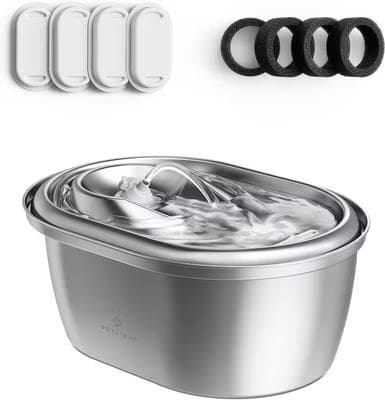
304 food-grade stainless steel pet water fountain, 101 oz. The circulating, filtered water encourages cats to drink more, which supports urinary tract and kidney health.
Webvet may earn a commission when you click through to Chewy, at no extra cost to you.
 $65 · no membership
Worried about your dog's urinary or kidney symptoms?
A licensed vet can examine your dog over video and prescribe treatment online when it's appropriate.
 Talk to a vet
- Licensed vets
- All 50 states
- same-day Rx
Webvet may earn a commission if you book.
Home Remedies for Dog UTI: What Actually Helps (Supportive Care)
These are the measures with the strongest rationale behind them. None of them cures an infection on its own, but all of them genuinely support your dog and can lower the risk of the next one. Use them alongside veterinary care, not instead of it.
1. More water (the single most useful step)
Increasing water intake is the best-supported home measure. More water means more dilute urine and more frequent urination, which physically flushes bacteria out of the bladder before they can settle in.
Keep fresh water available at all times, add a second or third bowl around the house, and consider a pet water fountain, since many dogs drink more from moving water. Adding a splash of water or low-sodium, onion-free broth to meals, or mixing in wet food, nudges intake up further.

2. Frequent, complete potty breaks
Do not make your dog hold it. Offering more frequent chances to urinate keeps the bladder flushing and prevents bacteria-laden urine from pooling for hours. Give an extra midday walk if you can, and let your dog fully empty rather than rushing back inside. If your dog is straining to urinate but almost nothing comes out, stop and call a vet, because that pattern points to a possible blockage rather than a simple infection.

3. Good hygiene
Keeping the genital area clean and dry reduces the bacterial load sitting near the urethra. Gently wipe the area with a pet-safe wipe or a damp cloth after walks, trim long fur around the opening, and pay extra attention to dogs with a recessed vulva or deep skin folds, where moisture and bacteria collect. This is simple, safe, and especially worthwhile in dogs prone to recurrent infections.
4. Cranberry or D-mannose supplements (vet-approved, evidence tier: promising but limited)
Cranberry and D-mannose are the supplements with a real biological rationale. Compounds in cranberry (proanthocyanidins) and the sugar D-mannose may make it harder for E. coli to stick to the bladder wall. The honest caveat: evidence in dogs is limited and mixed, so these are best viewed as prevention aids for recurrence-prone dogs rather than treatments for an active infection.
Use a product formulated for dogs at a vet-guided dose, and never give cranberry juice, which is loaded with sugar and often too acidic. See WebVet’s guide to whether dogs can eat cranberries.
5. Probiotics
A dog-specific probiotic supports a healthy gut and skin microbiome, which is where many urinary bacteria originate, and it is especially reasonable if your dog is on antibiotics that disrupt normal flora. Like cranberry, a probiotic is a supportive and preventive measure, not a cure. Choose a product made for dogs and ask your vet about timing relative to any prescribed antibiotic.
- 1Water first: dilute, frequent urination is the most reliable way to help the bladder flush bacteria.
- 2Frequent potty breaks and clean hygiene are simple, safe, and effective supportive steps.
- 3Cranberry, D-mannose, and probiotics are prevention aids with limited evidence, best used with vet approval, not as a cure.
Home Remedies to Skip or Approach With Caution
The internet is full of confident advice about curing a dog UTI with pantry ingredients. Some of it is merely useless, and some of it can hurt your dog. Here is what to skip, and why.

Popular remedies: helpful vs. skip
Pros
- Increase water intake (dilutes and flushes the bladder)
- Frequent, complete potty breaks
- Clean, dry genital hygiene
- Vet-approved cranberry or D-mannose supplement for prevention
- Dog-specific probiotic as supportive care
Cons
- Apple cider vinegar in water (unproven, can irritate and deter drinking)
- Coconut oil as a UTI cure (no antibacterial effect on a bladder infection)
- Hydrogen peroxide by mouth (dangerous, never for a UTI)
- Human OTC UTI medicines like AZO or phenazopyridine (toxic to dogs)
- High-dose cranberry juice (sugary and too acidic)
Apple cider vinegar (ACV)
ACV is the most common myth in this space. Adding vinegar to the water bowl will not cure a bladder infection, the amounts involved cannot meaningfully change urine chemistry the way people claim, and the sour taste often makes dogs drink less, which is the opposite of what you want. In some dogs it also irritates the mouth or stomach. Skip it.
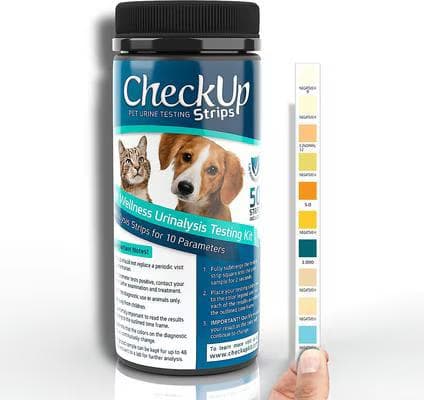
At-home urine test strips that screen for glucose, blood, pH, and protein in seconds, so you can catch early signs of diabetes, kidney disease, or a UTI and bring real numbers to your vet.
Webvet may earn a commission when you click through to Chewy, at no extra cost to you.
Coconut oil
Coconut oil is heavily promoted as a natural antibacterial, but there is no evidence it treats a bladder infection, and it does not reach the bladder in any active form. Large amounts can also cause stomach upset, diarrhea, and, in prone dogs, pancreatitis. It is not a UTI remedy.
Hydrogen peroxide
Never give hydrogen peroxide by mouth for a UTI. It has no role in treating urinary infections and is used only to induce vomiting after certain poisonings, and only under direct veterinary guidance. Given otherwise it can badly damage the stomach lining.
Human over-the-counter UTI products
Do not reach for human UTI remedies like AZO or phenazopyridine, or for leftover antibiotics. Phenazopyridine can be toxic to dogs, human dosing is wrong for a dog, and a leftover antibiotic may be the wrong drug entirely while fueling antibiotic resistance. Any medication for a dog UTI must come from your vet.
What to Feed a Dog With a UTI
Diet will not cure an active bacterial infection, but the right feeding approach supports recovery and, for the right dog, helps prevent the next flare-up. The theme is simple: more moisture, and, when appropriate, a vet-chosen therapeutic diet.

- Add moisture. Wet food, or kibble moistened with water or low-sodium broth, increases water intake and dilutes the urine.
- Feed a complete, balanced diet. A quality maintenance food supports overall immune health. Now is not the time for drastic, unbalanced homemade experiments.
- Ask about a therapeutic urinary diet. If your dog has stones or crystals driving repeat infections, your vet may prescribe a therapeutic diet formulated to change urine chemistry and dissolve or prevent certain stones.
- Skip the sugar and salt bombs. Avoid sugary cranberry juice and heavily salted human foods marketed as home cures.
Because stone type dictates the correct diet, and the wrong diet can make some stones worse, any therapeutic food should be chosen by your vet based on your dog's specific diagnosis, not picked off a shelf.
Can a Dog UTI Clear Up Without Antibiotics?
This is the question every owner really wants answered, so here it is plainly: you should not count on a dog UTI clearing up without antibiotics. A true bacterial bladder infection does not reliably resolve on its own. While a rare, very mild case might improve with strong flushing, there is no way to know at home whether an infection is mild, worsening, or already climbing toward the kidneys.
The risk of waiting is real. Untreated bladder bacteria can ascend to the kidneys and cause pyelonephritis, a serious infection that can damage kidney function or progress to sepsis. Blood in the urine can also signal stones or a tumor rather than a simple infection, so a dog peeing blood should always be examined. The safe answer is to have a suspected UTI diagnosed and treated promptly, then use home care to support that treatment.
Over-the-Counter Options for Dog UTI: What's Safe and What Isn't
Owners often ask which over-the-counter product is good for a dog UTI. The blunt truth is that no OTC product cures a bacterial infection, and some are dangerous. Here is how the common options actually sort out.
| Over-the-counter option | Safe to use? | What it does (and doesn't) do |
|---|---|---|
| Dog cranberry or D-mannose supplement | Yes, with vet approval | May help prevent recurrence; does not cure an active infection |
| Dog-specific probiotic | Yes | Supportive for gut and skin flora; not a cure |
| OTC urine test strips | Limited use | Cannot identify bacteria or the right antibiotic; a normal strip can falsely reassure |
| Apple cider vinegar | Skip | Unproven, can irritate and reduce drinking |
| Human UTI meds (AZO, phenazopyridine) | No, unsafe | Can be toxic to dogs; wrong dosing |
| Leftover or human antibiotics | No, unsafe | Likely wrong drug or dose; fuels resistance |
The bottom line on OTC options: the safe ones are supportive supplements, used with your vet's blessing, and even the best of them do not replace a diagnosis. Anything meant to actually kill the infection has to be prescribed.
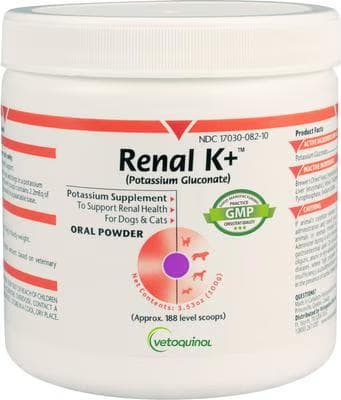
Vet-formulated potassium supplement that supports kidney health in dogs and cats with chronic kidney disease. An easy oral powder you mix into food.
Webvet may earn a commission when you click through to Chewy, at no extra cost to you.
When Home Care Is Not Enough: Red-Flag Symptoms and Emergencies
Home care has clear limits. Certain signs mean you should stop trying remedies and get veterinary help, sometimes immediately. Treat the following as your stop-and-go-now list.

- Straining with little or no urine. A possible urinary obstruction. This is a life-threatening emergency, so go to a vet right now.
- A hard, bloated, or painful belly. This can mean an overfull bladder that cannot empty. Emergency care.
- Vomiting, weakness, collapse, or fever. Signs the infection may have spread or a blockage is causing toxins to build. Emergency care.
- Heavy bleeding, or signs lasting beyond a day or two. Large amounts of blood, or symptoms that persist despite home care, need a prompt vet visit.
Puppies, senior dogs, pregnant dogs, and dogs with diabetes or a history of stones should be seen sooner rather than later, since they are less able to tolerate a delay. When in doubt, a phone call to your vet or an emergency clinic is always the safer choice.
How Vets Diagnose and Treat a Dog UTI
Knowing what happens at the clinic makes it clear why home care alone falls short. Diagnosis starts with a physical exam and a urinalysis, which checks the urine for white blood cells, bacteria, blood, crystals, and concentration. For a precise answer, vets rely on a urine culture and sensitivity test, which grows the bacteria, identifies the species, and reveals which antibiotic will kill it. The cornerstone of dog UTI treatment is then an antibiotic matched to that result, sometimes with pain relief to keep your dog comfortable.
Two rules make treatment work. Finish the entire course of antibiotics, even after your dog looks normal within a couple of days, because stopping early lets bacteria rebound and breeds resistance. And treat the underlying cause, since stones, diabetes, or an anatomical issue will keep driving infections until it is addressed. The same diagnostic logic applies across species, as our guide to how veterinarians diagnose urinary problems in cats explains.
Preventing Future UTIs at Home
This is where home care genuinely shines. You cannot prevent every infection, but consistent habits meaningfully lower the odds, especially in dogs prone to recurrence.
- Keep water flowing. Constant fresh water, a fountain, and moisture-rich meals dilute urine and help the bladder flush bacteria before they settle in.
- Offer frequent potty breaks. Do not make your dog hold urine for long stretches, since stale urine gives bacteria time to multiply.
- Mind hygiene. Keep the genital area and skin folds clean and dry, particularly in female dogs and those with a recessed vulva.
- Manage underlying conditions. Well-controlled diabetes or Cushing's disease removes a major driver of stubborn, recurring infections.
- Use vet-approved supplements consistently. For recurrence-prone dogs, a cranberry, D-mannose, or probiotic supplement your vet endorses is a reasonable long-term prevention aid.
If UTIs keep returning, ask your vet to hunt for a root cause rather than just re-treating each flare. For a plain-language overview of the same topic, our partners at Petful also cover UTIs in dogs. And because urinary trouble is not just a dog problem, cat owners should read our hub on UTIs and urinary problems in cats, since a blocked cat is an even faster-moving emergency.
Many of the same principles, hydration, frequent urination, and managing underlying disease, carry across species, as our guide to preventative care for feline urinary health shows. Whatever the pet, prevention works best when the underlying reason is found and managed with your vet.
Home Remedies for Dog UTI FAQ
Frequently Asked Questions
Can a dog's UTI cure itself without antibiotics?
You should not count on a dog's UTI curing itself without antibiotics. A true bacterial bladder infection does not reliably clear on its own, and while strong flushing with extra water might help a rare, very mild case, there is no way to tell at home whether an infection is mild or already worsening. Leaving it untreated risks the bacteria ascending to the kidneys and causing pyelonephritis, a serious infection that can damage kidney function or lead to sepsis, all while your dog stays in pain. The safe approach is to have a suspected UTI diagnosed and treated promptly, then use home care such as extra water and frequent potty breaks to support that treatment.
What can I give a dog for a urine infection?
The only thing that reliably clears a dog's urine infection is a vet-prescribed antibiotic chosen to match the bacteria, ideally from a urine culture. At home, you cannot give anything that cures the infection, but you can support your dog with constant fresh water, frequent potty breaks, and clean hygiene. If your vet approves, a dog-specific cranberry or D-mannose supplement and a probiotic may help as adjuncts, mainly for prevention. Do not give human UTI medicines like AZO or phenazopyridine, leftover antibiotics, or apple cider vinegar, since these are either unsafe or ineffective. Any medication meant to treat the infection must come from your veterinarian.
What triggers UTI in dogs?
Most dog UTIs are triggered when bacteria that normally live around the anus and skin, usually E. coli, climb up the urethra into the bladder and overwhelm the urinary tract's natural defenses. Several factors make that more likely: female anatomy with a shorter urethra, holding urine too long, bladder stones or crystals, diabetes or Cushing's disease that put sugar in the urine and weaken immunity, and a recessed vulva or moist skin folds that trap bacteria. Because an underlying problem so often sits behind a UTI that keeps returning, the trigger matters as much as the infection itself, and recurring infections are a reason for your vet to look for a root cause.
What can I feed my dog with a UTI?
Feed a complete, balanced diet and focus on adding moisture, since diet supports recovery but does not cure a bacterial infection. Wet food, or kibble moistened with water or low-sodium, onion-free broth, increases water intake and dilutes the urine so the bladder flushes more often. If your dog has stones or crystals driving repeat infections, your vet may prescribe a therapeutic urinary diet designed to change urine chemistry and dissolve or prevent certain stones. Because the correct diet depends on the stone type, and the wrong diet can make some stones worse, any therapeutic food should be chosen by your vet based on your dog's specific diagnosis rather than picked off a shelf. Avoid sugary cranberry juice and heavily salted human foods.
How to clear up a UTI in a dog naturally?
There is no reliable way to clear up a true bacterial UTI in a dog purely naturally, because an infection needs the right antibiotic to be eliminated. What natural, supportive care can do is help. Encourage much more water to dilute and flush the bladder, offer frequent complete potty breaks, keep the genital area clean and dry, and, with your vet's approval, use a dog-specific cranberry or D-mannose supplement and a probiotic as prevention aids. Skip apple cider vinegar, coconut oil, and any human medicine, which are unproven or unsafe. Use these natural measures alongside veterinary diagnosis and treatment, and if your dog is straining with little or no urine, skip home care and go to an emergency vet.
How to cure your dog's UTI at home?
You cannot truly cure a dog's UTI at home, only support your dog alongside vet care. A bacterial infection requires a vet-prescribed, culture-guided antibiotic, so the first step is always a veterinary diagnosis. Once your vet has confirmed the infection and started treatment, helpful home measures include ensuring constant fresh water, offering frequent potty breaks so the bladder flushes often, keeping the genital area clean, and giving every dose of the prescribed antibiotic on schedule until the full course is finished. Vet-approved cranberry or probiotic supplements can support prevention but are not a cure. If your dog is straining with little or no urine coming out, do not attempt home care, and go to an emergency vet immediately, because that can signal a life-threatening blockage.
What over the counter medicine is good for UTI in dogs?
No over-the-counter medicine reliably treats a bacterial UTI in dogs, and some are dangerous. Human UTI products such as AZO or phenazopyridine can be toxic to dogs and are dosed for people, so they should never be given. Leftover or human antibiotics are also unsafe, since they may be the wrong drug or dose and can fuel antibiotic resistance. The over-the-counter options that are reasonable are supportive rather than curative: a dog-specific cranberry or D-mannose supplement and a probiotic, ideally used with your vet's approval and mainly for prevention. Over-the-counter urine strips cannot identify the bacteria or the right antibiotic and can falsely reassure you. Any medicine intended to actually treat the infection must be prescribed by your veterinarian.
$65 · no membershipWorried about your dog's urinary or kidney symptoms?
A licensed vet can examine your dog over video and prescribe treatment online when it's appropriate.
Talk to a vet- Licensed vets
- All 50 states
- same-day Rx
Webvet may earn a commission if you book.

Editor
The Webvet Editorial Team is the in-house group of pet-care editors and writers behind Webvet, operated by Smart Pet Collective. The team researches, writes, and maintains Webvet's pet health, behavior, and medication content. Every article follows a defined editorial process: research from reputable veterinary and scientific sources, careful drafting, mandatory review of medical content by a credentialed veterinarian, and dated publication. Health and medication articles are medically reviewed by a licensed veterinary professional before they go live and are kept current over time.
Veterinarian · BVMS MRCVS
Dr. Pippa Elliott, BVMS, MRCVS, is a veterinarian with nearly 30 years of experience in companion animal practice. Dr. Elliott earned her Bachelor of Veterinary Medicine and Surgery from the University of Glasgow. She was also designated a Member of the Royal College of Veterinary Surgeons. Married with 2 grown-up kids, Dr. Elliott has a naughty Puggle named Poggle, 3 cats and a bearded dragon.
Related reading

Kidney Disease in Dogs: Why Tracking Water Intake Can Help Your Vet

Best Cat Water Fountain Picks of 2026, Vet Informed

Dog Bladder Stones: Symptoms, Treatment, and Surgery Costs
