Dog Peeing Blood but Acting Normal? Causes and Vet Advice
Is it an emergency if your dog is peeing blood but acting normal? A vet-reviewed guide to the 8 causes, the red flags that mean go now, and what to do at home.

BVMS MRCVS
Medically reviewed by Dr. Pippa Elliott, BVMS MRCVS · Last reviewed

This article contains affiliate links. Webvet may earn a commission when you buy through them, at no extra cost to you.
If your dog peeing blood still eats, plays, and greets you at the door, it is natural to feel relieved and assume the problem is minor. Please do not. Blood in a dog's urine, a sign vets call hematuria, is never normal, and a dog can act completely fine while a bladder stone, an early tumor, or a clotting problem quietly worsens inside. This vet-reviewed guide explains what the blood means, the eight most common causes, the red flags that make it a same-night emergency, and exactly when to call your vet versus head to the ER.
- 1Blood in a dog's urine (hematuria) is always abnormal and warrants a veterinary evaluation, even if your dog seems to feel fine.
- 2A dog straining and unable to pass urine is a life-threatening emergency (urinary obstruction). Go to an emergency vet immediately.
- 3The eight common causes range from a simple UTI to bladder stones, prostate disease, cancer, trauma, clotting disorders, kidney disease, and estrus.
- 4Never give human pain relievers such as ibuprofen or acetaminophen. They are toxic to dogs and can worsen bleeding or cause organ failure.
- 5Home care and supplements are adjuncts only. A urinalysis, and often a culture and imaging, are what actually find the cause.
Dog Peeing Blood but Acting Normal: Is It Still an Emergency?
Hematuria simply means blood in the urine. It can show up as an obvious red or pink puddle, a rusty brown tinge, or streaks and clots that only appear at the start or end of a stream. Owners often reason that a wagging, hungry, playful dog cannot be seriously ill, so the bloody urine must be a fluke. That instinct is understandable, but it is not how urinary disease works.
Dogs are remarkably good at masking discomfort. A dog with a slow-growing bladder tumor, a stone sitting quietly in the bladder, or an early clotting disorder can look and behave completely normal for days or weeks while the underlying problem progresses. Normal behavior tells you the dog is not yet in crisis. It does not tell you the cause is harmless.
So here is the load-bearing message this entire guide is built around: any visible blood in your dog's urine deserves a veterinary evaluation, even when your dog seems perfectly happy. Most causes are very treatable when caught early, which is exactly why do not wait and watch is the right call. The rest of this article helps you judge how urgently to act.
What Blood in Dog Urine Looks Like
The appearance of the blood can offer clues, though it never replaces testing. Paying attention to the color, the timing within the stream, and whether you see clots gives your vet a useful head start.
- Bright red urine or fresh blood: often points to active bleeding lower down, in the bladder or urethra, such as a stone, infection, or trauma.
- Rust, brown, or tea-colored urine: can mean older blood, or it may not be blood at all but a pigment (see the section on hemoglobinuria and myoglobinuria below).
- Pink or lightly tinged urine: suggests a smaller amount of blood mixed evenly through the urine.
- Blood clots: visible clots indicate more significant bleeding and always warrant prompt veterinary attention.
- Timing in the stream: blood mainly at the start can suggest the lower urethra or genital tract, blood throughout the stream points to the bladder or kidneys, and blood at the very end can indicate the bladder wall.

According to the Merck Veterinary Manual, the color and pattern of blood in urine are starting points that guide the vet's workup, not a diagnosis on their own. A clean, fresh urine sample is worth far more than a phone description, so collect one if you safely can before your appointment.

At-home urine test strips that screen for glucose, blood, pH, and protein in seconds, so you can catch early signs of diabetes, kidney disease, or a UTI and bring real numbers to your vet.
Webvet may earn a commission when you click through to Chewy, at no extra cost to you.
Why Is My Dog Peeing Blood? 8 Common Causes
Blood in the urine is a symptom, not a diagnosis. Several very different conditions produce it, which is why a vet almost never treats bloody urine blindly. Here are the eight causes that account for the large majority of cases.
1. Urinary tract infection (UTI)
A bacterial bladder infection is one of the most common reasons a dog passes bloody urine, especially in females. The inflamed bladder lining bleeds and triggers frequent, painful urination. Our full guide to a UTI in dogs covers the symptoms and treatment in depth.
2. Bladder or kidney stones
Stones and crystals scrape the bladder wall and cause bleeding, straining, and pain. Bladder stones can also lodge in the urethra and cause a life-threatening obstruction, which is why straining with little output is an emergency.
3. Prostate disease in intact male dogs
In unneutered males, an enlarged, infected, or cancerous prostate is a leading cause of blood in the urine or a bloody discharge. Prostate problems become more common with age in intact males and are a strong reason to have a male dog evaluated.
4. Cancer and bladder tumors
Tumors of the bladder or urinary tract, such as transitional cell carcinoma, classically cause chronic or intermittent bloody urine in older dogs, often with straining. This is one of the reasons an acting-normal senior dog with bloody urine still needs a workup, since early tumors can be silent.
5. Trauma
A blow to the abdomen, a fall, a road accident, or rough play can bruise or tear the bladder, urethra, or kidney and produce blood in the urine. Any known trauma plus bloody urine deserves same-day veterinary attention to rule out internal injury.
6. Clotting disorders and rodenticide poisoning
If a dog cannot clot normally, it may bleed into the urinary tract. A major cause is anticoagulant rodenticide (rat bait) poisoning, which blocks vitamin K and causes bleeding that can appear in the urine, gums, stool, or under the skin. Known or suspected rat-bait exposure is an emergency, even if your dog seems fine, because bleeding can be delayed by days.
7. Kidney disease
Disorders of the kidneys themselves, including infection (pyelonephritis), inflammation, or certain kidney diseases, can cause blood to appear in the urine along with signs like increased or decreased urination, drinking more, and lethargy.
Compare coverage choices for your pet, then request a quote directly on Lemonade.
- Check a price for your pet
- Review available coverage choices
- See the terms before you decide
Eligibility, waiting periods, limits and exclusions apply.
Webvet may earn a commission when you click through to Lemonade, at no extra cost to you.
8. Estrus (heat) in intact females
In an unspayed female, a bloody vulvar discharge during heat can be mistaken for blood in the urine. This is a normal reproductive event, not a urinary problem, but because it can mask a genuine UTI or other issue, it is still worth confirming with your vet if you are unsure what you are seeing.
The Merck Veterinary Manual, including its overview of noninfectious urinary disease, stresses that these causes overlap in how they look, so the pattern of the blood alone cannot tell them apart. Testing is what sorts them out.
Hematuria vs. Hemoglobinuria vs. Myoglobinuria
Not every red or brown urine is blood. Three different things can discolor urine, and telling them apart matters because the causes and the urgency are very different. This is a distinction most general articles skip, but it can change what happens next.
| Term | What is actually in the urine | Typical causes |
|---|---|---|
| Hematuria | Whole red blood cells (true blood) | UTI, stones, tumors, prostate disease, trauma, clotting problems |
| Hemoglobinuria | Hemoglobin pigment released from broken-down red blood cells | Immune-mediated hemolysis, toxins (onion, garlic, zinc), certain infections |
| Myoglobinuria | Myoglobin pigment released from damaged muscle | Severe muscle injury or breakdown (rare) |
Hematuria means whole blood cells are in the urine, and it points to bleeding somewhere in the urinary or genital tract. Hemoglobinuria and myoglobinuria are pigments, not blood cells, and they often signal a body-wide problem such as red-blood-cell destruction or muscle damage. A vet distinguishes them by spinning down the sample and examining it under the microscope, which is another reason a home guess is never enough.
Dog Peeing Blood but Acting Normal: What It Does and Doesn't Rule Out
The single most searched version of this problem is the dog that is peeing blood but acting completely normal. It is worth being clear about what that normal behavior does and does not tell you.
What normal behavior does suggest is that your dog is probably not in immediate crisis right now: not obstructed, not collapsing, not in shock. That is genuinely reassuring for the next few hours.
What normal behavior does not rule out is a long list of causes that are painless or silent in their early stages. A bladder stone can sit quietly. An early bladder tumor often causes no behavior change until it is advanced. A clotting problem from rat bait can look like nothing until the bleeding becomes severe. A brewing UTI may only show as a little blood before the discomfort sets in.
In other words, acting normal buys you time to book a proper appointment rather than rush to the ER, but it does not buy you permission to ignore the blood. Treat it as a reason to call your vet within a day, and watch closely for any of the red flags below.
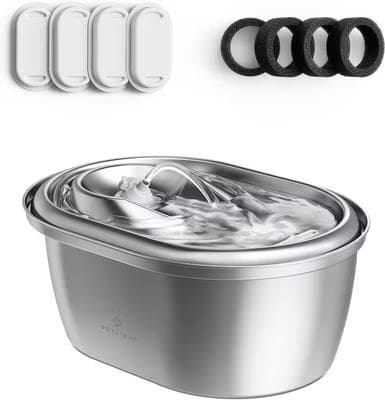
304 food-grade stainless steel pet water fountain, 101 oz. The circulating, filtered water encourages cats to drink more, which supports urinary tract and kidney health.
Webvet may earn a commission when you click through to Chewy, at no extra cost to you.
 $65 · no membership
Worried about your dog's urinary or kidney symptoms?
A licensed vet can examine your dog over video and prescribe treatment online when it's appropriate.
 Talk to a vet
- Licensed vets
- All 50 states
- same-day Rx

Webvet may earn a commission if you book.
Is Blood in a Dog's Urine an Emergency? Red-Flag Signs
Most bloody-urine cases are urgent but not immediate emergencies. A specific set of signs, however, means you should stop reading and get to an emergency vet now. The most important is a dog straining to urinate with little or nothing coming out.
A dog straining to urinate with no urine passing may have a urethral obstruction, most often a stone or plug. A blocked dog cannot empty its bladder, pressure backs up toward the kidneys, toxins build in the blood, and the bladder can rupture.
Per the Merck Veterinary Manual, a complete obstruction causes toxins to build up within one to two days and can be fatal in about three days if untreated. That makes it a true emergency that needs immediate veterinary care.
If none of those red flags are present and your dog is otherwise acting normally, you are usually looking at a prompt, same-week appointment rather than a midnight trip. When in doubt, call your veterinarian or a local emergency clinic and describe what you are seeing. They will help you judge the urgency.
How Kidneys Shutting Down Presents vs. a Simple UTI
Sometimes bloody urine is a local bladder problem, and sometimes it is a sign of a body that is becoming systemically ill. Learning to tell the difference helps you gauge urgency.
A simple lower UTI tends to stay local. The dog urinates frequently and painfully, may pass a little blood, and licks the genital area, but otherwise eats, drinks, and behaves normally. It feels uncomfortable rather than sick all over.
Kidney failure, by contrast, makes a dog systemically unwell. As the kidneys shut down, dogs commonly become lethargic and weak, lose their appetite, vomit, and develop notably bad, sometimes chemical-smelling breath. Thirst and urine volume often change: some dogs drink and urinate far more, others produce little or no urine at all. Weight loss, mouth ulcers, and pale gums can appear as the illness advances.
The Merck Veterinary Manual notes that when bloody urine comes bundled with lethargy, vomiting, appetite loss, or a change in how much a dog drinks and urinates, the problem is more likely systemic and needs urgent, not routine, evaluation. Bloody urine plus a sick-acting dog is a stronger warning than bloody urine alone.
What You Can and Can't Give a Dog for Bloody Urine at Home
It is natural to want to do something right away. The most important thing to know is what not to reach for.
So what can you safely do while you arrange a vet visit? A short list of genuinely helpful, low-risk steps:

- Ensure constant fresh water. Good hydration dilutes the urine and helps the bladder flush, which supports comfort while you wait.
- Collect a clean, fresh urine sample. A mid-stream catch in a clean container, refrigerated and brought in within a few hours, speeds up diagnosis.
- Offer frequent potty breaks. Do not force your dog to hold urine, which is uncomfortable and unhelpful.
- Write down what you see. Note the color, timing, any straining, and possible toxin or trauma exposure.
What about cranberry, apple cider vinegar, or urinary supplements? These are adjuncts at best, not treatments, and they should never delay a vet visit for bloody urine. Our overview of home remedies for a dog UTI explains where supportive care genuinely helps and where it does not. If the cause is a stone, a tumor, or a clotting problem, no home remedy will fix it, and self-medicating can waste critical time. See WebVet’s guide to whether dogs can eat cranberries.
First Signs of a UTI in Dogs
Because a UTI is such a common cause of bloody urine, it helps to recognize its earliest signs, often before blood even appears. Catching a UTI early usually means a simpler, faster resolution.
- Frequent small voids: asking out constantly but producing only a little each time.
- Straining or discomfort: hunching or seeming to work at urinating.
- Excessive licking: repeatedly licking the genital area.
- Indoor accidents: a housetrained dog suddenly leaking or going inside.
- Cloudy or strong-smelling urine: a change in clarity or odor.
- Blood in the urine: pink, red, or cloudy urine as inflammation builds.
For a fuller walkthrough, see our guide to the symptoms of a dog UTI, and note that females are affected more often, covered in our guide to UTIs in female dogs. Per the Merck Veterinary Manual, which notes females are more prone to UTIs than males, a cluster of these signs is a strong reason to have your dog tested rather than assume it will pass.
How Vets Diagnose the Cause
Because so many conditions look alike, diagnosis is about finding the specific cause, not just confirming there is blood. Your vet works through a logical sequence of tests.

- Physical exam and history: including feeling the bladder and, in males, checking the prostate.
- Urinalysis: examines the urine for red and white blood cells, bacteria, crystals, and protein.
- Urine culture: grows and identifies bacteria and shows which antibiotic will work, ideally from a sterile cystocentesis sample drawn directly from the bladder.
- Bloodwork: screens for kidney disease, diabetes, and clotting problems.
- Imaging: X-rays and ultrasound look for stones, tumors, and structural problems.
- Cystoscopy: in some cases, a scope examines the bladder and urethra directly.
For dogs with recurring or stubborn bloody urine, this fuller workup is what finally identifies the root cause and stops the cycle.

Webvet may earn a commission when you click through to Chewy, at no extra cost to you.
Treatment by Cause
There is no single treatment for bloody urine, because the right treatment depends entirely on the cause. Once the diagnosis is clear, the path usually follows one of these lines:
| Cause | Typical treatment |
|---|---|
| Bacterial UTI | A targeted antibiotic guided by urine culture, sometimes pain relief |
| Bladder or kidney stones | A special dissolution diet or surgical or minimally invasive removal |
| Prostate disease | Neutering, antibiotics, or further workup depending on the cause |
| Bladder or urinary tumor | Referral to a specialist for medication, chemotherapy, or surgery |
| Rodenticide or clotting problem | Emergency vitamin K, plasma or blood products, hospitalization |
| Kidney disease | Fluids, diet, and medical management of the underlying disease |
Our detailed guide to dog UTI treatment covers the antibiotic path in depth. Whatever the cause, two rules hold: finish every medication exactly as prescribed, and treat the underlying problem rather than just the bleeding, or it will return.
Bloody Urine in Male, Female, and Senior Dogs
Signalment, the dog's sex, reproductive status, and age, shifts which causes are most likely and helps your vet prioritize the workup.
Intact male dogs
In unneutered males, prostate disease (infection, enlargement, or cancer) is a leading cause of blood in the urine or a bloody drip, and it becomes more likely with age. A bloody discharge in an intact male always deserves a prostate check.
Female dogs
Females get UTIs more often than males because of their shorter, wider urethra. In an intact female, a bloody vulvar discharge during heat can be mistaken for urinary blood, so knowing her cycle helps sort out the picture.
Senior dogs
In older dogs of either sex, the risk of bladder tumors and other serious causes rises. That is precisely why an acting-normal senior with bloody urine should never be written off. Age raises the stakes on getting a real diagnosis.
Can It Go Away on Its Own, and How to Prevent Recurrence
Owners often hope the blood will simply stop. Sometimes visible blood does fade for a day, but that is not the same as the cause resolving. A stone, tumor, or clotting disorder does not heal itself, and even a UTI that seems to quiet down can persist and ascend to the kidneys. Blood that disappears is still a reason to have your dog checked, because the underlying problem may still be active.
While you cannot prevent every cause, these habits meaningfully lower the risk of the common ones, especially recurrent UTIs and stones:
- Keep water flowing. Constant fresh water dilutes urine and helps the bladder flush bacteria and crystals.
- Offer frequent potty breaks. Do not make your dog hold urine for long stretches.
- Follow any prescribed diet. For stone-forming dogs, a therapeutic urinary diet prevents both stones and the bleeding they cause.
- Consider spaying and neutering. Neutering reduces prostate disease in males, and spaying removes estrus bleeding and lowers some tumor risks.
- Monitor senior dogs closely. Regular checkups catch tumors and kidney disease earlier, when they are most treatable.
When to Call the Vet vs. Go to the ER Tonight
Pulling it together, here is a simple decision guide for the moment you notice blood.
Go to the ER now if: your dog is straining but cannot pass urine, is passing large amounts of blood or many clots, is weak, collapsing, vomiting, or has pale gums, or has any possible exposure to rat bait, antifreeze, or human medication. These are life-threatening and cannot wait.
Call your vet within a day if: your dog is passing bloody urine but is otherwise bright, eating, and acting normal. This is the common acting-normal scenario. It is not a midnight emergency, but it still needs a prompt appointment and a urine sample.
Whatever you do, do not: give human pain relievers, wait weeks to see if it clears, or rely on supplements in place of a diagnosis.
The principle underneath every one of these branches is the same load-bearing message: blood in a dog's urine always warrants professional evaluation. For a plain-language companion overview of canine urinary infections, our partners at Petful also cover UTIs in dogs. And because urinary trouble is not only a dog problem, if you also share your home with cats it is worth reading our hub on UTIs and urinary problems in cats, since a blocked cat is an even faster-moving emergency.
Frequently Asked Questions
Is blood in dog's urine an emergency?
Blood in a dog's urine is always abnormal and always warrants a veterinary evaluation, but it is not always a same-night emergency. It becomes a true emergency when your dog is straining but unable to pass urine (a possible urethral obstruction), is passing large amounts of blood or clots, is weak, collapsing, or vomiting, has pale gums, or has any known exposure to rat bait, antifreeze, or human medication. In those situations, go to an emergency vet immediately. If your dog is passing bloody urine but is otherwise bright, eating, and acting normal, it is usually not a midnight emergency, but you should still call your vet within a day and arrange a prompt appointment with a urine sample.
What does it mean if my dog is peeing a little blood?
Even a little blood in your dog's urine (hematuria) means something is bleeding somewhere in the urinary or genital tract, and it is never normal. A small amount of blood can come from an early urinary tract infection, a bladder stone or crystals, prostate disease in intact males, an early bladder tumor, trauma, a clotting problem, or, in unspayed females, estrus bleeding mistaken for urinary blood. The amount of blood does not reliably tell you how serious the cause is, since a small amount can come from a serious problem and a larger amount from a treatable one. A small amount of blood is a reason to book a prompt vet appointment and bring a fresh urine sample, not a reason to wait and watch.
What can I give my dog for peeing blood?
You should not give your dog any medication for bloody urine without your veterinarian's direction, and you must never give human pain relievers such as ibuprofen, acetaminophen, aspirin, or naproxen, which are toxic to dogs and can worsen bleeding or cause organ failure. There is no safe over-the-counter treatment for blood in the urine, because the correct treatment depends entirely on the cause, which requires testing to identify. What you can safely do at home is ensure constant access to fresh water, collect a clean fresh urine sample for your vet, offer frequent potty breaks, and write down what you are seeing. Cranberry or urinary supplements are adjuncts at best and should never delay a proper diagnosis.
What are the first signs of a UTI in dogs?
The first signs of a UTI in dogs are usually frequent urination in small amounts, straining or discomfort while urinating, and excessive licking of the genital area. Owners often also notice indoor accidents from a housetrained dog, cloudy or strong-smelling urine, and eventually pink, red, or cloudy urine as inflammation builds. A dog may show only one or two of these signs early on, before blood ever appears. Because these symptoms overlap with bladder stones, tumors, and other conditions, a cluster of them is a strong reason to have your dog tested with a urinalysis rather than assuming the problem will clear on its own.
How does a dog act when their kidneys are shutting down?
When a dog's kidneys are shutting down, the dog usually becomes systemically ill rather than just uncomfortable. Common signs include marked lethargy and weakness, loss of appetite, vomiting, and notably bad, sometimes chemical-smelling breath. Thirst and urine output often change: some dogs drink and urinate much more than usual, while others produce very little or no urine at all. As the illness advances, you may see weight loss, mouth ulcers, and pale gums. When bloody urine appears alongside these whole-body signs, it points to a systemic illness that needs urgent veterinary evaluation, not a routine appointment.
What are signs your dog is going to pass away?
Signs that a seriously ill dog may be approaching the end of life can include profound weakness and inability to stand, refusal to eat or drink for an extended period, labored or irregular breathing, a very low body temperature and cold extremities, unresponsiveness or disorientation, loss of bladder and bowel control, and pale or bluish gums. In the context of severe urinary or kidney disease, an inability to pass urine, collapse, and persistent vomiting are grave warning signs. These situations are veterinary emergencies. If you are seeing them, contact your veterinarian or an emergency clinic right away, both to give your dog the best chance and to discuss humane, compassionate options if recovery is not possible.
Should I be worried if my dog is peeing blood?
Yes, you should take blood in your dog's urine seriously, because it is always abnormal, even if your dog is eating, playing, and acting completely normal. Normal behavior means your dog is likely not in immediate crisis, but it does not rule out causes that are silent early on, such as bladder stones, an early tumor, or a clotting problem. The reassuring news is that most causes are very treatable when caught early. The right response is not to panic, but not to ignore it either: call your veterinarian within a day for an appointment, or go to an emergency vet immediately if your dog is straining and unable to urinate, passing a lot of blood, weak or collapsing, or may have been exposed to a toxin.
$65 · no membershipWorried about your dog's urinary or kidney symptoms?
A licensed vet can examine your dog over video and prescribe treatment online when it's appropriate.
Talk to a vet- Licensed vets
- All 50 states
- same-day Rx
Webvet may earn a commission if you book.

Editor
The Webvet Editorial Team is the in-house group of pet-care editors and writers behind Webvet, operated by Smart Pet Collective. The team researches, writes, and maintains Webvet's pet health, behavior, and medication content. Every article follows a defined editorial process: research from reputable veterinary and scientific sources, careful drafting, mandatory review of medical content by a credentialed veterinarian, and dated publication. Health and medication articles are medically reviewed by a licensed veterinary professional before they go live and are kept current over time.
Veterinarian · BVMS MRCVS
Dr. Pippa Elliott, BVMS, MRCVS, is a veterinarian with nearly 30 years of experience in companion animal practice. Dr. Elliott earned her Bachelor of Veterinary Medicine and Surgery from the University of Glasgow. She was also designated a Member of the Royal College of Veterinary Surgeons. Married with 2 grown-up kids, Dr. Elliott has a naughty Puggle named Poggle, 3 cats and a bearded dragon.
Related reading

Kidney Disease in Dogs: Why Tracking Water Intake Can Help Your Vet

Best Cat Water Fountain Picks of 2026, Vet Informed

Dog Bladder Stones: Symptoms, Treatment, and Surgery Costs
