UTI in Dogs: Symptoms, Causes, and When to See a Vet
A UTI in dogs causes frequent, painful urination, straining, and sometimes bloody urine. Learn the symptoms, causes, and red flags that mean an emergency, plus how vets diagnose and treat it.

BVMS MRCVS
Medically reviewed by Dr. Pippa Elliott, BVMS MRCVS · Last reviewed

This article contains affiliate links. Webvet may earn a commission when you buy through them, at no extra cost to you.
A UTI in dogs, short for urinary tract infection, happens when bacteria travel up the urethra and colonize the bladder, causing inflammation that makes urinating frequent, painful, and urgent. Most infections are treatable, but a dog straining to pass urine with little or nothing coming out can signal a life-threatening blockage that needs an emergency vet right away. This vet-reviewed guide walks through the symptoms, the common causes, look-alike conditions, how vets diagnose and treat the problem, and exactly when to pick up the phone.
- 1A dog UTI is a bacterial infection of the bladder that causes frequent, painful, or bloody urination and straining.
- 2Straining to urinate with little or no output can mean a urinary obstruction, which is a true emergency, so call a vet now.
- 3Dog UTIs do not reliably clear up on their own and can ascend to the kidneys if left untreated.
- 4Diagnosis relies on a urinalysis and, ideally, a urine culture so the right antibiotic is chosen.
- 5Antibiotics must be prescribed by a vet and guided by a culture; home care and supplements are adjuncts only, never a substitute.
What Is a UTI in Dogs?
A urinary tract infection is exactly what it sounds like: an infection somewhere in the system that makes and carries urine out of the body. In dogs, the most common form is a bacterial infection of the bladder, also called bacterial cystitis. Bacteria, most often Escherichia coli from the dog's own gut and skin, climb up the urethra, reach the bladder, and multiply, irritating the bladder lining and triggering the classic signs of discomfort.
Vets divide the urinary tract into a lower part (the bladder and urethra) and an upper part (the kidneys and the ureters that connect them). Most dog UTIs are lower urinary tract infections in the bladder. The danger of leaving one untreated is that the infection can travel upward and reach a kidney, a far more serious condition called pyelonephritis.
Veterinary specialists also separate simple from complicated cases. A sporadic, uncomplicated UTI is an occasional infection in an otherwise healthy dog. A recurrent or complicated UTI keeps coming back or occurs alongside another problem, such as bladder stones, diabetes, or a structural issue. According to consensus guidance from the American College of Veterinary Internal Medicine and the International Society for Companion Animal Infectious Diseases (ACVIM/ISCAID), that distinction shapes how aggressively a case is worked up and treated.

Webvet may earn a commission when you click through to Chewy, at no extra cost to you.
Symptoms of a UTI in Dogs
The signs of a bladder infection come from an inflamed, irritated bladder that feels full even when it is nearly empty. If you are wondering how to tell whether your dog has a UTI, watch for these common symptoms:
- Frequent urination: asking to go out far more often than usual, sometimes every few minutes.
- Straining or discomfort: hunching, whimpering, or visibly working to pass urine.
- Only a few drops: squatting repeatedly but producing very little urine each time.
- Indoor accidents: a reliably housetrained dog suddenly leaking or urinating inside.
- Blood in the urine: pink, red, or cloudy urine, a sign called hematuria.
- Strong or foul odor: urine that smells unusually strong or unpleasant.
- Excessive licking: repeatedly licking the genital area because it feels irritated.

Some dogs also seem lethargic or run a low fever if the infection is more advanced. For a deeper walk-through of what to look for, see our guide to the signs of a dog UTI, and if you have noticed red or pink urine, read more about what it means when a dog is peeing blood. A single symptom on its own does not confirm a UTI, but a cluster of these signs is a strong reason to call your vet.
What Can Be Mistaken for a UTI in Dogs?
Here is the part that surprises many owners: a large share of dogs with UTI-like signs do not actually have a bladder infection. Frequent, painful, or bloody urination is a symptom, not a diagnosis, and several other conditions produce the exact same picture. That is a key reason a vet visit and a urine test matter so much, because treating the wrong problem wastes time and can let the real one worsen.
The most common look-alikes include bladder stones and crystals, sterile inflammation of the bladder (cystitis), bladder tumors such as transitional cell carcinoma, prostate infection or enlargement in male dogs, and metabolic diseases like diabetes and kidney disease that make dogs drink and urinate far more. Behavioral marking and simple incontinence can also mimic a UTI.
| Condition | How it can look like a UTI | How vets tell it apart |
|---|---|---|
| Bladder stones or crystals | Straining, blood, frequent urination | Imaging (X-ray or ultrasound) plus urinalysis |
| Bladder cancer (TCC) | Chronic blood and straining, often in older dogs | Ultrasound, urine tests, sometimes biopsy |
| Prostate disease (male dogs) | Straining, blood, discomfort urinating | Rectal exam, imaging, prostate-specific testing |
| Diabetes or kidney disease | Drinking and urinating a lot, accidents | Bloodwork plus urinalysis |
| Behavioral marking or incontinence | Indoor accidents, small volumes | History, exam, ruling out infection first |
Because these conditions overlap so heavily, a vet almost never treats presumed UTI signs blindly in a dog with recurring or ongoing problems. The urine tells the real story.
What Causes UTIs in Dogs?
Most dog UTIs are caused by bacteria that normally live around the anus, on the skin, and in the environment making their way into the urethra and up to the bladder. Escherichia coli is by far the most common culprit, but Staphylococcus, Proteus, Enterococcus, Klebsiella, and other bacteria are also frequent offenders.
A healthy urinary tract has natural defenses. Regular, complete urination flushes bacteria out, the bladder lining resists attachment, and the urine's acidity discourages growth. A UTI develops when those defenses are overwhelmed or weakened, for example when a dog holds urine too long, cannot empty the bladder fully, or has a condition that makes the urine a friendlier place for bacteria to grow.
Anatomy plays a role too. Anything that lets bacteria linger near the urethral opening, or anything that interrupts the normal flushing of the bladder, raises the odds that a stray population of bacteria takes hold and multiplies into a true infection.
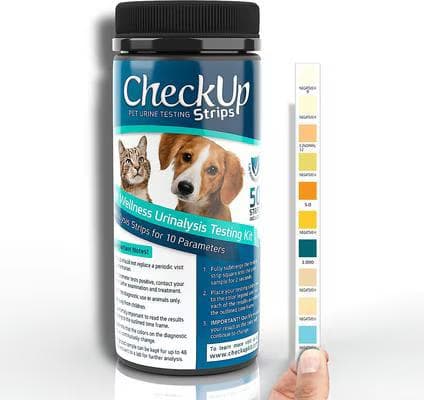
At-home urine test strips that screen for glucose, blood, pH, and protein in seconds, so you can catch early signs of diabetes, kidney disease, or a UTI and bring real numbers to your vet.
Webvet may earn a commission when you click through to Chewy, at no extra cost to you.
Risk Factors and Predisposed Dogs
Some dogs are simply more prone to urinary infections than others. Female dogs get UTIs more often than males because their urethra is shorter and wider, giving bacteria a shorter climb to the bladder. Beyond sex, several factors raise the risk:
- Older age, as immune defenses and bladder function decline with time.
- Diabetes and Cushing's disease, which put sugar in the urine and suppress immunity, making infections both more likely and more stubborn.
- Bladder stones or crystals, which irritate the bladder lining and harbor bacteria.
- A recessed or hooded vulva, and excess skin folds that trap moisture and bacteria near the urethra.
- Urinary catheterization or recent surgery, which can introduce bacteria directly into the bladder.
- Anything that blocks full emptying, such as stones, tumors, or nerve problems that leave stale urine behind.
If your dog carries one of these risk factors, a UTI is worth taking seriously the first time and worth investigating for a root cause if it keeps returning.
 $65 · no membership
Worried about your dog's urinary or kidney symptoms?
A licensed vet can examine your dog over video and prescribe treatment online when it's appropriate.
 Talk to a vet
- Licensed vets
- All 50 states
- same-day Rx
Webvet may earn a commission if you book.
Will a Dog UTI Go Away on Its Own?
It is tempting to hope a bladder infection will simply clear up if you wait. In practice, you should not count on that. A true bacterial UTI does not reliably resolve without treatment, and the discomfort your dog feels is real. More importantly, an untreated infection has a place to go: upward.
When bacteria in the bladder are left to multiply, they can ascend the ureters and infect a kidney, causing pyelonephritis. That is a painful, potentially serious condition that can damage kidney function and, in severe cases, spill bacteria into the bloodstream and lead to sepsis. What starts as an uncomfortable but manageable bladder infection can become a genuine medical crisis.
The bottom line is that a suspected UTI is a reason to see a veterinarian, not to wait and watch. Prompt, correct treatment usually resolves an uncomplicated infection quickly, while delay only gives the infection room to spread.
When to See a Vet vs. Emergency
Most UTIs warrant a same-week, non-emergency vet visit. But some urinary signs are true emergencies, and the difference can be the difference between life and death. The most important one to recognize is a dog that strains to urinate but produces little or no urine.
A dog that is straining to urinate with nothing coming out may have a urinary obstruction, most often a stone or a plug lodged in the urethra. This is more common in male dogs, whose urethra is longer and narrower and blocks more easily. A blocked dog cannot empty the bladder, pressure backs up to the kidneys, toxins build in the blood, and the bladder can rupture. This is a life-threatening emergency that needs a vet immediately, day or night. Do not wait to see if it passes.
Short of those red flags, book a regular appointment promptly if your dog shows frequent or painful urination, blood in the urine, indoor accidents, or excessive genital licking. Puppies, senior dogs, and dogs with diabetes or a history of stones should be seen sooner rather than later.
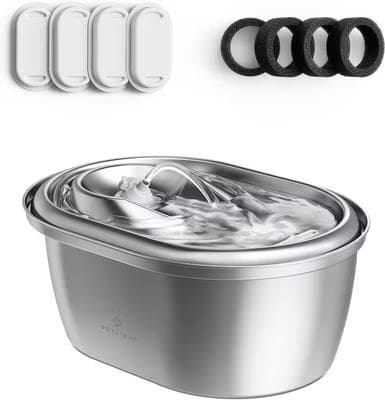
304 food-grade stainless steel pet water fountain, 101 oz. The circulating, filtered water encourages cats to drink more, which supports urinary tract and kidney health.
Webvet may earn a commission when you click through to Chewy, at no extra cost to you.
Can You Check a Dog for a UTI at Home?
You can do a lot of useful observing at home, but you cannot truly diagnose a UTI there. The single most valuable thing you can do is watch your dog closely and collect a fresh urine sample for your vet. Note how often your dog urinates, how much comes out, whether there is straining, and whether the urine looks pink, red, or cloudy.

To catch a sample, slide a clean, dry container into the stream once your dog starts urinating, ideally a mid-stream catch. Refrigerate it and get it to the clinic within a few hours, since bacteria multiply and cells break down in a sample that sits out. A fresh sample can save an office recollection and speed up the diagnosis.
Over-the-counter urine test strips exist, but they are not a substitute for veterinary testing. A strip might flag blood or protein, yet it cannot identify which bacteria are present or which antibiotic will actually work, and a normal strip can give false reassurance while a real problem goes untreated. Use home observation to gather information, then let the vet confirm the diagnosis.
How Vets Diagnose a Dog UTI
Diagnosis starts with a physical exam and a urinalysis, the workhorse test that examines the urine for white blood cells, red blood cells, bacteria, crystals, protein, and concentration. A urinalysis can strongly suggest an infection, but it does not tell the vet which bacteria are involved.

For that, vets rely on a urine culture and sensitivity test. The lab grows the bacteria from the sample, identifies the species, and tests which antibiotics will kill it. The most reliable sample for a culture is collected by cystocentesis, a quick, safe technique where the vet draws urine directly from the bladder with a fine needle, avoiding contamination from the lower tract. ACVIM/ISCAID guidance considers culture the gold standard, especially for recurrent or complicated infections.
When a UTI keeps recurring, or when the vet suspects a look-alike condition, the workup expands. Imaging such as X-rays or ultrasound checks for bladder stones, tumors, or anatomical problems, and bloodwork screens for diabetes, kidney disease, or Cushing's disease. Finding and treating the underlying cause is what stops the cycle of repeat infections.
How UTIs in Dogs Are Treated
The cornerstone of dog UTI treatment is a course of antibiotics chosen to match the specific bacteria causing the infection. Ideally that choice is guided by the culture and sensitivity results, which is why the culture matters. Modern veterinary guidance favors shorter, targeted antibiotic courses for uncomplicated infections to reduce antibiotic resistance, rather than long, one-size-fits-all treatment.
Your vet may also prescribe pain relief or anti-inflammatory medication to make your dog comfortable while the antibiotics work, since an inflamed bladder is genuinely painful. If a culture is pending, some vets start a reasonable first-choice antibiotic and adjust once results come back.
Two treatment principles are non-negotiable. First, finish the entire prescribed course, even after your dog looks and acts normal within a couple of days, because stopping early lets surviving bacteria rebound and encourages resistance. Second, treat the underlying cause. If stones, diabetes, or an anatomical issue is fueling the infections, the UTI will keep returning until that root problem is addressed.
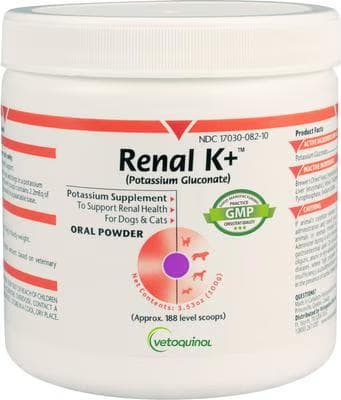
Vet-formulated potassium supplement that supports kidney health in dogs and cats with chronic kidney disease. An easy oral powder you mix into food.
Webvet may earn a commission when you click through to Chewy, at no extra cost to you.
Can You Treat a Dog UTI Without a Vet?
Owners often ask whether they can clear a UTI at home without a trip to the clinic. The honest answer is no, not safely. A bacterial infection needs the right antibiotic at the right dose, and identifying the right one requires a culture. Guessing at a leftover or human antibiotic risks using a drug that will not touch the bacteria, using the wrong dose, and driving antibiotic resistance, all while your dog stays in pain and the infection potentially spreads.
Supportive home care has a place, but only as an adjunct alongside veterinary treatment, never instead of it. Making sure your dog drinks plenty of water and gets frequent chances to urinate helps flush the bladder. Some owners ask about cranberry or urinary-support supplements; discuss any supplement with your vet first, and treat these home remedies for a dog UTI as comfort and prevention measures, not cures. For a plain-language overview of the same topic, our partners at Petful also cover UTIs in dogs. If your dog's signs point to a possible obstruction, skip home care entirely and go straight to an emergency vet. See WebVet’s guide to whether dogs can eat cranberries.
What Not to Feed a Dog With a UTI
Diet does not cure a UTI, but the wrong foods can irritate the bladder or feed the mineral imbalances behind stones that cause recurring infections. There is no single banned-foods list for every dog, because the right diet depends on whether stones are present and what type they are. That is a conversation to have with your vet, ideally guided by testing.
As a general rule during and after a urinary problem, it is sensible to limit these:
- High-oxalate foods such as spinach and certain nuts, if your dog forms calcium oxalate stones.
- Foods high in magnesium and phosphorus, which can encourage struvite stones in some dogs.
- Salty table scraps and rich human food, which upset the diet balance and can worsen thirst and urine concentration.
- Excess treats, which crowd out a balanced diet and can tip mineral levels off.
The most helpful dietary move is usually the simplest one: keep your dog well hydrated so the urine stays dilute and the bladder flushes often. Moisture-rich food and constant access to fresh water do more for most dogs than any single ingredient to avoid. If your dog forms stones, your vet may prescribe a specific therapeutic urinary diet, which is far more precise than guessing at foods to cut.
How to Prevent UTIs and Recurrence
You cannot prevent every infection, but simple habits meaningfully lower the odds, especially in dogs prone to recurrence:
- Keep water flowing. Constant fresh water dilutes urine and helps the bladder flush bacteria before they can settle in.

- Offer frequent potty breaks. Do not make your dog hold urine for long stretches, since stale urine gives bacteria time to multiply.
- Mind hygiene. Keep the genital area and any skin folds clean and dry, particularly in dogs with a recessed vulva.
- Manage weight and underlying disease. Keeping diabetes or Cushing's well controlled removes a major driver of stubborn infections.
- Follow the diet plan. For stone-forming dogs, a prescription urinary diet where indicated can prevent both stones and the infections they cause.
If your dog has recurrent UTIs, ask your vet to look for a root cause rather than just re-treating each flare. Prevention succeeds when the underlying reason is found and managed.
Recovery and Outlook
The outlook for an uncomplicated dog UTI is very good. On the right antibiotic, most dogs feel noticeably better within a day or two, and a simple bladder infection typically resolves over the course of the prescribed treatment. That early improvement is exactly why owners are tempted to stop the medication too soon, and exactly why they should not.
For recurrent or complicated infections, recovery takes more care. Your vet may recommend a follow-up urine culture after treatment to confirm the infection is truly gone rather than just quieted, and additional testing to pin down and manage the underlying cause. With a correct diagnosis and a full course of the right treatment, even dogs with repeat infections usually do well.
Urinary trouble is not just a dog problem, and it can look quite different in other pets. If you share your home with cats too, it is worth understanding feline urinary health, since a blocked cat is an even faster-moving emergency; start with our hub on UTIs and urinary problems in cats. Whatever the species, the same principle holds: urinary signs deserve a prompt, accurate veterinary diagnosis.
Frequently Asked Questions
How can I tell if my dog has UTI?
You can tell your dog may have a UTI if it is urinating far more often than usual, straining or seeming uncomfortable while it goes, producing only a few drops at a time, having accidents indoors after being housetrained, passing pink, red, or cloudy urine, giving off a strong or foul urine odor, or licking its genital area excessively. A single sign is not proof, but a cluster of these symptoms is a strong reason to see a vet. Because these signs overlap with bladder stones, tumors, diabetes, and other conditions, only a urinalysis and, ideally, a urine culture can confirm a true infection.
What can be mistaken for a UTI in dogs?
Several conditions can be mistaken for a UTI in dogs because they cause the same frequent, painful, or bloody urination. The common look-alikes include bladder stones or crystals, sterile bladder inflammation (cystitis), bladder cancer such as transitional cell carcinoma, prostate infection or enlargement in male dogs, and metabolic diseases like diabetes and kidney disease that make dogs drink and urinate more. Behavioral marking and urinary incontinence can also mimic a UTI. This overlap is exactly why a vet runs a urinalysis and often imaging or bloodwork rather than treating the signs blindly, since the true cause changes the treatment entirely.
Will UTI go away on its own dog?
No, you should not expect a dog UTI to go away on its own. A true bacterial bladder infection does not reliably clear without the correct antibiotic, and leaving it untreated is risky. Bacteria in the bladder can travel up to the kidneys and cause pyelonephritis, a serious infection that can damage kidney function and, in severe cases, lead to sepsis. Waiting also leaves your dog in avoidable pain. A suspected UTI is a reason to see a veterinarian promptly, not to wait and watch, and any dog straining with little or no urine coming out needs emergency care immediately.
Can I check my dog for a UTI at home?
You can observe for signs and collect a sample at home, but you cannot truly diagnose a UTI there. Watch how often your dog urinates, how much comes out, whether it strains, and whether the urine looks pink, red, or cloudy. The most useful step is catching a fresh mid-stream urine sample in a clean container, refrigerating it, and getting it to your vet within a few hours. Over-the-counter urine test strips are not a substitute for veterinary testing, because they cannot identify which bacteria are present or which antibiotic will work, and a normal strip can falsely reassure you while a real problem goes untreated.
Can I treat my dog's UTI without going to vet?
No, you cannot safely treat a dog UTI without a vet. A bacterial infection needs the correct antibiotic at the correct dose, and choosing the right one requires a urine culture. Using a leftover or human antibiotic risks picking a drug that will not work, dosing it wrong, and fueling antibiotic resistance, all while your dog stays in pain and the infection can spread to the kidneys. Home care such as ensuring plenty of water and frequent potty breaks can support recovery, and cranberry or urinary supplements may help as an adjunct if your vet approves, but none of these replaces vet-prescribed, culture-guided antibiotics.
What not to feed a dog with a UTI?
There is no single banned-foods list, because the right diet depends on whether your dog forms stones and what type. In general, during and after a urinary problem it is sensible to limit high-oxalate foods like spinach and certain nuts for calcium oxalate stone-formers, foods high in magnesium and phosphorus that can encourage struvite stones, salty table scraps and rich human food, and excess treats that unbalance the diet. The most helpful move is usually keeping your dog well hydrated with fresh water and moisture-rich food so the urine stays dilute. If your dog forms stones, your vet may prescribe a specific therapeutic urinary diet, which is far more precise than guessing at foods to cut.
$65 · no membershipWorried about your dog's urinary or kidney symptoms?
A licensed vet can examine your dog over video and prescribe treatment online when it's appropriate.
Talk to a vet- Licensed vets
- All 50 states
- same-day Rx
Webvet may earn a commission if you book.

Editor
The Webvet Editorial Team is the in-house group of pet-care editors and writers behind Webvet, operated by Smart Pet Collective. The team researches, writes, and maintains Webvet's pet health, behavior, and medication content. Every article follows a defined editorial process: research from reputable veterinary and scientific sources, careful drafting, mandatory review of medical content by a credentialed veterinarian, and dated publication. Health and medication articles are medically reviewed by a licensed veterinary professional before they go live and are kept current over time.
Veterinarian · BVMS MRCVS
Dr. Pippa Elliott, BVMS, MRCVS, is a veterinarian with nearly 30 years of experience in companion animal practice. Dr. Elliott earned her Bachelor of Veterinary Medicine and Surgery from the University of Glasgow. She was also designated a Member of the Royal College of Veterinary Surgeons. Married with 2 grown-up kids, Dr. Elliott has a naughty Puggle named Poggle, 3 cats and a bearded dragon.
Related reading

Kidney Disease in Dogs: Why Tracking Water Intake Can Help Your Vet

Best Cat Water Fountain Picks of 2026, Vet Informed

Dog Bladder Stones: Symptoms, Treatment, and Surgery Costs
